-
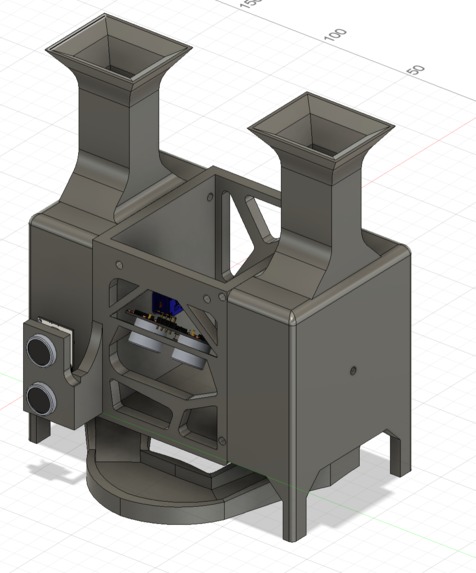
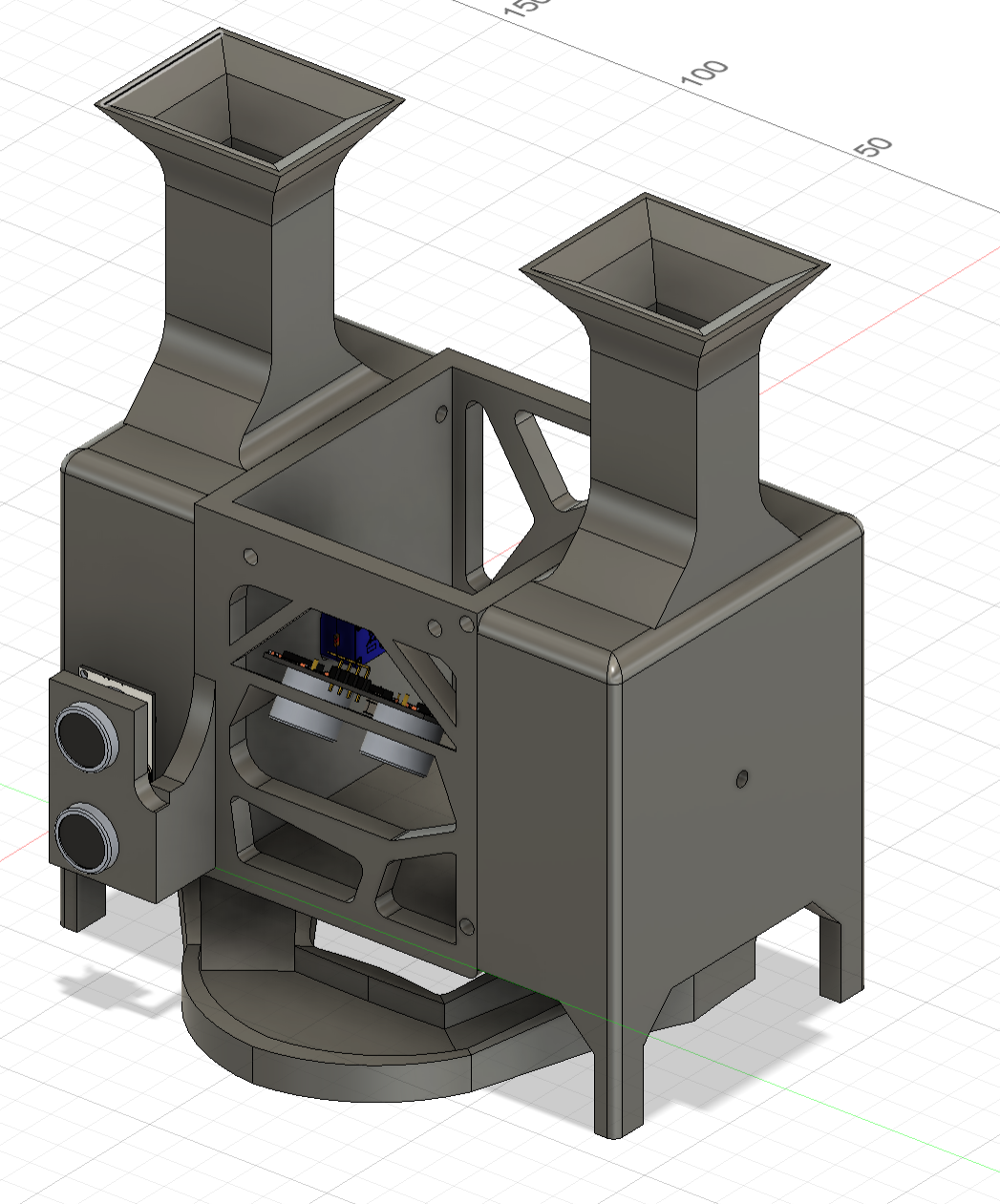
Picture of our 3d Model
-
Inspiration
We were inspired to create PillWatch after witnessing how difficult medication management can be for seniors and individuals with dementia. The risk of overdosing or taking the wrong medication is high when pills are taken manually, especially when someone has memory challenges or multiple prescriptions. We wanted to create a solution that ensures safety, reduces caregiver stress, and promotes independence for elderly users.
What it does
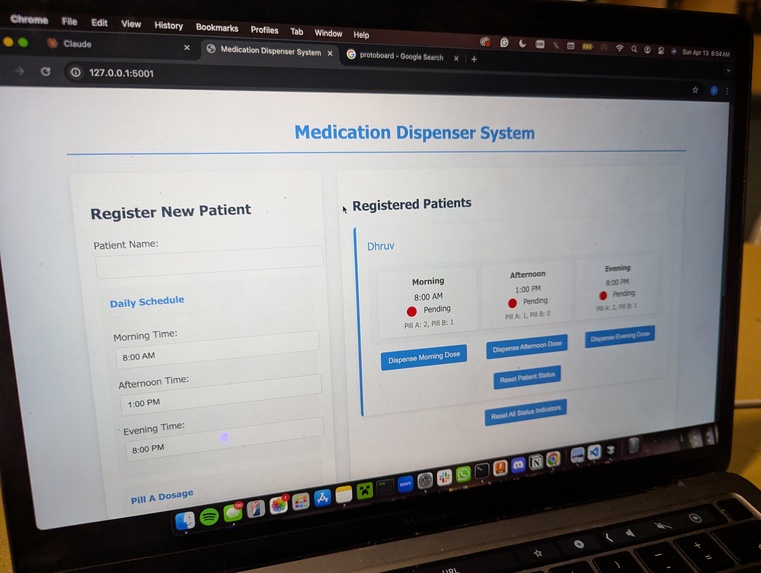
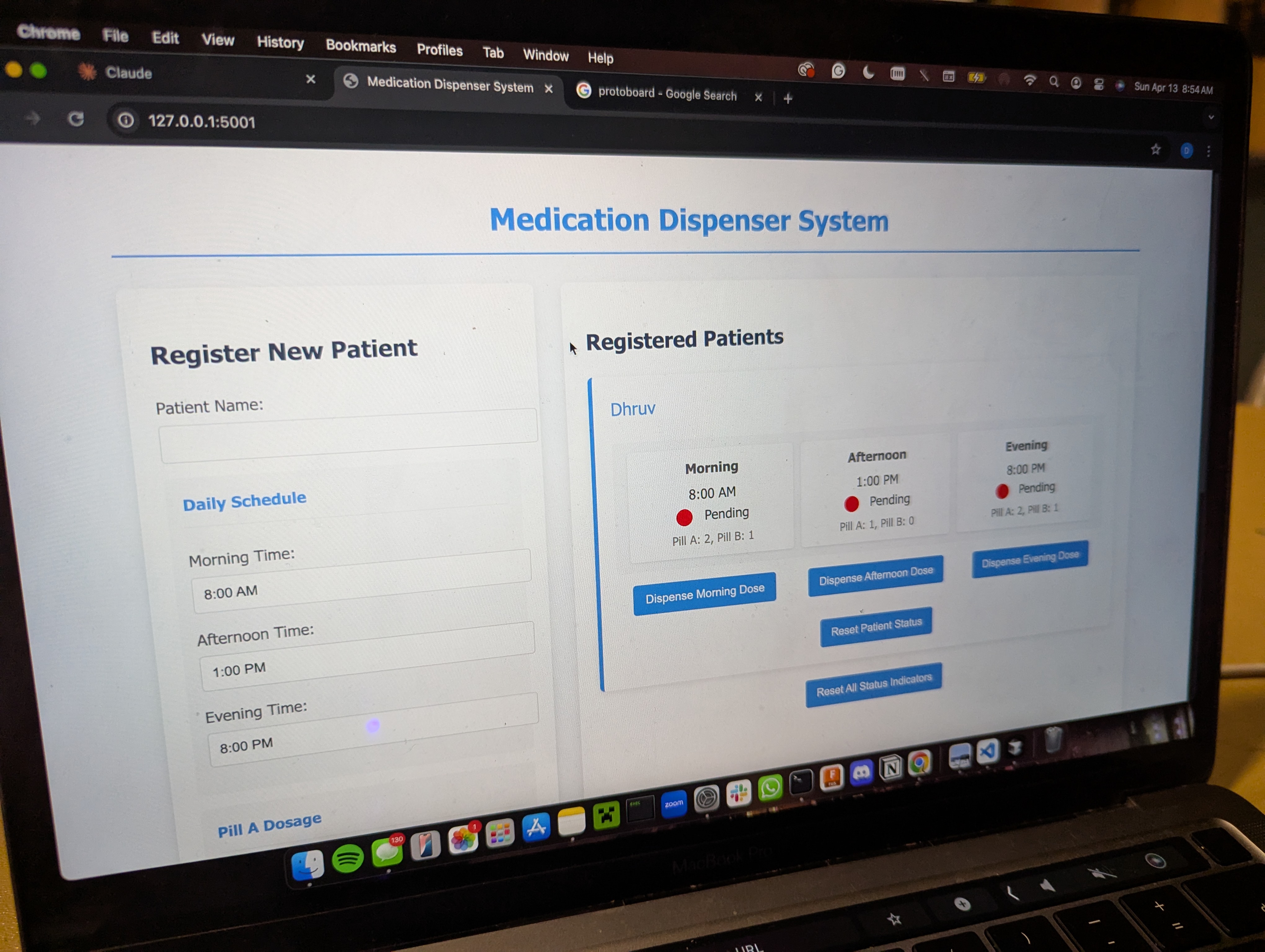
PillWatch is a smart, 3D-printed pill dispenser that accurately sorts and dispenses the right type and amount of medication at the correct time. It is personalized for multiple users and fully controlled through a caregiver-facing web app. Caregivers input medication schedules and dosages, and the dispenser automatically handles the rest—preventing overdoses, missed doses, or pill mix-ups.
How we built it
We started by designing a compact, 3D-printed frame to house our internal mechanisms. Inside, we built a mechanical pinwheel system powered by two servos that rotates and sorts pills based on the schedule. We programmed a web application that allows caregivers to manage user profiles, pill types, quantities, and timing. The system integrates seamlessly with the dispenser via a microcontroller, coordinating servo movement and scheduling logic in real-time.
Challenges we ran into
One of the main challenges was aligning the pinwheel mechanism so that pills would dispense accurately without jamming. Calibrating the servos to sort different pill types required a lot of testing. On the software side, syncing the web app with the hardware to ensure perfect timing and reliability was tricky, especially when managing multiple user profiles.
Accomplishments that we're proud of
We’re proud of creating a fully functional prototype with a custom 3D-printed design that integrates both mechanical and software components. We also successfully built a user-friendly web interface for caregivers that adds real-world usability to the device. The fact that PillWatch can help prevent serious medical issues makes it a project we’re especially proud of.
What we learned
We learned how to merge mechanical design with real-time software control, which involved both hardware debugging and backend development. We also gained experience in user-focused design, especially thinking from the perspective of both seniors and caregivers. Understanding how to build a reliable, real-world healthcare tool pushed our problem-solving and engineering skills to the next level.
What's next for PillWatch
Next, we want to improve the precision of the dispensing system to handle a wider variety of pill shapes and sizes. We're also planning to add SMS or app notifications for caregivers and possibly integrate voice alerts for users. In the future, we'd love to partner with healthcare facilities or senior homes to test PillWatch in real-world environments and refine it even further.
Built With
- 3d-printer
- arduino
- c++
- esp-32
- opencv
- raspberry-pi
- touchscreen-lcd
- vscode

Log in or sign up for Devpost to join the conversation.