-
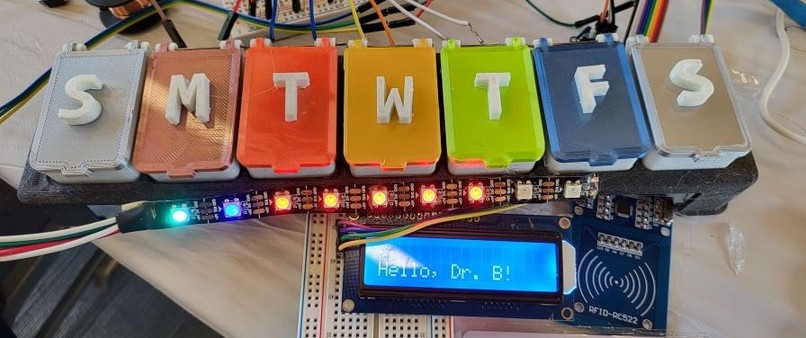
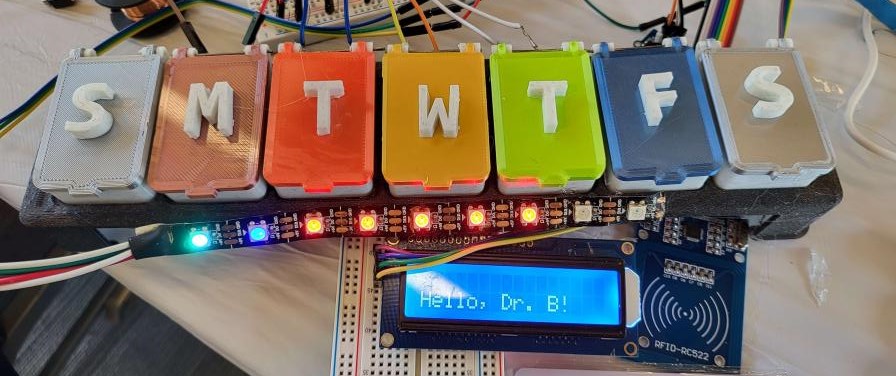
Finished Product!
-
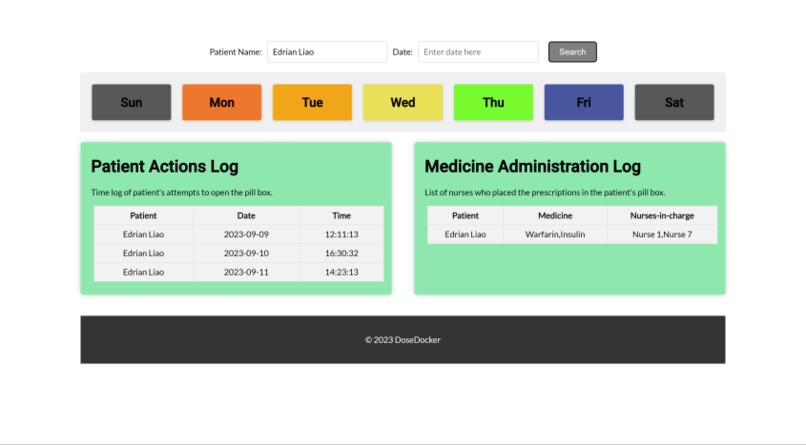
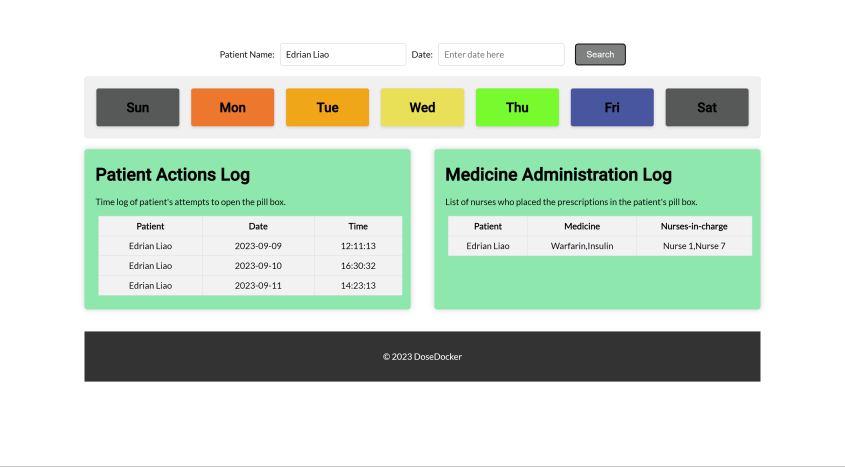
Finished Web Page
-
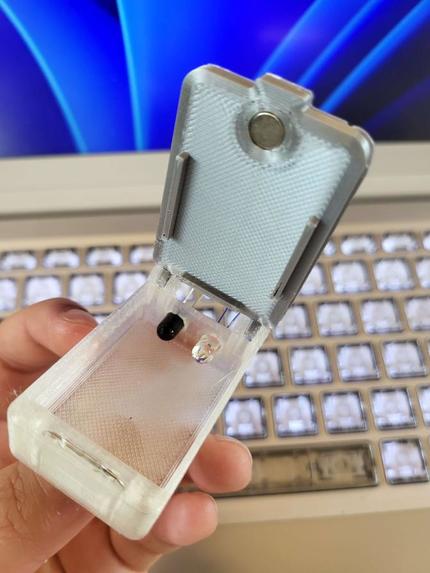
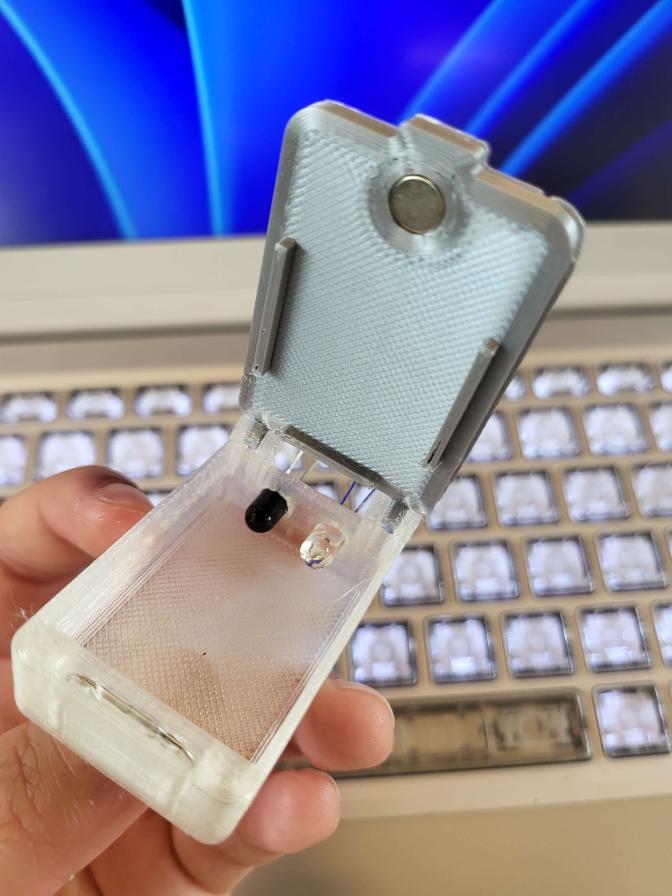
Individual Bos with IR sensors + magnetic sensor
-
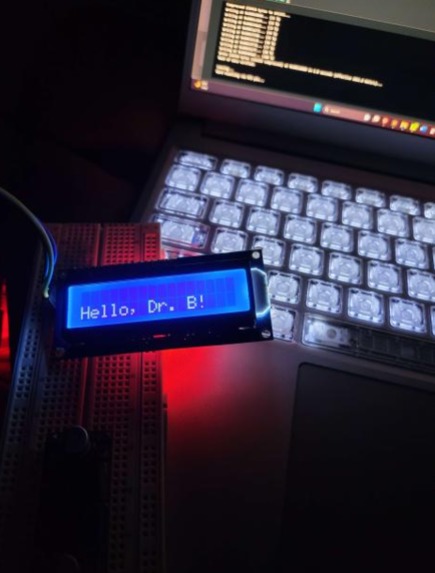
RFID scanner for caregivers to "sign" after preparing medicines for the pillbox.
-
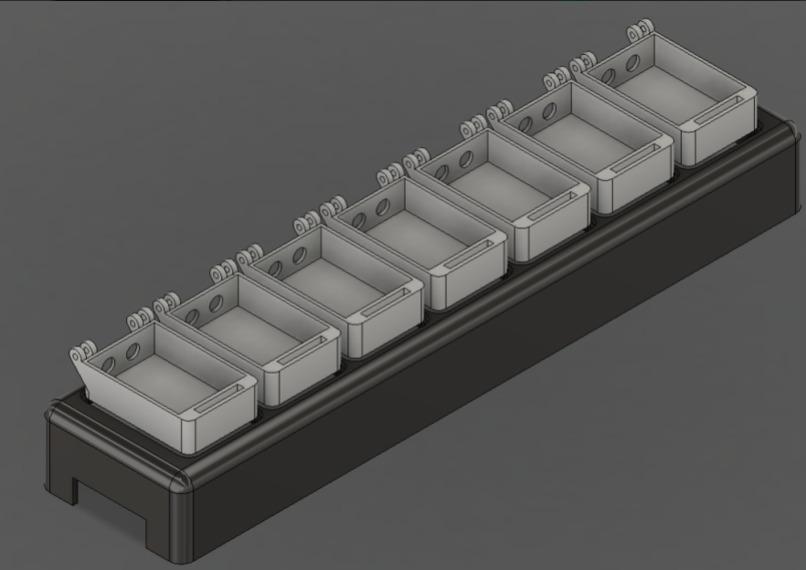
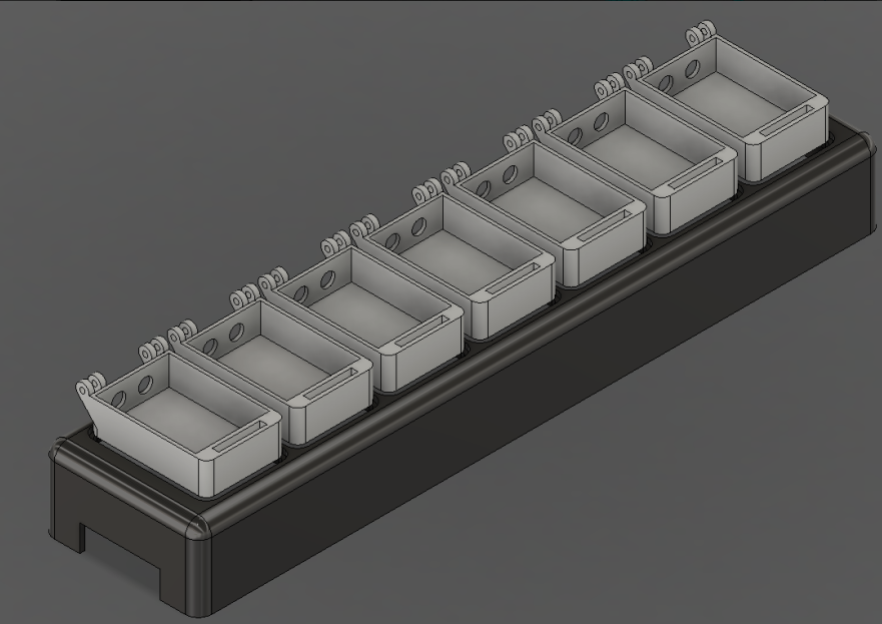
Open cover prototype for pillbox
-
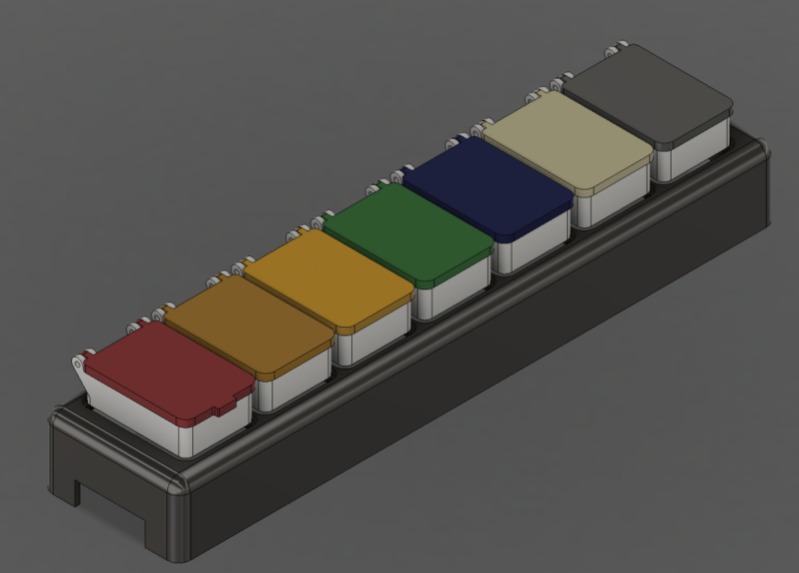
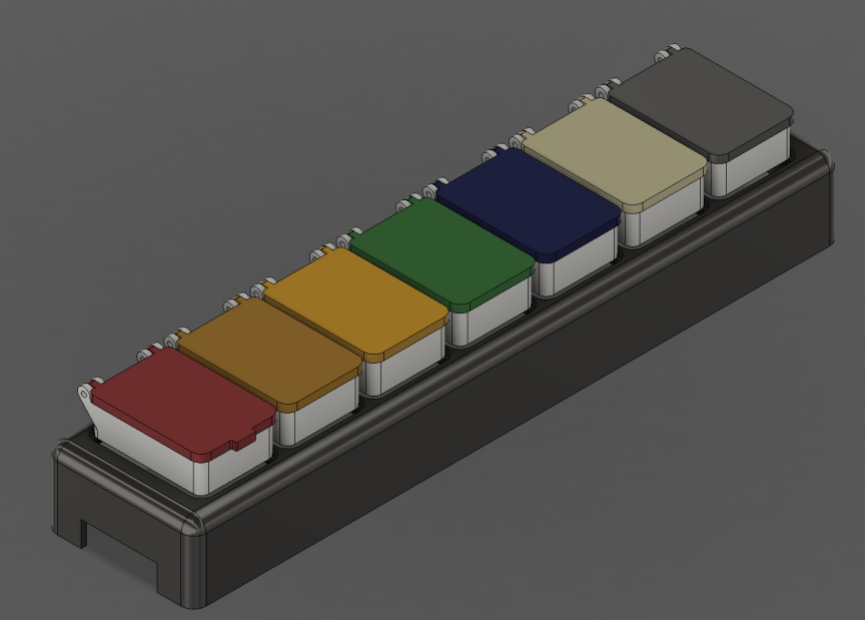
Closed cover prototype for pillbox
-
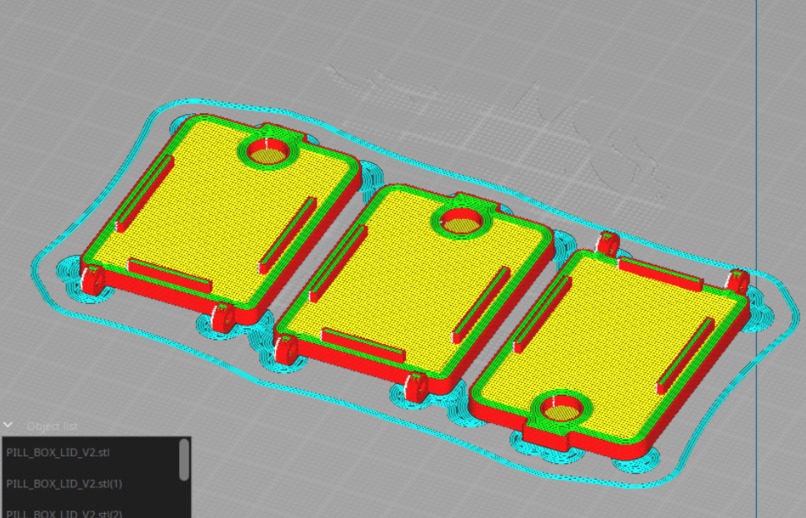
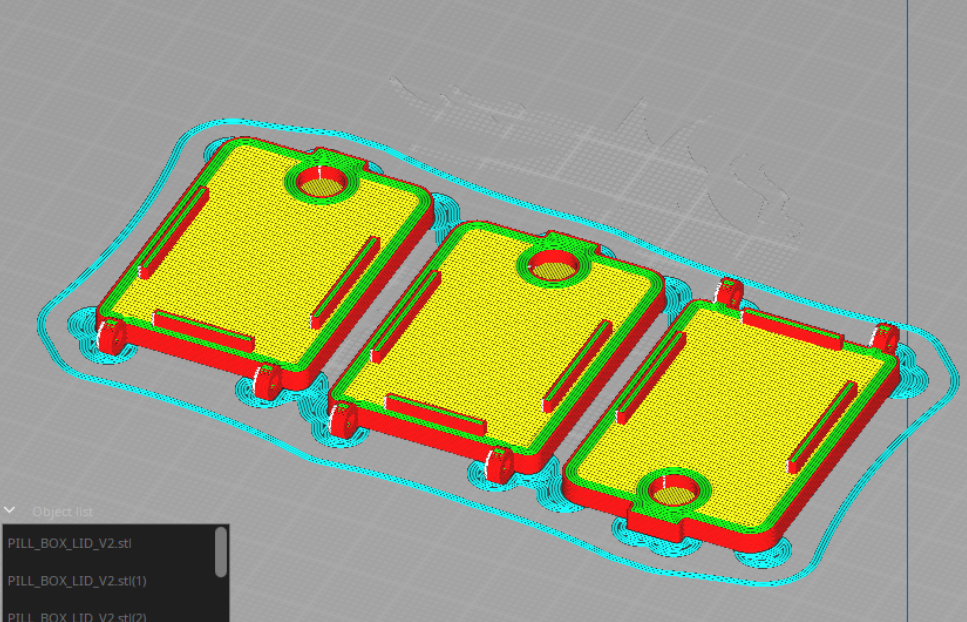
Sliced models

Project Slideshow Presentation: https://docs.google.com/presentation/d/1py8z9A5hT9-pCioKTpm5W1MpNgXQnmB5_weVPzX4_Eo/
Inspiration
At the start of this hackathon, our team wanted to create a project that combined hardware and software. An IoT device with a built-in monitoring seemed like a natural choice. We later listened to a talk about patient safety and were astounded that 250,000 people die a year from preventable errors. After diving deeper into such incidents with Medication‐related incidents at 19 hospitals: A retrospective register study using incident reports, we found that the most common preventable medication incident was 1. Wrong Dose, and 2. Missed Dose.
Therefore, we wanted to create a system where during medication administration (putting the respective pills into each compartment), there would be a verification system where the respective doctors would need to "sign-off" on the dosage + medication through tapping their ID cards onto an RFID reader, which could be logged on the cloud.
Next, when the medication is brought to the patient, the pill box knows which compartments still have medication, and can log when medication was taken, along with alerting the patient when they have missed a dose, therefore tackling both of the most common issues with medication.
What it does
- The pillbox has 7 compartments, one for each day of the week, and uses an ESP32 microcontroller to take and process sensor readings on the current box compartment status, and then uses HTTP POST to translate the sensor data in JSON format over WiFi
- A Flask python web server reads the passed data, parses it appropriately, adds timestamps, and uploads the data to MongoDB
- The pillbox tracks when it is opened and closed, informing nurses if and when a patient has taken their medication for the day
- A small display to provide text reminders + data, a RGB LED strip to show if a compartment is open / closed
- An RFID/NFC scanner can log and read a "digital signature" from a caregiver who prepares the medicines via a tap of their ID card
- The pill box tracks 1) when a compartment was opened using a reed sensor + magnet on the lid 2) if there is something inside the compartment (not fully implemented in our end prototype due to lack of hardware)
How we built it
The shell of the project was CAD'ed in Fusion360 from scratch, with a small base to hold all the individual compartments. The project was 3D printed in PLA with a variety of colors to give the pill box a fun and friendly appearance. The hinges are made with metal for added reinforcement + durability, and as mentioned before the electronics components include an ESP32, RGB LED strip, RFID reader, photocells and LCD. All the circuity was prototyped on a breadboard with some soldering done to make certain components more breadboard friendly
The sensor data is coursed through Arduino and Flask into storage in MongoDB. From MongoDB, the data is presented on a user friendly web app built with Node.js, HTML, and CSS.
Challenges we ran into
A lot of our IoT components that would be optimal for our use case were either not available physically, or would not work with our existing hardware. Some of the hardware (reed sensor and vibration motor for our alarm) were very delicate and with the time crunch we found ourselves accidentally damaging components and needed to quickly find a temporary workaround.
We went through several rewrites of our web backend and frontend to accommodate the data structure we needed to present on the web app.
Since this was all of our first hackathons, we were not really sure what to do initially so we spent a very long time brainstorming which likely could have been better spent building the project, wiring, CAD'ing, coding, etc. Because we brainstormed so much, our project also grew very quickly in scope to where we were not sure which tasks to prioritize especially towards the end.
Accomplishments that we're proud of
Building so much with hardware and software in 36 hours, especially the variety of tools we used and with the scope of what we were trying to accomplish with our project.
Additionally, it is really cool to see the data flowing from one place to the next, all through different protocols as well.
What we learned
Time constraints imposed by a hackathon necessitate a super focused and somewhat limited scope.
What's next for DoseDocker
Obtaining optimal hardware for tracking medication, expanding our data pipeline as well as streamlining it. We hope that the data collected through DoseDocker can be used to optimize the administration of medicines, possibly by making visible the times that caregivers are most accurate in preparing them.


Log in or sign up for Devpost to join the conversation.