-
Product
Inspiration
Reading news articles on how many people are not adhering and completing their prescriptions as per recommended by their doctors inspired us to think further. A survey conducted in Singapore by SGH showed that 60% of patients did not adhere to their prescriptions. Notably, not completing your required dosage can lead to very severe consequences wherein the bacteria actually starts to develop a resistance to the antibiotics. We also need to consider the elderly, who typically tend to forget when and what medication to take. As well as dementia patients who may forget whether they took a tablet and prevent them from overdosing which could be extremely dangerous.
How do we pursue people and ease their lives by making this a seamless process? We would need to create a product that implements reminders in the easiest way possible for the user.
What it does
Reminding people to take their medication. A user would simply have to scan their prescription label (printed and stuck on the tablets, i.e. take 1 tablet 3 times a day, etc) and our application would automatically parse this image and convert it into Google calendar reminders as well as alerted via a pill box!
So the user would simply scan the image which automatically fills in their google calendar with reminders as to when exactly they would need to take the tablet (based on the meal timings they input onto our frontend web app) and give them a reminder at the hour they need to take the tablet, with a description of the name of the pill. Once the image is parsed, we are able to extract the keywords that we are interested in, such as the name of the pill, the number to be taken and the frequency at which it should be consumed.
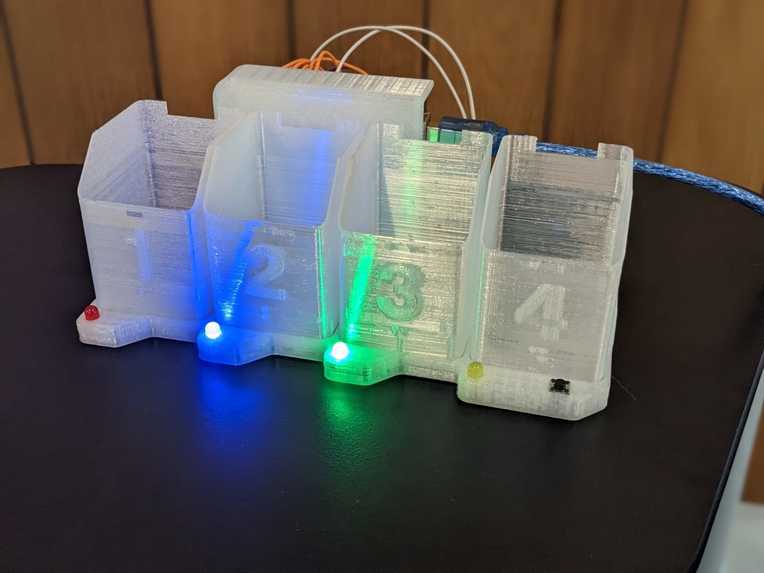
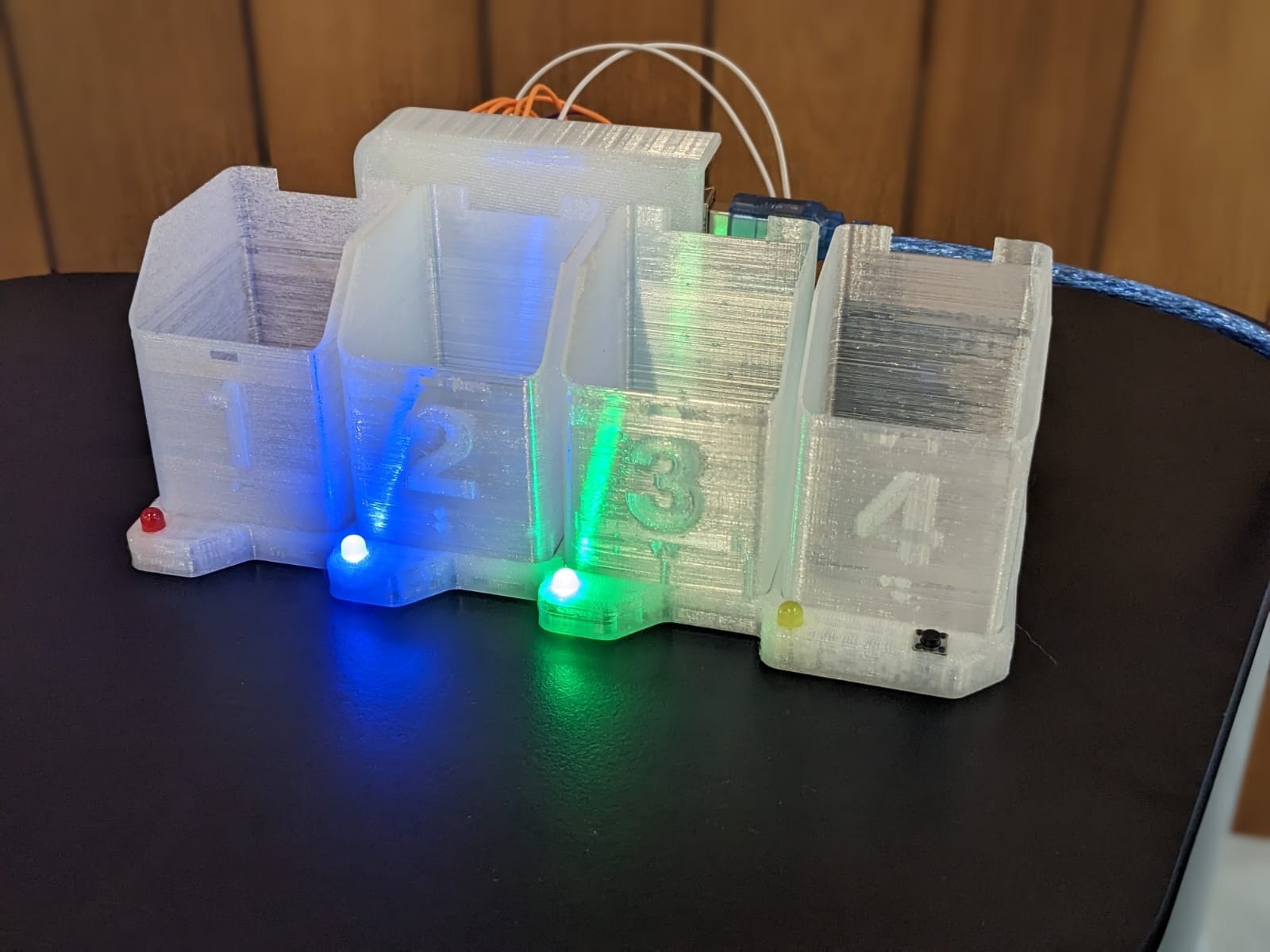
Furthermore, we have a physical pill box prototype that is able to light up and buzz the exact pill they need to consume at that moment. Only when the pill is consumed and the button is clicked, the buzzing sound and light would turn off (this has been implemented and presented). This takes a traditional pill box 3 steps further.
Our pill box also has Braille markings to aid and ensure our product can be used by the visually impaired as well.
How we built it
We built our app by using Python and React, OCR for the software side, and utilised 3D printing and Arduino for the pill box implementation. Our project is an all-encompassing solution, that has a GUI to take and process the images, backend to perform OCR and NLP character extraction, communication with google calendars API and finally the hardware implementation of our vision.
Challenges we ran into
When building our application, we had to ensure that the 3d printed components are designed precisely using CAD. Also, had to ensure that the OCR is able to parse the prescription labels and extract the keywords needed to fill into the google calendar.
Accomplishments that we're proud of
We are very proud of the fact that our prototype is working and that the pill box is able to light up and buzz as expected. Furthermore, our OCR is accurate and able to parse our image well.
What we learned
We learnt many things along the way and saw how the different components work together.
What's next for Pill Pal
As for our next steps, we definitely aim to integrate cloud for more seamless communication between our components. Also, we plan on partnering with hospitals, practitioners, and doctors to promote the use of our application whilst prescribing the medication to their patients.
This would ensure that the patients adhere to the dosage instructions and so the medications can work as expected!


Log in or sign up for Devpost to join the conversation.