Inspiration
42% of older adults take 5+ medications daily. Daily pills, for many of us, are a part of everyday life: prescription medication, birth control, etc. And yet, medical error in tracking these pills is still a prominent cause of death, especially in elderly populations. When people are taking several pills a day, a slipup, a “Did I take this already?”, becomes more than a slight annoyance; it becomes dangerous. We wanted to reduce the hassle of keeping track of different medications and gamify the experience with an adorable PillPal.
Focusing on the Flick to Flow challenge, our project eliminates the friction and cognitive overload caused by the fragmented annoyance of repetitive daily tasks. Managing essential routines such as medication schedule adherence can require constant manual input and attention, disrupting users’ daily activities and, even worse, putting their health in danger. By creating an adaptive system for convenient healthwatch, our solution allows users to prepare for the day with one less worry. In line with Arista Networks’ challenge, we apply networking principles to connect users and the app's caretakers for elderly patients. Additionally, in the future, PillPal aims to connect users directly with local pharmacies and doctors to treat the pharmaceutical refill process more efficiently. This creates a connected and responsive ecosystem that resolves everyday life by transforming a time-consuming visit to the doctor’s office into a coordinated and proficient approach.
What it Does:
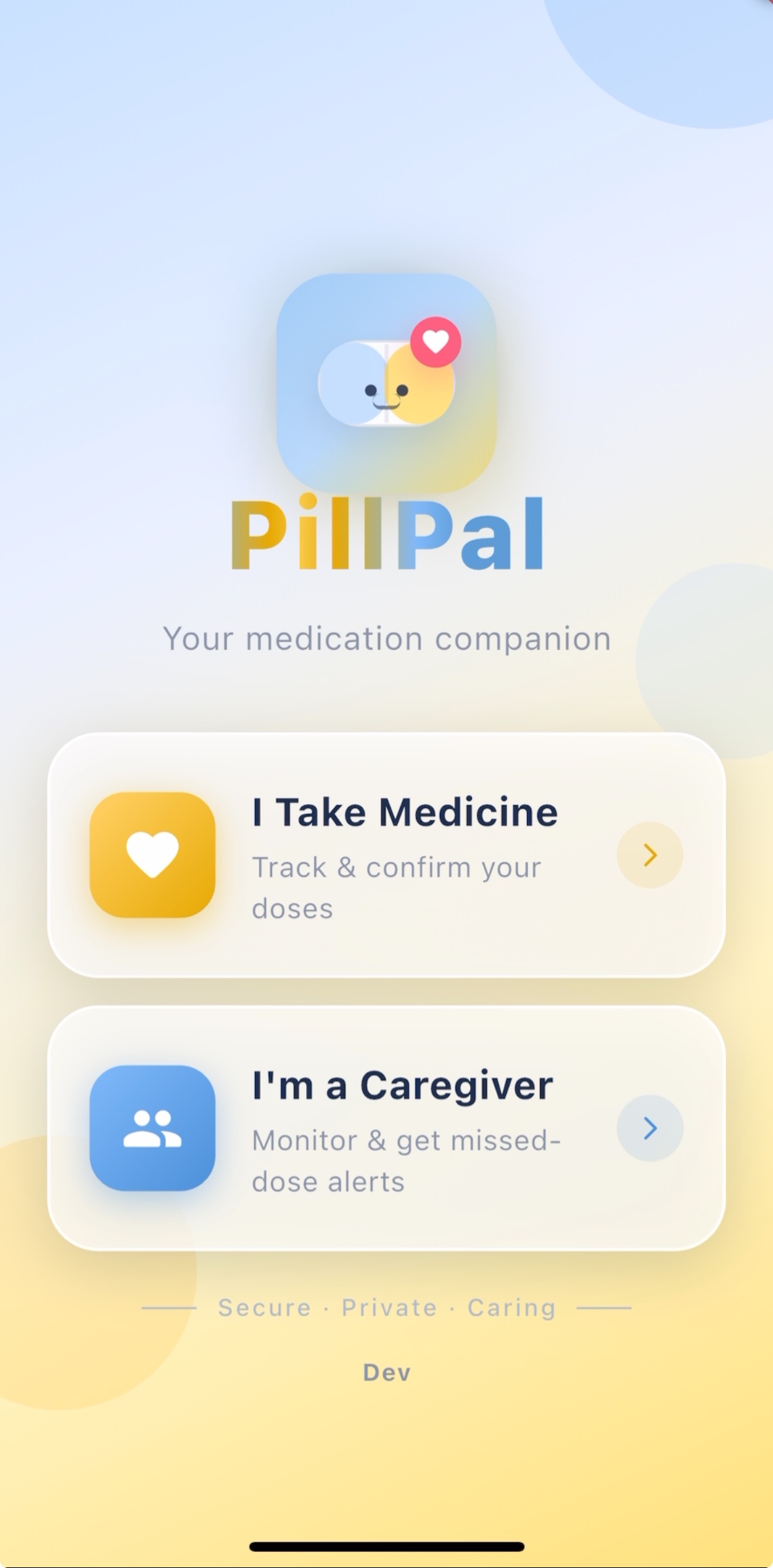
PillPal works for both independent users as well as containing features to connect with a caretaker.
User Interface:
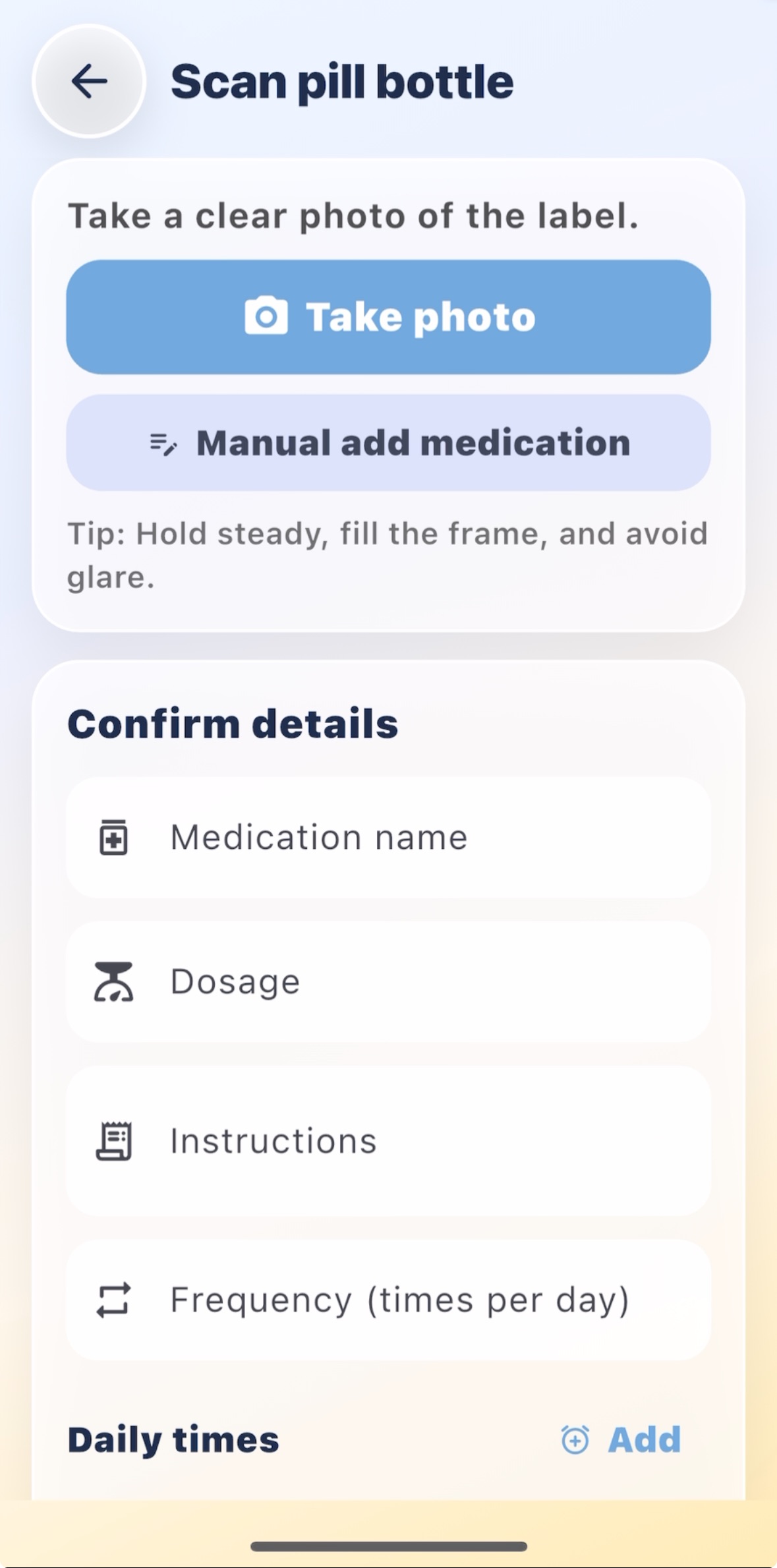
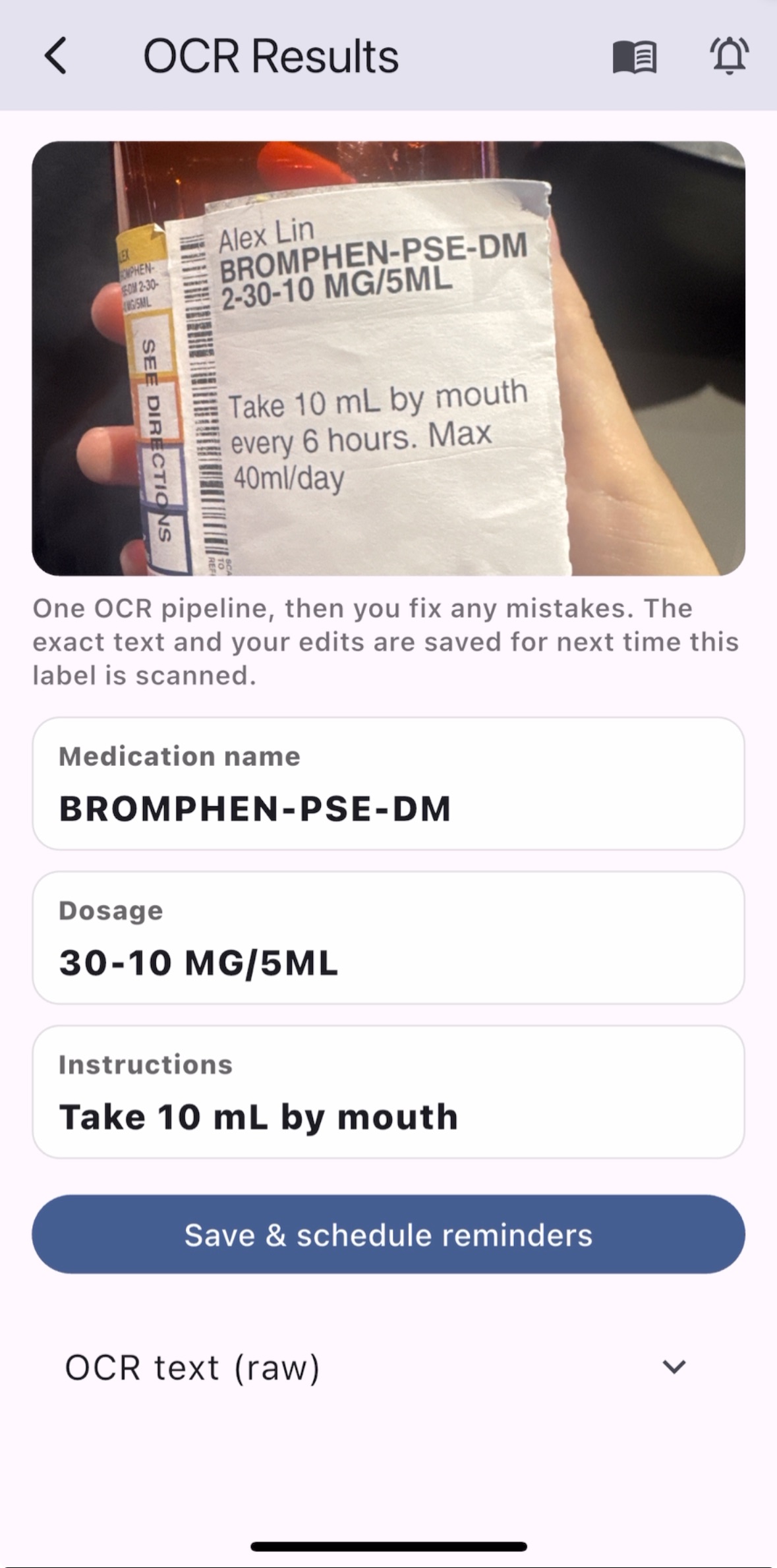
1. Scan your pills : Users can scan the label of prescription bill bottles to automate reminders based on the dosage information. For medication without a prescription label, users can manually enter their medication and reminder times.
2. Escalating Alarm System : When a pill is missed, users receive escalating notifications.
3. Adaptive Reminders : The system adapts based on user behavior to adjust the timing of reminders. For example, if a patient tends to be out of the house during the usual time to take a pill, the system will adjust to remind the user to take/bring the medication before they leave the house.
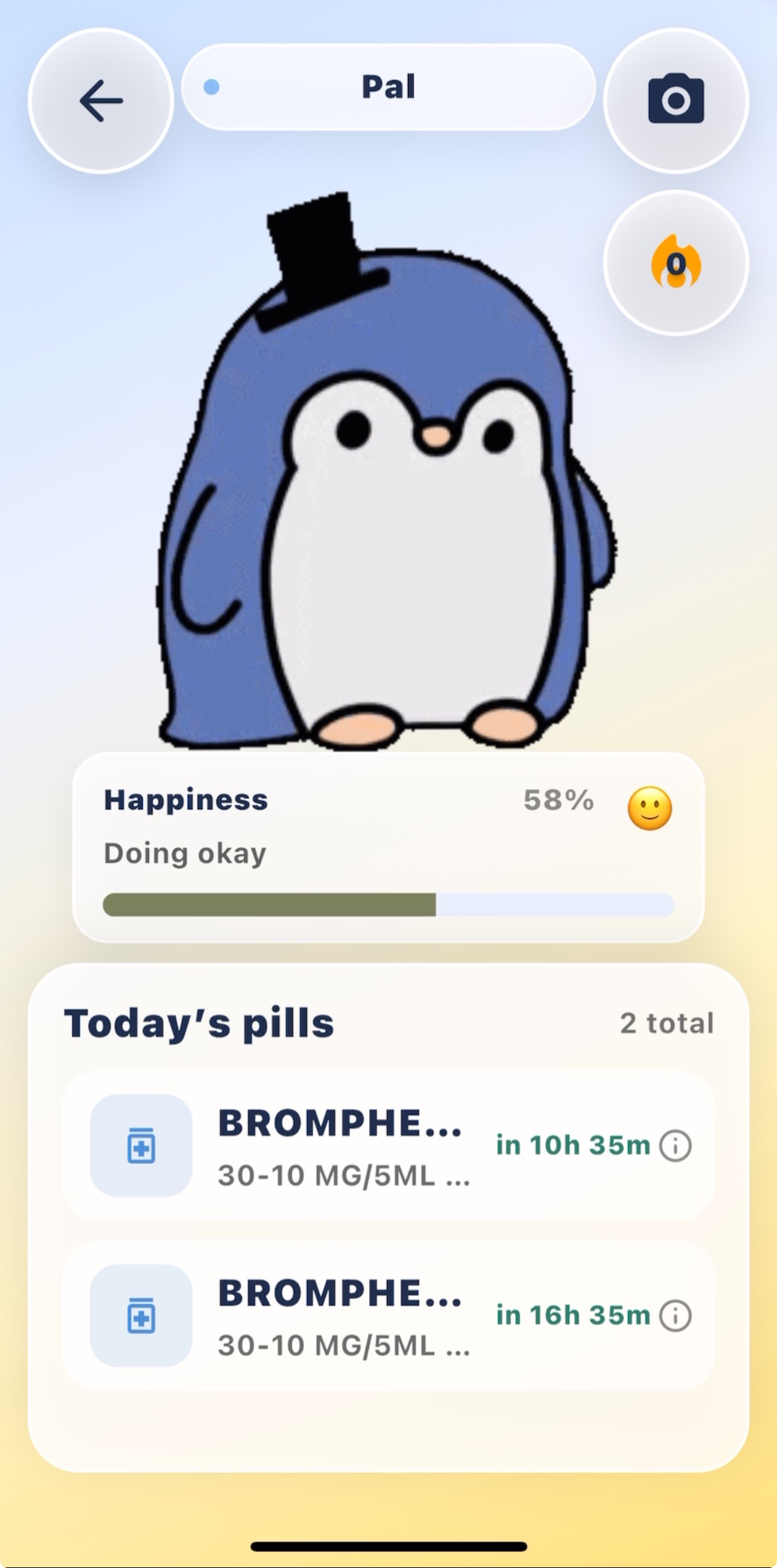
4. PillPal Behavioral Reinforcement : Users get to name and take care of their very own PillPal by staying on track of their medication. A missed pill makes your PillPal sad, while consistently taking your correct medication keeps them happy.
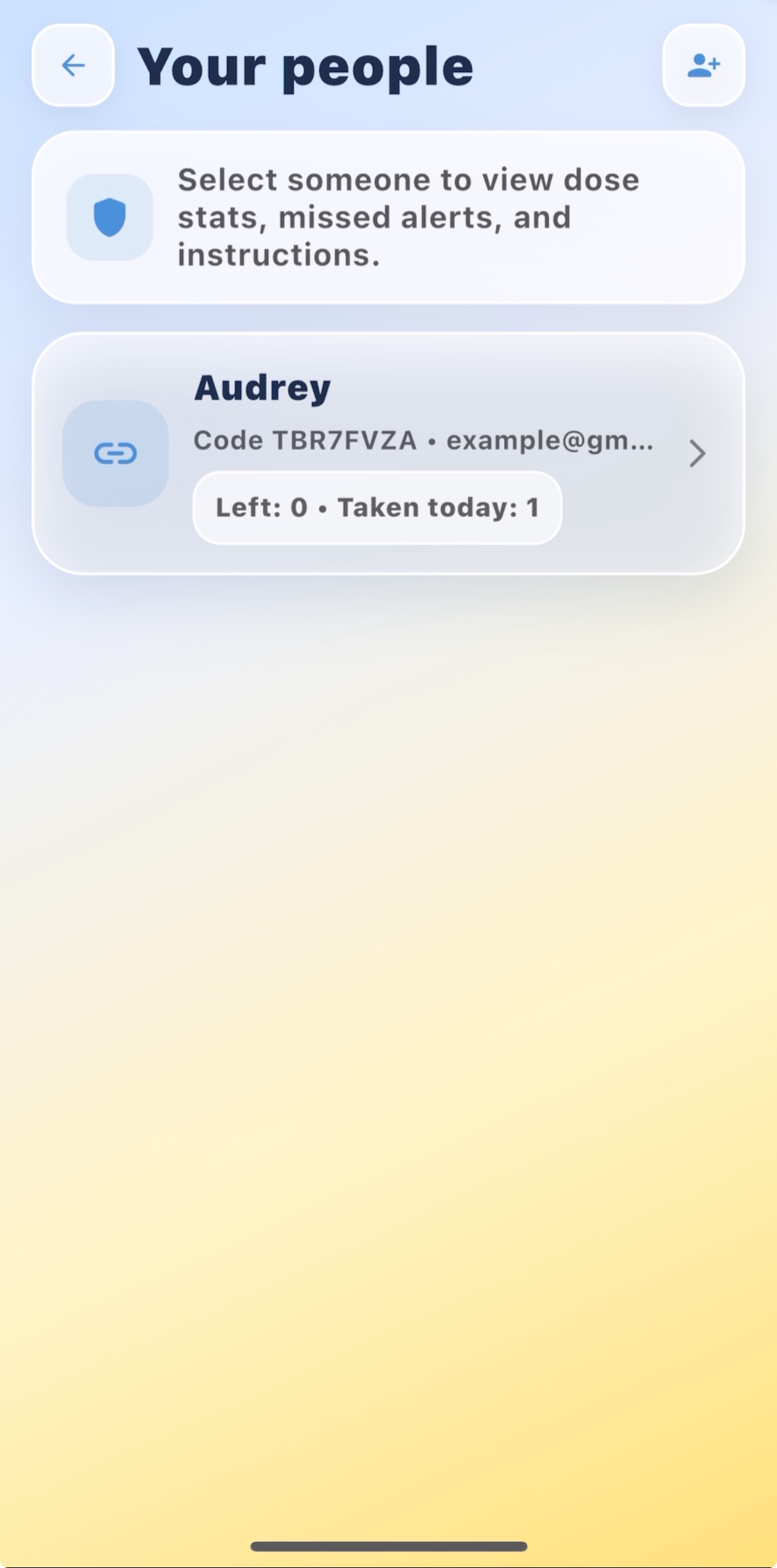
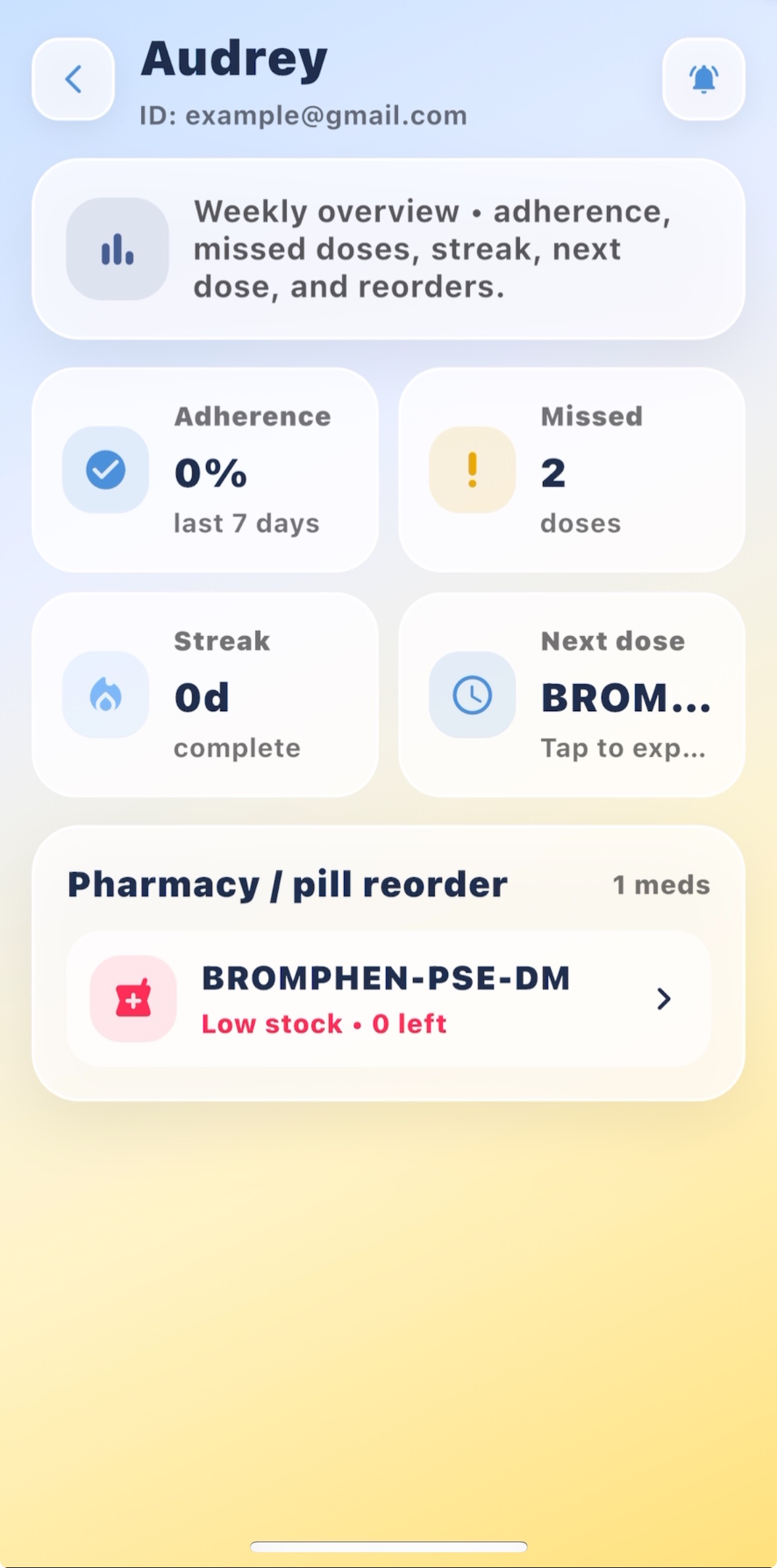
Caretaker Interface: 1. Connect with Users : Using a user ID, caretakers can connect with multiple users, gaining access to help manage their medications and alerts.
2. Emergency Notifications : When a caretaker is connected, if a user misses their alert, their caretaker is also notified alongside them.
How we built it
We used the Flutter framework to design our mobile app while integrating Firebase in order to handle our cloud storage for our user data. For our image extraction, we utilized Google's ML Kit text extraction and an local NLP-style parsing pipeline to identify the name, dosage per day, and instructions for each of the scanned medications.
Challenges we ran into
One of our biggest challenges was finding a way to connect our users with our caretakers. Initially, we had no idea how to connect the two, because unlike simple coding languages, where you can connect two variables using, for example, dictionaries in Python, large databases with one caretaker connecting to several users would be way too complicated to implement. To resolve this issue, we did some research and landed on using a shared unique code determined by the caretaker to link the users and caretakers together. We implemented this idea, and after a few iterations, they finally could connect.
Accomplishments that we're proud of
This was our first time as a group creating a functioning mobile application. This mobile app not only looked extremely visually appealing but also provided a user-friendly experience that made accessibility easy and entertaining. Our actual Pill Pals were another aspect we were proud of. We managed to create different expressions and animations for 3 different types of pets the user can choose from, making the user experience interactive and immersive.
What we learned
Throughout this process, we learned not only about mobile application development, but also the importance of accessibility and considering our process. While designing our app, for every feature that we added, we had to circle back to the question of if this would be usable for everyone who needs it, including those like the elderly who are less familiar with technology. We learned that product development is more than just technical skills; it means knowing your target audience.
What’s next for PillPall
We hope to expand the reach of PillPal in the future to further simplify routine medication. As PillPal grows, we aspire to include features such as automated pill refills that partner with medical providers and contact pharmacies when low on a medication.


Log in or sign up for Devpost to join the conversation.