-
-
Pill Drop by The Drug Dealers
-
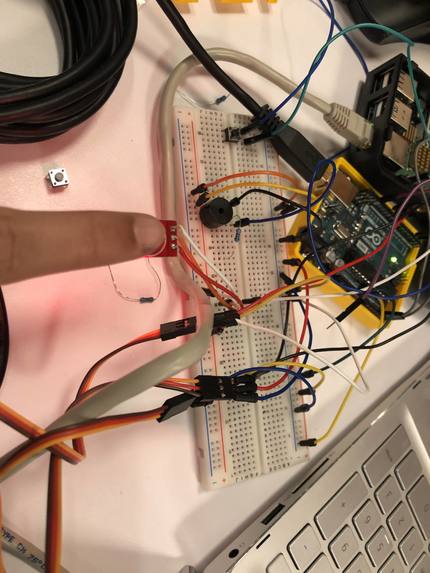
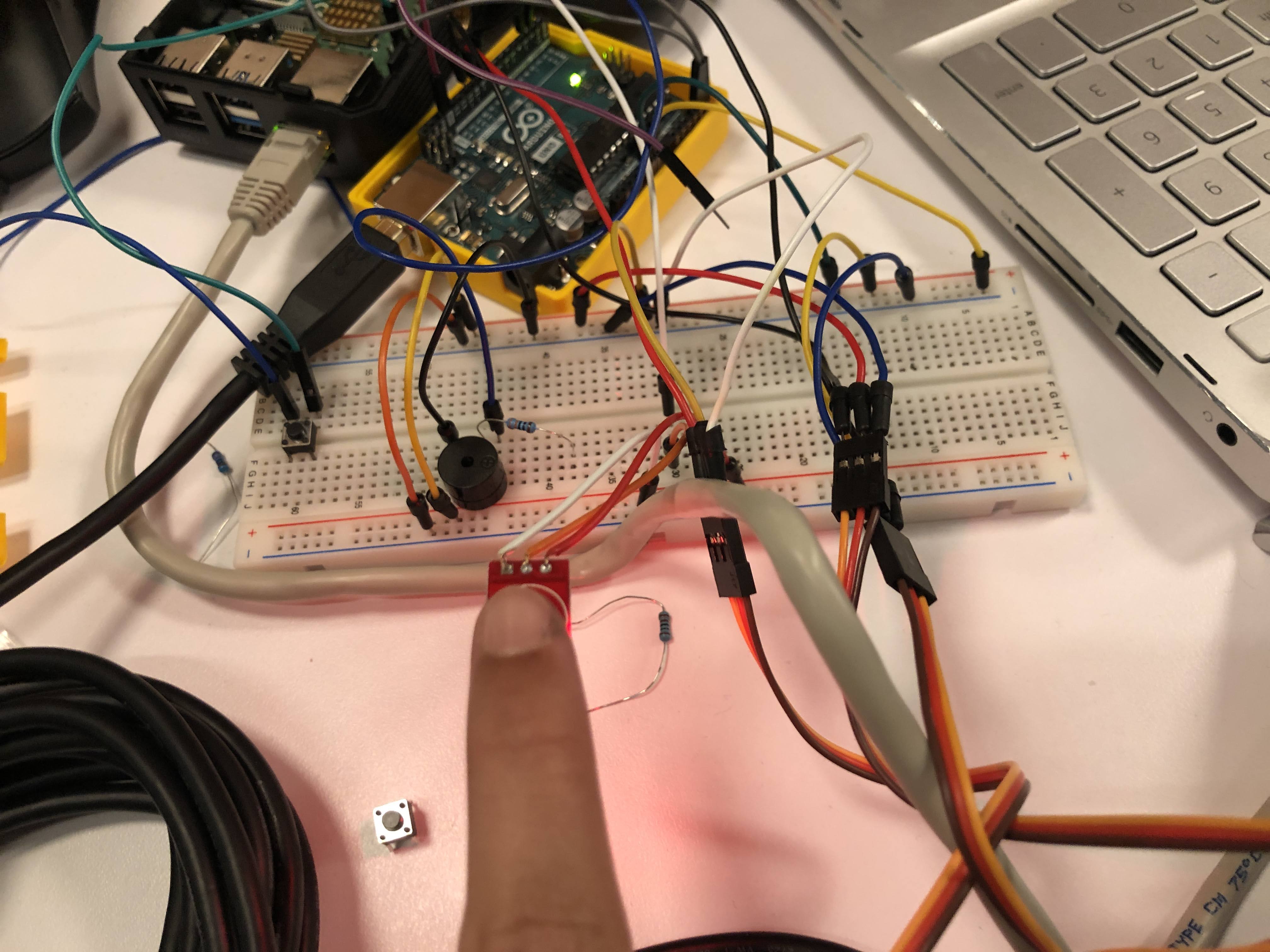
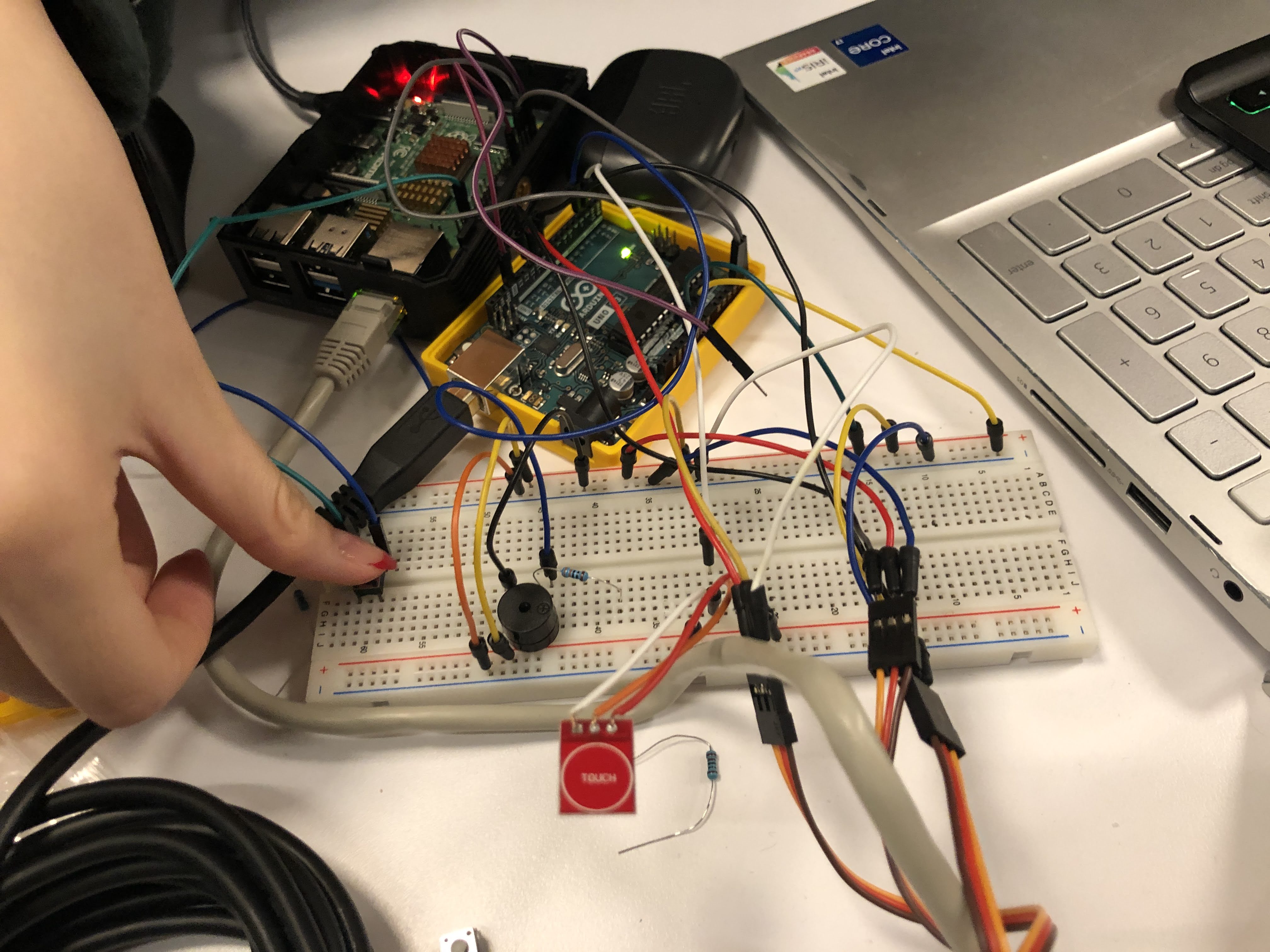
Touch Sensor
-
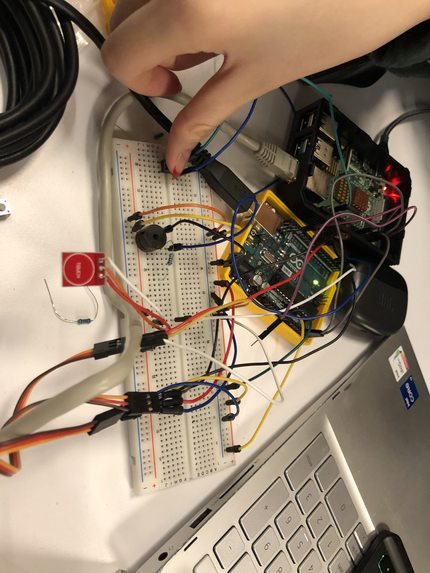
Button to confirm that pills were taken on time
-
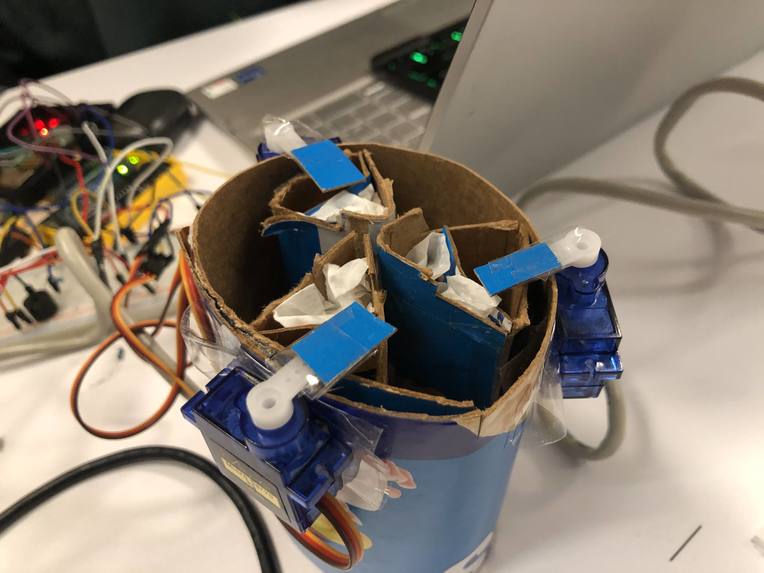
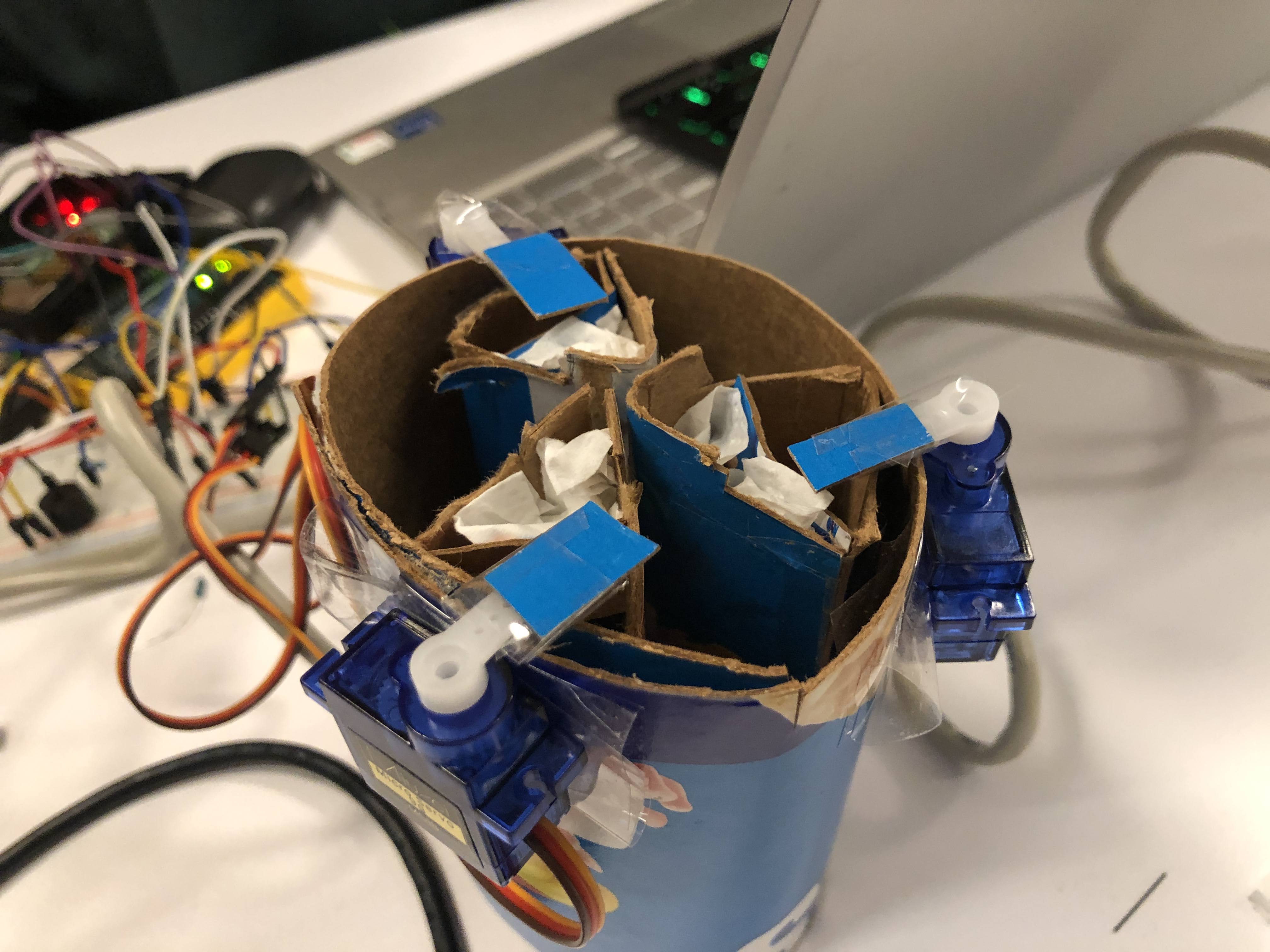
Servo mechanism dispensing the pills
-
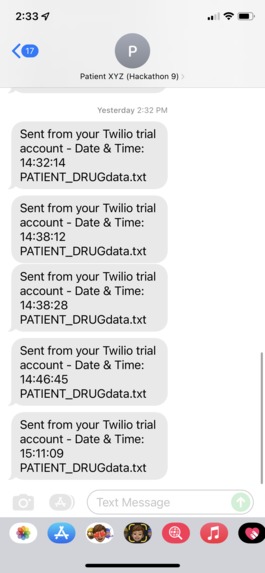
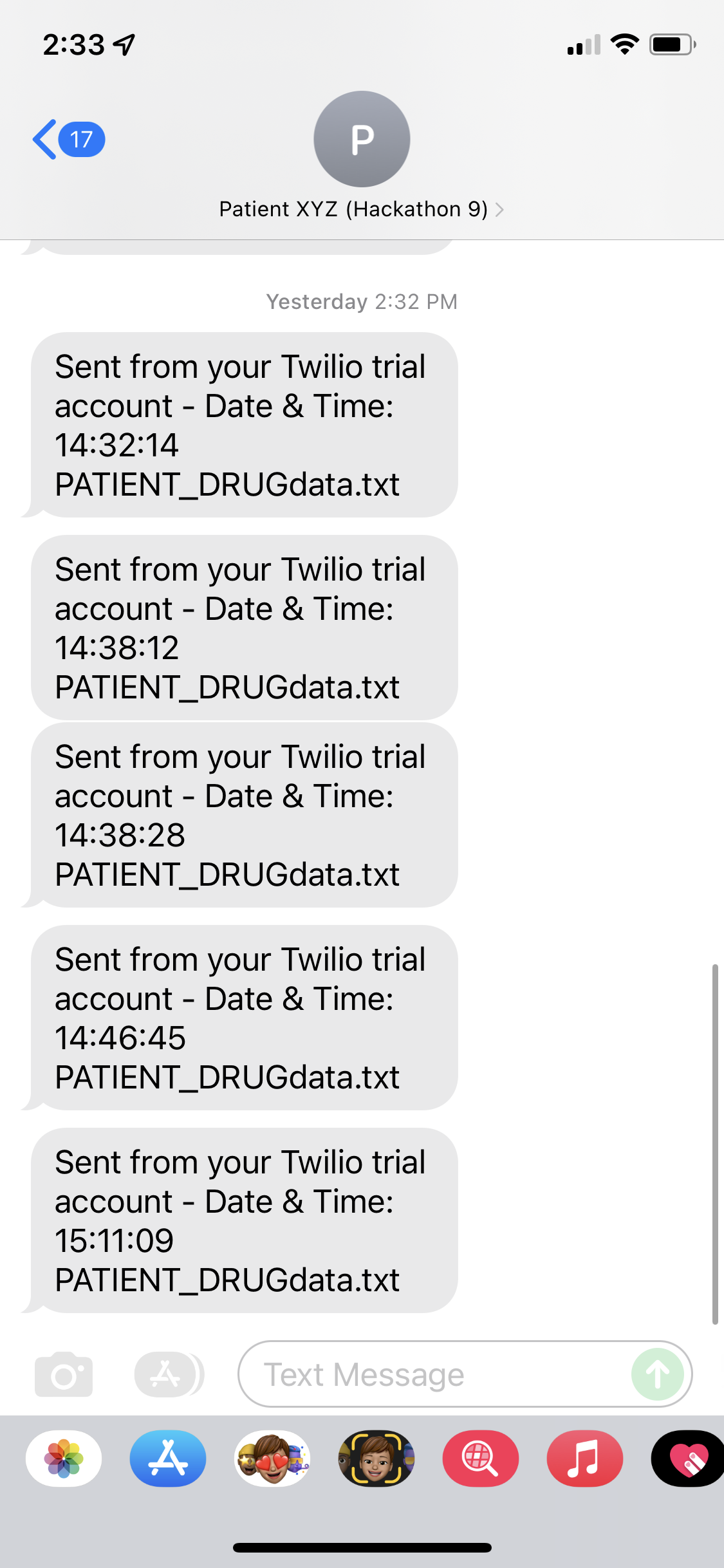
Sending patient report directly to the doctor through Twilio
-
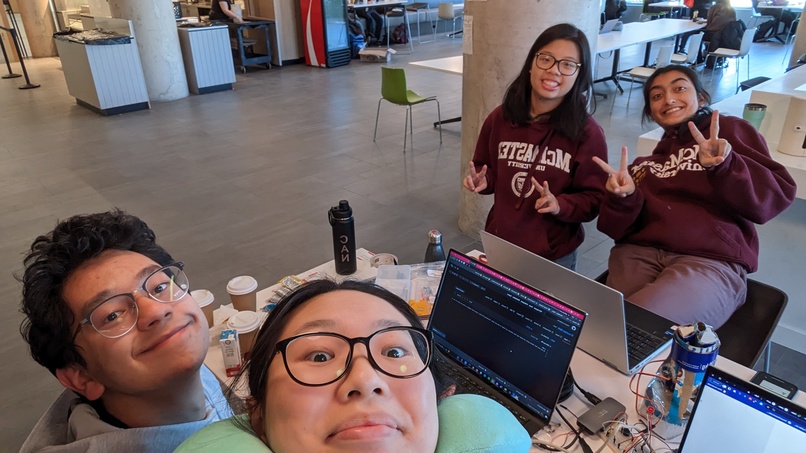
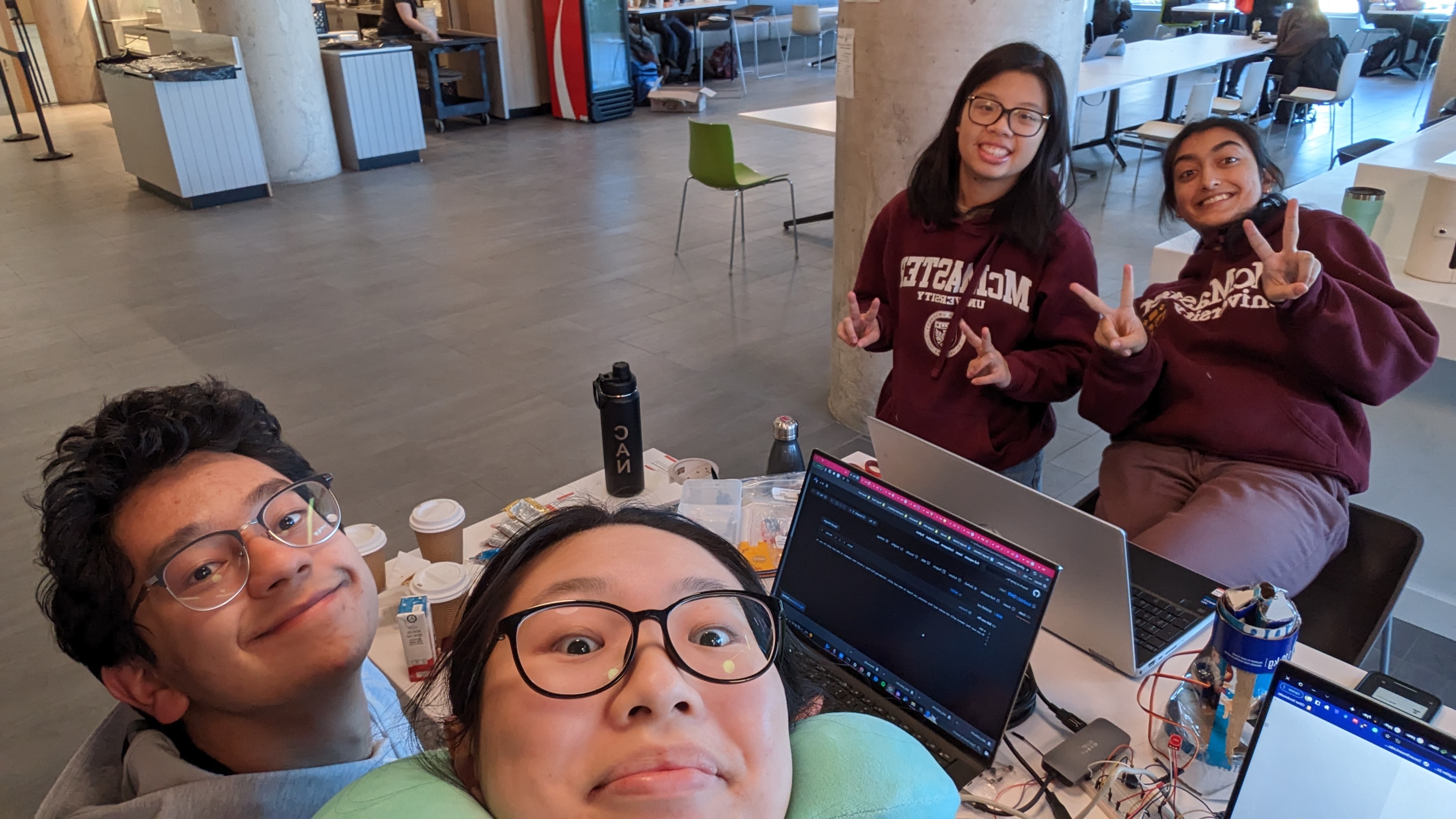
The DD's
Inspiration
According to the United State's Department of Health and Human Services, 55% of the elderly are non-compliant with their prescription drug orders, meaning they don't take their medication according to the doctor's instructions, where 30% are hospital readmissions. Although there are many reasons why seniors don't take their medications as prescribed, memory loss is one of the most common causes. Elders with Alzheimer's or other related forms of dementia are prone to medication management problems. They may simply forget to take their medications, causing them to skip doses. Or, they may forget that they have already taken their medication and end up taking multiple doses, risking an overdose. Therefore, we decided to solve this issue with Pill Drop, which helps people remember to take their medication.
What it does
The Pill Drop dispenses pills at scheduled times throughout the day. It helps people, primarily seniors, take their medication on time. It also saves users the trouble of remembering which pills to take, by automatically dispensing the appropriate medication. It tracks whether a user has taken said dispensed pills by starting an internal timer. If the patient takes the pills and presses a button before the time limit, Pill Drop will record this instance as "Pill Taken".
How we built it
Pill Drop was built using Raspberry Pi and Arduino. They controlled servo motors, a button, and a touch sensor. It was coded in Python.
Challenges we ran into
Challenges we ran into was first starting off with communicating between the Raspberry Pi and the Arduino since we all didn't know how to do that. Another challenge was to structurally hold all the components needed in our project, making sure that all the "physics" aligns to make sure that our product is structurally stable. In addition, having the pi send an SMS Text Message was also new to all of us, so incorporating a User Interface - trying to take inspiration from HyperCare's User Interface - we were able to finally send one too! Lastly, bringing our theoretical ideas to fruition was harder than expected, running into multiple road blocks within our code in the given time frame.
Accomplishments that we're proud of
We are proud that we were able to create a functional final product that is able to incorporate both hardware (Arduino and Raspberry Pi) and software! We were able to incorporate skills we learnt in-class plus learn new ones during our time in this hackathon.
What we learned
We learned how to connect and use Raspberry Pi and Arduino together, as well as incorporating User Interface within the two as well with text messages sent to the user. We also learned that we can also consolidate code at the end when we persevere and build each other's morals throughout the long hours of hackathon - knowing how each of us can be trusted to work individually and continuously be engaged with the team as well. (While, obviously, having fun along the way!)
What's next for Pill Drop
Pill Drop's next steps include creating a high-level prototype, testing out the device over a long period of time, creating a user-friendly interface so users can adjust pill-dropping time, and incorporating patients and doctors into the system.
UPDATE!
We are now working with MedX Insight to create a high-level prototype to pitch to investors!



Log in or sign up for Devpost to join the conversation.