-
-
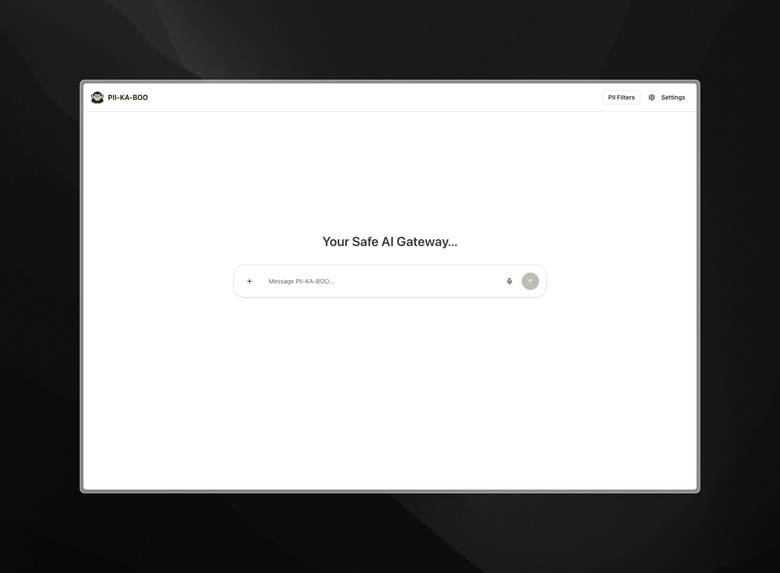
Home Page
-
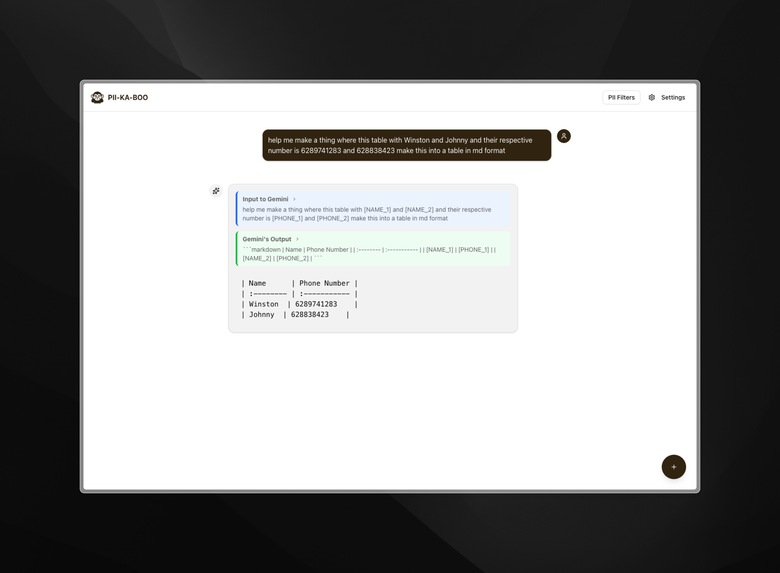
Text Redactor
-
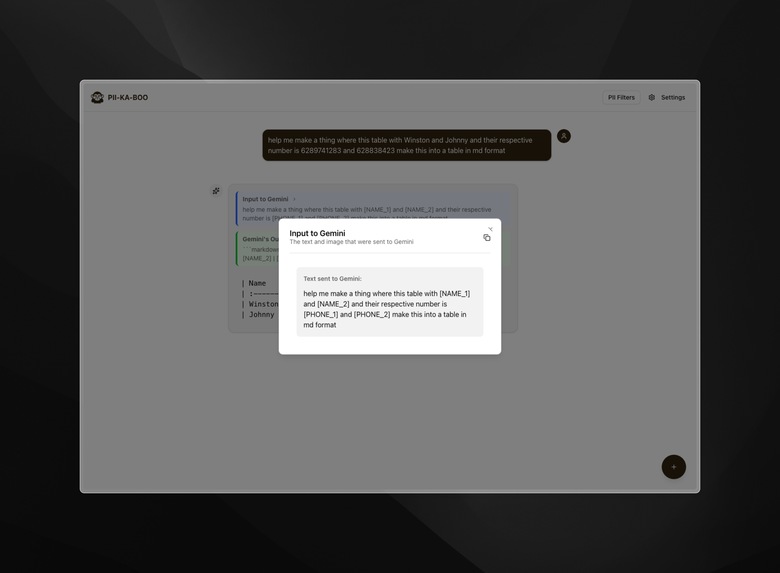
Text Redacted
-
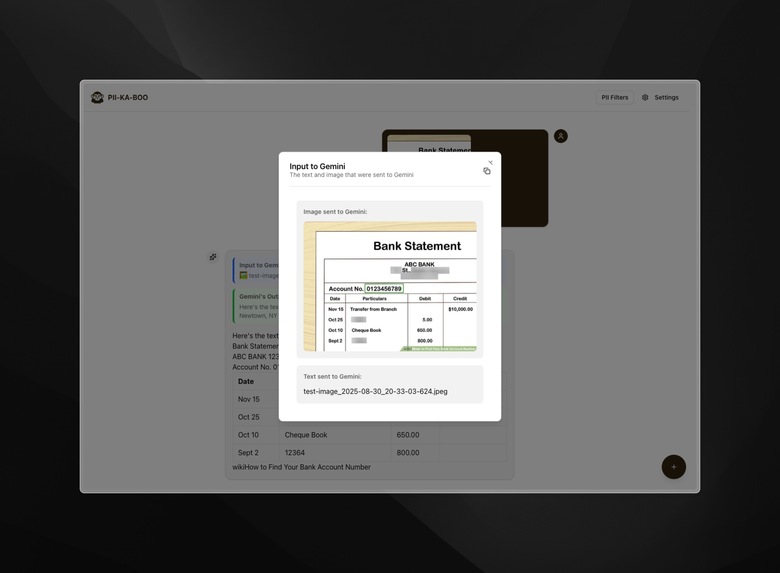
Image Redacted
-
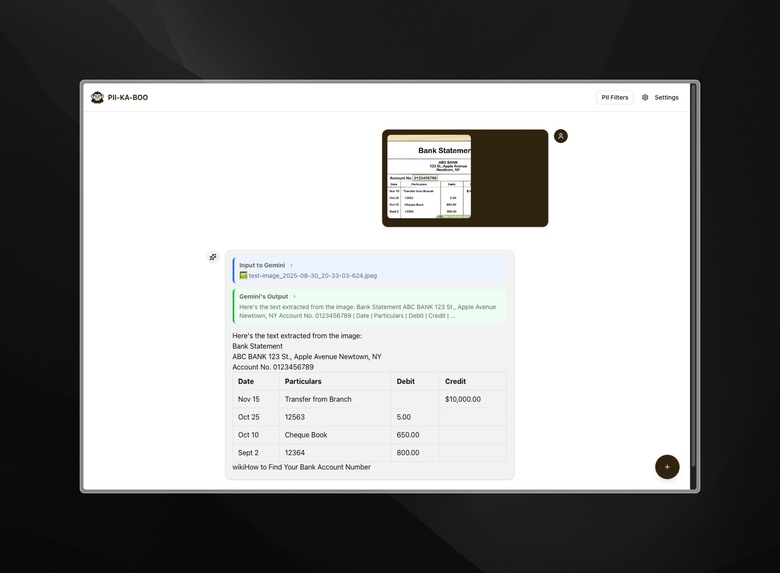
Image Redactor
Inspiration
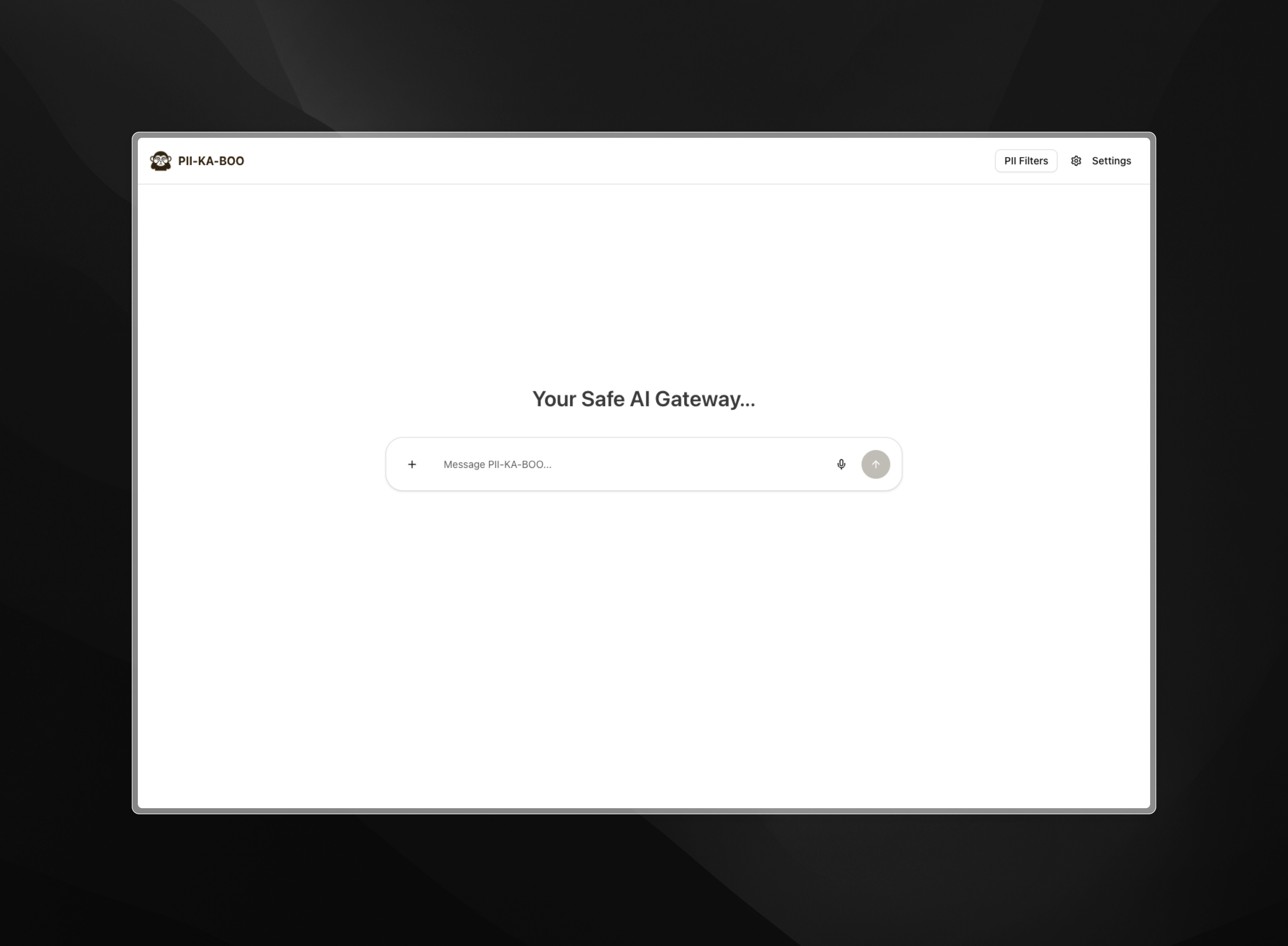
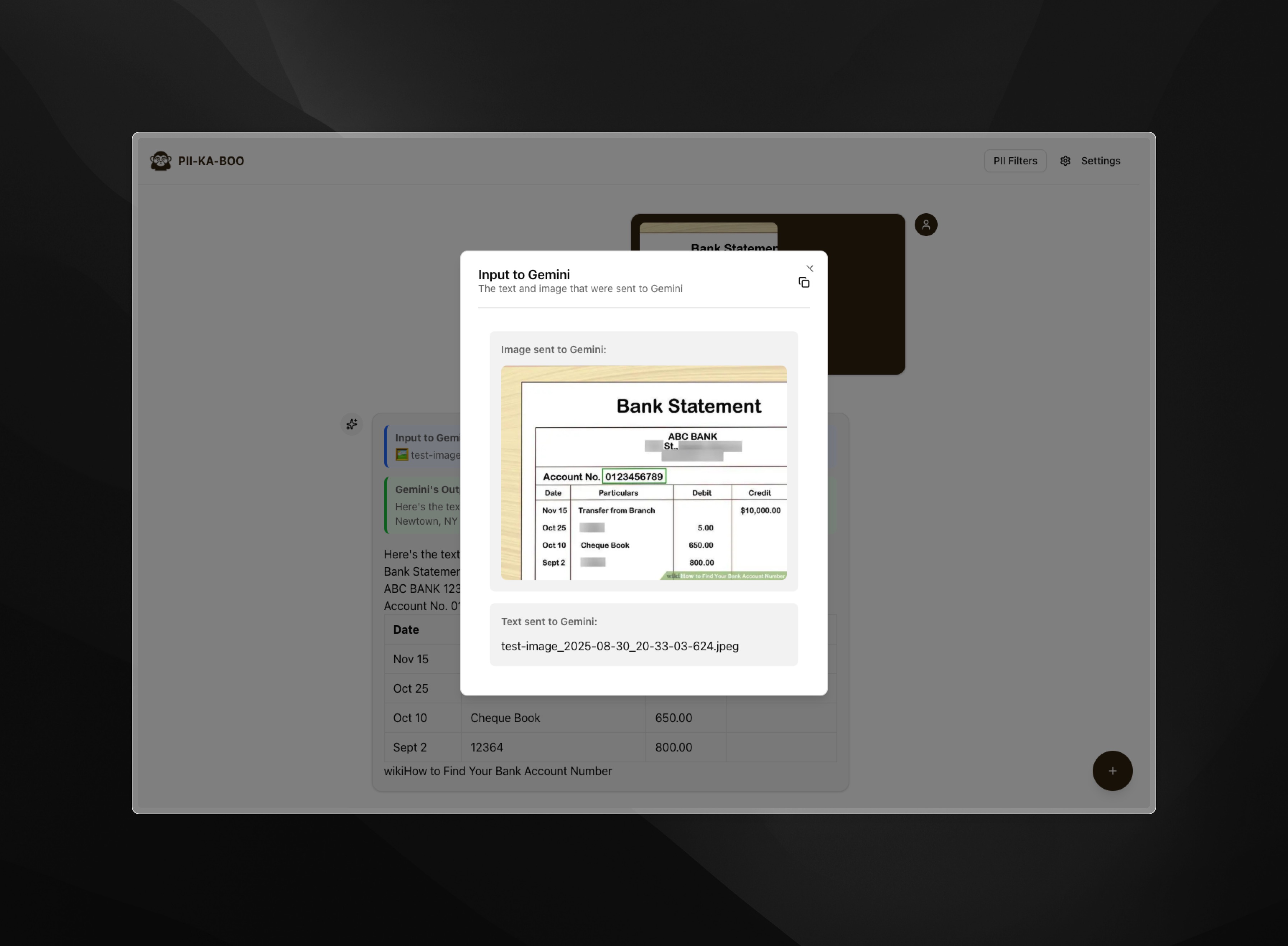
With the rise of AI assistants and cloud-based LLMs, people are increasingly sharing sensitive information online without realizing the risks. We wanted to build something that gives users peace of mind: a powerful on-device privacy scrubber that protects text, images, and even audio before it ever leaves their device. The idea was to empower individuals to benefit from AI while staying in control of their personal data.
What it does
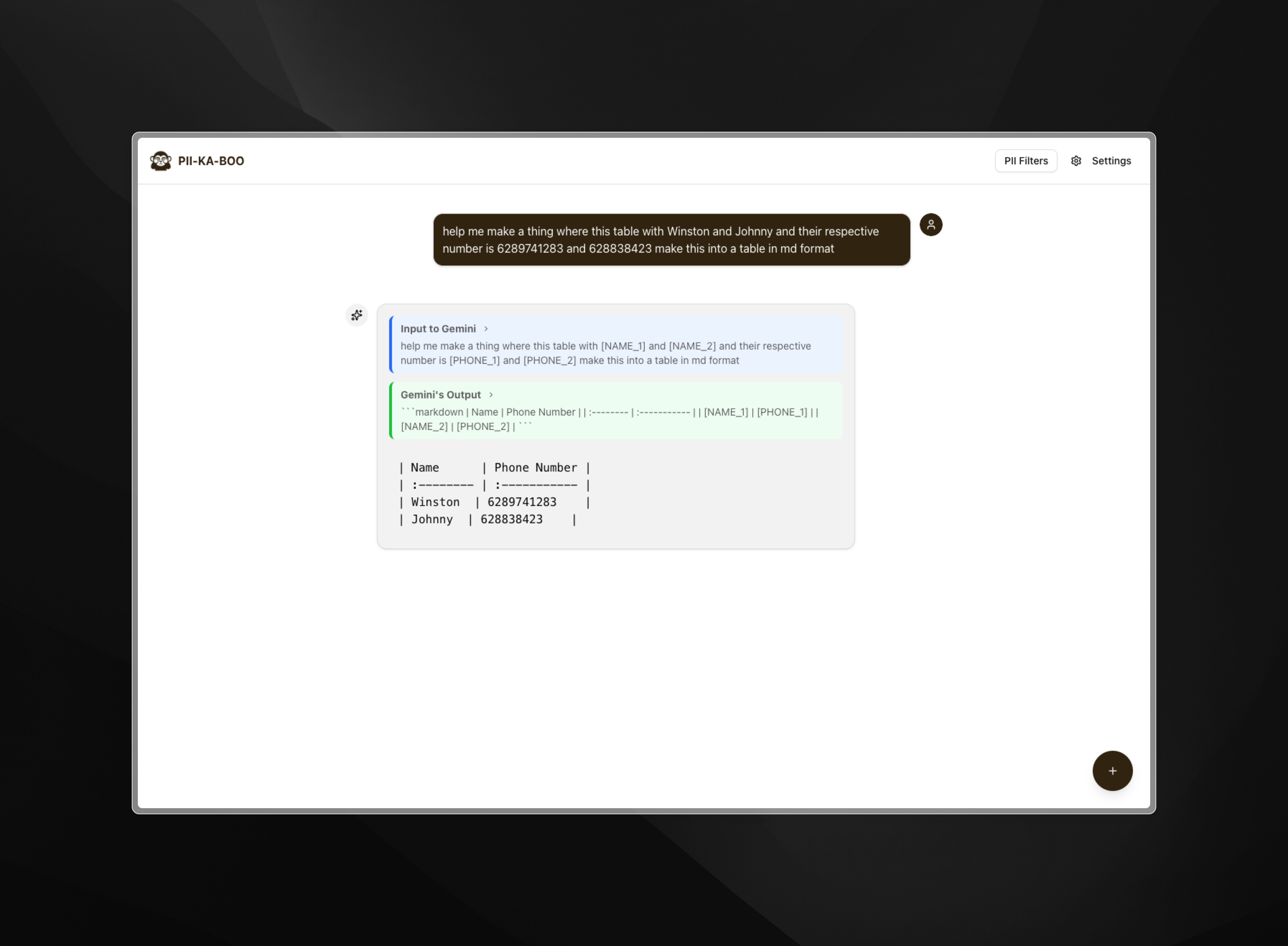
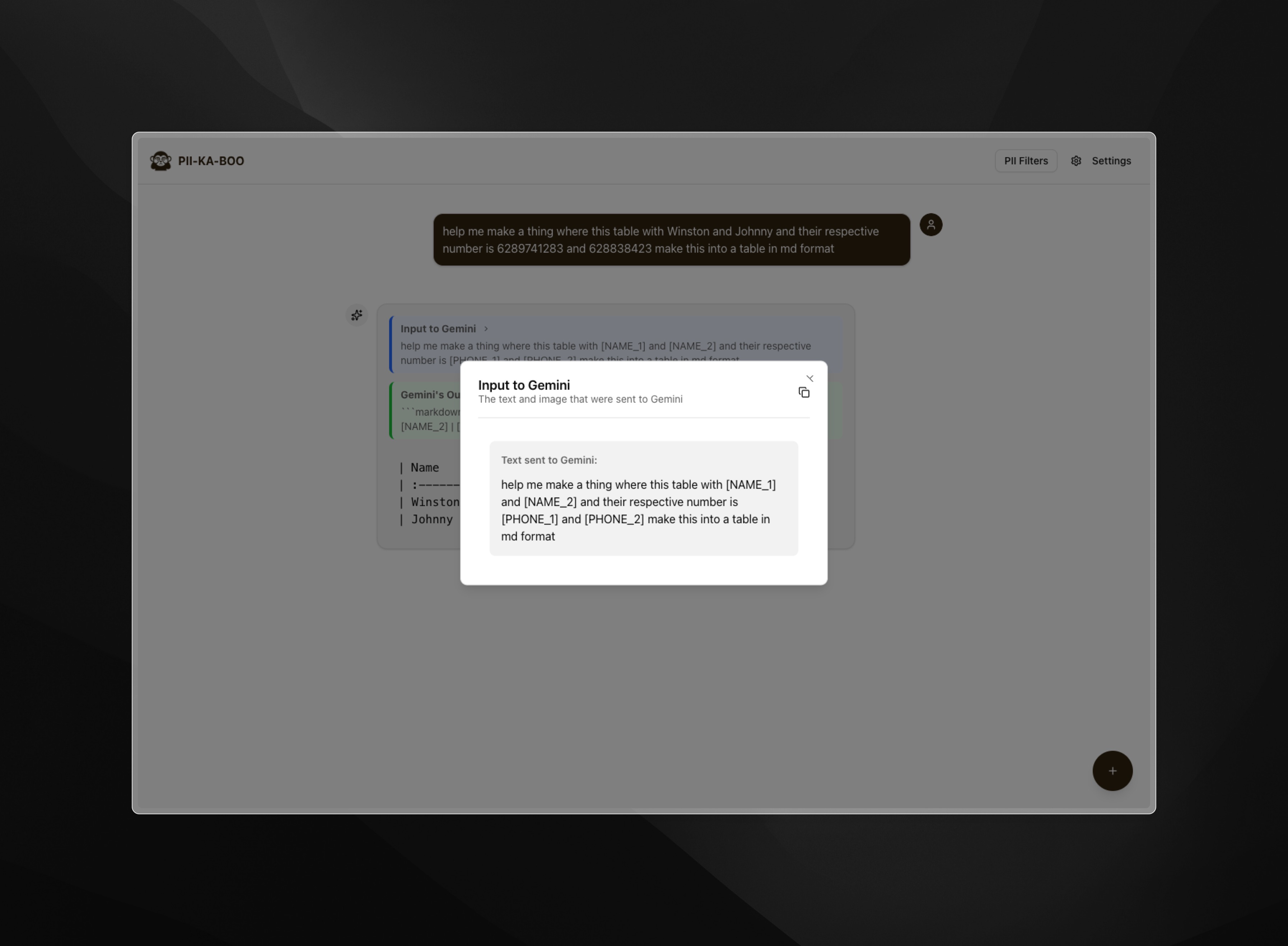
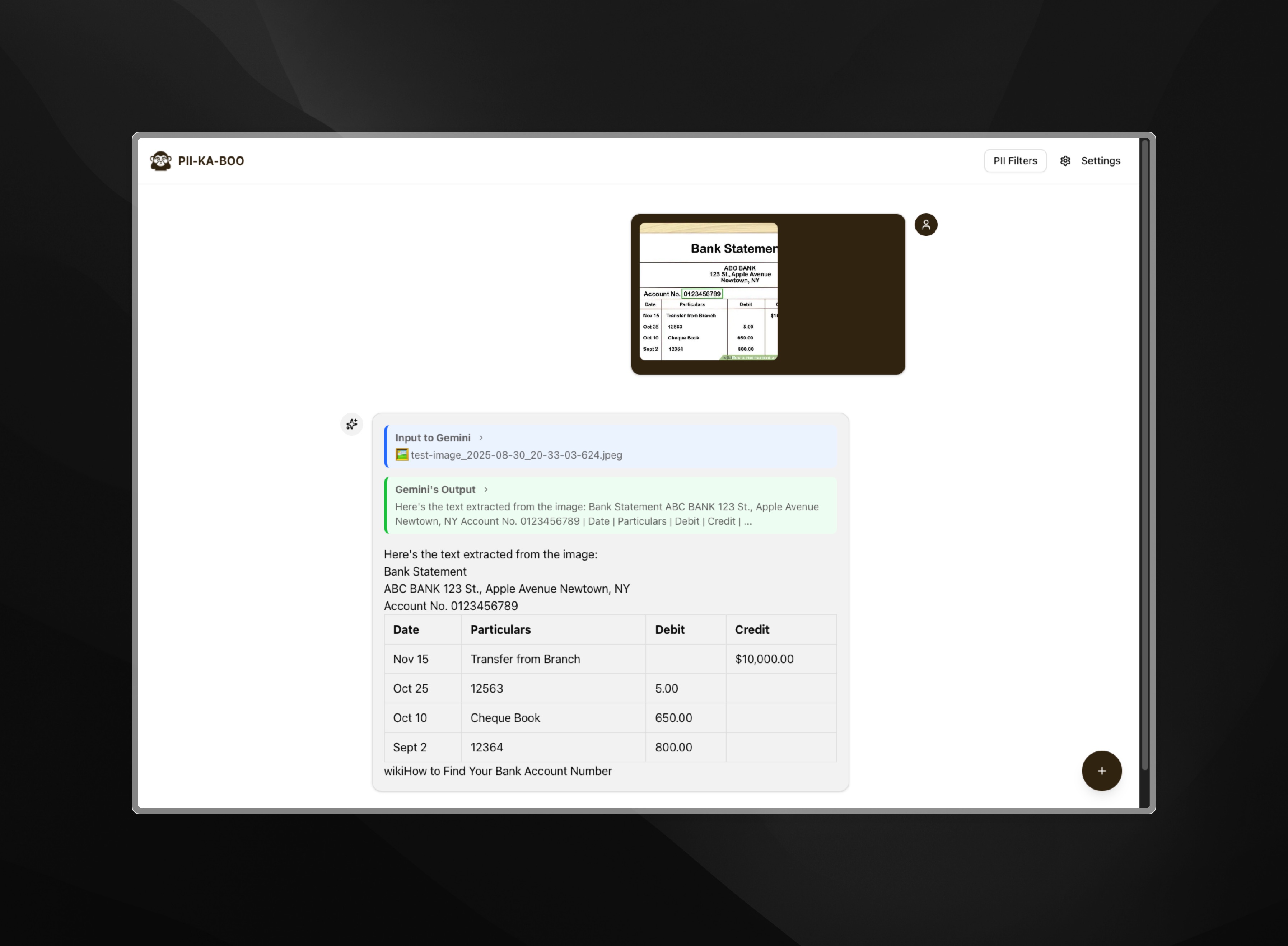
PII-KA-BOO automatically detects and removes Personally Identifiable Information (PII) from text, images, and audio. Users can apply flexible, category-based filters (names, emails, phone numbers, addresses, URLs, etc.) to decide exactly what to redact. After scrubbing, the sanitized content can safely be sent to cloud AI services, while the original remains protected on-device. Response from the cloud AI services will be displayed with the original content.
Key features:
- text PII redaction
- Image anonymization (e.g., blurring faces, license plates, or text)
- Audio scrubbing to remove spoken names and other PII
- Category-based filters for full user control
- Context-preserving placeholders for seamless AI processing
How we built it
We built the mobile app using the Lynx framework for the mobile layout as well as a web app using Next. For text redaction, we designed a multi-stage PII processing pipeline:
- Detect PII using regex and lightweight ML models like Distilbert, it will choose which one to use depending on the use case
- Replace with structured placeholders (
[NAME_1],[EMAIL_2], etc.) - Send sanitized content to Gemini AI
- Restore context by mapping placeholders back to original values (locally)
Image and audio scrubbing use on-device ML models for face/voice detection to ensure consistency across modalities.
Challenges we ran into
- Designing a system that works completely offline without sending raw PII to servers.
- Balancing accuracy vs. over-redaction (e.g., distinguishing “May” the name from “May” the month).
- Integrating multiple data types (text, image, audio) into a single, seamless pipeline.
Accomplishments that we're proud of
- Built a cross-platform mobile and web app that actually works in real time on-device.
- Extended beyond text to image and audio redaction, making it more comprehensive than existing tools.
- Created a category-based filter system, giving users full transparency and control over their data.
- Successfully integrated with Gemini AI while ensuring no raw PII ever leaves the device.
What we learned
- Privacy-first design requires rethinking data flow, you can’t just “add security later.”
- Users want granularity and transparency in privacy tools, not a one-size-fits-all approach.
- Running ML models on-device is challenging but crucial for trust.
- UX matters: even the strongest privacy tool fails if users find it confusing or intrusive.
What's next for PII-KA-BOO
- Expand supported PII types (government IDs, handwritten text).
- Improve audio redaction with speaker diarization for multi-speaker and multi-lanugage conversations support.
- Open-source the PII detection engine so developers can integrate it into their own apps.
- Build integrations with popular platforms (WhatsApp, Slack, Gmail, etc.) for seamless privacy scrubbing everywhere.
- Long-term: turn PII-KA-BOO into a privacy OS layer, sitting between user input and cloud services.
Built With
- distilbert
- genai
- huggingface
- lynx
- natural-language-processing
- next
- opencv
- python
- transfomers
- typescript


Log in or sign up for Devpost to join the conversation.