-
-
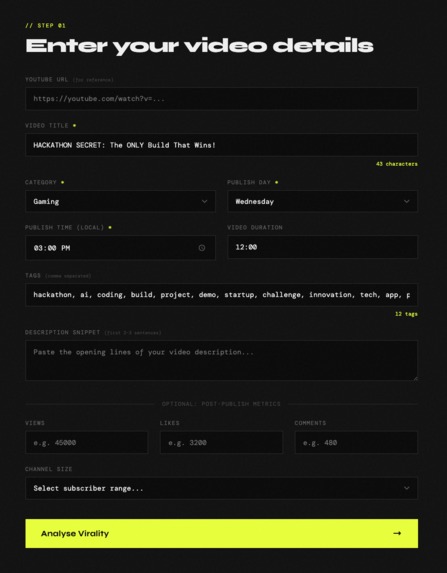
Input
-
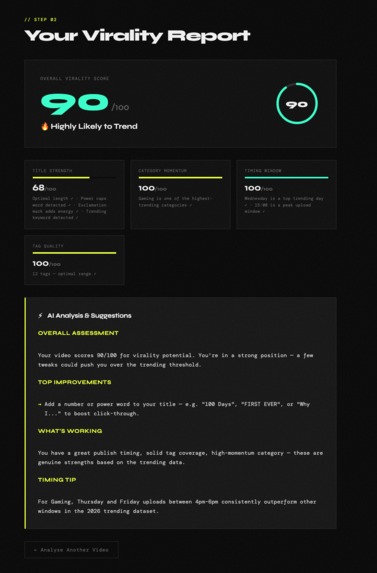
Viral
-
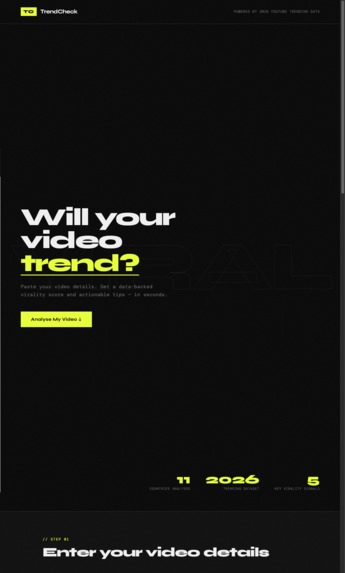
Title
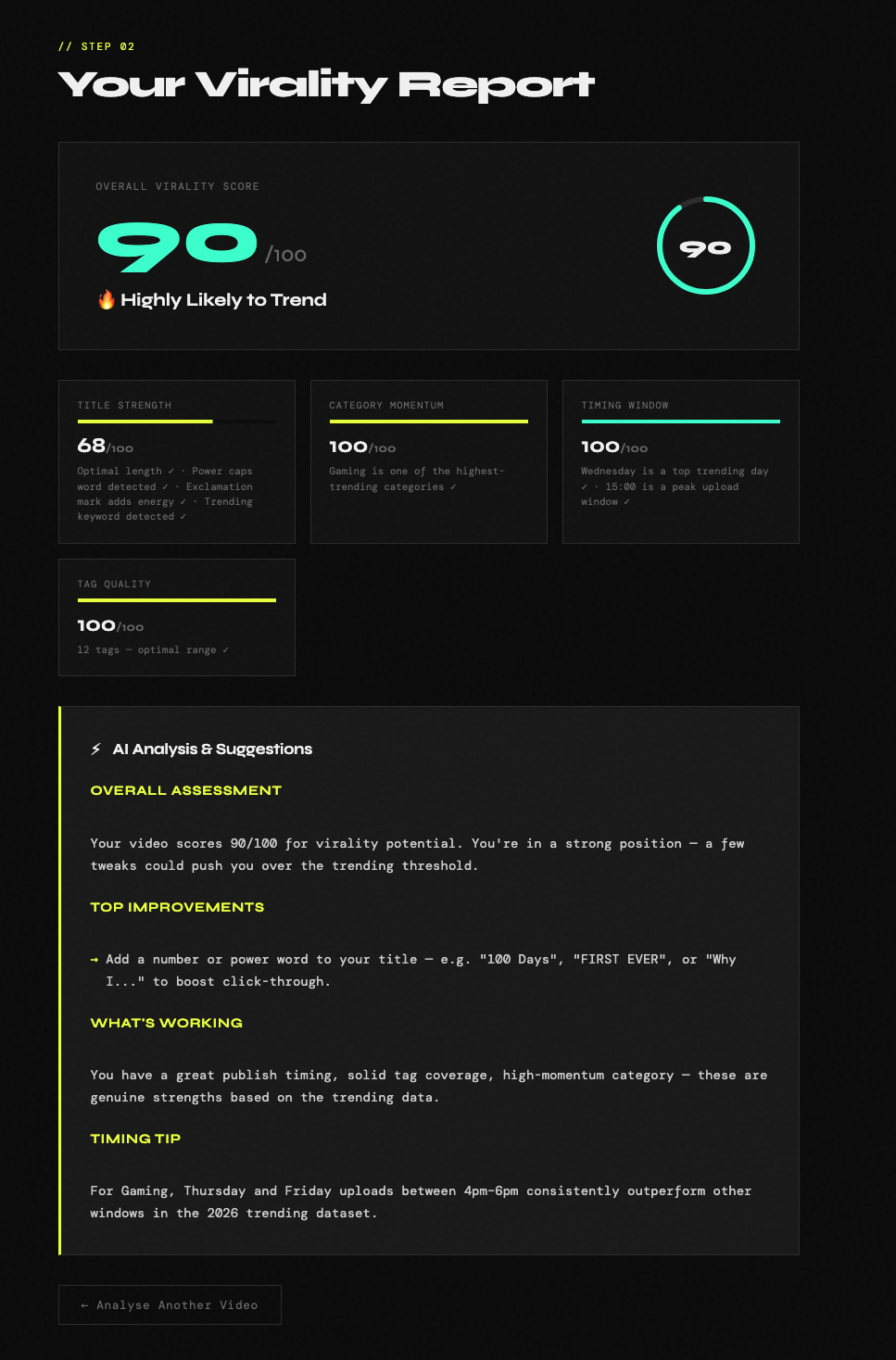
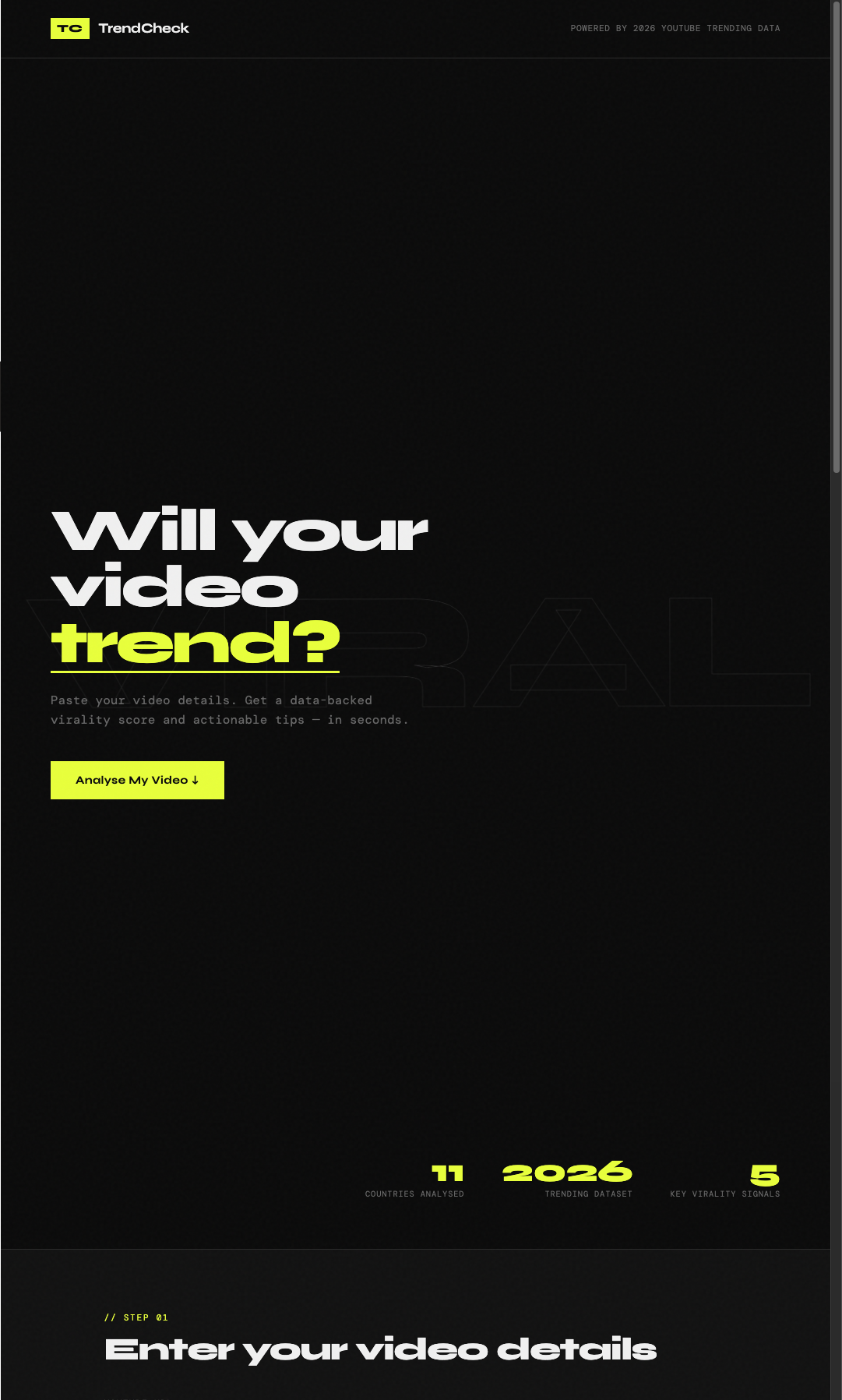
We built TrendCheck because creators currently upload with almost no real pre-publish feedback. A creator can spend hours planning, filming, editing, and packaging a video, then still have no clear way to judge whether the title, timing, category, or tags are actually strong before pressing publish. Most advice online is vague, such as “post consistently” or “engage your audience,” but not specific enough to help someone make a better publishing decision.
Our goal was to build something more useful: a tool that gives creators a data-backed virality score before upload, not after the video underperforms.
What we built
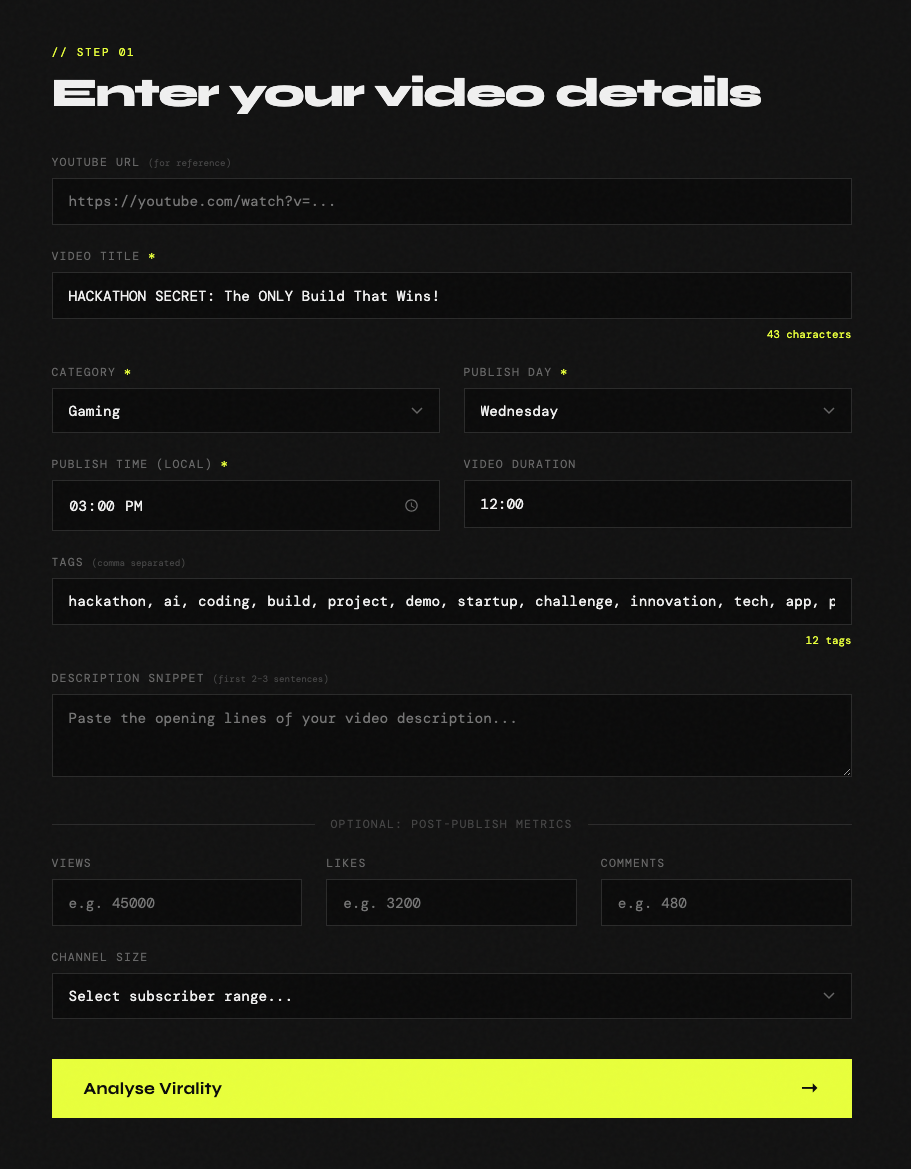
TrendCheck is a web app that lets a user enter key video details such as the title, category, publish day, publish time, and tags, then returns a virality score out of 100 along with AI-generated suggestions. The idea is to turn raw trend data into something simple, actionable, and easy to use.
The app scores videos using five signals:
- Title Strength
- Category Momentum
- Timing Window
- Tag Quality
- Engagement Profile (optional)
We designed the interface to feel fast and clear. The user enters the video details, clicks analyse, then sees an animated score, verdict, sub-scores, and suggestions on how to improve the video setup.
How we built it
We built TrendCheck using HTML, CSS, and JavaScript with no heavy dependencies. The scoring engine is rule-based and uses insights derived from a 2026 YouTube trending dataset containing 178,399 video snapshots across 11 countries.
From that dataset, we turned the analysis into usable scoring signals. For example:
- Wednesday performed best as a publish day
- 15:00 local time was the strongest upload window
- Gaming was the strongest trending category
- CAPS words in titles showed a positive signal
- Brackets in titles were associated with worse performance
- The strongest tag range was around 10 to 18 tags
We also integrated Gemini AI suggestions so that users do not just get a number, but also get practical recommendations. If the AI call fails or no API key is provided, the app can still fall back to rule-based suggestions, which made the prototype more reliable.
What we learned
One of the biggest things we learned was how to turn raw data into a product that feels useful to a normal user. It is one thing to find interesting patterns in a dataset, but it is much harder to convert those patterns into scoring logic that is simple, explainable, and still meaningful.
We also learned that some of the most valuable insights are not always obvious. For example, small title choices such as using brackets or not, or changing the publish time by a few hours, can have a noticeable effect on the score. That made us think more carefully about how creators make decisions and how data can support those choices.
Challenges
The biggest challenge was balancing accuracy, simplicity, and explainability. We did not want to create a black-box number that users could not understand. We wanted each part of the score to connect back to a clear signal and a real insight from the data.
Another challenge was building a hackathon version that still felt polished. We had to keep the scope realistic, so in this version we used manual input rather than full YouTube API integration. We also had to make sure the app still worked even if the AI layer was unavailable, which is why the fallback logic was important.
What’s next
This hackathon version proves the core idea. The next step is to connect the app to the YouTube API so users can paste a video URL and auto-fill metadata instantly. After that, we want to add trend velocity tracking, publish-time optimisation, A/B title testing, and a creator dashboard.
Overall, TrendCheck is about helping creators make smarter publishing decisions using real trend data, before every upload.
Built With
- css
- custom-rule-based-scoring-logic
- gemini-api
- github
- html
- javascript
