-
-
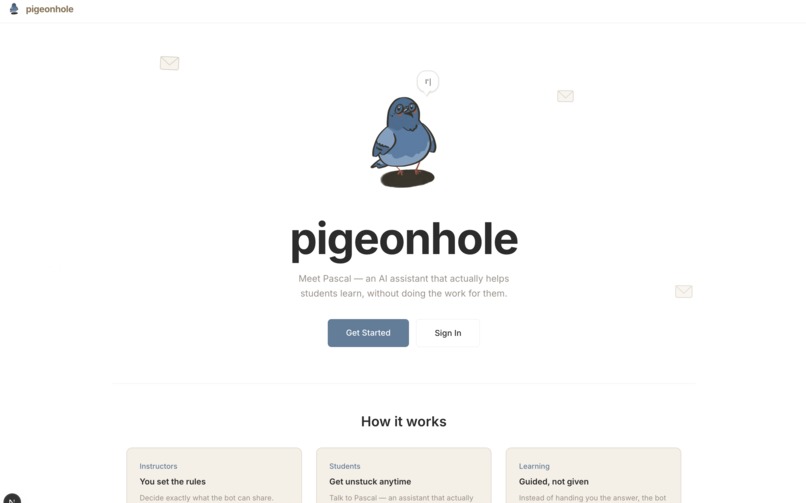
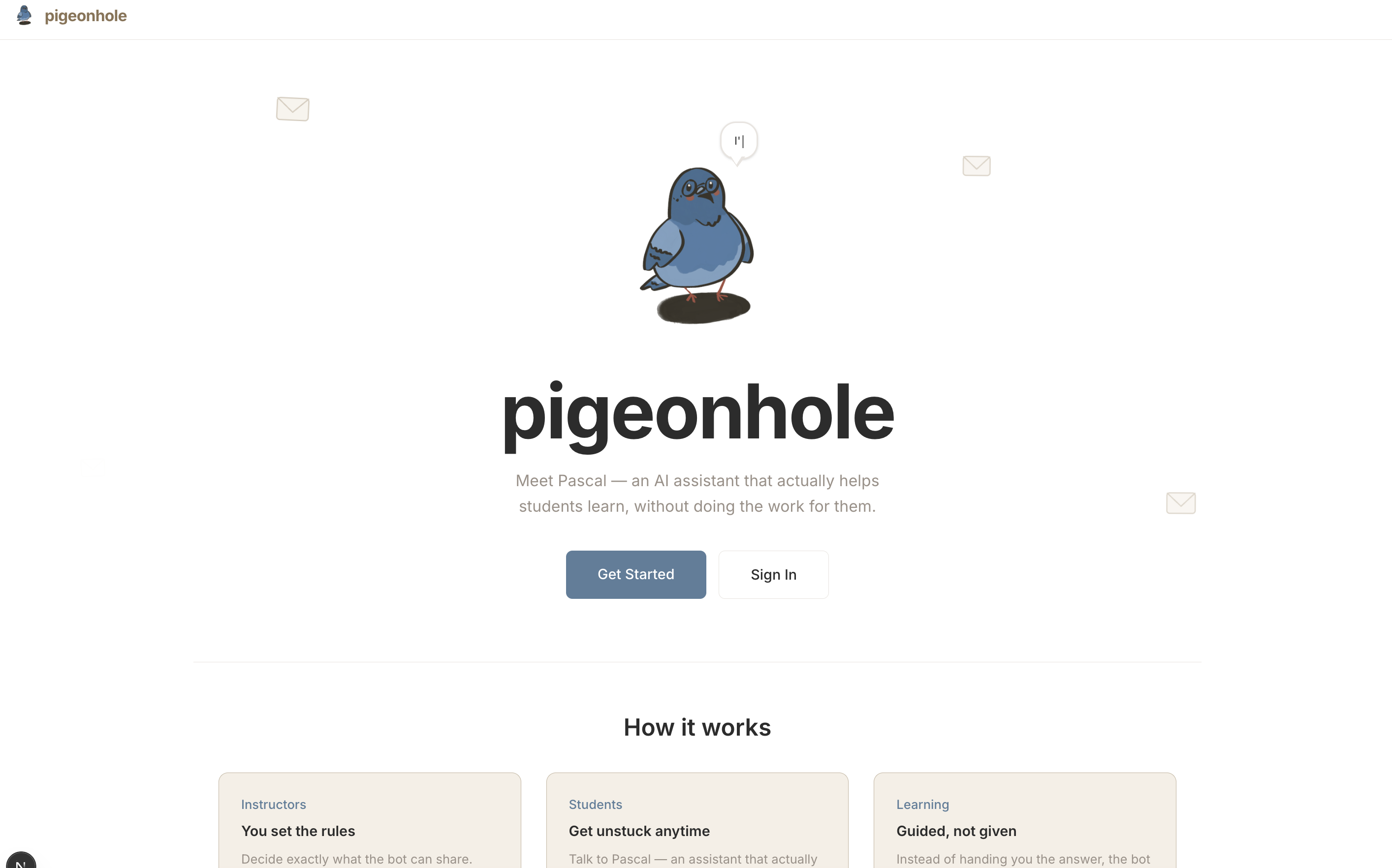
Home page
-
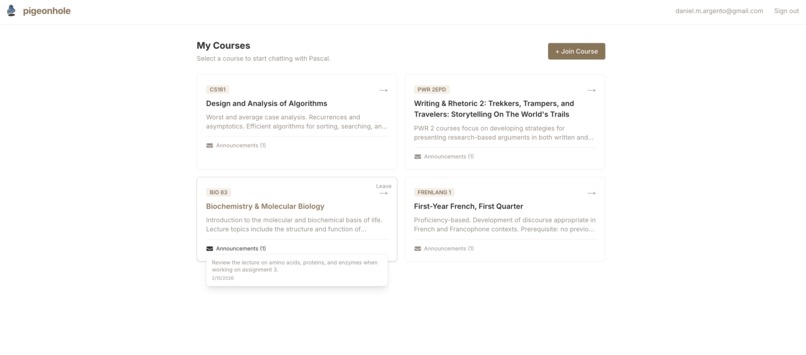
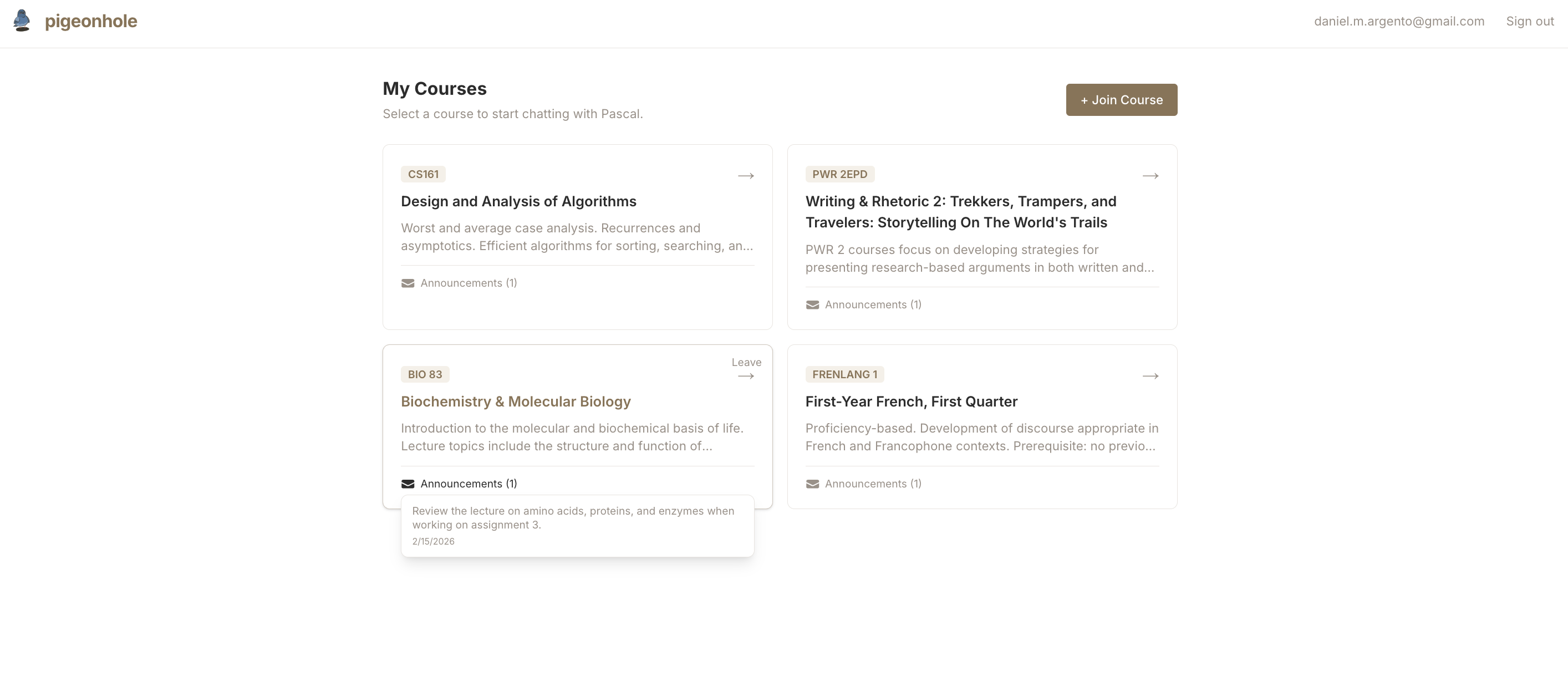
Student dashboard
-
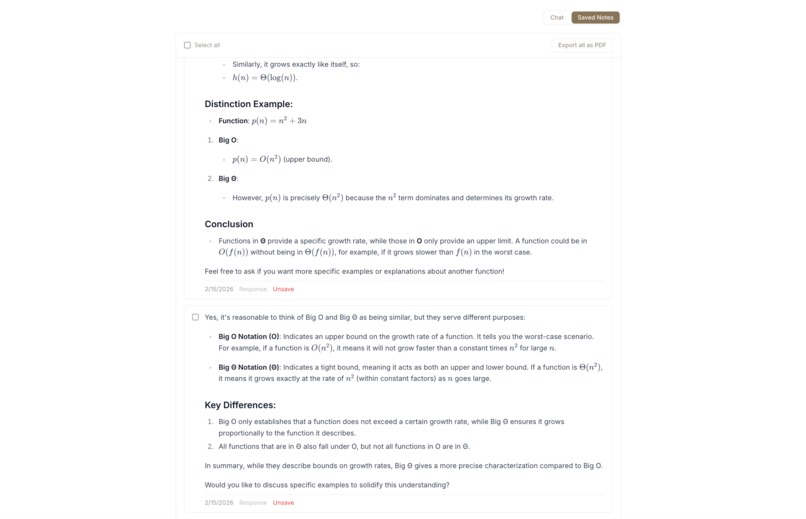
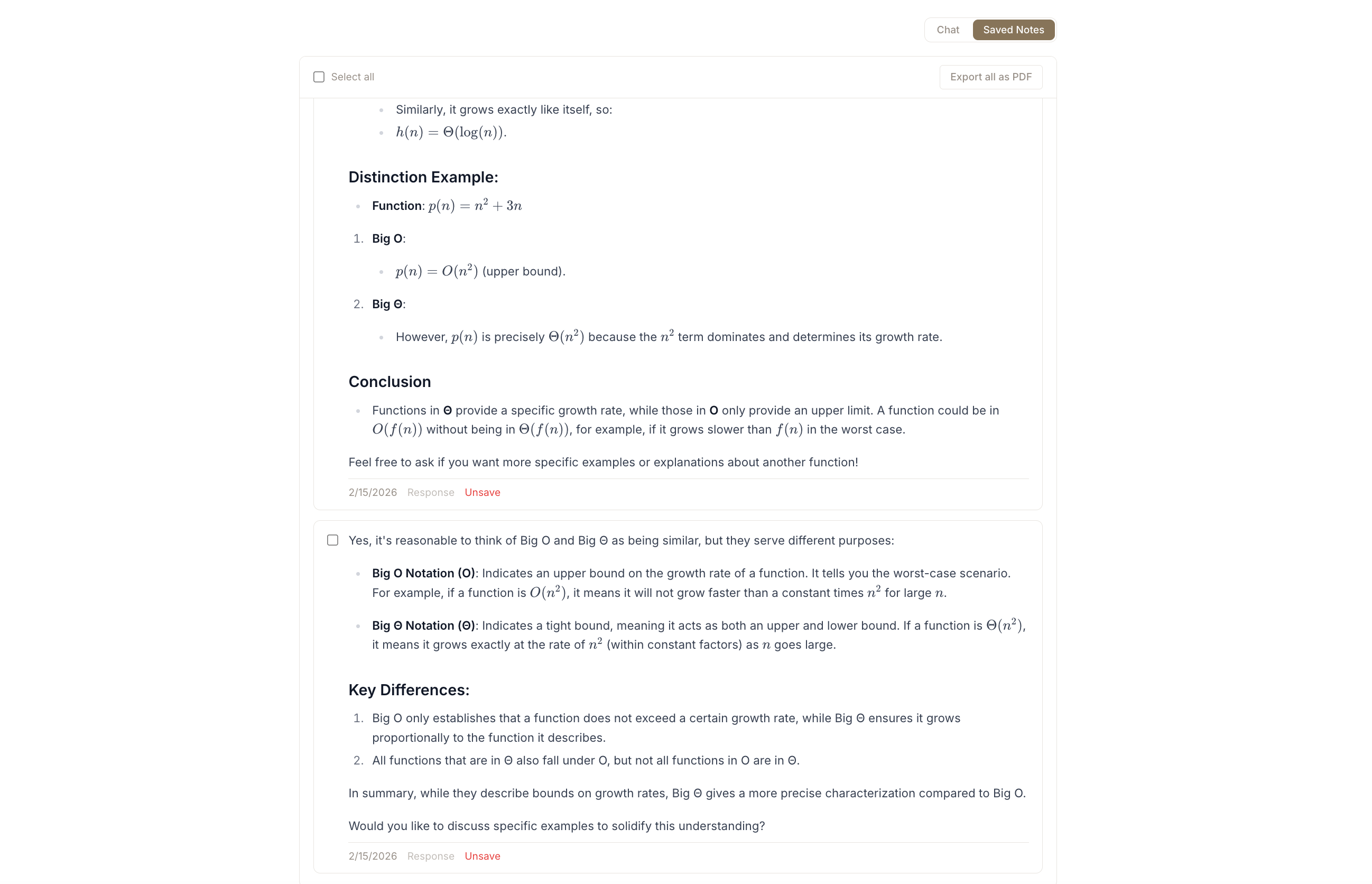
Saved notes page
-
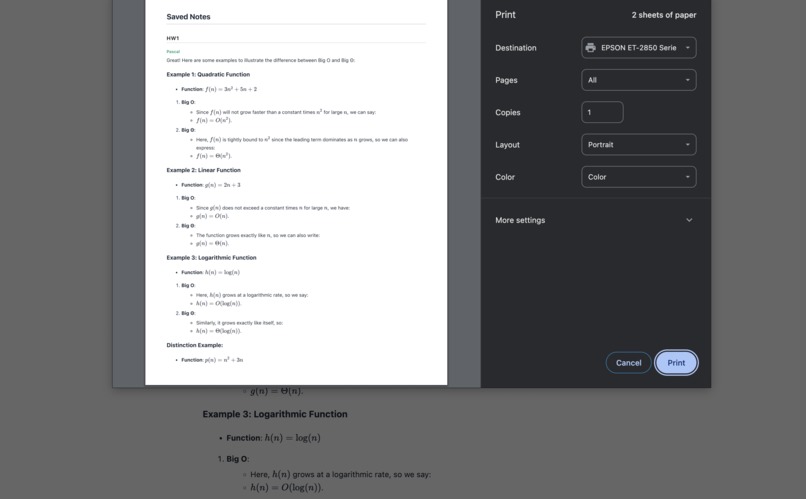
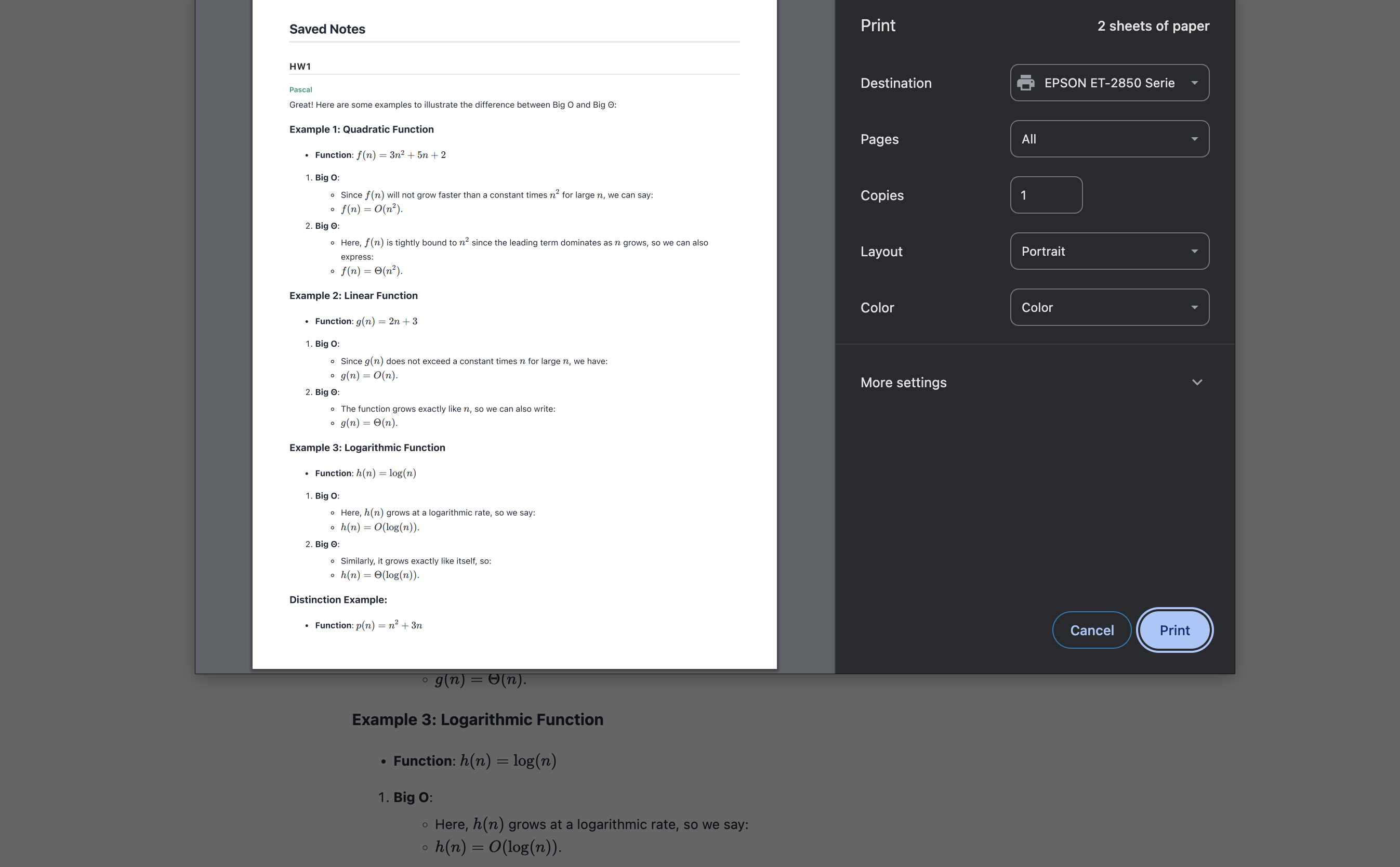
Upload saved notes to pdf
-
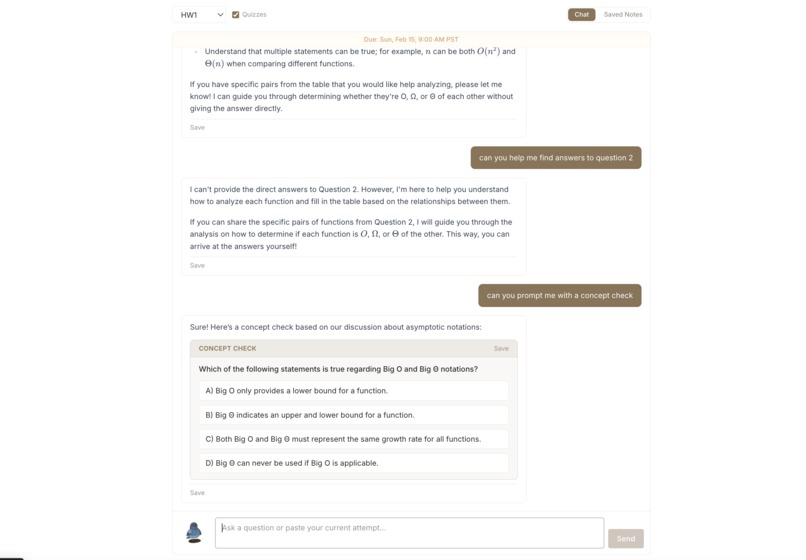
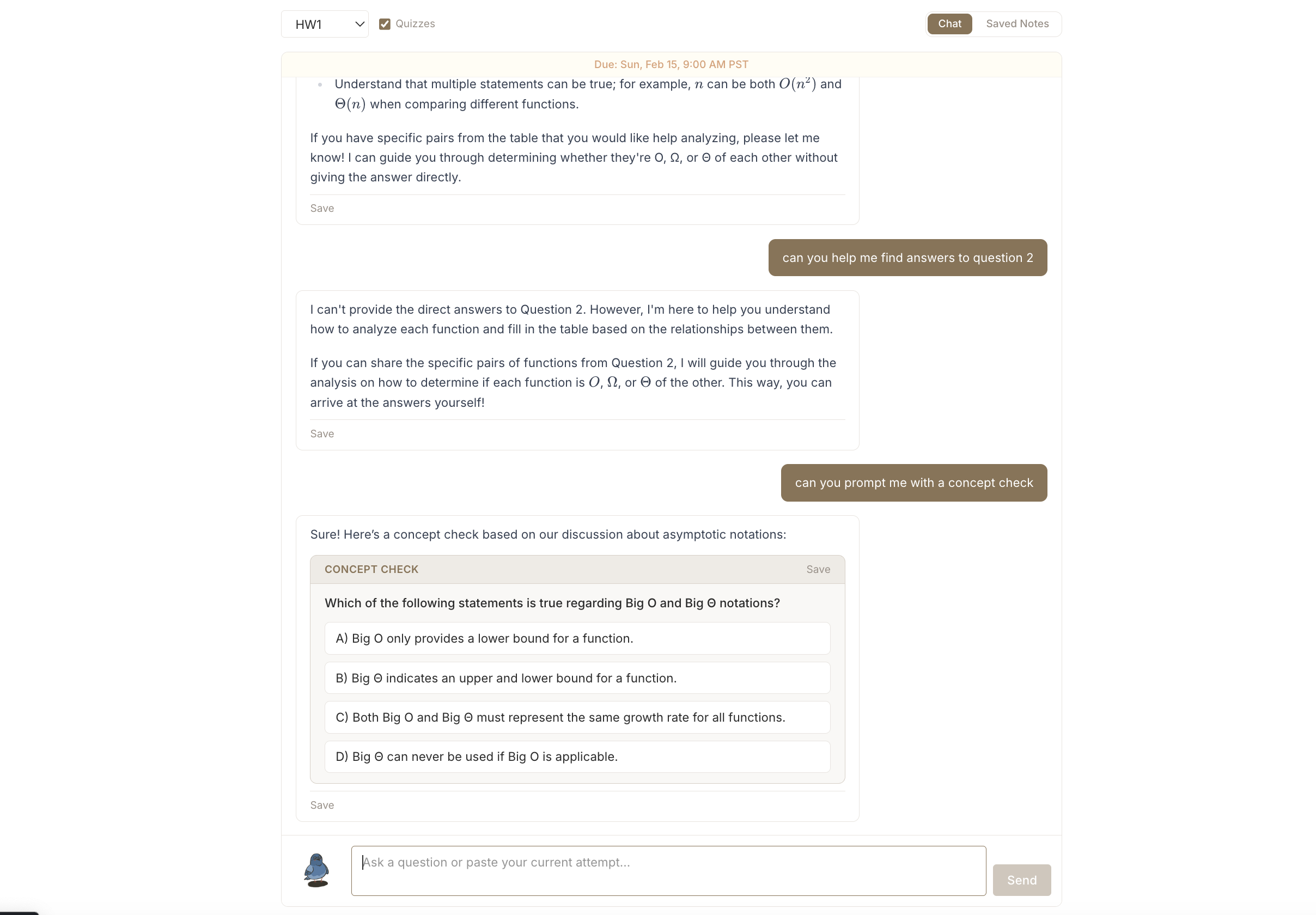
Concept check
-
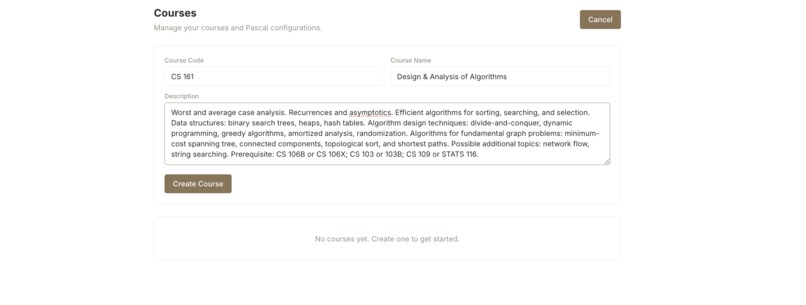
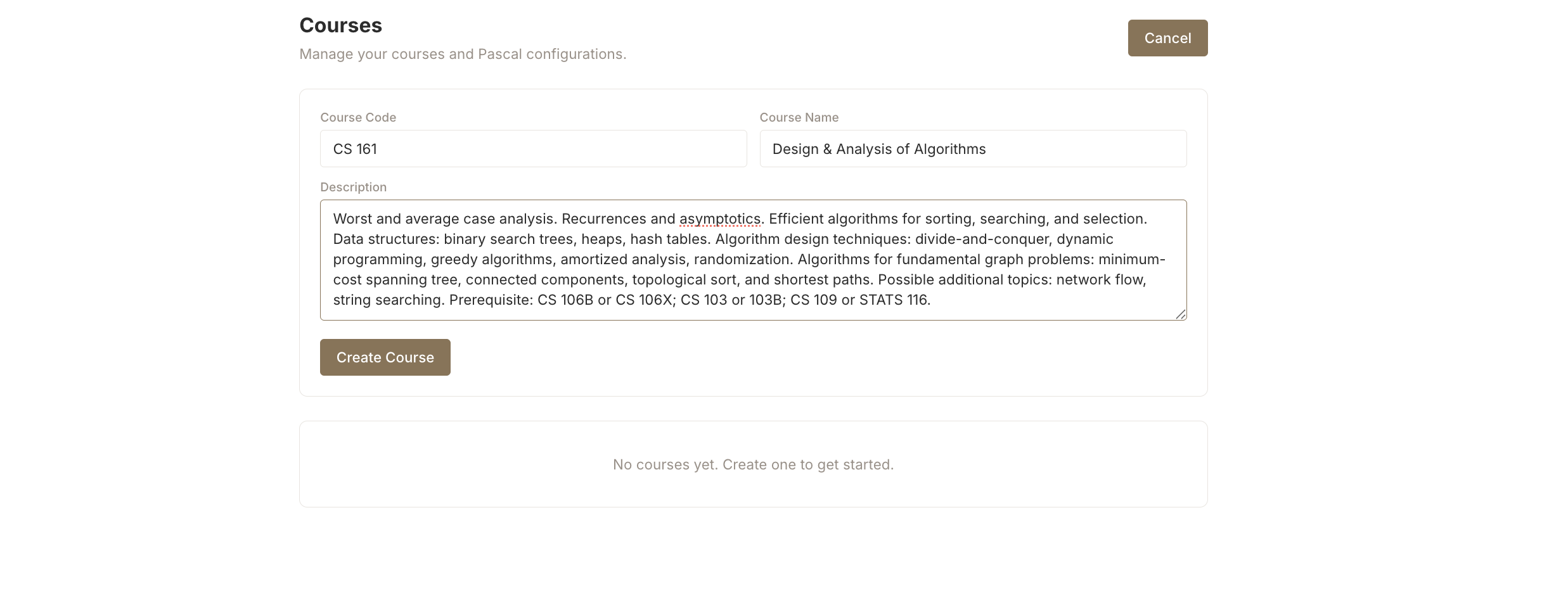
Course creation page
-
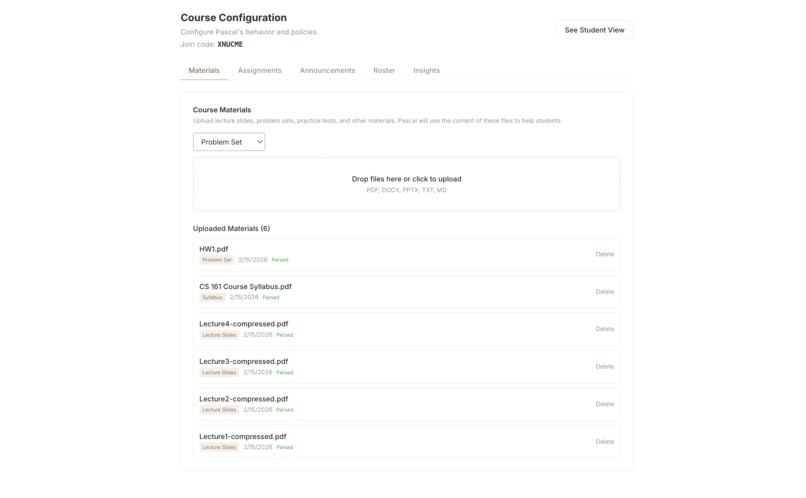
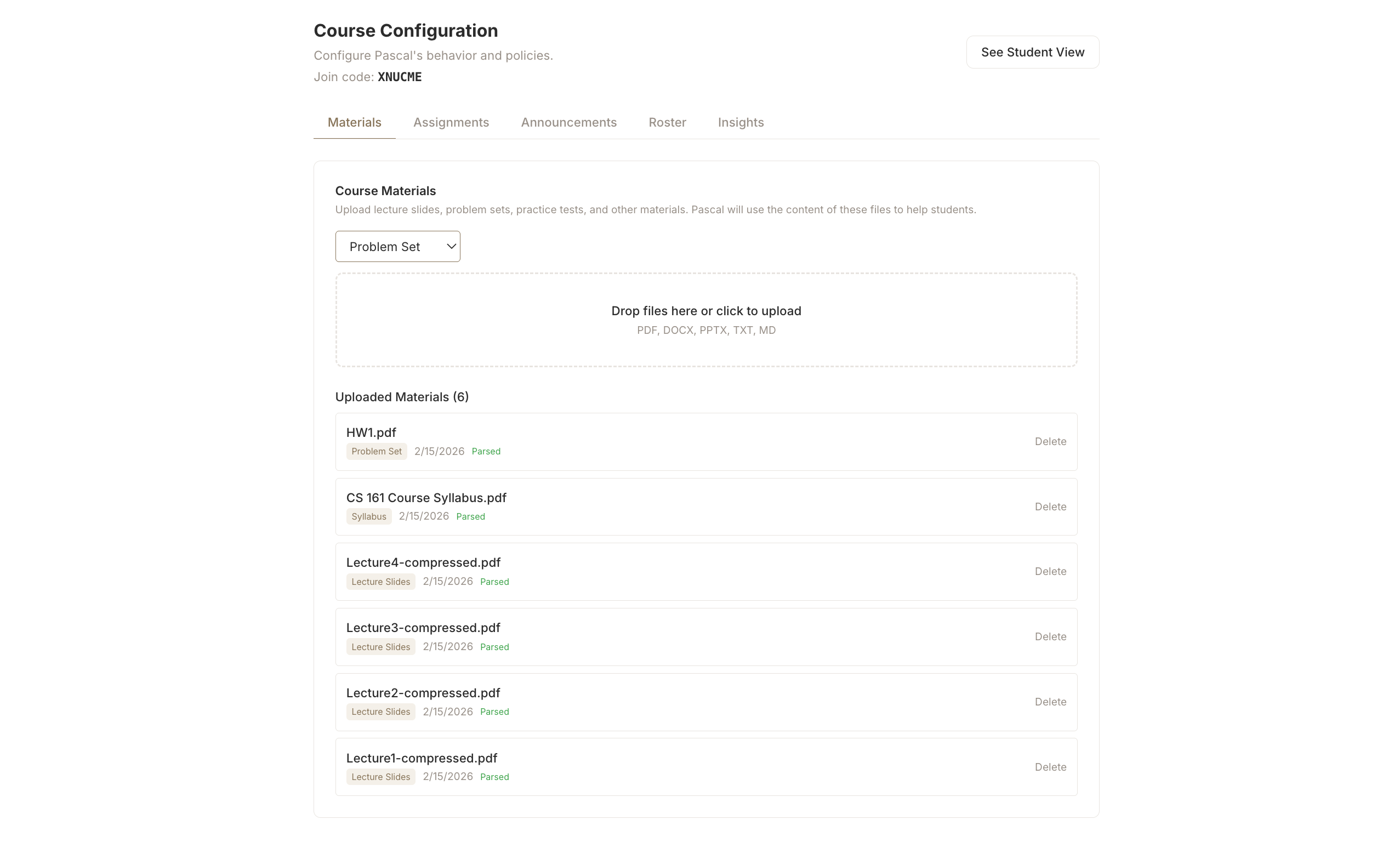
Course materials
-
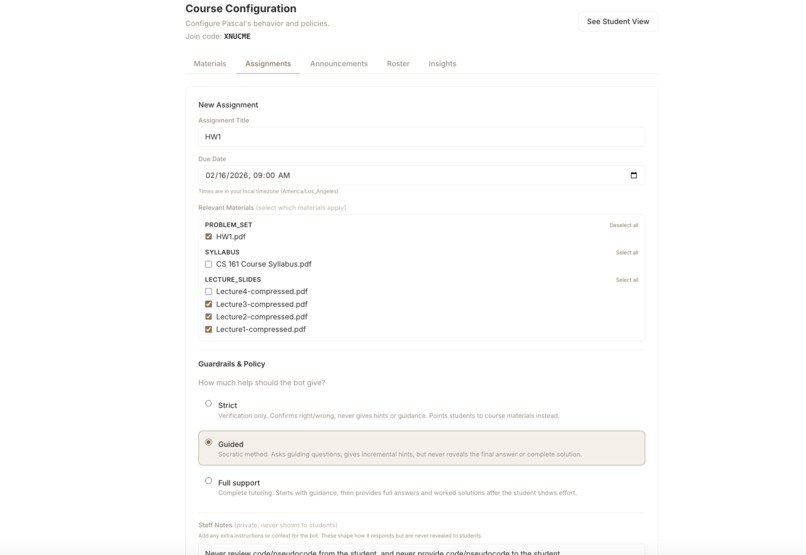
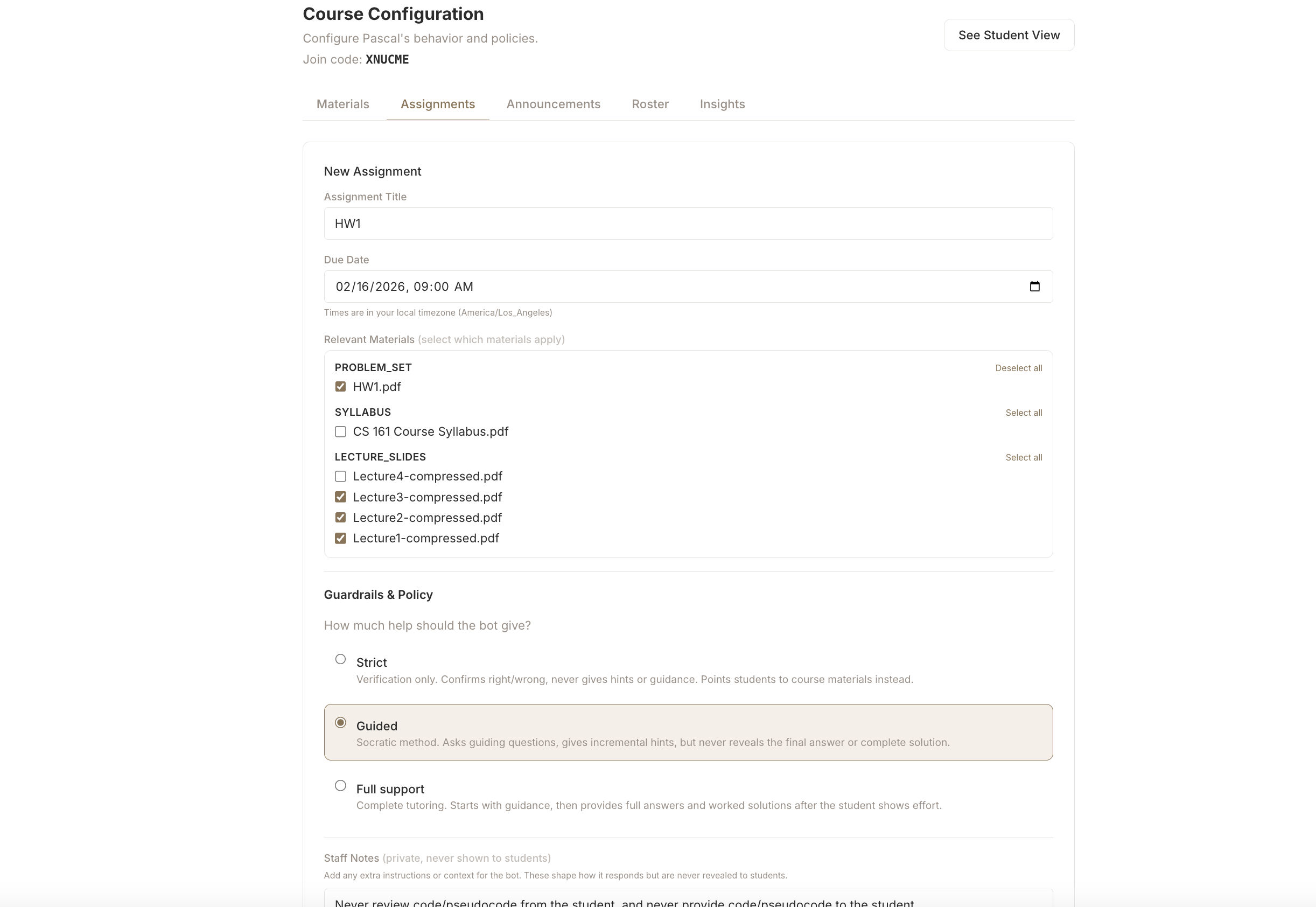
Assignment creation page
-
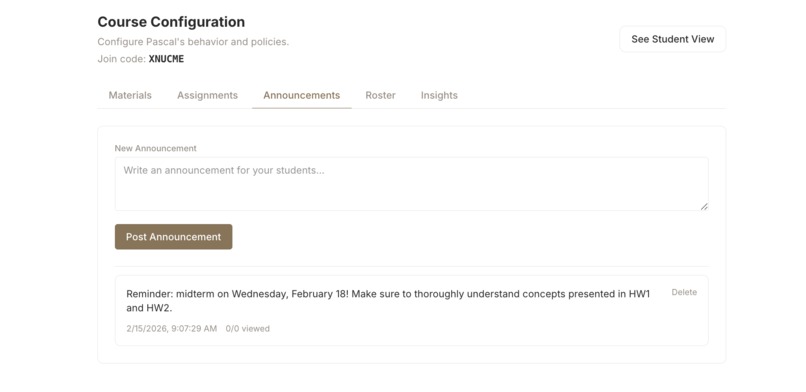
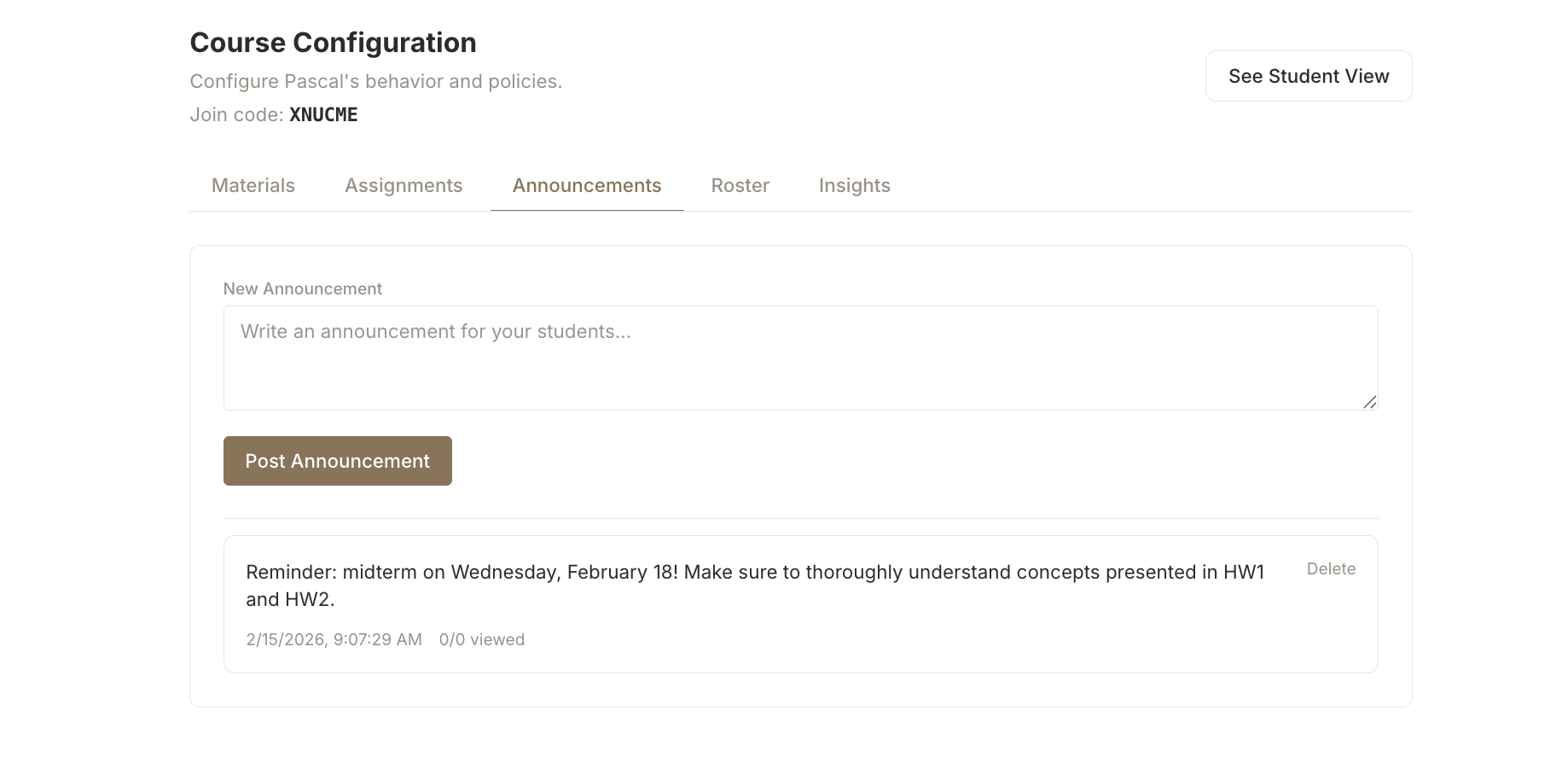
Class announcements
-
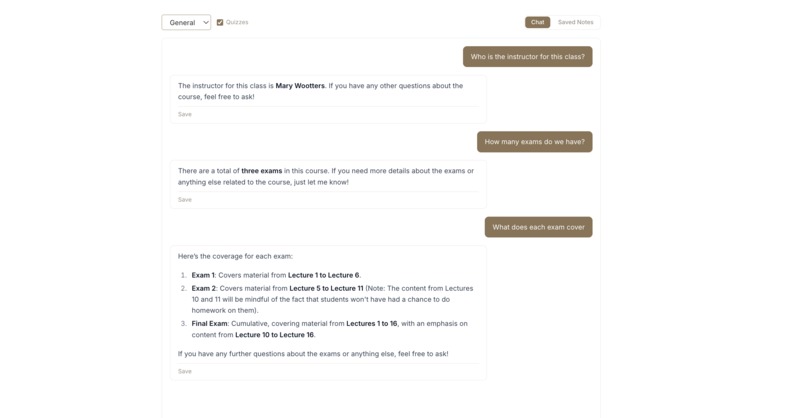
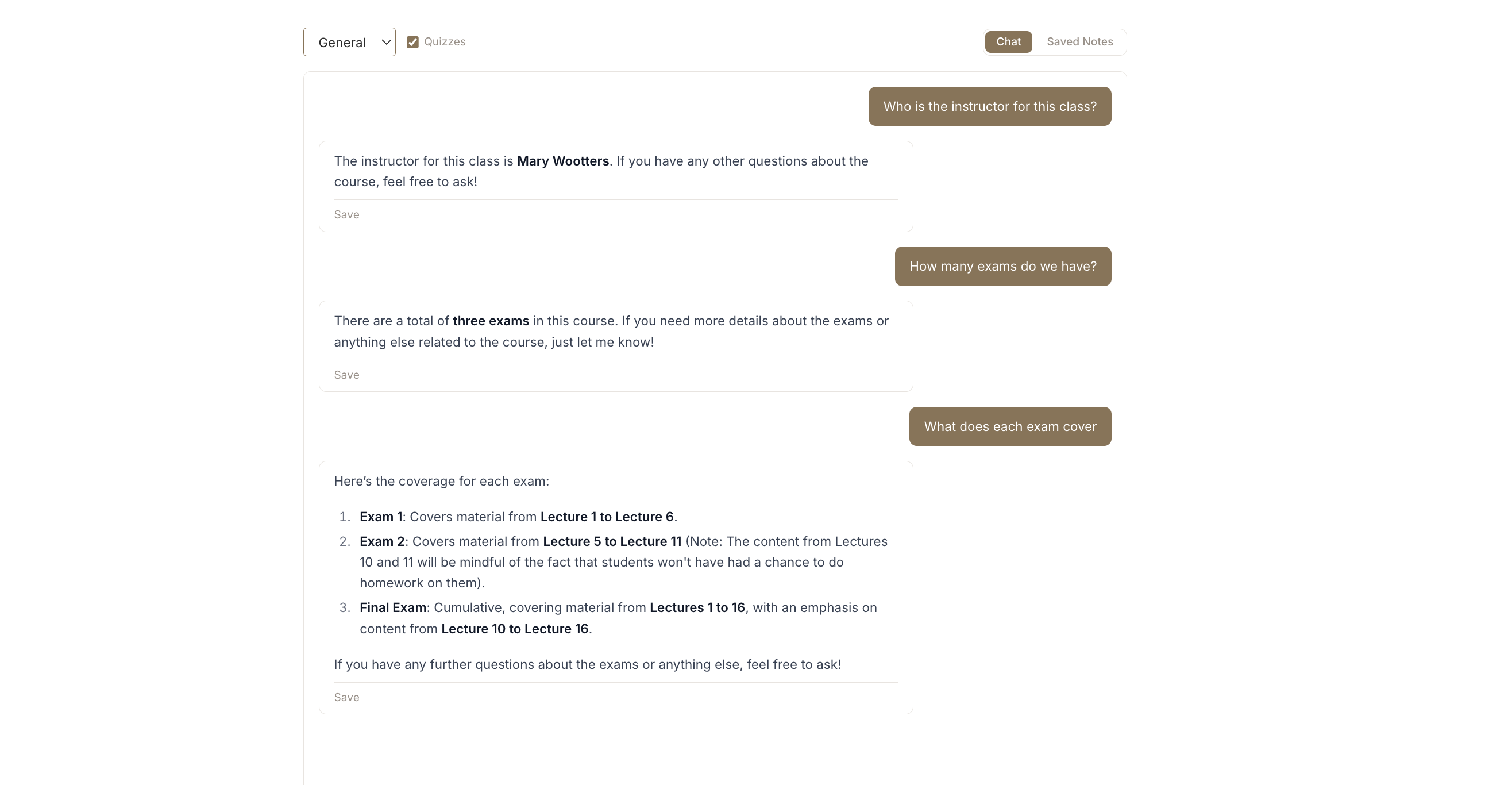
General course inquiries
-
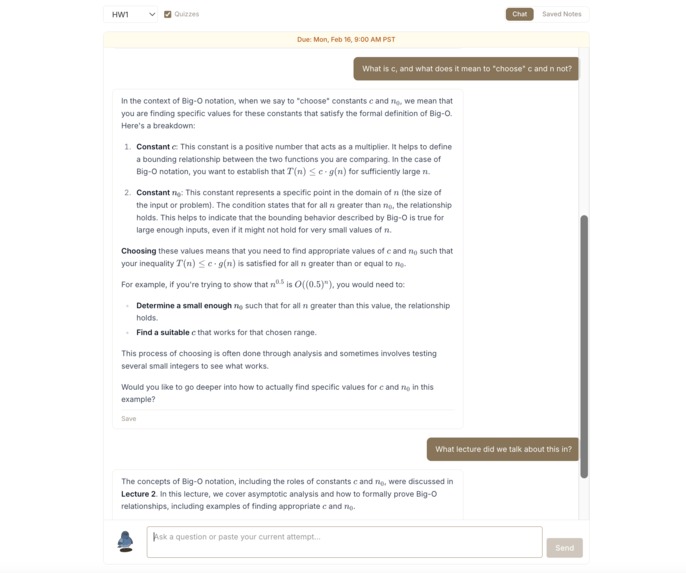
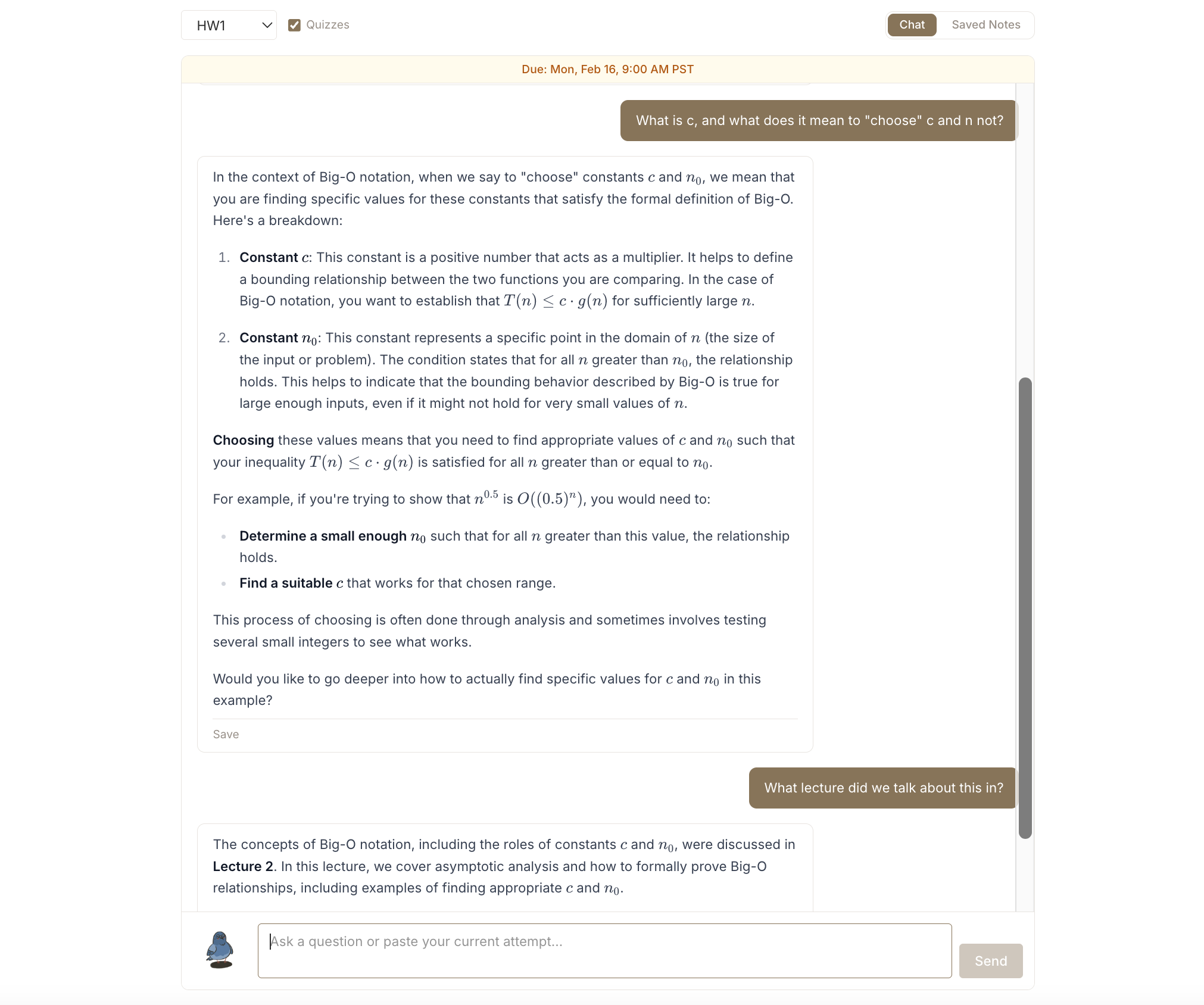
Chat with Pascal, the AI TA
-
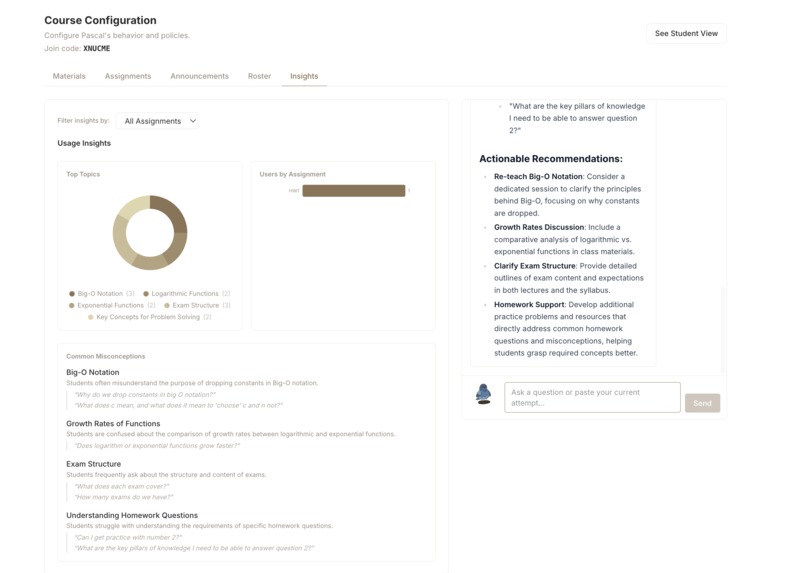
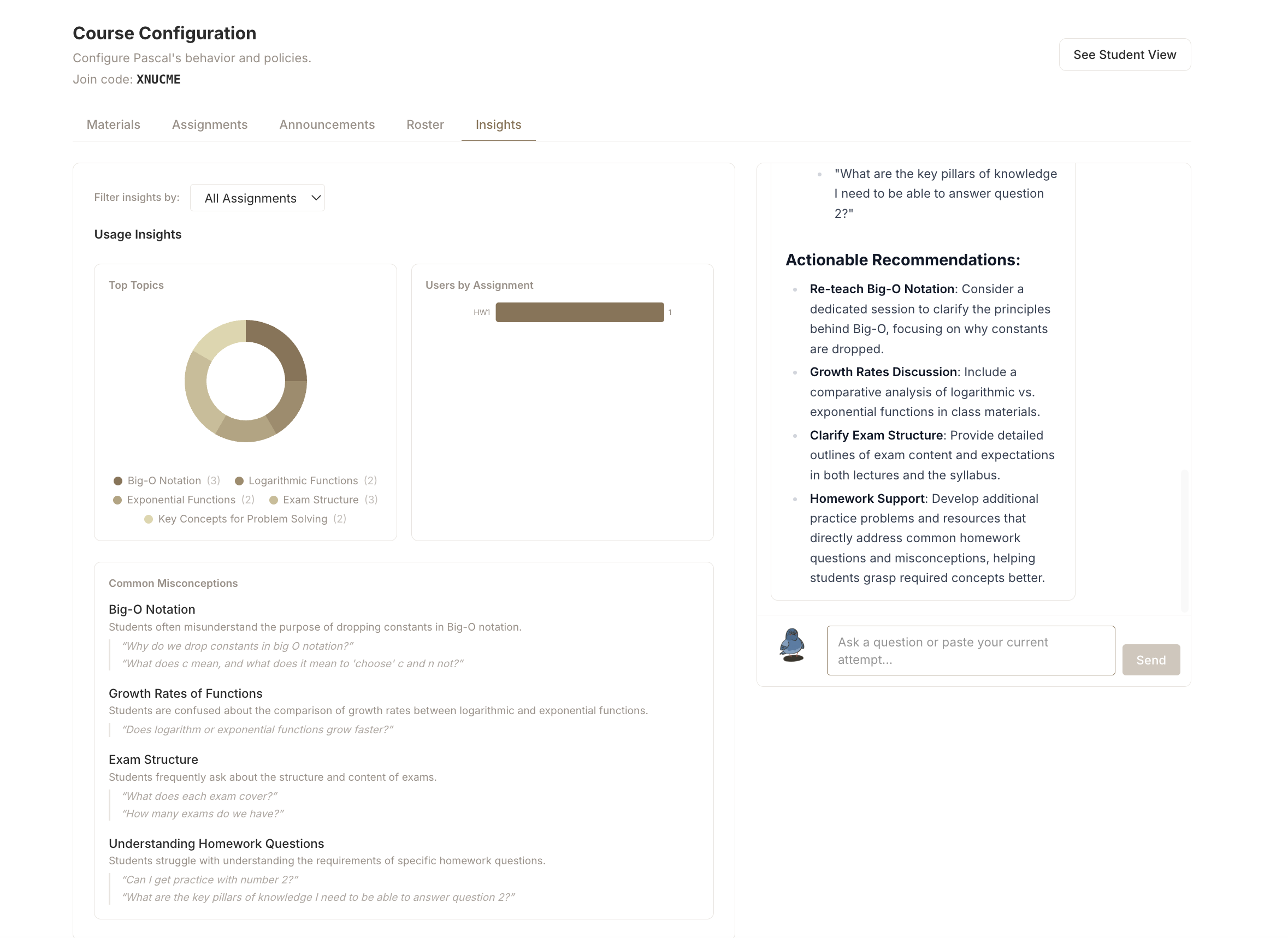
Teacher insights
Inspiration
Generative AI is now a default study tool. The issue is not use vs. no use, but alignment: general-purpose chatbots do not know a course’s syllabus, policies, or pedagogical intent, and they often optimize for answer completion rather than conceptual understanding. We built pigeonhole to make AI support instruction by design, with instructor control and learning-first interaction.
What it does
pigeonhole is a course-aligned AI TA that provides scaffolded help rather than direct solutions. For students, it guides problem solving through questions, hints, and stepwise decomposition. After a session, it produces a structured recap (what was confusing, how understanding changed, what to review) and enables quick review through a lightweight quiz. For instructors, it offers configurable guardrails (what help is allowed, what topics are off-limits) and aggregated insight into common misconceptions and friction points.
How we built it
We implemented a web app with distinct student and instructor workflows:
- Instructor configuration: course context, policy constraints, and approved hint scaffolds.
- Student chat: a guided dialogue loop that prioritizes questioning, partial hints, and checking student work before progressing.
- Learning artifacts: automatic session summaries and exportable PDFs for later study or forum posting.
- Analytics: aggregation of anonymized interaction signals to surface high-level confusion patterns.
Challenges we ran into
- Defining “helpful but not too helpful” in a way that is consistent across topics and student behaviors.
- Preventing accidental answer leakage while still allowing students to make progress under time pressure.
- Translating open-ended chat transcripts into concise, accurate recaps without introducing new errors.
- Designing instructor controls that are powerful but simple enough to set up quickly.
Accomplishments that we're proud of
- Built an end-to-end experience that serves both students and instructors, not just a chatbot.
- Implemented policy-aware scaffolding that reliably pushes for student work and reasoning before hints escalate.
- Produced reusable learning artifacts (recaps + PDF export) that turn chat into study material.
What we learned
- Guardrails are most effective when they are explicit, instructor-configurable, and enforced at the interaction level, not just as a disclaimer.
- Students respond well to structured guidance when it reduces cognitive load (first step, plan, checkpoints).
- Instructor trust depends on transparency, control, and clear evidence of learning alignment.
What's next for pigeonhole
- Richer instructor tooling: assignment-specific rubrics, granular hint templates, and per-topic constraints.
- Stronger analytics: confusion clustering by concept, time-to-first-progress, and pre/post understanding signals.
- Personalized study support: adaptive review plans before exams, spaced repetition prompts, and targeted practice sets.
- Multimodal outputs: short personalized explanation videos based on what a student struggled with.
- Deeper integration: LMS and course content connections to make setup and compliance seamless.
Built With
- github
- jszip
- mammoth
- next.js
- node.js
- openai-api-(gpt-4o-mini
- openai-node-sdk)
- pdf-parse
- sse
- supabase-(postgres/auth/storage)
- tailwind-css
- typescript


Log in or sign up for Devpost to join the conversation.