Inspiration
We were kind of annoyed with our mailing platforms. We've been mostly annoyed with the search feature, not remembering exactly words to search for from an email 3 years ago. We asked what annoyed people about their platforms. We got clutter, spam, and categorization, and just general dissatisfaction. The sense of lacking is what pushed us to work on this, as it seemed there was no perfect solution to a problem that people had been having for so long.
What it does
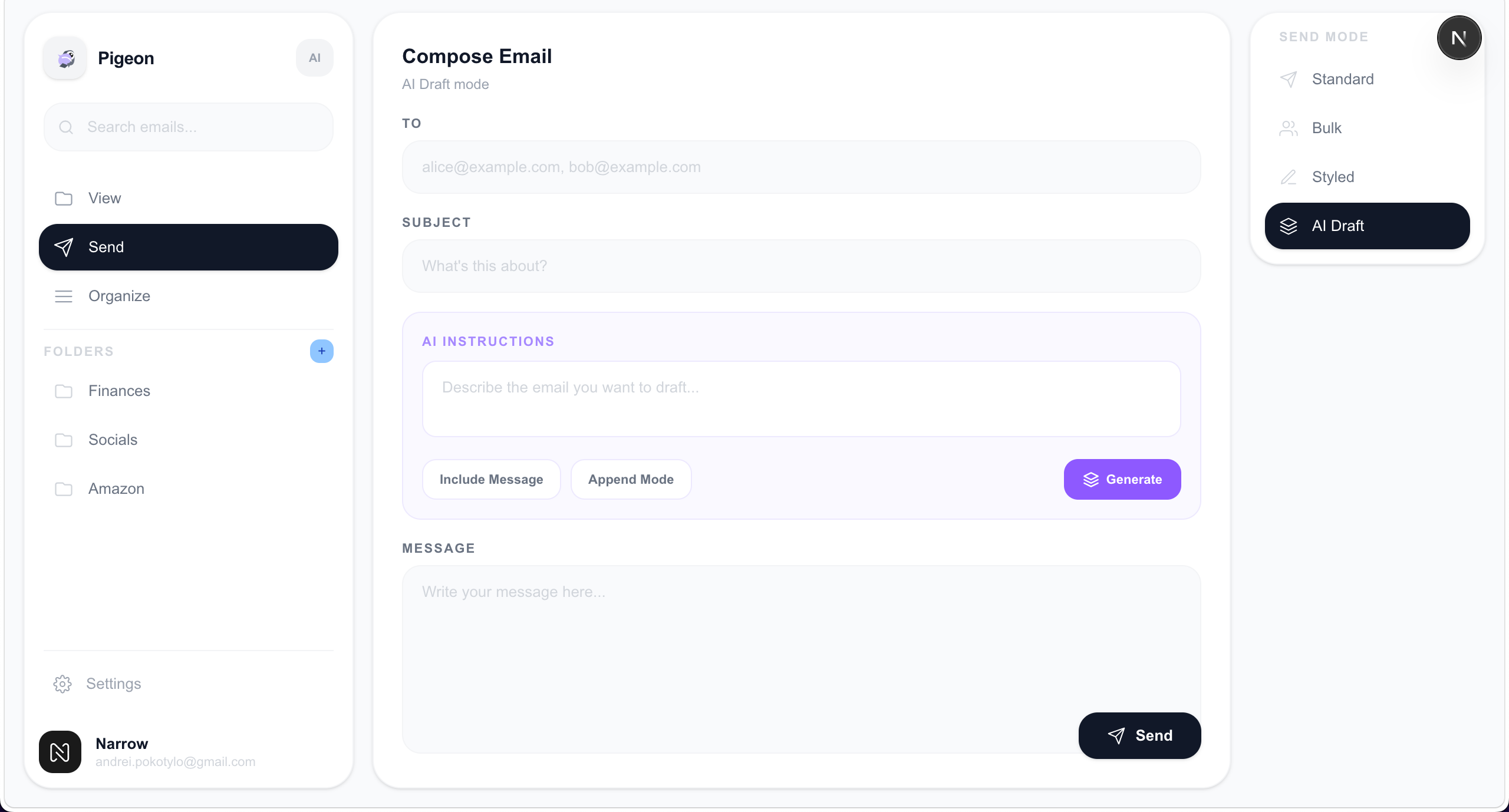
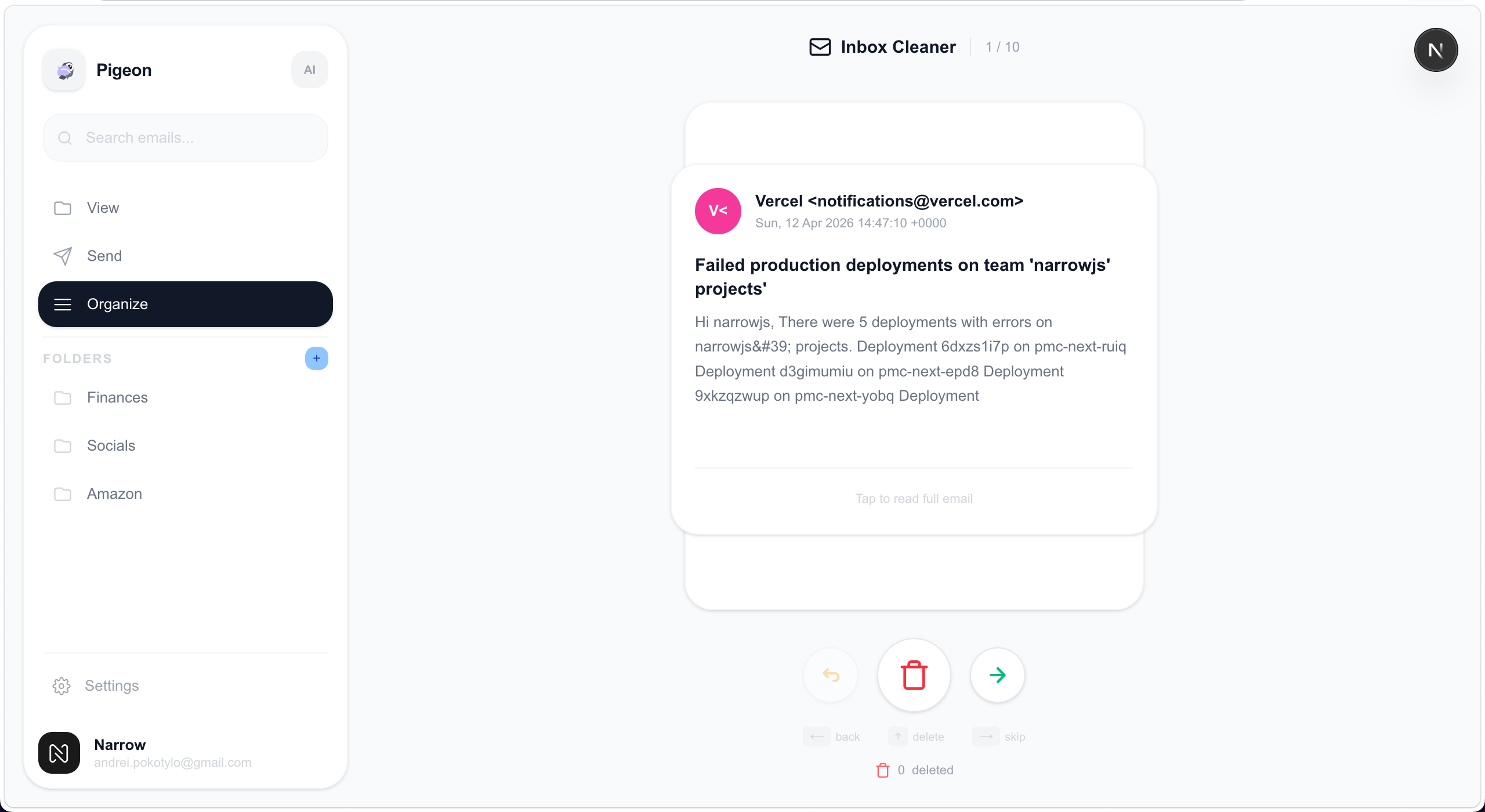
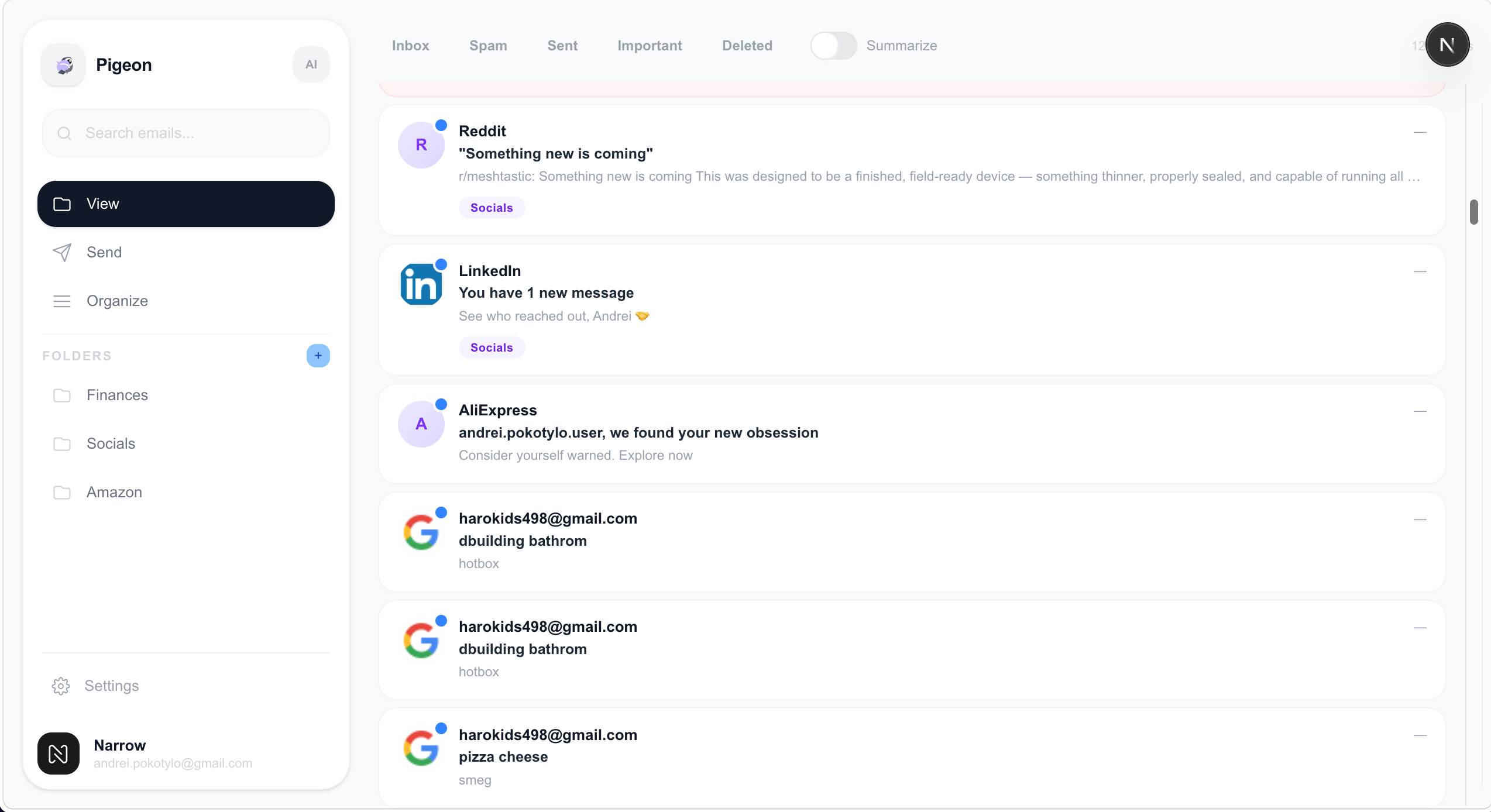
Our project can do all of the normal email service things and more. Just like yahoo or gmail, you can send and receive emails, but in addition ours summarizes, improves searches, gives you control over categorization, and helps you sort through your emails. Ultimately, our features aim to improve the way users interact with their emails. For example, we created a custom version of a popularly implemented and gamified swiping system that you can use to quickly manage your emails in an engaging way. Additionally, our search system does not just look for the word you searched, but gives you access to all standard gmail paramaters with the added option of utilizing AI to dive even deeper and look for emails in the general or surrounding topics too. We also have fully customizable email feeds, such as categories that AI can help you sort your emails into, and marking certain addresses as important to pin all of their new emails to the top of your inbox. Outside of your inbox, we have implemented AI assistance in planning, creating, and editing emails and their subject lines. This makes it so much easier to quickly draft messages with the tone and ideas that you want accurately conveyed, as all of the tools you need to craft such an email are right there.
How we built it
We built Pigeon using Next.js and React JS along with Tailwind CSS. We used the Gmail API to get, send, delete, and help with the categorization of emails. Our authentications are done with Google's OAuth, and database needs are fulfilled with MongoDB. To ensure full security, we use only email reference ids and never directly save user data on our platform, aside from preferences and categories. Additionally, many of our AI features go through Palantir's AIP platform by utilizing an AI Logic application function connected to Claude Opus 4.6 that we have implemented into our project by turning it into a downloadable SDK package. This implementation guarantees that the LLMs only get necessary information and cannot train off of it, ensuring that user data is fully protected.
Challenges we ran into
A major difficulty that we had was integrating Palantir AIP into our app. Because we were using NextJS, there were difficulties because NextJS' serverless functionality conflicted with the way the platform wanted to authenticate. Additionally, this error appear in many different forms in our application making it hard to pin point the root cause of our problem. We also had issues getting started with creating a SDK to implement our AI logic application into our app due to conflicting dependencies and terminal structures. Although we definitely spent a lot of time on our own to find solutions, the people at the Palantir booth were very helpful in guiding us to the solution. Another set of difficulties came from implementing MongoDB as our database. In previous projects, we had used Supabase for our database needs, so there was a learning curve to getting that working. We also developed a custom Google OAuth flow which gave us more control, but also created hurdles along the way such as access token management from the cookies and having to create a login page. Lastly, deployment was tricky because we had to wait for our domain to update due to their nature of non-instantaneous change implementation. Ultimately, many of our issues stemmed from exploring new technologies that we felt would make this a stronger product. We embraced the difficulties because we understood that it would not only be beneficial, but also be a valuable learning experience towards our future endeavors.
Accomplishments that we're proud of
Our proudest moments came from resolving issues described above, especially the AIP integration, as it took over 5 hours. We are also very proud of architecting a secure and cohesive system that enables a smooth and reliable user experience. Due to the scale of this product and the work that we have done without the use of generative AI, we feel that this is a formidable accomplishment. On a similar note, we are proud of the local API system that we have created to connect the front end and back end. All in all, each new component that added impactful functionality to Pigeon Mailing Client felt like a win because we were proud to be innovating in a space we feel passionate about.
What we learned
We learned from all of our challenges, these challenges and concepts were uncharted territory, ideas that we had never grappled with before. One of us was new to web development and today, built their knowledge from the ground up, learning Tailwind CSS and attempting to help build out the front end. Another learned all about the Palantir AIP. The last learned how MongoDB could help our needs and explored how to use Google OAuth and Gmail API.
What's next for Pigeon Mailing Client
Our future holds expanding to enterprise users to give users the ability to grow with agentic email. We hope to expand upon the AI Capabilities and mode system for sending emails to allow users to quickly generate any kind of email that they need, and do so quickly and effectively. We also will build upon our searching and sorting system to create a system that can accomodate any of the user's needs for searching their email.

Log in or sign up for Devpost to join the conversation.