-
-
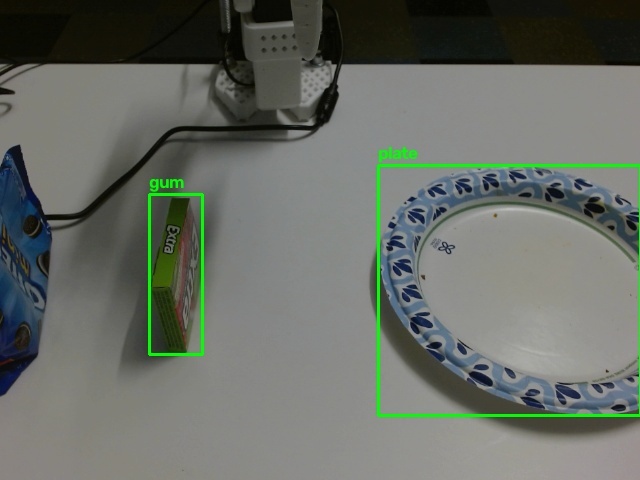
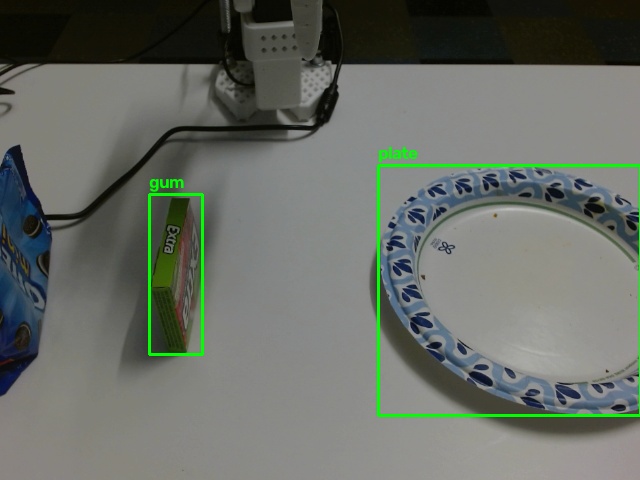
Perceptron Object Detection
-
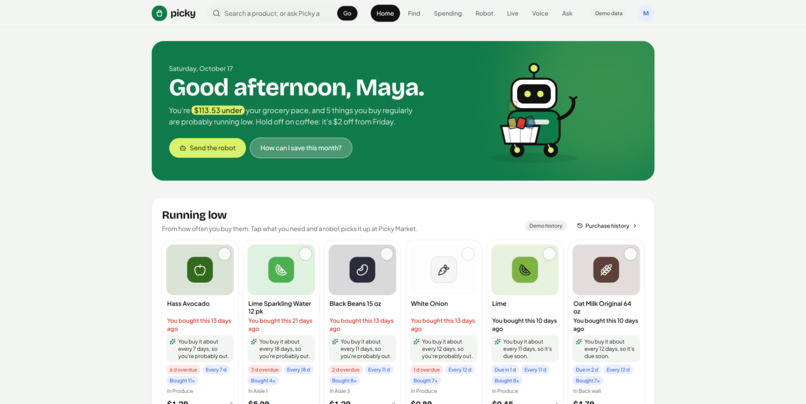
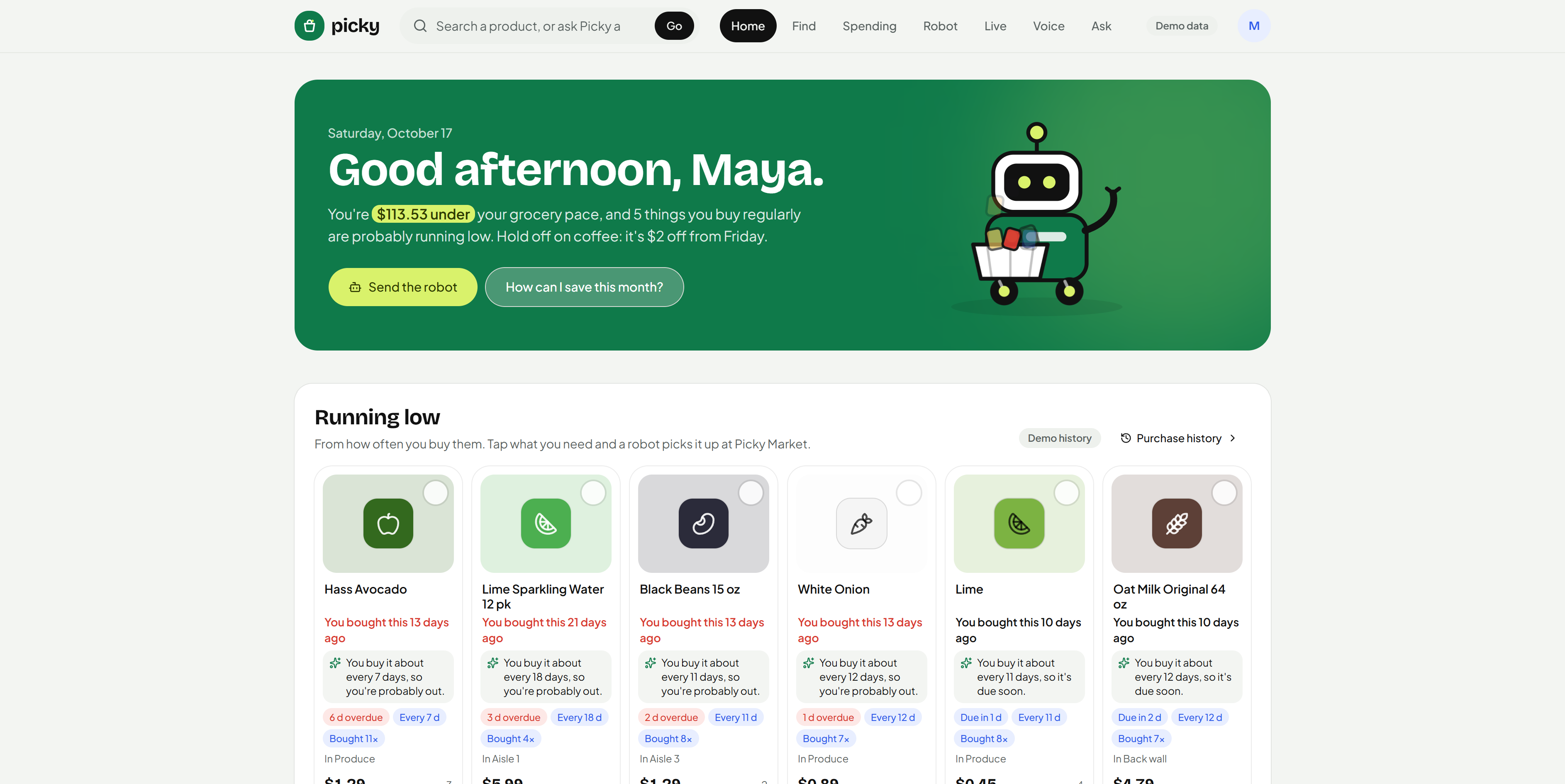
Home Page
-
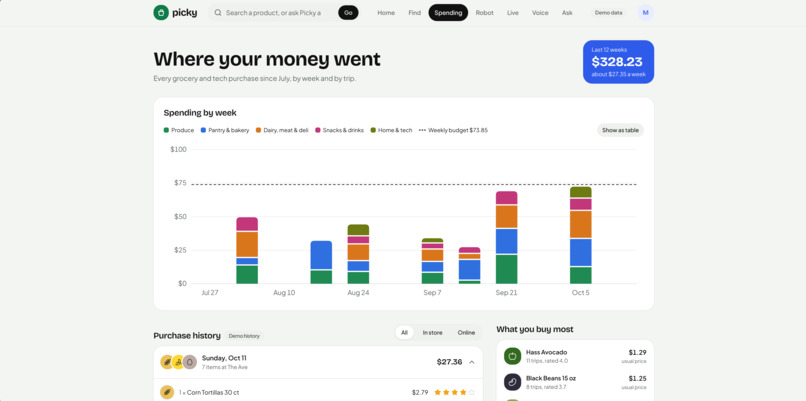
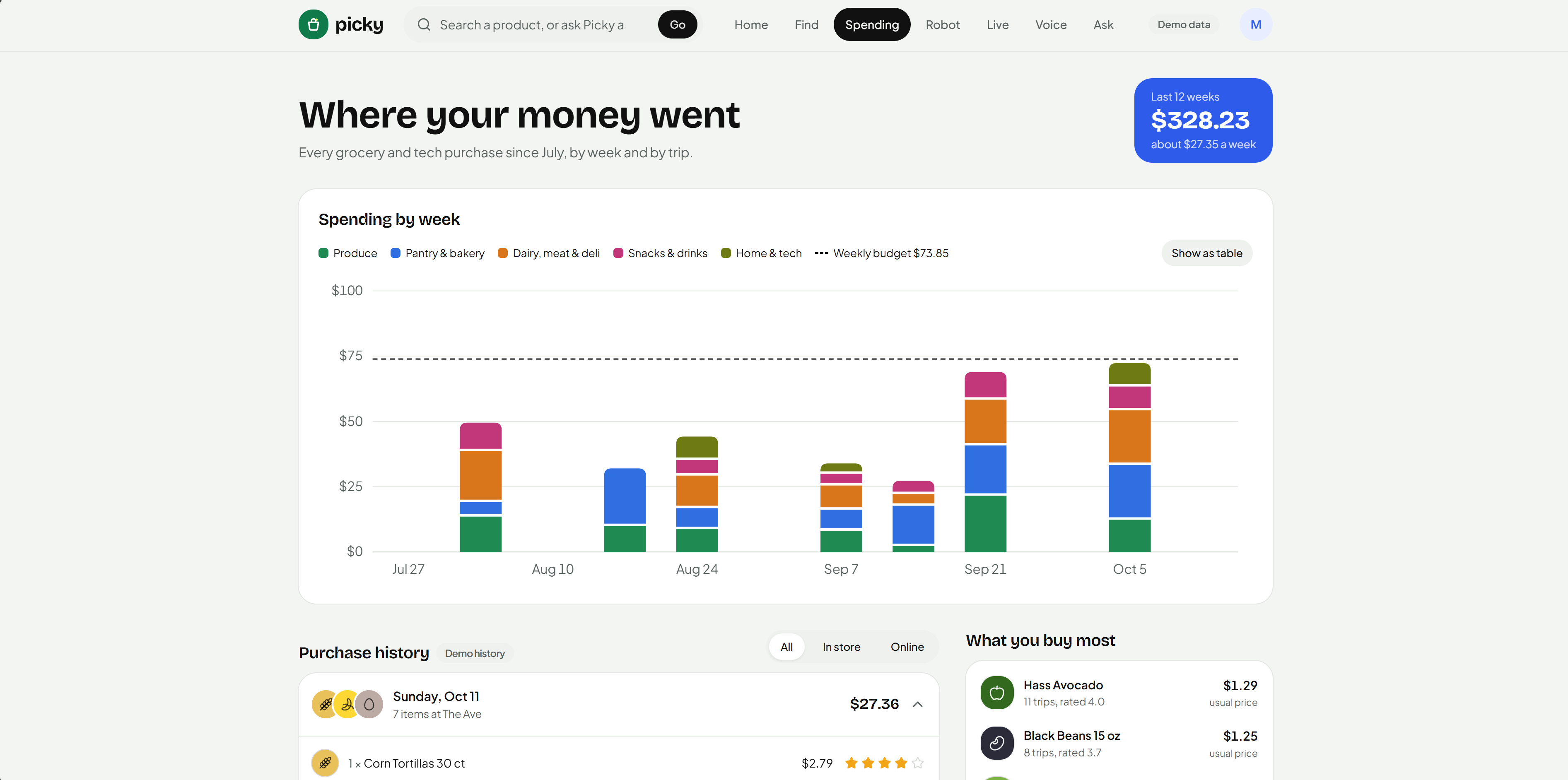
Spending
-
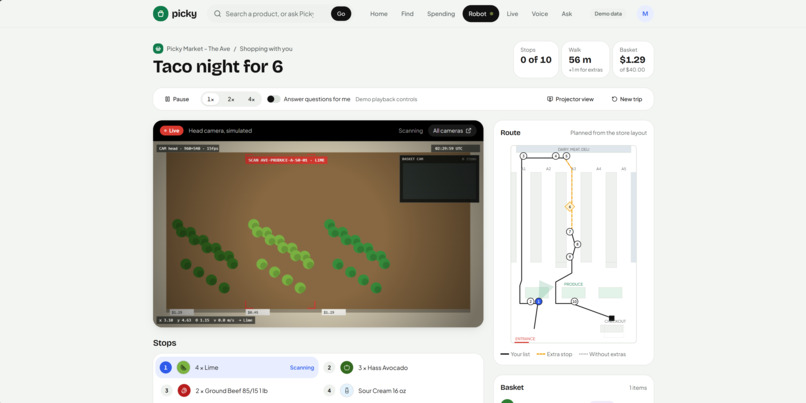
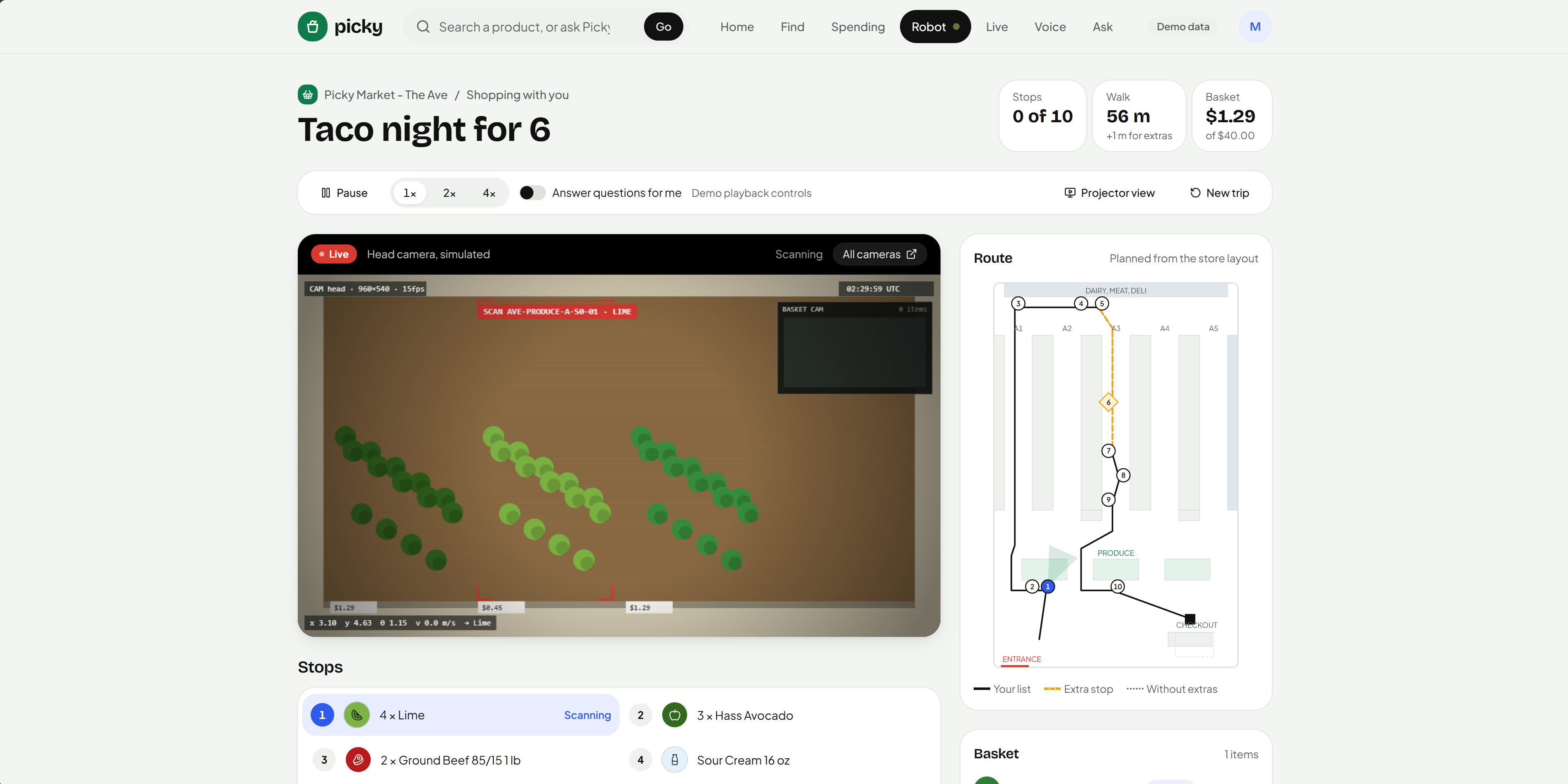
Live Robot Viewer
Inspiration There was a Fred Meyer near my house with robots working inside it, but it shut down because it cost too much to run. A lot of people relied on it for most of their food, and suddenly it was gone. Our team wanted to find a way for robots to cut costs so stores like that could stay open. That's how we came up with Picky.
What we learned We learned that robotics is way harder than regular software. Getting our real robot arm to pick up a pack of gum took a lot of tuning. We also learned how to use vision models so robots can see, and that anything involving money needs strict rules and the shopper's approval. Most of all, we learned to always have a backup plan.
How we built it Picky is a fleet of shopping robots for real stores. You type something like "tacos for 6, under $40," and Picky makes the list, picks the best store, and sends a robot to shop for you. Since the robots are already in the store and plan the fastest route, they can get your order faster and cheaper than an Instacart worker. We built it in Python with route planning, AI vision, and test payments through Stripe, and ran it all in a 3D store simulation.
Challenges we faced Our simulation ran on our team's 5090 computer, and late in the hackathon it stopped working. We had to switch to a different simulator last minute and get everything running on my computer instead. It was stressful, but we got it working in time.
Built With
- claude
- fastapi
- ikpy
- isaac-sim
- isaacsim
- lerobot
- mujoco
- next.js
- numpy
- nvidia-omniverse
- opencv
- or-tools
- pillow
- pydantic
- python
- react
- shadcn-ui
- so-101
- tailwindcss
- typescript
- uvicorn
- zustand


Log in or sign up for Devpost to join the conversation.