-
-
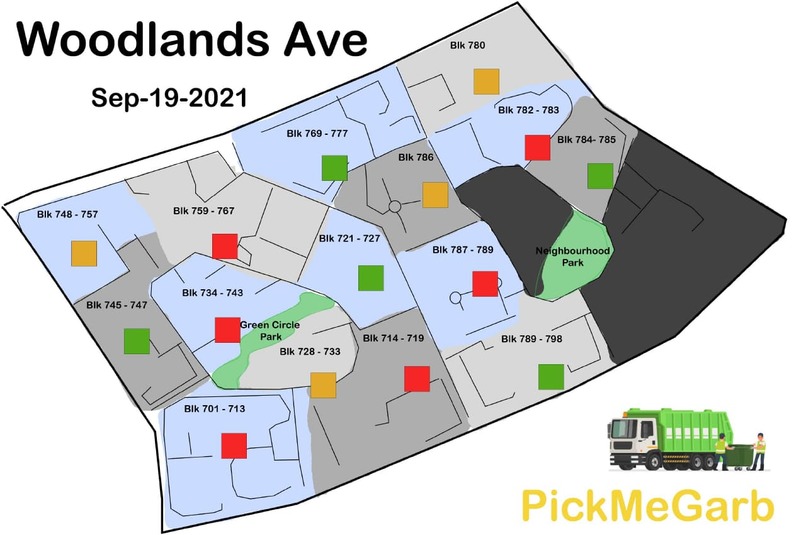
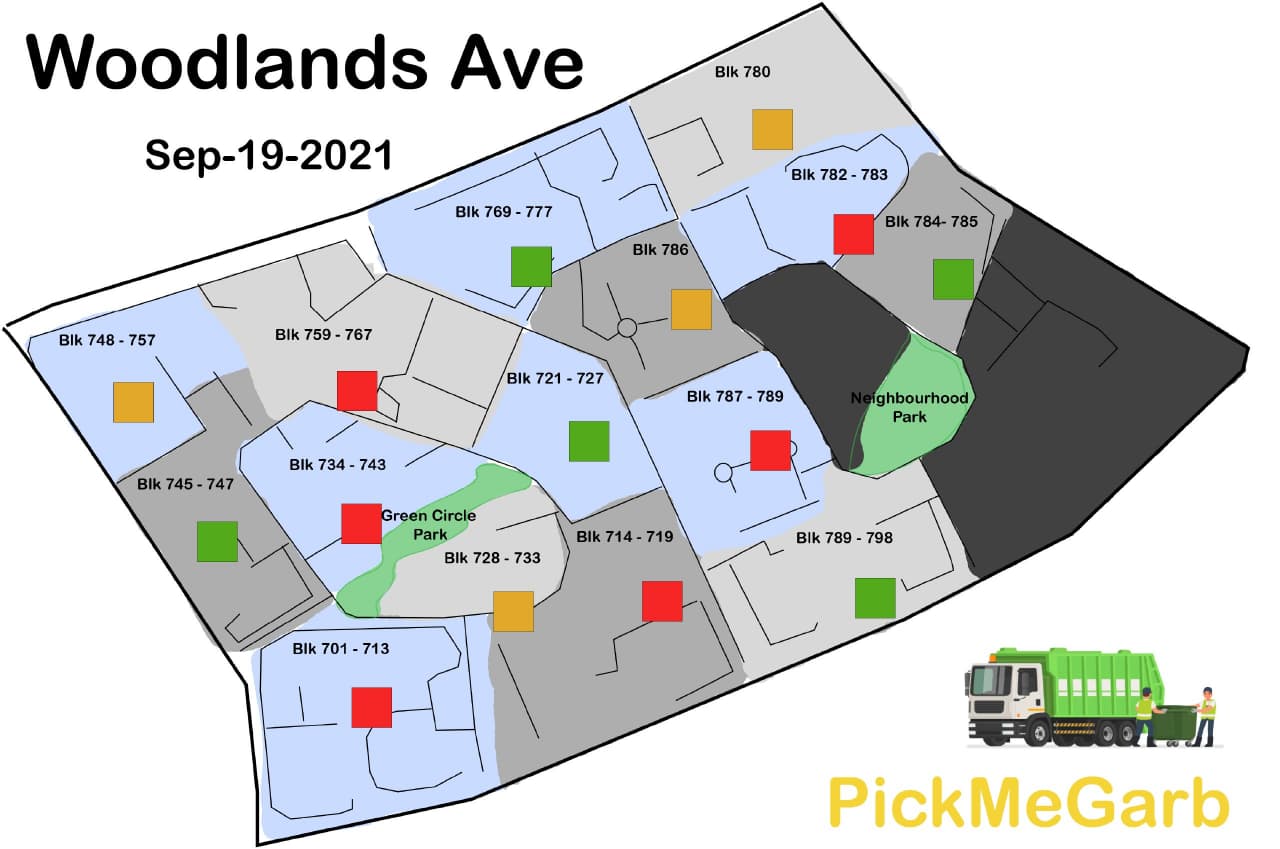
An overview of the rubbish bins in Woodland Ave plotted by PickMeGarb
-
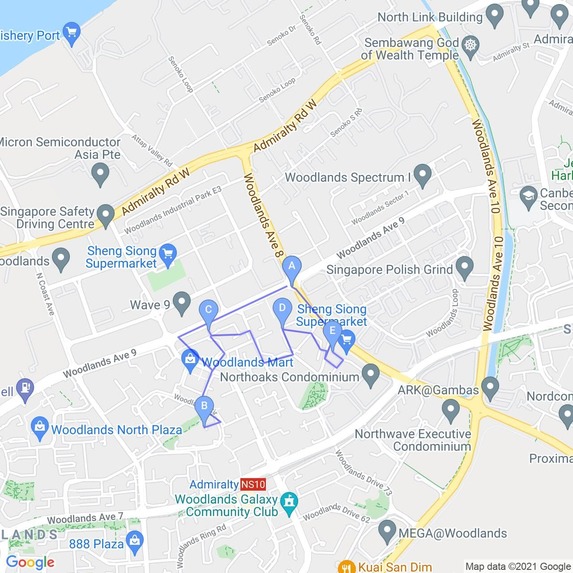
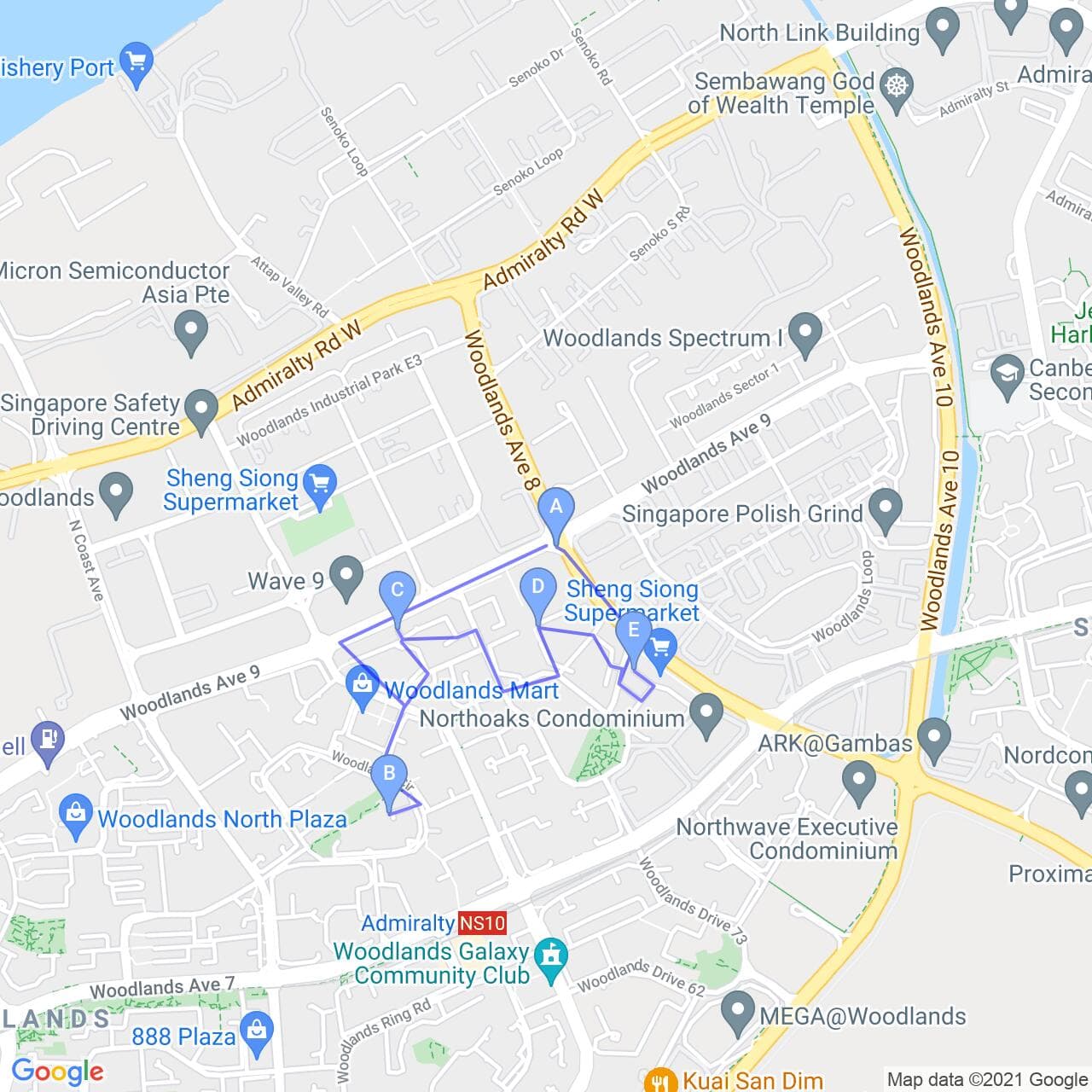
A suggested route plotted by PickMeGarb for waste collectors to follow.
Inspiration
Our group's inspiration was sparked when we noticed how our hostel's floor bins tend to fill up (and in worse cases overflow) over the weekends at an exceedingly fast rate compared to normal weekdays. We wanted to find a way to optimize the waste-collection process such that our school's cleaners could reduce their daily trips to every floor of hostel and would only need to clear our the trash when the bin was of a sufficiently filled level. In line with WTH and the UN Sustainable Goals' requirements, we decided to scale up this idea onto a national scale to streamline the transportation of waste in Singapore.
What it does
PickMeGarb is a user-friendly IOT system that aims to boost the efficiencies of the waste-collection process in Singapore by reducing the travelling time and workload of waste-management employees. It consists of a custom telegram bot that provides users with real-time information on the location and capacity of all nearby rubbish bins in Singapore, all within the reach of a user's smartphone. Each individual bin is color-coded to be red (filled capacity of >90%), yellow (filled capacity between 50%- 90%) or green (filled capacity <50%) on the map printed.
PickMeGarb's self-optimization system then suggests to users the shortest route it can take to round up waste in the nearby area. Only yellow and red bins will be included in the route. This is to minimize the unnecessary trips needed to be made by the waste collector to bins with sufficiently empty capacity.
How we built it
Each large dumpster bin has an ultrasound sensor and an infra-red sensor installed on the lid of the bin. These sensors are hooked up to a Raspberry Pi Zero, which takes note of the timestamp each time trash has been thrown into the bin and estimates the filled capacity of the bin via distance. These data are continuously updated to Google Firebase every 10 seconds, which PickMeGarb extracts and uses to reflect a pictorial summary of the rubbish bins and calculates the shortest route that waste collectors can take.
Challenges we ran into
On the physical prototyping side, one of our main challenges was powering our PIR-11 and HC-SR04 sensors as they required a 5V input to function successfully. The microcontroller issued to us could only output a maximum of 3.3V, which led us to integrate our sensors to a Raspberry Pi Zero after prolonged periods of troubleshooting. The Raspberry Pi Zero was also not powerful enough to support the constant processing of the sensors' data and its continuous submission to Google Firebase, which limited our refresh rate of real-time data to Google Firebase.
On the coding side, it was challenging to integrate all of the different subsystems to produce a single coherent product. As PickMeGarb consisted of many different elements and libraries that required the bridging between hardware and software, most of us had difficulty grasping its documentation as we were completely unfamiliar with them. We also faced some difficulties in communicating the various requirements that we needed from each other early on, which led to some miscommunication and confusion along the way.
Accomplishments that we're proud of
Our group's biggest accomplishment is being able to implement a fully functional IOT system and telegram bot within a short span of 24 hours, despite our lack in knowledge of these areas. Being able to implement new features whilst learning them on the fly through research and communication was an eye-opener for us.
What we learned
Every member was able to takeaway with them new knowledge, such as the use of Python Pillow to implement pictures and Google Maps API to plot routes from point-to-point. The fact that we were able to work together and communicate well as a team to produce a well-balanced working prototype whilst having an enjoyable learning experience was what made this hackathon an arduous but fun journey.
What's next for PickMeGarb
PickMeGarb can be further improved by implementing more accurate smart sensors that are able to detect the rate of waste disposal at the dumping sites. These data can be used to further improve the algorithm to predict the dumping patterns of individual bins across Singapore, such that implementation of manpower can be more efficient. Hazardous wastes contents can also be detected to alert waste management companies to resolve the issue quickly to prevent unwanted hazards. In future, we hope that such a system can be implemented nationwide in alignment with Singapore's Smart Nation agenda.

Log in or sign up for Devpost to join the conversation.