Inspiration
Picker was inspired by the need to bridge the gap between Web3 complexity and user-friendly experiences. The project emerged from recognizing that:
- Current Web3 applications are too trivial for mainstream adoption
- AI technology can dramatically improve system intelligence and usability
- There's a lack of integrated platforms combining AI agents, decentralized marketplaces, and secure payments
- Users need a unified platform for work, entertainment, and life management on local PCs
The vision was to create an "AI-powered smart system for reliability and usability in next-generation decentralized internet" that makes Web3 accessible to everyone.
What it does
Picker is a comprehensive multi-component ecosystem that integrates:
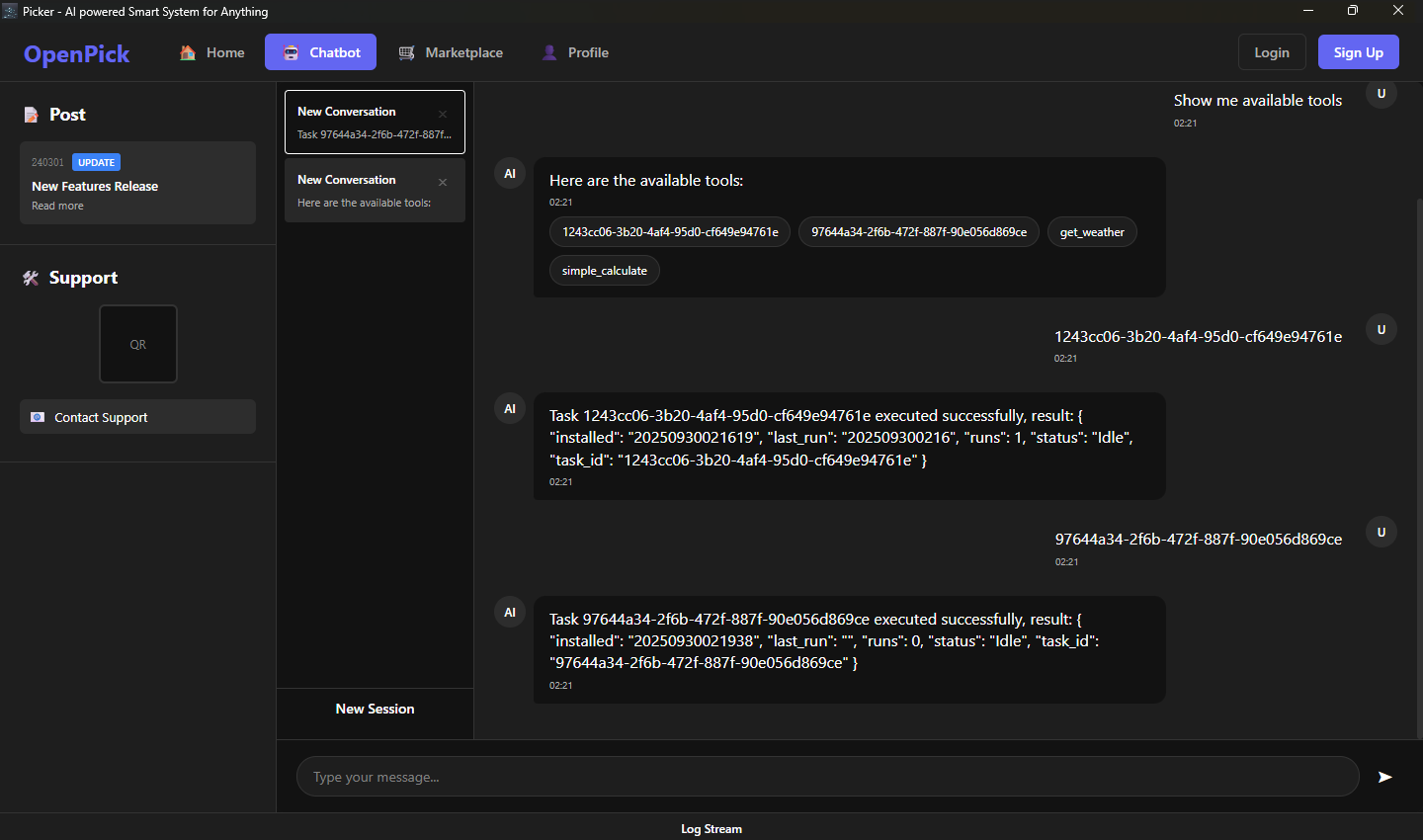
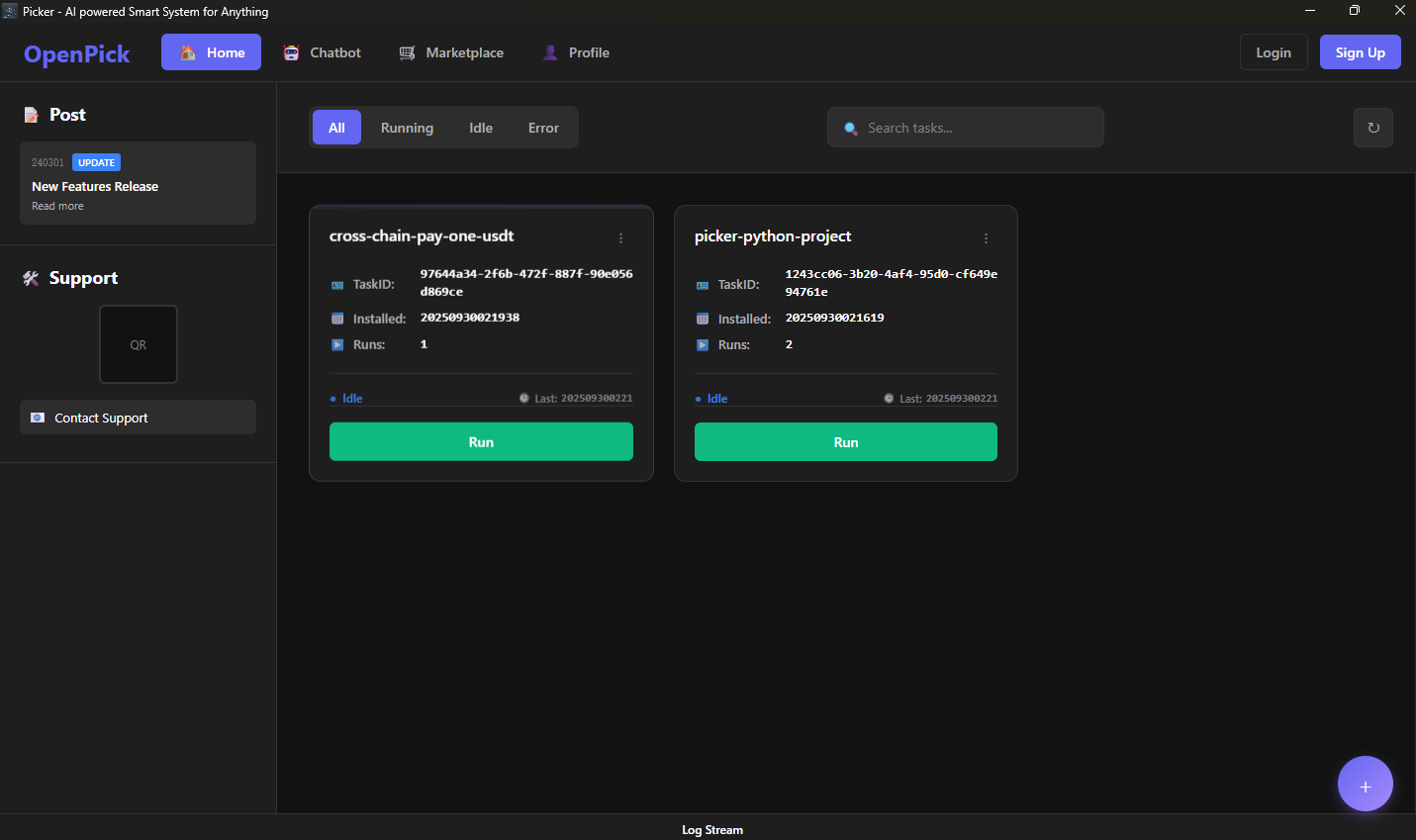
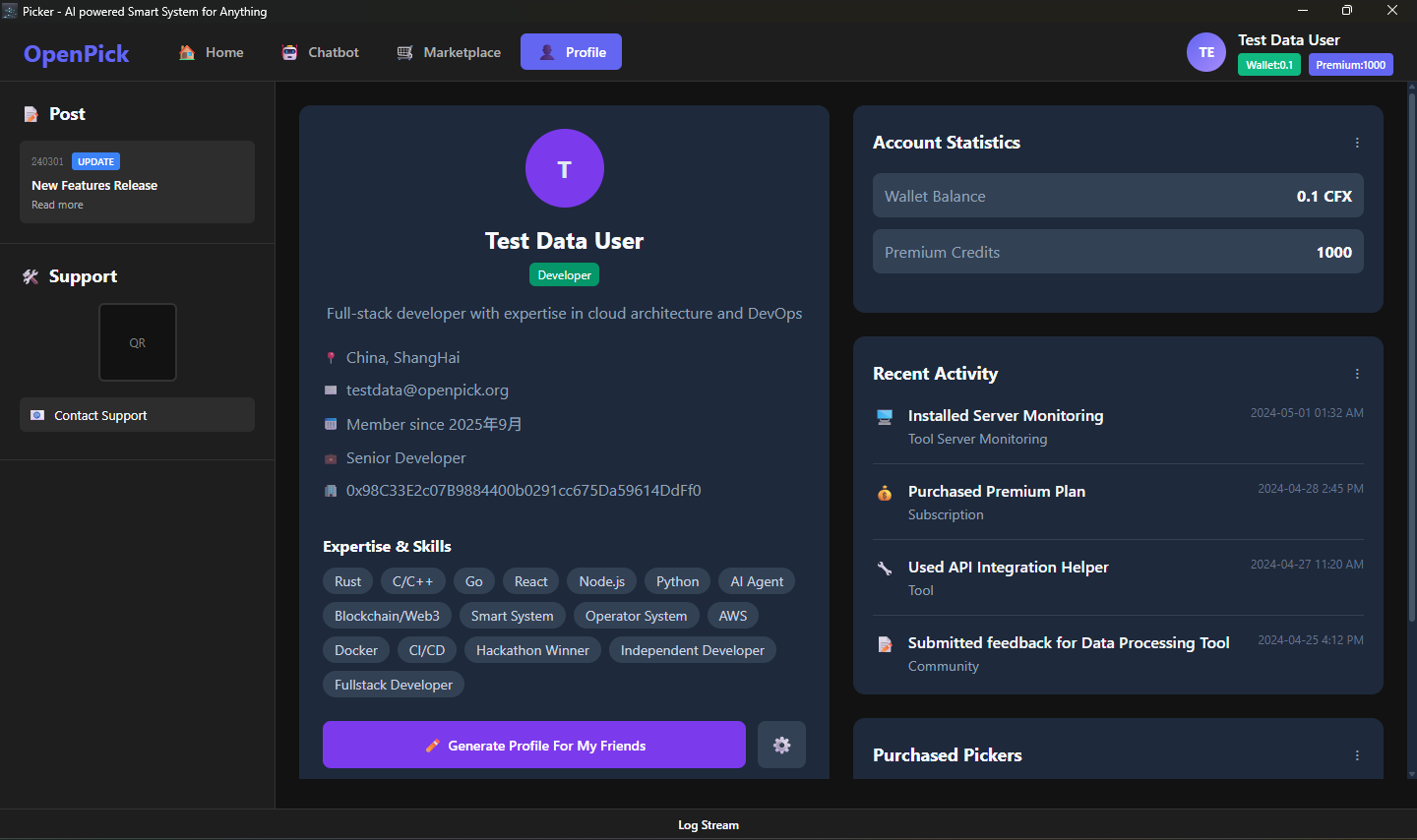
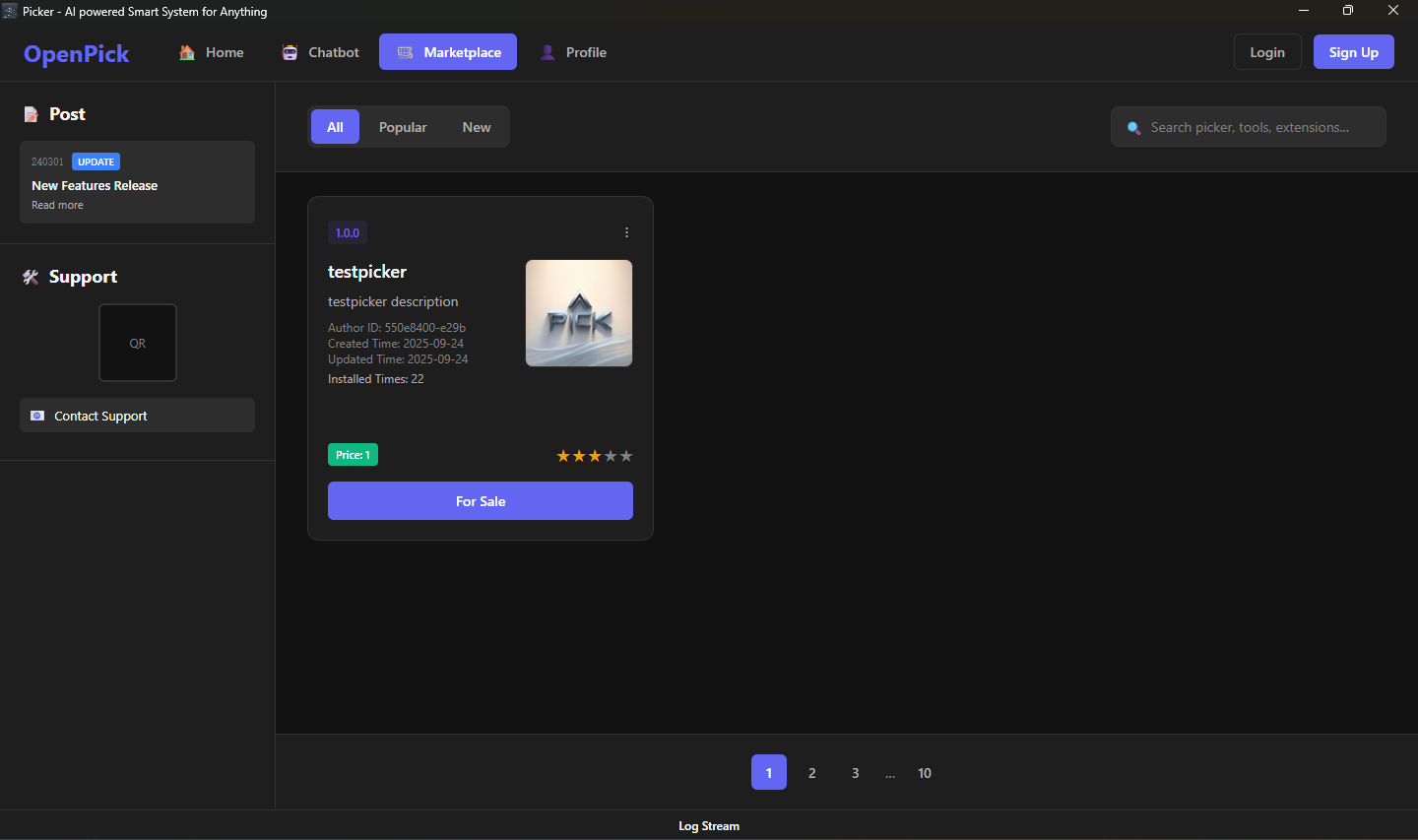
1.AI-Powered Desktop Application : A Tauri2.0 + React desktop app providing task management, chatbot services, marketplace browsing, and user profiles
2.Decentralized Application Marketplace : Users can browse, download, and run various applications (Python, Node.js, PowerShell, Bash scripts, WebAssembly apps)
3.Dual Payment System : Supports both Web3 wallet payments and point-based transactions
4.AI Agent Framework : A Rust-based framework for building intelligent applications with LLM integration, tool calling, and MCP service connections
5.Smart Contract Backend : Solidity contracts for on-chain payment processing and data verification. The system serves three user types : General users (30 monthly points), Developer users (can upload tasks), with a complete point-based economy.
How we built it
We adopted a modular architecture with cutting-edge technologies:
Backend Infrastructure
- Rust Axum server with SQLite3 database for high-performance API services
- JWT authentication with email verification system
- Multipart file upload system with secure temporary download links
AI Framework
- Custom Rust AI Agent framework with Runnable unified execution interface
- OpenAI API integration supporting both Chat Completions and Responses APIs
- MCP (Model Context Protocol) service integration for tool calling
- Asynchronous design built on Tokio for scalability
Desktop Application
- Tauri2.0 + React + TypeScript + Vite for cross-platform desktop experience
- Integrated chatbot using the custom AI agent framework
- Marketplace interface for browsing and managing applications
Blockchain Integration
- Solidity smart contracts with Hardhat development framework
- EVM-compatible payment processing for on-chain transactions
- Secure custom second level authorization payment contract
Development Tools
- Multiple application templates (Python, Node.js) for developers
- Comprehensive testing with both unit and integration tests
Challenges we ran into
Technical Challenges
1.AI Framework Design : Creating a unified Runnable interface that supports synchronous, asynchronous, and streaming processing was architecturally complex 2.Tauri-Rust Integration : Bridging the gap between Rust backend services and React frontend through Tauri required careful API design 3.Security Considerations : Implementing secure wallet generation, JWT authentication, and private key management across multiple components
Development Challenges
1.Multi-language Coordination : Managing Rust, TypeScript, Solidity, and Python codebases simultaneously 2.Blockchain Testing : Testing smart contracts and cross-chain functionality required extensive testnet usage 3.Performance Optimization : Ensuring the Rust backend could handle concurrent requests while maintaining low latency 4.User Experience Design : Creating an intuitive interface that hides Web3 complexity from end users
Integration Challenges
1.MCP Service Integration : Adapting external MCP tools to work with our custom AI framework 2.Payment System Integration : Coordinating between on-chain payments, point systems, and traditional payment methods 3.File Management : Implementing secure file upload/download system with proper access controls
Accomplishments that we're proud of
Technical Achievements
1.Complete AI Agent Framework : Built from scratch in Rust with unified execution interfaces, tool calling, and MCP integration 2.Full-stack Integration : Seamless connection between Rust backend, React frontend, and Solidity contracts 3.Multi-platform Desktop App : Created a beautiful, responsive desktop application using Tauri2.0
Innovation Highlights
1.Unified Runnable Interface : Novel approach to AI component composition with Runnable abstraction 2.Dual Payment System : Innovative combination of Web3 wallets and point-based transactions 3.Modular Architecture : Successfully implemented microservices architecture across multiple programming languages 4.Developer-friendly Templates : Comprehensive templates for multiple programming languages
Practical Results
1.Working Marketplace : Functional application marketplace with upload, browse, and download capabilities. And supports Web3 contract authorization management, wallet transaction payment. 2.Complete User System : Full authentication, authorization, and user management system 3.AI Chatbot Integration : Working conversational AI integrated into the desktop application
What we learned
Learned that chain transaction delay handling is the key challenge—from single transfers to smart contract interactions, each transaction requires waiting for block confirmation, which demands us to implement asynchronous state tracking and real-time progress feedback in user experience design, while learning to optimize gas fees and retry mechanisms to deal with transaction delays during network congestion. Learned that Rust provides excellent performance for backend services and unified interfaces in AI component architecture.
What's next for Picker
Immediate Improvements
Move from testnet to mainnet for real-world usage. Optimize database queries, implement caching, and add CDN for file downloads.
Feature Expansions
Add ratings, reviews, categories, and advanced search capabilities. Expand to support more tokens and DeFi protocols. Add multi-modal AI capabilities, better context management.
Ecosystem Growth
Create IDE plugins, debugging tools, and comprehensive SDKs. Add forums, tutorials, and community-driven content. Integrate with popular Web3 services and platforms.


Log in or sign up for Devpost to join the conversation.