-
-
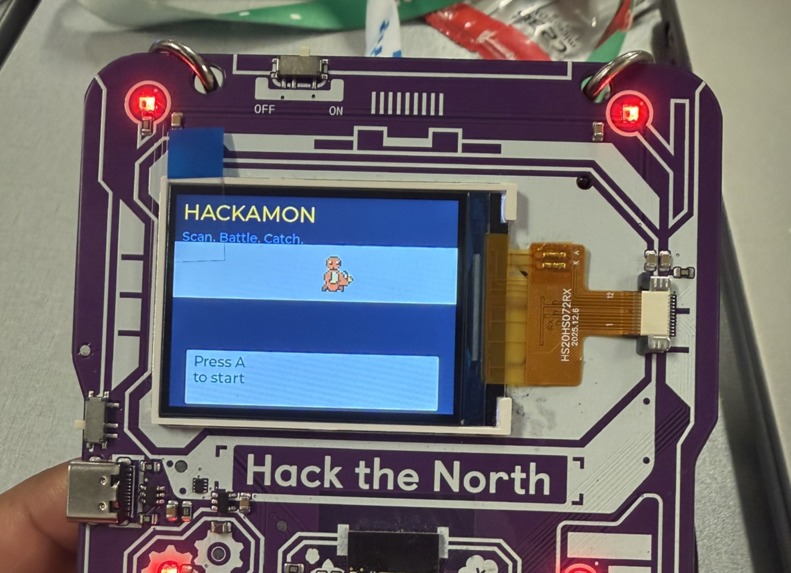
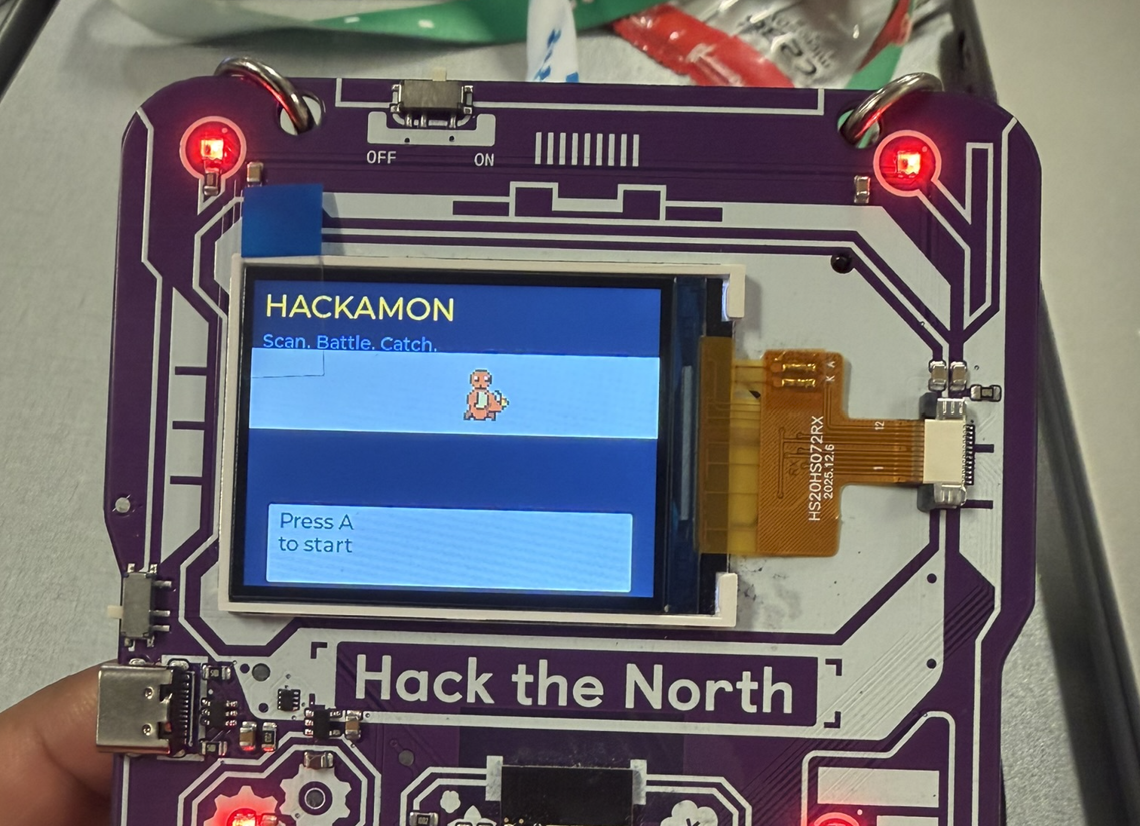
Loading screen with Charmander
-
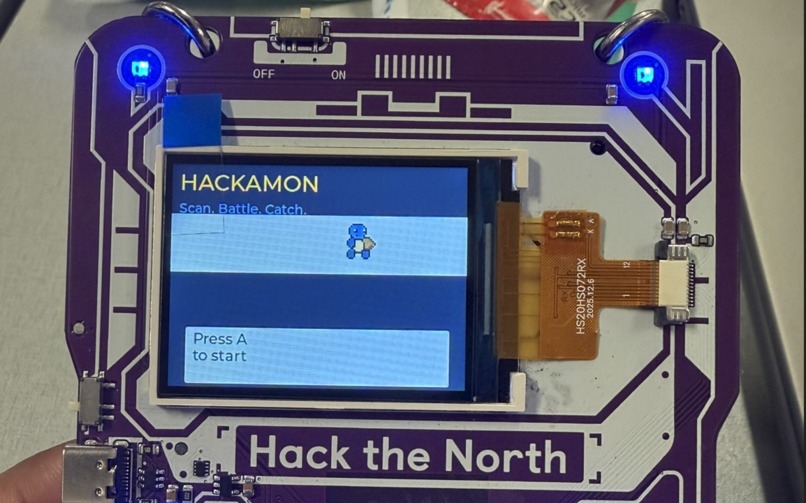
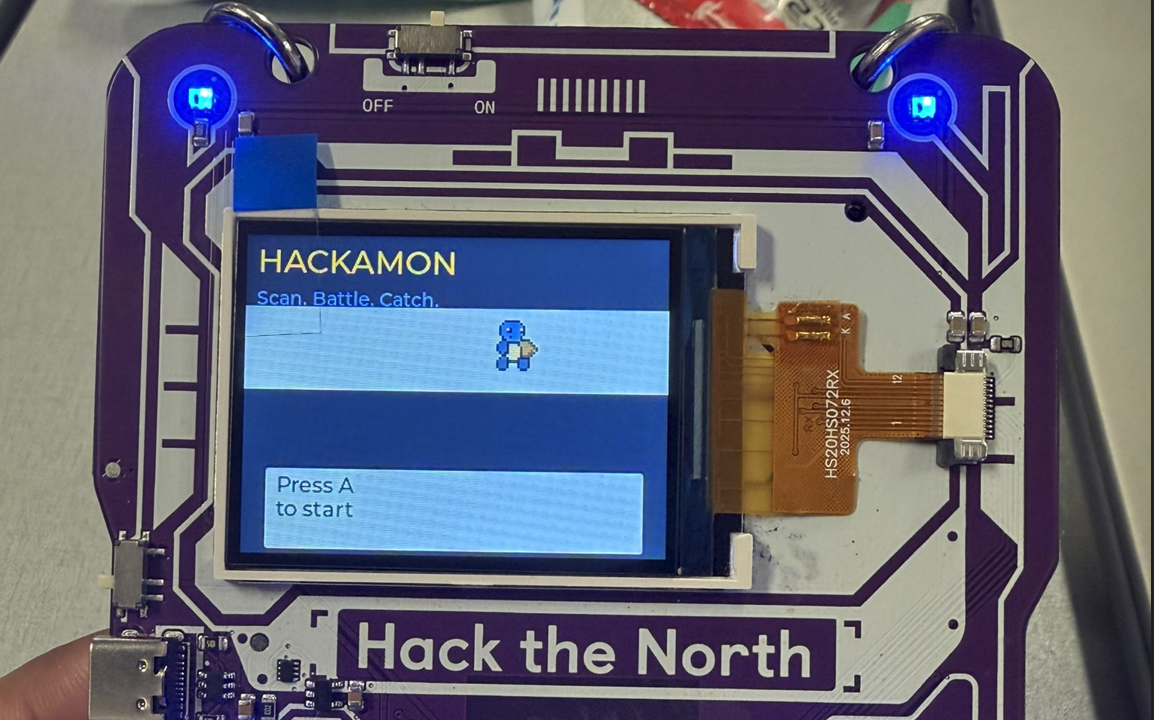
Loading screen with Squirtle
-
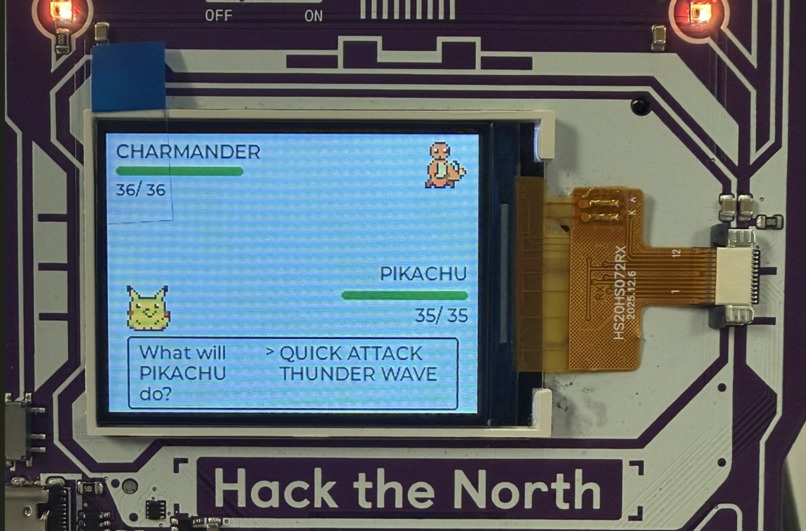
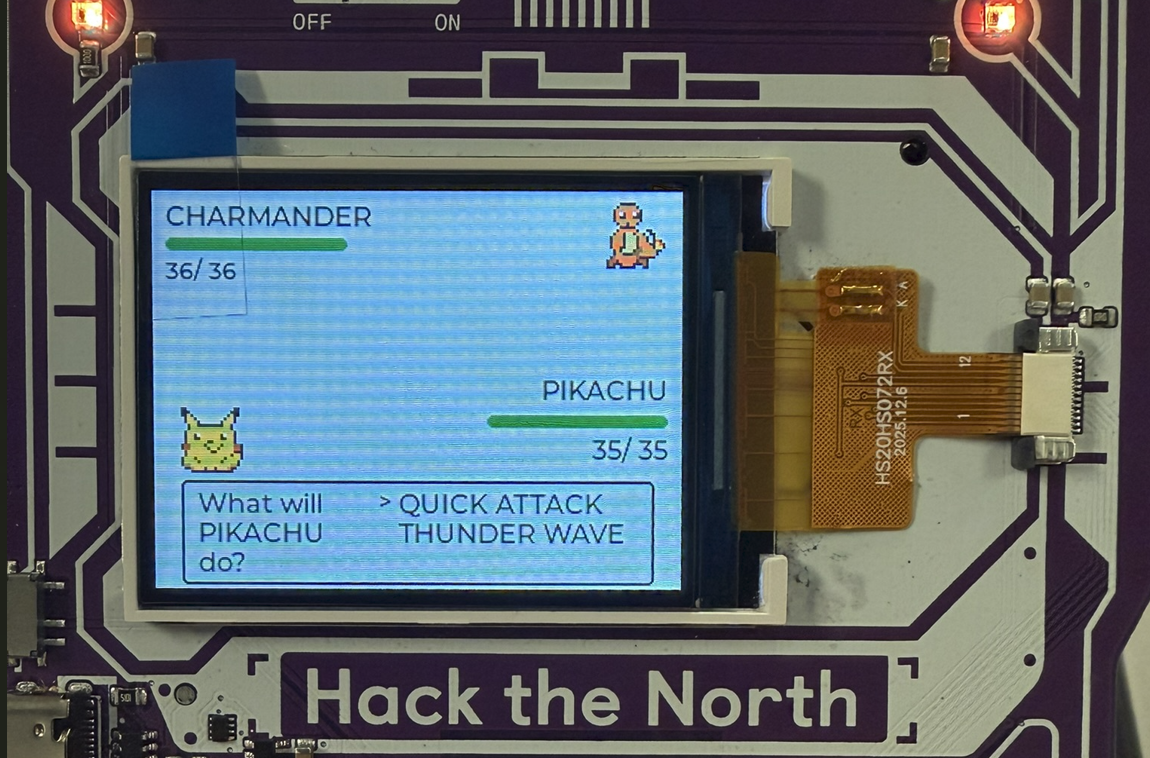
Battle with Pikachu and Charmander
-
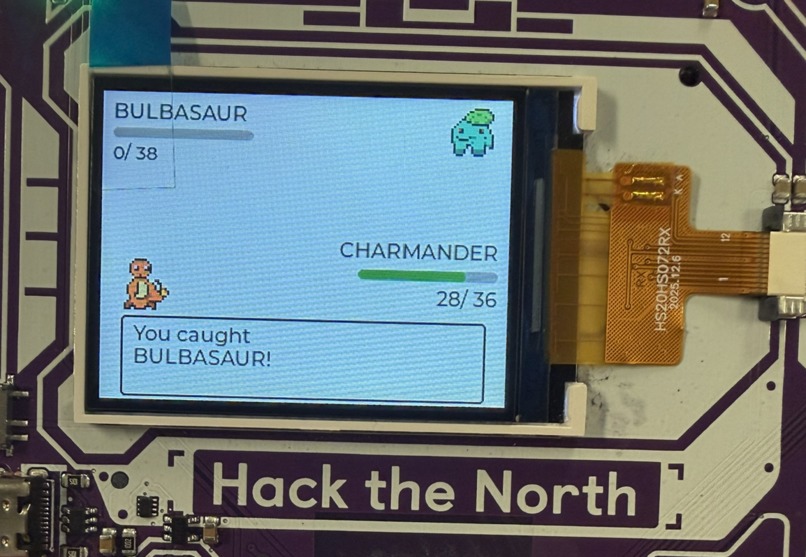
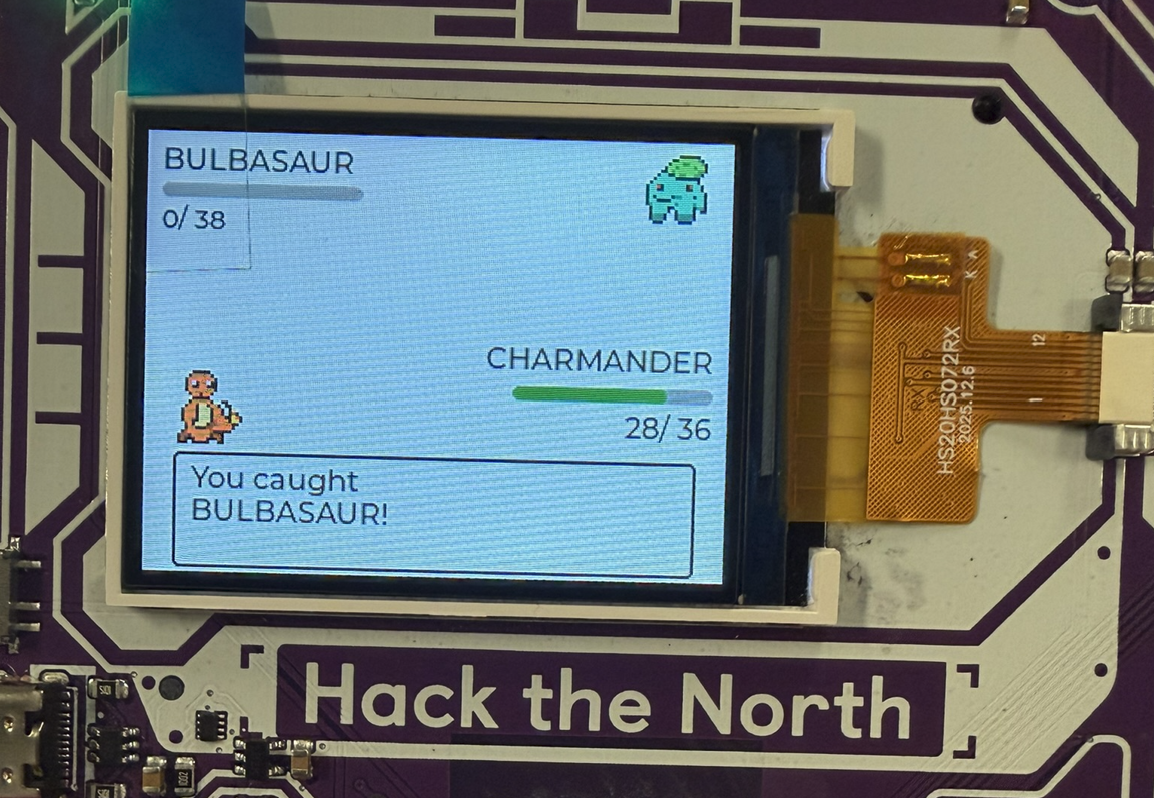
Battle with Charmander and Bulbasaur
-
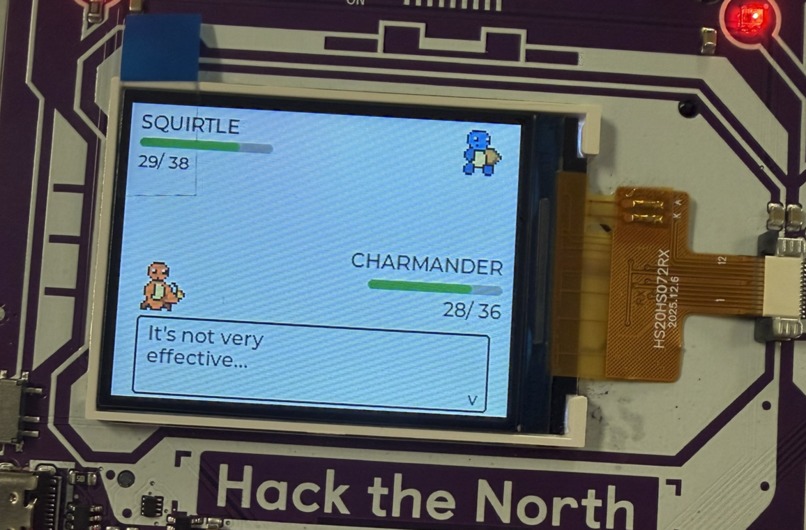
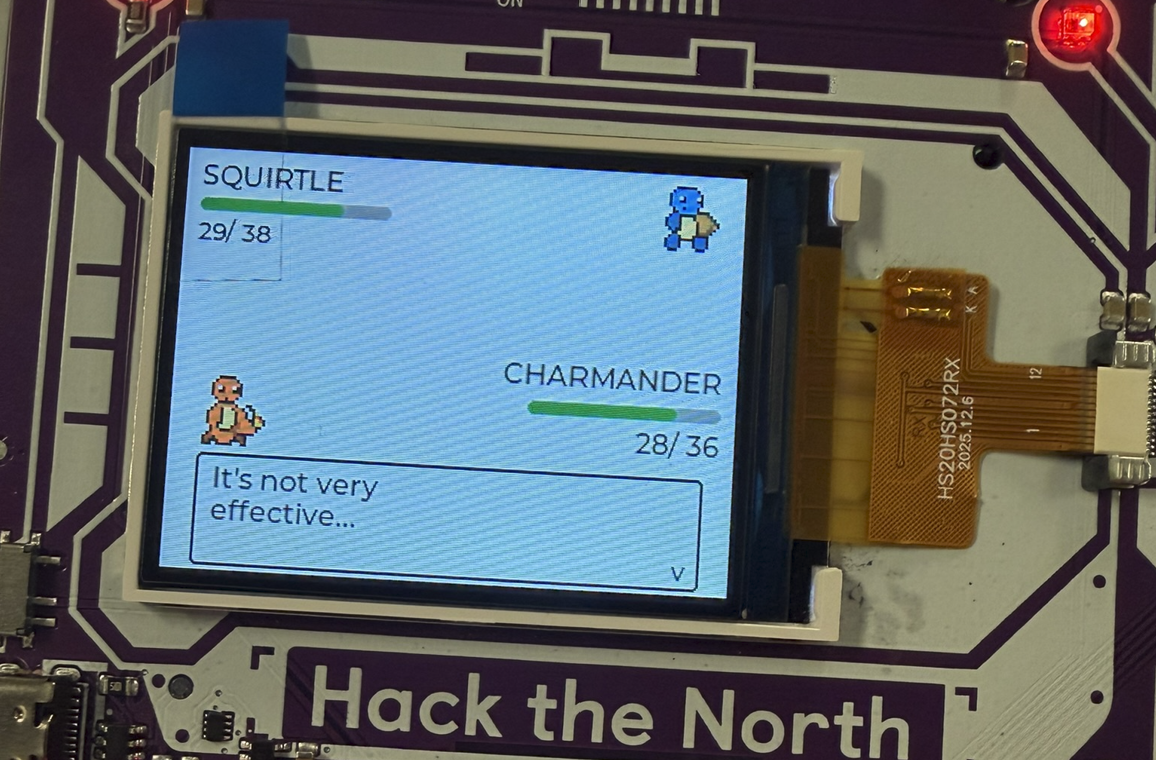
Battle with Charmander and Squirtle
Inspiration
Our inspiration came from Pokémon GO and Hack the North’s NFC stickers. We loved the idea of turning the physical space around us into part of the game, where players have to actually walk around and discover things. We wanted to bring that same feeling to a Pokémon battle game, so we created Hackamon.
What it does
You start the game with Pikachu and explore to find hidden Pokémon NFC tags. When you scan one, the Pokémon appears and challenges you to a battle. If you defeat it, you can capture it and add it to your party.
The goal was to make the whole experience feel like discovering Pokémon in the real world rather than just playing another game on a screen.
How we built it
We programmed each NFC sticker with a unique Pokémon code that tells the game which Pokémon was scanned. For example, PKM02 maps to Squirtle.
When the game reads the tag, it uses that code to load the Pokémon's information, including its name, health, and attacks. From there, the player can battle and, if they win, add that Pokémon to their party.
We also added visual feedback to make the battles feel more interactive, including lights flashing when attacks land.
Challenges we ran into
One of our biggest challenges was working with a 64 KB memory limit. We originally wanted features like four attacks per Pokémon, items, running from battles, and detailed sprites for around twenty Pokémon. Trying to fit all of that into such a small amount of memory quickly became a problem.
We had to make some tough decisions and simplify the game. We reduced each Pokémon to two attacks, limited the party to four Pokémon, removed items, and simplified our sprites. These changes let us keep the core gameplay while making sure everything could run smoothly on the hardware.
Accomplishments we're proud of
We're really proud of how well Hackamon captures the feeling of discovering and playing Pokémon for the first time. Instead of just tapping through menus, you physically walk around, find hidden Pokémon, scan them, and battle them.
We're also proud of how we integrated the NFC tags into the gameplay. Seeing the lights flash when an attack lands made the battles feel much more physical and interactive.
What we learned
Throughout the project, we learned how to program in Lua, configure and work with NFC tags, and optimize a game for extremely limited memory.
We also learned how to create and simplify graphics that could actually fit within the limitations of our hardware. A lot of the project was about figuring out what we could remove or optimize without losing what made the game fun.
What's next for Hackamon?
There are a lot of things we'd love to add next:
- Online multiplayer so players can battle each other
- Four moves for each Pokémon
- Items and a shop
- A coin system where players earn rewards for winning battles
- More detailed Pokémon sprites
- Music and sound effects using a piezo buzzer
For now, we're really happy with what we managed to build within the hardware constraints, but we'd love to keep expanding Hackemon into a much bigger Pokémon adventure.

Log in or sign up for Devpost to join the conversation.