-
-
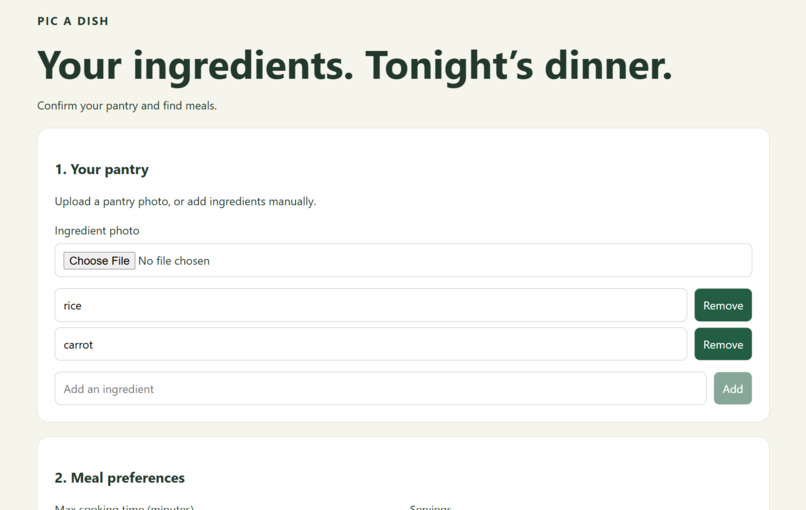
Front Page
-
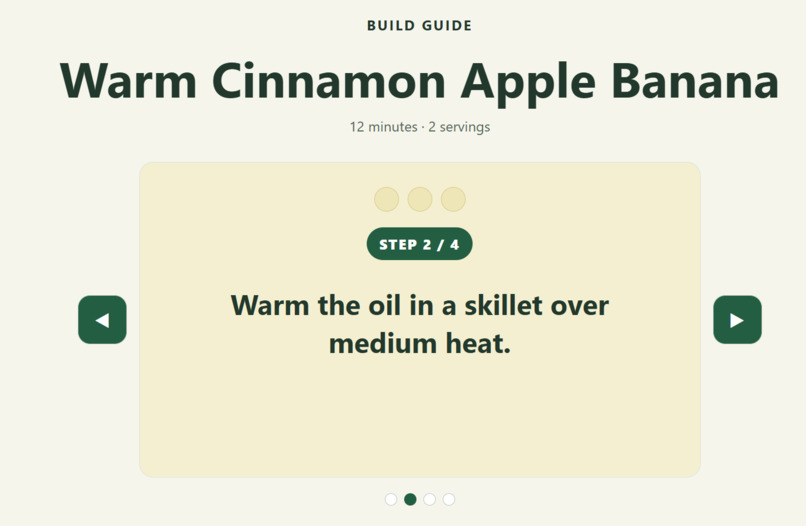
Flipbook
Inspiration
As college students, we often open our refrigerators to find a random assortment of ingredients, some of which are about to go bad. Throwing away food feels wasteful, but sometimes all we need is an idea to turn those ingredients into a meal. We built Pic A Dish to help people reduce food waste, save money, and discover new dishes using what they already have.
What it does
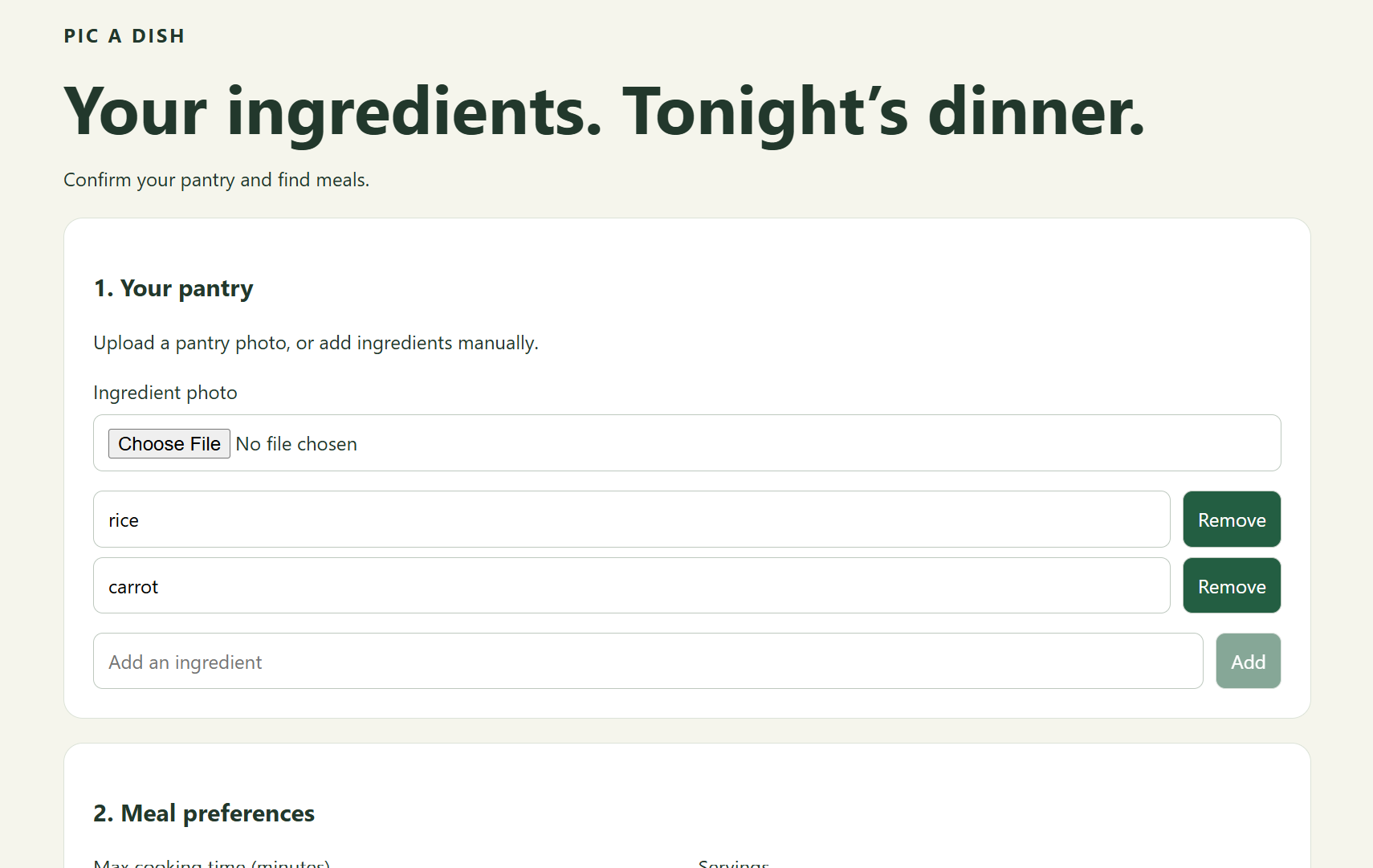
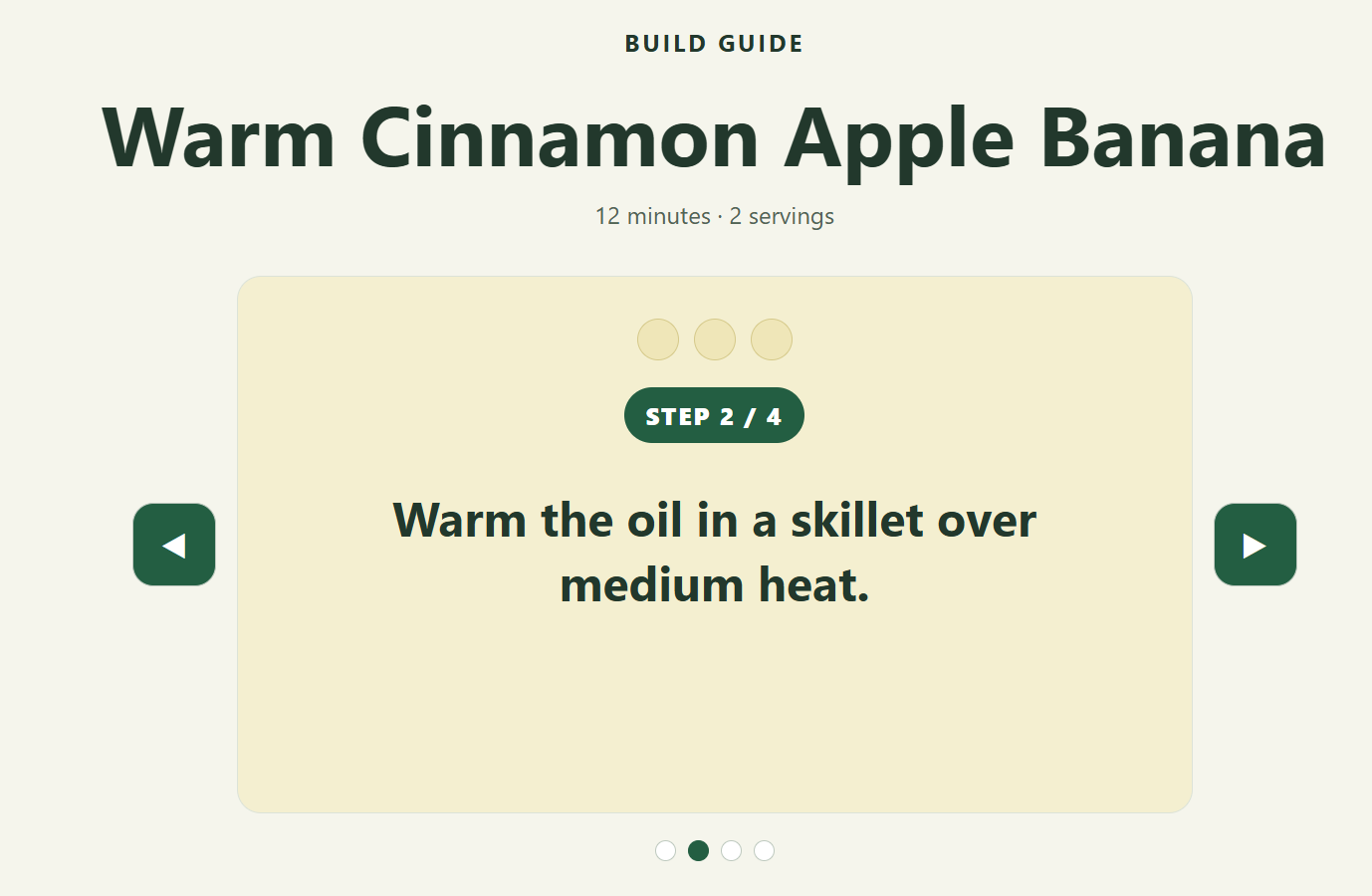
Pic A Dish lets users take a picture of their ingredients or refrigerator, choose their meal preferences and dietary restrictions, and receive AI-generated recipes tailored to what they have available. Once users choose a recipe, an interactive, flipbook-style guide walks them through the cooking process one step at a time.
How we built it
We built Pic A Dish with a web-based frontend and a Python backend. We use AI-powered image recognition to identify ingredients from uploaded photos and a large language model to generate personalized recipes based on the detected ingredients and user preferences. The frontend brings everything together in an interactive experience, including our step-by-step cooking flipbook.
Challenges we ran into
One of our main challenges was connecting ingredient recognition with recipe generation. Identifying food from a refrigerator photo can be difficult when ingredients overlap, are partially hidden, or appear in packaging. We also had to coordinate the frontend, backend, and AI services within the limited time of a hackathon.
Accomplishments that we're proud of
We're proud to have created a tool that connects AI to an everyday problem. Rather than simply generating recipes, Pic A Dish creates a complete experience, from photographing ingredients to following an interactive cooking guide. We aimed to make cooking more approachable while helping users get more value from their groceries.
What we learned
We learned how to integrate AI services into a full-stack application, connect image recognition with language-model outputs, and collaborate under a tight deadline. We also learned that building a useful AI product requires more than a model: the user experience is just as important.
What's next for Pic A Dish
We want to improve ingredient detection, account for ingredient quantities and expiration dates, and generate recipes that better match users' available time, budgets, and dietary needs. In the future, Pic A Dish could also track pantry inventory and recommend meals based on ingredients that need to be used soon, helping users reduce food waste even further.
Built With
- ai
- backboard
- css
- cursor
- git
- github
- javascript
- object-detection
- python
- react-native
- vscode
- yolo


Log in or sign up for Devpost to join the conversation.