Inspiration Music learning often keeps people in front of a screen for long periods of time. We wanted to turn that relationship around. PIANIST — Touch Grass was inspired by a simple idea: the world outside is already full of music. Instead of beginning with a lesson on a screen, PIANIST begins by asking the learner to step outside, slow down, and listen. A short outdoor listening experience becomes the starting point for musical discovery. The goal is not simply to teach notes, but to encourage curiosity, attention, movement, and a deeper connection between everyday sounds and music. Our core idea is: OUTSIDE → LISTEN → DISCOVER → PIANO
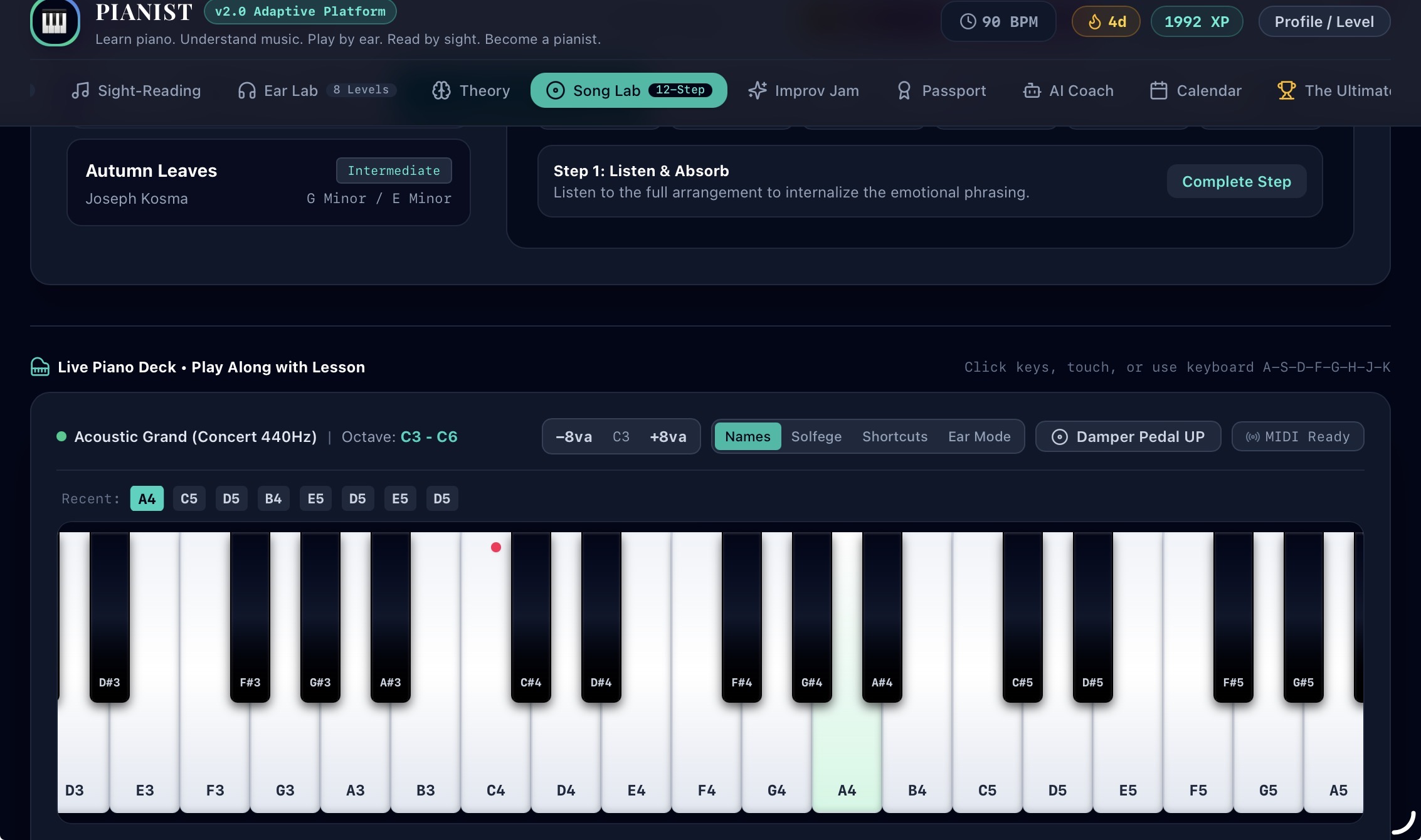
What it does PIANIST — Touch Grass creates a short music-learning journey built around outdoor listening. The experience starts with a 60-Second Walk, encouraging the user to step away from the screen and pay attention to the surrounding soundscape. The user then moves through a listening and discovery experience focused on acoustic characteristics rather than private conversations. Musical ideas are surfaced from what the user hears, creating a bridge between the environment and musical exploration. Finally, the user returns to an interactive piano, where those discoveries can become notes, patterns, chords, and playful experimentation. The experience turns: a walk → into listening → into discovery → into music.
How we built it PIANIST — Touch Grass is built as an interactive web experience using a modern React-based frontend. Key technologies and components include:
- React for the interactive application experience
- Web Audio API for working with audio and acoustic information in the browser
- Gemma-powered AI integration for the project's intelligent discovery experience
- Interactive piano synthesis for immediate musical exploration
- Tailwind CSS for the interface
- GitLab for source control, repository collaboration, CI, documentation, and the hackathon Showcase workflow Privacy was an important design consideration. The experience is designed around extracting useful acoustic characteristics rather than turning the outdoor listening experience into a system for recording and storing private conversations. We also added project documentation covering the architecture, privacy considerations, demo flow, contribution guidance, and submission evidence.
Challenges we ran into The biggest challenge was designing an experience that genuinely encourages people to leave the screen, while still requiring a screen to guide the experience. We had to find the right balance between:
- making the 60-second outdoor activity simple enough to actually do;
- giving the listening experience enough structure to feel meaningful;
- transforming environmental sound into something musically useful;
- keeping the interaction playful rather than turning it into another technical audio-analysis tool;
- and maintaining a privacy-conscious approach to ambient sound. Another challenge was keeping the project focused. It would have been easy to build a much larger music-learning platform. Instead, we concentrated on one memorable interaction loop: OUTSIDE → LISTEN → DISCOVER → PIANO.
Accomplishments that we're proud of We are proud that PIANIST turns a very small interaction — one minute of intentional listening — into the beginning of a music-learning experience. We are especially proud of:
- The 60-Second Walk concept.
- The connection between environmental listening and musical discovery.
- The interactive piano experience that lets users immediately experiment with what they discovered.
- The simple OUTSIDE → LISTEN → DISCOVER → PIANO journey.
- Building privacy considerations directly into the concept rather than treating them as an afterthought.
- Preparing the project with documentation, CI, demo evidence, and a reproducible GitLab repository.
- Creating something that is not just another screen-based music lesson, but a small invitation to reconnect with the physical world.
What we learned We learned that a good music-learning experience does not necessarily need to begin with music theory. It can begin with attention. By asking someone to listen first, the technology becomes a bridge between the real world and musical creativity rather than the destination itself. We also learned that constraints can improve a product. Limiting the initial outdoor experience to 60 seconds makes the idea approachable: it is short enough to try immediately, but long enough to change how someone pays attention to their surroundings. Most importantly, we learned that AI and interactive technology can be used not only to keep people engaged with screens, but also to encourage people to step away from them.
What's next for PIANIST — Touch Grass The next step is to expand PIANIST from a single listening journey into a richer musical discovery system. Potential directions include:
- More outdoor listening missions and environments.
- Personalized musical exercises generated from listening discoveries.
- Expanded piano lessons and progressive skill levels.
- More expressive mappings between acoustic characteristics and musical parameters.
- Better accessibility and multilingual experiences.
- Optional collaborative experiences where learners can share musical discoveries without exposing private ambient recordings.
- A broader collection of Touch Grass activities that connect movement, listening, creativity, and music learning. The long-term vision is simple: PIANIST should help people become better musicians by first helping them become better listeners.

Log in or sign up for Devpost to join the conversation.