-
-
Sheild
🛡️ Piaegis: Next-Gen LLM-Powered Security Suite
DEMOS : https://drive.google.com/drive/folders/10L25hW8l-mf8dQJhoX6kWxi8Mj7X0hvY?usp=drive_link
✨ Inspiration
Security vulnerabilities are a constant headache for dev teams. We've all been there:
- 🌙 Late nights patching critical flaws before release
- 😰 Stress investigating potential breaches
- 🤔 The feeling we should be doing more for security
Traditional SAST and DAST tools flood us with alerts (many false positives) and lack context-aware remediation advice.
Enter Piaegis: Leveraging AI to identify vulnerabilities more accurately and provide intelligent, actionable guidance—less like an auditor, more like a helpful security expert at your side.
🔍 What It Does
Piaegis integrates seamlessly into your development lifecycle, focusing on SANS Top 25 Most Dangerous Software Errors, OWASP Top 10, business logic flaws, and emerging threats.
Core Components:
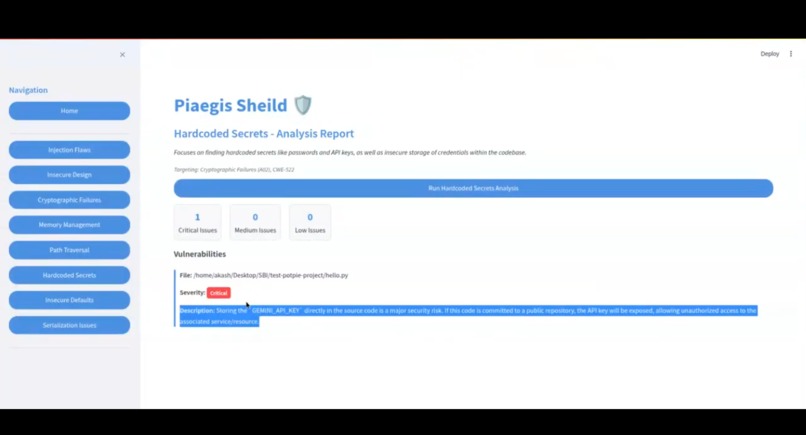
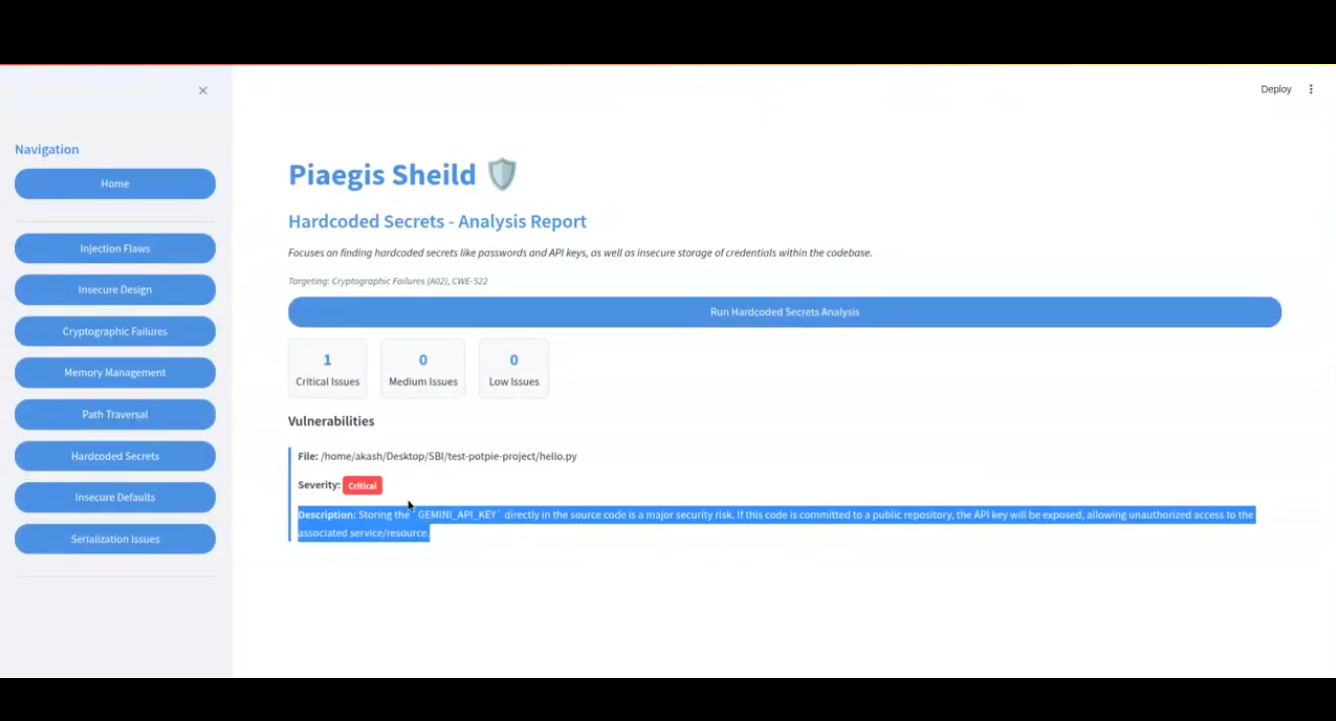
🛡️ Piaegis Shield (SAST)
- LLM-powered static code analysis for .NET, Java, and more
- Understands semantic context beyond pattern matching
- Identifies complex vulnerabilities with greater accuracy
- Provides tailored remediation suggestions
⚔️ Piaegis Sword (DAST)
- Integrates with OWASP ZAP for dynamic testing
- Filters noise from raw reports
- Presents findings in clear, actionable format
- Provides insights on vulnerability implications
🏰 Piaegis Fortify (Interactive Security Debugger)
- Conversational security analysis
- Lets developers ask questions about vulnerabilities
- Discusses security best practices
- Offers context-aware remediation based on codebase history
🔧 How We Built It
- Backend: Python
- Frontend: Streamlit for user-friendly interfaces
- LLM Integration: OpenAI, potentially Google Gemini and OpenRouter
- DAST: OWASP ZAP API integration
- Data Management: PostgreSQL, Neo4j, Redis + Celery
- Containerization: Docker Compose
- DevOps: Jenkins integration
🧗 Challenges We Faced
- ✏️ Prompt Engineering: Balancing accuracy, minimizing false positives
- 🧩 Diverse Codebases: Adapting to different project structures
- 🔌 Tool Integration: Seamlessly working with ZAP and CI/CD systems
- ⚡ Performance: Optimizing for large codebases
- 🔄 Dependencies: Managing multiple services
- ⚖️ Accuracy Balance: Reducing false positives without missing vulnerabilities
- 💻 Platform-Specific Analysis: Tailoring for .NET, Java, Android, iOS
🏆 Accomplishments
- ✅ Functional core components (Shield, Sword, Fortify)
- 🐳 Complete Docker environment
- 🤖 Successful LLM and DAST tool integration
- 👨💻 User-friendly Streamlit interfaces
- 🎯 Focus on actionable insights
- 🔝 Prioritized SANS Top 25 vulnerabilities
📚 What We Learned
- LLM strengths and limitations in security context
- Complexity of comprehensive security testing
- Importance of seamless workflow integration
- Benefits of microservices architecture
- Value of containerization
🚀 What's Next
- 🌐 Enhanced language support (.NET, Java, Android, iOS)
- 🎯 Improved accuracy, fewer false positives
- 🔍 Deeper DAST analysis
- 🧠 Business logic vulnerability detection
- 🔭 Emerging threat detection
- 🔧 IDE and CI/CD integrations
- 📊 Enhanced reporting and remediation guidance
- 🤝 Community engagement
- 📈 Graph-based security analysis
- ⚡ Performance optimization

Log in or sign up for Devpost to join the conversation.