Inspiration
Traditional deep learning models are power-hungry, opaque black boxes that frequently violate basic physical laws because continuous equations have trust issues with floating-point approximations. I wanted to see if we could completely side-step heavy multi-billion parameter networks. The goal was to build an ultra-fast, hardware-bounded architecture that enforces physical constraints directly inside raw, bit-packed memory arrays.
What it does
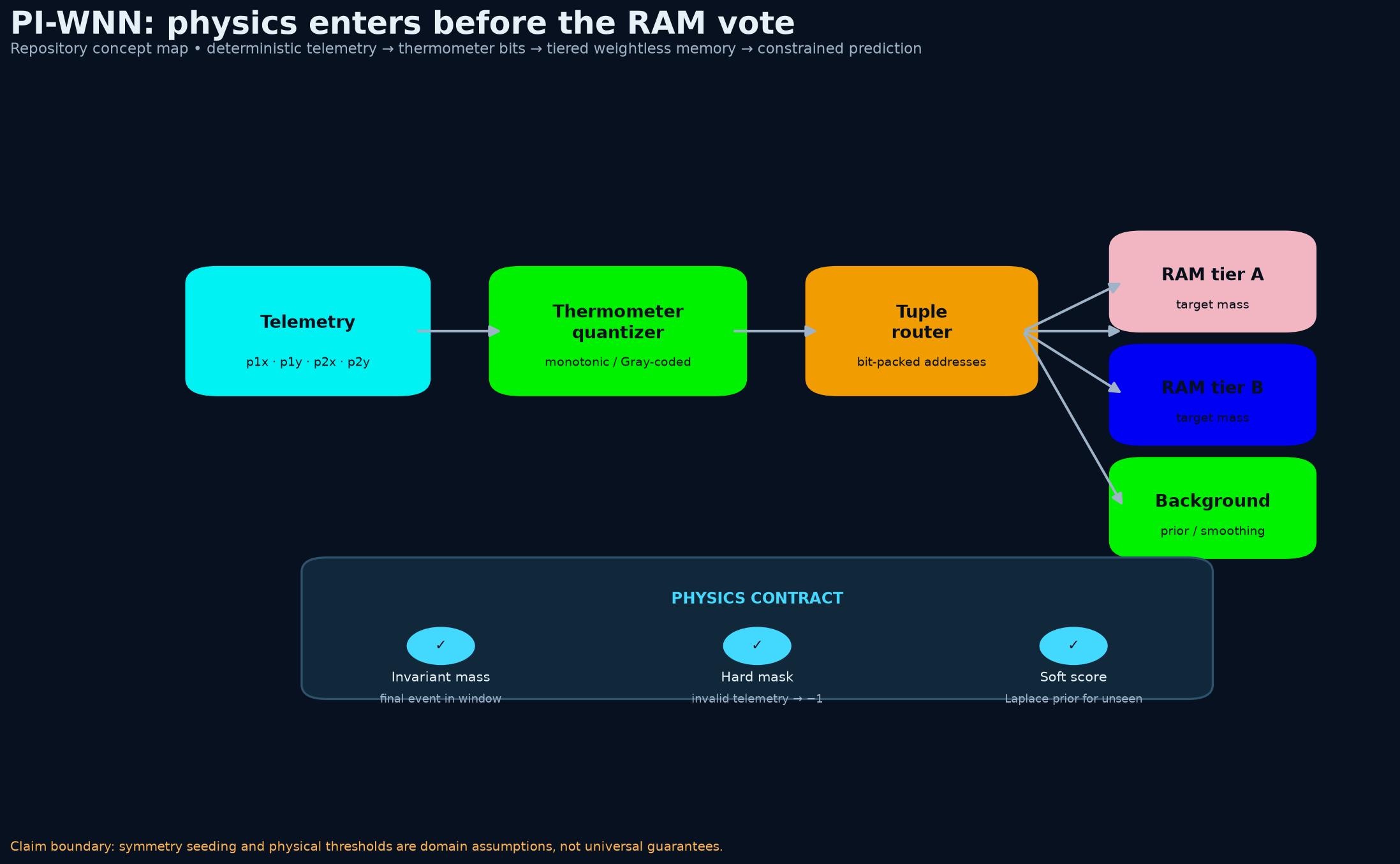
WiSARDINES is a physics-informed weightless neural network (PI-WNN). Instead of shifting floating-point weights via backpropagation, it maps tracking telemetry into deterministic binary tuple addresses across RAM discriminators.
It handles complex data structures using both hard and soft physical constraints:
- Hard Constraints: Telemetry that violates known conservation laws (like mass-tier routing or energy ceilings) is masked entirely at the hardware boundary and returns a strict (-1).
- Soft Constraints: Unseen binary addresses receive logical priors using sparse Laplace smoothing rather than multiplying the dense RAM footprint.
How I built it
The architecture is split into a robust testing pipeline and a bare-metal execution core:
- The Physics & AI Sandbox: Written in Python, featuring custom telemetry encoders, real-world data pipelines, and full continuous baselines to challenge GBTs and PyTorch architectures.
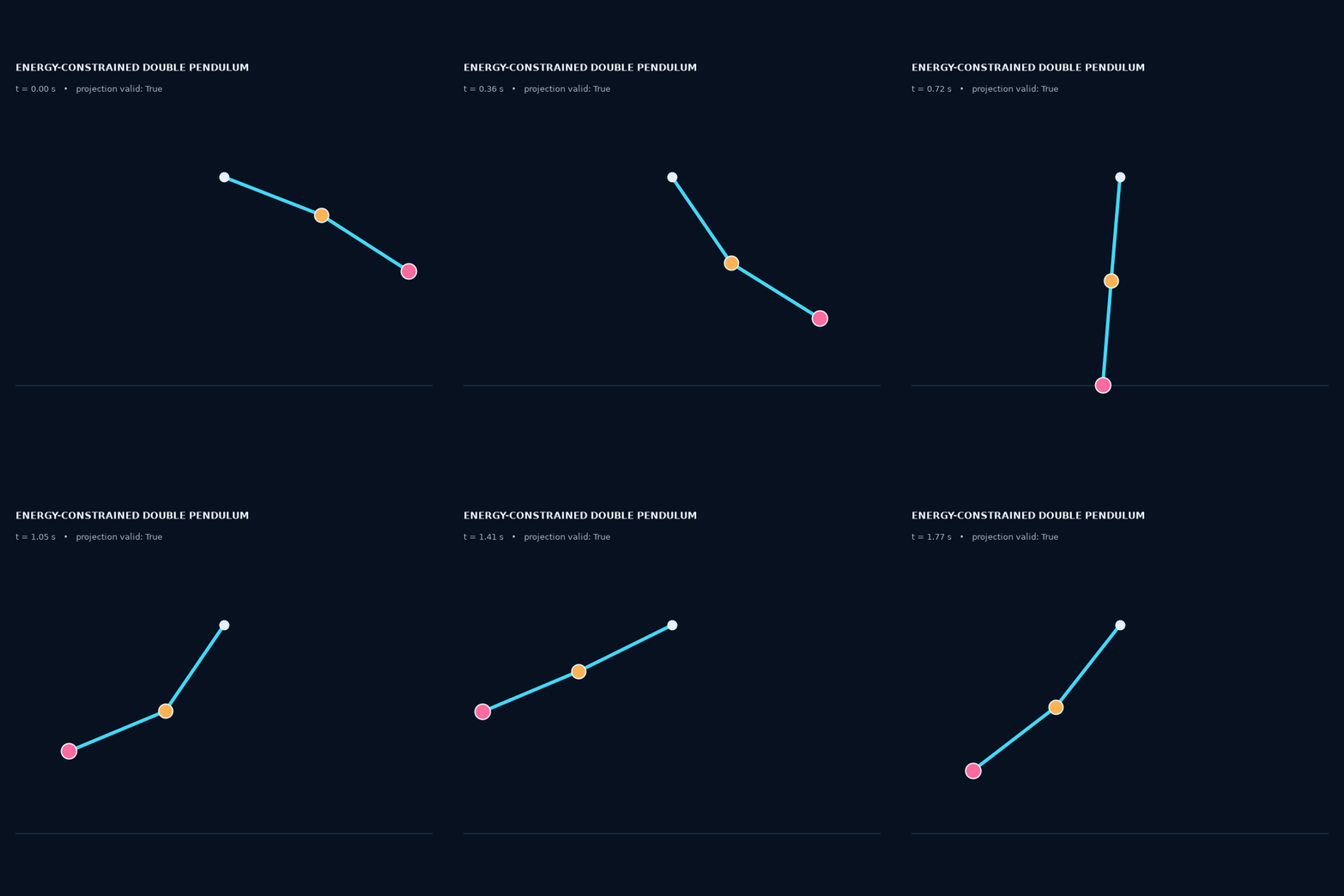
- The Simulation Engines: Built-in tools including an
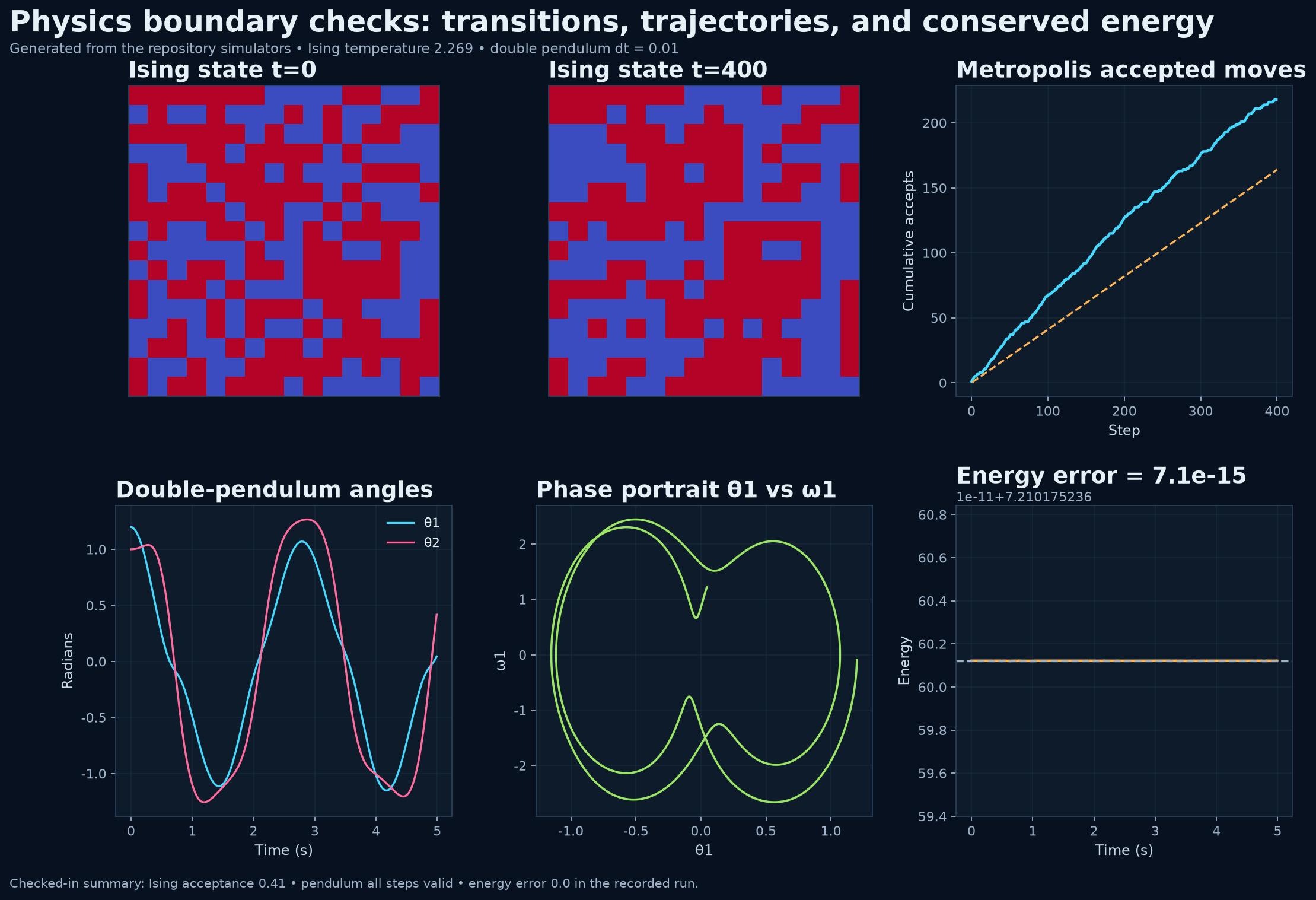
IsingTransitionSimulatorfor Metropolis frequencies and a chaoticEnergyConstrainedDoublePendulumthat maps step updates back to an initial energy budget. - The Embedded Core: A zero-dependency, strict C99 module (
embedded_core.c) optimized for zero-overhead, highly predictable execution loops on low-power microcontrollers. - Quantization: Employs Gray-coded thermometer quantization to maintain a strict binary Hamming distance of exactly (1) between adjacent interior data ranges.
Challenges I ran into
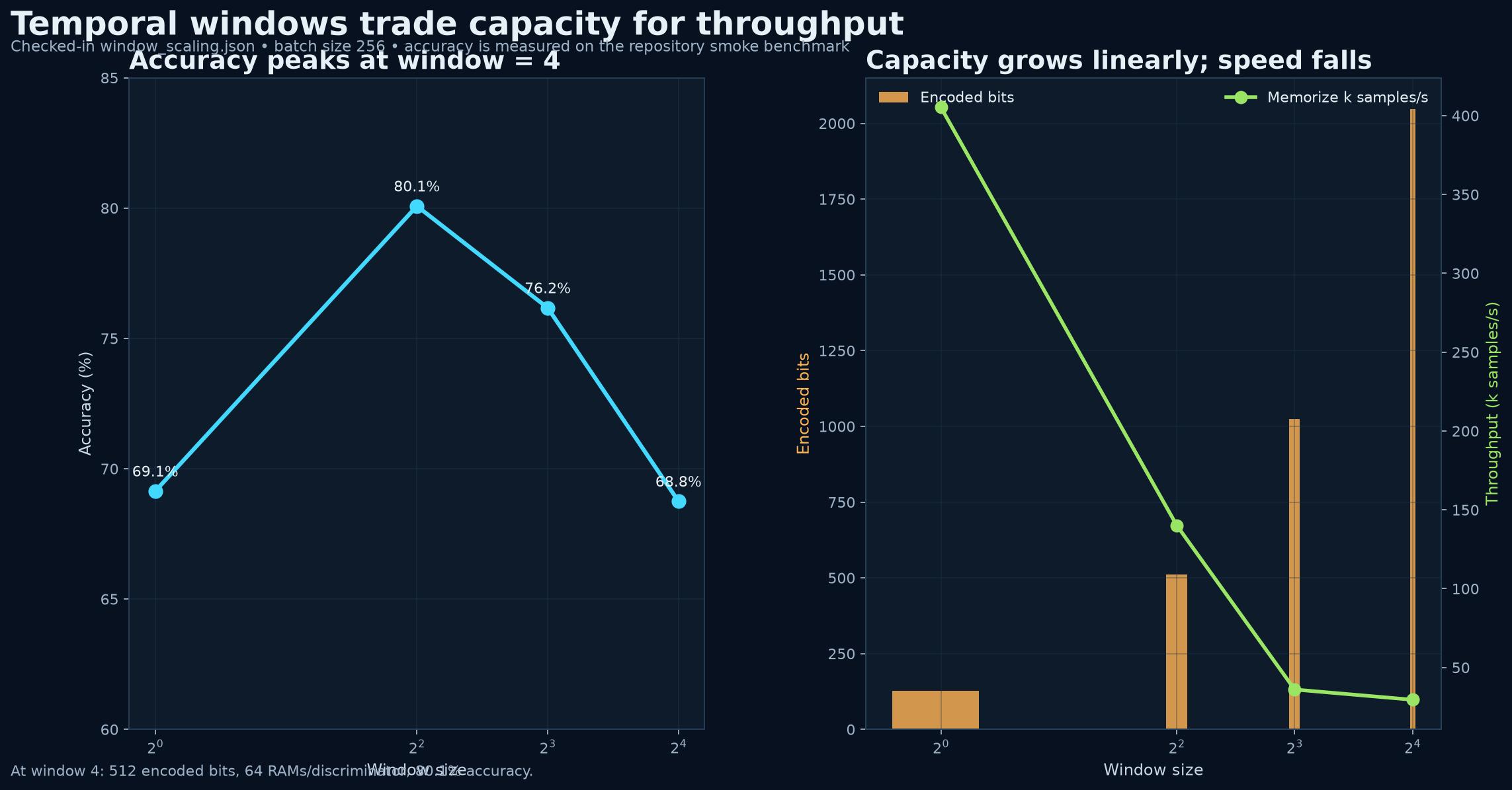
Hardware has a brutal sense of humor, and exponential growth is the punchline. When scaling a tracking tuple size from 8 to 16 bits, the lookup table doesn't double in size—it multiplies the dense RAM footprint by exactly 128 times ((2^{16}) vs (2^8)).
To keep WiSARDINES viable for tiny embedded chips without crashing the memory ceiling, I bypassed dense matrix allocations completely. I designed a highly optimized address-partitioning pipeline utilizing cuckoo_table.py for exact address storage, switching the engine into a sparse, hashed storage footprint that only scales with activated states.
What I learned
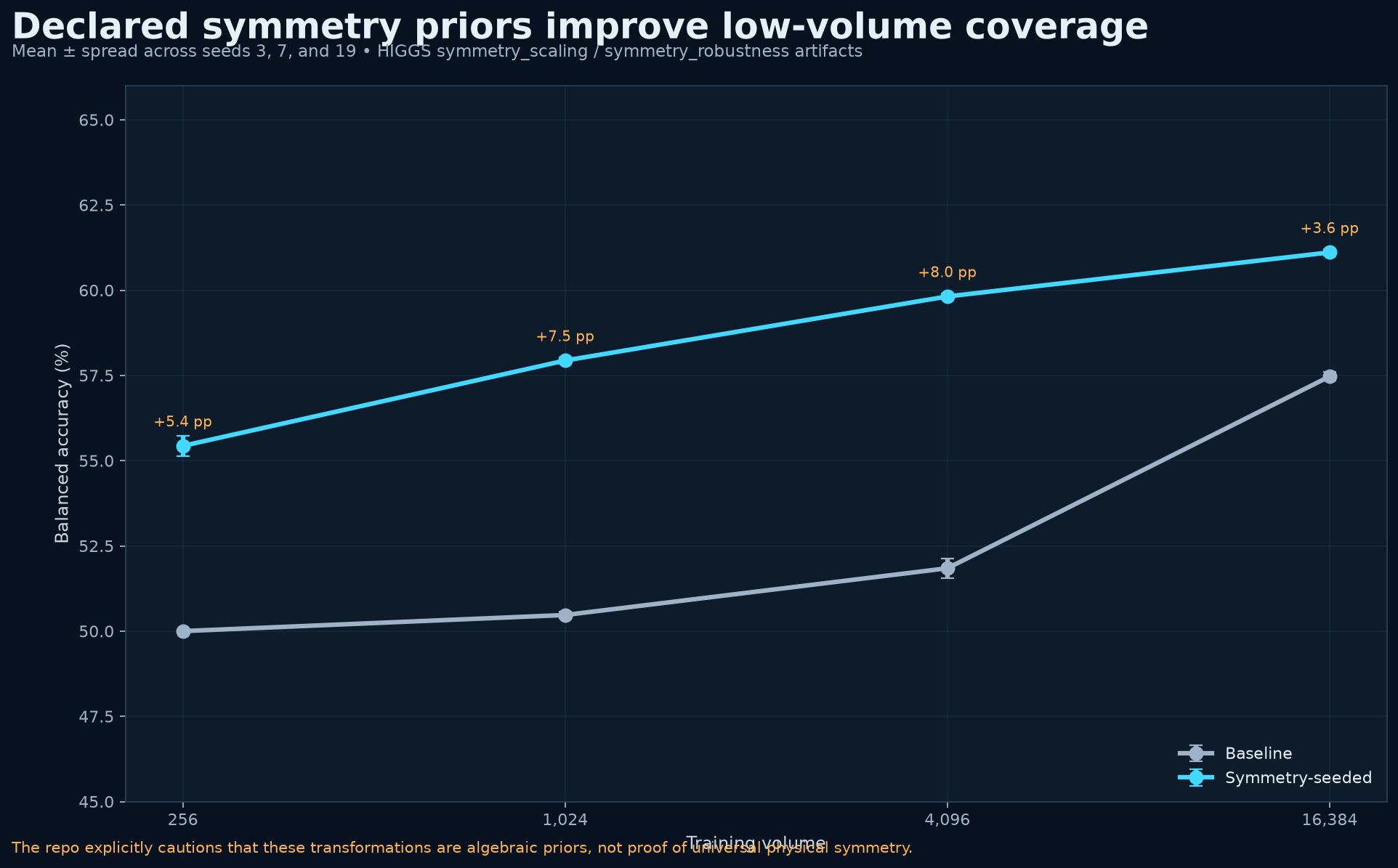
When you write physics-informed code, optimization becomes the ultimate tool for engineering equity. By seeding algebraic data priors (like identity, bit-reversal, and complement orbits) straight into the memory structure, you gain material accuracy lifts on heavy physics benchmarks—like the 1-million-row UCI HIGGS dataset—without needing a massive corporate infrastructure budget to back you up.
Built With
- c
- c99
- data-structures
- embedded-systems
- gray-code
- hashing-algorithms
- machine-learning
- physics-informed-ai
- python
- telemetry
- unit-testing

Log in or sign up for Devpost to join the conversation.