Inspiration
Conventional soil remediation means excavation — dig, haul, dump, repeat — at massive cost and with zero ecological upside. Bioremediation (mycoremediation, phytomining) is proven science, but consultants still plan it manually with spreadsheets and PDFs. I wanted to turn that process into software.
What it does
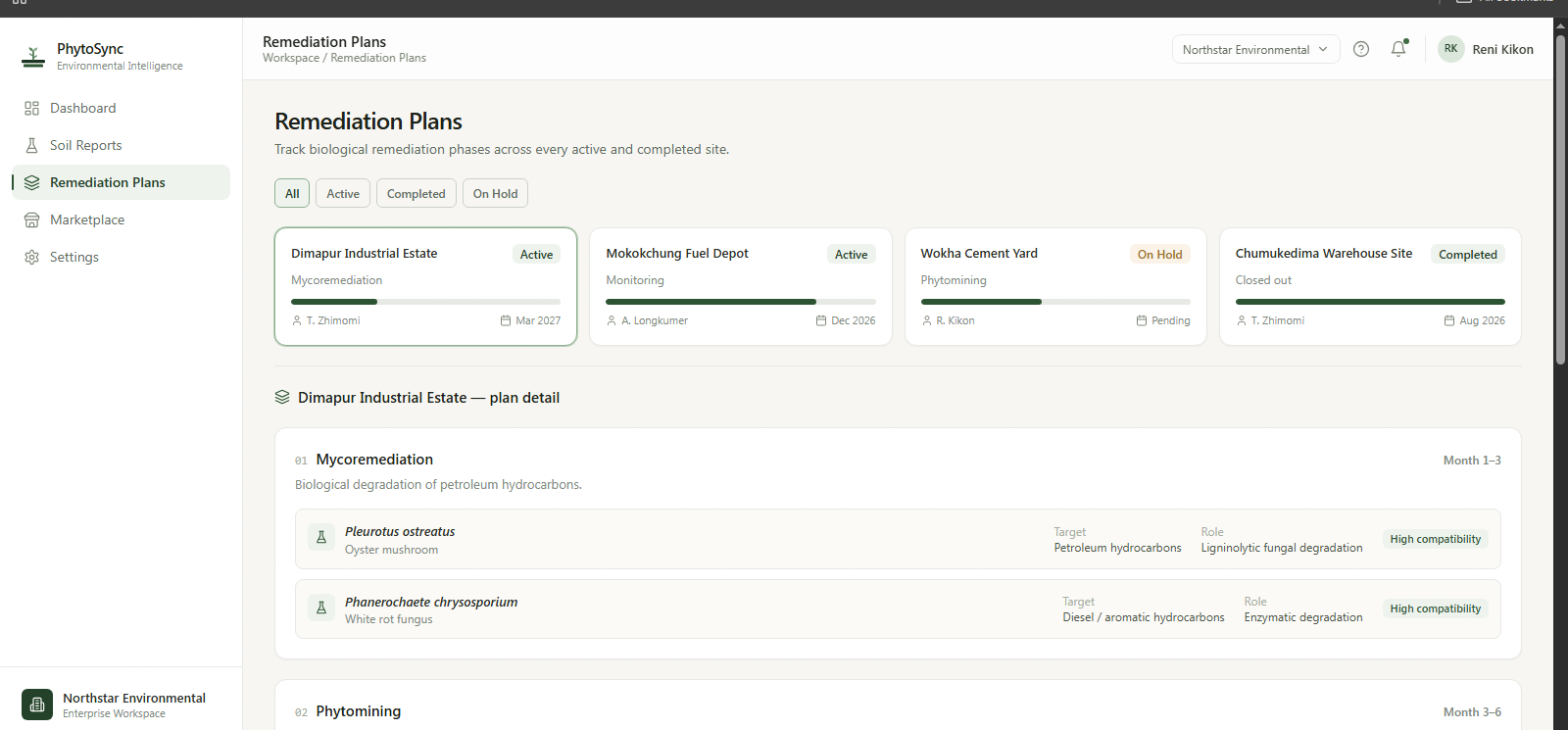
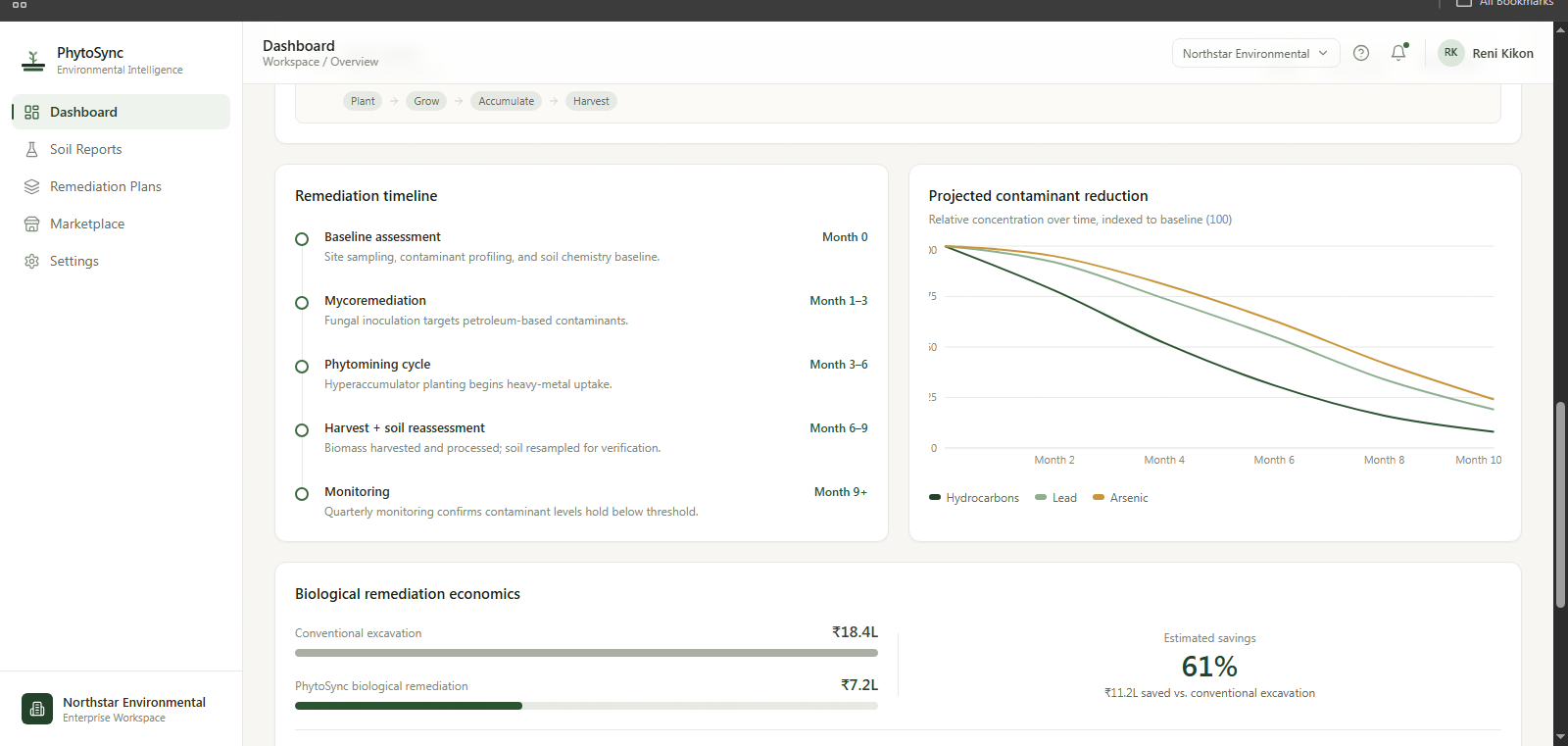
PhytoSync takes a site's soil type and detected contaminants and generates a biological remediation blueprint: matched fungal/plant species, a phased timeline, projected contaminant-reduction curves, and a cost comparison against conventional excavation.
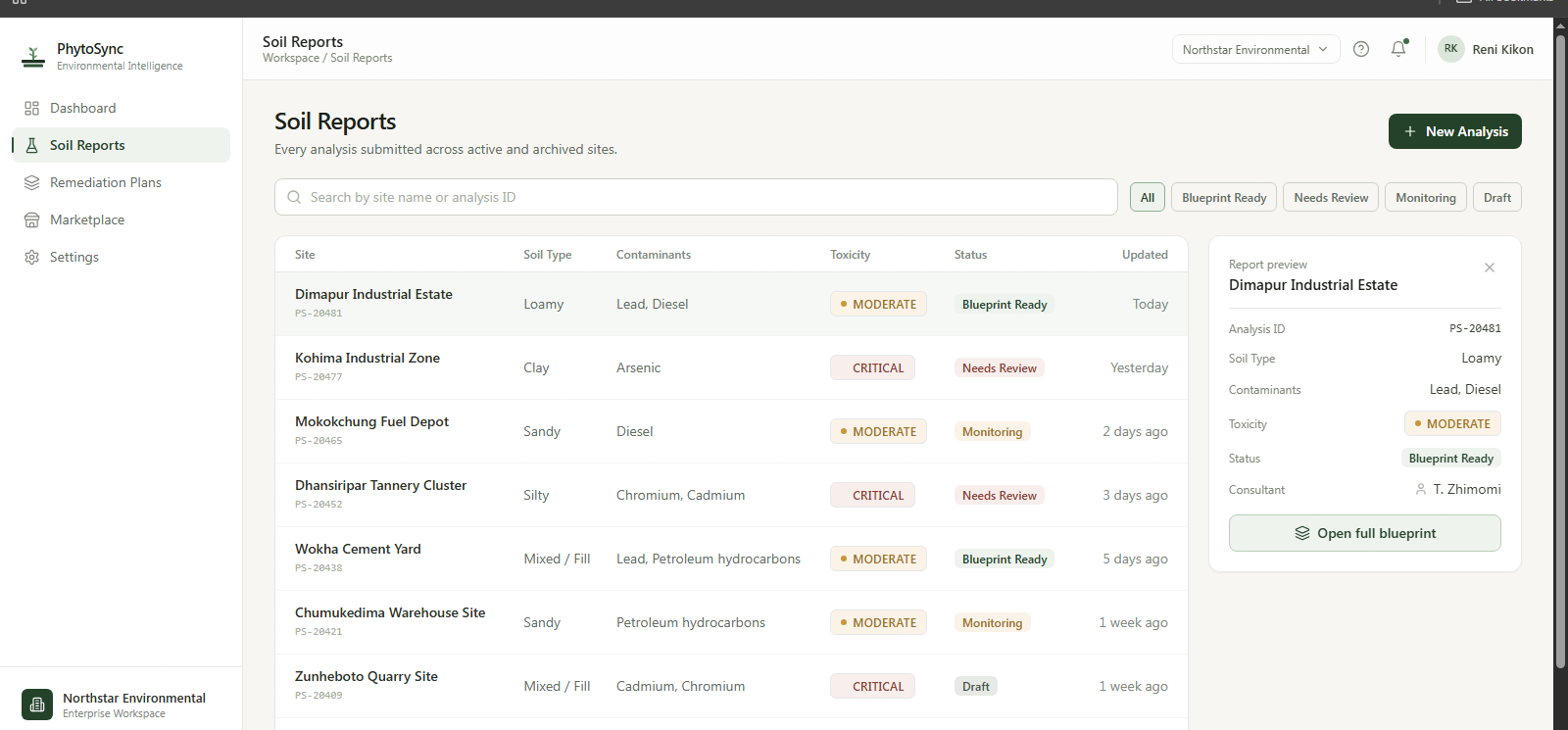
It also tracks active remediation plans, logs soil reports, and connects to a marketplace for biological agents and monitoring equipment.
How I built it
- Next.js 14 (App Router) + TypeScript + Tailwind CSS, with no external UI kit — every component was built from scratch for a restrained enterprise design system
- Recharts for the contaminant-reduction projection chart
- A deterministic blueprint-generation engine (
lib/generate-blueprint.ts) that classifies toxicity, matches fungal/plant agents to input contaminants, and computes phase timelines and cost estimates — all client-side, with no backend call - Domain types (
SoilAnalysis,RemediationBlueprint,BiologicalAgent,PlantSpecies, etc.) modeled to map directly onto a future Supabase schema
Challenges I ran into
Getting the UI to not look like a generic dashboard took real discipline — restrained color use, no gratuitous cards or gradients, tabular numerals, and consistent 8px spacing.
The other challenge was making the mock "blueprint generator" feel intelligent rather than templated. Contaminant matching had to produce genuinely different fungal/plant/phase combinations depending on the input, rather than simply swapping out text.
Accomplishments I'm proud of
I built a fully working, type-safe frontend — zero TypeScript errors on build — that runs standalone with npm install && npm run dev and still looks populated and real without touching a database.
What I learned
I learned how much of "product feel" comes from restraint — fewer colors, a tighter type scale, and deliberate whitespace can feel more credible than heavier, flashier UI.
I also reinforced how far you can get simulating "intelligence" with well-structured rule-based logic before reaching for an actual model.
What's next for PhytoSync
- Wire up Supabase for authentication, persistent soil records, and real organization/workspace data
- Replace the rule-based blueprint generator with an LLM-assisted version grounded in real bioremediation literature
- Add field-verification workflows so consultants can log actual post-treatment soil readings against the projected curve
Built With
- nextjs15
- rechart
- tailwindcss
- typescript

Log in or sign up for Devpost to join the conversation.