Inspiration
Our inspiration was that we felt bad for gardeners and farmers who don't have time to focus just on their plants. We saw that they weren't able to manage their time properly since gardening and farming weren't their only jobs. They just did this as a passion. So, we came up with this idea where if we take a picture of a plant leaf, it will detect if it is healthy, at risk of disease, or diseased. This would help people save a LOT of their time, since they don't have to analyze their plants every day or week. They just have to take a picture of it.
What it does
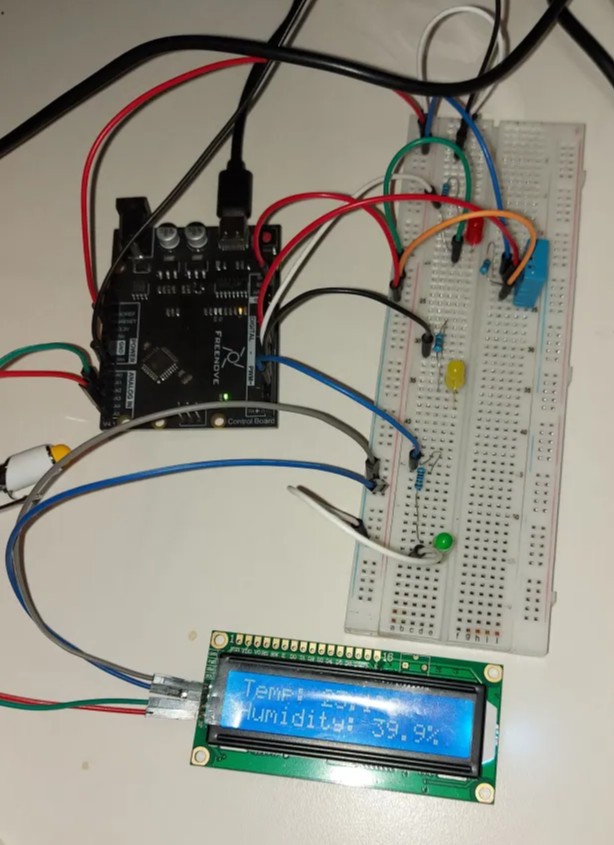
PhytoSense is an intelligent crop disease prediction system that assists plant owners and farmers in identifying possible plant diseases before they manifest. Crop conditions are tracked in real time by the system using a trained machine learning model and using a combination of temperature and humidity sensors, along with a leaf picture analysis. A dashboard and LEDs on the hardware indicate early risk levels, and the machine learning model predicts the start and severity of the disease by examining the patterns in leaf color and texture. The system alerts the farmer based on these forecasts and offers practical intervention recommendations, assisting in lowering crop loss, minimizing the usage of pesticides, and boosting total production. PhytoSense uses a combination of the following to forecast possible crop diseases: Analysis of Leaf Images: identifying minute alterations in color and texture that occur before symptoms become apparent. Tracking Environmental Data: keeping an eye on the humidity and temperature that affect the growth of pathogens. Machine Learning Prediction: forecasts the probability of disease onset in the next few days by combining sensor and visual data.
How we built it
First, we split up our team respective to our adequate skills. Two members worked on the User Interface, front-end and back-end. Another member greatly contributed to the pitch and presentation. Finally, the last member worked more predominantly on hardware but also oversaw all the progress. We built PhytoSense using Arduino for hardware; html, css, javascript and python for the software and canva for the presentation. For our machine learning, we used a website called Teachable Machines to discern between a plant that is diseased, at risk of disease, healthy or not a plant entirely. With all of these components, we were able to create a finalized application.
Challenges we ran into
While working on the arduino, we had difficulty with connecting the hardware with the back-end software. With the help of mentors, we were able to link the arduino with the back-end machine. Another challenge that we faced was getting the machine learning to work. We used Teachable Machines to identify plants that were healthy, at risk of disease, diseased, or not a plant. Our challenge was to prevent the website from overloading and timing out. After three tedious attempts, we successfully developed a machine that could identify the health of plants. Our final challenge was to connect our model with our code. At the start, we had a lot of problems in both the code and the model. Connecting both took a lot of tries and in the end we were able to link both.
Accomplishments that we're proud of
We are proud of conquering a lot of problems. Despite our inexperience in the fields of Computer-Science, we were able to persevere and build an application. We split up the work among our team and brought our team to a successful culmination. Each of us were subject to individualized struggles and we all rose above them to create a solution which was greater than the struggle was negative. Lastly and most importantly, we also bested our natural limits, victoriously warding off our fatigue, both mental and physical.
What we learned
We learned how to train models and machines. By using Teachable Machines, we were able to generate a machine that could perform complex tasks. With this model, we learned how to link it with code. We gained experience with connecting models to code. Additionally, by working with Arduino, we were able to sharpen our hardware skills. We learned how hardware can pair up with software to create a meaningful project. We gained experience with making presentations and preparing pitches. We also learned core skills, like diligence and teamwork. We advanced our knowledge in VS code and related programming languages such as HTML, Python, and other front-end/back-end tools.
What's next for PhytoSense
We are planning to make this app as a more fun, interactive way. We are planning to add a gamification system into PhytoSense. For every plant you add in the app, you will get 10 points. This way, the users of our app will feel more engaged while using our app. When they reach a certain number of points, they will get a reward. For example, they might get like a $15 Tim Hortons gift card or a $50 Amazon gift card. It will all depend on how many points they have. Also, this will detect the location and the season to know if the color of the leaves change or not. For example, in fall in Canada, the leaves change color and we have to address this challenge differently. Also, we have to change the frontend so that it will notify the user and give them an alert of their plant's status.


Log in or sign up for Devpost to join the conversation.