Inspiration
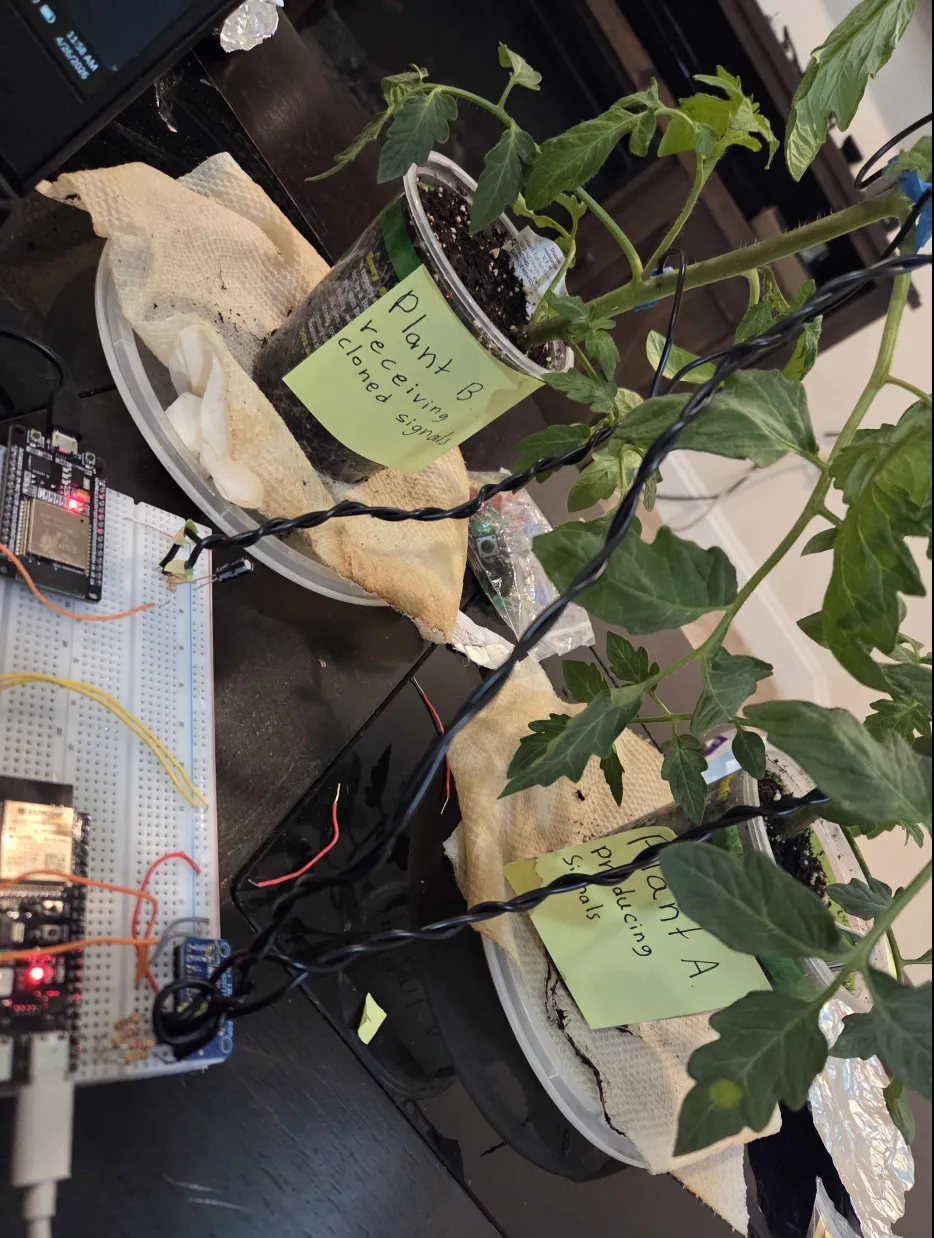
When we saw the prompt was related to cloning, we focused on biology but realized actual cloning was not feasible for us. Instead, we explored real world biological systems and discovered that plants produce electrical signals when under stress. This concept stood out because it bridged biology and technology in an interesting way, and it became the foundation for our project direction. ## What it does When we found out the prompt was related to cloning, we focused on biology but knew actual cloning was not realistic. Instead, we explored natural systems and discovered that plants send electrical signals when stressed, such as when they are touched or damaged. This stood out because it connects biology and technology, and became the direction for our project.Our project, PhytoClone, copies stress signals from one plant and sends them to another. We detect these small electrical signals using electrodes, process them with simple circuits, and transmit them wirelessly using a microcontroller. The signal is then recreated in another plant, while we monitor its response to see if it reacts.
How we built it
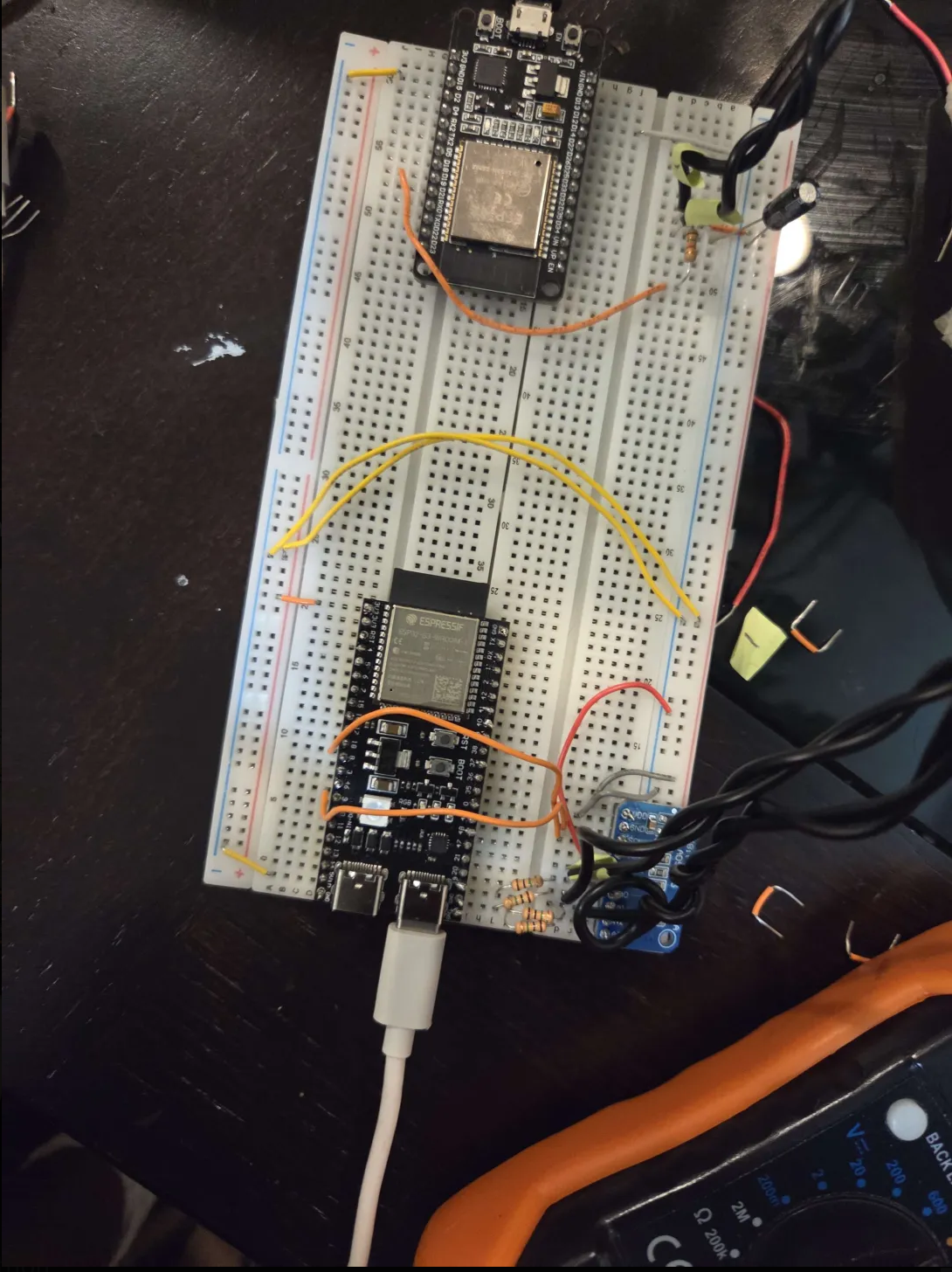
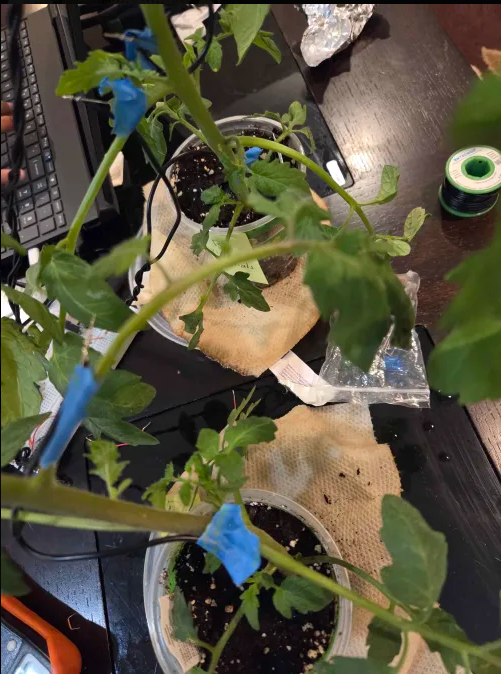
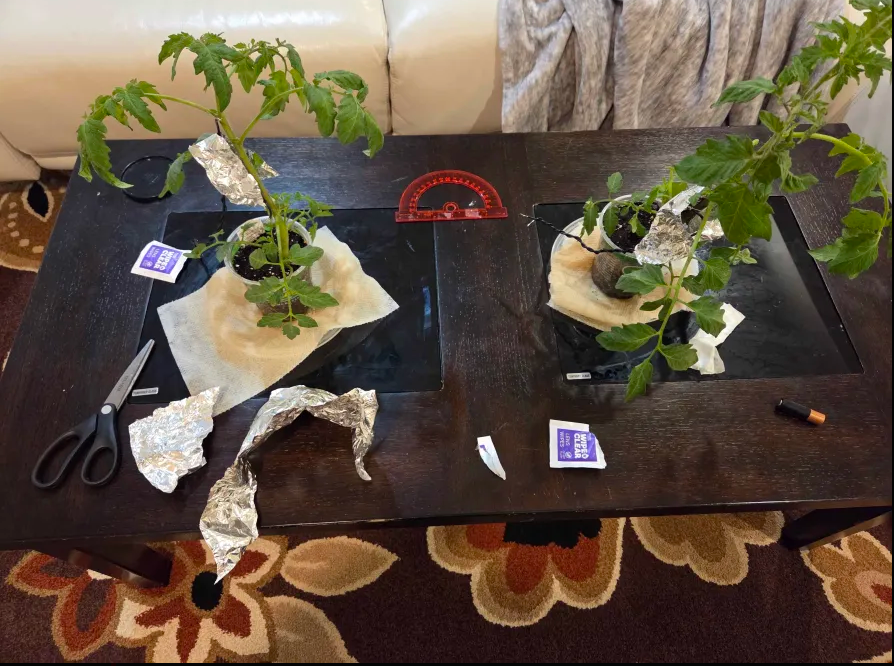
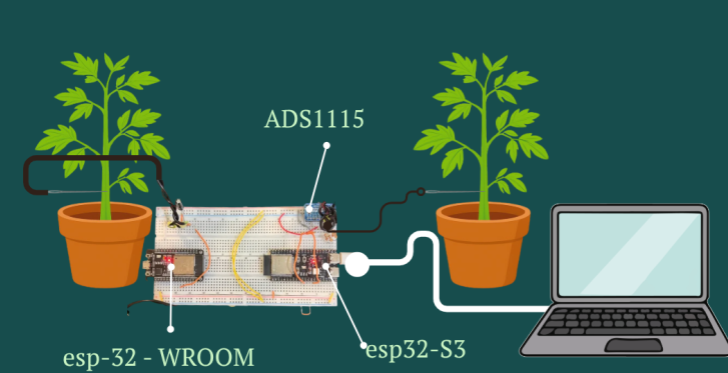
PhytoClone started as a challenge where we asked how we could capture a very small electrical signal from a plant, send it wirelessly, and recreate it in another plant using simple parts and open source code. To do this, we placed two small needle electrodes into the stem of a tomato plant. One electrode picked up the signal, and the other acted as a reference point. When the plant was stressed, it produced tiny electrical signals that traveled through its stem. Because these signals are extremely weak, we had to amplify them right away using a simple transistor circuit. We also added a filter to remove noise and keep only the slow biological signal we were interested in. After cleaning the signal, we sent it into a high-precision converter that turned it into digital data. A microcontroller then read this data, tracked the normal signal level, and detected when a stress event happened. When it noticed a change, it sent the signal wirelessly to another microcontroller connected to a second plant. This allowed us to transfer the signal from one plant to another in real time. On the receiving side, the second microcontroller recreated the signal and adjusted it to match the natural strength of a plant’s electrical signal. It then sent this signal into the second plant using another set of electrodes. We also added a second set of sensors to monitor how the second plant responded. This helped us see if the plant reacted to a signal that did not originally come from itself. In the end, we built the entire system on a breadboard using basic electronic parts and simple code, creating a working connection between two living plants. ## Challenges we ran into We were planning to use more ESP-32s but we found out that 2 of our ESP were destroyed due to static discharge from mishandling the controller. Because of our limited amount of ESPs that we had it almost made it impossible to complete our project, however we had found one more ESP deep inside of our storage box. Another challenge that we had was measuring the output from the plants because the voltage was so low that outside signals were interfering with it.
Accomplishments that we're proud of
We are especially proud that we were able to successfully transfer stress signals from one plant to another. This was not just a hackathon project, but an effort to connect science with real world applications. We turned a complex biological idea into a working system, which made the project more meaningful and impactful. We also thought about how this could be used in the future. It could develop into a startup or a tool for agriculture, helping farmers detect plant stress early and prevent damage from spreading. Overall, we aimed to create something that goes beyond the competition and shows how technology can solve real world problems.
What we learned
During this hackathon, we learned that complex ideas can be achieved with research, testing, and teamwork. At first, we were unsure how to work with plant electrical signals, but through experimentation we learned how to capture and transmit them. This improved our problem solving and showed us how to turn an idea into a working system quickly. We also learned how biology and technology can connect in unexpected ways, since we did not know plants could send electrical signals before this project. Finally, we started thinking beyond the hackathon and considered real world uses, such as helping farmers detect plant stress earlier, showing the importance of creating impactful projects.
What's next for Phytoclone
PhytoClone shows that electrical signals from one plant can be transmitted to another using technology. We discovered this idea while researching how plants respond to stress, which made us think about expanding it into a larger system. Instead of just two plants, we could create a network where many plants are connected and share signals, similar to natural underground root systems. In this system, a stressed plant could send warning signals to others nearby. For example, if a plant at the edge of a field is damaged, it could alert other plants before the threat spreads. Those plants could then prepare their defenses early. This shows how technology could help plants communicate and potentially protect each other in new ways. ## Ai Usage Throughout the project, we used AI as a quick reference tool to double check component values, verify circuit calculations, and help debug small issues. For example, it helped us confirm filter settings and understand why certain signals were not working as expected. This saved us time on technical details so we could focus more on building and testing. However, the core of PhytoClone came from our own work. We came up with the idea, researched the biology, chose the materials, and built the system ourselves. The most important parts of the project came from hands on experience, like placing electrodes into the plant and observing real signals. These were things we learned through trial and error, not from AI.


Log in or sign up for Devpost to join the conversation.