-
-
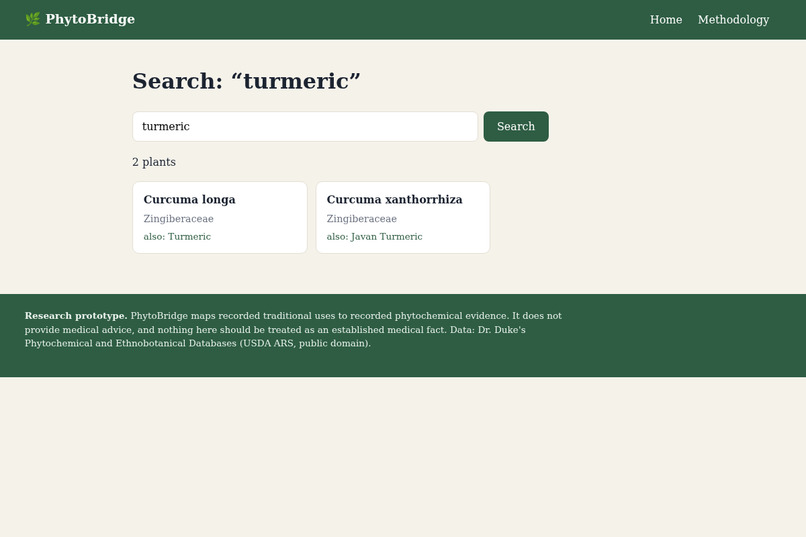
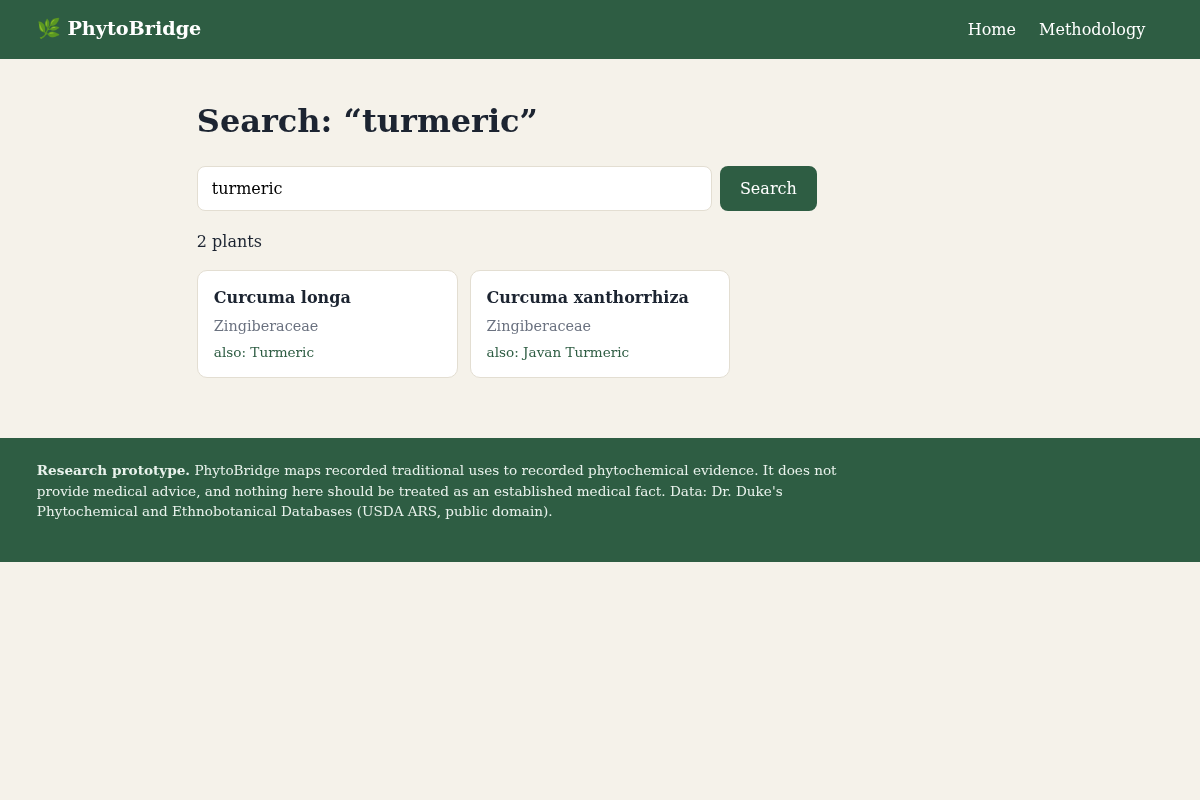
Search 'turmeric' resolves to the exact botanical species: Curcuma longa (Zingiberaceae)
-
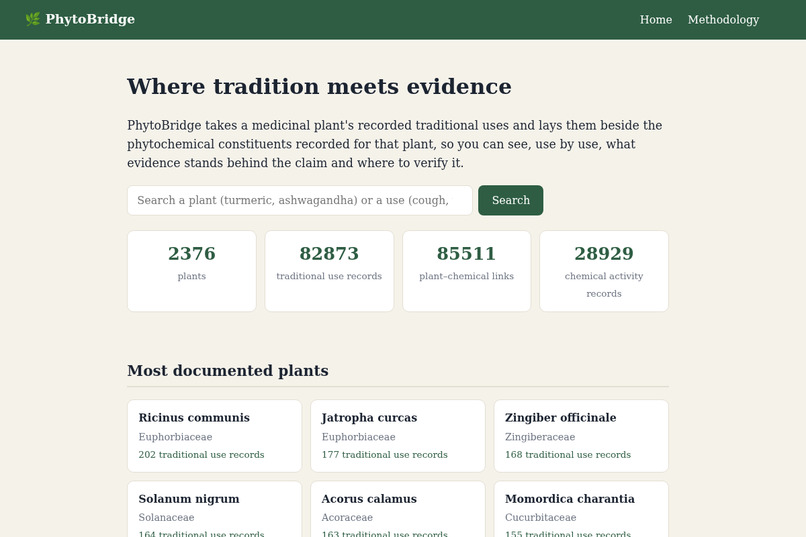
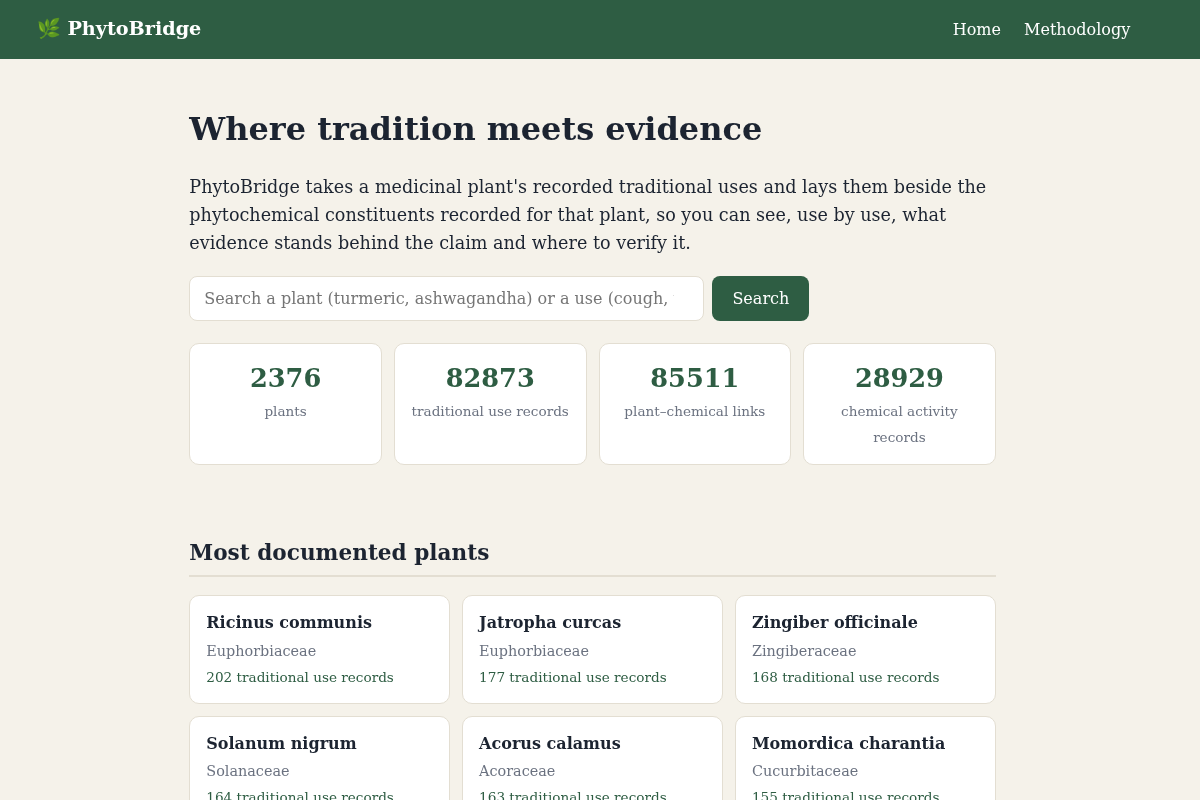
Home: 2,376 medicinal plants, 82,873 traditional-use records from Dr. Duke's USDA ethnobotany data
-
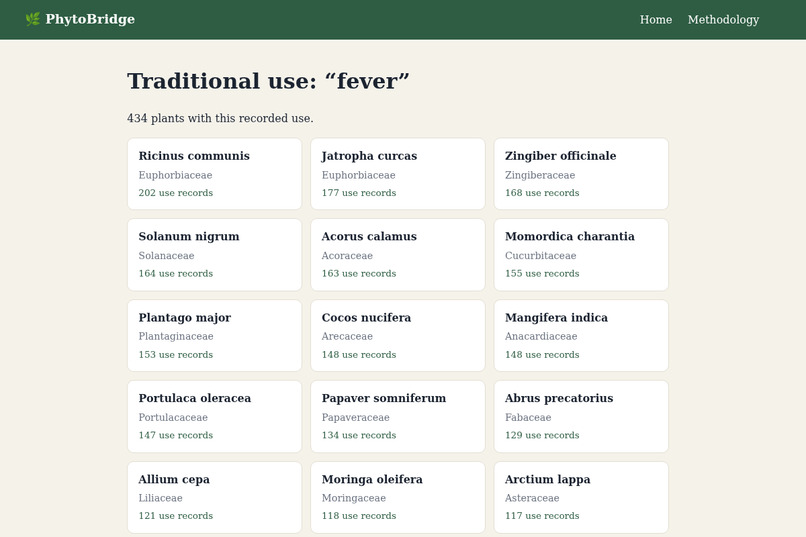
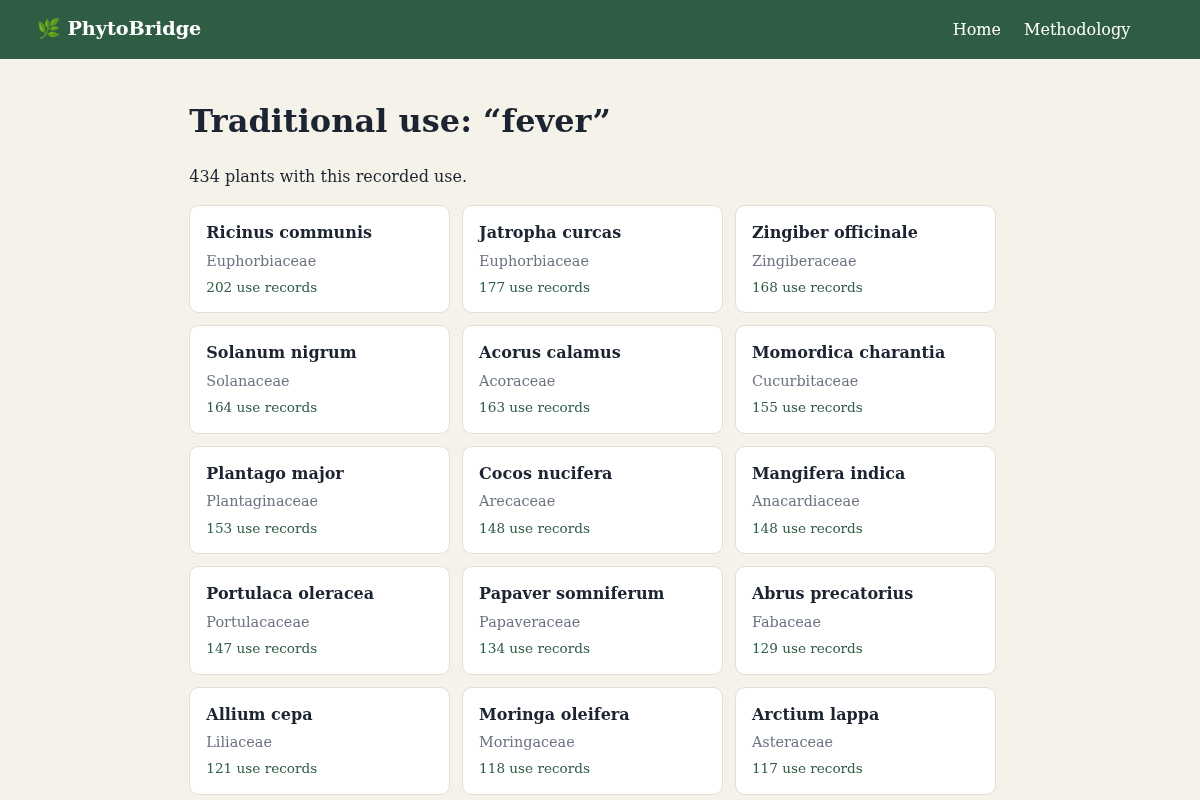
Use view: 434 plants documented for fever, ranked by number of constituents
-
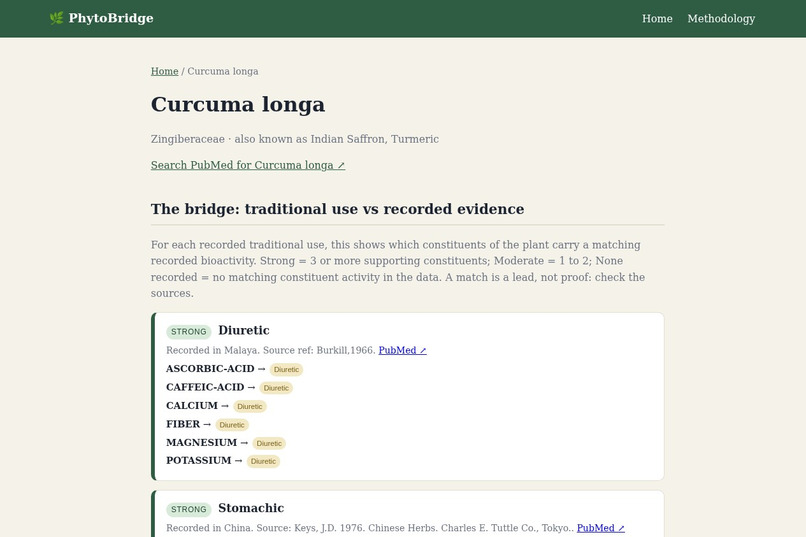
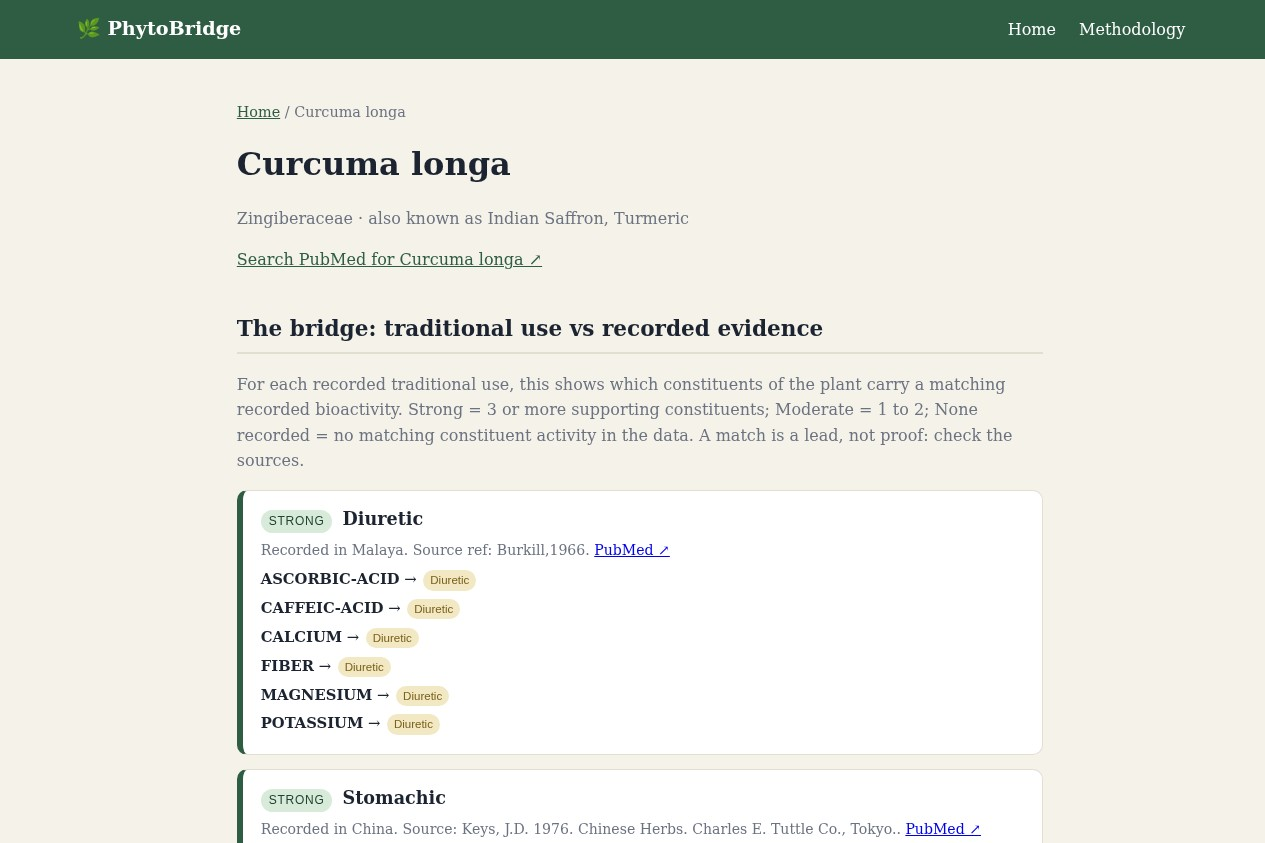
Plant bridge: Curcuma longa uses mapped to recorded constituents, incl. curcumin
Inspiration
Most of the world's medicinal plant knowledge lives outside databases: in folklore, family remedies, and ethnobotanical records collected over decades. That knowledge is scattered, poorly cited, and easy to misread. People who search a traditional remedy online rarely learn whether its active compounds were ever isolated, studied, or contradicted. EthnoHack's Digital Health & Phytotherapy track asks how to connect phytotherapy evidence to real contexts, and that gap is exactly where PhytoBridge started.
What it does
PhytoBridge is an evidence explorer for traditional plant remedies. Search a medicinal plant (or a condition) and the app shows, side by side:
- Traditional layer: recorded ethnobotanical uses of the plant, drawn from Dr. Duke's Ethnobotanical Database (USDA), with the activity/activity-sourcing data that database carries.
- Science layer: the phytochemical constituents associated with the plant, their recorded biological activities, and links out to PubMed literature so every claim can be checked at its source.
- Bridge view: for each traditional use, which recorded constituents and activities support or don't support it, shown as an evidence ladder rather than a verdict.
- Safety rails: the app is explicitly a computational prototype, not medical advice; it separates recorded data from interpretation and flags where evidence is thin.
How we built it
- A Python data pipeline downloads and cleans Dr. Duke's ethnobotany and phytochemistry tables (public-domain USDA data), plus plant metadata, into a compact JSON dataset.
- A Flask + vanilla JS web app serves searches, the plant-evidence pages, and the bridge view. No API keys, no paid services: the whole stack runs free, and the demo is deployed on Render.
- PubMed links are generated per claim so a reader can verify the underlying literature themselves.
Challenges
- The Duke database is a set of flat text tables with messy plant names and inconsistent activity vocabulary; normalising it into a queryable evidence graph took most of the engineering time.
- Designing the presentation so the app never asserts efficacy: it maps claims to evidence, always with sources, and states its limitations openly.
What we learned
- How ethnobotanical data is structured in practice, and how much interpretation sits between a recorded folk use and a laboratory result.
- That a responsible health tool can be built on public-domain data alone when the design goal is transparency instead of prescription.
What's next
- Adding cross-cultural comparisons of the same plant's uses, and a biodiversity view of where the plants grow and which are at conservation risk.
PhytoBridge is a hackathon research prototype. It does not provide medical advice; nothing in it should be treated as an established medical fact.
