-
-
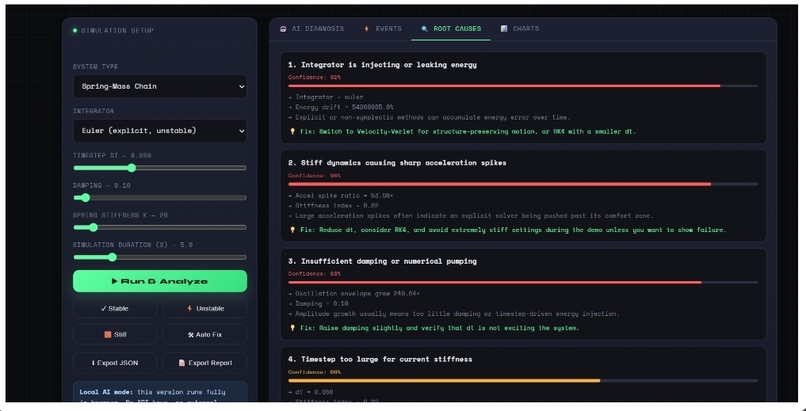
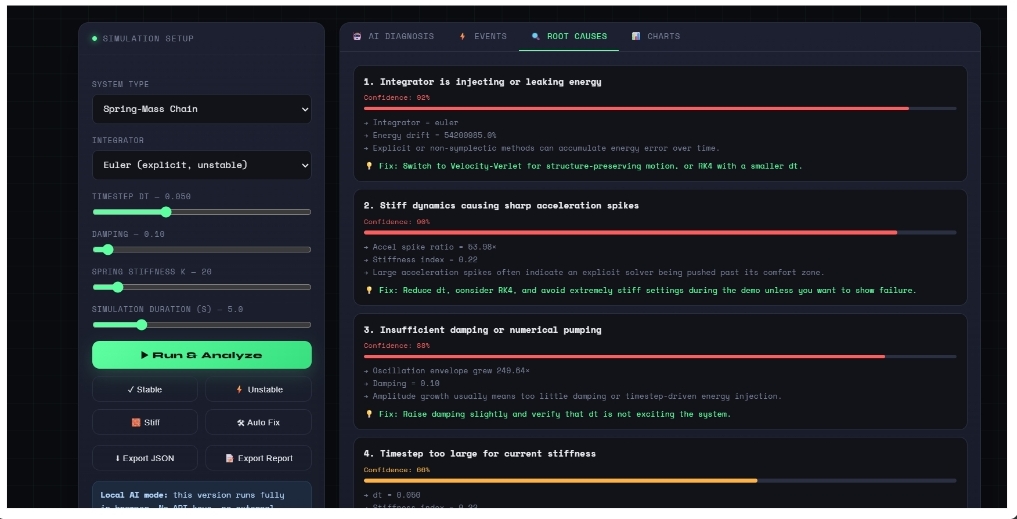
Root causes
-
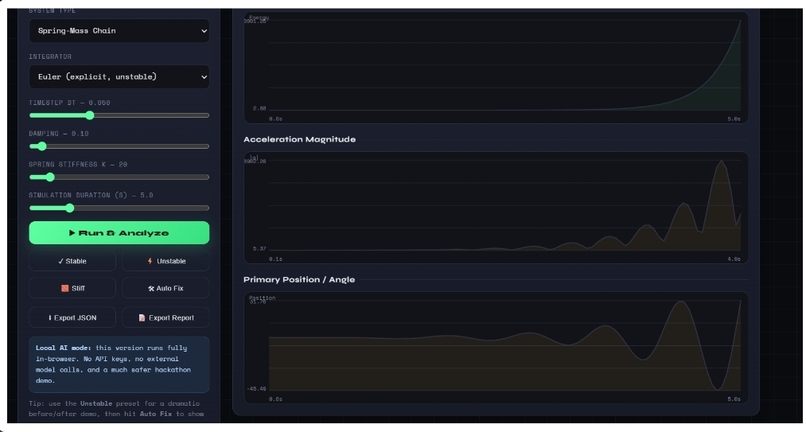
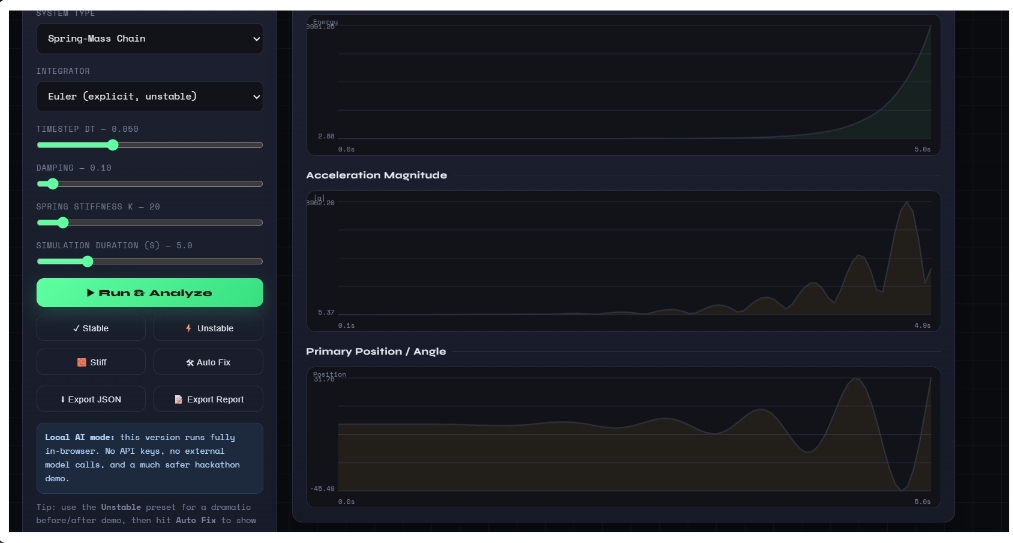
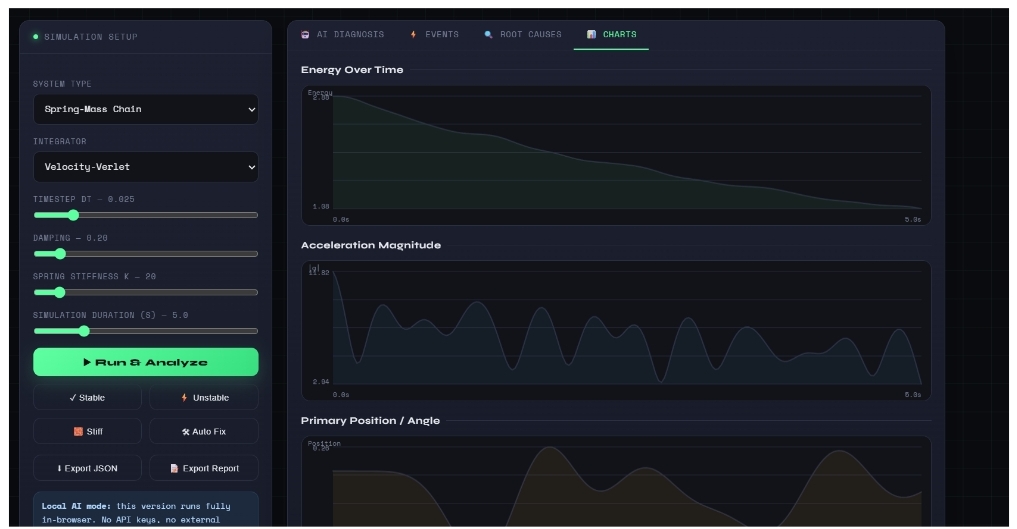
Charts
-
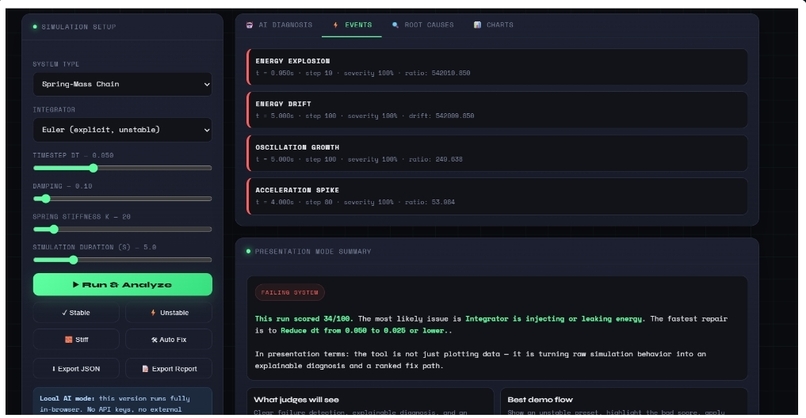
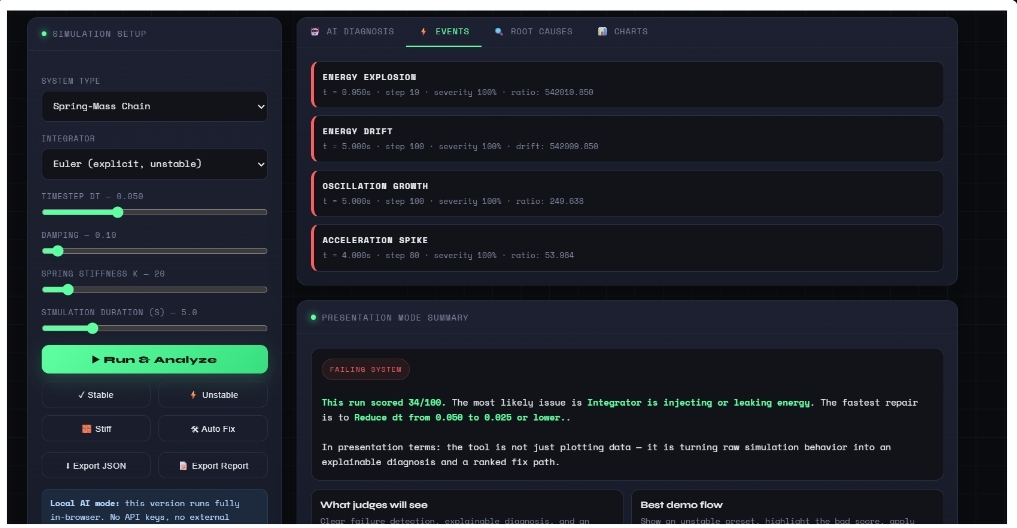
Events
-
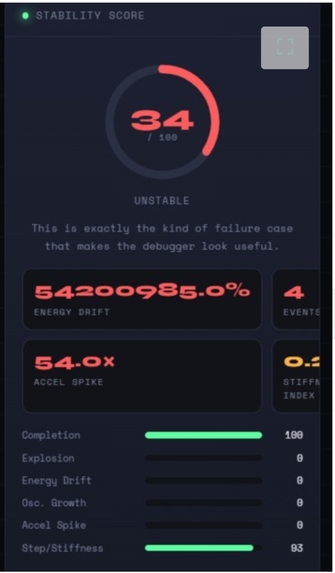
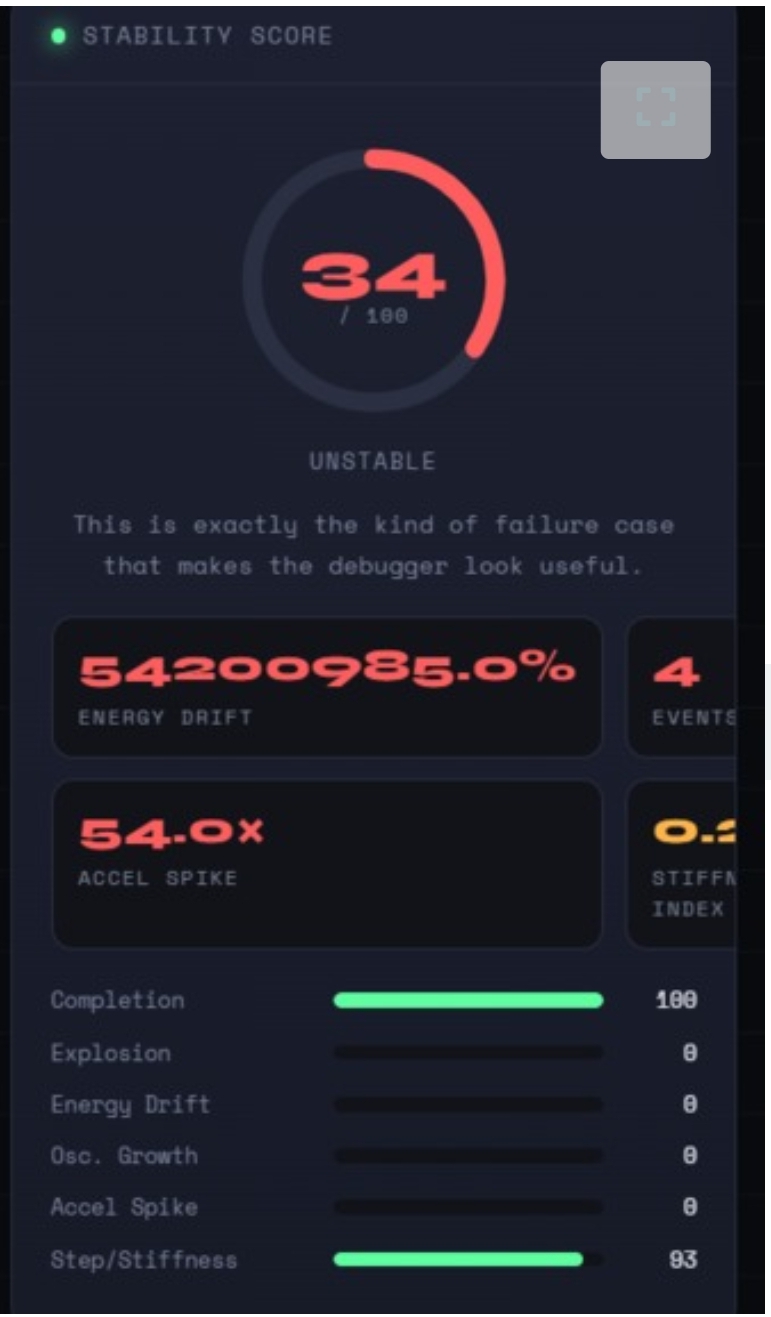
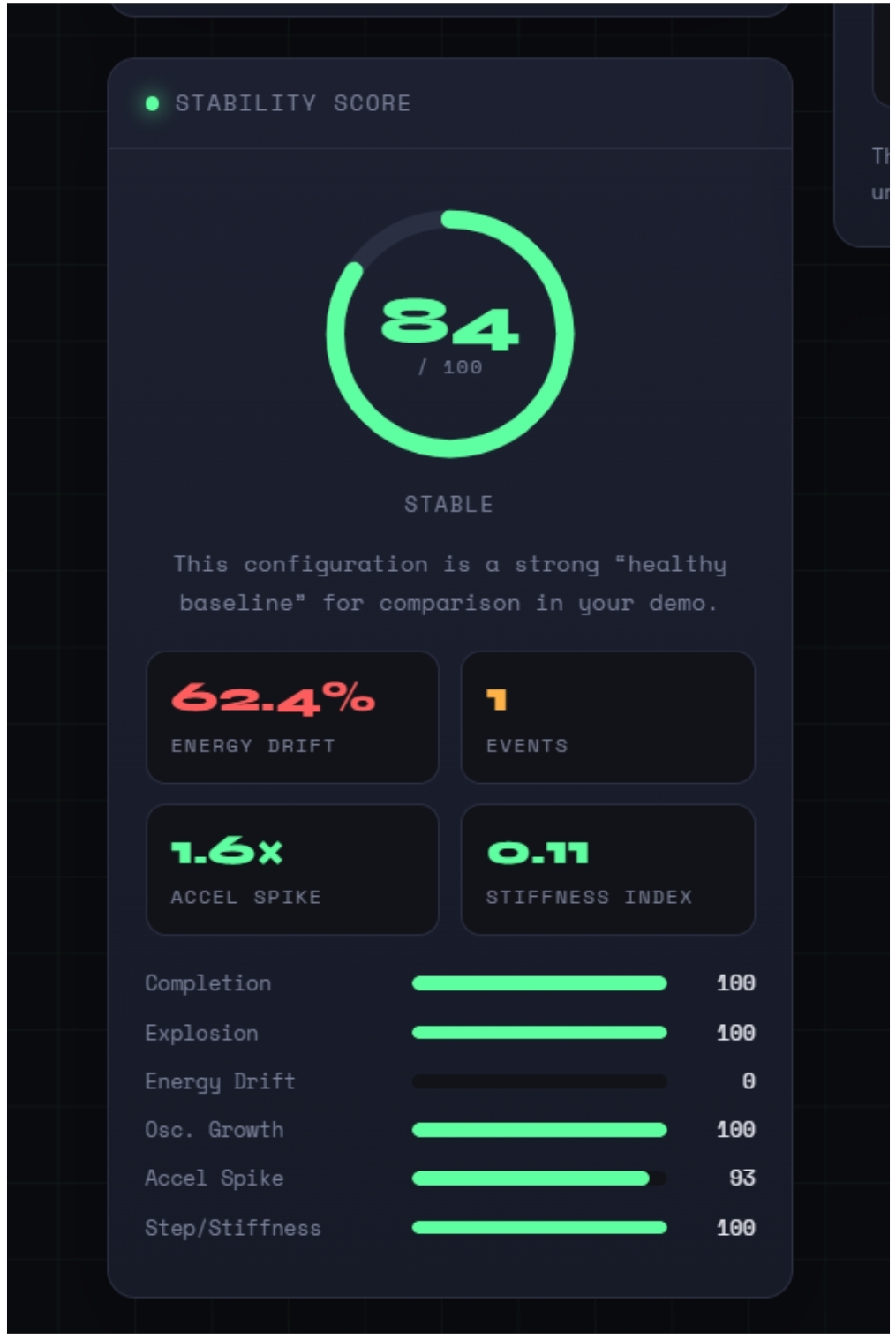
Stability score
-
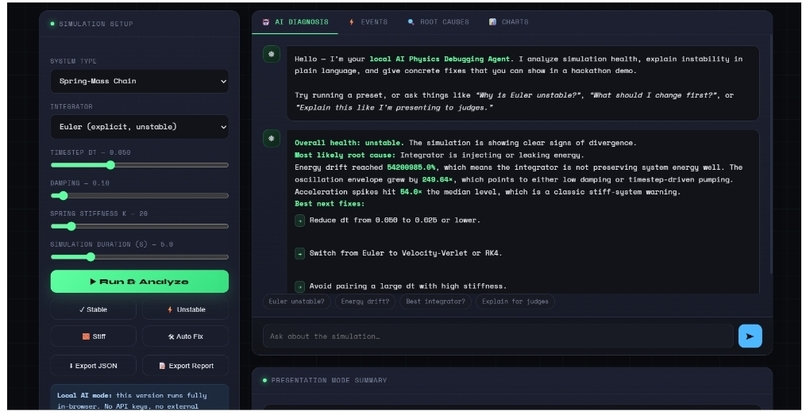
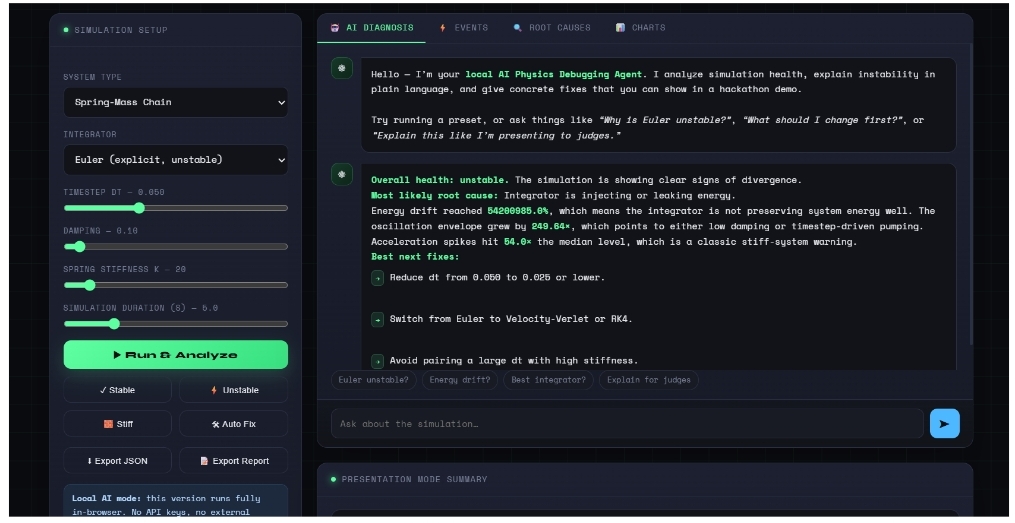
Ai suggestions
-
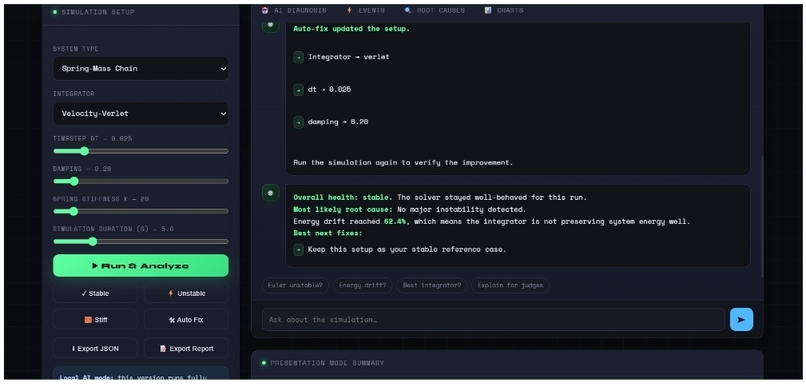
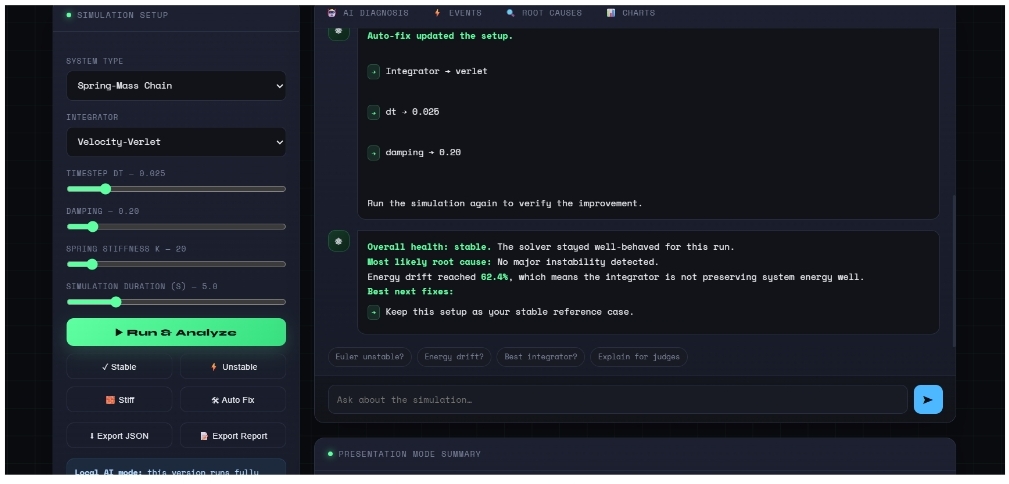
Auto fix feature
-
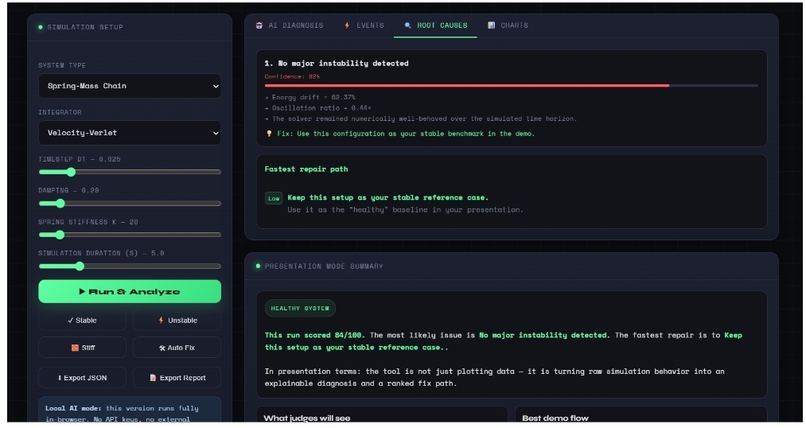
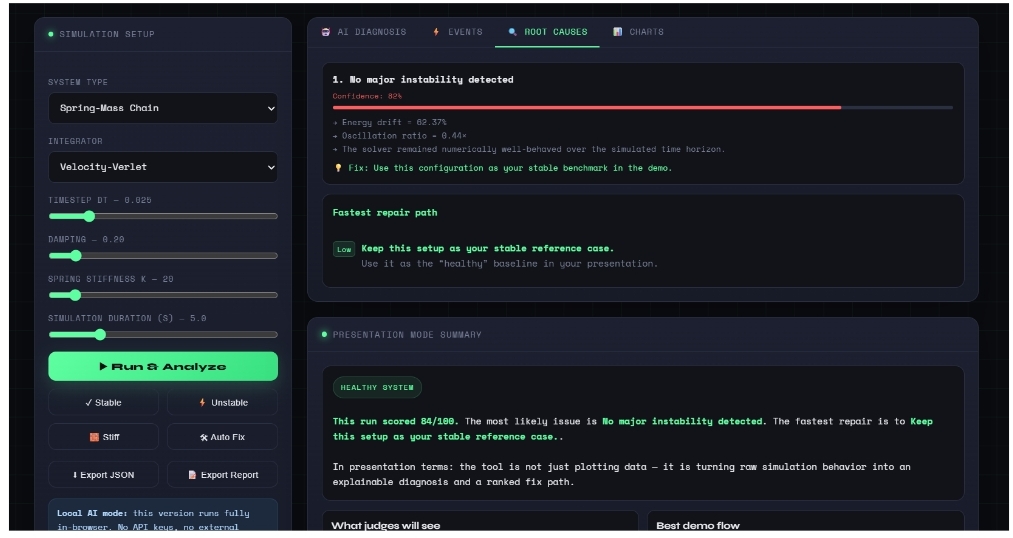
Root cause after auto fix
-
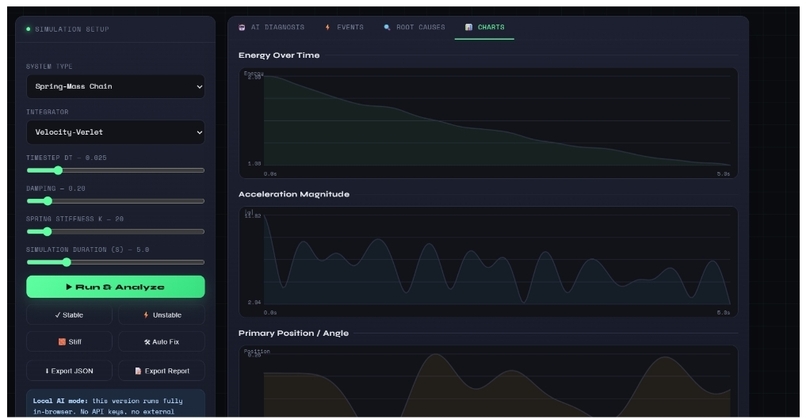
Charts after auto fix
-
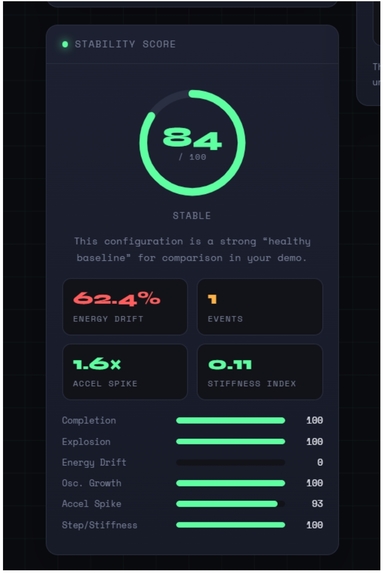
Stability score after auto fix
Inspiration
Physics simulations in robotics, game engines, and scientific research fail constantly due to numerical instability. Developers waste hours manually inspecting graphs and parameters. We wanted to build an intelligent assistant that does this automatically.
What it does
PhysiX AI runs physics simulations (spring-mass, pendulum), tracks stability indicators like energy drift and oscillation growth, detects failure events, and uses an AI agent to explain root causes and suggest parameter fixes — all through an interactive dashboard.
How we built it
Built a custom simulation engine for numerical integration, a diagnostics module for instability pattern detection, and an AI layer using Claude API for natural language explanations. Visualization built with interactive charts synced to real-time simulation data.
Challenges we ran into
Designing reliable instability detection across unpredictable simulation behaviors, and translating raw numerical signals into developer-friendly explanations.
Accomplishments that we're proud of
Successfully combining physics simulation, automated diagnostics, and explainable AI into one coherent debugging workflow that actually reduces debug time.
What we learned
Explainable AI is critical in engineering workflows. Showing a number means nothing — interpreting it does.
What's next for PhysiX AI — AI Agent for Debugging Simulation
External simulation log uploads, 3D visualization, reinforcement learning for auto parameter tuning, and integration with Unity/Unreal physics pipelines.


Log in or sign up for Devpost to join the conversation.