-
-
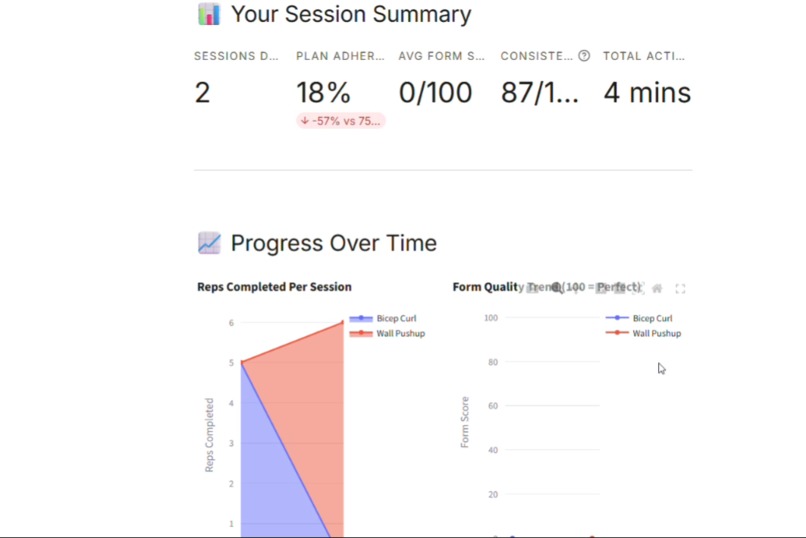
Mathematical Powered analysis of Performance
-
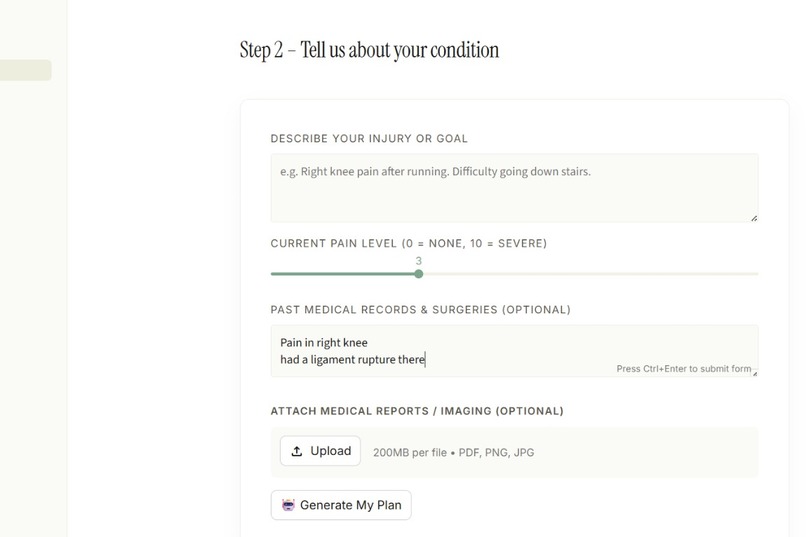
User specified introduction for AI to take smart decisions
-
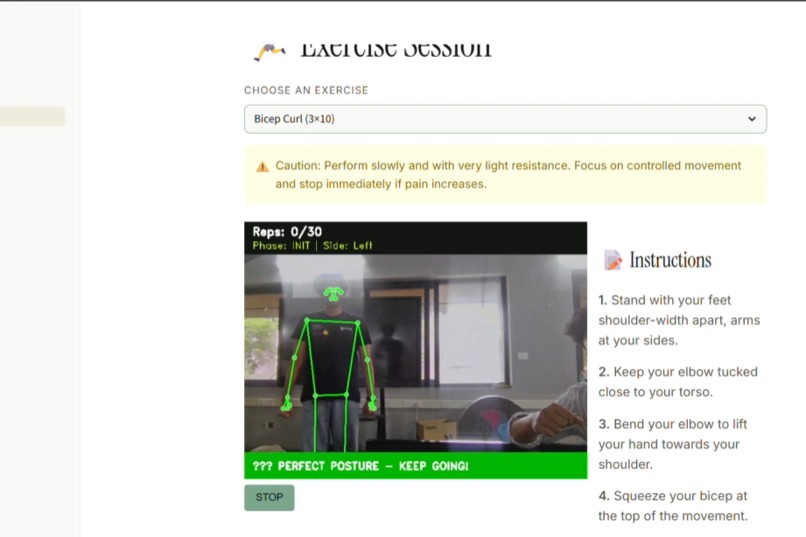
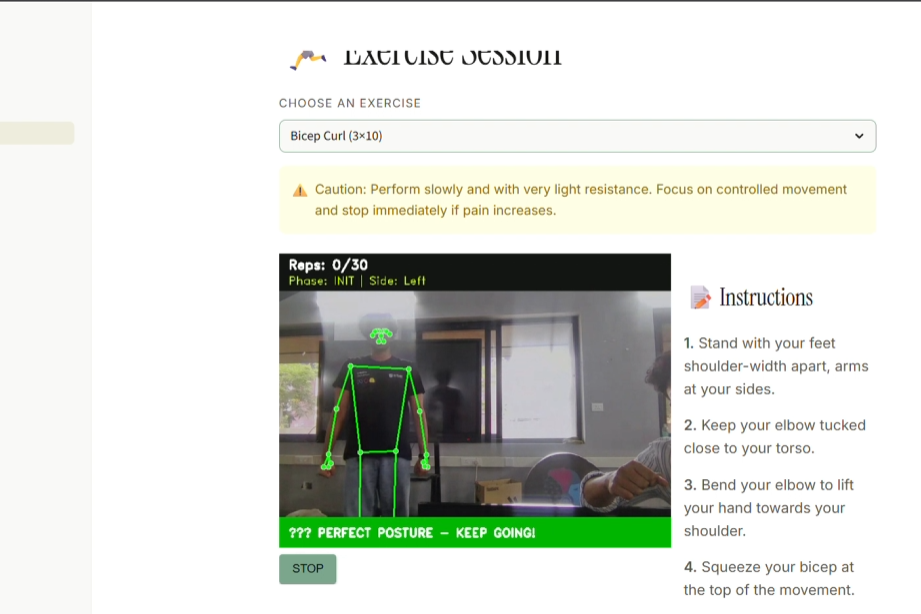
Training Supervision using Computer Vision
-
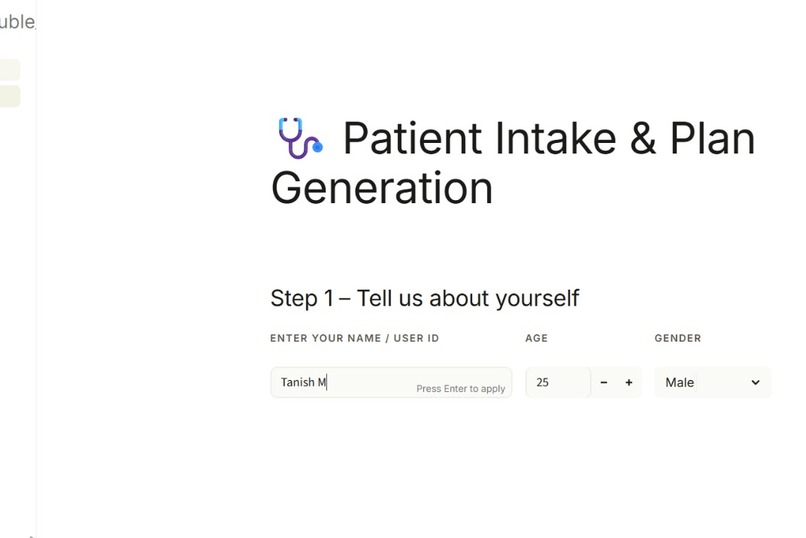
-
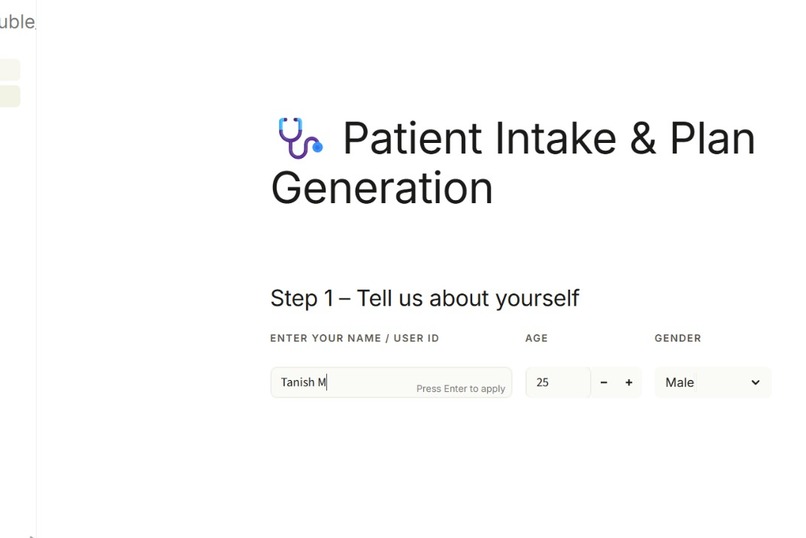
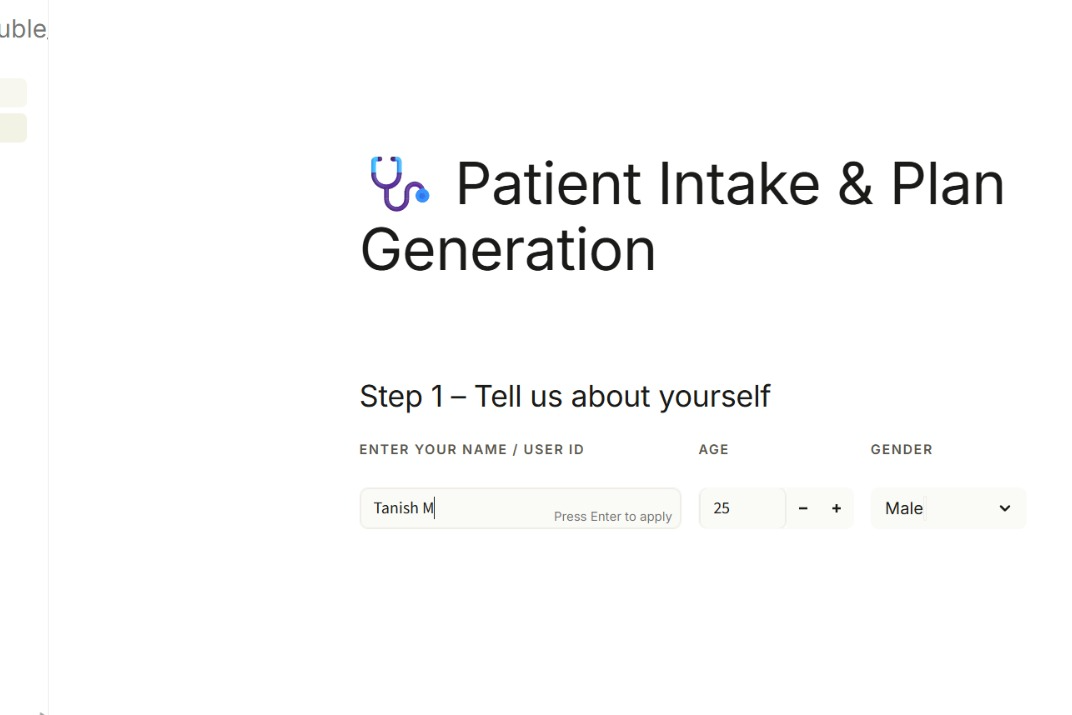
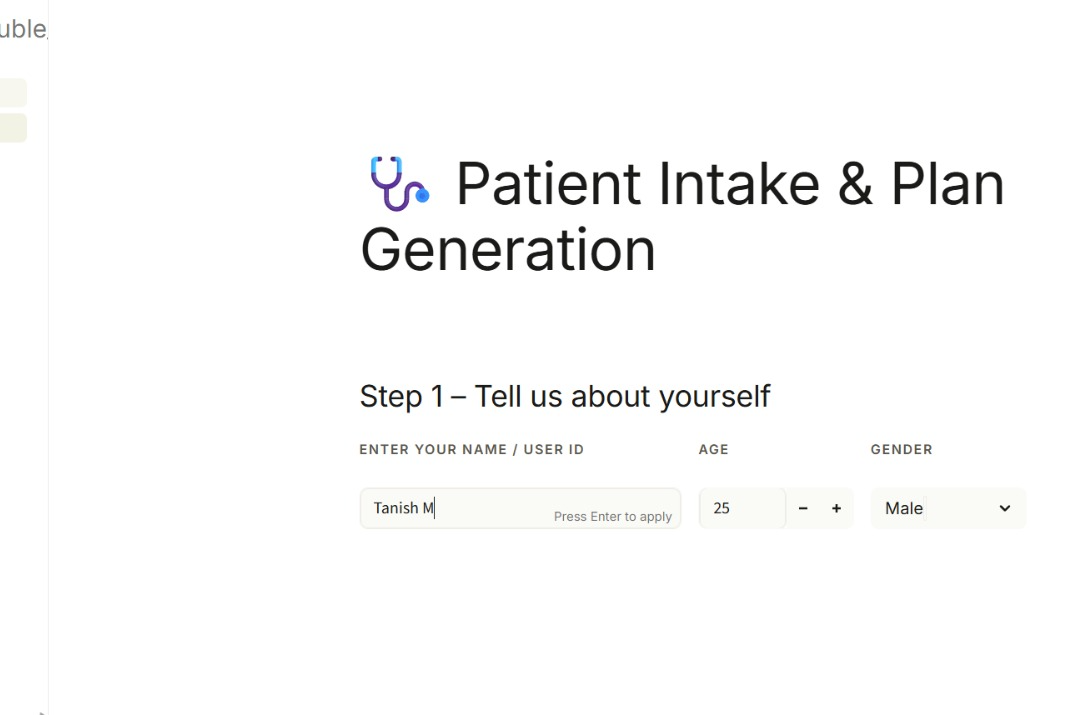
User entering personal details for better reference of AI to make decisions
PhysioTracker AI
Inspiration
Physical therapy often depends on patients remembering instructions, counting reps correctly, and staying consistent between sessions. We wanted to build something that makes rehab feel more guided, more measurable, and easier to follow at home.
What it does
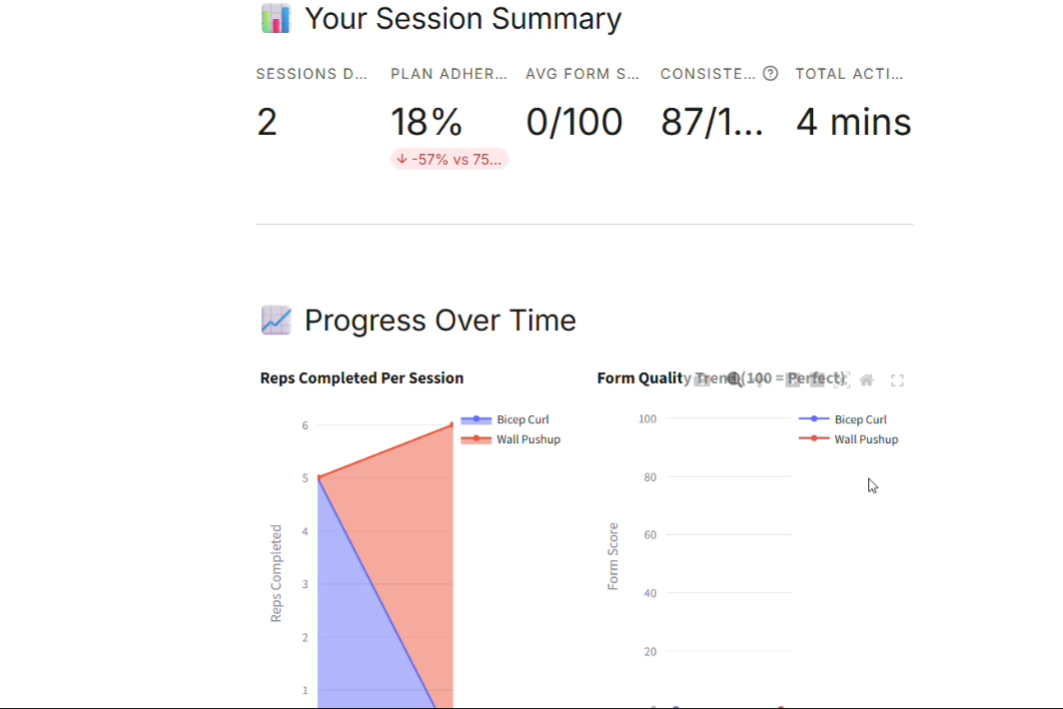
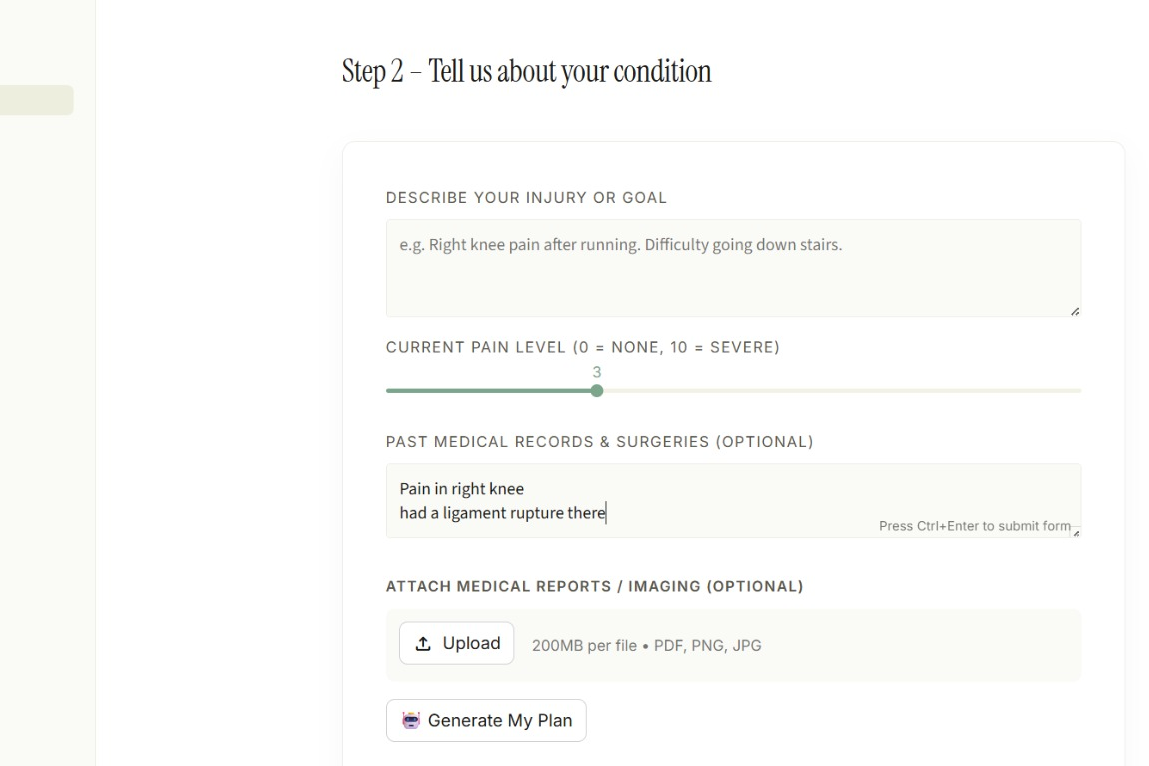
PhysioTracker AI turns a short injury intake into a personalized exercise plan. During a live webcam session, it uses computer vision to track pose, count reps, and flag form issues in real time. After each session, it stores progress and shows analytics like adherence, form quality, and common mistakes over time.
How we built it
We built the app with Streamlit as a multi-page experience for intake, exercise sessions, and reports. Google Gemini generates the rehab program from the user’s complaint and pain level, while MediaPipe and OpenCV handle pose tracking and live feedback from the webcam. We store users, plans, and session logs in SQLite through SQLAlchemy, then use Pandas and Plotly to generate progress dashboards.
Challenges we ran into
One challenge was making the pose feedback reliable enough to be useful while keeping it lightweight for a browser-based experience. Another was getting the AI-generated exercise plan into a safe, structured format that could be stored and used consistently across the app. We also had to keep state synchronized across multiple Streamlit pages so the user flow felt seamless.
Accomplishments that we're proud of
We’re proud that the app connects AI-generated recommendations with real-time movement tracking in one workflow. The project also gives users a clear feedback loop: intake, training, and analytics. Most importantly, it transforms rehab from a static handout into an interactive coaching experience.
What we learned
We learned how to combine LLMs, pose estimation, and a simple web app into a practical health-focused product. We also learned that good UX matters as much as the underlying model, especially when users need clear instructions and immediate feedback. Building the reporting layer taught us how valuable session data becomes once it is structured and visualized well.
What's next for PhysioTracker AI
Next, we want to improve exercise detection across more movement types, add richer form-error detection, and expand the exercise library. We also want to personalize progression over time, support clinician review, and make the reporting layer more useful for both patients and therapists.

Log in or sign up for Devpost to join the conversation.