-
-
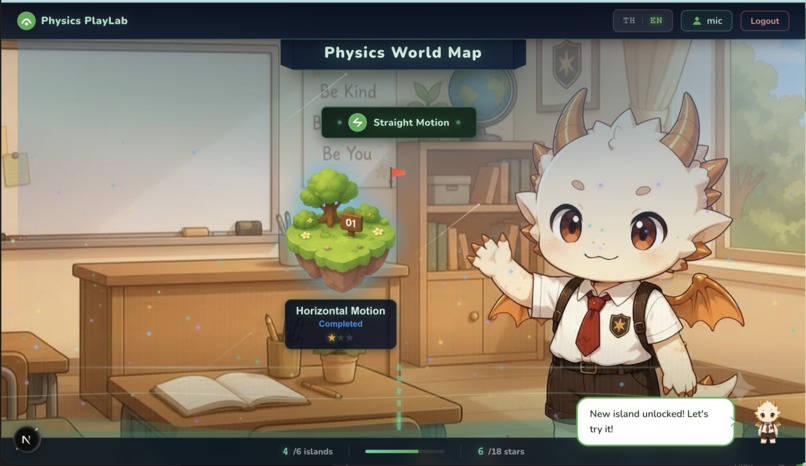
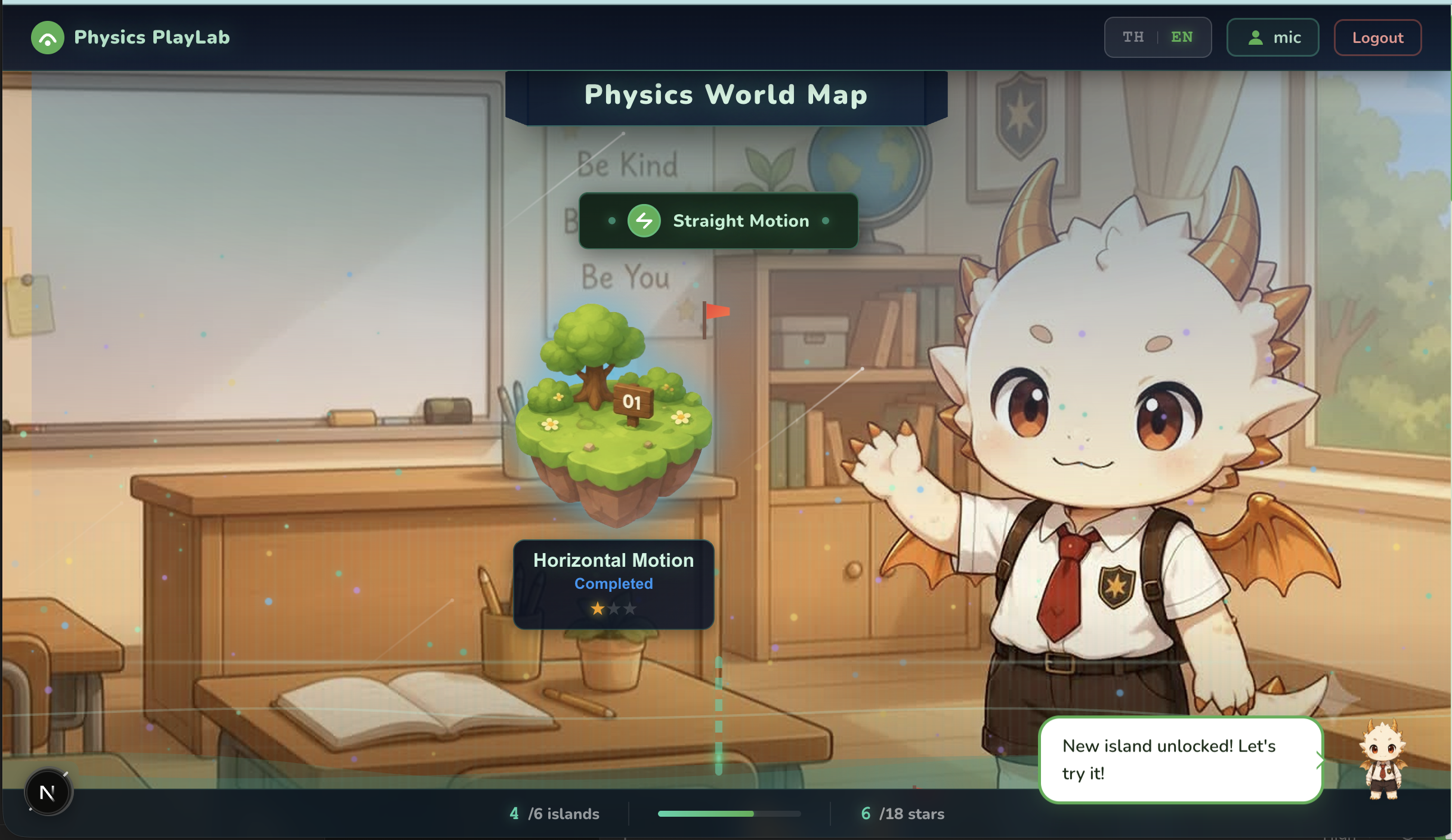
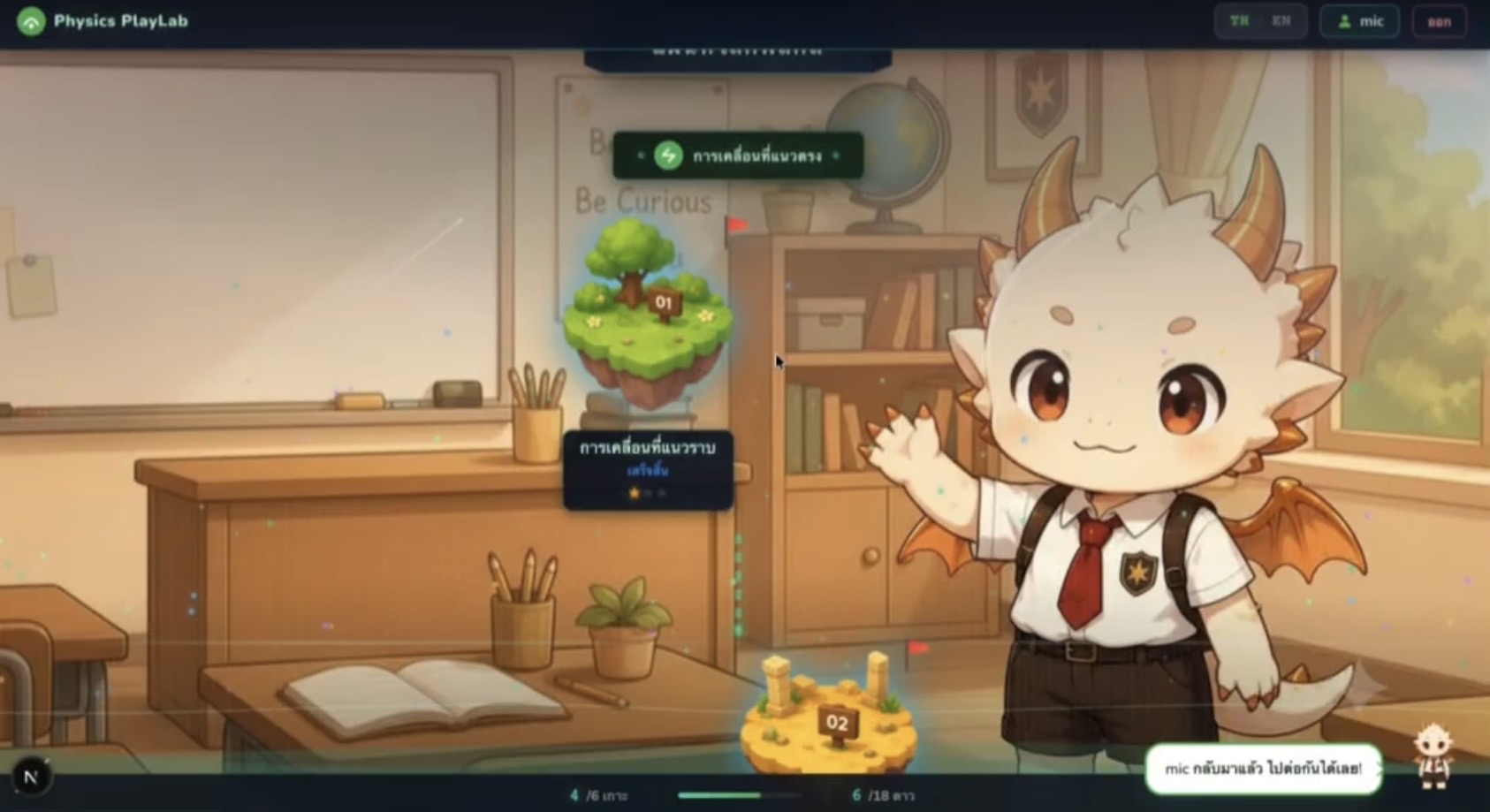
Physics World Map showing learning progress, stars, flags, and unlocked physics units.
-
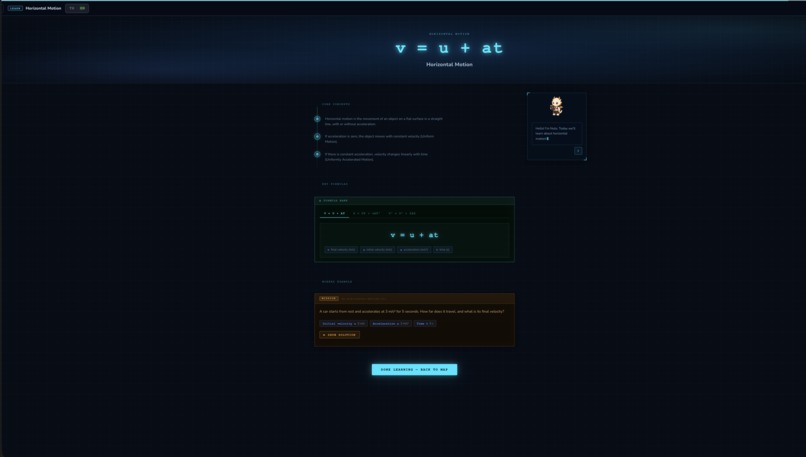
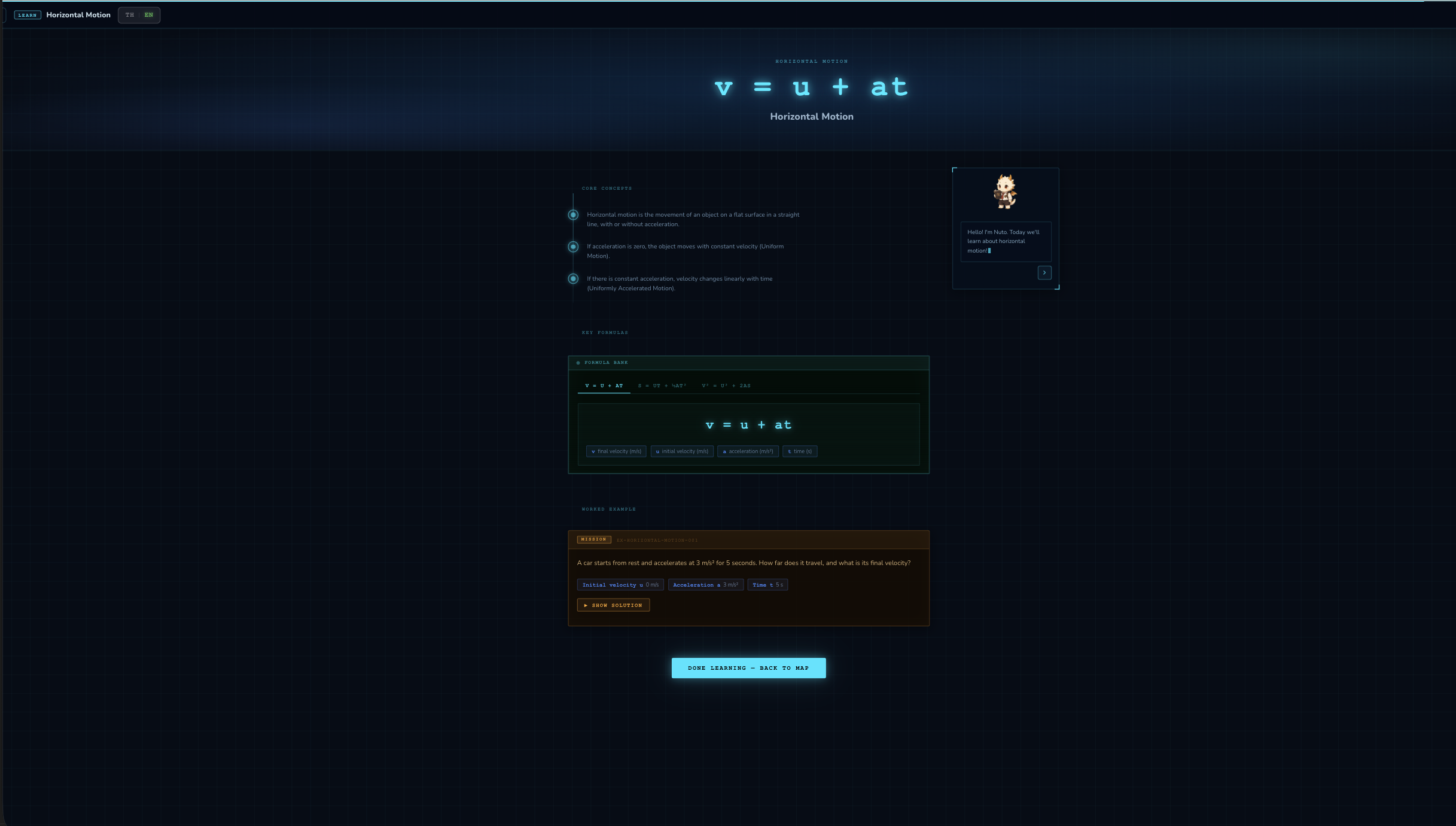
Each unit begins with structured lessons, formulas, variables, and worked examples before students enter the interactive lab.
-
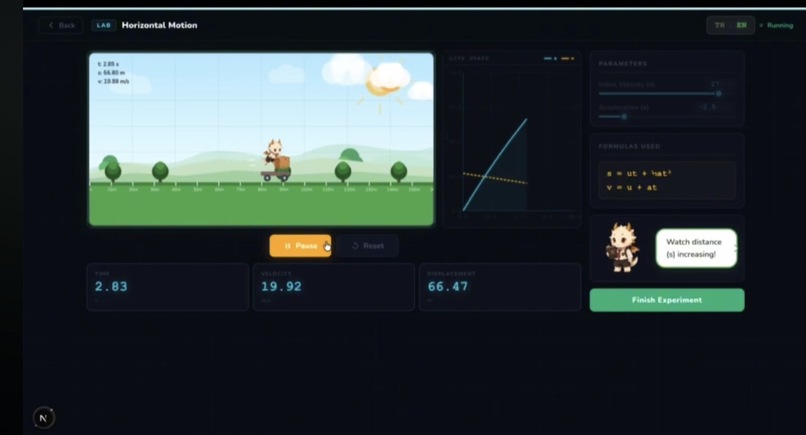
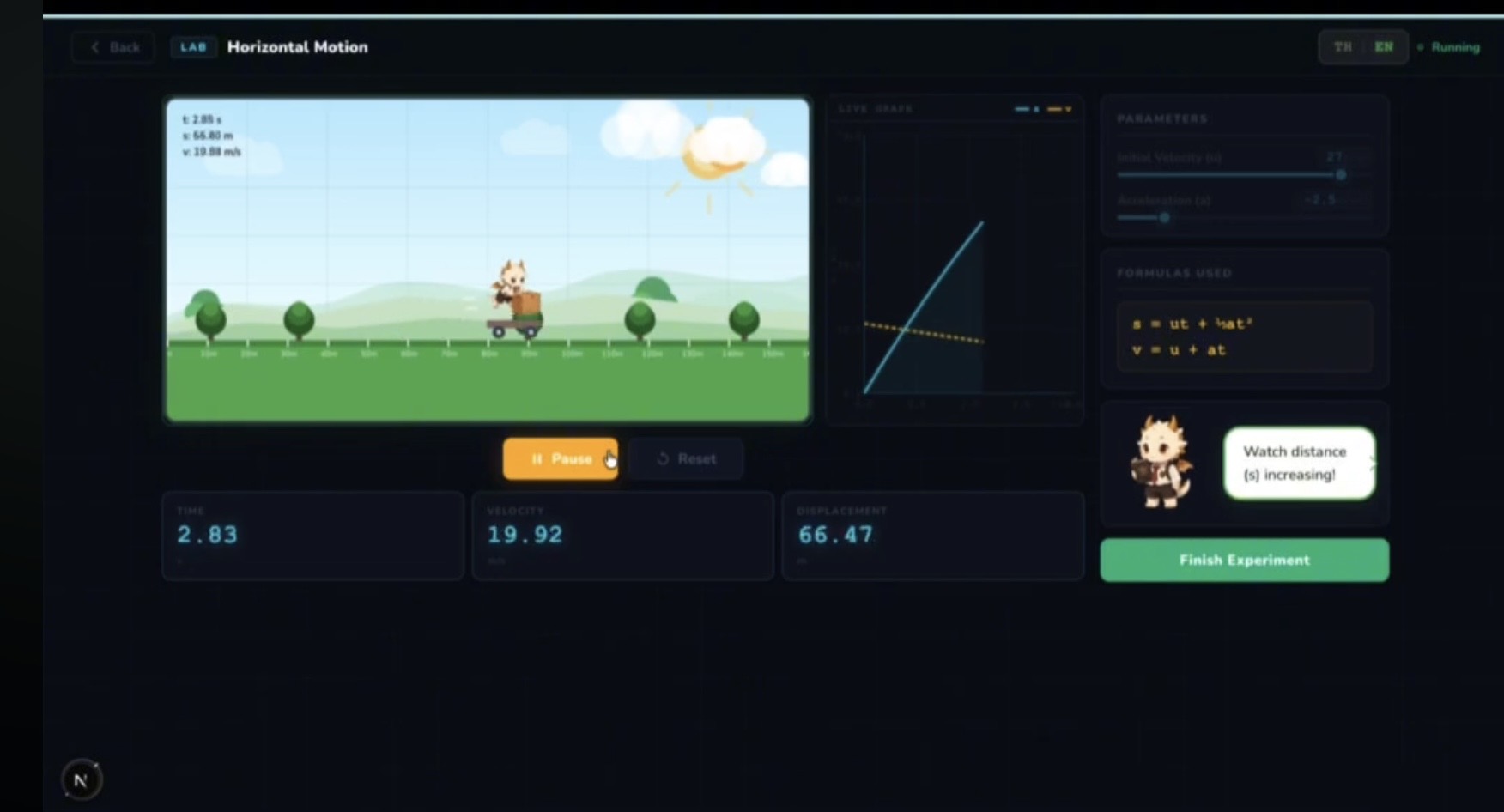
Students can change physical variables and immediately observe the motion, live measurements, and graphs respond.
-
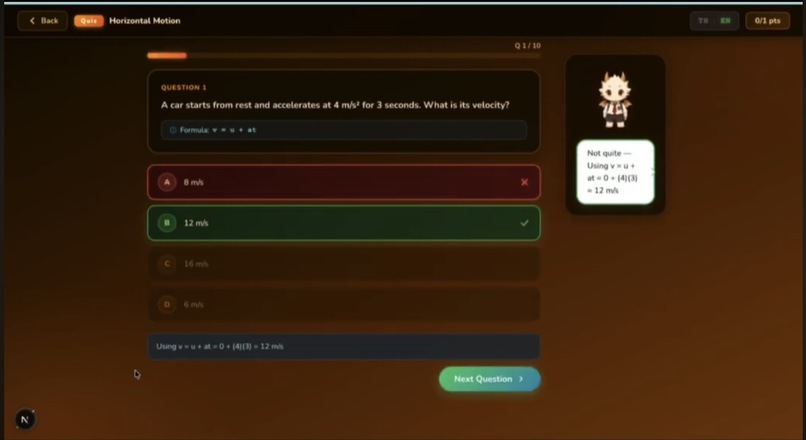
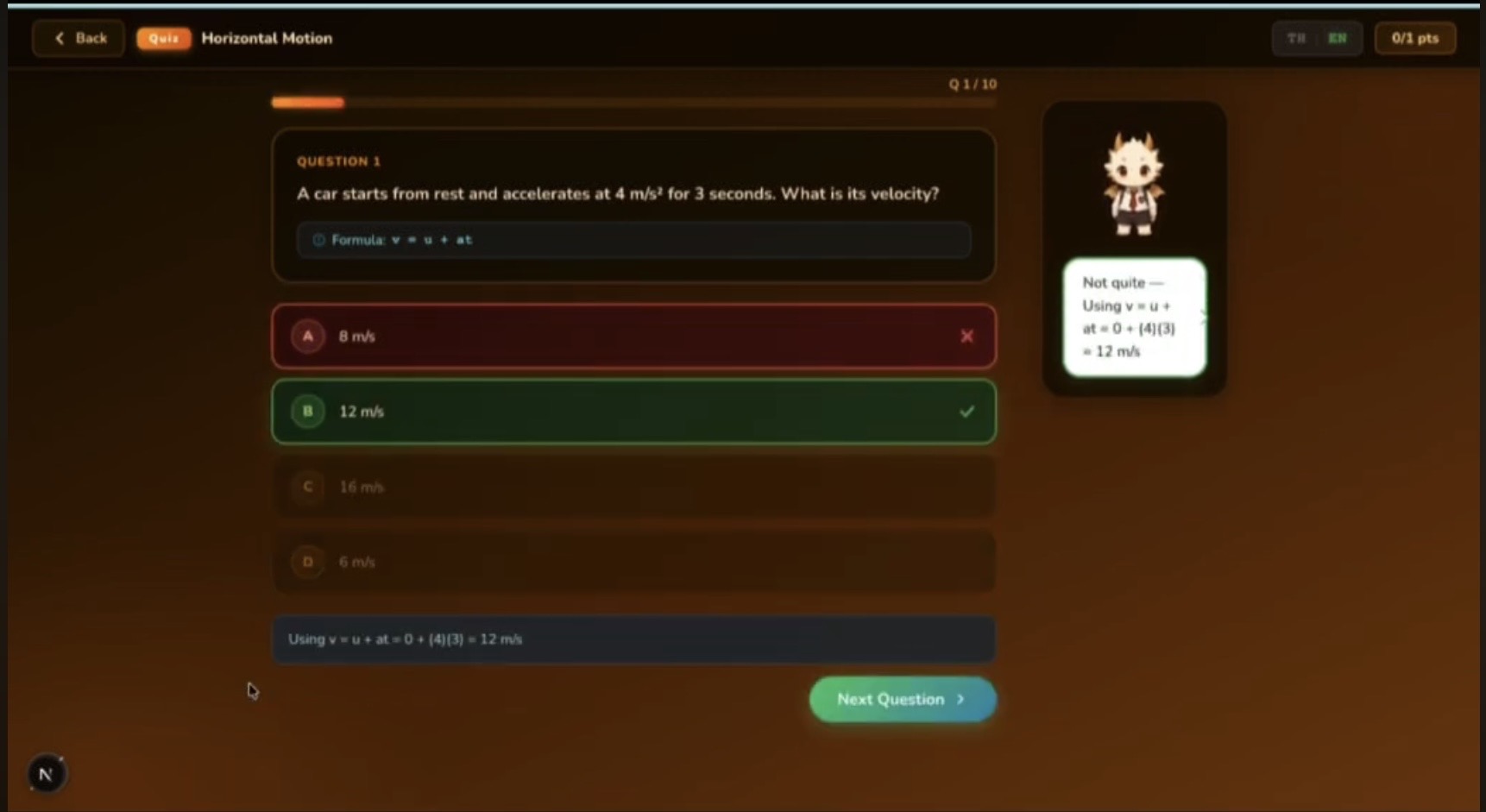
Quizzes provide immediate feedback and explanations, turning mistakes into part of the learning process.
-
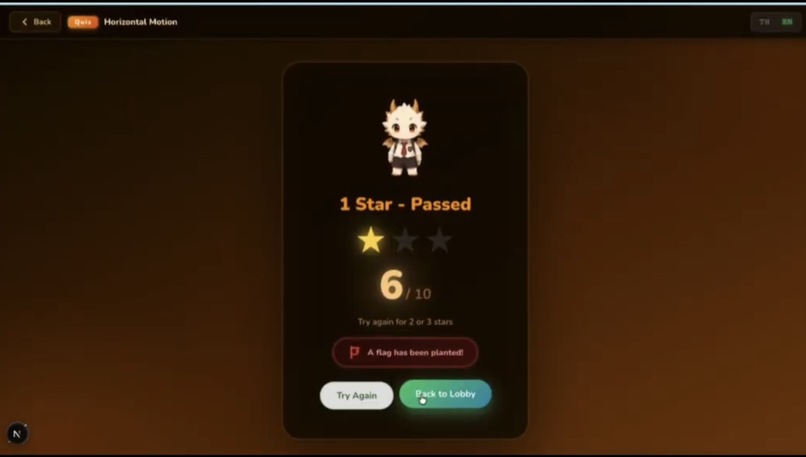
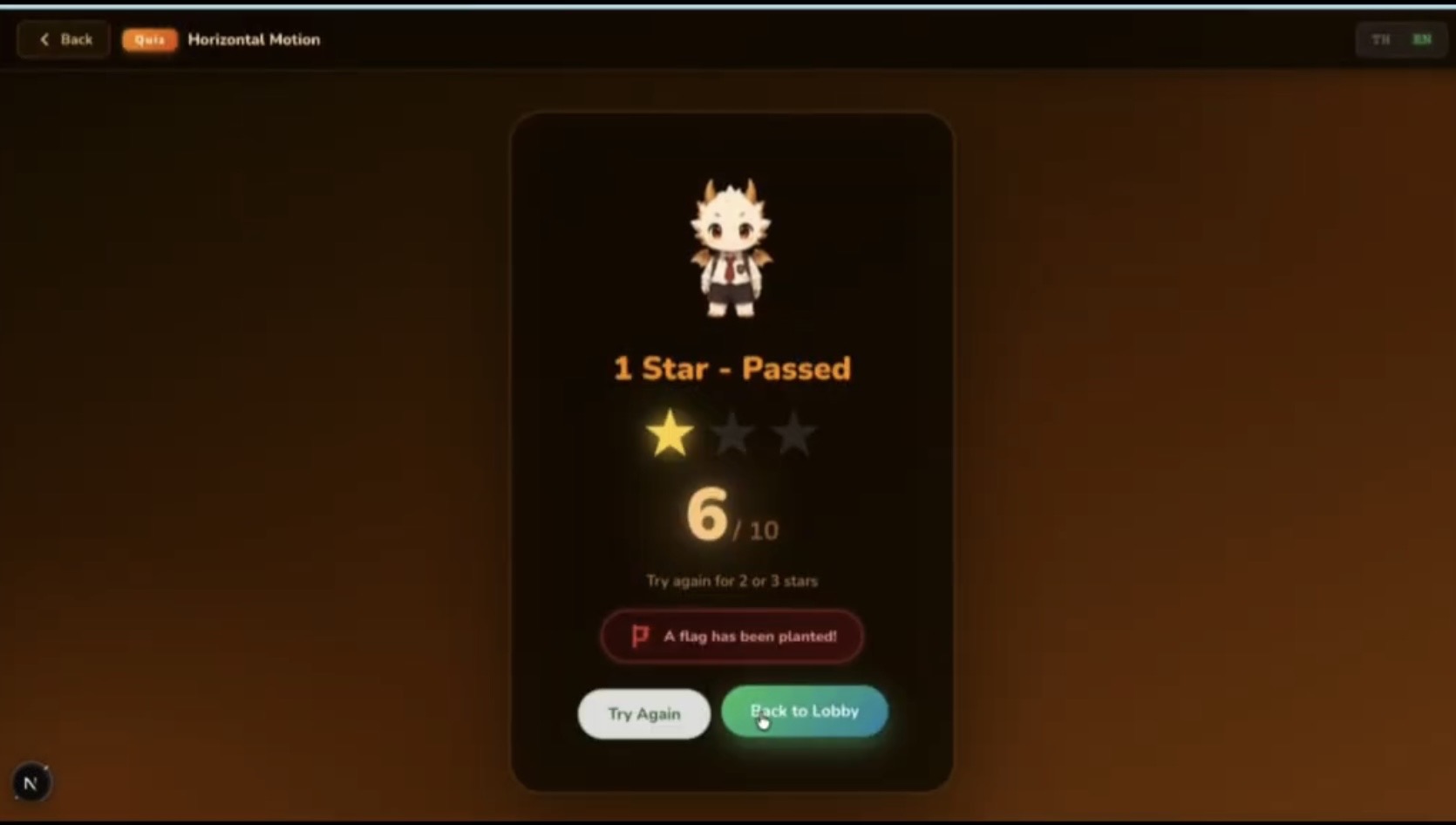
Performance becomes visible progress through scores, stars, completion flags, and unlocked learning units.
-
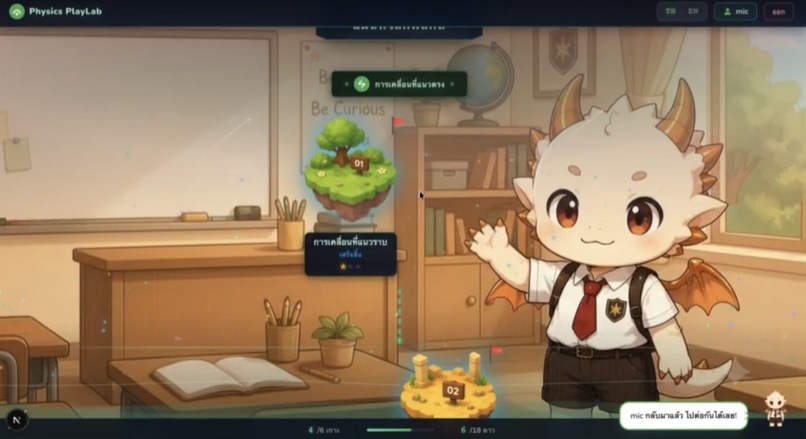
Completed units, stars, and flags are reflected on the Physics World Map to show learning progress.
-
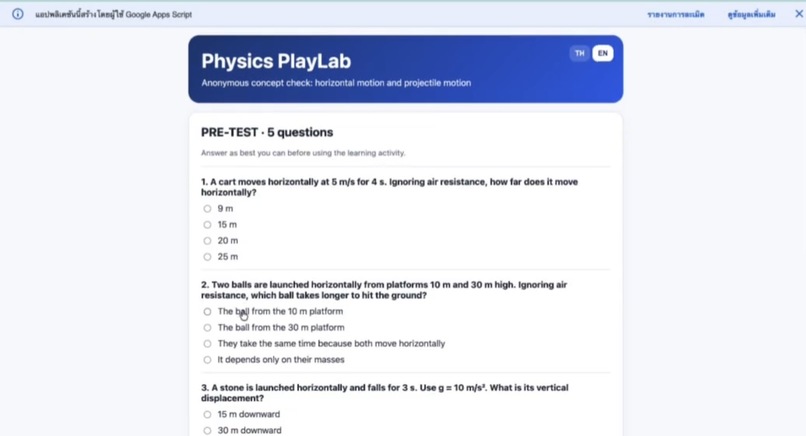
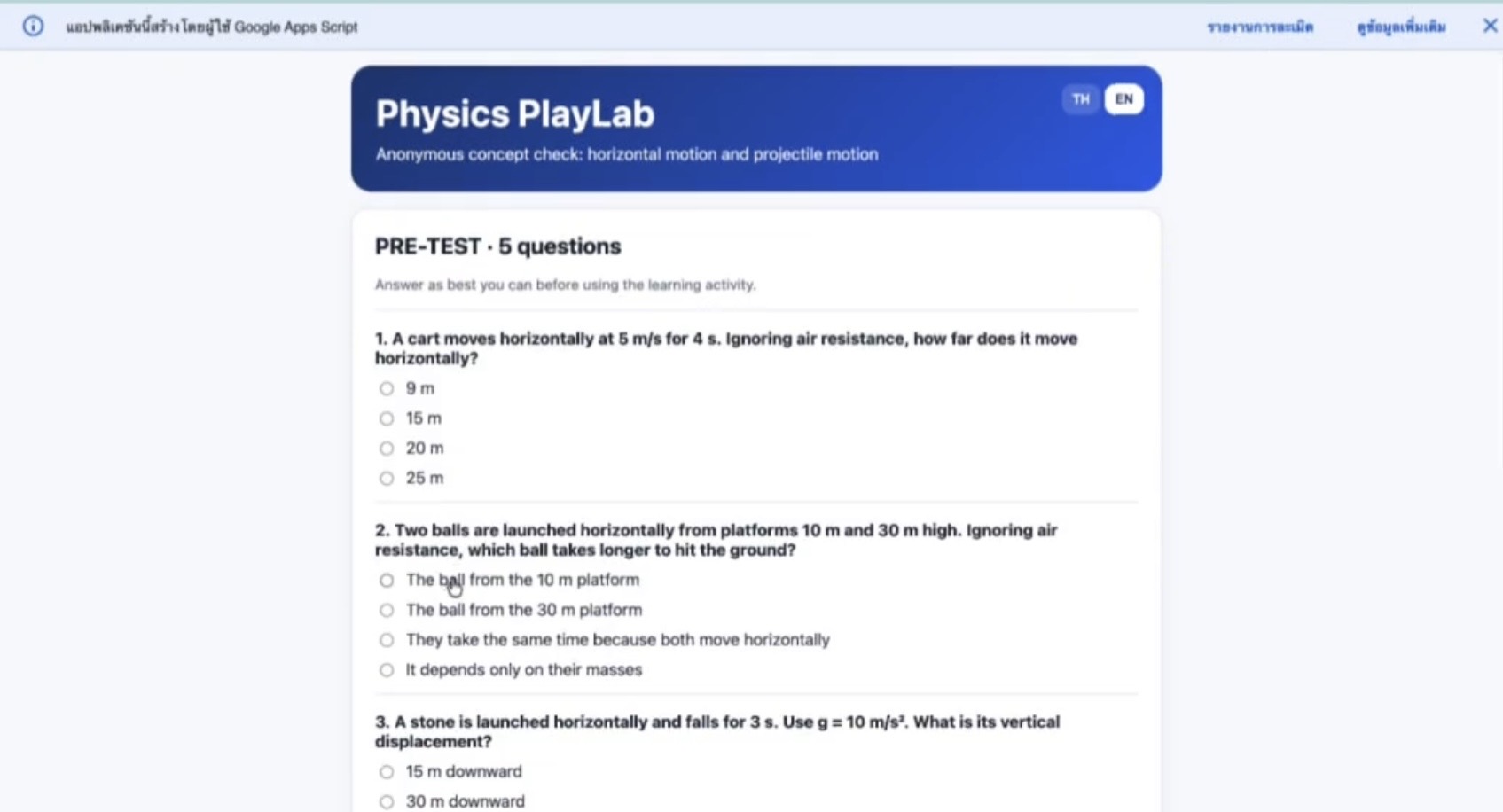
An anonymous pre-test and post-test system helps evaluate learning change before and after the experience.
Inspiration
Physics is one of those subjects where students can memorize the correct formula, substitute the numbers, and still not fully understand what is actually happening.
We noticed that lessons, simulations, and quizzes are often separated. Students may read a concept in one place, experiment somewhere else, and answer questions without seeing how everything connects.
We built Physics PlayLab to turn that disconnected experience into one continuous learning journey.
Instead of only asking students to memorize equations, we want them to see the physics, change the variables, test their understanding, learn from mistakes, and progress step by step.
What it does
Physics PlayLab is a bilingual interactive physics learning platform built around the learning loop:
Learn → Experiment → Apply → Feedback → Progress → Unlock
Each learning unit combines:
- structured concept explanations
- a Formula Bank with variables and units
- worked examples
- interactive physics simulations
- live measurements and graphs
- quizzes with immediate feedback and explanations
- stars, completion flags, and unlockable learning units
Students can change variables inside the lab and immediately observe how those changes affect the motion.
For example, instead of only calculating projectile motion on paper, students can change the launch velocity or angle and directly see how the trajectory changes.
Physics PlayLab currently includes interactive experiences for topics such as:
- Horizontal Motion
- Vertical Motion
- Projectile Motion
The core experience supports both Thai and English, making the same learning system accessible in two languages.
We also created an anonymous pre-test and post-test system that can match the same learner before and after the experience. This gives us a way to evaluate learning change instead of only counting clicks or completed lessons.
How we built it
Physics PlayLab is built as a browser-based web application using:
- Next.js
- React
- TypeScript
- Firebase Authentication
- Cloud Firestore
Firebase handles user authentication and saved learning progress, including completed units, stars, flags, and unlocked content.
The platform is designed around reusable learning modules so that new physics topics can follow the same structure without rebuilding the entire system.
We also developed a bilingual localization system for the core learning journey and tested the application across both Thai and English.
During development, we used AI tools including ChatGPT and coding assistants for brainstorming, debugging, code review, localization support, and development assistance. We reviewed, tested, and integrated the final implementation ourselves and can explain how the system works and the decisions behind it.
Challenges
One of our biggest challenges was making the platform feel like one learning experience instead of several unrelated features.
A simulation by itself can look impressive, but students still need to understand what they are observing.
We therefore focused on connecting:
Concept → Formula → Experiment → Question → Explanation → Progress
We also had to solve several technical and content-quality problems, including:
- keeping quiz answers and explanations mathematically consistent
- preserving simulation state during Pause and Resume
- saving progress between sessions
- supporting Thai and English across the same learning flow
- keeping the physics simulations understandable without overwhelming students
We created validation checks for our quiz content and repeatedly tested the full learning journey to reduce inconsistencies.
What we learned
This project taught us that educational technology is not only about adding more features.
The lesson, simulation, feedback, progression, and measurement systems all need to support the same learning goal.
We also learned the importance of testing educational content just as carefully as software. A technically correct application can still teach the wrong thing if an answer key, formula, or explanation is inconsistent.
Most importantly, Physics PlayLab changed from being a collection of physics experiments into a more complete learning product.
What's next
We want to continue expanding Physics PlayLab with more physics topics while keeping the same learning loop.
Future possibilities include:
- additional physics units
- teacher assignments
- classroom management tools
- learning analytics
- concept mastery tracking
- curriculum-based lesson packs
Our goal is to make physics feel less like a page of equations to memorize and more like something students can see, experiment with, and understand.
Learn it. Experiment with it. Apply it.
Built With
- application
- authentication
- cloud
- css
- education
- firebase
- firestore
- gamification
- html
- internationalization
- javascript
- next.js
- physics
- react
- simulation
- typescript
- vercel
- web

Log in or sign up for Devpost to join the conversation.