-
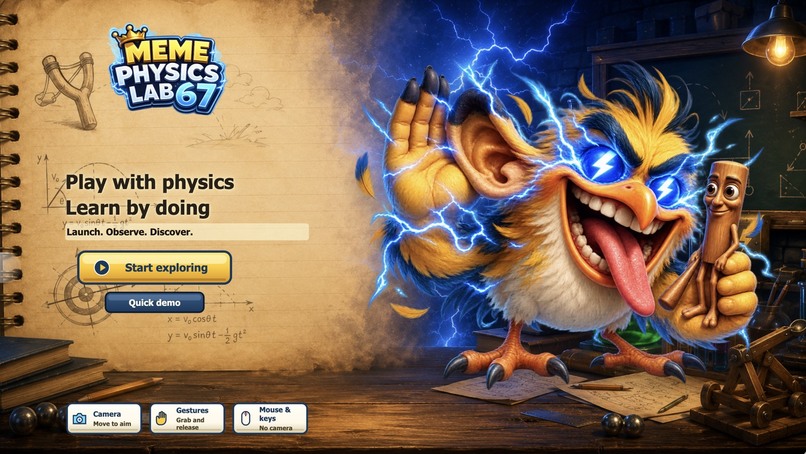
Start Physics Meme Lab — an interactive physics journey built around learning by doing.
-
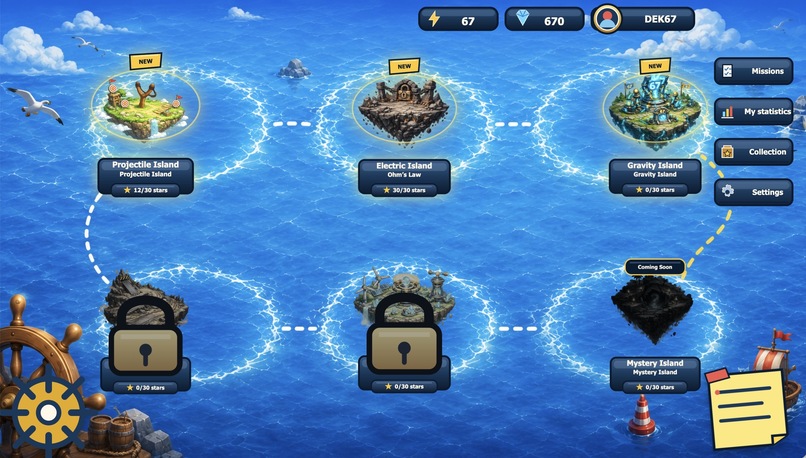
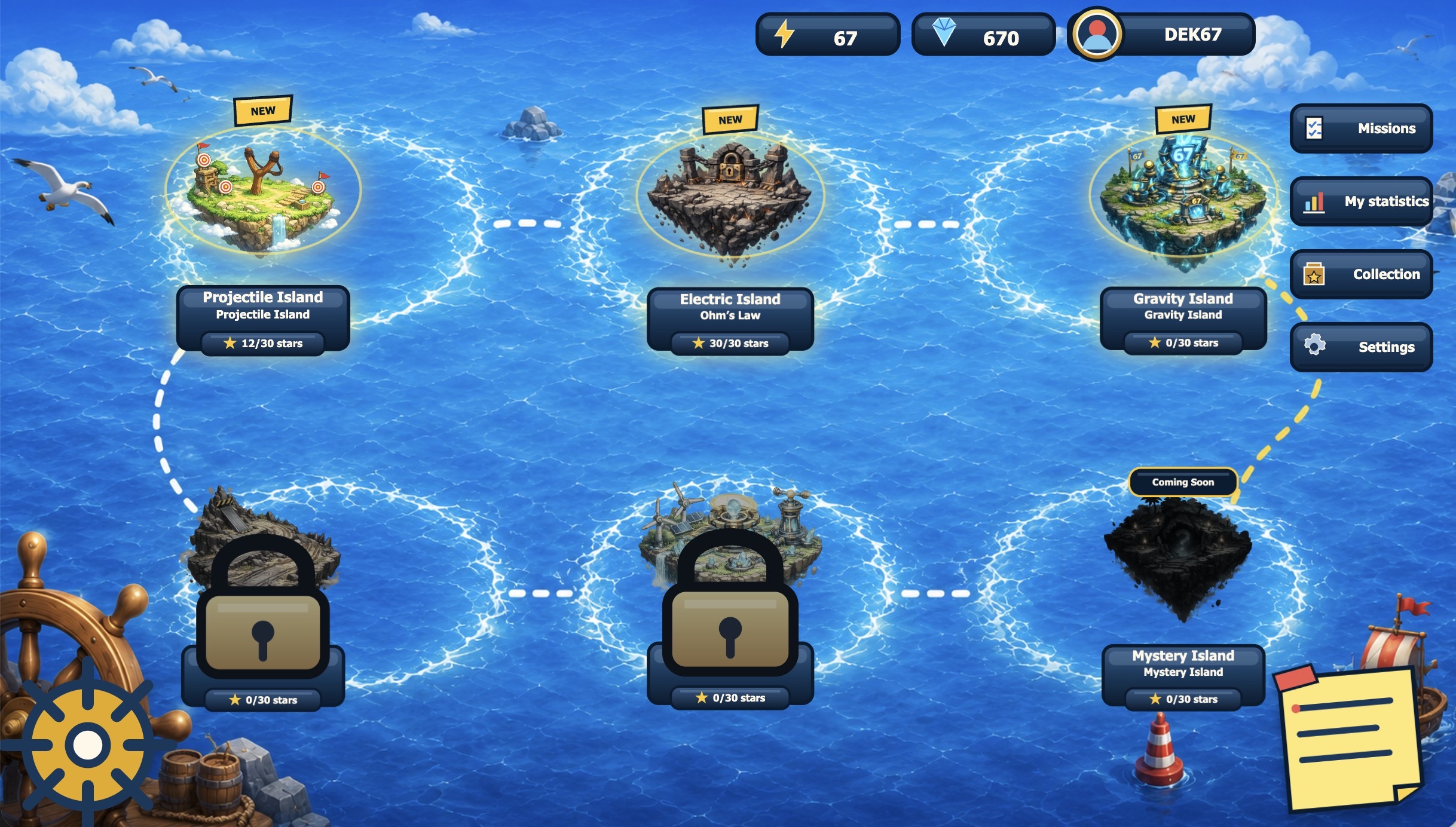
Choose a mission from the world map: Projectile Motion, Electricity, or the Gravity Sandbox.
-
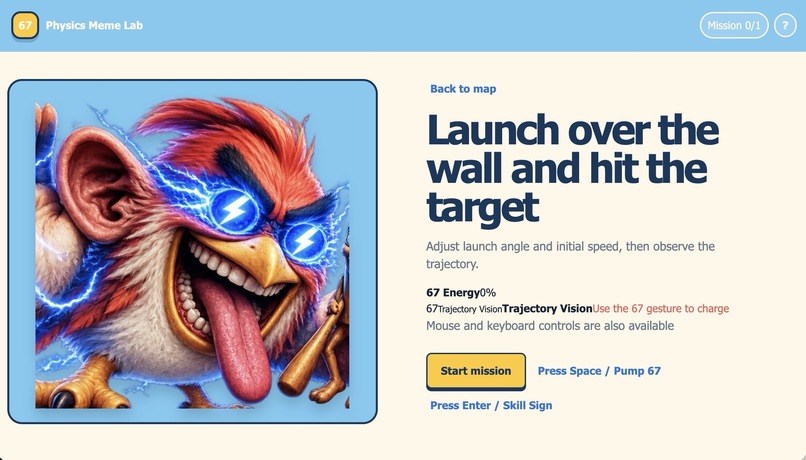
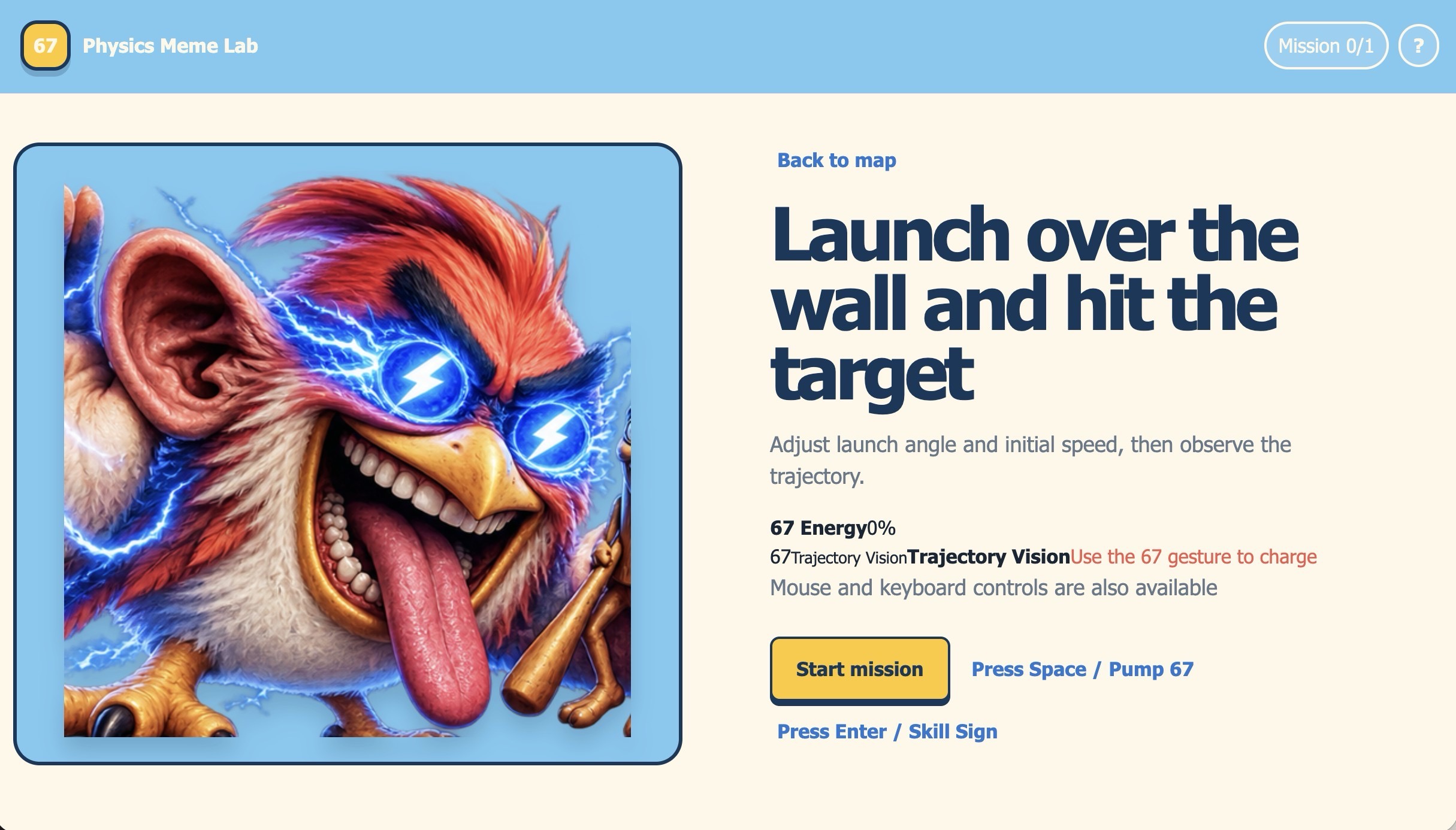
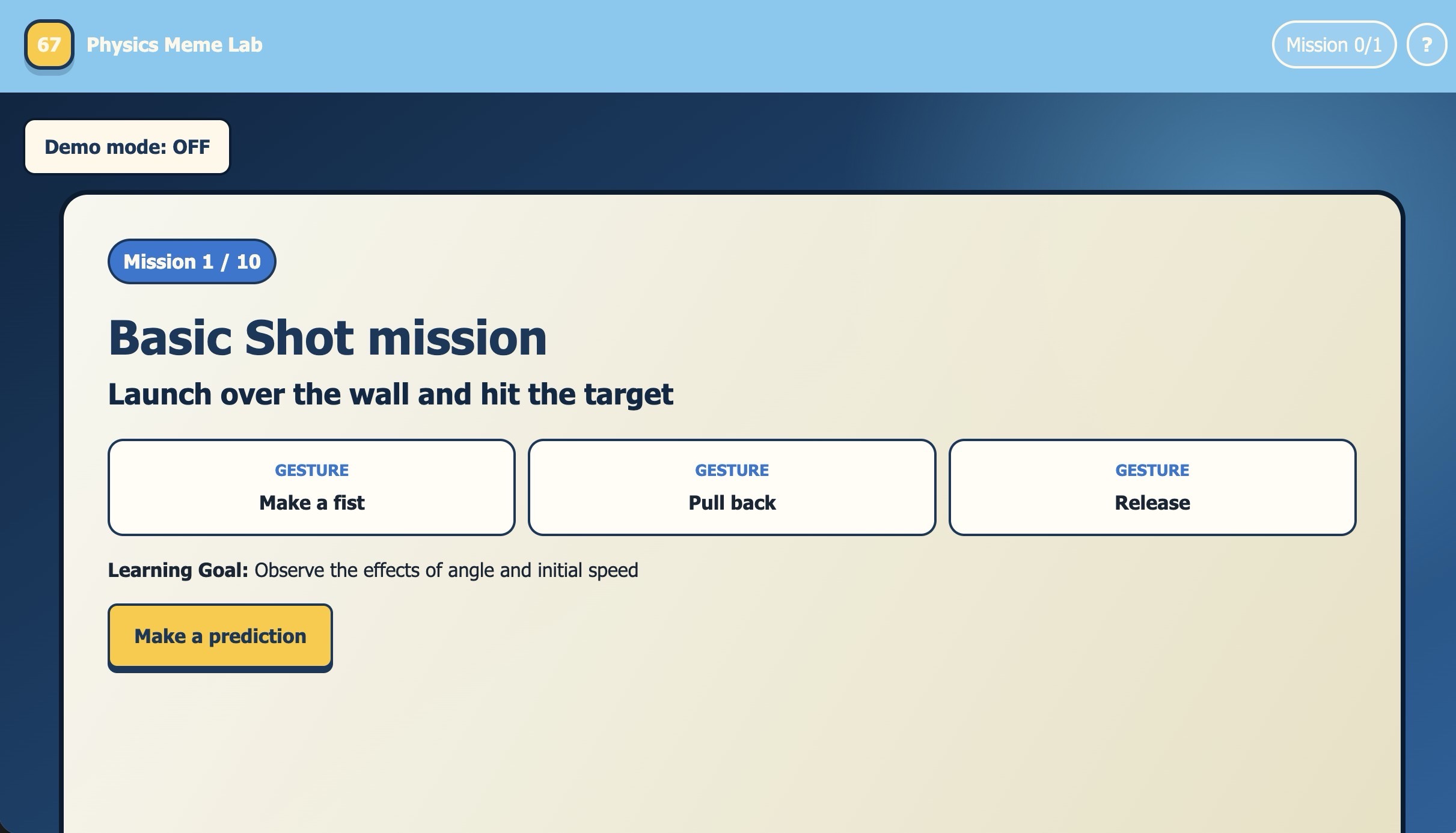
Projectile mission: predict the launch, clear the wall, hit the target, and observe the trajectory.
-
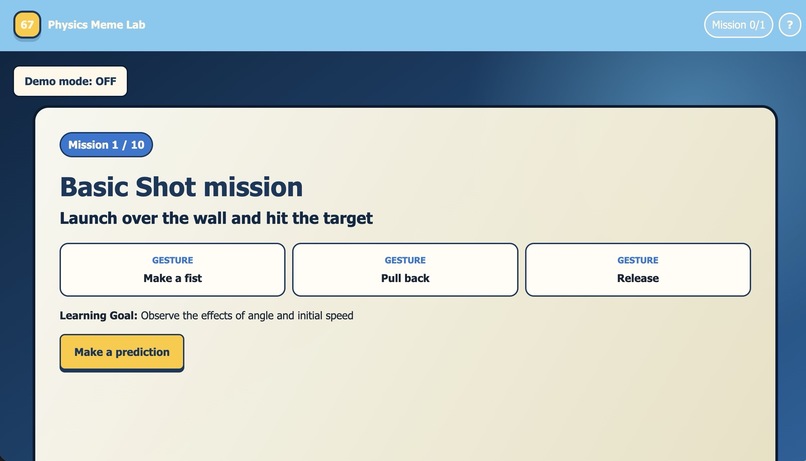
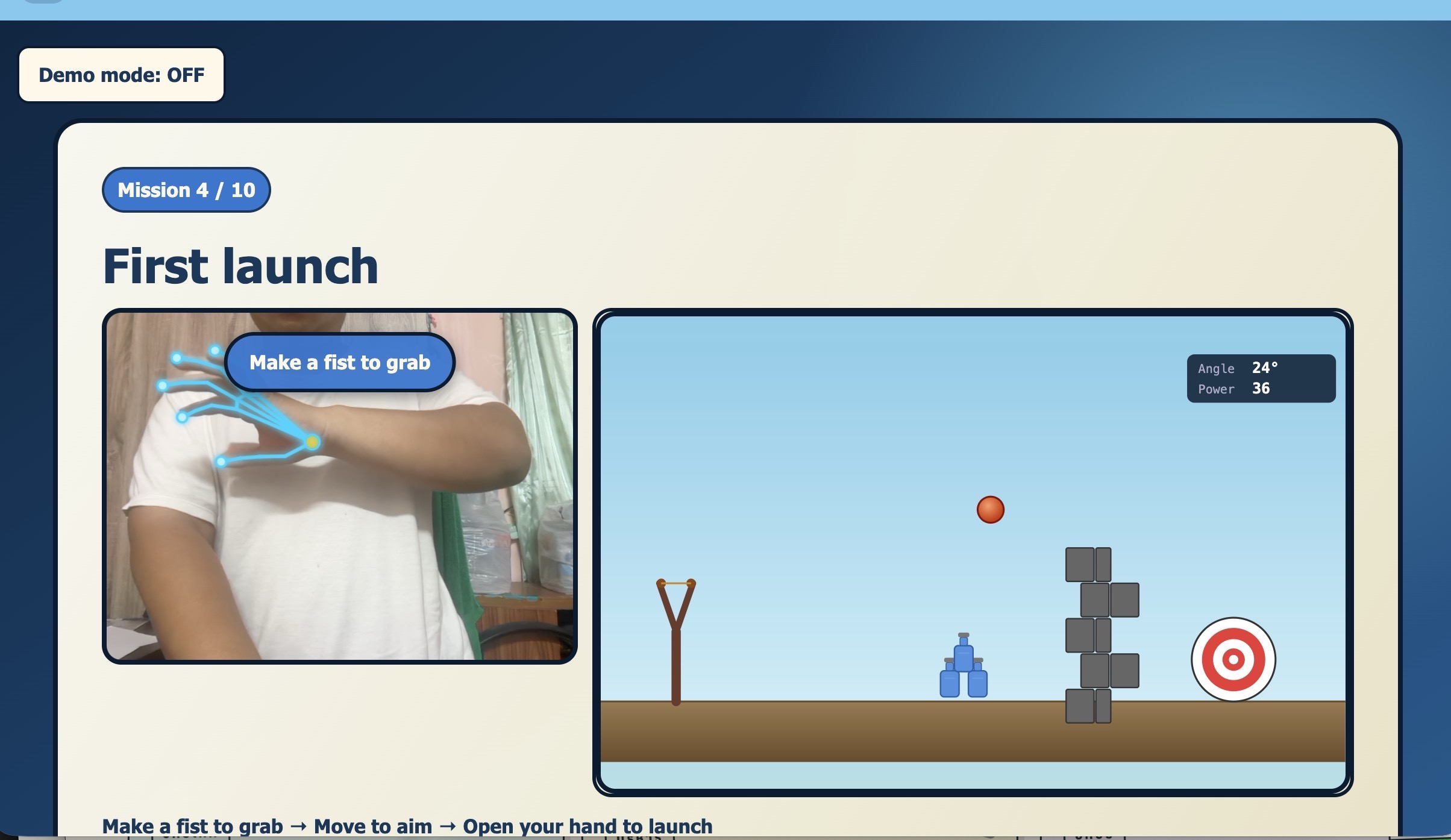
Learn the controls first: make a fist to grab, pull back to aim, then release to launch.
-
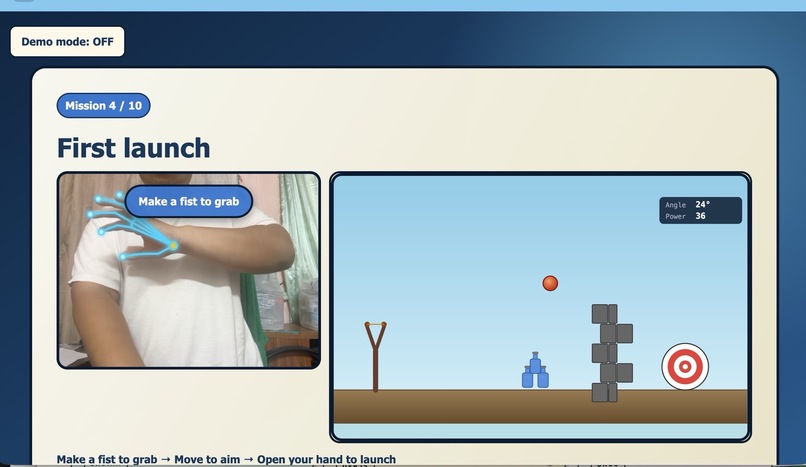
Hand tracking turns physical gestures into the experiment — aim, launch, and watch the motion happen.
-
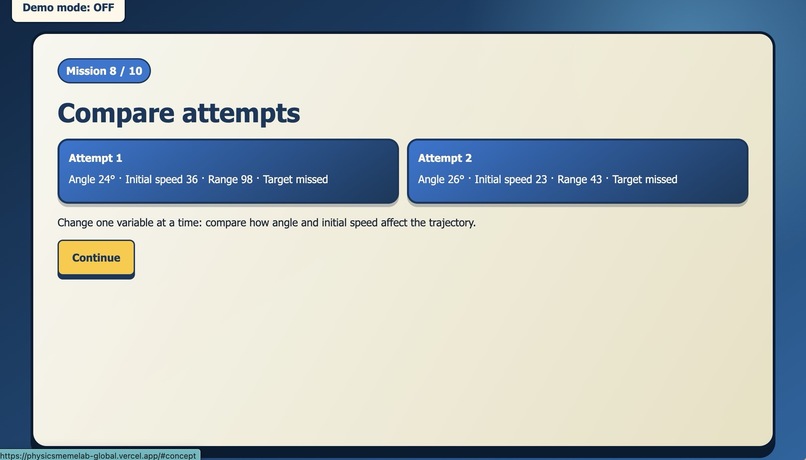
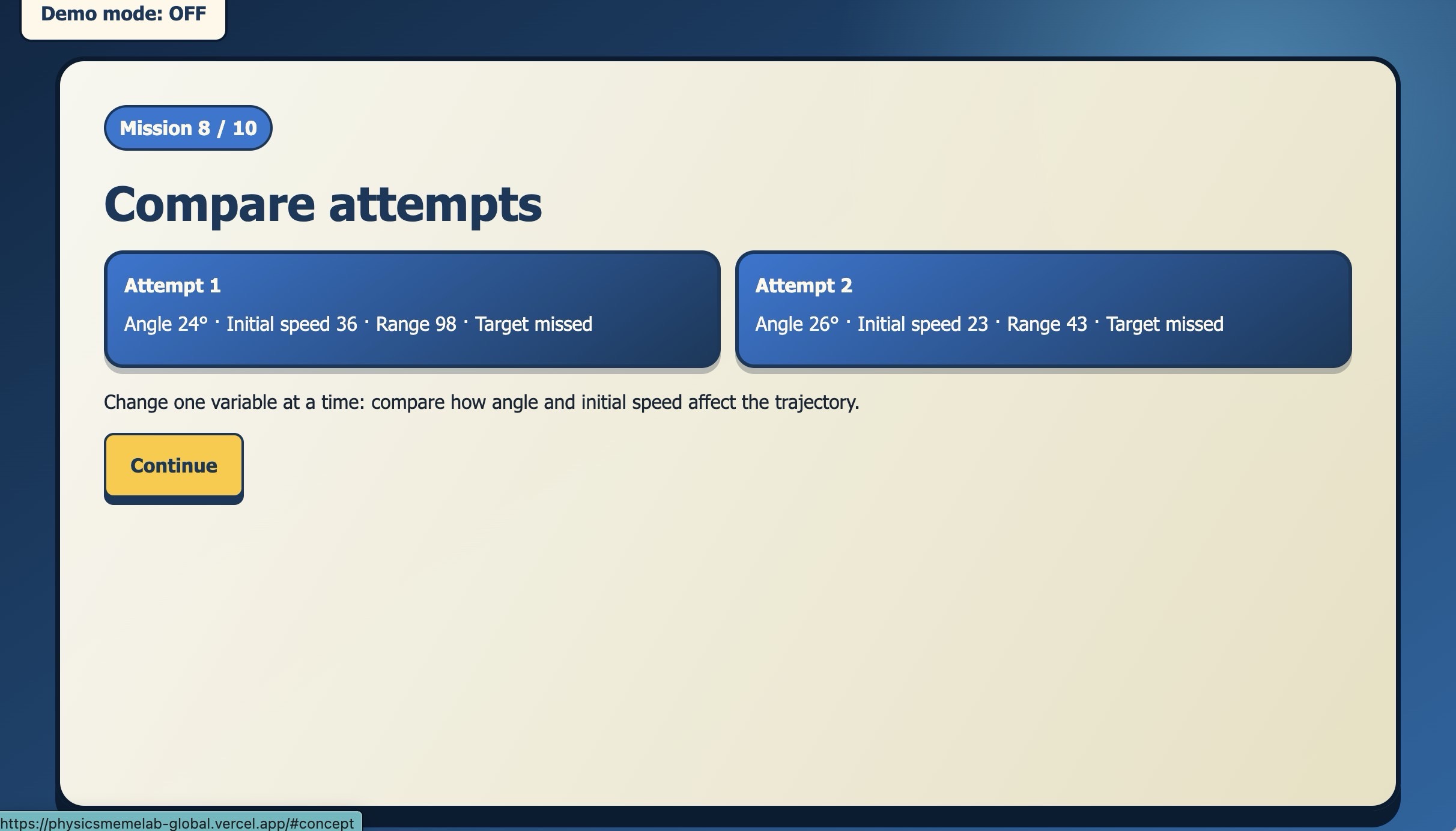
Compare attempts to see how launch angle and initial speed change the trajectory and result.
-
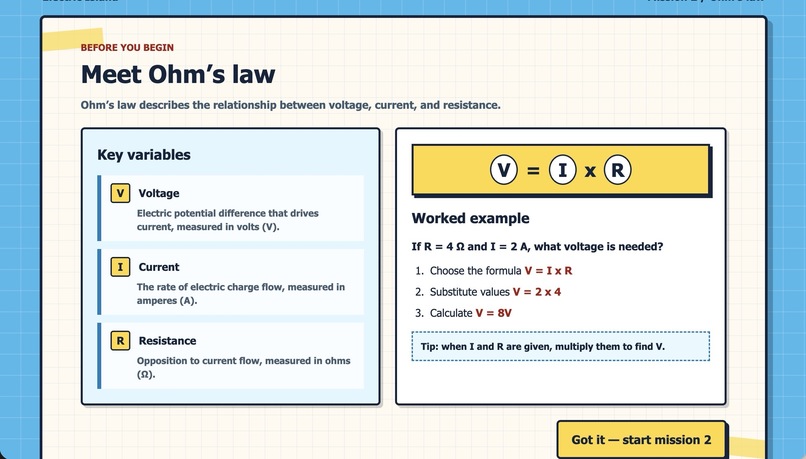
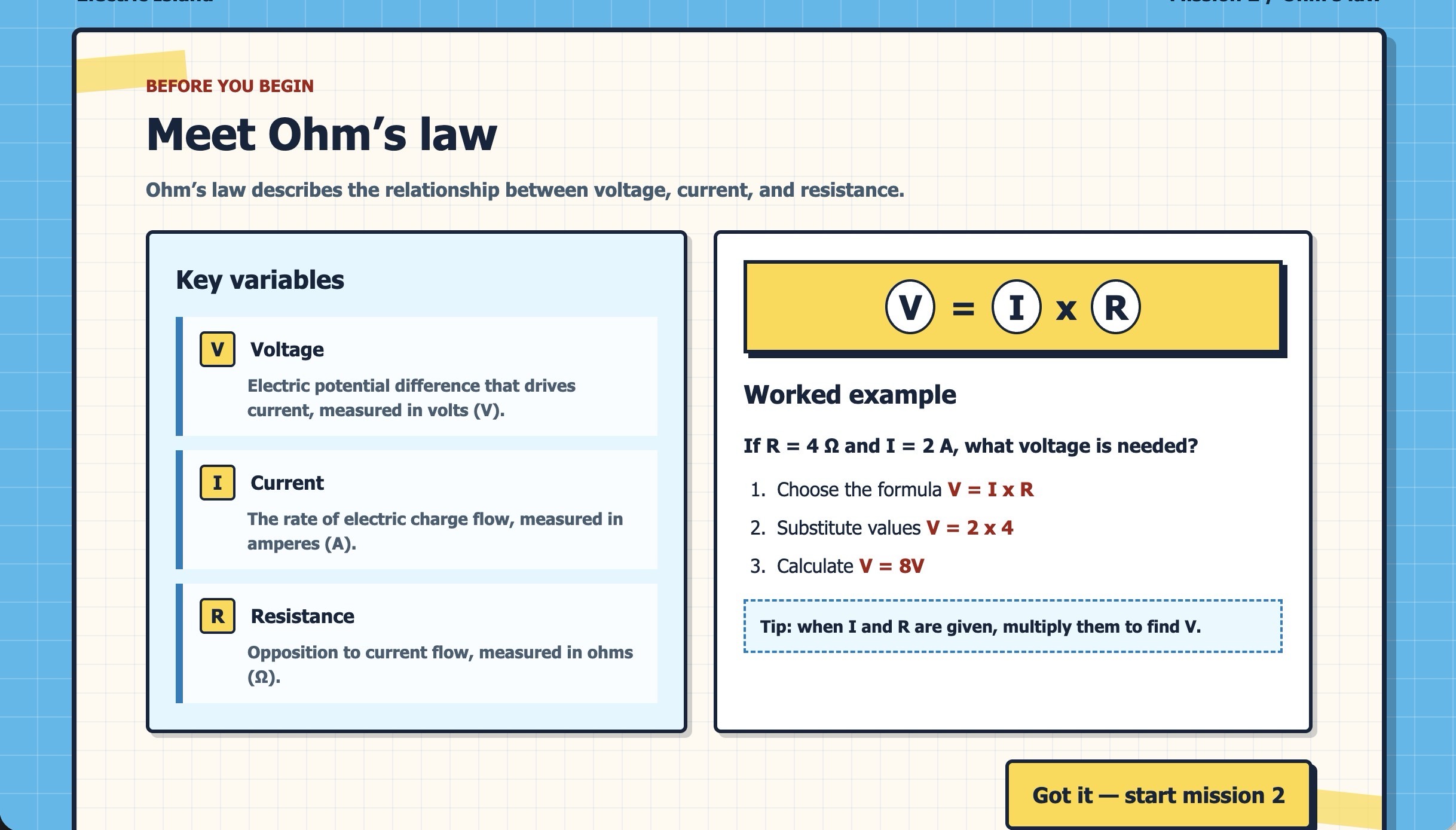
Electricity begins with a short visual lesson explaining voltage, current, resistance, and Ohm’s Law.
-
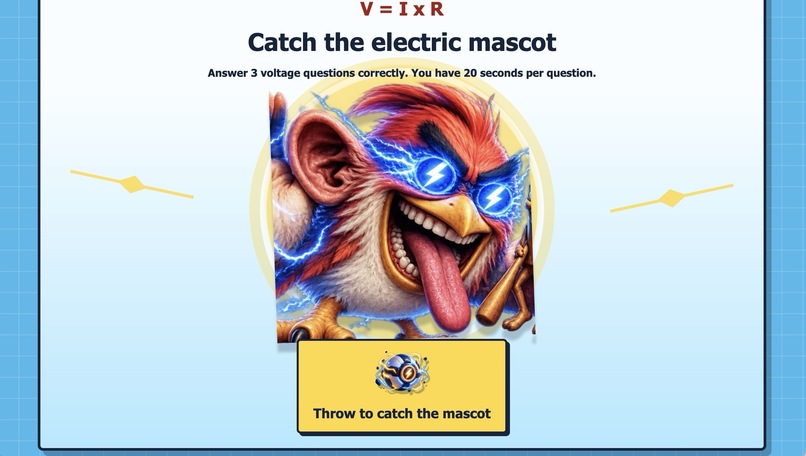
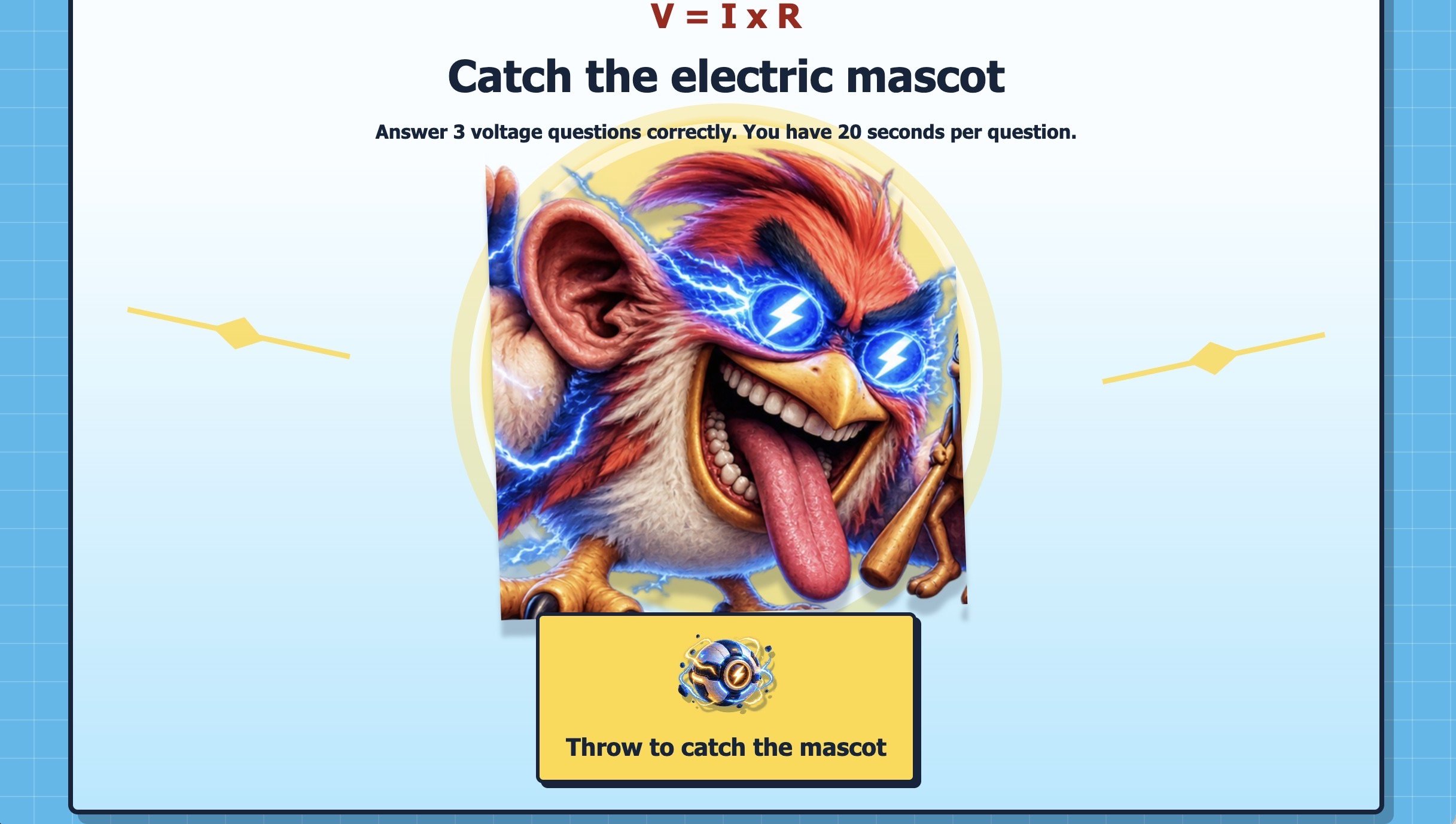
A playful transition turns the lesson into an interactive challenge before the physics questions begin.
-
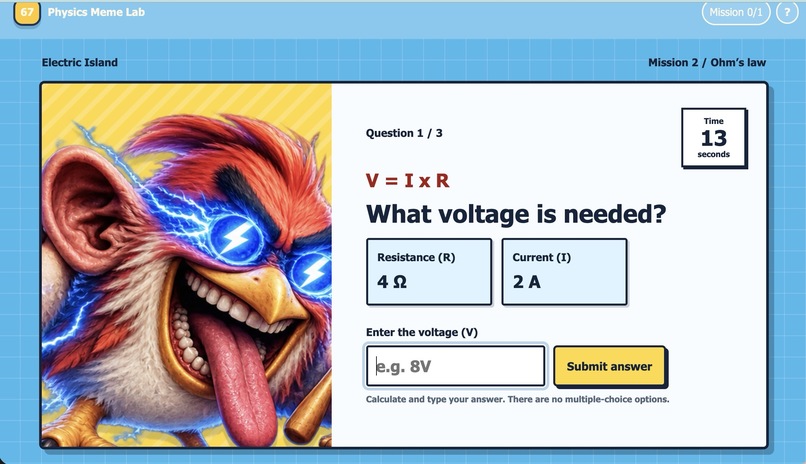
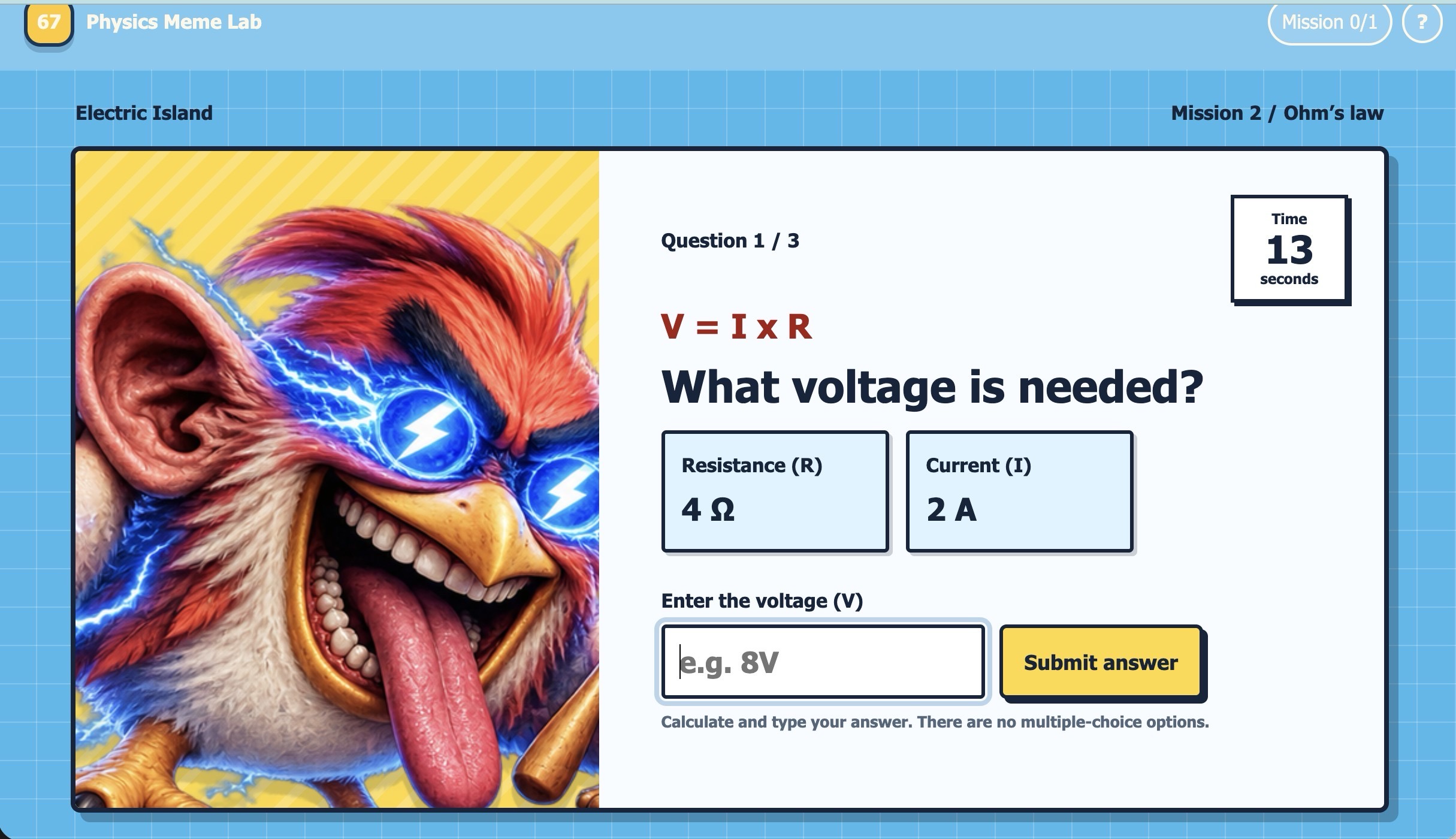
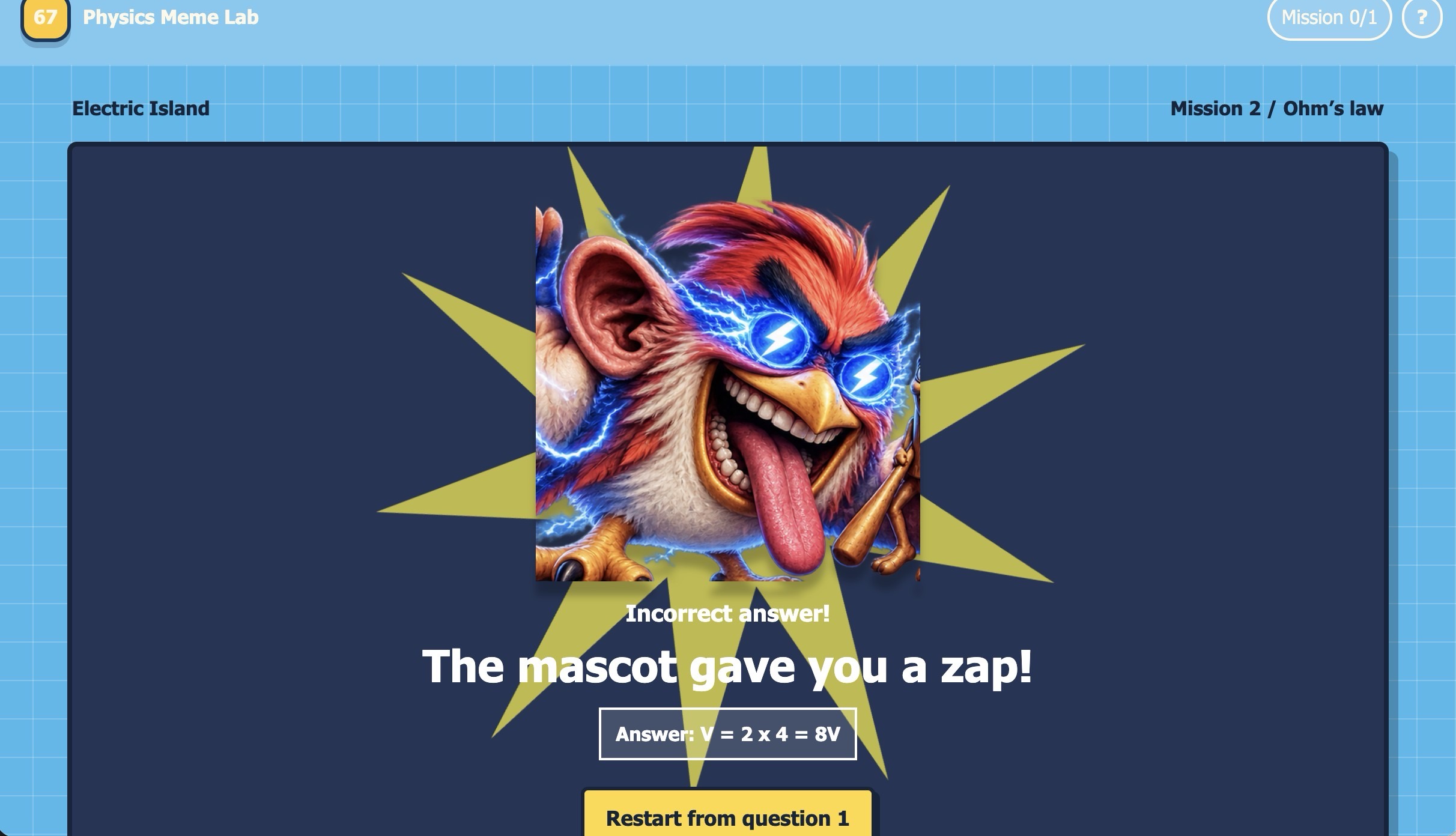
Apply Ohm’s Law in timed challenges and receive immediate feedback after each answer.
-
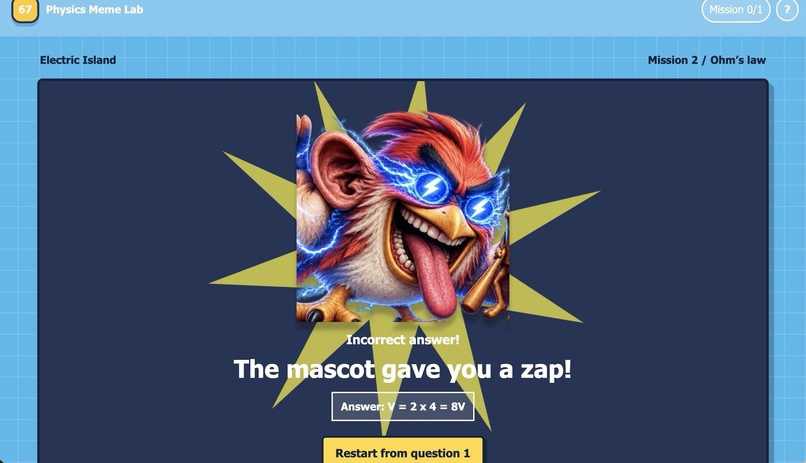
Immediate feedback shows the correct result and lets students retry the challenge.
-
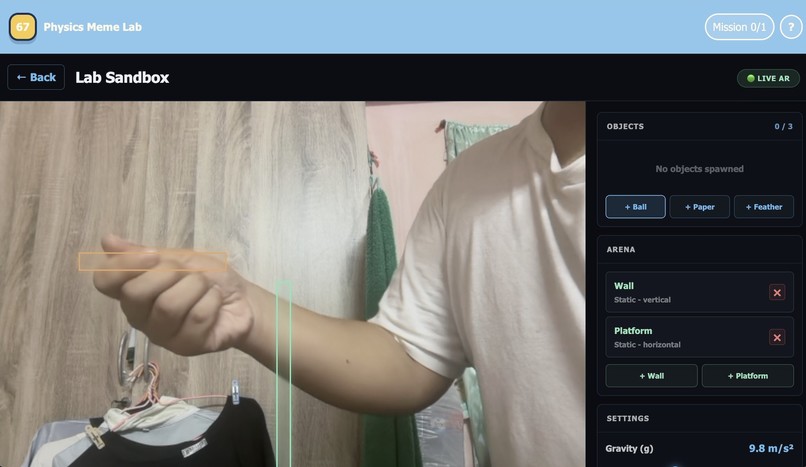
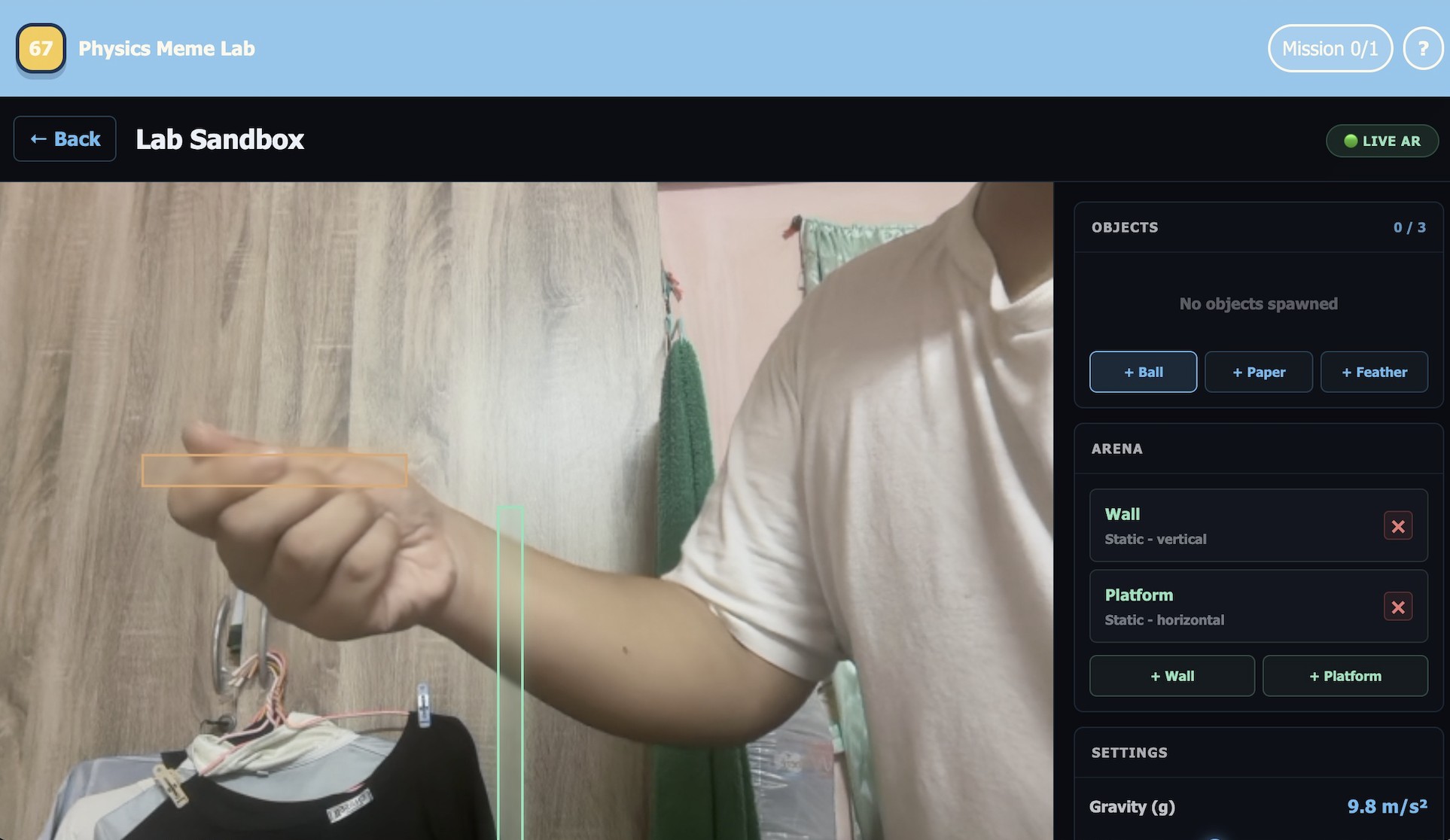
Use hand tracking to grab and throw objects, adjust gravity, and observe how changes in physical conditions affect motion in real time.
Inspiration
Physics can feel difficult when students only encounter it through formulas, diagrams, and written explanations.
We wanted to explore a different approach: what if students could interact with physics, make predictions, see the results, and learn from experimentation instead of memorization alone?
That idea became Physics Meme Lab — a meme-inspired interactive physics learning experience designed to make science more engaging, memorable, and approachable.
The project aligns with UN Sustainable Development Goal 4: Quality Education, especially through its focus on accessible and engaging STEM learning.
What it does
Physics Meme Lab turns physics concepts into interactive missions.
Students move through a world map and explore different activities:
Projectile Motion
Students predict a launch angle, aim, launch, observe the trajectory, compare attempts, and answer a concept question.
Electricity
Students practice basic electrical concepts through short challenges based on Ohm's Law:
( V = I \times R )
They receive immediate feedback and can retry questions as they learn.
Gravity Sandbox
Students can spawn objects, change gravity, observe movement, inspect values such as mass, force, and speed, and interact with objects using camera-based hand gestures.
Our core learning loop is:
Predict → Experiment → Observe → Compare → Understand
Instead of adding a quiz after a game, we designed the physics itself to become part of the interaction.
How to play
- Start from the world map and choose a physics mission.
- Read the mission objective and controls before beginning.
- In Projectile Motion, predict an angle, aim, launch, and compare your attempts.
- In Electricity, learn Ohm's Law and apply it in short timed challenges.
- In the Gravity Sandbox, add objects, adjust gravity, and use hand tracking to grab and throw objects.
- Observe the results and connect what happened to the physics concept being explored.
The main learning loop is:
Predict → Experiment → Observe → Compare → Understand
What makes it different
Physics Meme Lab combines interactive simulations with playful, meme-inspired visual cues.
Selected activities also use browser-based hand tracking, allowing physical gestures to become part of the learning experience.
For example, students can use gestures to interact with projectiles or manipulate objects in the gravity sandbox.
The goal is to make abstract physics concepts feel more tangible while keeping the experience playful enough to encourage experimentation.
How we built it
Physics Meme Lab is a browser-based application built primarily with:
- React
- TypeScript
- Vite
- MediaPipe
- HTML and CSS
MediaPipe is used for real-time hand tracking directly in the browser.
The application also contains custom physics and interaction logic for projectile motion, gravity, mission progression, learning questions, and game state.
Progress and supported preferences are stored locally in the browser, so users do not need to create an account.
The project is deployed on Vercel and can be played directly from a modern web browser.
Challenges we faced
One of the biggest challenges was making camera-based interaction feel usable while still keeping the learning experience understandable.
Hand tracking can behave differently depending on lighting, camera quality, browser support, and how clearly a gesture is performed. Because of this, we also kept alternative controls available in supported parts of the experience.
Another challenge was balancing entertainment and education. We wanted the meme-inspired presentation to make the experience memorable without distracting from the actual physics concepts.
We also had to design different interaction styles for each topic because projectile motion, electricity, and gravity cannot all be taught effectively through the same type of activity.
What we learned
Through this project, we learned more about:
- building interactive educational experiences,
- integrating real-time hand tracking in a web application,
- connecting physics concepts with gameplay,
- designing immediate feedback for learners,
- testing browser-based interactions,
- and adapting technical ideas for an international audience.
We also learned that making an educational project engaging is not only about adding game elements. The interaction itself needs to support the concept being taught.
UN SDG 4 — Quality Education
Physics Meme Lab contributes to SDG 4: Quality Education by exploring a more engaging way for students to interact with STEM concepts.
The project aims to:
- make abstract physics concepts easier to visualize,
- encourage experimentation rather than memorization alone,
- increase engagement through interactive learning,
- and provide a browser-based experience that does not require specialized equipment.
Physics Meme Lab is currently an educational prototype, but it demonstrates how interactive technology and familiar internet-style creativity can be used to make STEM learning more approachable.
Project history
Physics Meme Lab was originally developed before this event as a student physics-learning hackathon prototype.
For this international SDG-focused submission, we adapted the project with an English-language interface, refreshed character presentation, improved international presentation, clearer educational positioning, and explicit alignment with UN SDG 4: Quality Education.
We do not claim that the entire application was created during this event.
The core goal remains the same:
help students experience physics through interaction instead of memorization alone.
Built With
- css3
- github
- html5
- javascript
- mediapipe
- react
- typescript
- vercel
- vite

Log in or sign up for Devpost to join the conversation.