-
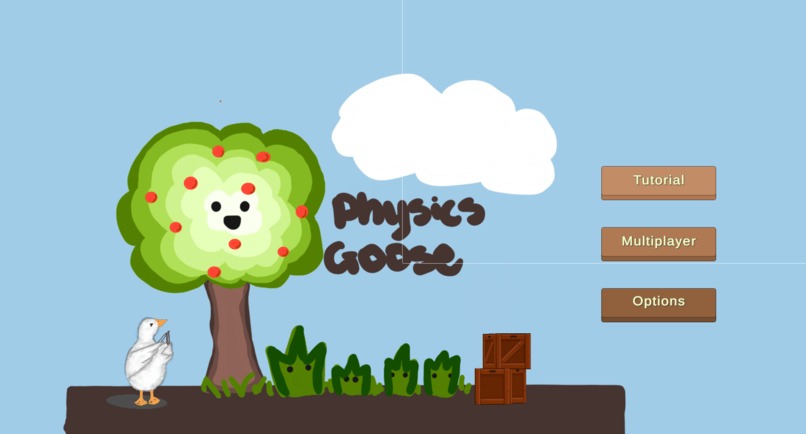
Menu Page
-
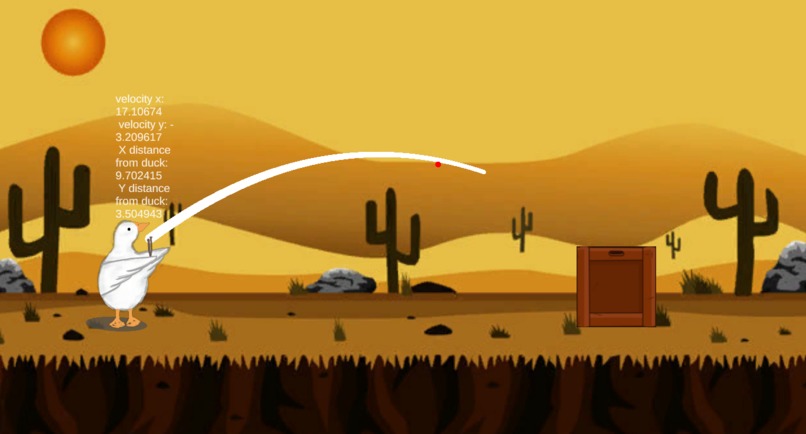
Tutorial
-
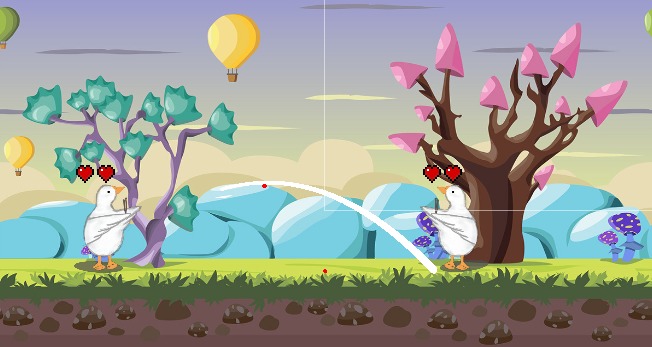
Multiplayer
Inspiration
Our group, consisting of Gavin, Yuqi, and myself, was motivated by Angry Birds, namely the physics-based projectile prediction lines used in the game. Since this is conceptually comparable to one of our themes (education), we've developed a game to explain the fundamentals of Projectile motion and acceleration to students.
What it does
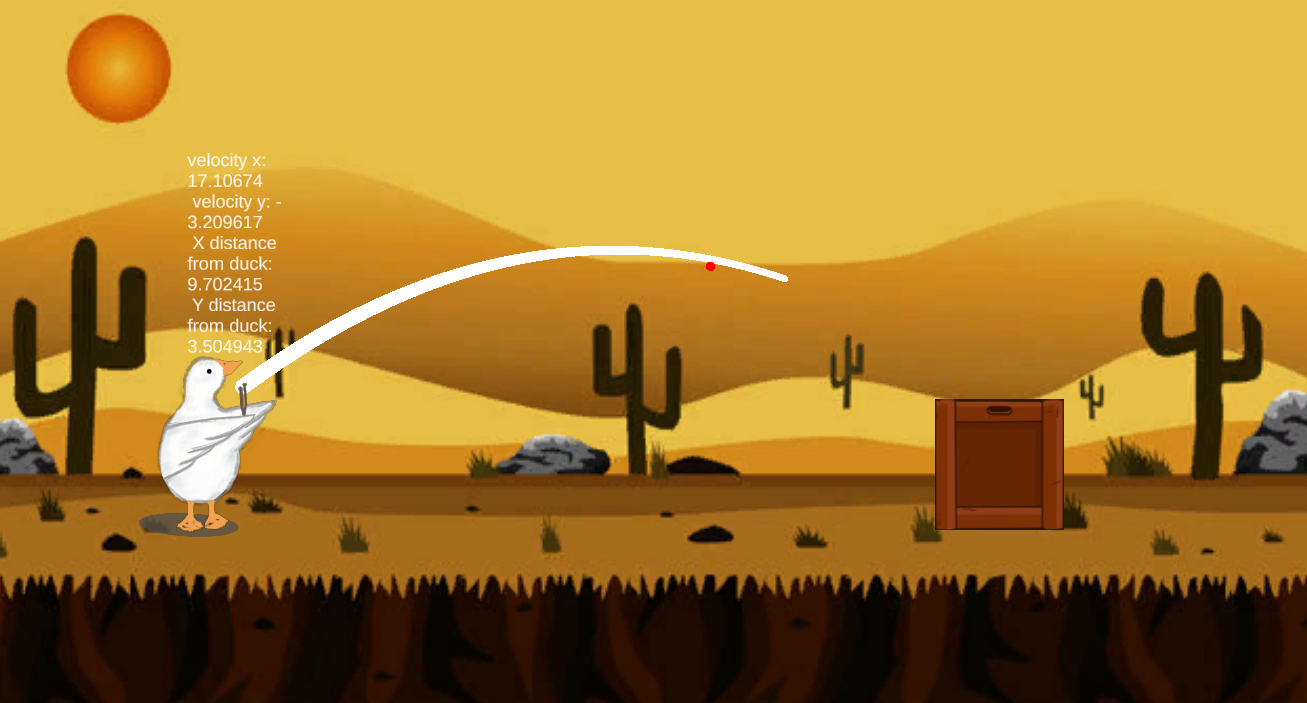
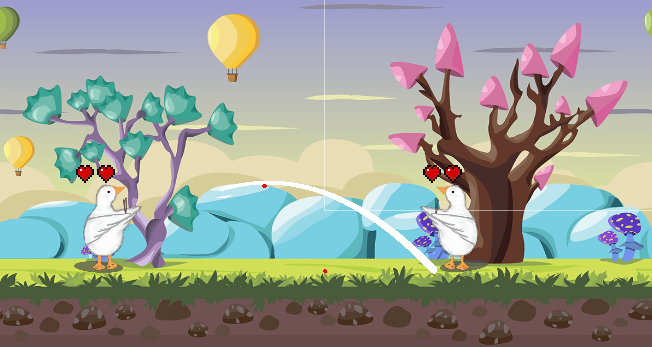
Our Unity-made game's primary play modes are a tutorial and a multiplayer mode. In the first option, students will use a mouse drag to see their x and y velocities as they attempt to determine the best path to the box (target) via a trajectory line. As for our second option, 1 vs. 1 multiplayer, it's a great way for the community to come together and have some fun. The host initiates play, and the client joins in to compete for the best velocity-only (no trajectory line) parabola.
How we built it
Our development strategy included starting with the game's trajectory script, expanding outward to include other game types and a menu, and so forth.
Challenges we ran into
We had a lot of trouble with the multiplayer mode, and we were never able to get it working properly. There were a number of problems, such as the host and clients not being able to use the same piece of code to accomplish their goals, and with determining who is the host and who is the client.
Accomplishments that we're proud of
Because of the time limit, the game currently has a projectile aim assist GUI. This is because the game currently has drag force, which complicates the physics involved. We will hide the projectile aim assist GUI, and disable the drag force in the future.
What we learned
We learned that teamwork is crucial for working efficiently; we had one of our teammates draw all of the sprites while we write the code, and it saved a lot of time. We also learned that interactive games a fun way to learn physics. So we might add other mini games such as games involving momentum and force into Physics Goose.

Log in or sign up for Devpost to join the conversation.