-
-
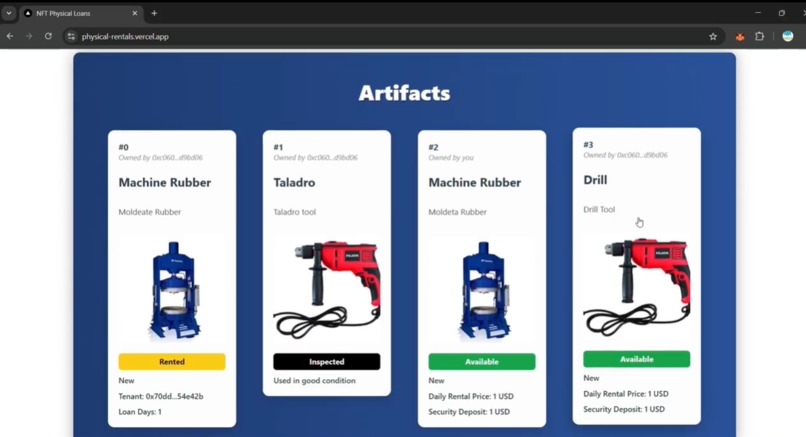
Panel
-
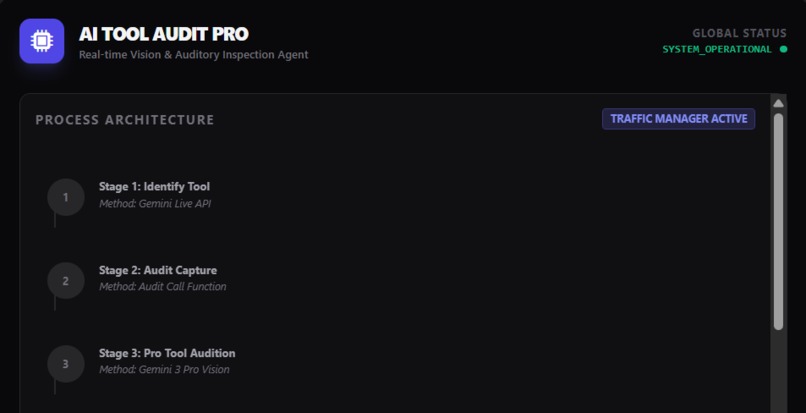
Stages Tool Audit
-
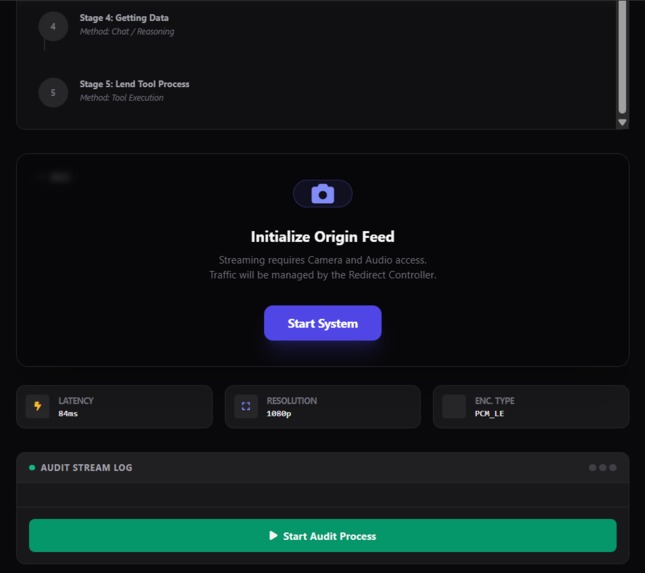
Tool Audit
💡 Inspiration
We were inspired by the "Sharing Economy" dilemma: millions of people own expensive tools (drills, cameras, drones) that sit idle 99% of the time, while others need them for short-term use but don't want to buy them full-price.
Current P2P rental solutions suffer from a massive trust gap. How do I know you'll return my expensive camera? How do I know you won't keep my security deposit even if I return it safely?
We realized that Blockchain is the perfect trust layer. By using Smart Contracts to lock collateral and NFTs to represent physical assets at time the ai auditing the tool condition, we could create a trustless environment where the code guarantees that the owner gets paid or compensated, and the renter gets their deposit back upon successful return.
🚀 What it does
Physical Rentals is a decentralized marketplace for renting physical goods.
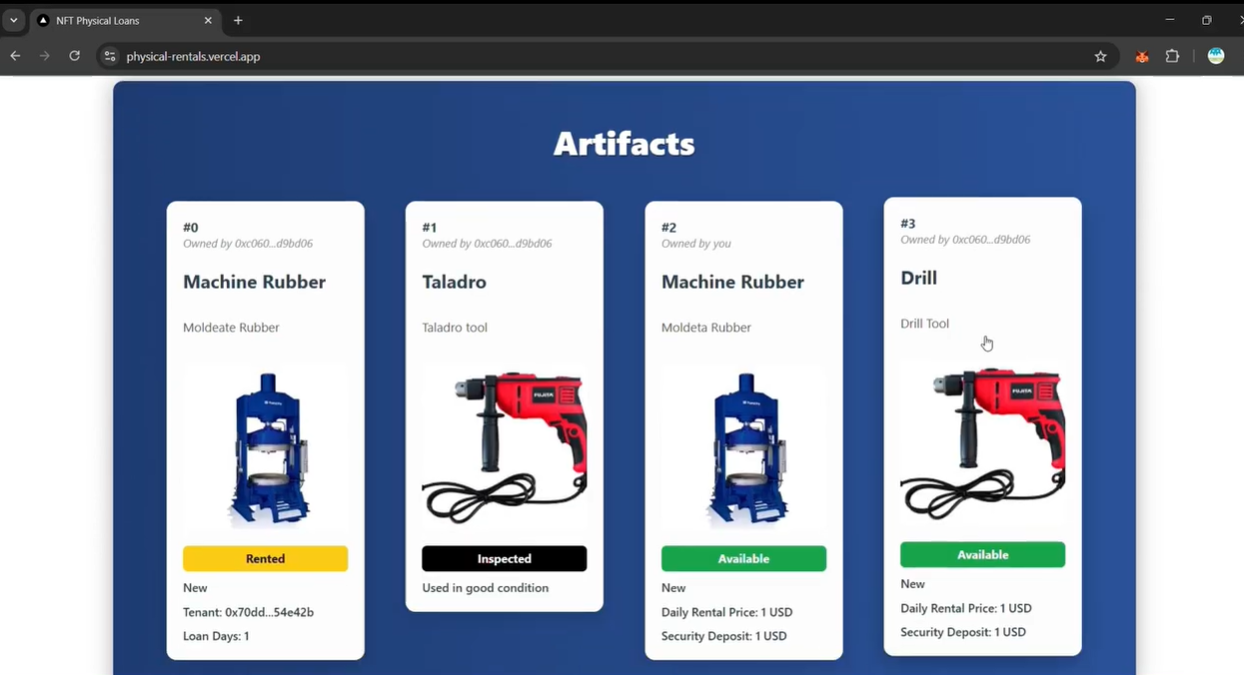
- Tokenization : Lenders mint an NFT that represents their physical item (e.g., a power drill). This NFT holds data about the item's condition, rental price, and required security deposit.
- Collateralized Renting : To rent an item, a user must lock the Rental Fee + Security Deposit in the smart contract. This ensures the lender is protected against theft or damage.
- Smart Escrow : The funds are held in a secure smart contract escrow. The lender cannot steal the deposit, and the renter cannot run away with the item without losing their collateral.
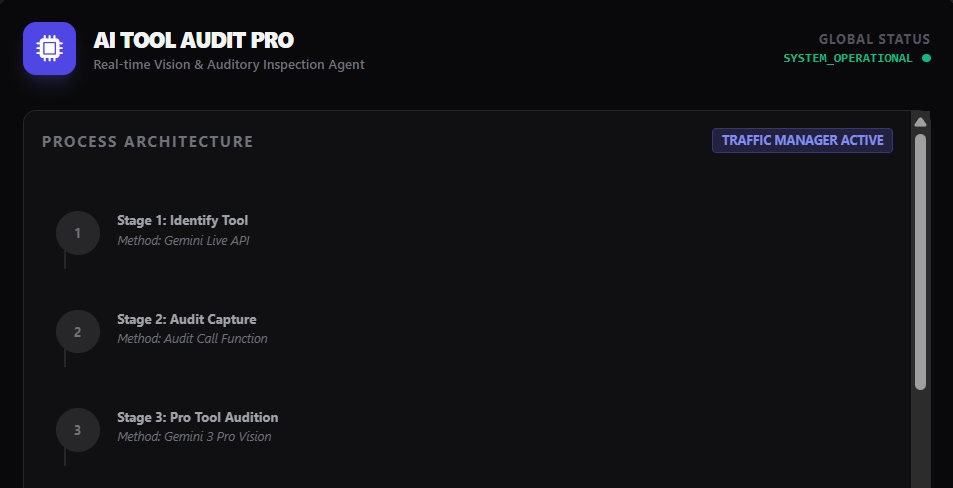
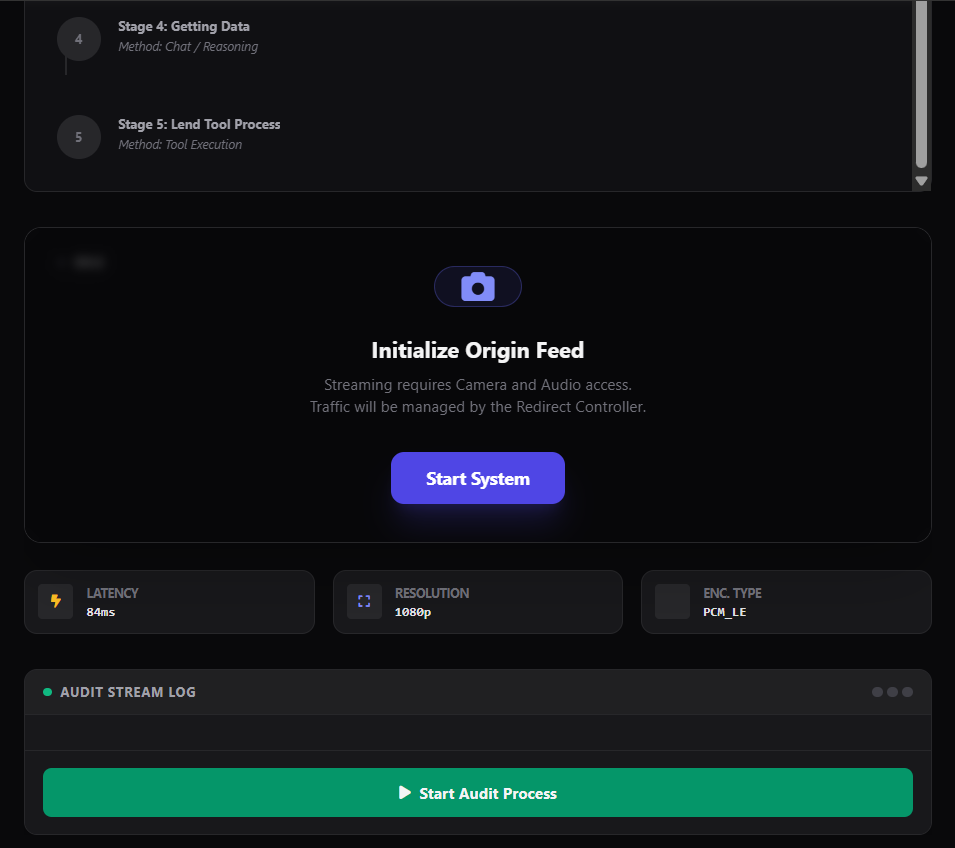
- AI Auditor: Uses OCR and LLM logic (Gemini Live API and Gemini 3 Flash) to validate tools condition against borrower acceptability like appearance and functionality. This agent is paid through x402 protocol from companies per each audit.
- Lifecycle Management : The dApp tracks the full lifecycle: Requested → Sent → Rented → Returned → Inspected .
⚙️ How we built it
We built a full-stack dApp bridging high-performance smart contracts with a modern user interface:
Smart Contracts (Solidity & Hardhat) : We engineered the PhysicalRental.sol contract using a robust State Machine pattern to handle the complex states of a physical rental. We implemented OpenZeppelin standards for security (ReentrancyGuard, Ownable).
Frontend (Next.js 15 & Wagmi) : We built a responsive, server-side rendered application using Next.js proximately in mobile.
UI/UX : We used TailwindCSS and Shadcn/UI to create a clean, accessible marketplace interface that feels like a Web2 app but has Web3 powers.
Indexing : We utilized The Graph to index blockchain events, allowing us to display available tools and user history instantly without hammering the RPC nodes.
KYC: The app use Self protocol as kyc to the users proof of humanity.
´Pro Audit: The tool audit is done through the Gemini Live API and Pro preview for the pro video analysis.
🚧 Challenges we ran into
- The "Phygital" Bridge : Connecting on-chain logic to off-chain physical actions is hard. We had to design a rigorous "Handshake" protocol (confirm sent, confirm received) to
- Modernizing the Stack : We started with older libraries (Moralis/Web3UIKit) but hit performance bottlenecks. Migrating the entire frontend to Wagmi v2 and Next.js App Router was a significant refactor, but it drastically improved load times and developer experience.
- KYC: The Self protocol confirmation was complex to render in a component.
- Audit: The audit architecture need complex audio and video processing and traffic configuration in each tool audit stage to validate if the tool works correctly.
🏆 Accomplishments that we're proud of
Secure Escrow Logic: Successfully implementing a "Pull Payment" system where users withdraw their earnings, preventing reentrancy attacks and gas limit issues.
Seamless UX: Creating a flow where a user can connect their wallet and rent a physical item in just 3 clicks.
Full Stack Integration: Successfully connecting the blockchain, The Graph indexer, and the Next.js frontend into a cohesive, working product.
Safety First : Implementing strict condition checks and state reversions to prevent users from losing funds due to accidental clicks or bad actors.
Compliance: Implementing Self protocol we verified that only a human can use our app.
Pro audit: Checking the tool condition in real time through the Live API we can ensure that only functional tools can be shared
🧠 What we learned
- Trust is Expensive : Replacing human trust with cryptographic trust requires careful game-theoretic design. Every loophole (e.g., "what if I claim I sent it but didn't?") needs a code-based answer.
- State Management : Managing the state of a physical object on the blockchain is more complex than managing a purely digital token. You need to account for shipping times, inspection periods, and disputes.
- The Power of Oracles : We learned that a dApp interacting with the real world is impossible without Oracles to provide accurate pricing and external data.
🔮 What's next for Physical Rentals
- Dispute Resolution DAO : Implementing a decentralized court (like Kleros) where token holders can vote on disputes (e.g., "The item arrived broken") to release funds fairly.
- AI testing: To demonstrate the assertiveness of the AI model to recognize the condition of a tool.
- IoT Smart Locks : Integrating with IoT-enabled lockboxes. The smart contract could automatically unlock a physical box when the rental payment is confirmed on-chain.
- Reputation System : Building an on-chain reputation score (SBT - Soulbound Token) for good renters and lenders, allowing highly-rated users to pay lower collateral.
- Multi-Chain Support : Deploying to L2s like Arbitrum or Optimism to lower gas fees for cheaper tool rentals.
Built With
- agent-orchestration
- blockchain
- chainlink
- geminiapi
- next
- on-off-ramps
- self-protocol
- solidity
- supabase
- thegraph
- x402-protocol

Log in or sign up for Devpost to join the conversation.