-
-
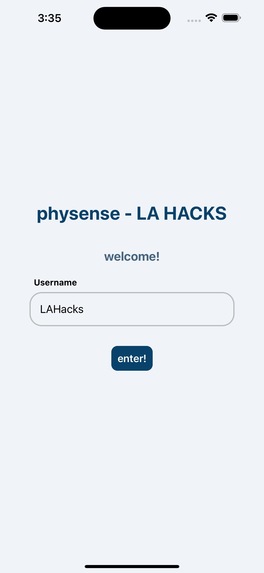
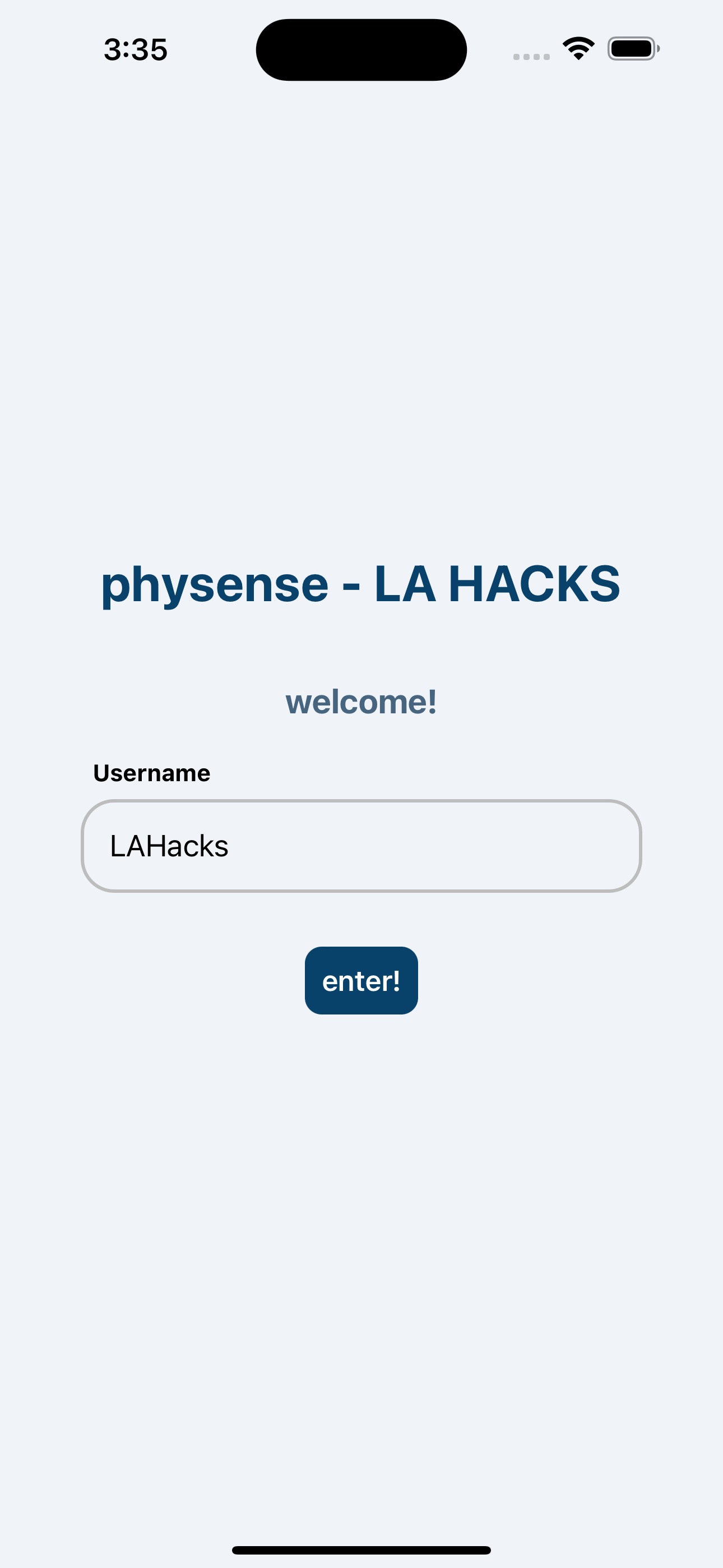
login page for users to relogin/or create an account
-
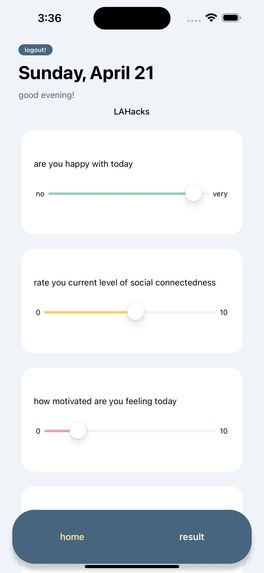
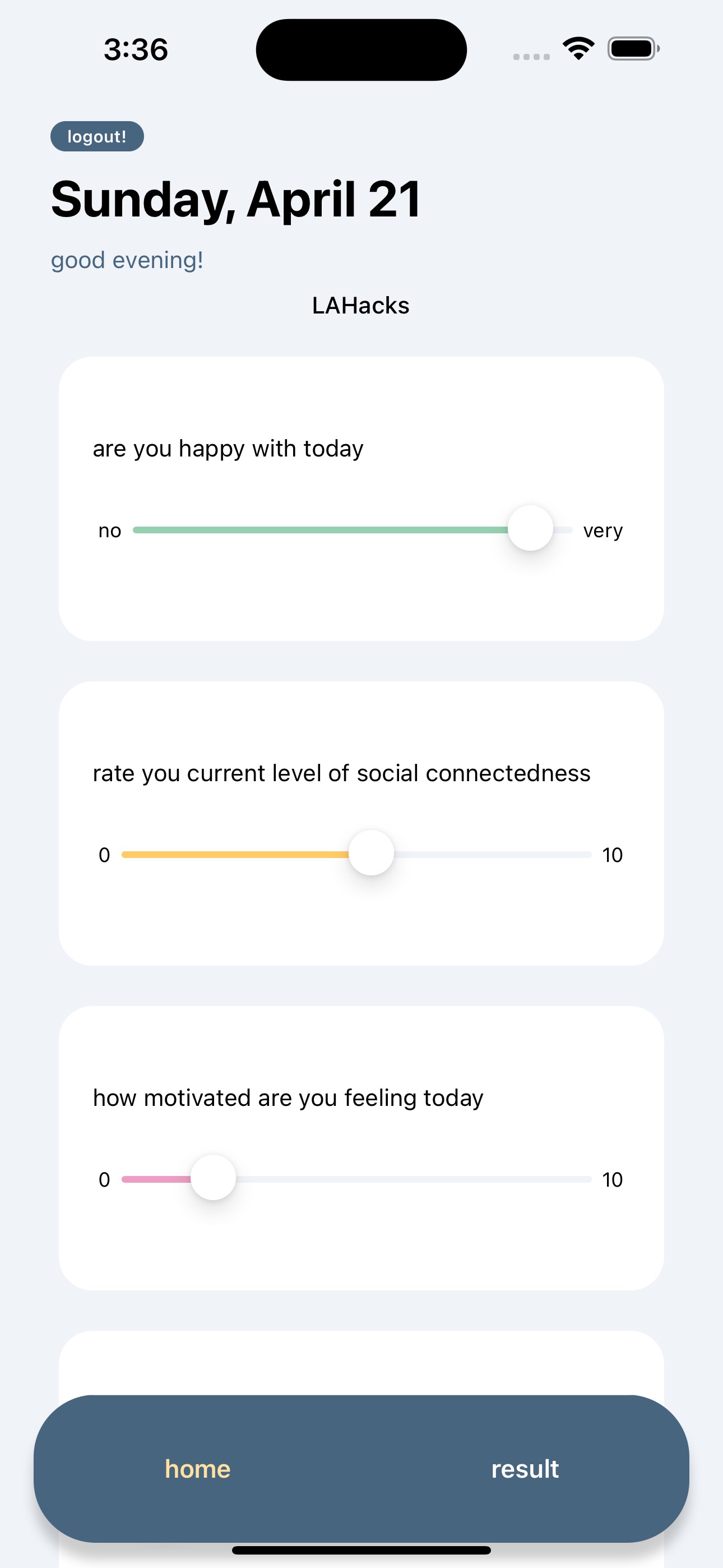
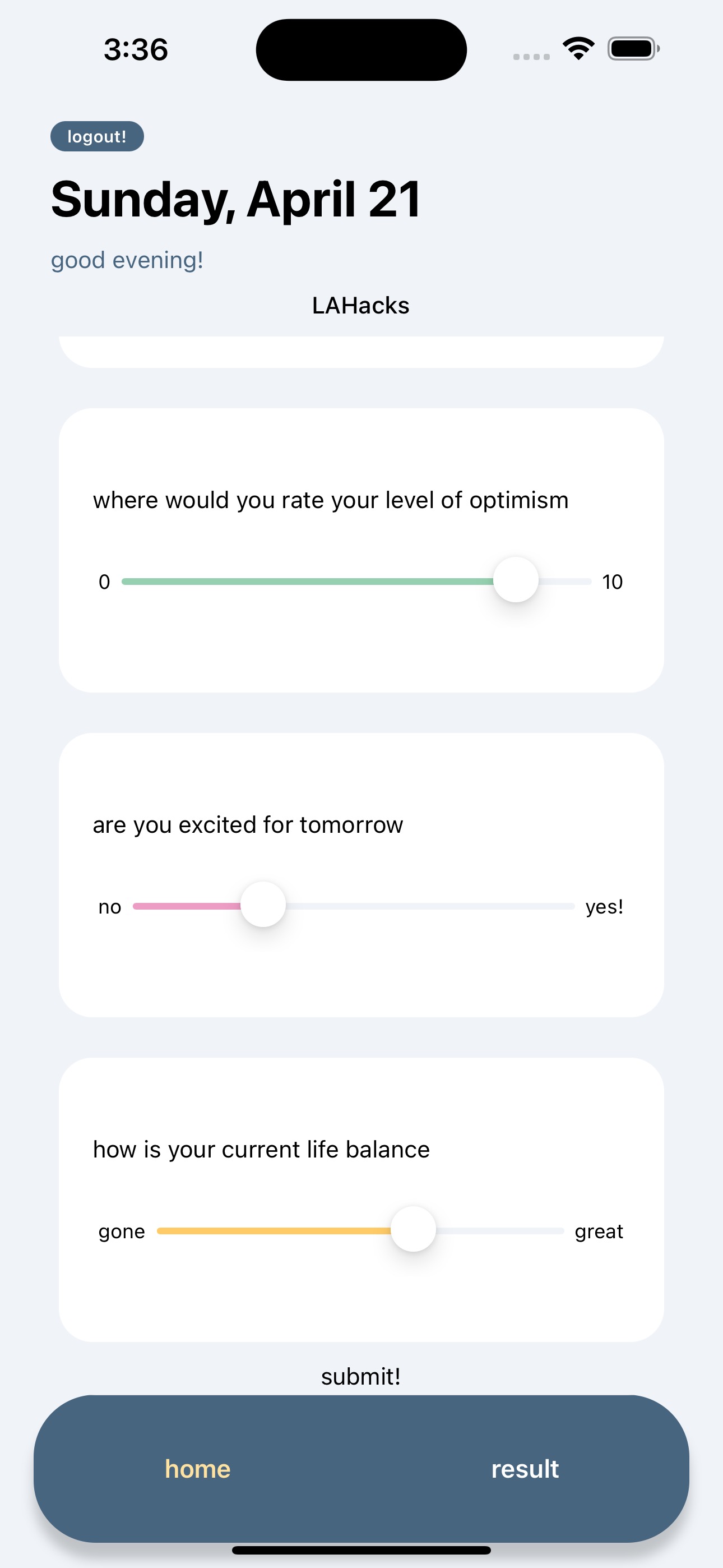
home page that collects information
-
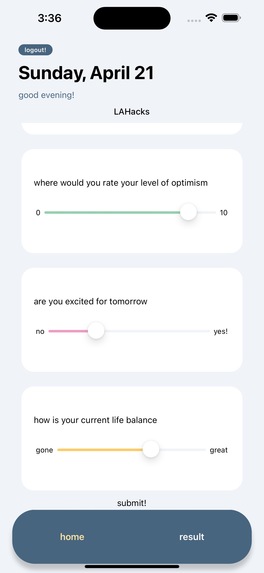
users submit their daily moods
-
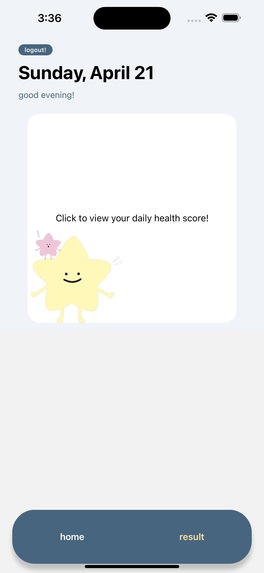
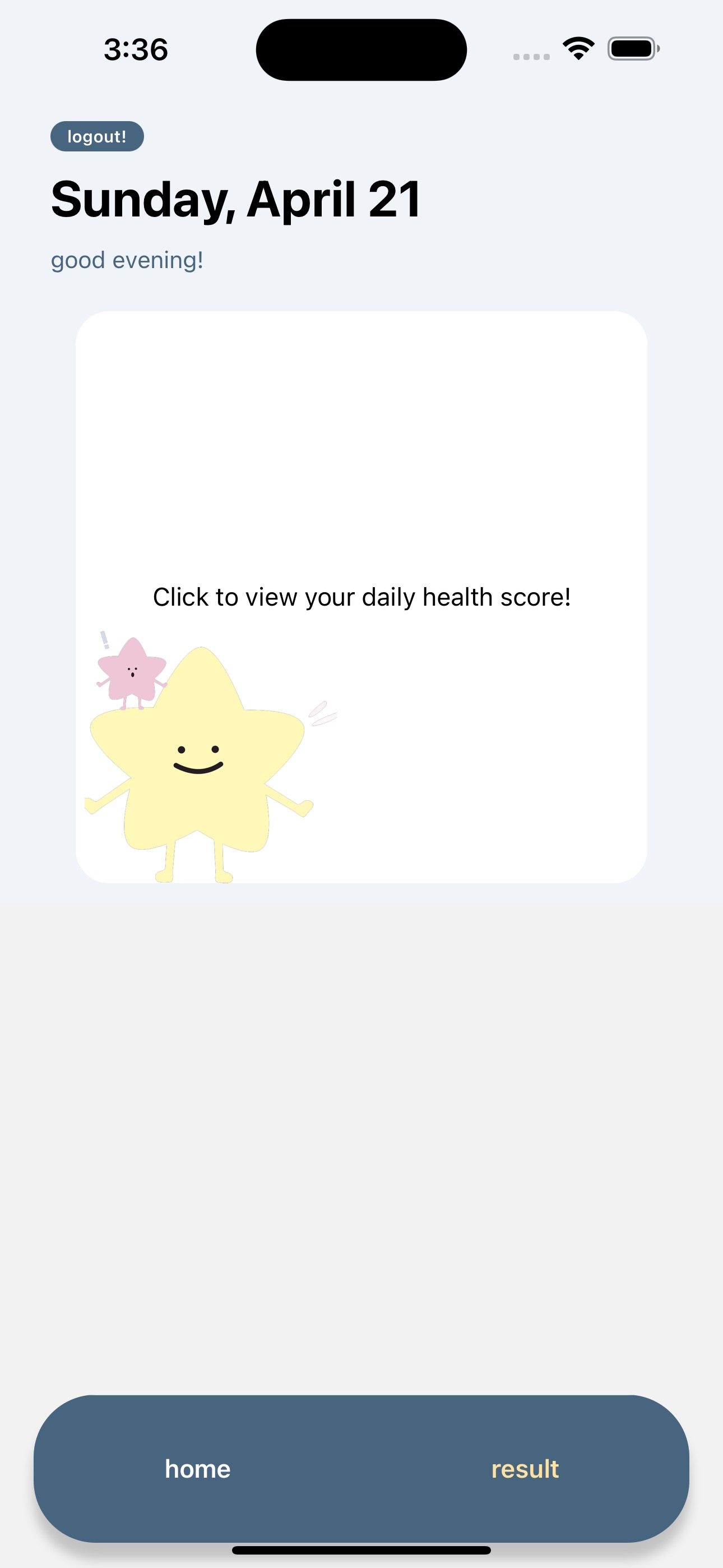
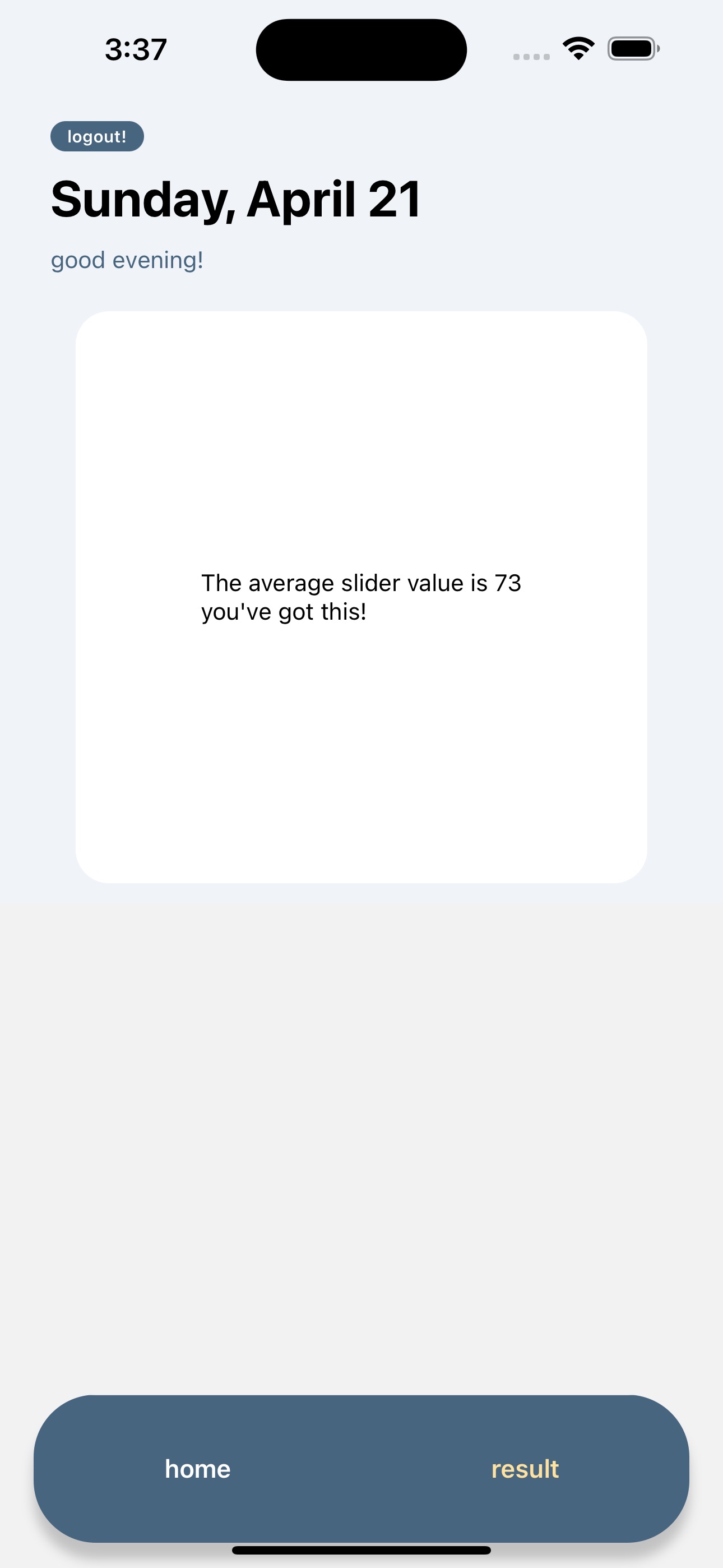
each submission is related to an overall health score
-
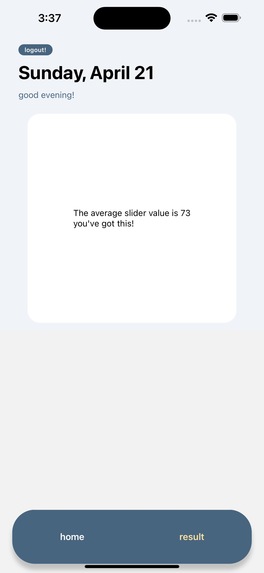
scores are accessed by flipping the card
Inspiration
Our project is inspired by the impact that comprehension of mood and health patterns can have on one's overall well-being. By tracking these fluctuations, our objective is to unveil invaluable insights into potential triggers and underlying causes, thereby empowering individuals to take proactive steps towards achieving greater mental and physical health.
While similar functionalities are being developed in platforms like Notion, they often necessitate significant user input and remain static. Our ambition is to streamline this process, reducing barriers to addressing mental health concerns. We strive to provide a seamless solution that facilitates the prioritization of mental well-being, recognizing its pivotal importance in achieving holistic health.
What it does
Physense revolutionizes the approach to mental and physical well-being by employing a questionnaire that assesses diverse mood symptoms on a scalable spectrum. Through this innovative process, a mood score is derived and archived within our database for different accounts. Users are then presented with visualizations, graphically portraying their mood fluctuations over time, thereby offering clear insights and facilitating informed decision-making for health management.
How we built it
We first designed the interface using Figma to visualize our ideas. Transitioning from design to development, we began creating custom components while also incorporating existing ones. Our focus extended to creating various navigation methods within the application and devising mechanisms to collect user information for data profiling purposes. To facilitate seamless interaction between frontend and backend systems, we hosted everything locally using Node.js. Additionally, we constructed APIs to establish connections between our backend database, powered by MongoDB, and our frontend implemented in React. This comprehensive approach ensured the integration of all components, enabling us to develop a robust and user-friendly platform for tracking and analyzing health data.
Challenges we ran into
Navigating through the challenges of integrating new technologies was a significant hurdle we encountered. Moreover, grappling with the intricacies of learning new programming languages added another layer of challenges. Additionally, bridging the gap between frontend and backend systems presented its own set of challenges. Understanding how to seamlessly integrate these two components required dedicated effort and experimentation.
Accomplishments that we're proud of
One accomplishment was successfully integrating our frontend and backend systems. It took some troubleshooting, but we finally managed to establish seamless communication between the two. Additionally, we were able to create our first full-stack application. Lastly, setting up our own server and database to securely store user data was a crucial step forward in ensuring the reliability of our platform.
What we learned
Prior to LA Hacks, none of us on the team had experience developing a mobile app or working with backend development. Starting from scratch, we learned React Native and began building our mobile app using Expo Go. We then familiarized ourselves with concepts like useState and components to create an interactive frontend.
Venturing into backend development, we learned about the entire full-stack mobile app development process. From constructing the frontend to establishing connections with a backend through a server and interfacing with a cloud database, we gained hands-on experience. From there we utilized Node.js, MongoDB, API construction, and integrated them with the React frontend. Additionally, we honed our skills in hosting servers locally using Express.
What's next for physense
Looking ahead, our focus for Physense revolves around several key objectives. Firstly, we aim to complete the implementation of the data visualization process, enhancing the user experience by providing clear and insightful representations of the collected data. Additionally, we want to integrate machine learning capabilities into our platform. By leveraging AI models, we aspire to analyze the data collected and provide users with personalized insights into their health status, further empowering them to make informed decisions about their well-being.
Furthermore, we plan to expand our platform's scope by introducing a symptom tracker feature. This addition will enable users to not only monitor their mental health but also track physical symptoms, facilitating a more comprehensive approach to overall health management. By continuously innovating and enhancing our platform, we remain committed to providing users with valuable tools and resources to support their journey towards optimal health and well-being.

Log in or sign up for Devpost to join the conversation.