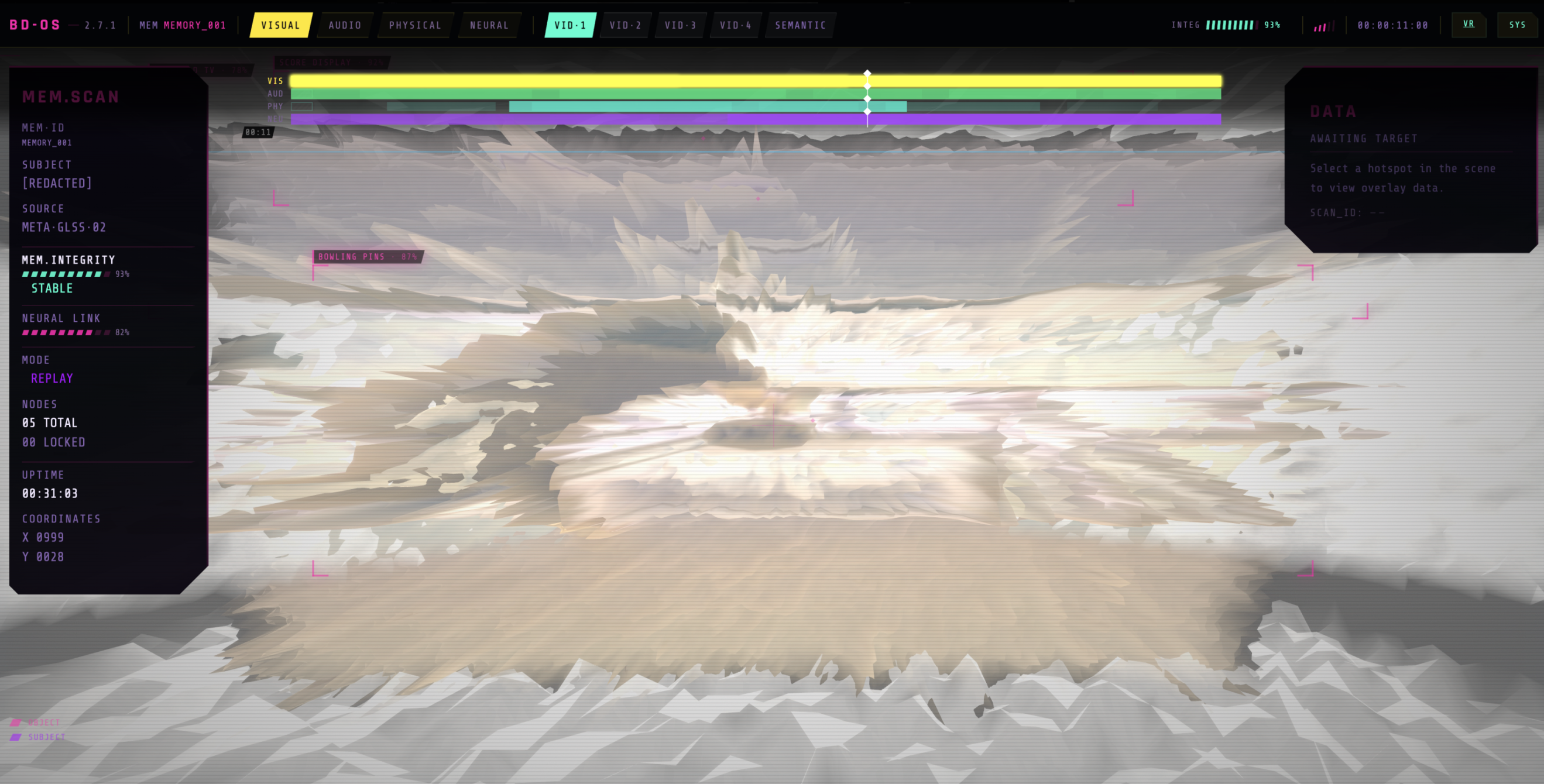
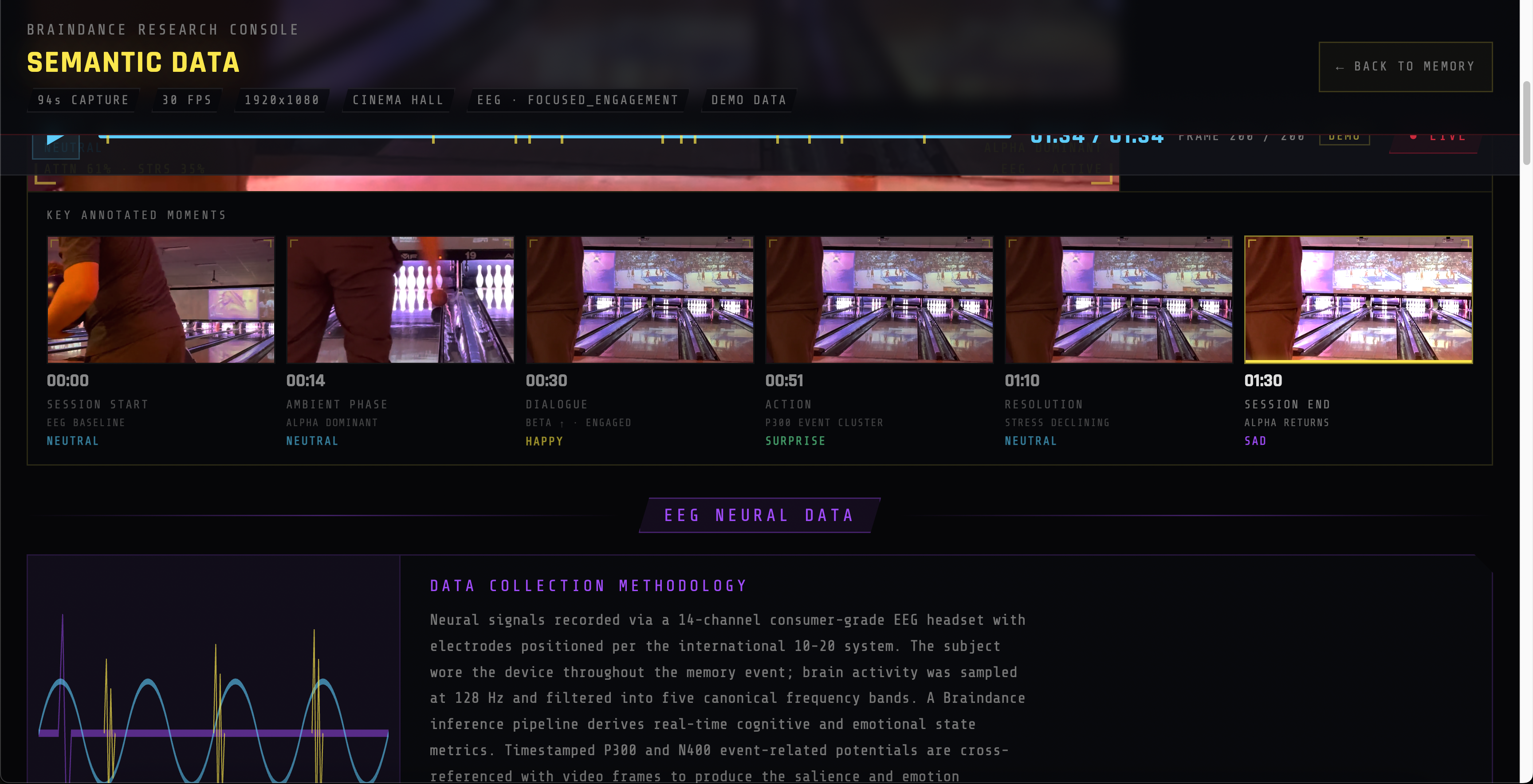
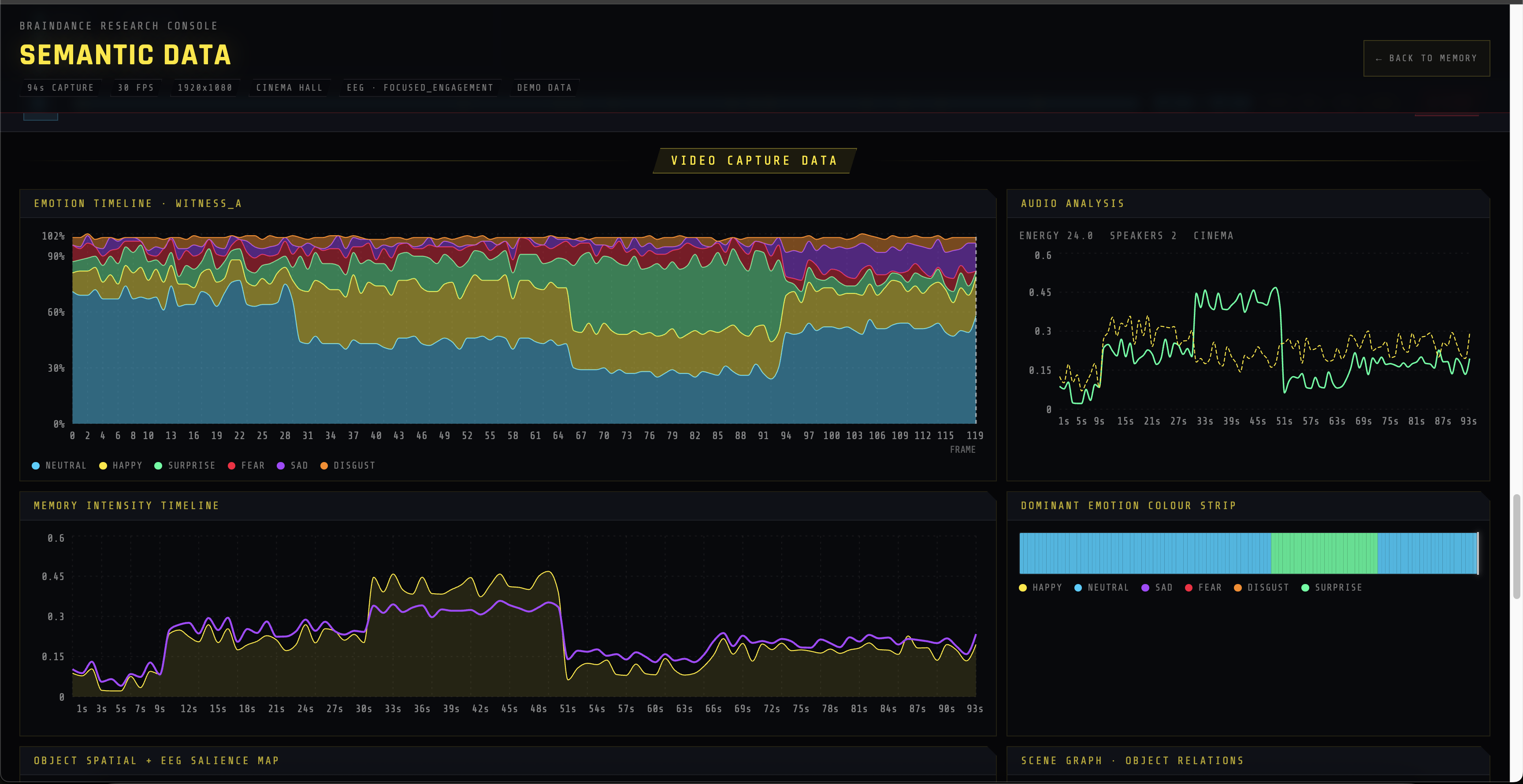
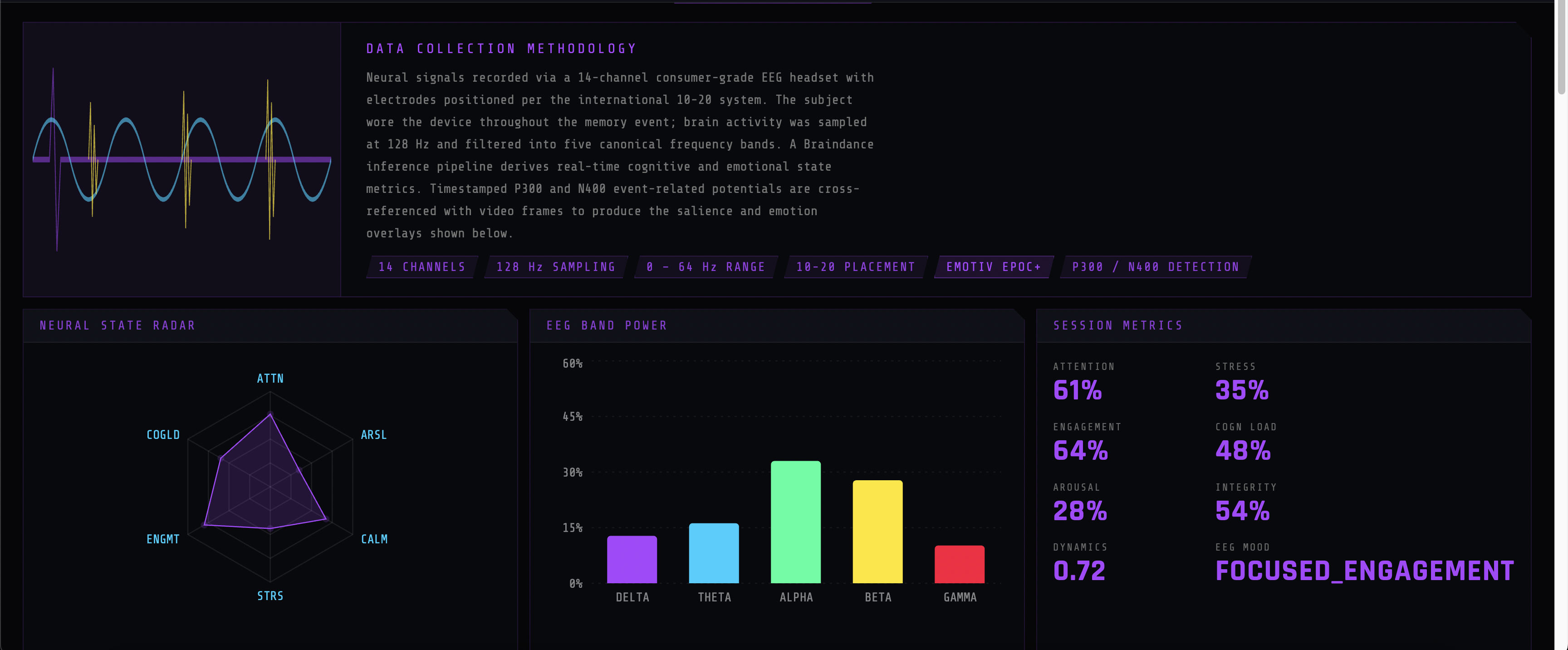
Inspiration
Entering Someone Else's Reality
The idea behind MindScape was inspired by the Braindance technology from the video game reference and the broader concept of shared consciousness, where people are no longer limited to simply viewing information through a screen. We asked a question that felt both futuristic and unsettling:
What if memories, dreams, and emotions could become places you could physically enter and explore?
Dreams are among the most mysterious experiences humans have. They combine emotions, fragmented memories, imagination, fears, and subconscious thoughts into worlds that often disappear seconds after waking up. Today, dreams exist only as vague recollections. Tomorrow, they could become digital environments.
MindScape explores a future where the boundary between the human mind and digital space begins to disappear.
Instead of scrolling through content or watching media, users become participants inside reconstructed experiences generated directly from neural activity.
Our vision extends beyond entertainment.
Imagine:
- Reliving forgotten memories
- Visualizing emotions in real time
- Understanding mental states through immersive environments
- Exploring human consciousness through AI
- Creating entirely new forms of communication beyond language
MindScape attempts to take a small step toward that future.
What it does
Dream Reconstruction Through Neural Interpretation
MindScape transforms brain activity into explorable worlds.
The system captures EEG brainwave signals and interprets patterns associated with neural activity during dream states and cognitive processes. Instead of displaying raw electrical graphs and meaningless values, our AI pipeline attempts to translate this information into a form humans naturally understand:
environments, visuals, emotions, and experiences.
The process can be represented as:
$$ EEG_{signals} \rightarrow Neural\ Interpretation \rightarrow AI\ Semantic\ Mapping \rightarrow 3D\ Environment\ Generation \rightarrow Immersive\ Experience $$
Rather than asking users to analyze complicated brain data:
$$ B(t)=\alpha+\beta+\theta+\delta+\gamma $$
MindScape converts invisible neural signals into something intuitive:
A place you can walk through.
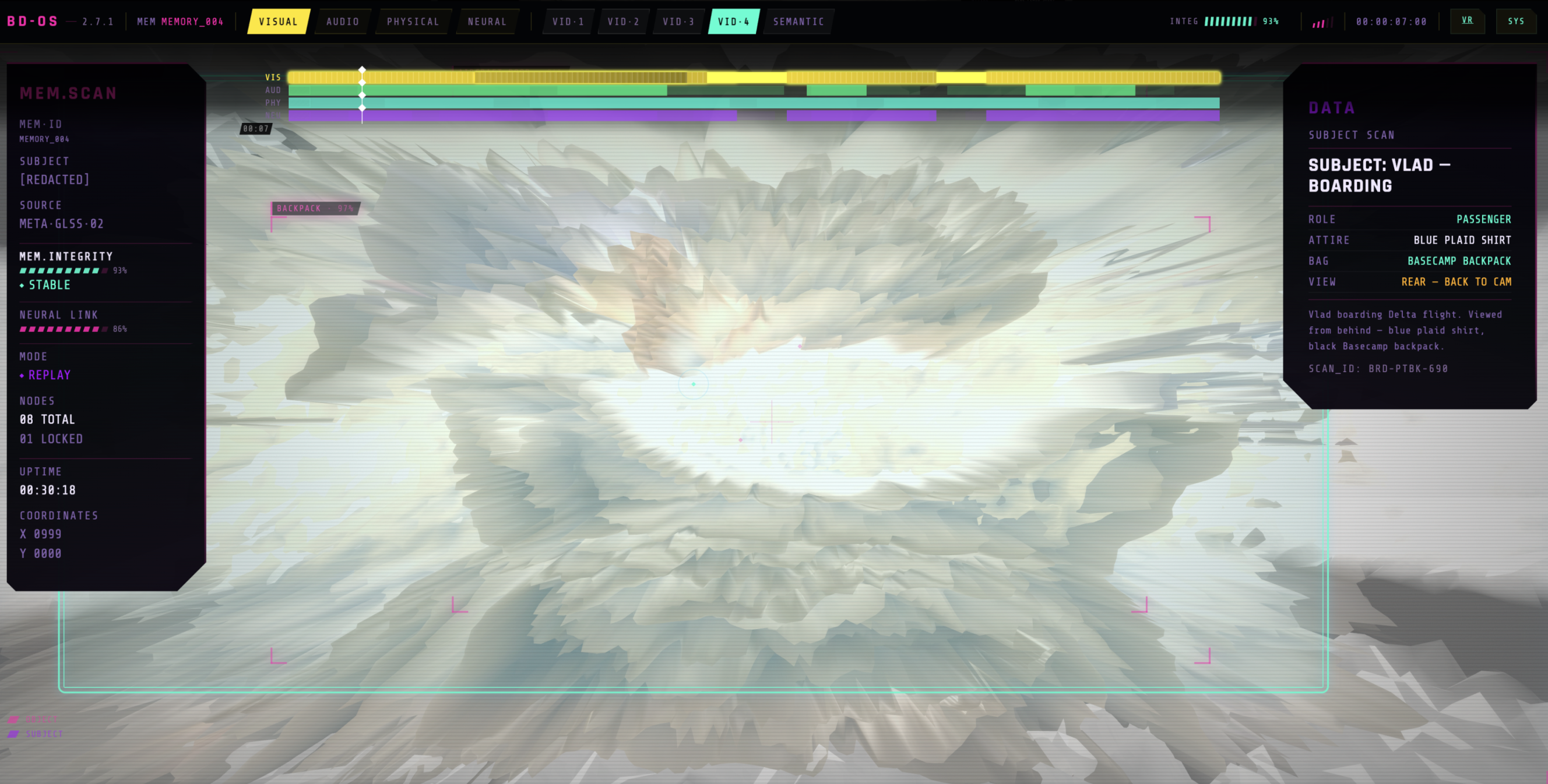
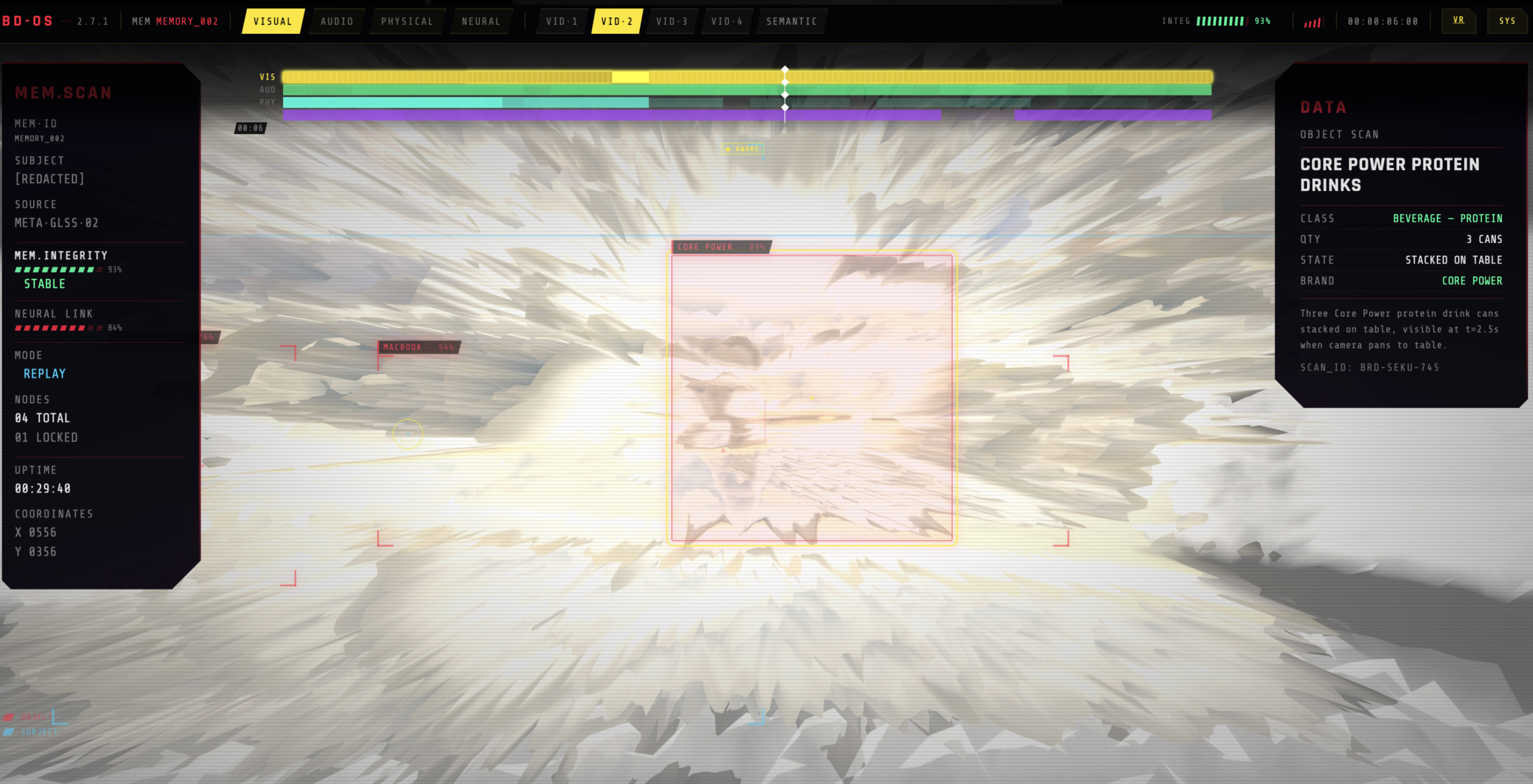
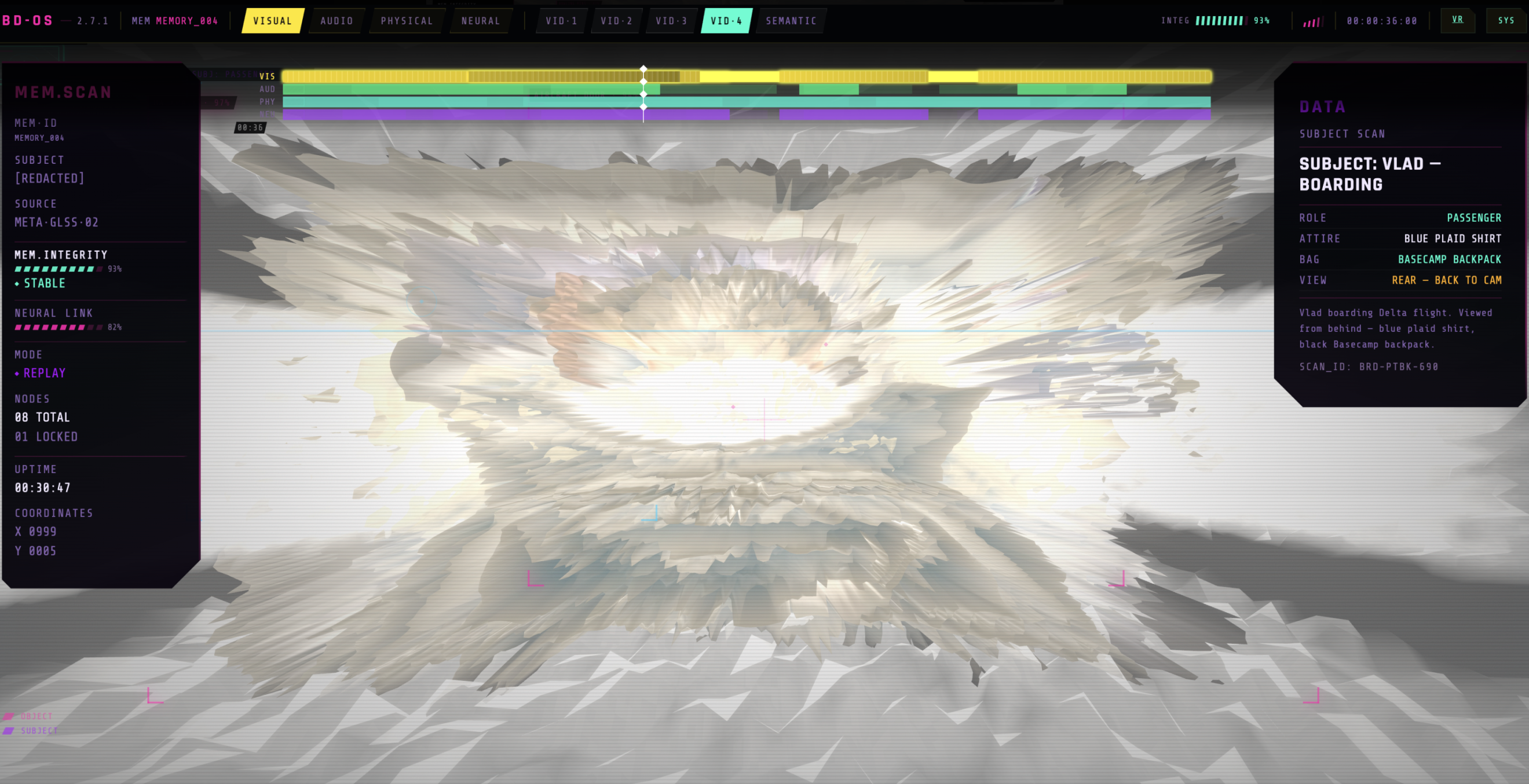
Users enter a cyberpunk neural interface where they can:
- Upload or stream EEG data
- Process neural activity through AI systems
- Generate dream inspired environments
- Explore reconstructed spaces in first person
- Experience dynamically generated visual landscapes
- Navigate through memory fragments and emotional representations
Instead of watching a video, users become active explorers inside their own subconscious.
Imagine standing inside a city generated from anxiety, walking through landscapes shaped by happiness, or exploring abstract environments built from fragmented dream memories.
MindScape converts signals into experiences.
How we built it
Building a Neural Experience Pipeline
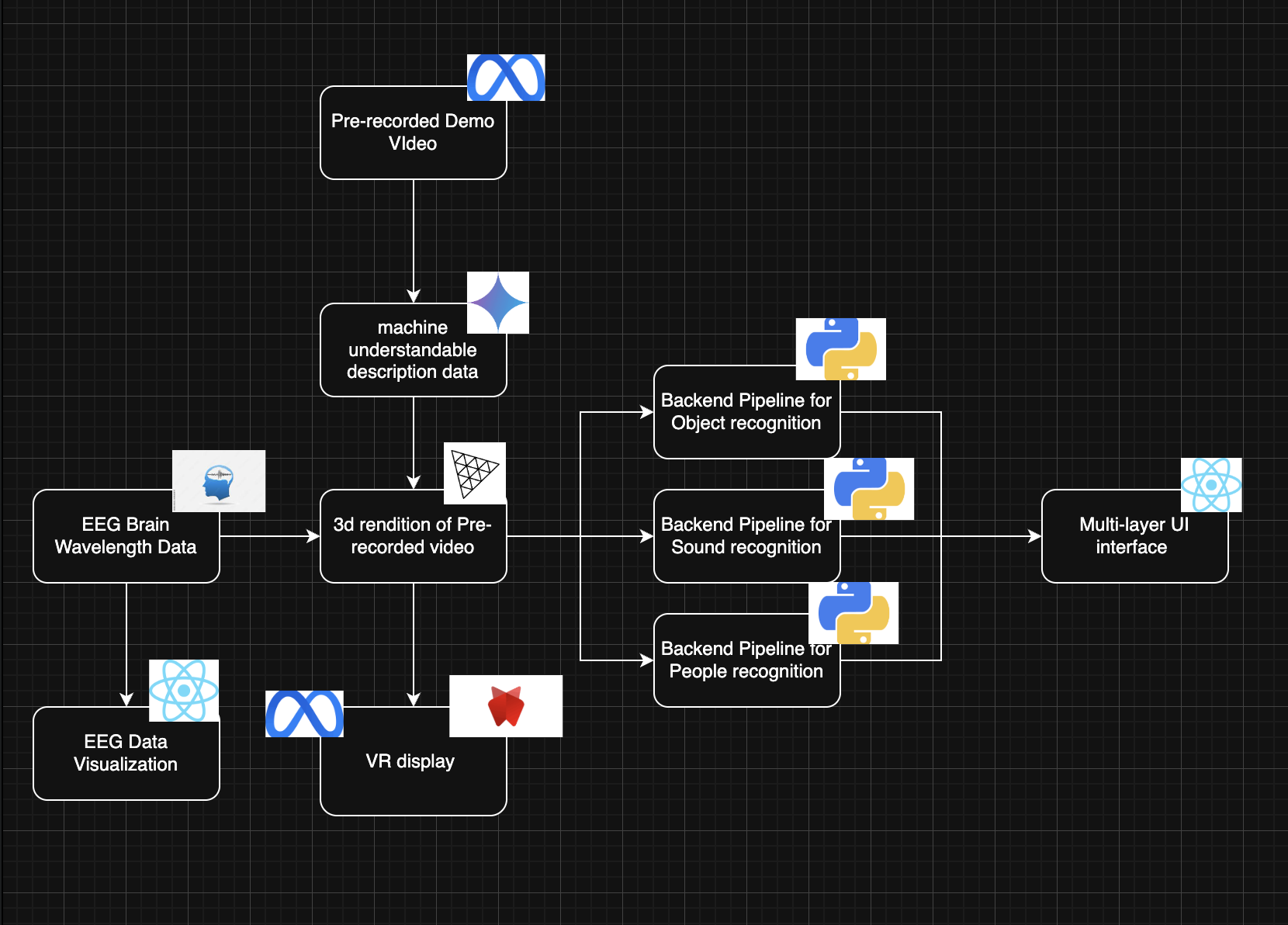
MindScape combines multiple technologies into one connected ecosystem.
Frontend Layer
React + Vite + TypeScript
Responsible for:
- Real time user interaction
- Neural interface dashboards
- Cyberpunk themed visual system
- Dynamic UI rendering
- State management and communication
Backend Processing Layer
Python
Responsible for:
- Signal processing
- Data transformation
- AI communication pipelines
- Model orchestration
- Neural data management
AI Interpretation Layer
The AI system acts as a translation engine between brain activity and visual representation.
Pipeline:
Raw EEG Data
      ↓
Signal Cleaning
      ↓
Pattern Extraction
      ↓
AI Interpretation
      ↓
Scene Generation Parameters
      ↓
3D Environment Construction
Potential features analyzed include:
- Brainwave frequencies
- Temporal patterns
- Emotional indicators
- Signal intensity
- Cognitive state relationships
Immersive Visualization Layer
Our visualization system dynamically transforms interpreted data into:
- Generated landscapes
- Lighting systems
- Environmental structures
- Spatial effects
- Atmospheric details
- Interactive elements
Experience Layer
Instead of building a standard website, we designed the project as a neural operating system interface.
The objective was:
Make users feel like they are connecting to a mind rather than opening an application.
Challenges we ran into
Making Science Fiction Behave Like Software
MindScape was intentionally ambitious.
The challenge was not simply building features.
The challenge was making disconnected technologies behave like a unified system.
Major obstacles included:
EEG interpretation complexity
Brain signals are noisy and difficult to map directly into meaningful concepts.
Questions constantly appeared:
- What does excitement look like?
- What does fear look like?
- What does imagination look like?
- Can a signal become a visual environment?
Synchronization between systems
We had multiple layers operating simultaneously:
- Neural input
- Backend processing
- AI generation
- Real time communication
- Dynamic visual rendering
Even small delays could break immersion.
Generating meaningful environments
AI can generate visuals, but creating environments that feel emotionally coherent is significantly harder.
Random outputs create confusion.
Experiences require narrative consistency.
Hackathon constraints
Building a concept involving:
- AI
- neuroscience
- immersive design
- frontend systems
- backend systems
- real time interactions
within roughly 24 hours required constant iteration and prioritization.
Accomplishments that we're proud of
Turning a Science Fiction Concept Into Reality
The biggest accomplishment was proving that an idea that sounds impossible can become tangible.
Achievements include:
- Successfully creating an end to end neural interpretation pipeline
- Connecting AI systems with immersive visual environments
- Designing a complete cyberpunk inspired experience
- Building a functional prototype under extreme time constraints
- Creating an experience that feels different from a traditional software product
Most projects create interfaces.
MindScape attempts to create experiences.
We moved from:
Input → Output
to:
Thought → Interpretation → World
What we learned
Ambition Needs Structure
We learned that large ideas are not built through complexity alone.
They require:
- fast iteration
- communication
- prioritization
- modular architecture
- constant testing
We also learned that immersive systems introduce entirely different design challenges compared to traditional software.
Users are not interacting with buttons.
They are interacting with experiences.
What's next for MindScape
Building the Future Neural Experience Platform
MindScape is currently a prototype, but the long term vision extends much further.
Planned future development:
- Improve EEG interpretation accuracy
- Add personalized neural profiles
- Introduce emotion aware environment generation
- Expand environmental complexity
- Add memory reconstruction systems
- Build collaborative shared dream spaces
- Enable real time neural visualization
- Integrate VR support
- Explore brain to brain experience transfer concepts
Future Vision
MindScape is not simply building another platform.
We are exploring a future where thoughts are no longer limited to language, text, or screens.
A future where experiences become transferable.
A future where people do not consume content.
They enter it.


Log in or sign up for Devpost to join the conversation.