-
-
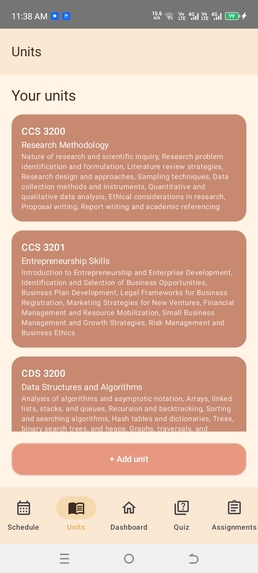
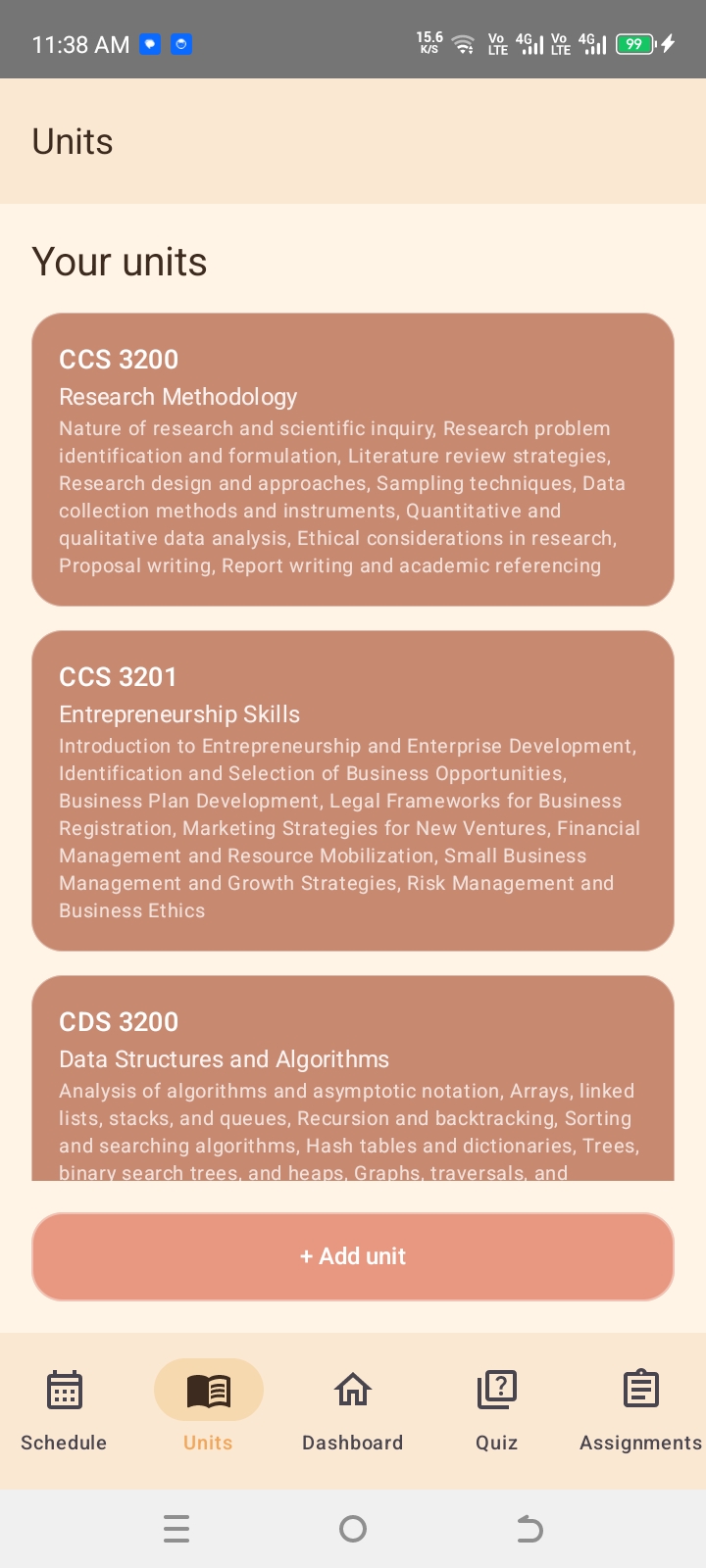
units with topics
-
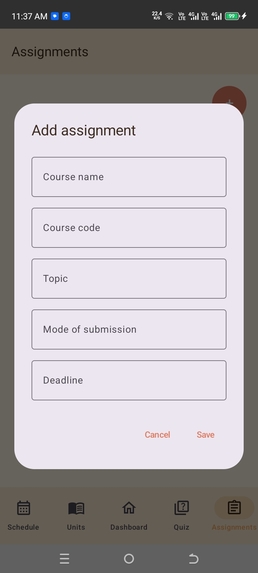
account setup
-
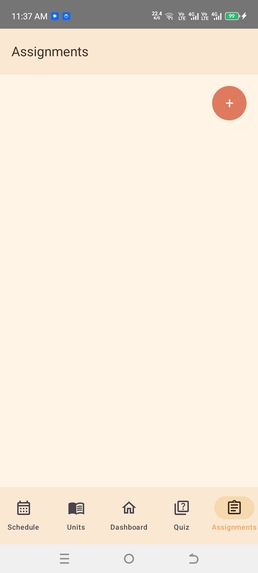
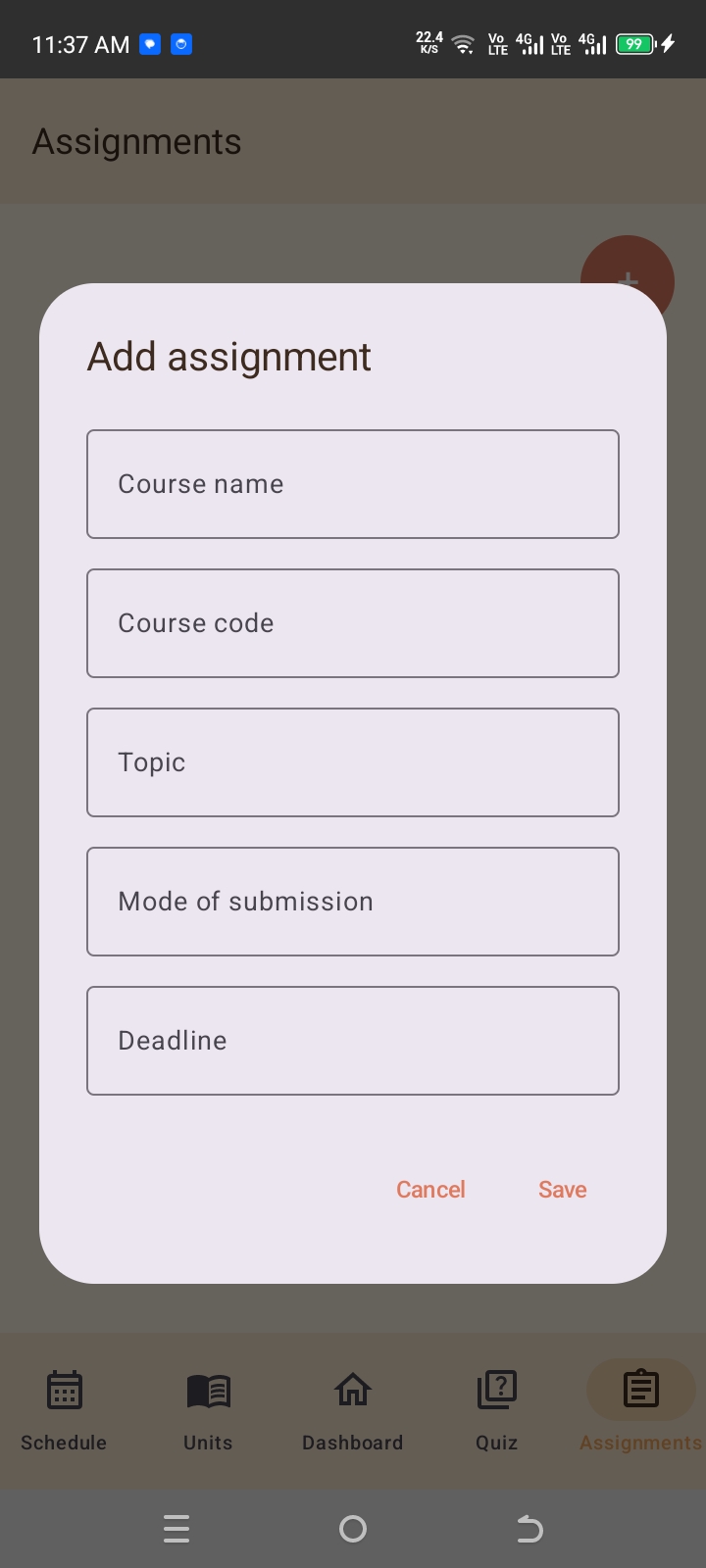
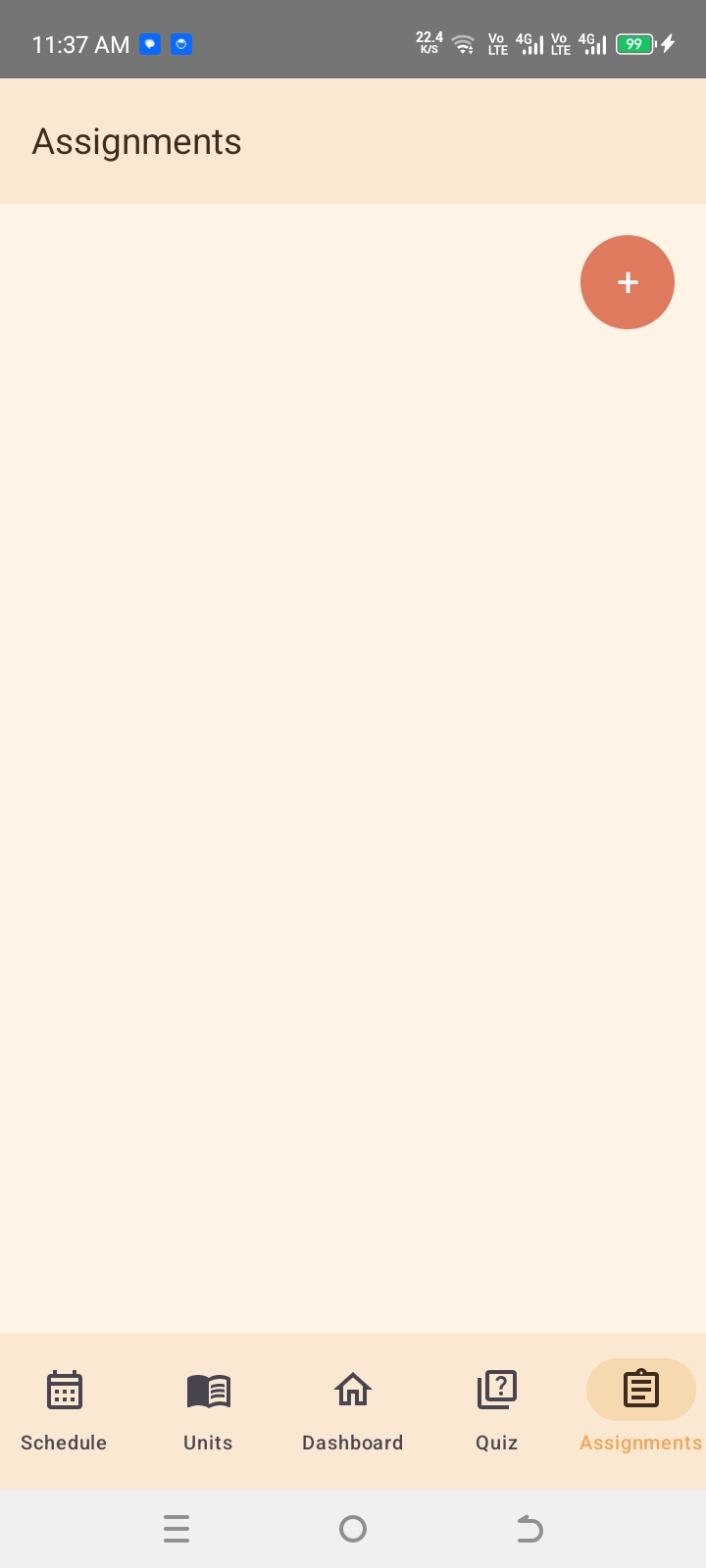
assignments page
-
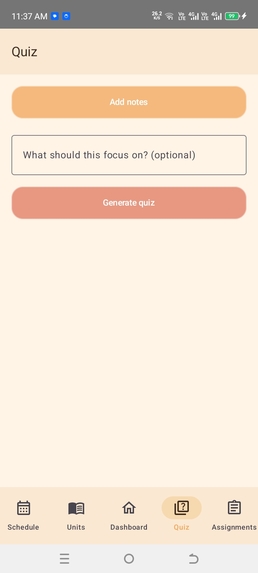
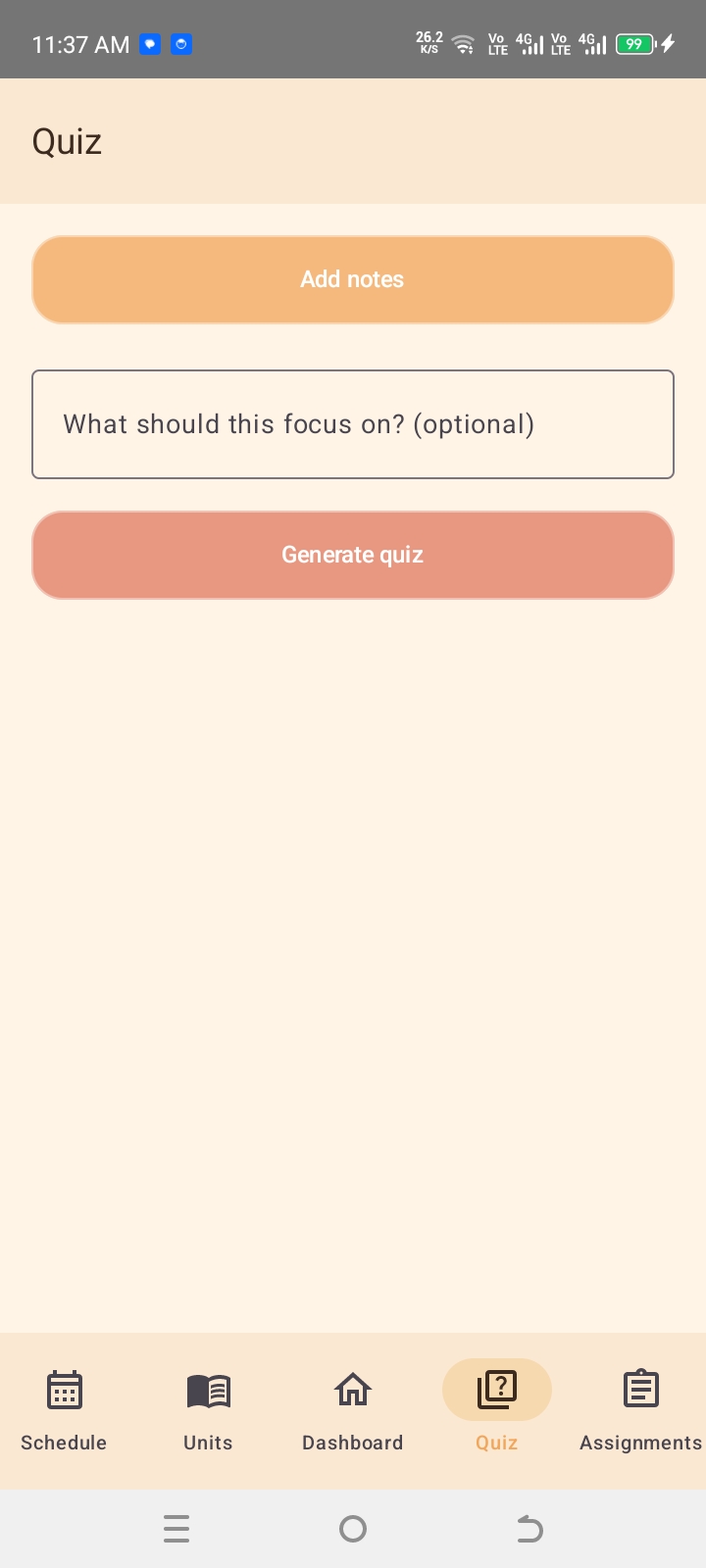
quiz page
-
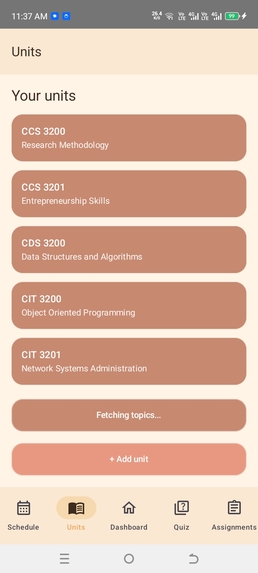
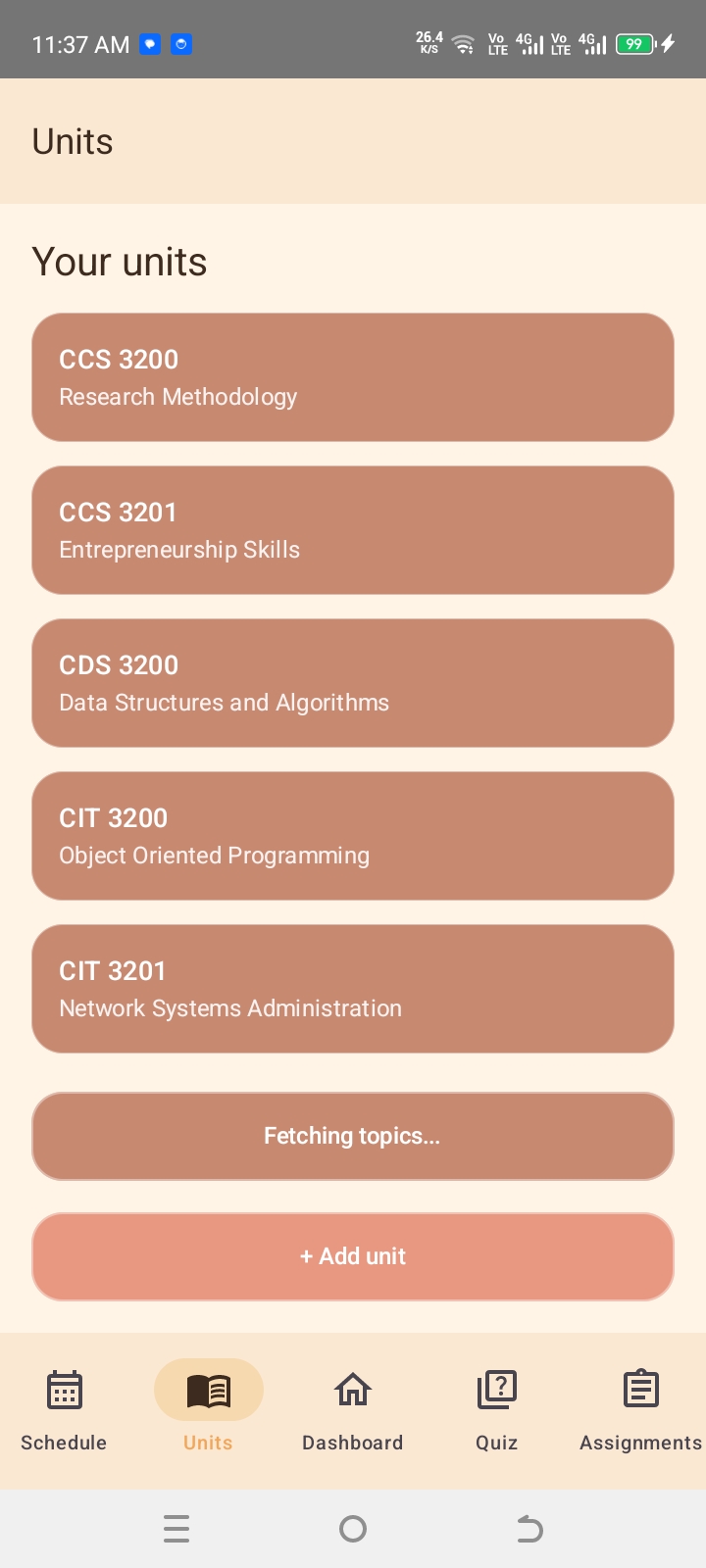
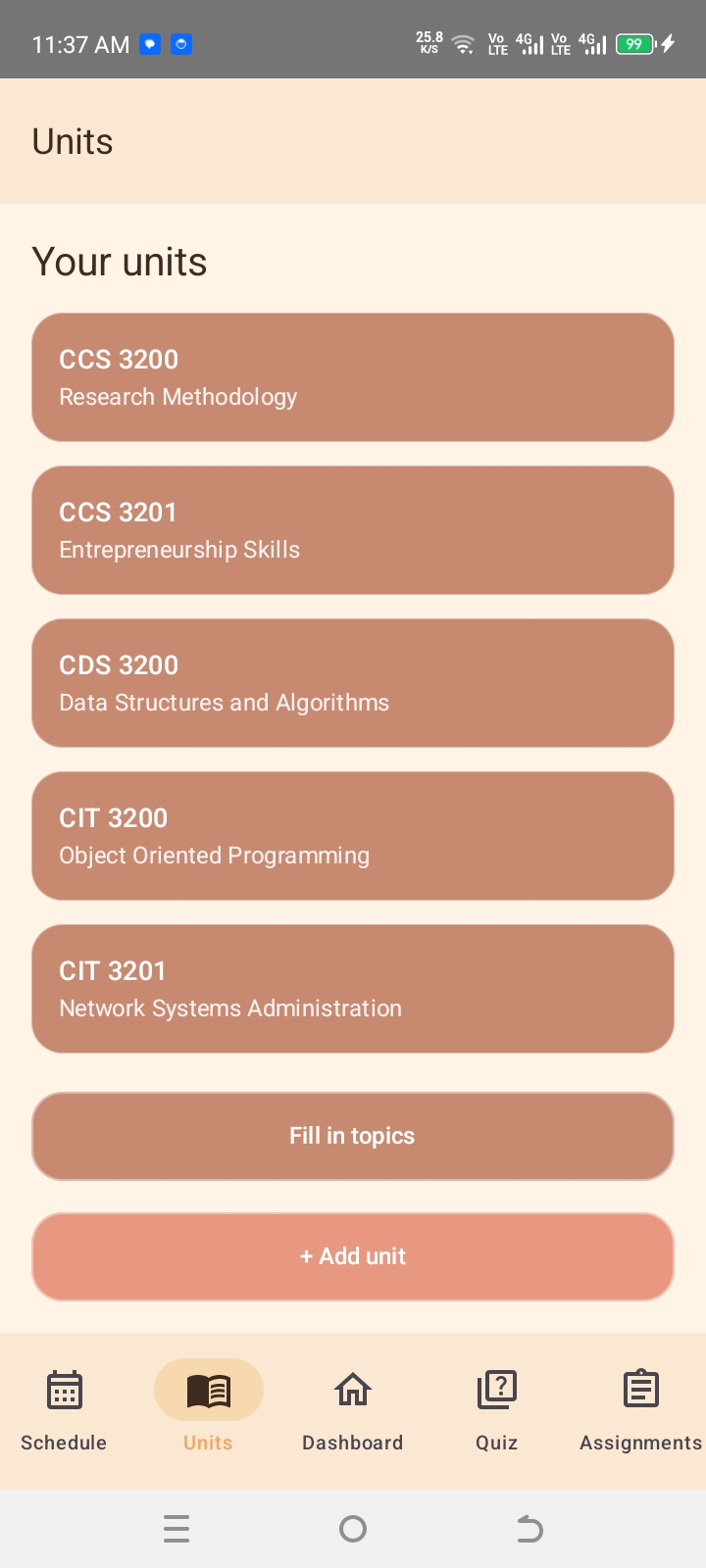
units alone (without topics)(fetching them)
-
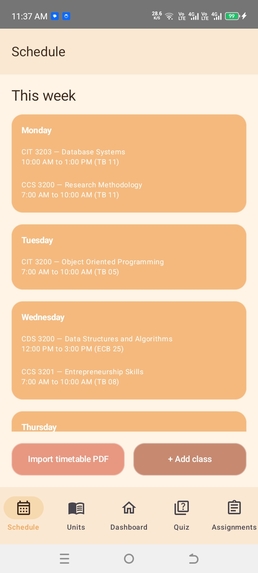
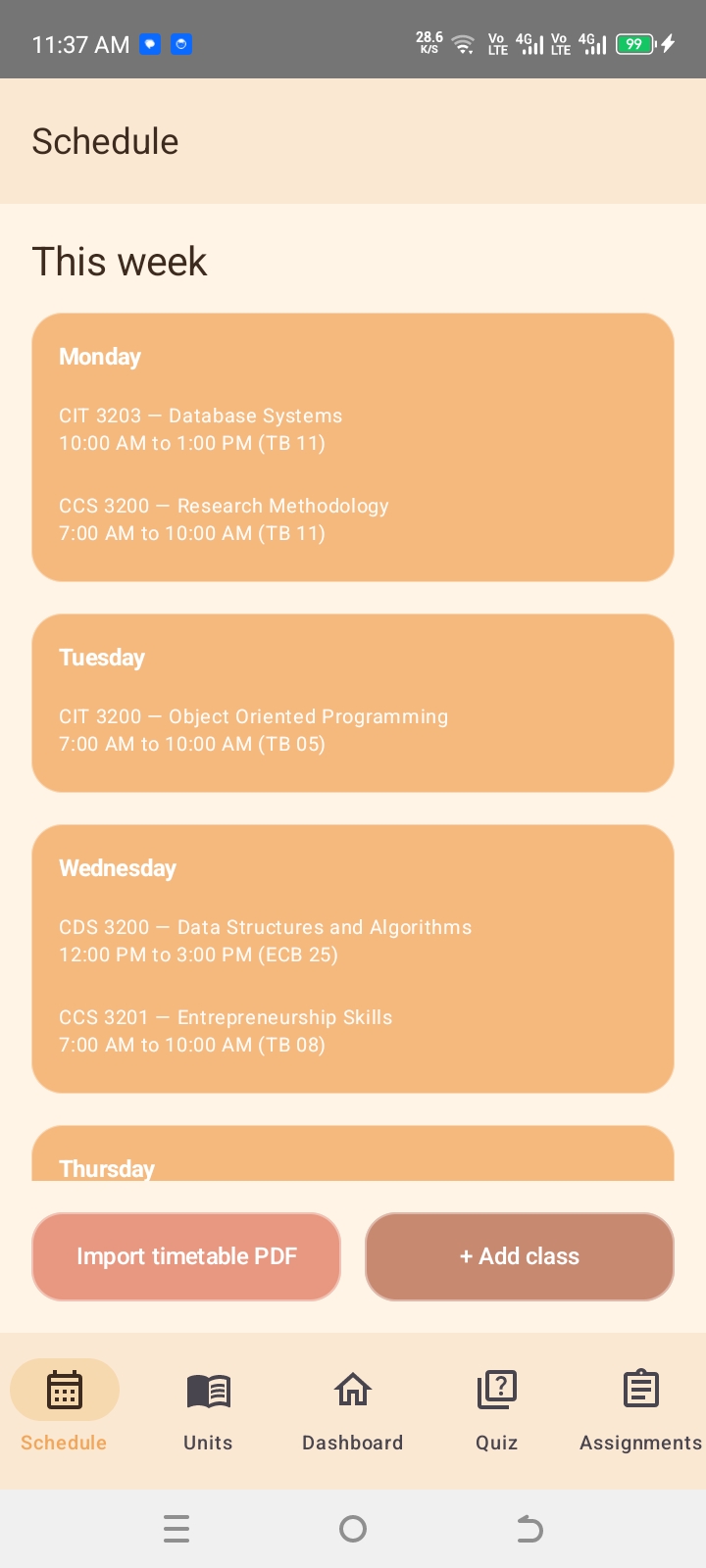
schedule
-
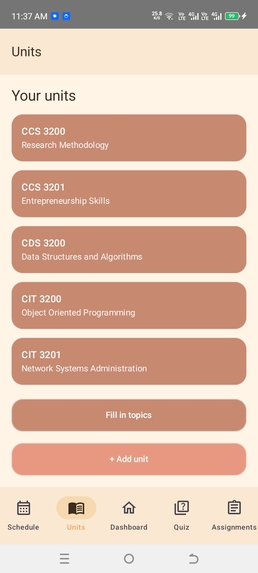
units alone (not yet fetched topics)
-

phronesis icon
-

icon


Inspiration
As a student, I built the original Phronesis as a desktop app to help manage assignments, exam dates, and study progress — but most of my day happens on my phone, not at a desk. When Shipaton came along, it was the perfect excuse to rebuild Phronesis as a mobile app and push it further: instead of just organizing information, I wanted it to actually help students learn, using AI to turn their own notes and timetables into something actionable — and to genuinely track what a student knows, not just what they've looked at.
What it does
Phronesis is an AI-powered study companion for students. You import your class timetable as a PDF and the app automatically extracts your schedule and units. Once your units are in, Phronesis can fetch the actual topics covered in each course, and you can generate a quiz for any specific topic — with feedback that explains why an answer is right or wrong, not just when you get it wrong. Every quiz you take updates two separate, real scores per topic: familiarity (how much you've engaged with it) and mastery (your actual quiz performance on it) — visualized as circular progress rings on the dashboard, both as an overall average and broken down unit by unit. Assignments use cascading autocomplete pulled from your own units and topics — start typing a course name, code, or even just a topic, and the rest fills in — with a native calendar picker for deadlines. A Focus Mode hides all system and app chrome during a quiz or summary session for distraction-free studying. The whole thing is wrapped in a warm, diary-style interface designed to feel personal rather than institutional.
How we built it
The app is built natively in Kotlin with Jetpack Compose for the UI, and Room for local persistence of assignments, units, topic progress, class sessions, and notes. AI features — timetable extraction, topic identification, note summarization, and quiz generation — run on Gemini through Firebase AI Logic, so the API key never has to live on the client. Monetization is handled through the RevenueCat SDK, with a subscription paywall (Monthly/Yearly/Lifetime) gating premium features like quiz generation.
Challenges we ran into
Getting Firebase App Check working reliably took real debugging — the manifest-based debug token trick didn't actually work, and I had to pull the real token from device logs and register it manually. A trickier issue surfaced later: the signed release build crashed immediately on launch, while the debug build worked fine. Digging through logcat's crash buffer traced it to RevenueCat's Test Store API key, which only initializes in debug builds by design — the release build needed its own guarded path so the app degrades gracefully instead of crashing until a production RevenueCat key is set up. I also hit Gemini's free-tier rate limits during heavy testing with large multi-program timetable PDFs, which meant adding retry-with-delay handling instead of upgrading to billing.
What's next for Phronesis
Finishing a production RevenueCat configuration so the signed release build supports real purchases, then moving through Google Play's closed testing track toward a full public listing. On the feature side: push notifications for assignment deadlines, an AI homework assistant that can take photos and text and actually help work through problems, a proper calendar view, and — the bigger one — real user accounts with role-based access, so a class rep can post to a shared announcements board that the whole class can see.


Log in or sign up for Devpost to join the conversation.