-
-
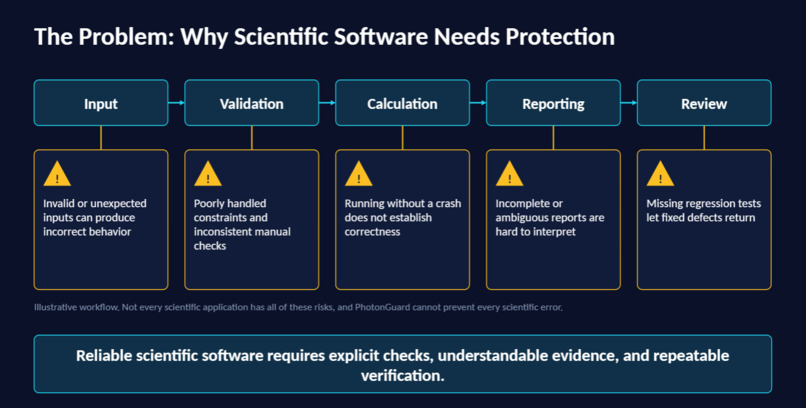
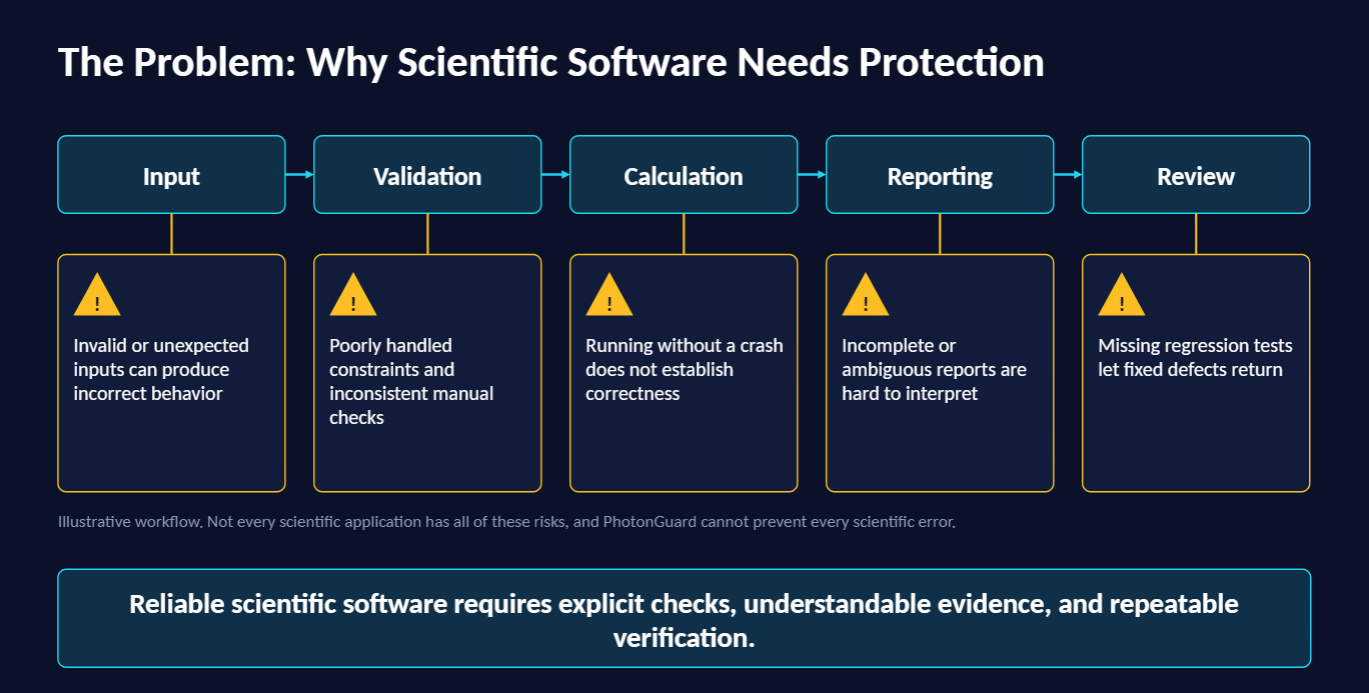
The problems which encourage to photonguard
-
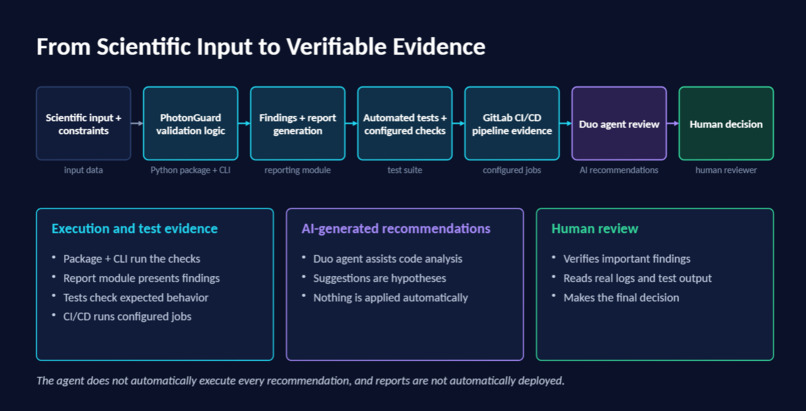
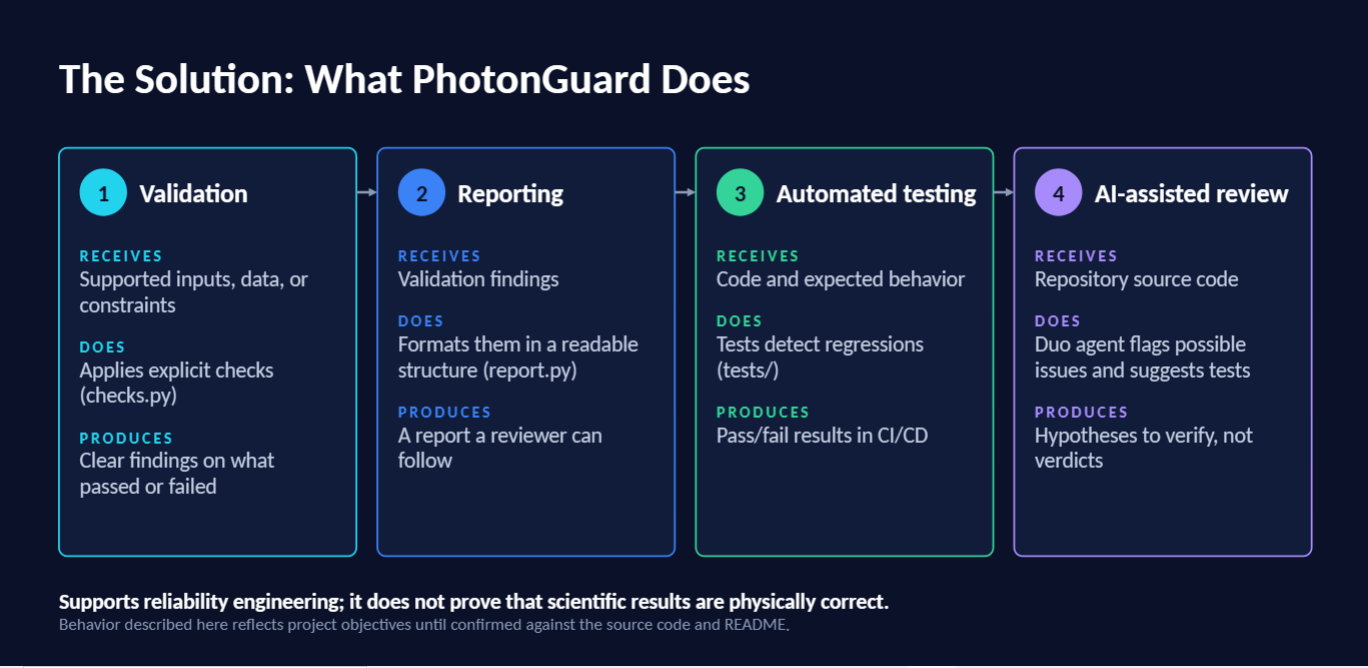
solution what photonguard does
-
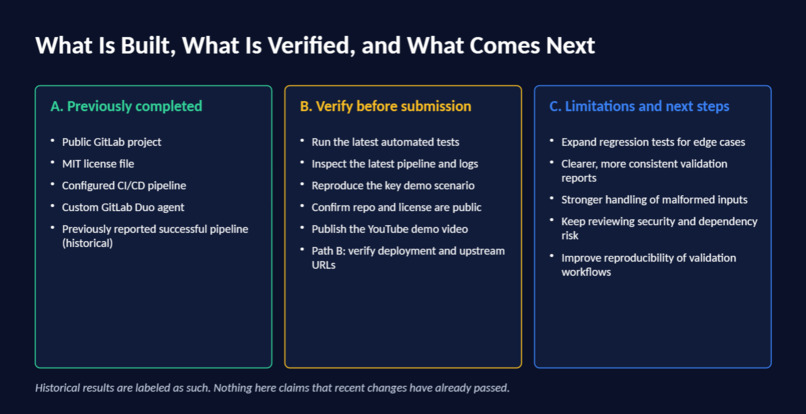
what build, what verify and what next
-
-
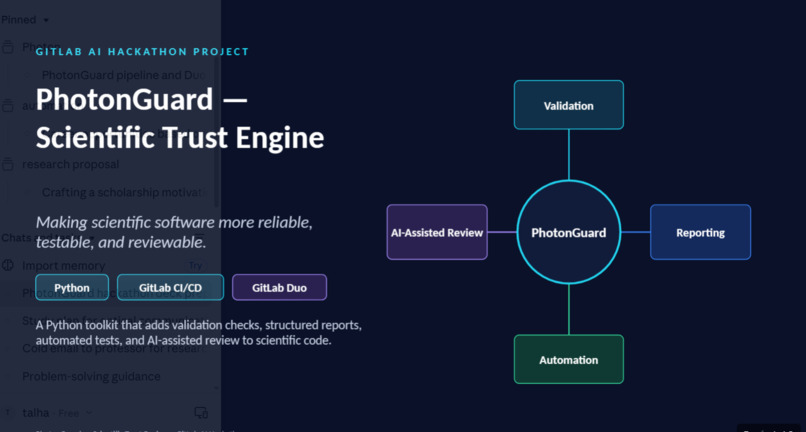
photonGuard complete setup
-
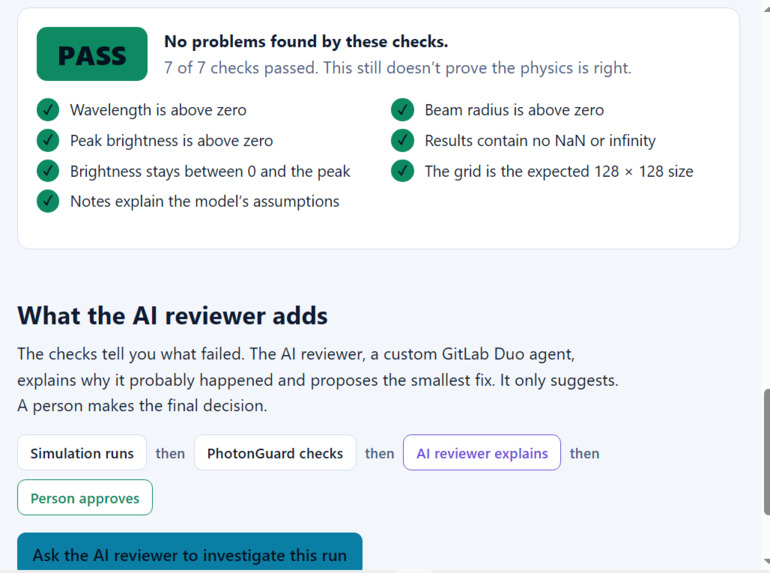
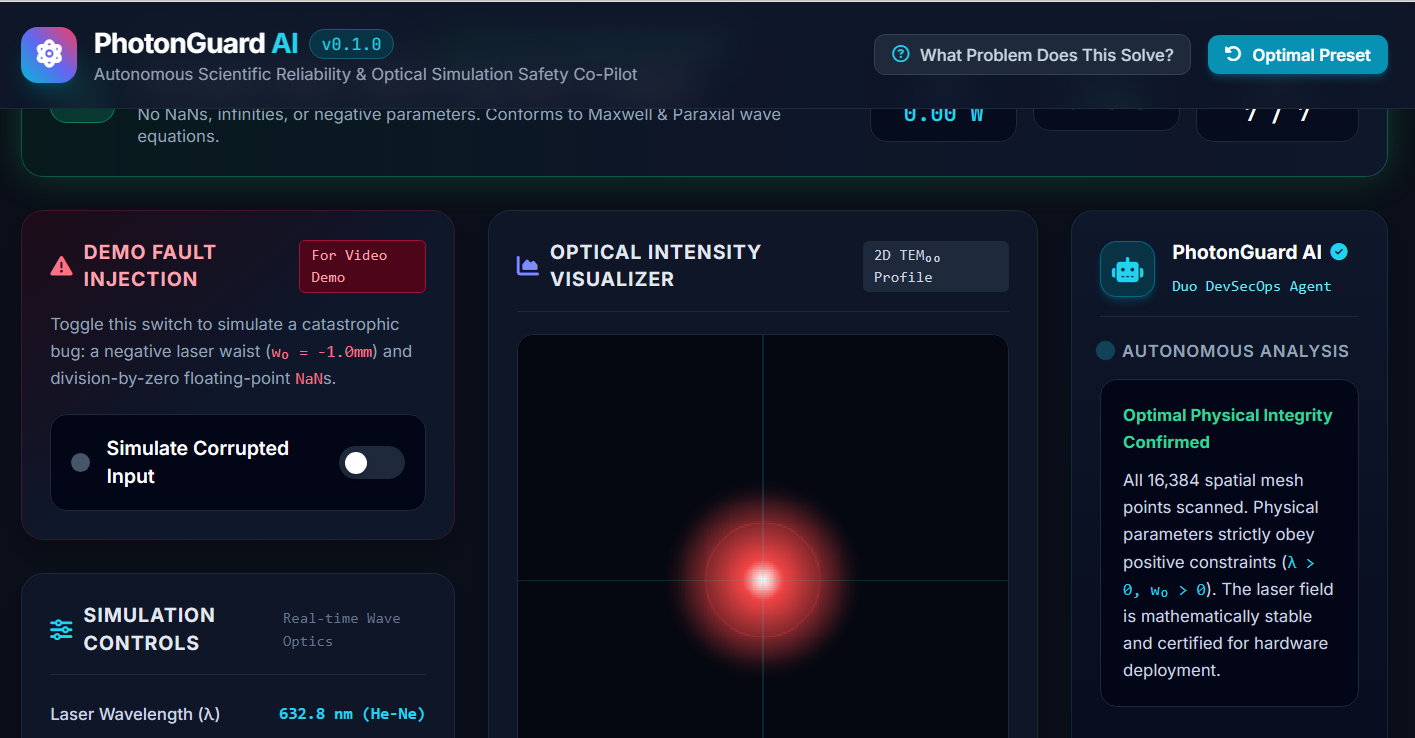
live demo of project
-
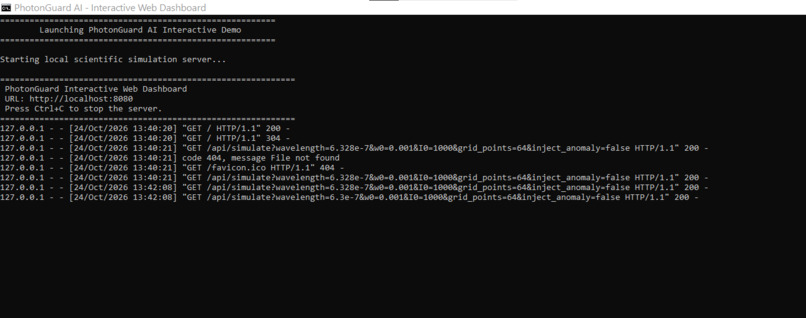
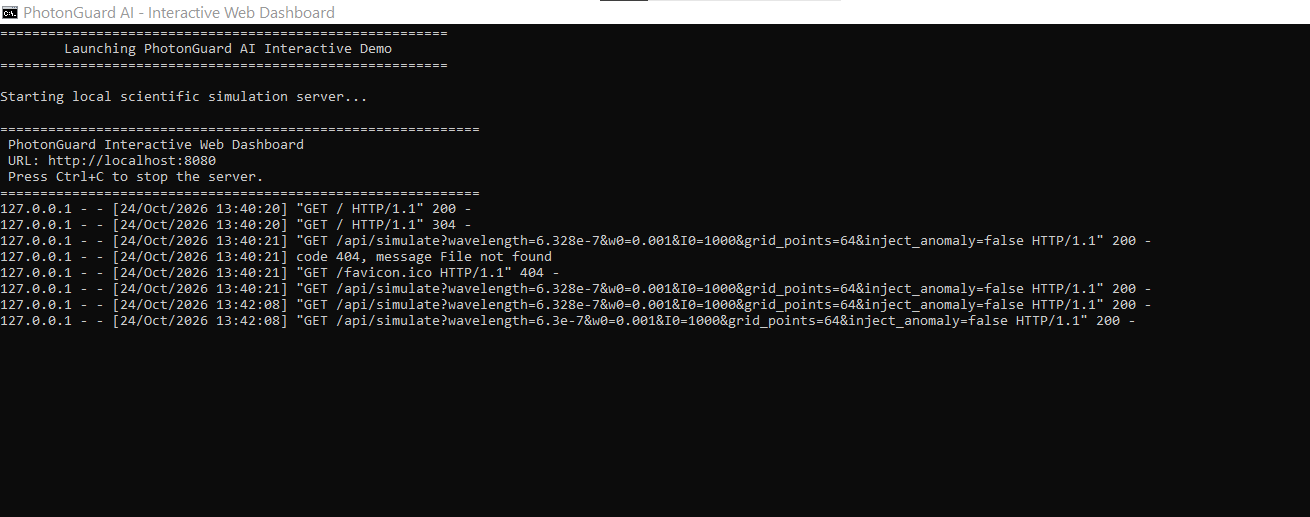
Launching PhotonGuard AI Interactive Demo
-
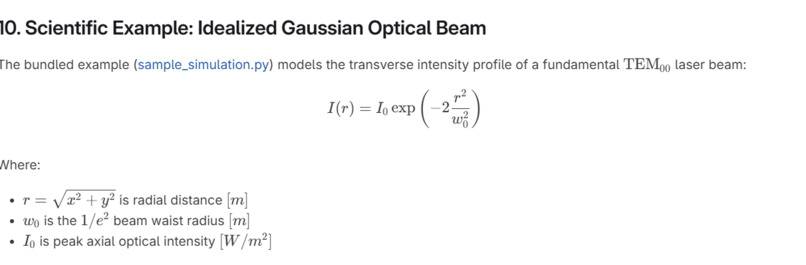
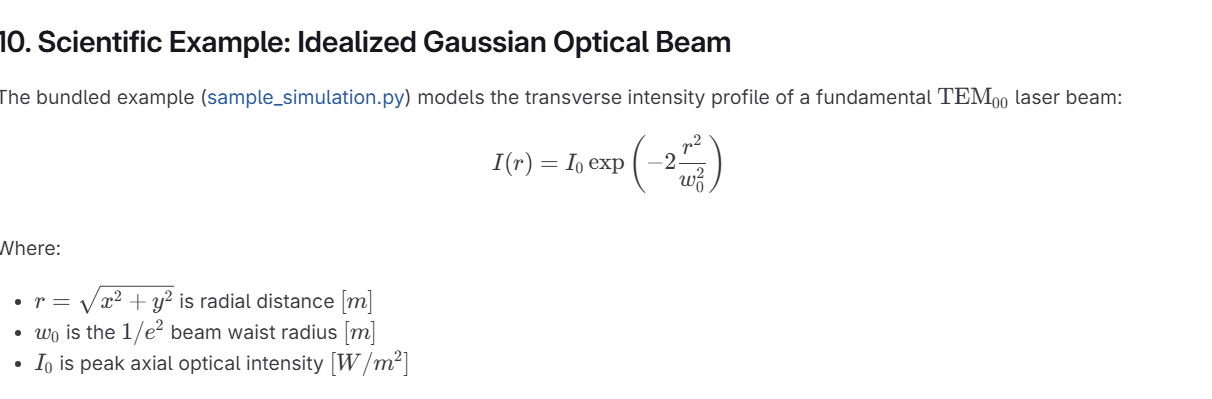
example mathematical expression
-
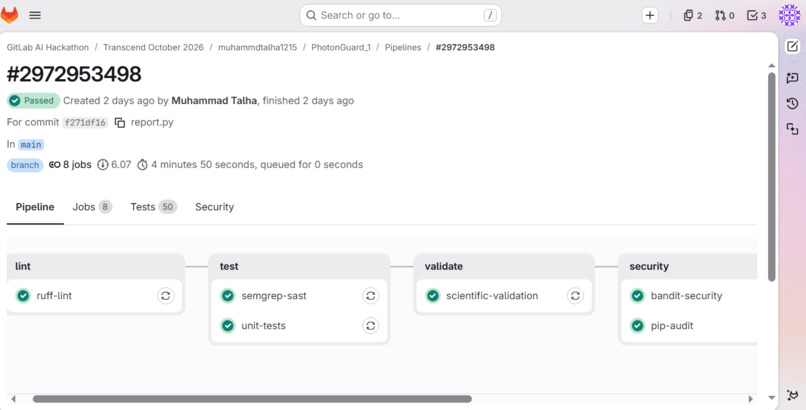
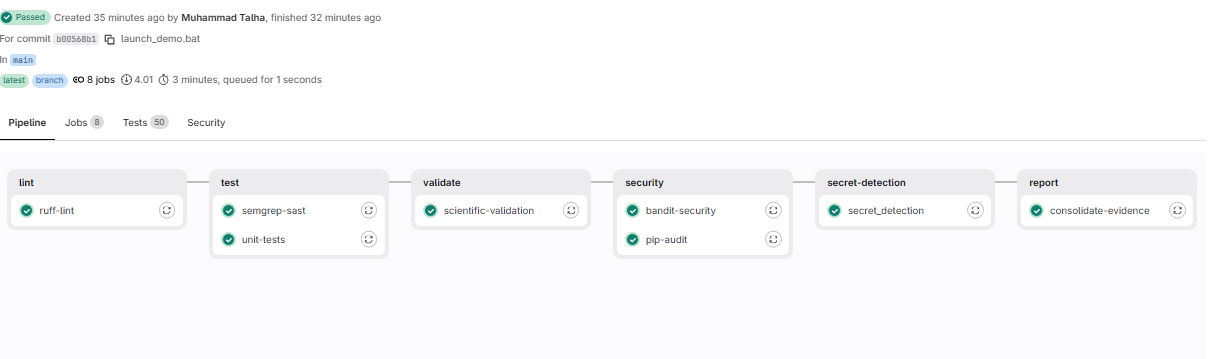
pipeline
-
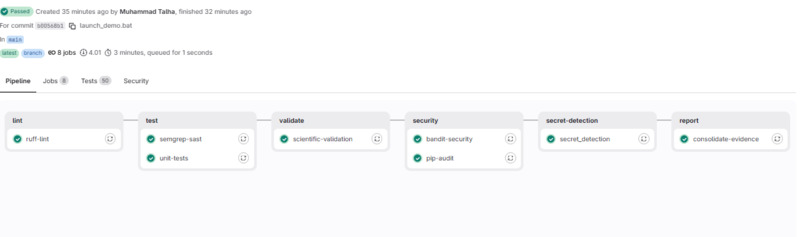
pipeline
-
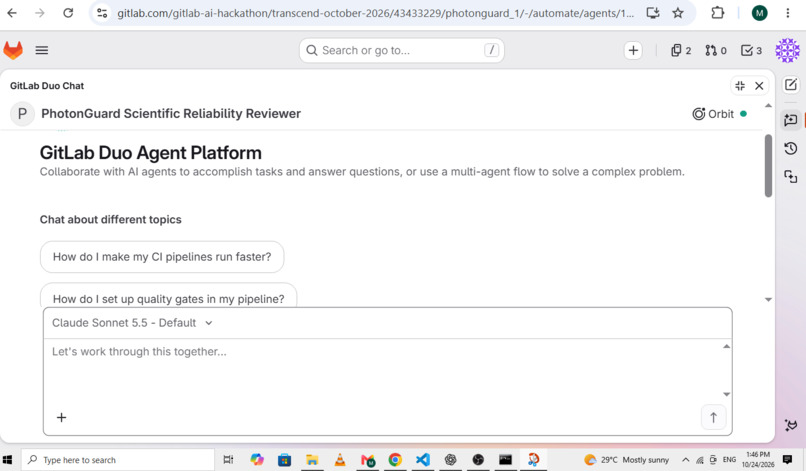
live photonguard ai agent in working
-
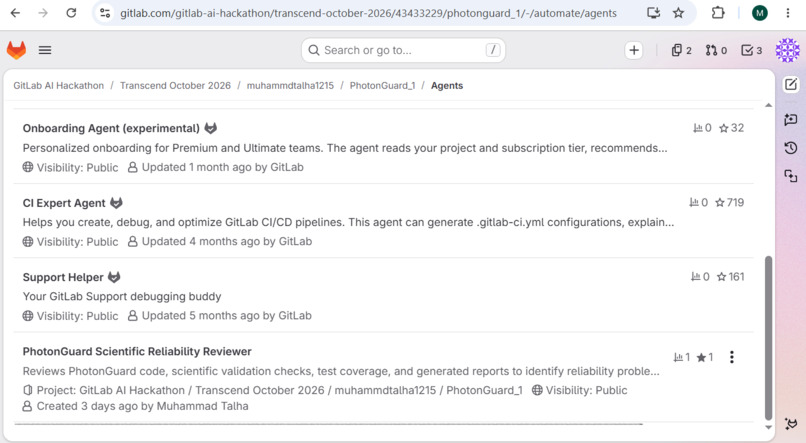
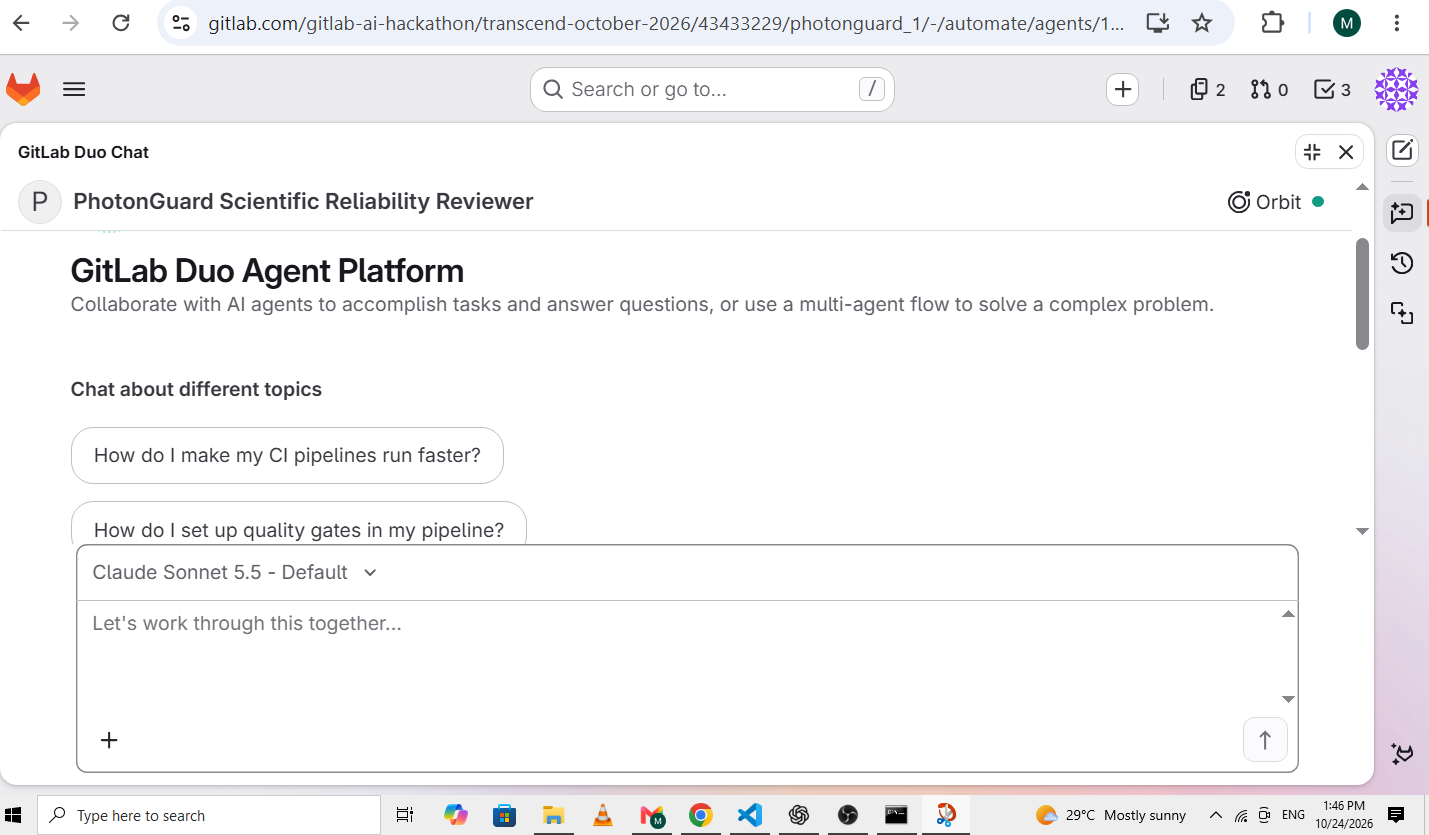
live photonguard ai agent
-
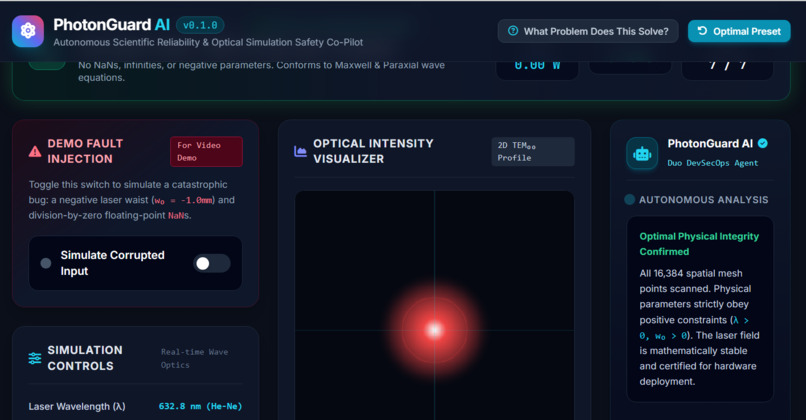
live demo of the project
-
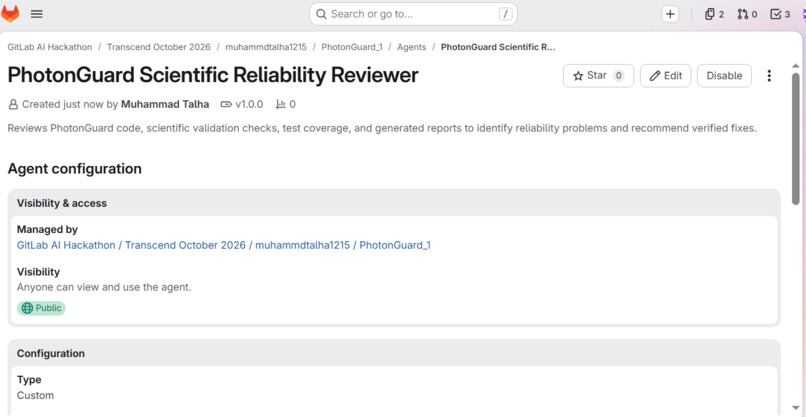
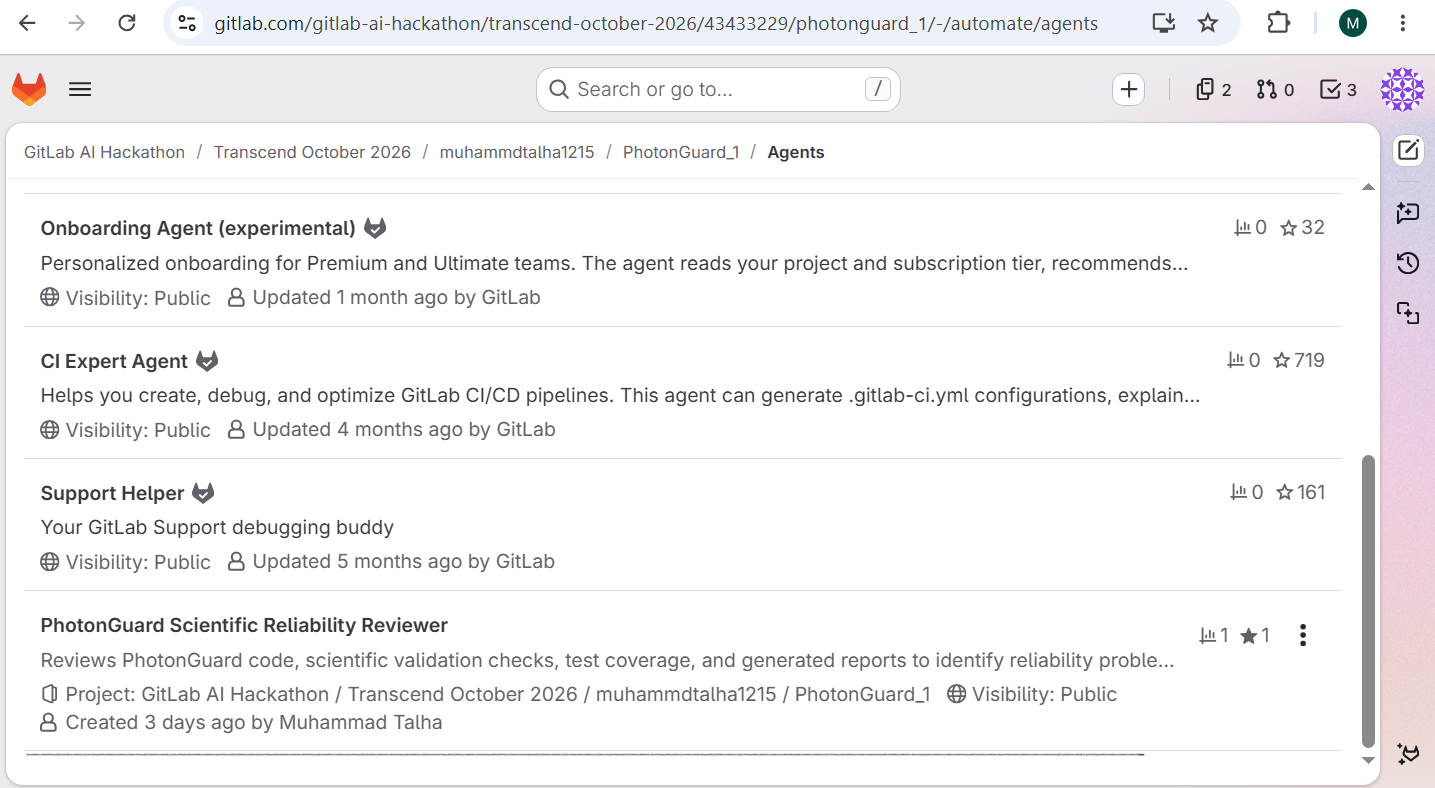
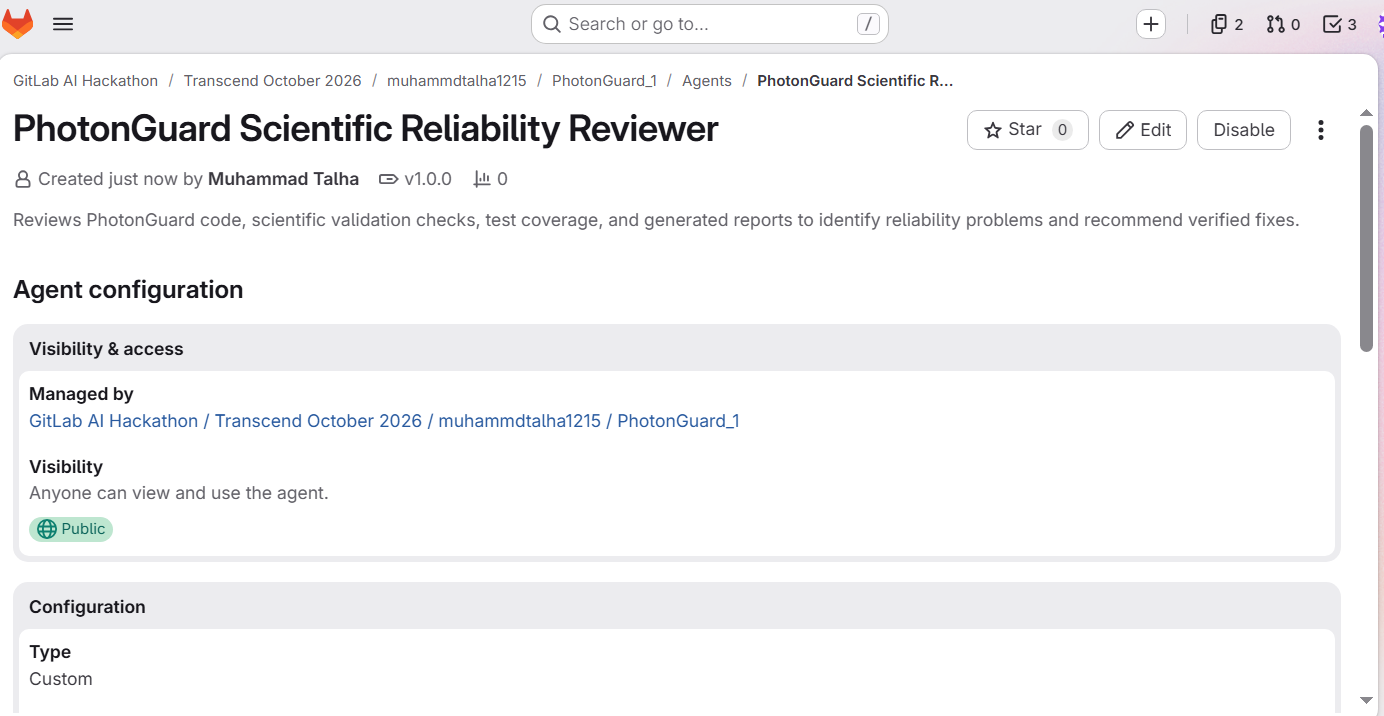
photonGuard ai agent
-
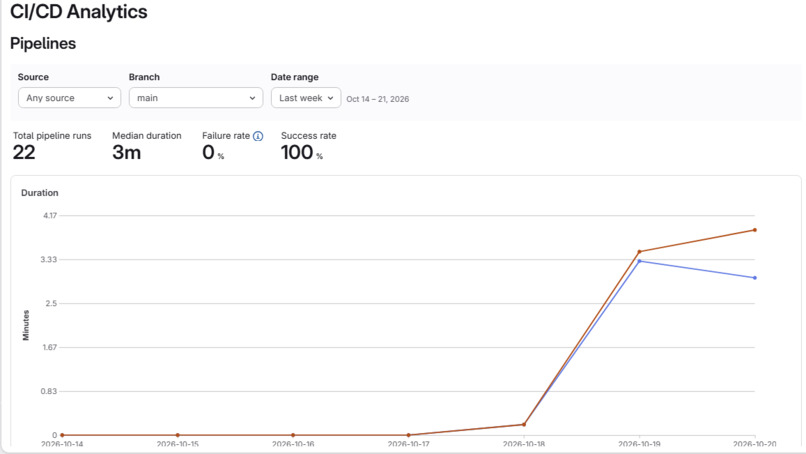
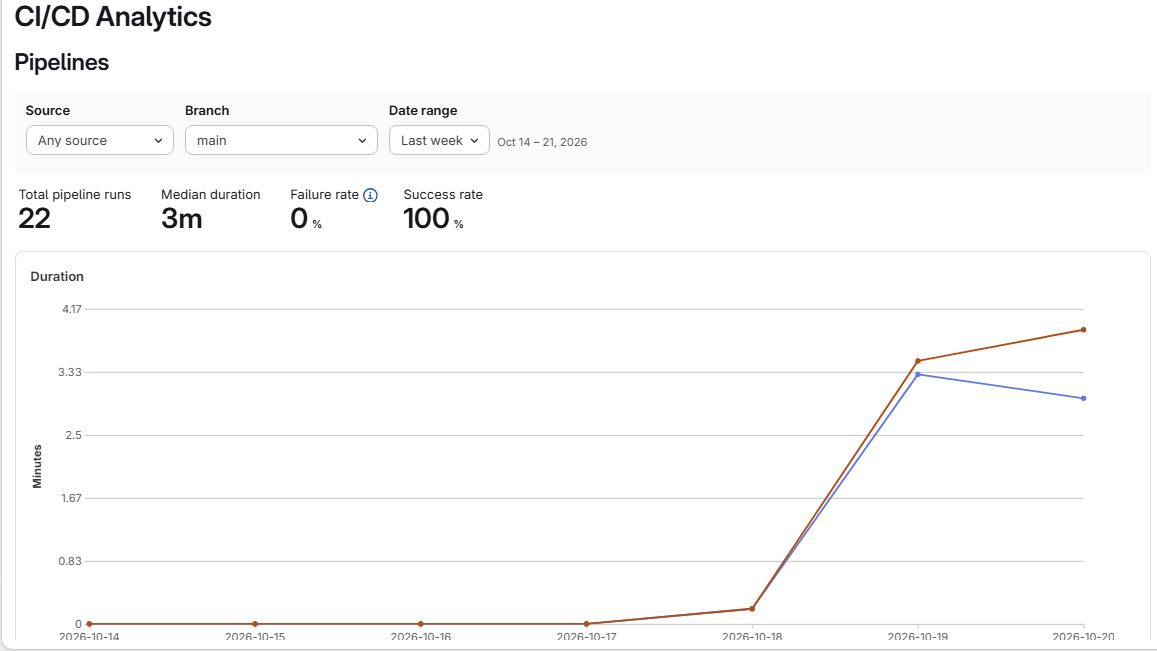
ci/cd analytics
PhotonGuard — Scientific Trust Engine
Inspiration
Scientific software can produce results that look convincing but may contain errors in calculations, assumptions, input handling, or implementation. In scientific computing, even a small mistake can affect the reliability of the final result.
My background in physics inspired me to explore how software engineering and AI could help address this problem. I wanted to build more than a conventional Python project: I wanted to create a tool that helps developers examine scientific code, identify potential reliability issues, and make their work easier to validate. This idea became PhotonGuard — Scientific Trust Engine.
What It Does
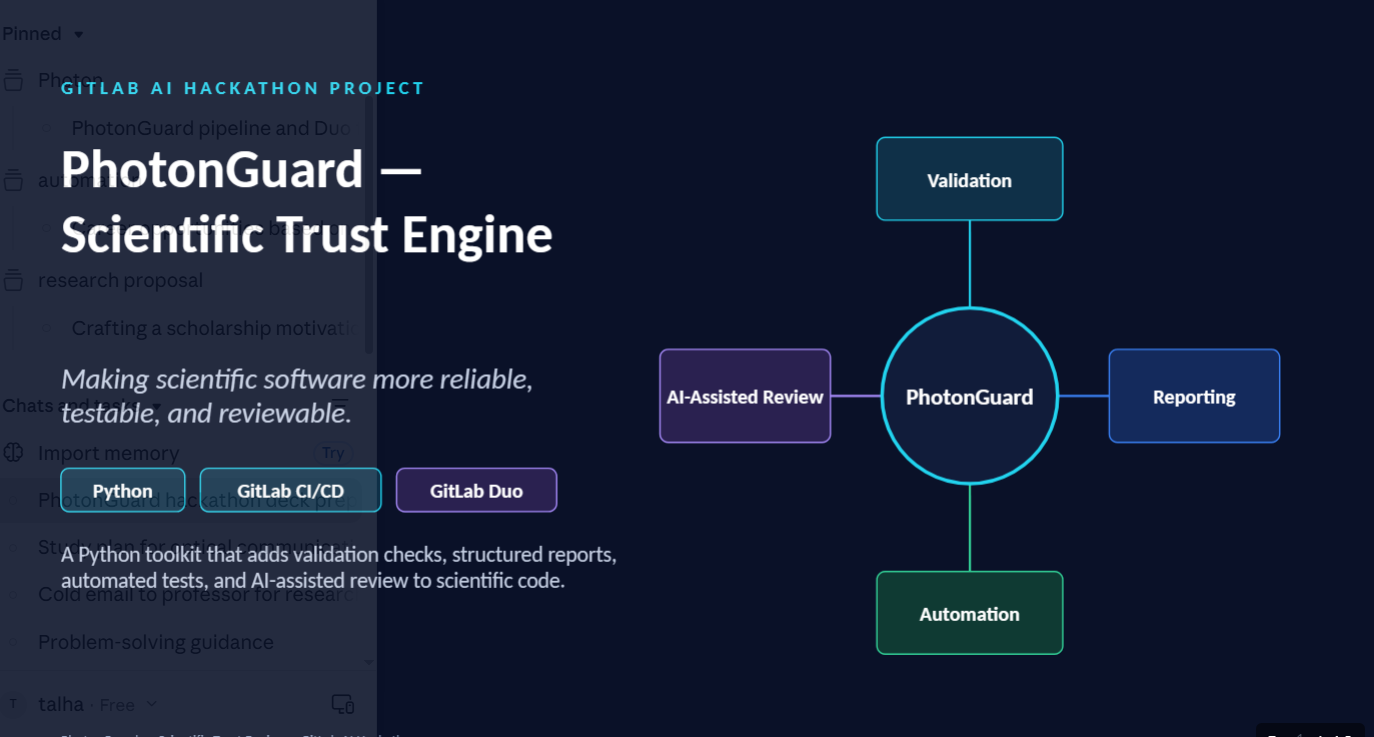
PhotonGuard is a Python-based project focused on scientific software reliability. It brings together scientific validation checks, automated testing, readable reporting, and software-quality workflows. Its goal is to help developers identify potential problems earlier and understand what needs further investigation before trusting computational results.
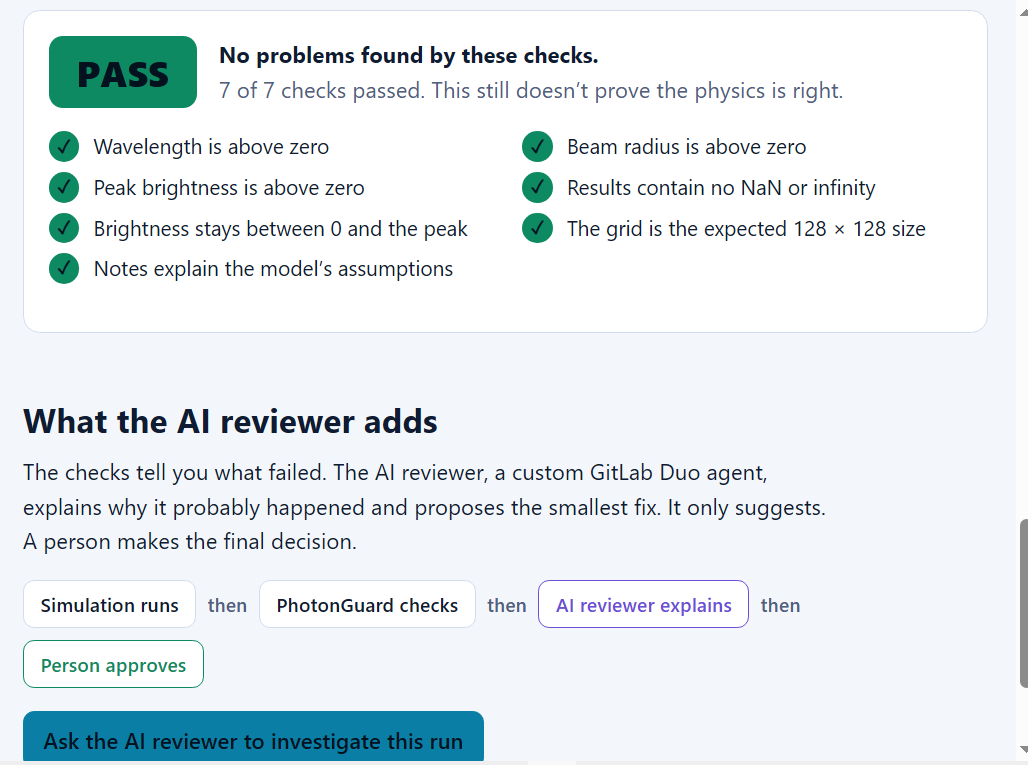
I also developed a custom GitLab Duo AI agent to assist with reviewing the project, examining potential weaknesses, and suggesting improvements. The agent complements the code-based checks by helping explain issues in a more accessible way.
How I Built It
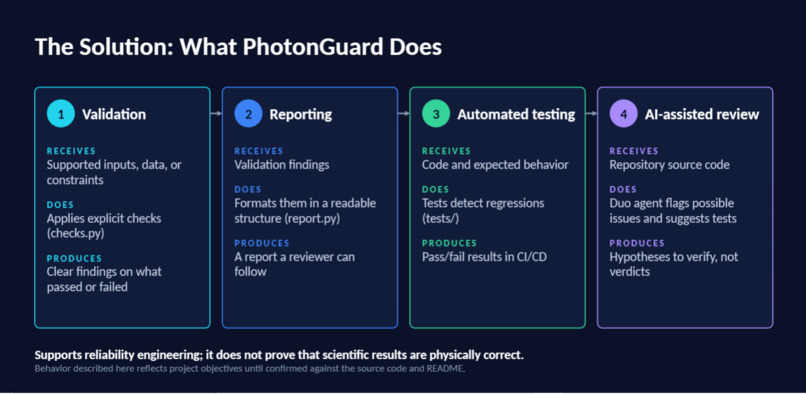
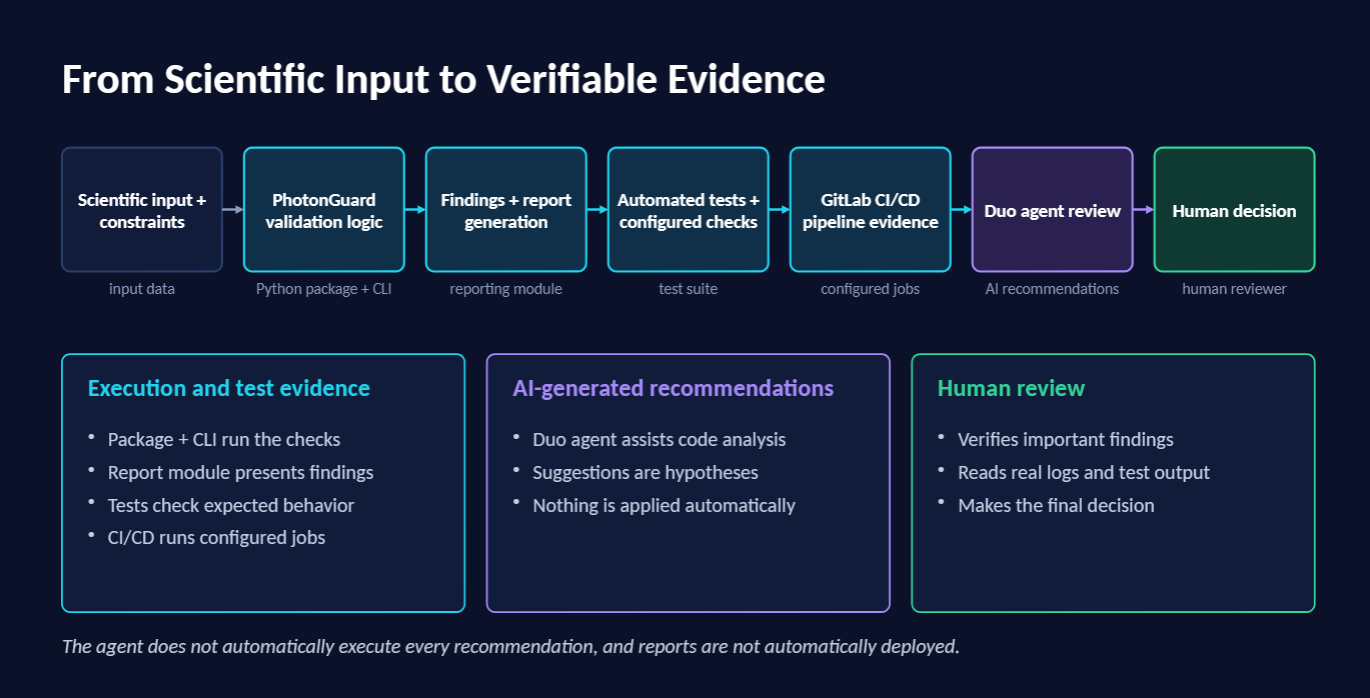
I built PhotonGuard as a structured Python project, organizing its functionality into modules for validation checks, report generation, and command-line interaction. I added tests and example resources to make the project easier to understand, verify, and extend.
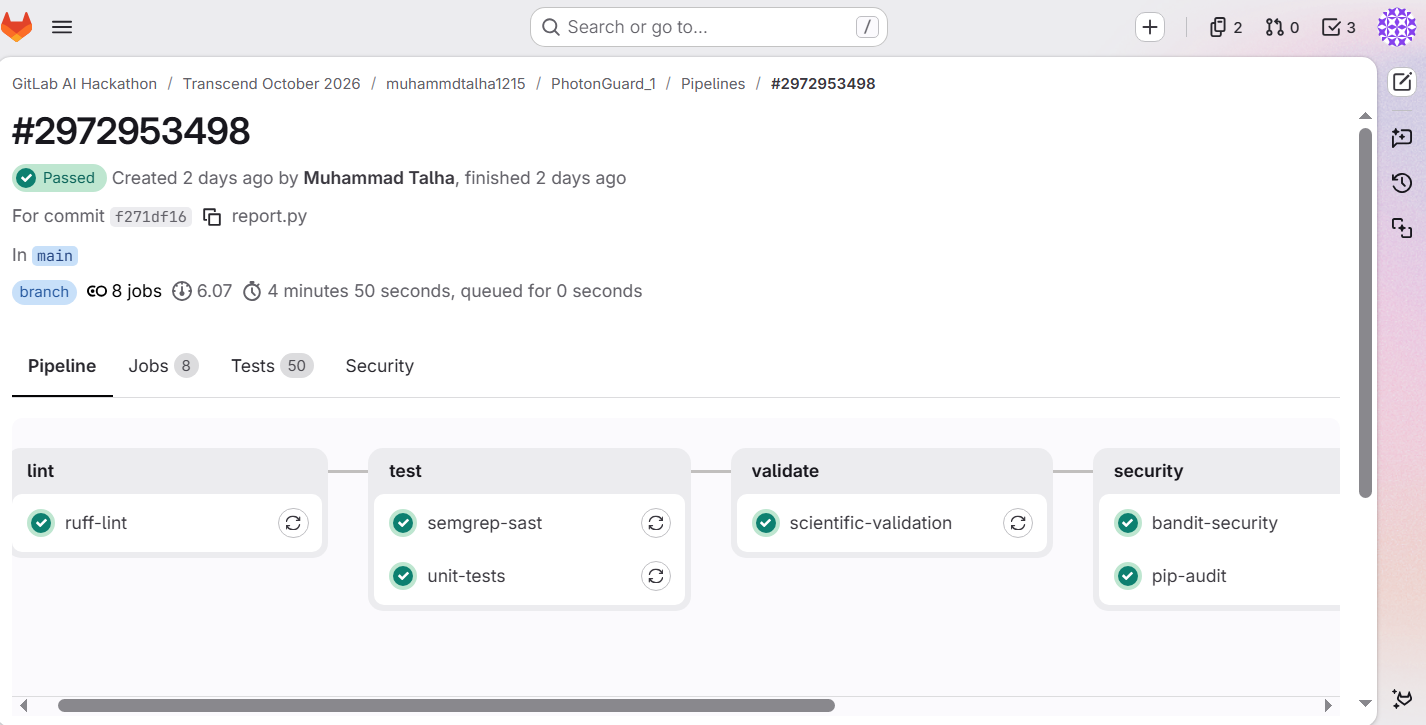
I used GitLab as more than a place to host the source code. I configured a CI/CD pipeline to automate the quality-control steps defined in the project configuration, making it easier to inspect job results and identify failures. I also worked on integrating an AI-assisted review workflow through my custom GitLab Duo agent.
The project combines traditional software engineering practices with AI-assisted analysis. The automated checks provide a foundation for repeatable verification, while the AI agent helps interpret potential issues and recommend next steps.
What I Learned
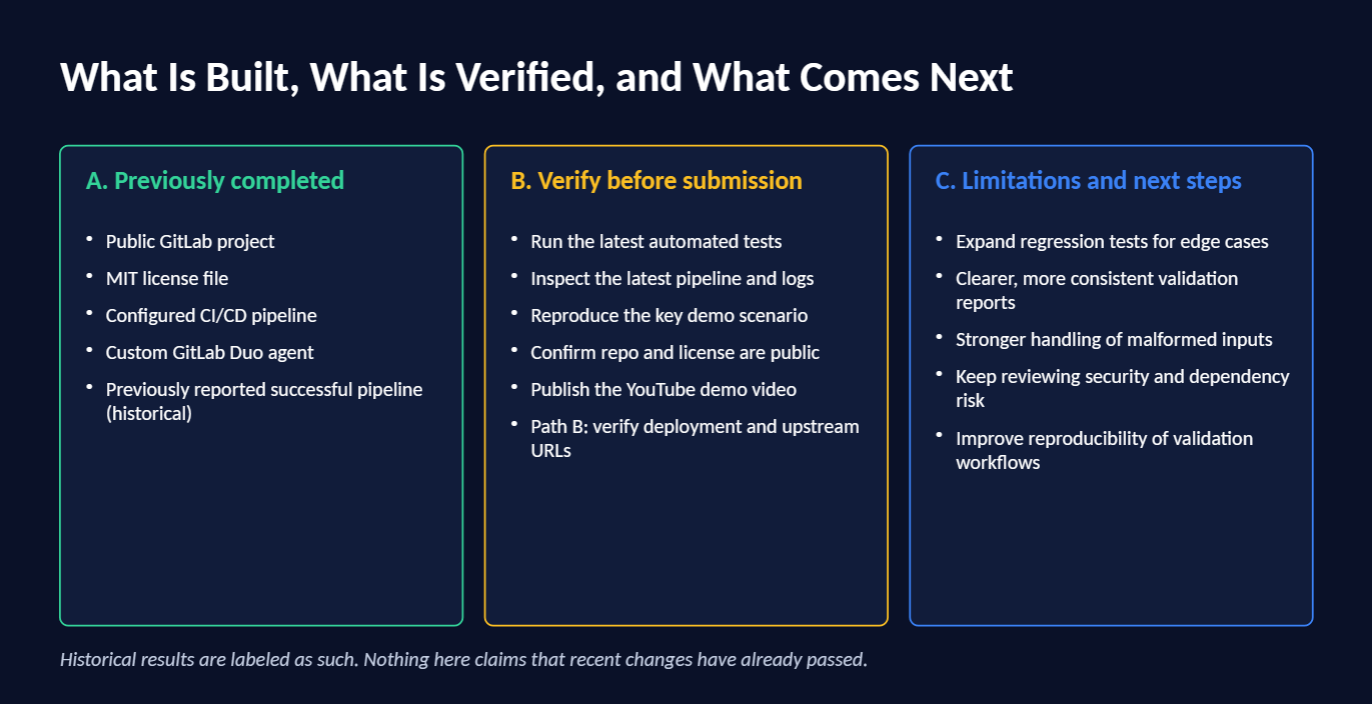
Building PhotonGuard helped me strengthen my Python programming, project organization, testing, debugging, and Git-based development skills. I also gained practical experience with GitLab repositories, CI/CD pipelines, software-quality tools, and custom AI agents.
One of my most important lessons was that an AI-generated explanation is not the same as a verified result. AI suggestions must be checked against the actual source code, and proposed fixes should be supported by tests. This reinforced the importance of combining AI assistance with reproducible, evidence-based validation.
Challenges I Faced
One challenge was bringing several components together into a project that is understandable, maintainable, and testable. Configuring the Python environment, organizing the source code, setting up the CI/CD workflow, and troubleshooting GitLab issues required careful debugging and repeated checks.
Another challenge was defining the proper role of AI in scientific software review. An agent can identify possible problems and suggest improvements, but it should not claim that code has been executed or validated without evidence. Designing the workflow around this distinction helped me focus on transparency and trustworthy reporting rather than simply generating confident-looking answers.
What Comes Next
PhotonGuard is a step toward making scientific software review more accessible and systematic. My next priorities are to expand the scientific validation checks, strengthen edge-case testing, improve the clarity of reports, and continue evaluating the AI agent against real examples.
My broader goal is to help developers and researchers spend less time discovering preventable software problems and more time understanding their scientific results. PhotonGuard explores how Python, automated quality checks, GitLab CI/CD, and AI-assisted review can work together to support that goal.## Inspiration
Built With
- ai-agents
- artificial-intelligence
- automation
- ci/cd
- code-quality
- continuous-integration
- cybersecurity
- developer-tools
- devsecops
- gitlab
- gitlab-duo
- open-source
- photon
- photonguard
- physics
- python
- python-development
- reliability-engineering
- scientific
- scientific-computing
- software-testing
- static-analysis
- unit-testing

