PHOSPHOR - Project Story
Inspiration
We asked ourselves: Why does chatting with your team need 2GB of RAM?
Discord, Slack, Teams — they're all Electron apps consuming massive resources for what's essentially text communication. Meanwhile, IRC — the protocol that connected millions in the 90s — sits forgotten, dismissed as "outdated."
But IRC isn't dead. It's just waiting for better design.
We were also inspired by three "dead" technologies that solved real problems elegantly:
- Teletext (1980s TV information pages) — instant data, zero latency
- DCC (IRC's file transfer) — peer-to-peer, no cloud middleman
- Beeping computers — auditory feedback before silent failures became the norm
What if we could resurrect all three with modern UX?
What it does
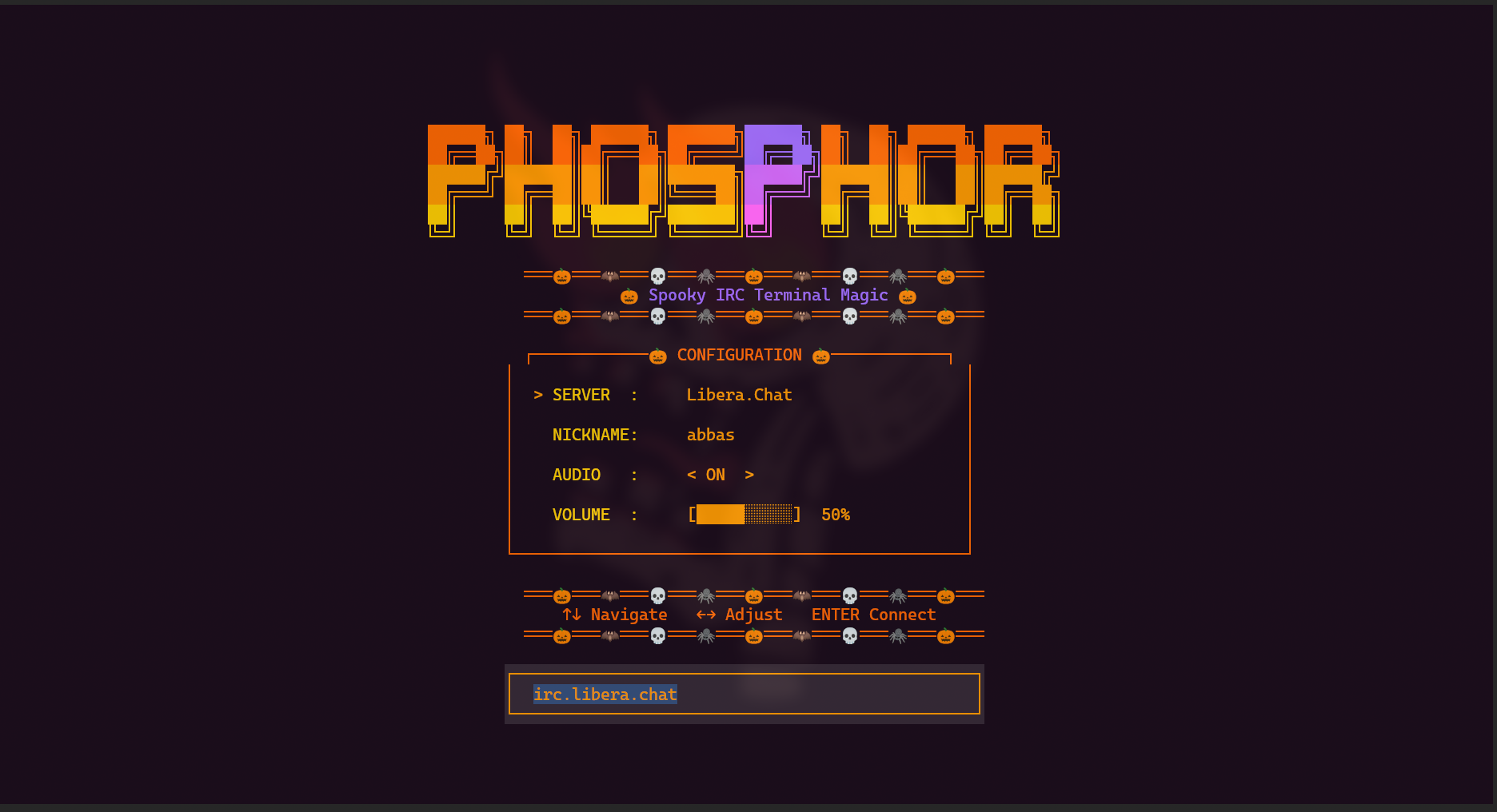
Phosphor is a terminal-based IRC client that delivers Discord's user experience at $\frac{1}{100}$th the memory footprint.
| Metric | Discord | Phosphor |
|---|---|---|
| Memory | 2GB | ~20MB |
| Startup | 10s | <1s |
| CPU idle | 10% | 2% |
Key features:
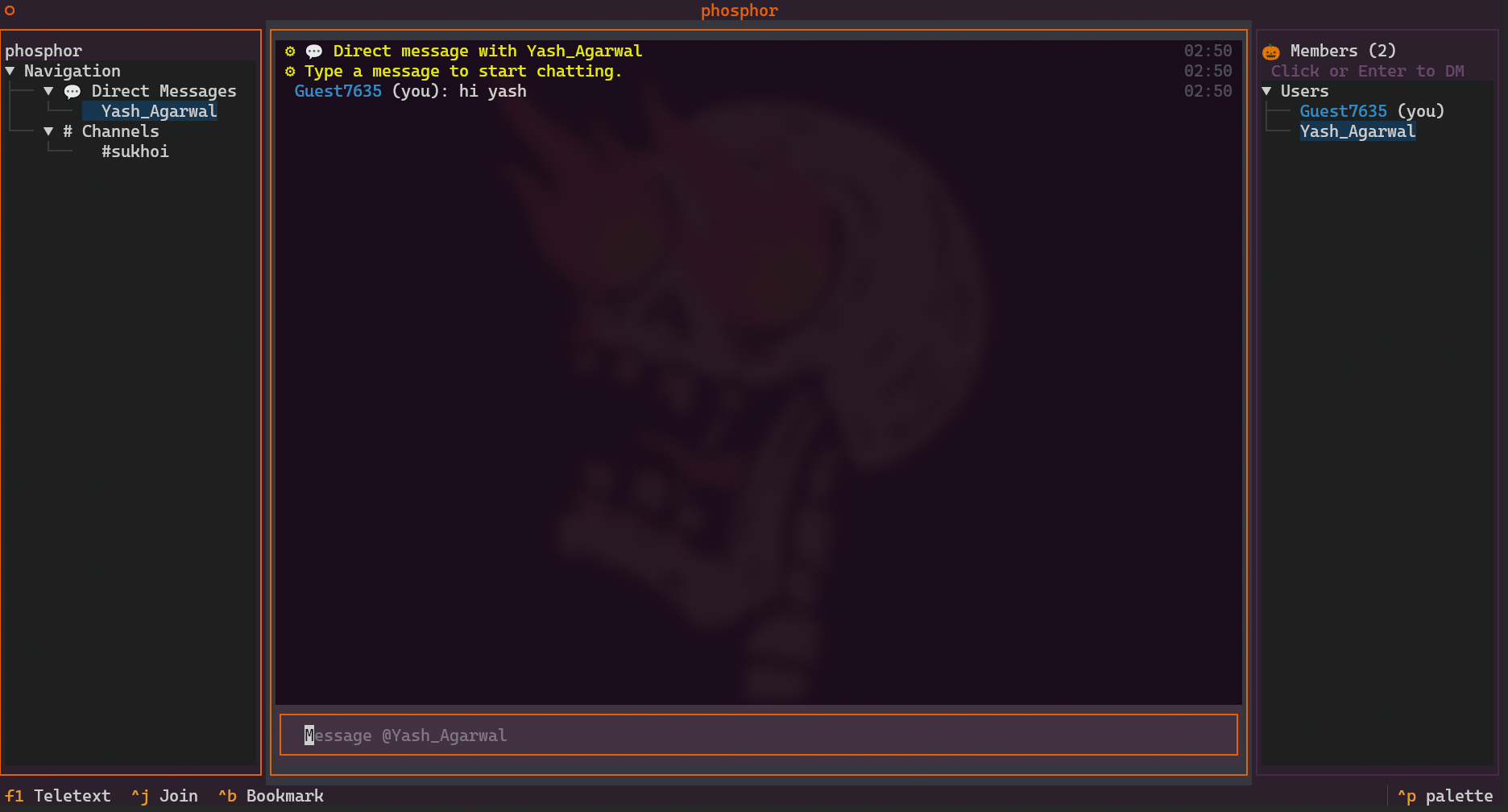
- Discord-like 3-pane UI — channels, chat, members with keyboard navigation
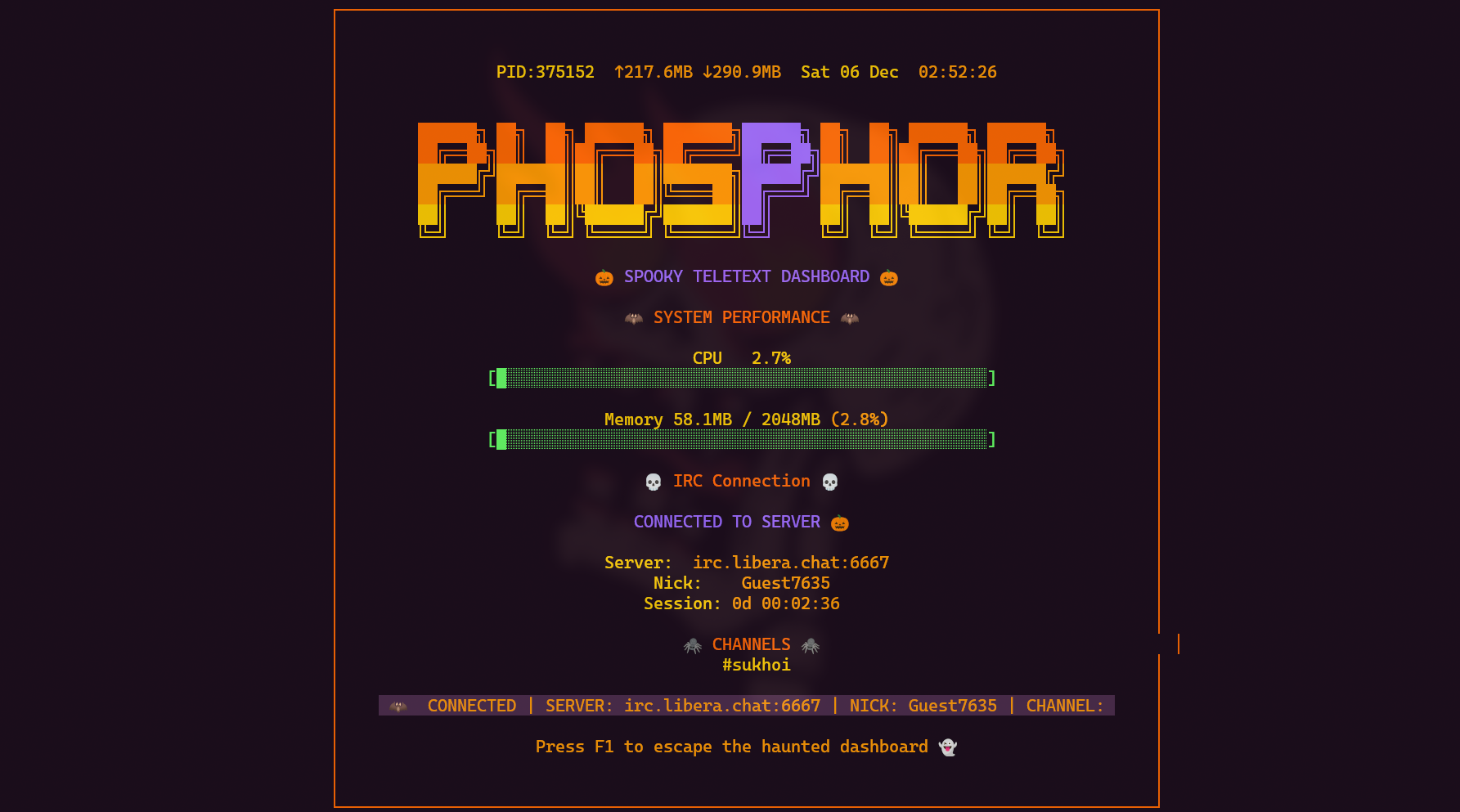
- Teletext Dashboard (F1) — authentic 1980s Ceefax aesthetic showing live DevOps metrics (CPU, memory, containers)
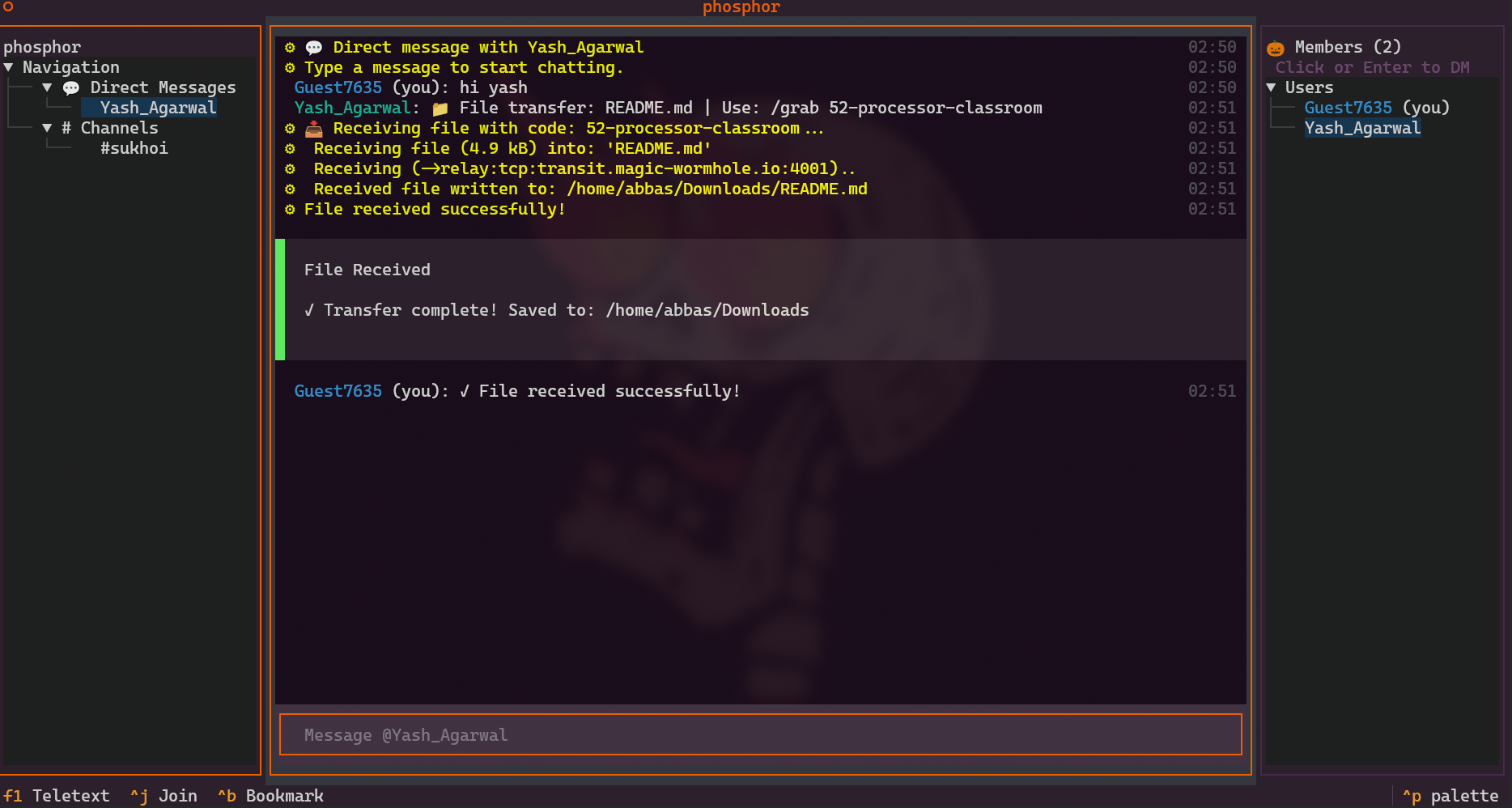
- Wormhole File Transfer — P2P encrypted transfers with human-readable codes like
7-guitar-ocean - Geiger Counter Audio — log sonification that lets you hear errors before you see them
- MCP Integration — AI-powered DevOps commands via
/ai docker-stats
How we built it
Built entirely in 4 days using Kiro as our AI coding assistant.
Tech Stack:
- Python 3.11+ — async-first architecture
- Textual — modern TUI framework for the Discord-like interface
- miniirc — lightweight async IRC library
- magic-wormhole — P2P encrypted file transfers
- psutil — system metrics for Teletext dashboard
- MCP (Model Context Protocol) — AI tool integration
Architecture:
┌─────────────────────────────────────────────────────┐
│                    UI Layer                         │
│  ┌─────────┐  ┌──────────┐  ┌─────────────────┐    │
│  │ Sidebar │  │ ChatPane │  │   MemberList    │    │
│  └────┬────┘  └────┬─────┘  └───────┬─────────┘    │
└───────┼────────────┼────────────────┼──────────────┘
        │            │                │
┌───────┴────────────┴────────────────┴──────────────┐
│                   Core Layer                        │
│  ┌──────────┐ ┌──────────┐ ┌──────────┐ ┌───────┐  │
│  │IRCClient │ │MCPClient │ │ Wormhole │ │ Audio │  │
│  └──────────┘ └──────────┘ └──────────┘ └───────┘  │
└─────────────────────────────────────────────────────┘
The callback pattern keeps UI and backend completely decoupled. IRC runs in a background thread with call_from_thread for thread-safe UI updates.
Challenges we ran into
Thread-safe UI updates — IRC messages arrive on a background thread, but Textual's UI must be updated from the main thread. We solved this with Textual's
call_from_threadmechanism.IRC nickname conflicts — Public IRC servers often have nickname collisions. We implemented automatic retry with random suffixes when receiving
433 ERR_NICKNAMEINUSE.Audio without dependencies — Cross-platform audio is notoriously difficult. We generate WAV files in-memory and pipe them to system audio players (
paplay,aplay,afplay) — no compiled dependencies needed.Teletext authenticity — Recreating the 1980s Ceefax aesthetic required strict adherence to the 8-color palette and block graphics (
█ ▀ ▄ ░). Modern terminals wanted to be too pretty.Wormhole integration —
magic-wormholeoutputs codes to stderr in various formats. Parsing these reliably across different versions required careful regex handling.
Accomplishments that we're proud of
- 100x efficiency gain — Same UX, 1/100th the resources
- Three resurrections in one app — Teletext, DCC, and audio feedback all modernized
- 4-day build with Kiro — From concept to polished product, including a complete Halloween theme (500+ lines of CSS generated by AI)
- Zero cloud dependencies for file transfer — True P2P with human-readable codes
- The Geiger Counter — You can literally hear your system's health
What we learned
- Old protocols aren't obsolete — IRC's simplicity is a feature, not a bug
- Terminal UIs can be beautiful — Textual proves TUIs can rival web apps
- AI pair programming accelerates everything — Kiro helped us iterate faster than we thought possible
- Constraints breed creativity — The 8-color Teletext palette forced elegant design decisions
What's next for PHOSPHOR
- Multi-server support — Connect to multiple IRC networks simultaneously
- Plugin system — Dynamic MCP tool loading for custom automation
- E2E encryption — Encrypted DMs using Signal protocol
- Mobile companion — Lightweight mobile client that syncs with desktop
- Community themes — User-contributed color schemes beyond Halloween 🎃
Phosphor proves that the past isn't dead — it just needed better tools.
Built With
- azure-sdk
- docker-api
- irc-protocol
- kiro
- magic-wormhole
- mcp
- miniirc
- psutil
- python
- rich
- textual


Log in or sign up for Devpost to join the conversation.