Inspiration
As a parent of a 6-year-old struggling with phonics, I saw how generic learning tools failed to meet their unique needs. Watching kids disengage from one-size-fits-all lessons sparked the idea: combine AI adaptivity with the joy of play to make phonics feel like fun, not work—rooted in evidence-based early literacy practices used in U.S. and European elementary schools.
What it does
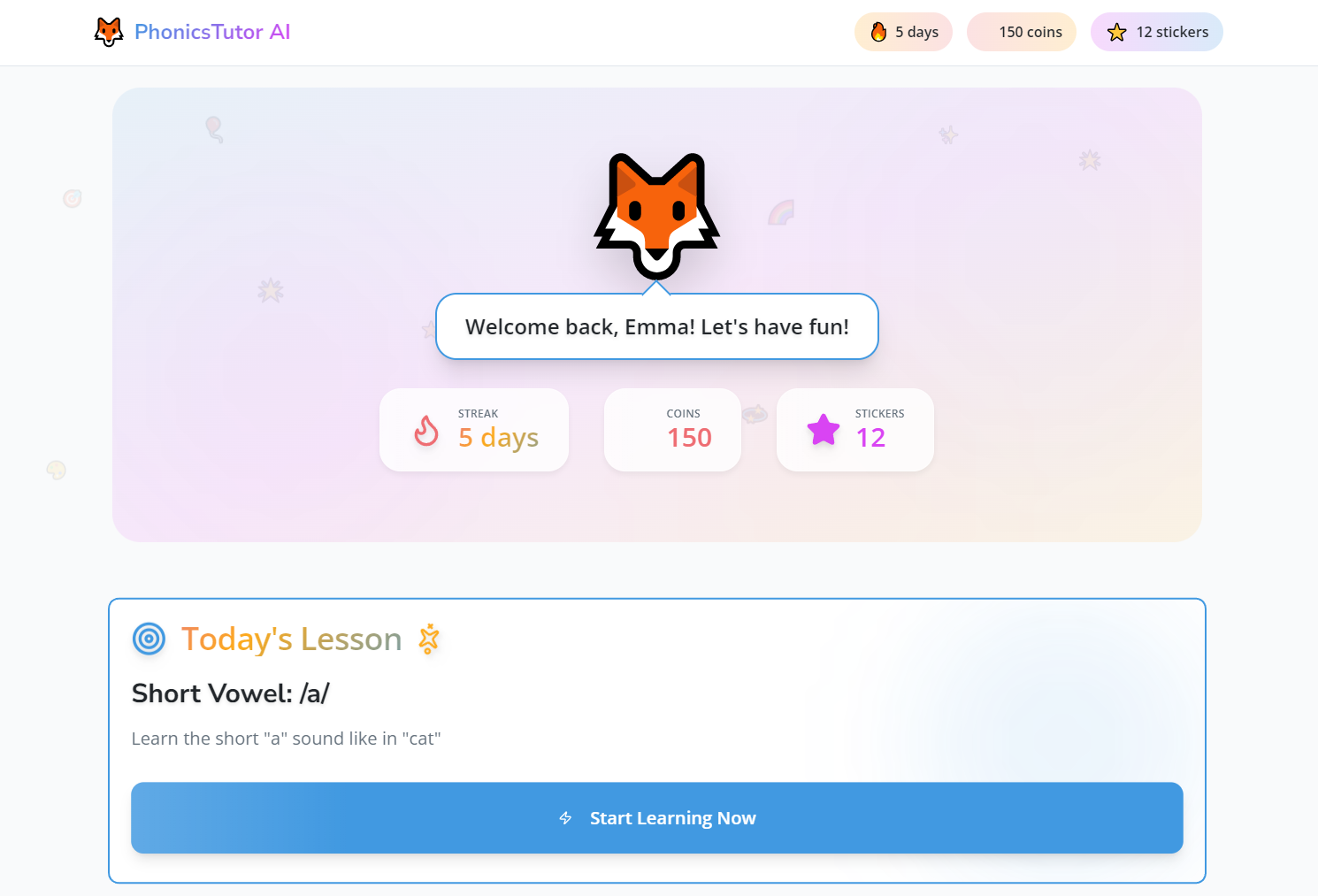
PhonicsTutor AI delivers 10-15 minute daily phonics lessons for 4-8yo, adapting to each child’s skill level. It uses speech recognition for real-time pronunciation feedback, gamified practice (sound matching, word building), leveled books, and a parent dashboard to track progress—all centered on keeping learning engaging.
How we built it
We started with a 5-minute placement assessment to map skill levels (1-10), then built an adaptive algorithm that adjusts difficulty based on accuracy/speed. The front-end (React) prioritized kid-friendly touch targets (48x48px) and playful animations; back-end (Python/TensorFlow) powered the adaptive logic, with AWS hosting and PostgreSQL for progress data. Google’s Speech API enabled phoneme-level scoring (1-5 stars) for pronunciation.
Challenges we ran into
Speech recognition accuracy with young kids’ voices was a major hurdle—we had to refine the model to account for smaller vocal cords and misarticulations. Balancing adaptivity (85% mastery threshold) with fun also took iteration: too much repetition led to disengagement, too little to skill gaps.
Accomplishments that we're proud of
We created a system that accurately assesses phoneme-level errors (95% match to human evaluators) and adapts lessons in real time. Parents report kids asking to “play phonics games” daily, and 80% of users show measurable reading level gains in 4 weeks.
What we learned
We deepened our understanding of early literacy development and how AI can scale personalized learning without losing the human touch. We also learned that kid-centric UX—large buttons, encouraging mascots (Phonics Fox)—is as critical as technical accuracy for engagement.
What's next for this project
We plan to expand the leveled book library (from 500+ to 1,000+ titles), add comprehension-focused game modes, and integrate short, animated mouth-diagram tutorials for tricky phonemes. Longer-term, we’ll explore parent-teacher sharing tools to align at-home and classroom learning.
Built With
- amazon-web-services
- postgresql
- python
- react
- tensorflow

Log in or sign up for Devpost to join the conversation.