The issue of denying an illegal robo-call has many barriers to overcome. Home-based hardware or software solutions can cost money and will be inaccessible to the very groups that most often fall prey to scamming. A block-list containing phone numbers added by a home consumer has the potential to block legitimate unknown phone calls, such as an employer responding to a resume submission. Software that analyzes the content of a phone call for specific audio signals or content is both a horrifying intrusion of privacy and a potential security risk. Requiring a caller to verify a CAPTCHA-like code would make calling a family member to let them know they are running behind schedule more painful than just showing up late and getting an earful.
To make matters worse, the above solutions can be circumvented by a combination of a criminal’s hard work on one end of the phone or a lack of consumer participation on the other.
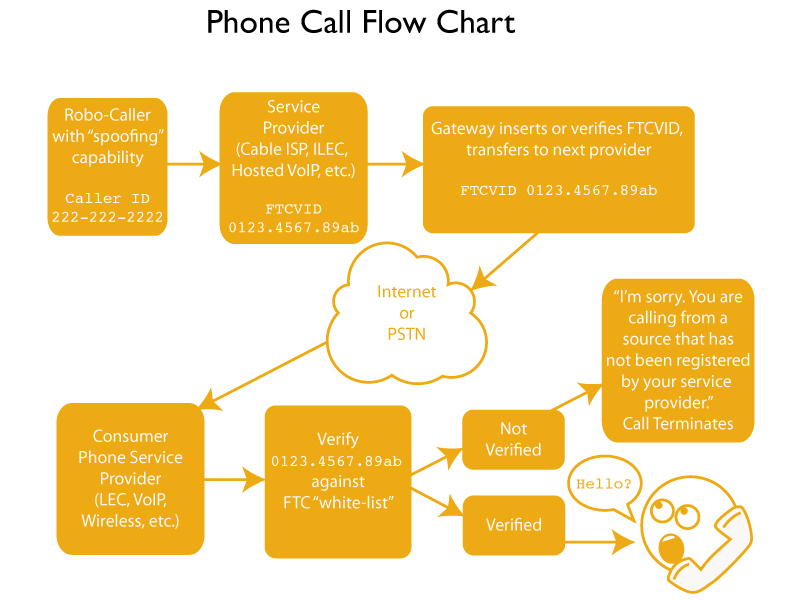
A real solution starts with verifying the networks of phone providers’ equipment that is outside of the reach of both criminals and consumers, then by incentivizing the denial of robo-calls. This is done by...
- Registering origination points at the periphery of phone service providers’ networks with the Federal Trade Commision (FTC) with a unique FTC-provided Verified ID (FTCVID). This creates a “white-list” of known and authenticated origination points.
- FTC shares that list with the US-based phone service providers that register their equipment.
- All phone numbers, spoofed or not, are paired with the FTCVID while in transit.
- If a phone number comes from an unregistered origination point, the phone service provider denies completion of the phone call to the consumer.
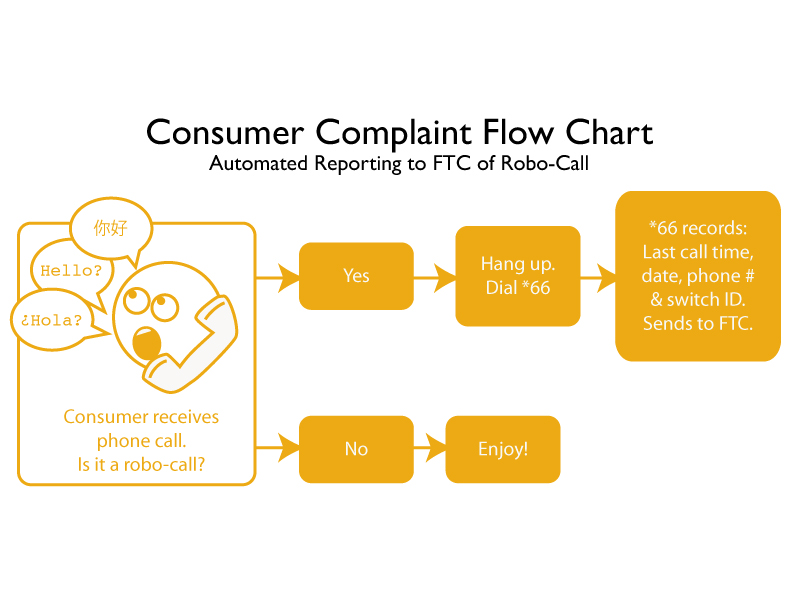
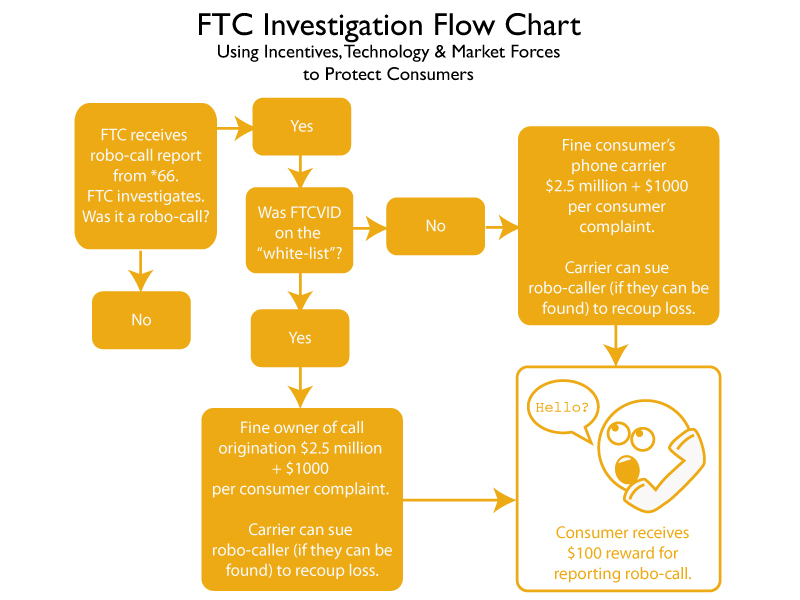
- If a home consumer receives an illegal robo-call, incentivize reporting with a $100 reward.
- Punish network equipment owners that choose not to comply with a free service that protects consumers. Reward network equipment owners that choose to comply with a “compliance bonus.”
Log in or sign up for Devpost to join the conversation.