-
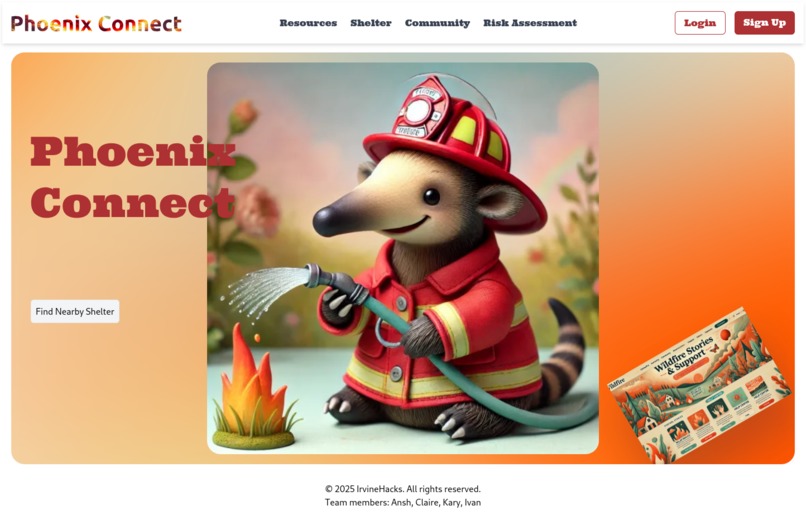
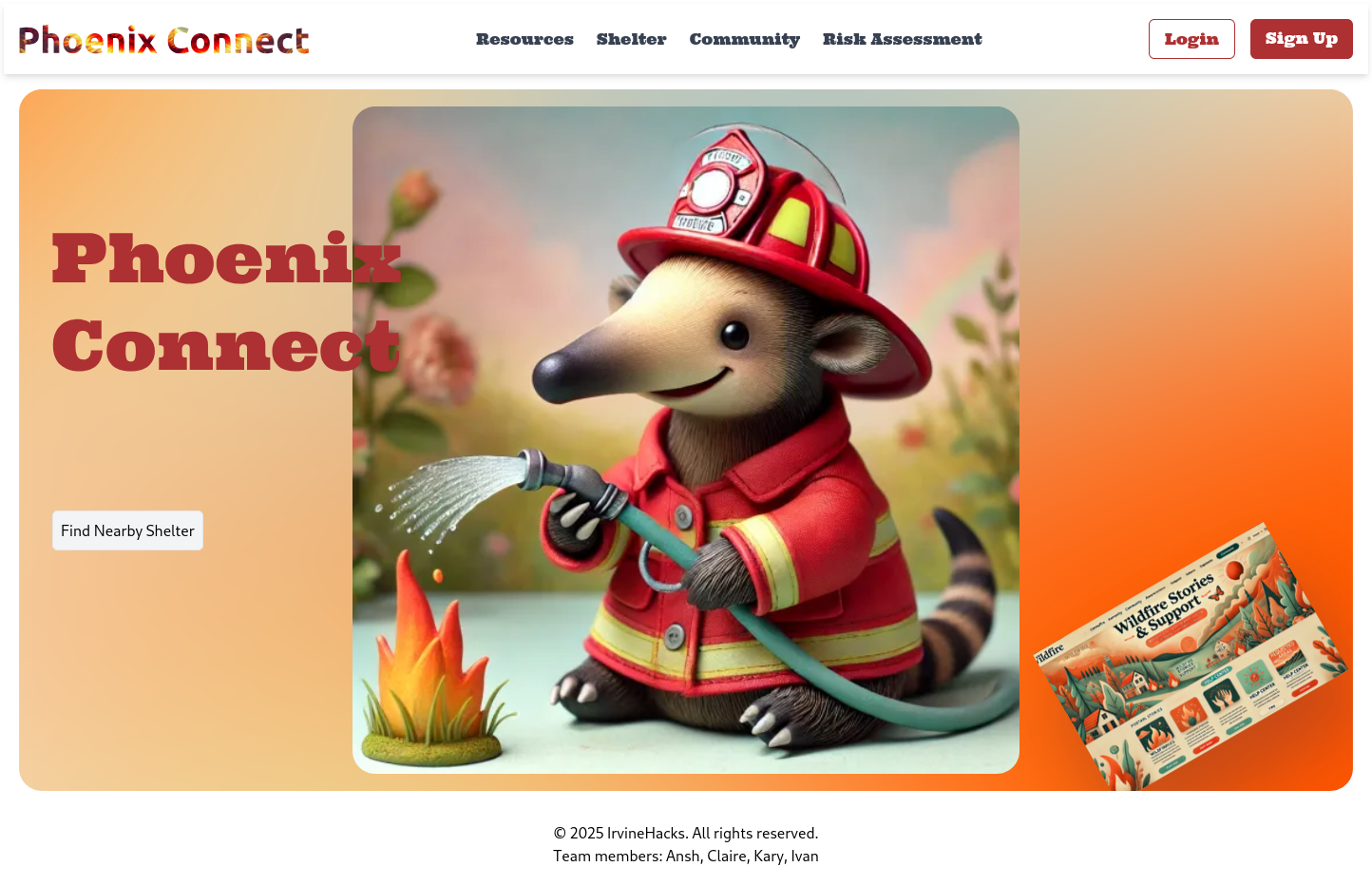
This is the home page for PhoenixConnect
-
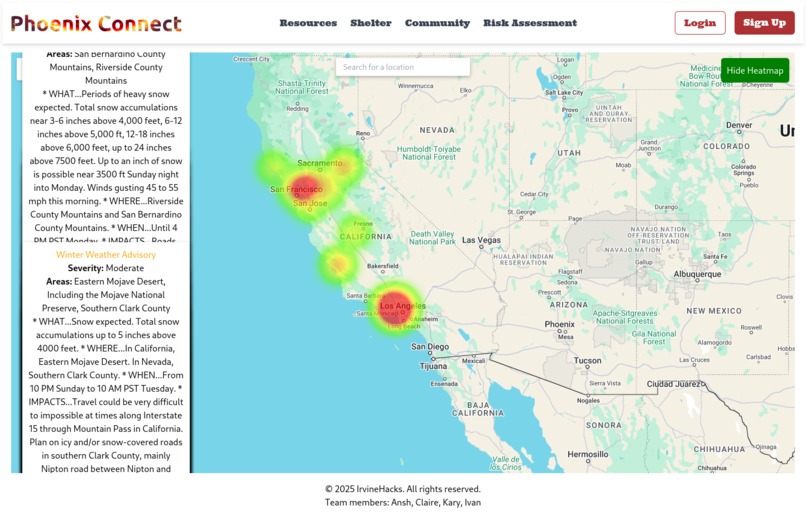
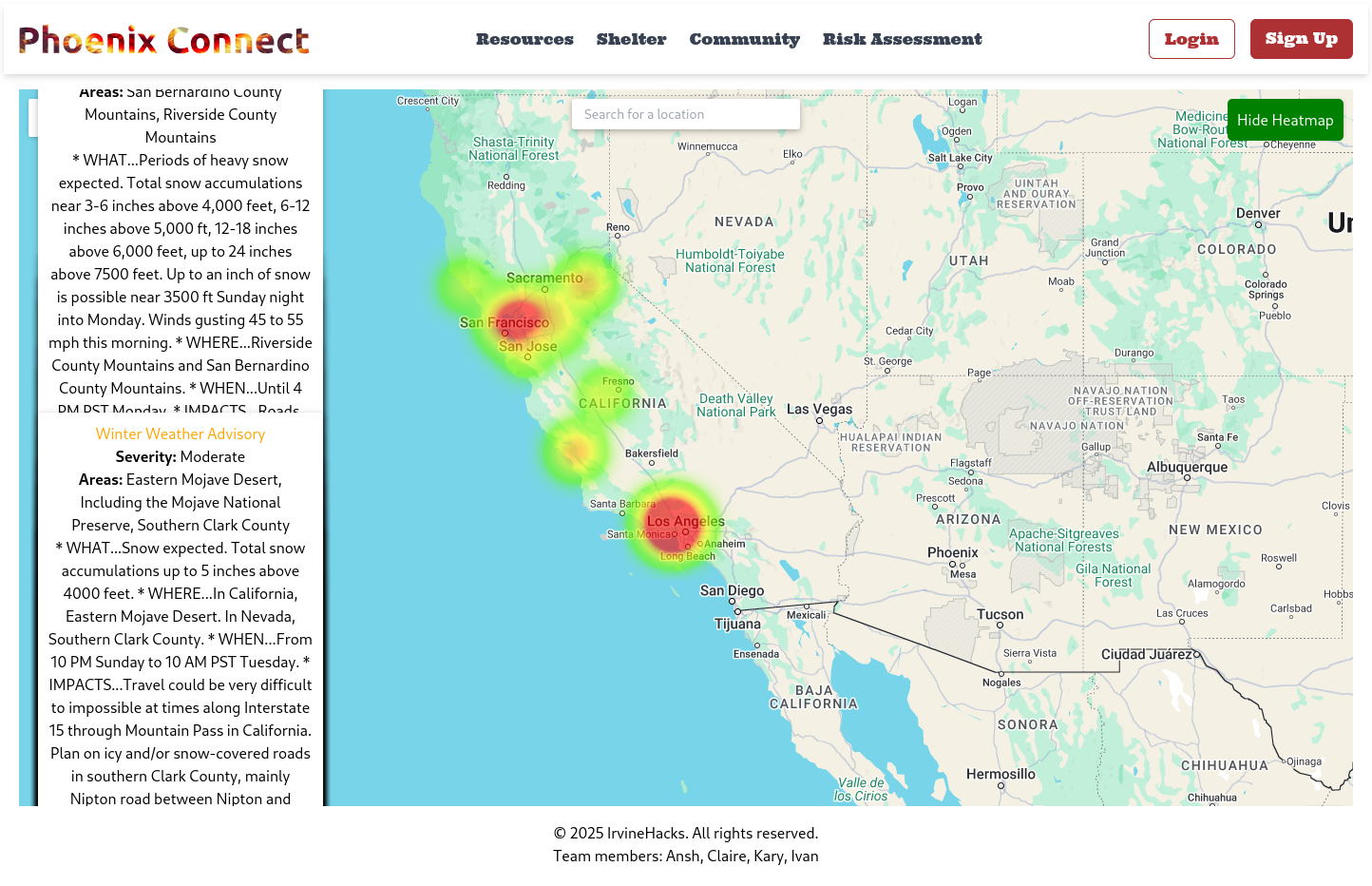
This is the interactive map where it shows the severity of fire with specific information show on the side.
-
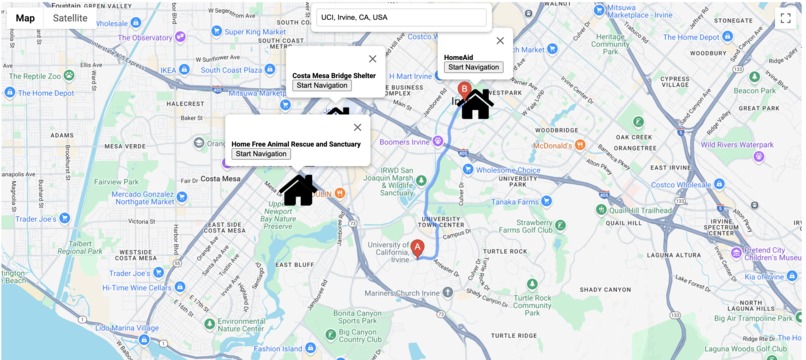
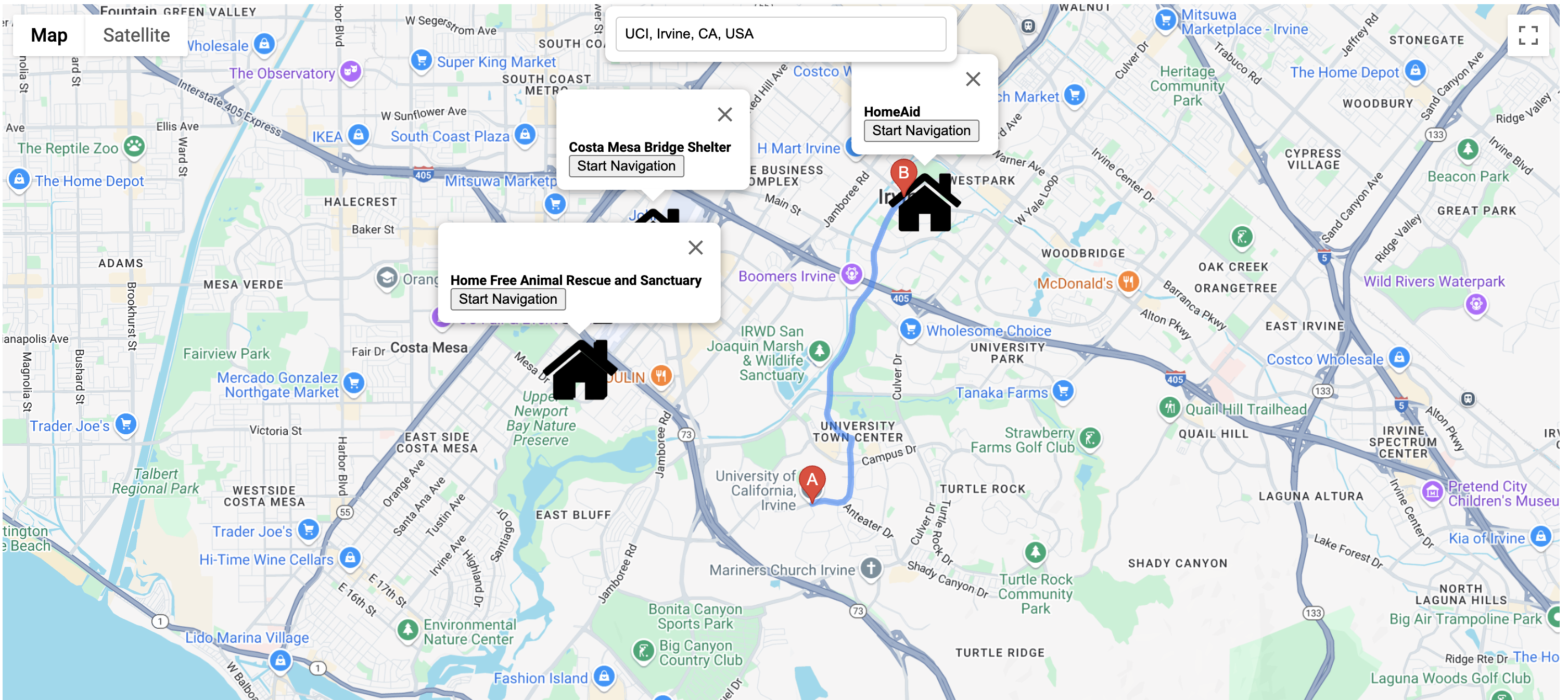
Users can see shelters nearby their current location with optimized route to the destination on the page of shelter.
-
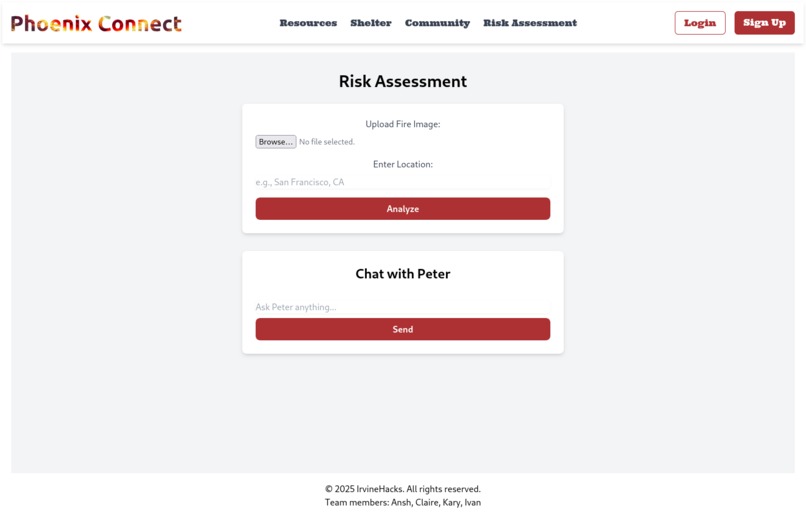
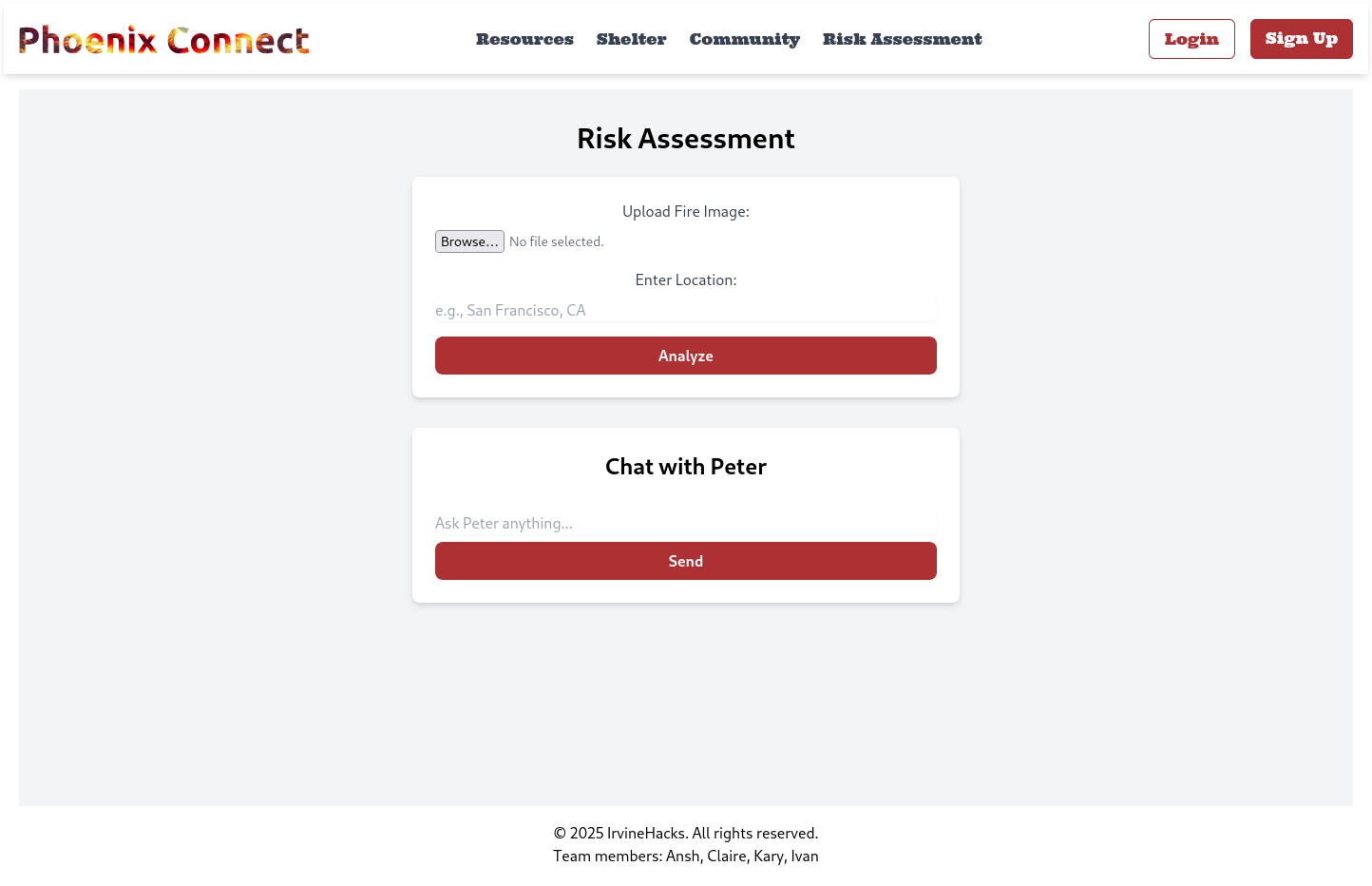
This is risk assessment page where people can upload fire pictures to analyze. There is also ChatBot where people can ask for suggestions.
-
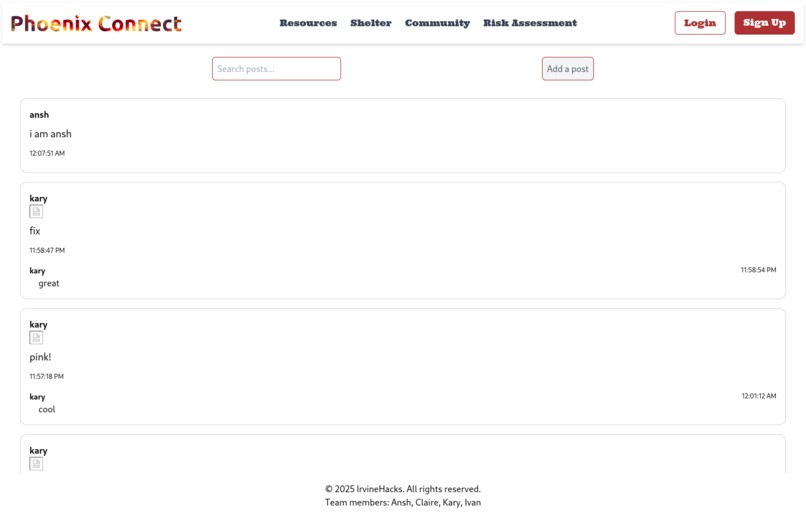
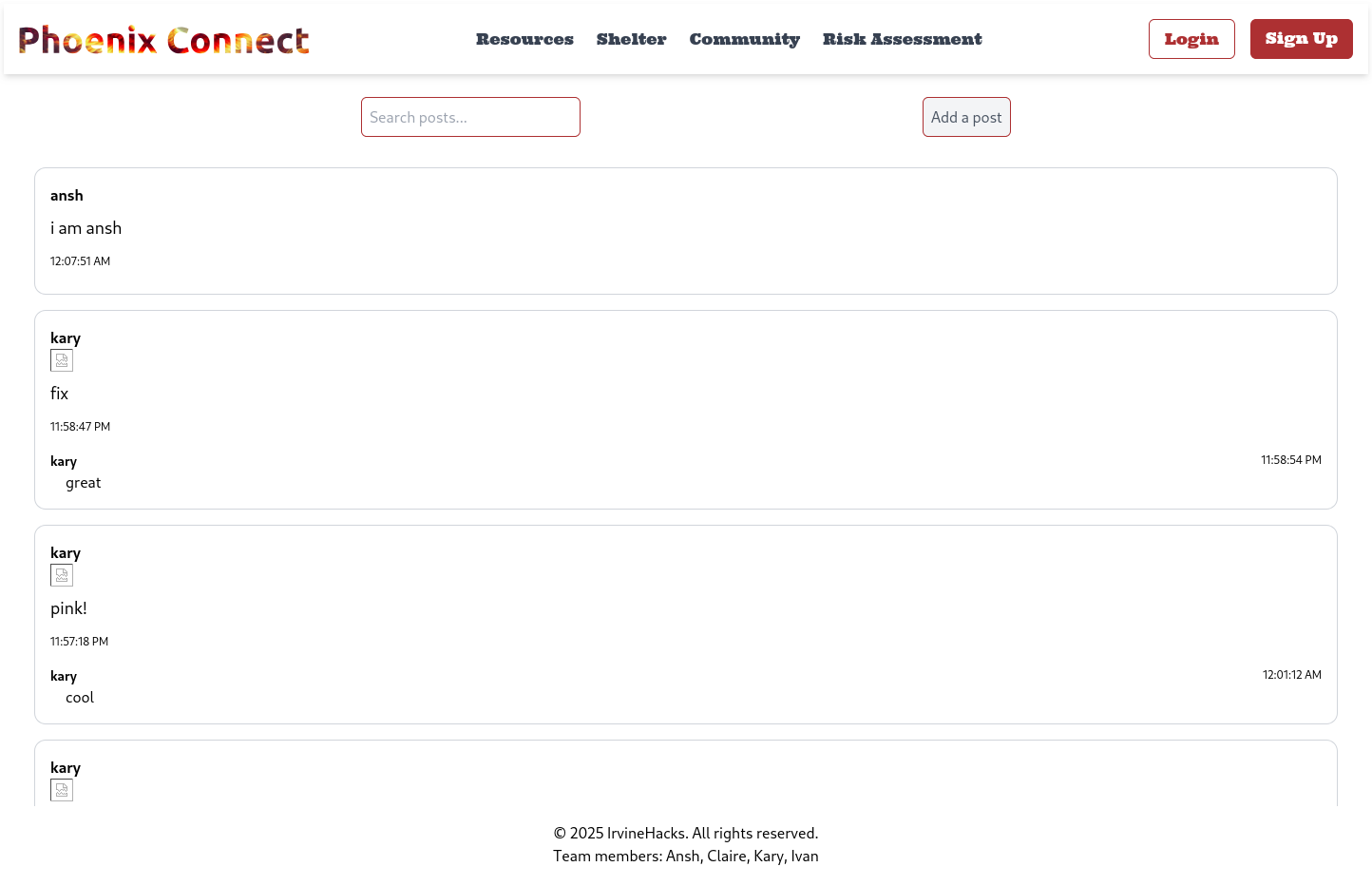
This is the Community Page where people can share post and comment on other people's stories.
Inspiration
Since January, we have witnessed countless individuals suffering from devastating wildfires in the Los Angeles area. Beyond the loss of property, many people face limited access to food and shelter, leaving them in dire situations. PhoenixConnect was inspired by these recurring wildfire disasters and the urgent need for better support during such emergencies. During evacuations, many individuals struggle to find clear guidance, essential resources, or a safe place to go. Imagine being caught in a natural disaster with nowhere to turn—searching for shelters on Google Maps yields limited results, leaving you feeling helpless. That’s where PhoenixConnect steps in.
PhoenixConnect provides a comprehensive solution by displaying all nearby resources on an interactive map with optimal route, making it easy to identify and choose the support you need. The community aspect of PhoenixConnect will be the core of our app, which aims to create a safe and supportive space for individuals to connect, share experiences, and collaborate during crises. It fosters real-time collaboration, emotional support, and a sense of belonging, empowering users to navigate challenges together. This feature is essential in building resilience and providing strength through shared experiences.
What it does
PhoenixConnect is designed to empower individuals and communities during wildfire events by offering a suite of essential tools. Stay informed with real-time wildfire heat maps, locate the nearest evacuation shelters with ease, connect with others through a community forum, and access post-fire analysis to understand and rebuild. PhoenixConnect is your trusted companion for safety, connection, and recovery in the face of wildfires.
Interactive Map is an unique map that is powered by Google Maps API and NASA FIRMS API which displays real time fire severity by heatmaps tailored to the user’s current location. It also highlights nearby shelters, resources, and safe zones, enabling users to make informed decisions during evacuations or emergencies. The Community platform serves as a hub for connection and support, enabling users to share personal stories about wildfire experiences, engage in meaningful discussions, and provide encouragement or advice by commenting on others’ posts. Users can also post requests for assistance, such as seeking donations or resources. With categorized posts and intuitive navigation, the platform ensures that every story and request is easily accessible and impactful. The Fire Risk Assessment feature utilized the power of the large language model, YOLOv10, to analyze fire images uploaded by users. By training YOLOv10 on a carefully curated small dataset, we’ve achieved precise risk categorization into low, moderate, and high-risk fire areas. The app provides both immediate resources and long-term community support, empowering users during emergencies and fostering resilience.
How we built it
PhoenixConnect was built using a carefully chosen stack of technologies to ensure a reliable, secure, and user-friendly platform:
Backend: Flask was used as the backend framework, allowing for efficient integration with MongoDB for robust and secure data management. This ensures seamless handling of user data such as uploaded images, shelter locations, and user profiles. 'Database: MongoDB, combined with Google Cloud’s storage solutions, provides secure and scalable data storage, enabling the app to handle spikes in usage during emergencies.
Frontend: The frontend was crafted using Vite and ReactJS and TailwindCSS to create a smooth, visually appealing, and responsive user experience. Special emphasis was placed on the Community feature to ensure effortless story sharing, interactive engagement through comments, and easy navigation of categorized posts.
API and ML model Integration:
NASA FIRMS API: real-time fire data is sourced from the NASA FIRMS API and visualized as interactive heatmaps, providing users with accurate and up-to-date information on wildfire locations and intensity.
NOAA Weather Alerts API: Highlights Red Flag Zones with active wildfire alerts and displays other critical weather warnings, ensuring users stay informed about hazardous conditions in real time.
YOLOv10 ML Model: trained the model on small dataset
Google Maps API: Integrated to deliver the nearest shelters and resources.
OpenAI’s API: Incorporated to power the Fire Analysis feature, enabling intelligent processing of user-submitted photos and generating actionable insights and tailored recommendations.
By combining these technologies, PhoenixConnect provides a reliable and intuitive platform that addresses the immediate and ongoing needs of individuals affected by wildfires.
Challenges we ran into
As beginning hackers with limited experience, learning new technologies and frameworks on a time-critical project can be a challenge. Debugging issues, managing dependencies, and balancing all aspects of the project are all part of our learning journey.
Connecting MongoDB to Flask using Python was a significant learning curve. As beginner developers, we had limited experience with database management and backend frameworks, so understanding how to set up, query, and maintain a robust and secure database required extra effort.
Finding the right APIs, such as Google Maps API and OpenAI API, and integrating them into the project was another hurdle. We had to navigate their documentation, understand usage limits, and ensure the APIs worked seamlessly with our application. Synchronizing the back-end functionality with the front-end user interface was the most extremely challenging task. Building endpoints in Flask and ensuring they provided accurate and timely data to the front-end required extensive testing and debugging.
Accomplishments that we're proud of
Successfully connected the database with the backend and integrated the backend with the frontend, ensuring smooth communication across all components of the application.
Effectively integrated APIs, such as Google Maps API and OpenAI API, into the application. These APIs function seamlessly on the front end, providing users with real-time, interactive, and intelligent features that greatly enhance the app's functionality.
As a team that had only recently met, we quickly built trust and achieved impressive results by working together effectively. Throughout the process, we learned together, supported each other and maintained good communication, making these achievements even more remarkable.
What we learned
Through this project, we learned how to connect a database to the backend using Flask and MongoDB, ensuring secure and efficient data management. Additionally, we gained valuable experience in integrating APIs like Google Maps API and OpenAI API, which enhanced the functionality of our app.
We also honed our skills in designing and developing applications that contain multiple components, including creating seamless connections between the backend and frontend. In addition, we deepened our understanding of building intuitive user interfaces and effectively managing real-time data. This project taught us the importance of problem solving, teamwork, and perseverance, which were critical to overcoming the challenges we faced.
What's next for PhoenixConnect
Future plans include enhancing the app with more advanced features, including: expanded resource recommendation improved community features refined the user experience and scale the app for broader adoption
Built With
- flask
- google-cloud
- mongodb
- openai
- python
- react
- vite


Log in or sign up for Devpost to join the conversation.