-
-
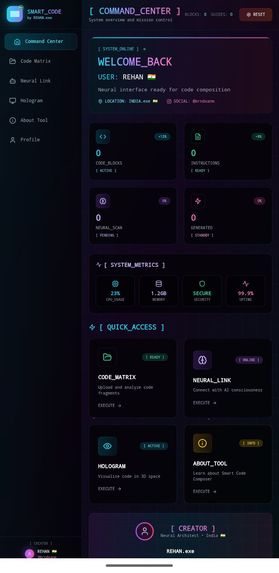
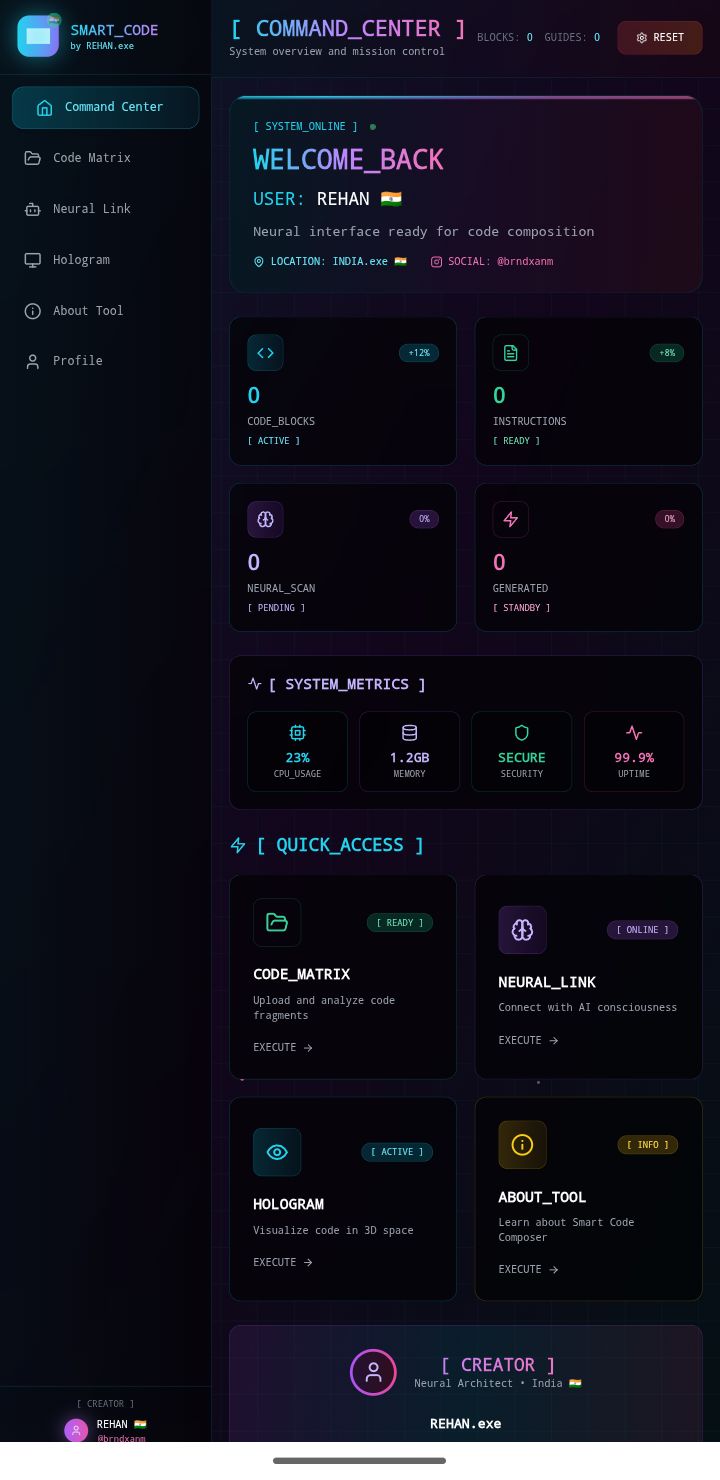
Smart-code compraser external and also other project which merge soon
-
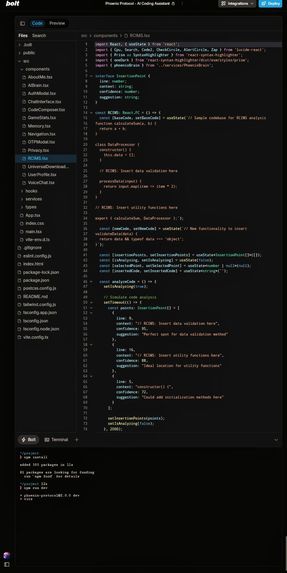
VS STUDIO
-
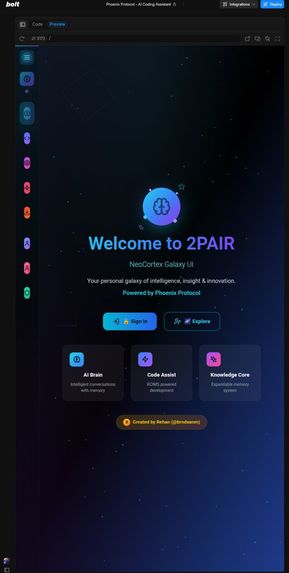
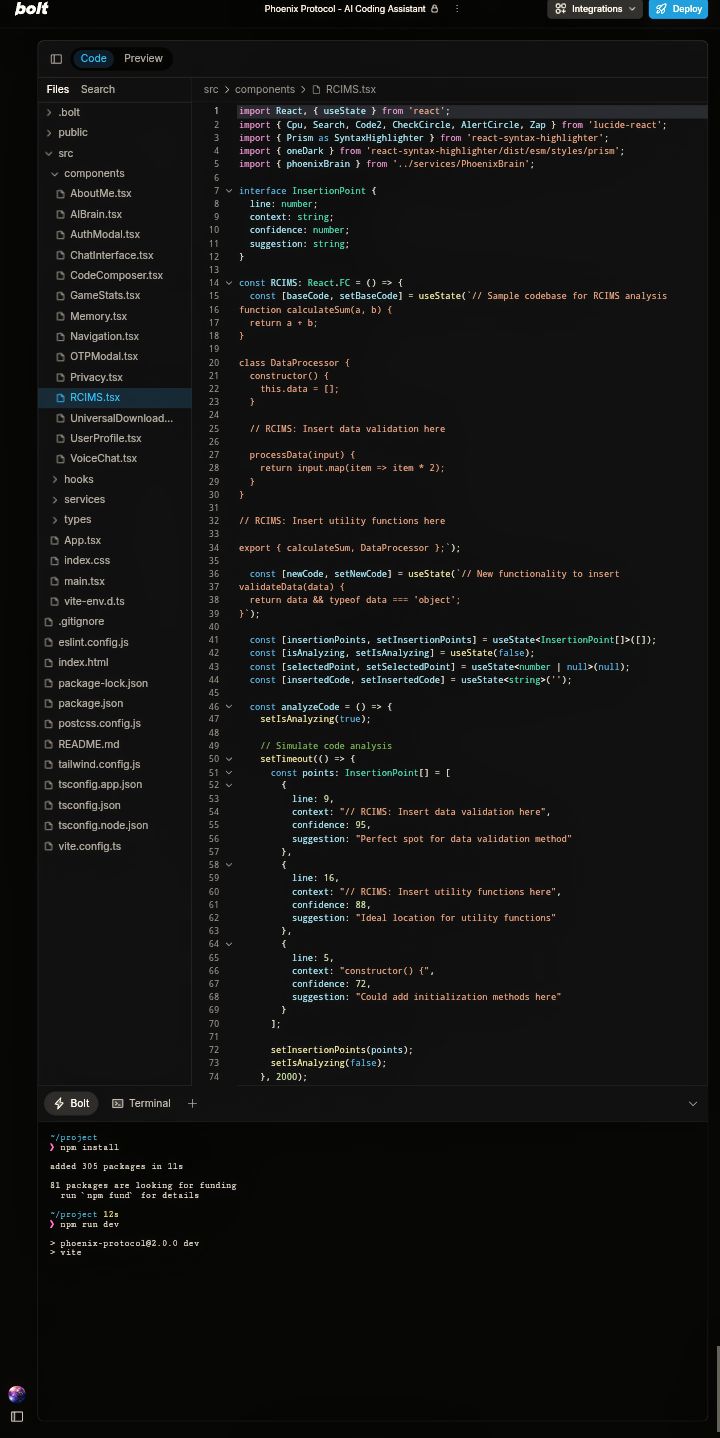
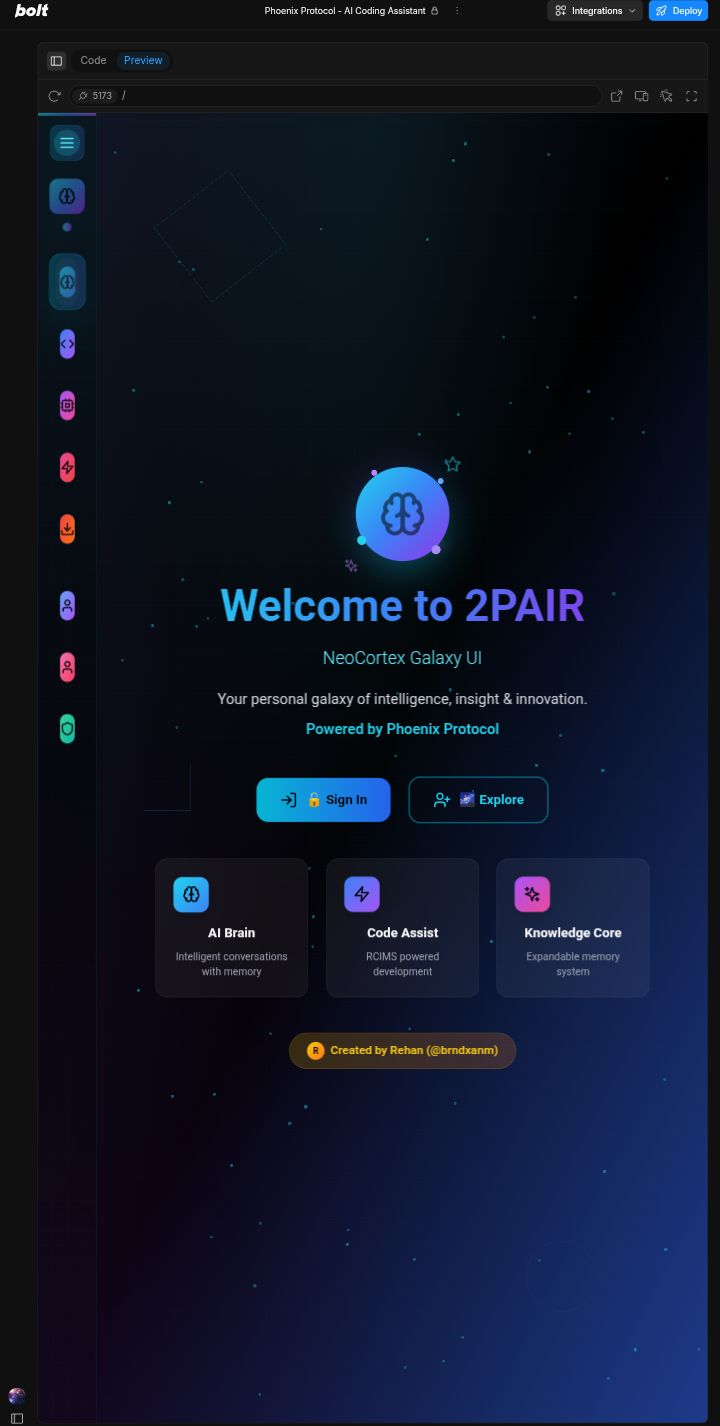
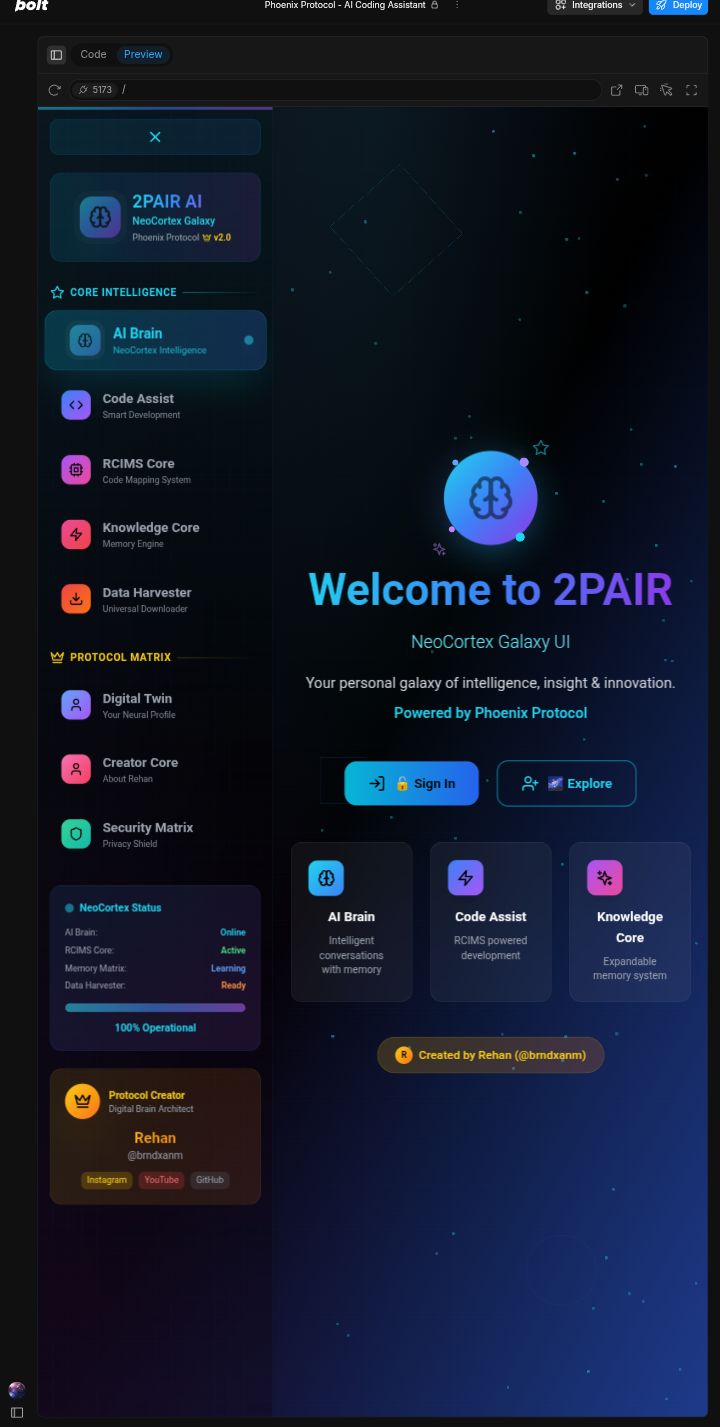
Preview by bolt ai Desboad without sign in
-
-
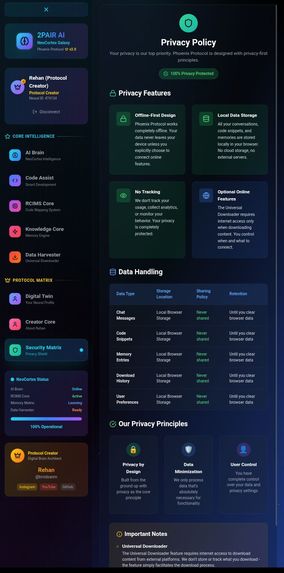
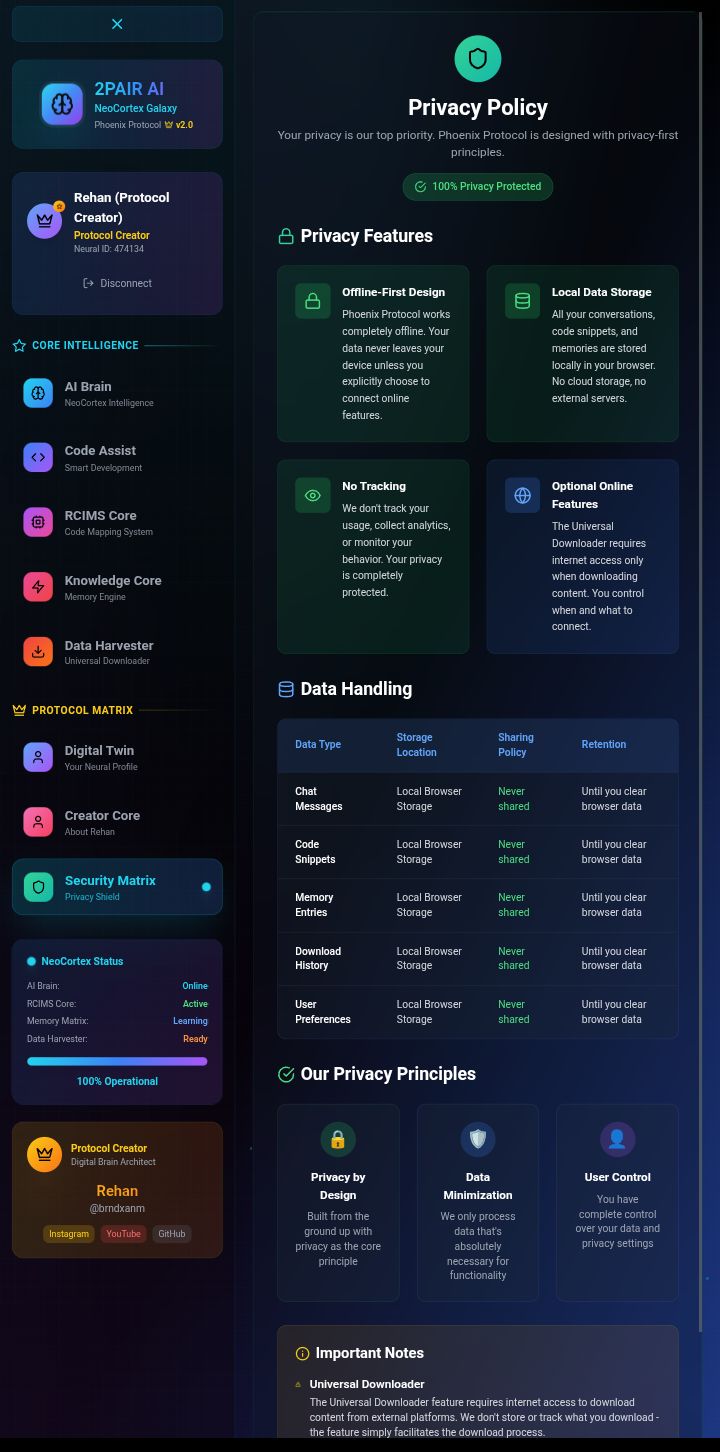
Privacy and policy, security of my phoenix protocol -ai
-
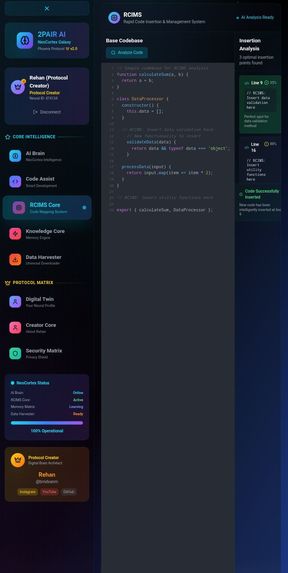
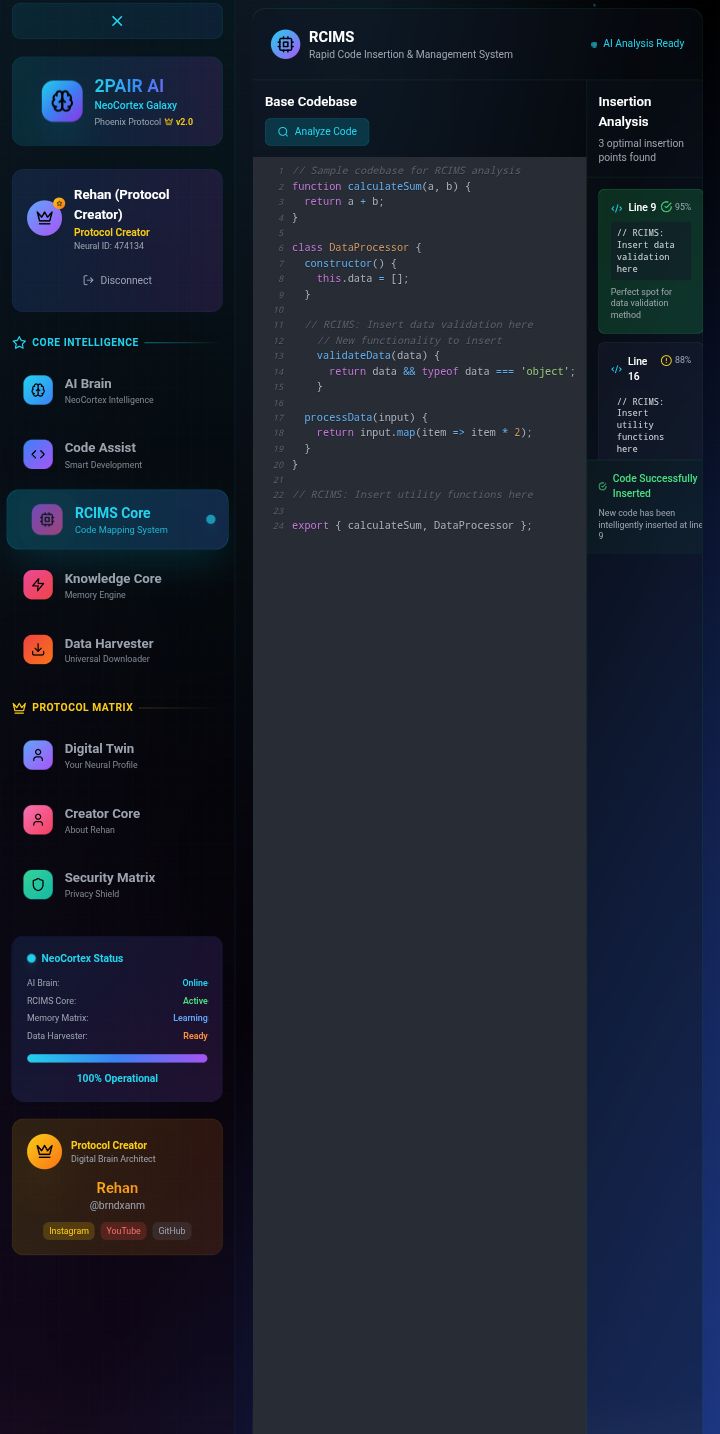
Bolt ai like code analyze compraser system
-
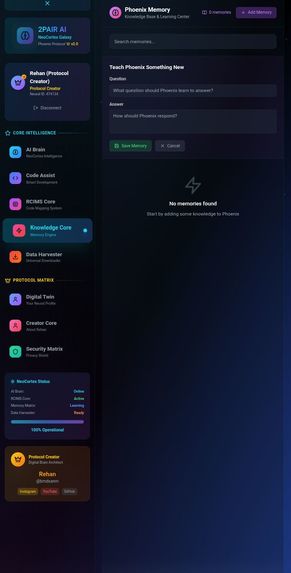
Preview etc
-
-
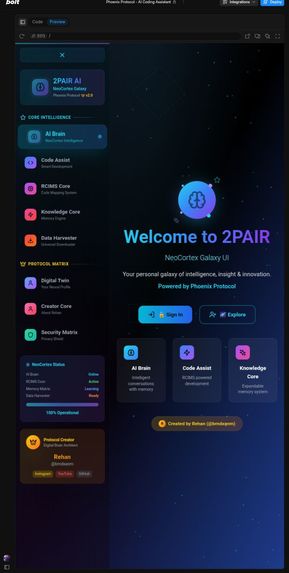
Without login
-
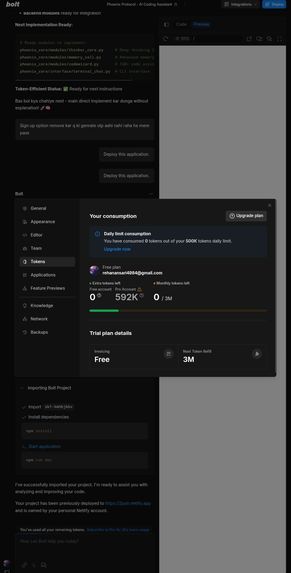
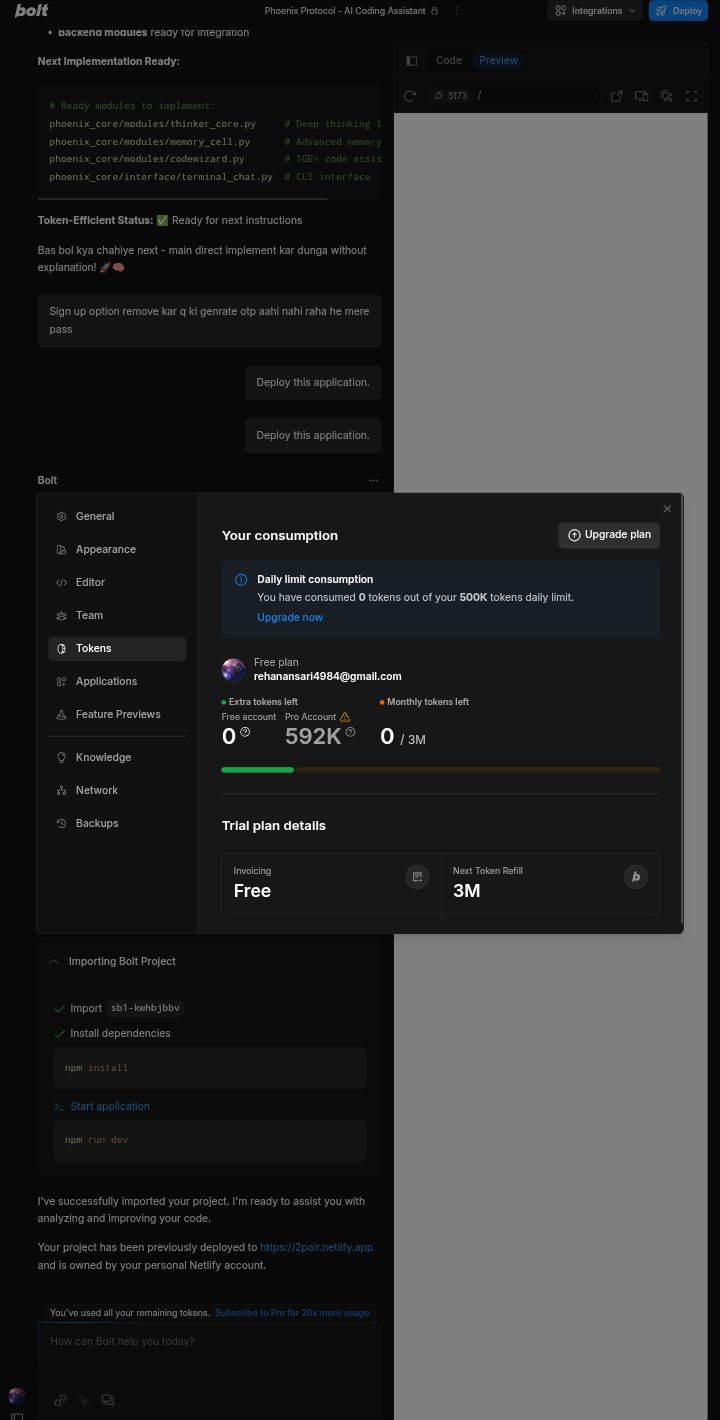
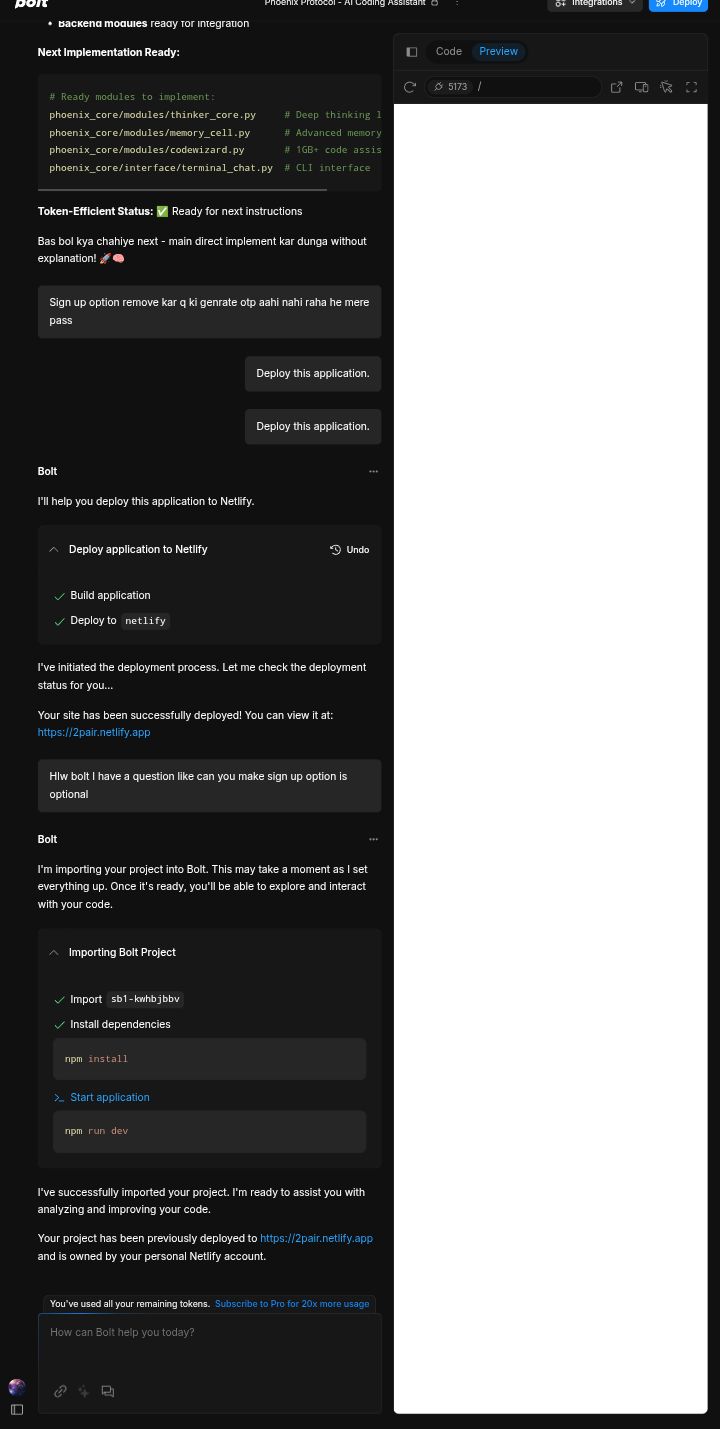
Bolt daily limited access now end
-
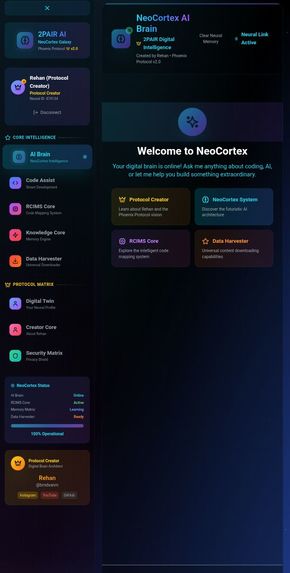
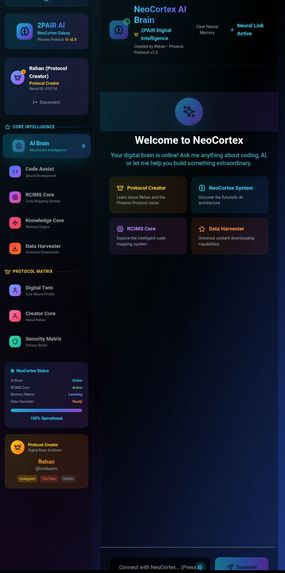
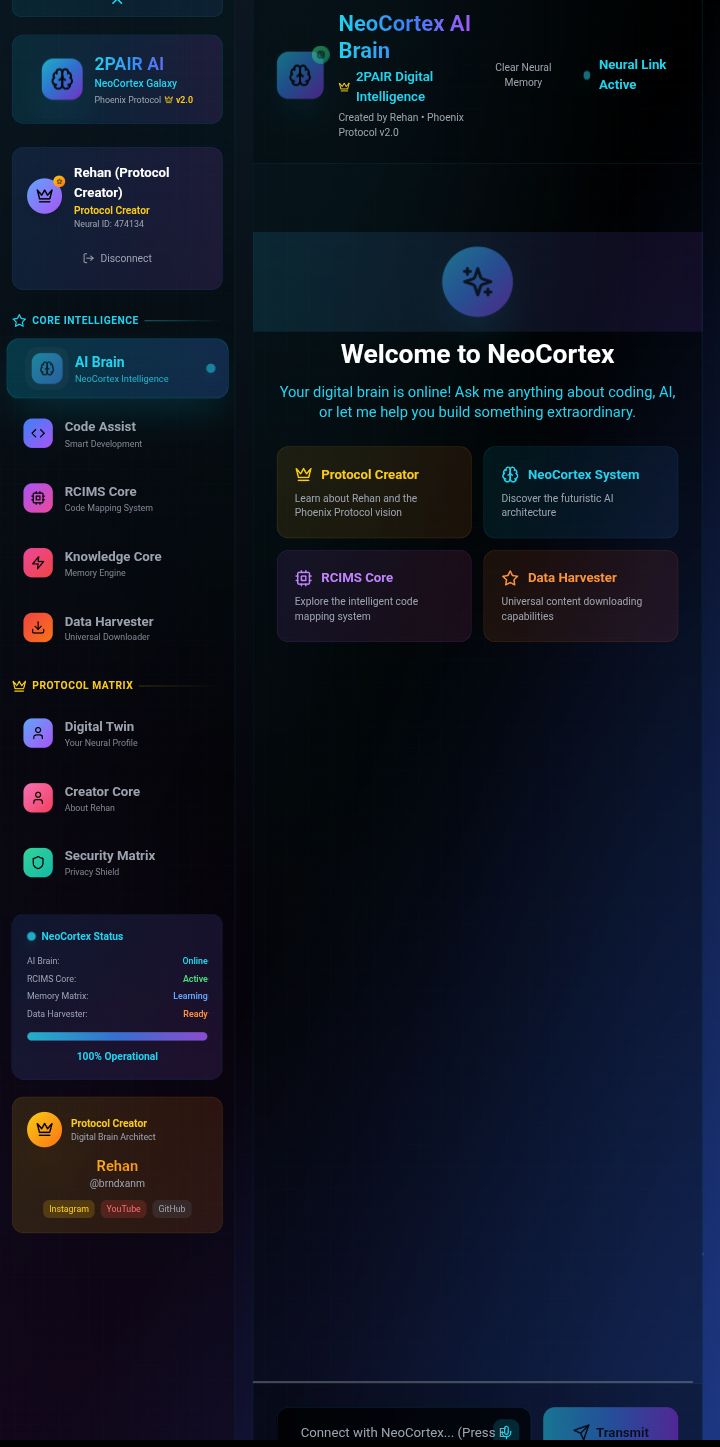
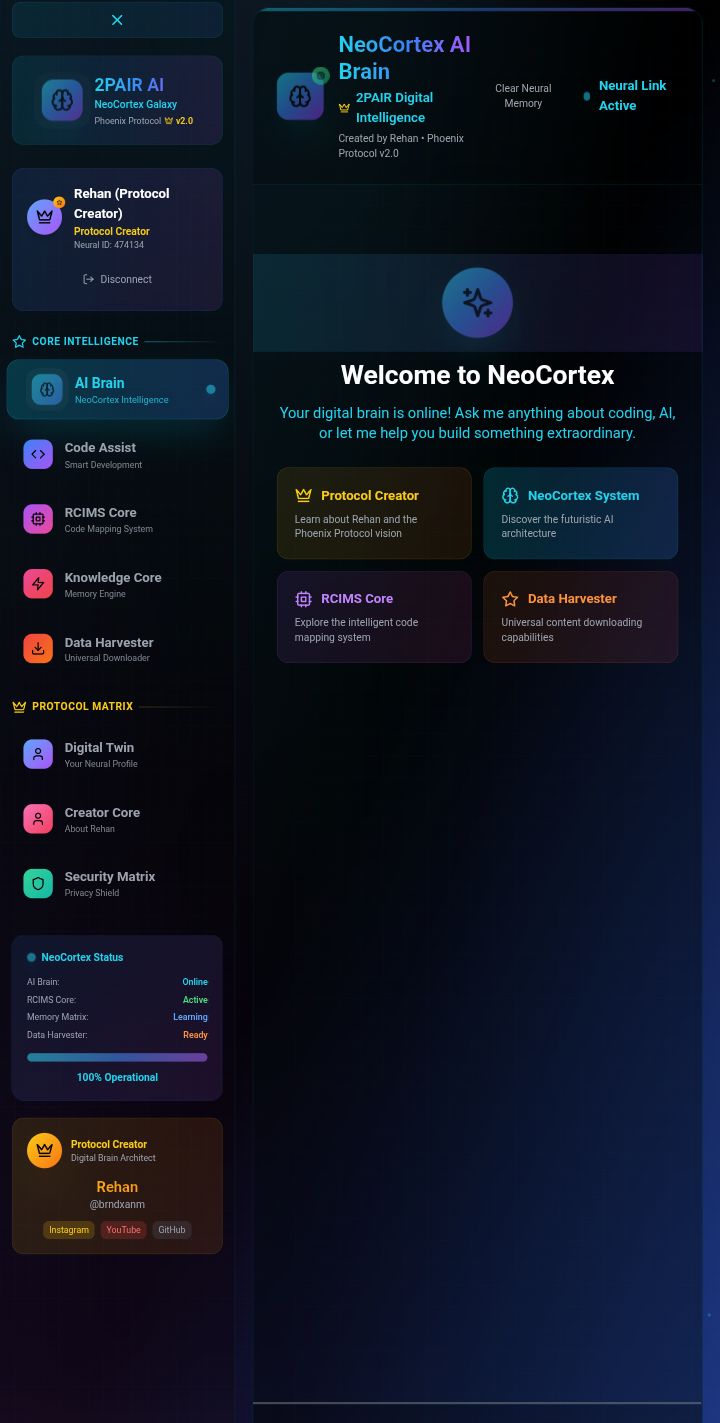
After log in
-
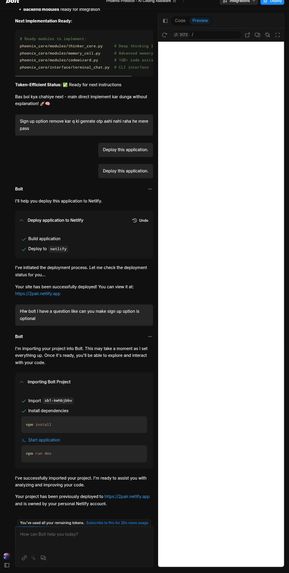
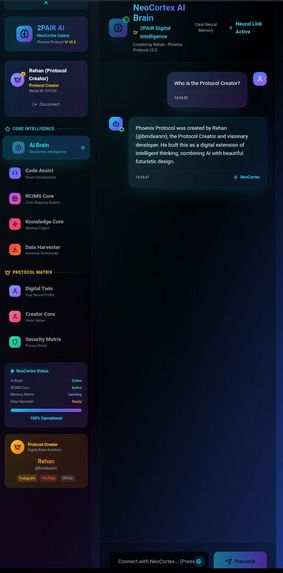
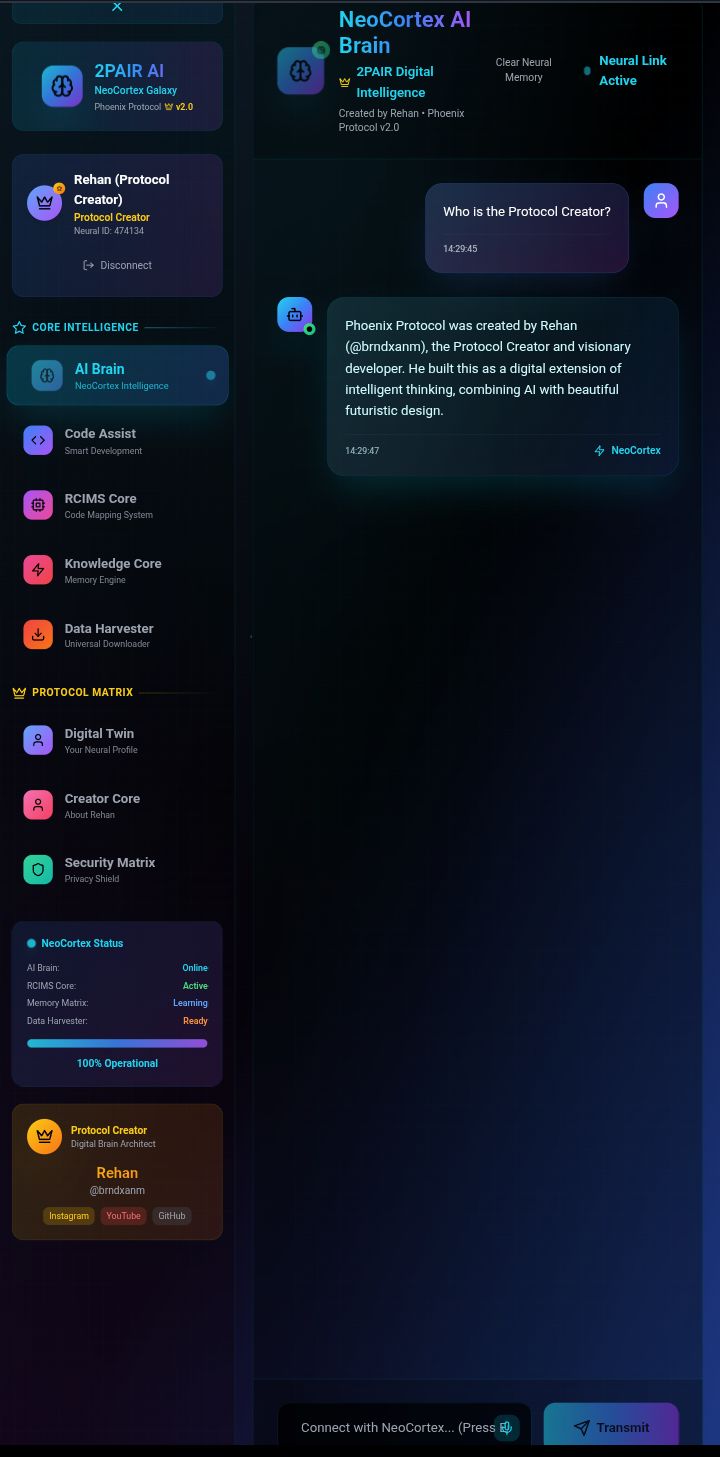
Bolt ai chat page
🔥 The Story Behind Phoenix Protocol
A Real Journey. A Real Struggle. A Real Vision.
🧠 What It Does
Phoenix Protocol is a self-learning, offline-first AI system that functions like a human brain.
Instead of relying on cloud APIs, it learns from:
Files (.txt, .md, .json)
Examples (e.g., math patterns, partial code)
Human corrections ... and builds knowledge it can use again — all without the internet.
It powers 3 core tools:
📦 Offline AI Brain – Understands files, grows smarter each time
💬 VIVA Assistant – A clean, behavior-aware chatbot for study help and respectful communication
🧩 Code Logic Learner – Analyzes broken/incomplete code and gives structure suggestions
🌍 Made for students, teachers, NGOs, and creators — anyone who wants real AI but can’t afford GPT tokens or tools.
🛠️ How We Built It
All built by one student, using zero paid APIs, with nothing but heart and persistence.
Tools & Platforms:
Bolt AI (Free Plan): Used for limited logic simulation
StackBlitz: To test UI and basic app flow
ST Studio: My self-created "brain lab" where I manually simulate AI memory using folders and .json/.txt files
Netlify: Hosted early frontend for public access → 2pair.netlify.app
Languages & Tech:
JavaScript, Python, Markdown, JSON
File-based modular learning system
Offline Learning Process:
Learns patterns like: 1+1=2 → infers 1+1+1=3
Updates stored memory files (editable)
Reflects and grows smarter each time
🧩 Challenges We Ran Into
💥 Token Limits: Free Bolt plan only gave ~10 logic tests/day. Often had to restart entire sessions.
🧍 Working Alone: No team, no mentor, no financial help. All ideas, testing, structure, docs — solo.
📴 True Offline AI Design: No cloud = no shortcuts. I had to manually simulate how AI "remembers" and "learns."
🎥 Video-to-Logic AI (in progress): Building a system that learns from videos offline — early, experimental.
📱 Low-end Hardware: No GPU, no fancy laptop, no subscriptions — just my will and local files.
👥 Limited Exposure: I'm not from Bangalore or Silicon Valley. I'm from a quiet place where few even know about AI.
🏆 Accomplishments We’re Proud Of
✅ Built a modular offline AI brain that stores logic in editable files
✅ Created a logic debugger that works with partial/incomplete code
✅ Released VIVA Assistant – promotes digital wellbeing & study focus
✅ Designed a version for NGOs like Blood Warriors to train people offline
✅ Hosted a public version of the frontend despite device limitations
✅ Got early feedback and interest from real users on Telegram & Discord
📚 What We Learned
That AI can work without OpenAI or cloud APIs — it just needs structure.
That learning by example (like humans do) is more ethical and understandable.
That persistence beats resources — I didn’t quit when my tools quit on me.
That even logic, language, and kindness can be engineered.
That sometimes the best innovation comes not from luxury, but from necessity.
🚀 What’s Next for Phoenix Protocol
Goal Description
🎥 Offline Video Learning Engine Convert lectures to notes + concepts, no internet 💬 VIVA Public Release Launch chatbot for study help, behavior reflection 🌐 Local Language Support Hindi, Bengali, Tamil packs for wider reach 📦 Pendrive Version Fully portable; works on any PC, no install needed 🧠 Reflective AI Memory AI that questions, corrects, and explains itself 🩸 NGO-Ready Toolkit Help organizations educate offline (Blood Warriors etc.) 🧑💻 Open Source Core Upload engine to GitHub; let others learn & build 💸 Grants & Support Seek ethical funding to scale, not sell out
🔥 The Story That Matters (What They Didn’t Ask — But You Should Know)
💔 The Real Background
I’m Rehan — a student from India. I don't have API keys. I’ve never bought ChatGPT+. I can’t even afford full access to the tools I build with.
I come from where:
Students drop out because of mobile recharge issues.
Power cuts are normal.
English = privilege.
Smart kids are ignored unless they have money or city connections.
So I didn’t wait for access.
I built my own AI lab — a folder system I call ST Studio. Inside it, .json, .txt, .md files act as brain cells. I handwrite memory. I simulate logic. I build — slowly, honestly, and with meaning.
🧠 Why I Built Phoenix Protocol
I asked:
“Why should real AI be locked behind credit cards, APIs, and servers?” “Why can’t we build something open, editable, offline, and free?”
And so I created something that doesn’t depend on power, privilege, or profit. I built something that thinks, learns, and can be taught by people like us.
🎯 Why This Project Deserves to Win
Because I didn’t buy this. I built it.
Because I didn’t fake screenshots. I wrote, tested, and broke logic every day until something clicked.
Because I’m not here for fame. I’m here for change.
If I win:
I’ll get the tools I need to build faster and help others
I’ll launch the pendrive version so kids in rural schools can have their own AI
I’ll open-source everything so no one has to start from zero again
🧡 Final Line
Not everyone starts with equal tools. But Phoenix Protocol proves that even from nowhere, something powerful can rise.
It’s not just a project. It’s my rebellion. It’s my brain. It’s hope, turned into code.
🧾 Honest Review from the Creator (Rehan – Student Developer, India)
“Phoenix Protocol is not just a project… it's a foundation under construction.”
✅ What Works Right Now (as of July 2025)
✅ The core idea is real and structured: everything is modular, editable, and offline-first.
✅ Frontend is live: You can check the design and basic sections here → https://2pair.netlify.app
✅ Manual Brain Logic Exists: My system (“ST Studio”) simulates learning using .json, .txt, .md files like memory blocks.
✅ Logic Learning Prototype is working for small math/code examples using Bolt AI.
✅ Documentation, structure, and learning flow are deeply thought out — I know exactly how each part should grow.
✅ Health NGO adaptation (Blood Warriors) has been drafted — how AI can explain blood donation offline.
🔧 What’s Still Missing / Under Construction
These things are either partially done or not done yet — but they’re in my build queue:
❌ Real AI Brain UI Not Wired Yet → Right now, the AI backend logic is only simulated in ST Studio, not live inside the site.
❌ Offline Video-to-Knowledge Learning Engine → This is the most ambitious part — still experimenting with how AI can learn from lectures without the internet.
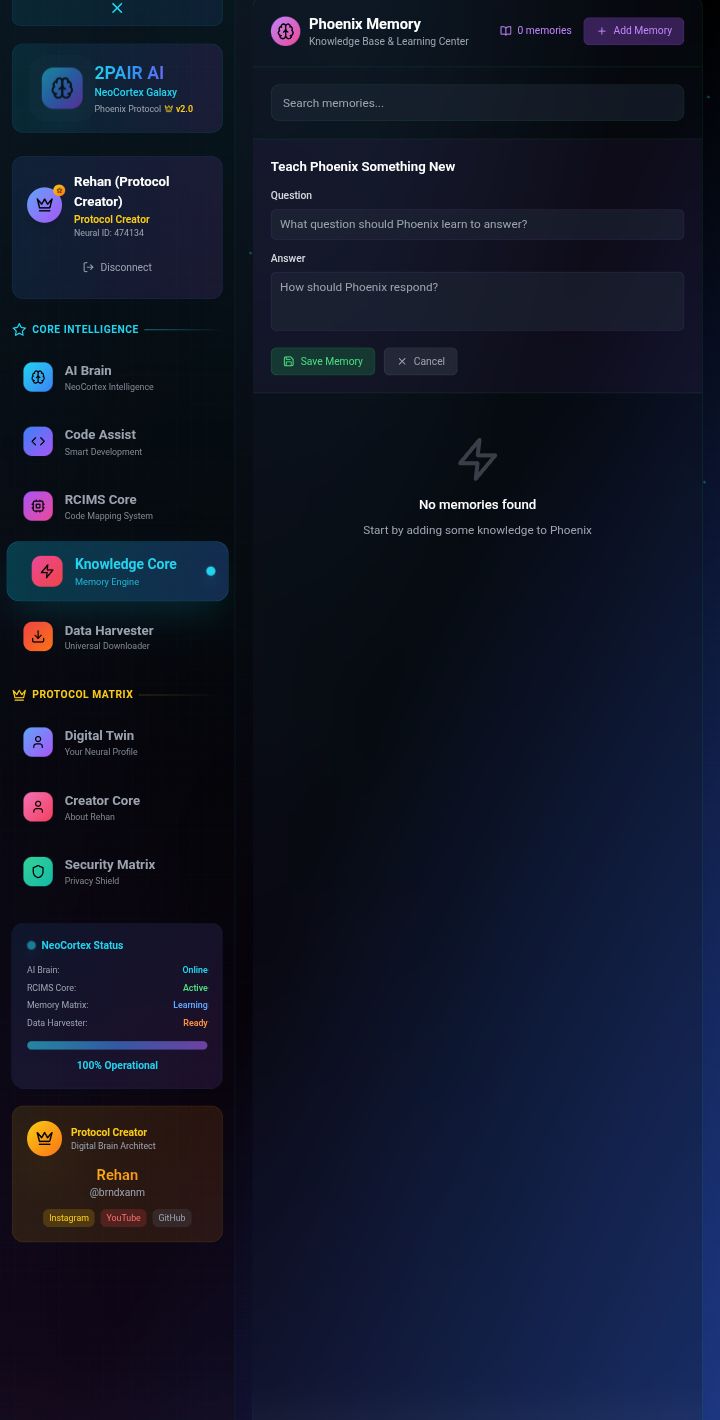
❌ Knowledge File Editor Inside UI → I can edit .json files manually, but I haven’t yet built a live interface for that inside the site.
❌ Dynamic Chat Memory → VIVA Assistant can be tested, but memory reflection & knowledge correction is not live yet.
❌ Mobile Optimization & Pendrive Export → I want it to run from a USB stick on any computer — not there yet.
❌ Local Language Support (Hindi, Bengali) → Still planning language files and structure; translation engine is not live.
❌ Real-time File Upload Learning → I want users to upload .pdf, .txt, .mp4 and AI learns — not working yet, just a concept right now.
🔮 What’s Realistically Coming Soon
If I get tools, time, or support, I will prioritize:
🎯 Building the AI Memory UI (view + edit knowledge in-browser)
🎯 Finishing the VIVA Assistant beta (for study + respectful communication)
🎯 Starting the video-to-logic prototype (even if small)
And in the long run:
Make it open-source
Create AI bundles for schools, NGOs, students
Launch the pendrive version that needs no install or net
⚖️ Why I’m Sharing This
I want judges, mentors, and supporters to know:
“This is not a finished product — it’s a living brain under construction.”
It’s raw, real, and honest.
I don’t fake demos
I don’t paste other people’s work
I won’t lie to win
Instead, I’m building what others only talk about:
An offline, editable AI brain
Built for students like me
Made without money, just logic
🙏 Final Message
Phoenix Protocol is still a structure, not a full system yet. But the heart, blueprint, and mission are already working.
All I ask is:
If you see potential, support it.
If you’re inspired, share it.
If you doubt it, test it.
This is just the beginning — the foundation is ready, and I will keep building until this AI walks on its own.
Built With
- and
- and-concept-relationships-**html/css**-?-interface-mockups-and-prototype-design-**stackblitz**-?-online-prototyping
- and-memory-representation-**json**-?-storing-ai-memory
- and-module-development-**discord**-?-community-management
- and-supporter-coordination-**github**-?-project-backups
- file-maps
- folder-management
- javascript**-?-core-logic-and-offline-assistant-scripting-**python**-?-for-advanced-logic-simulation-and-file-based-learning-engine-**markdown**-?-knowledge-formatting
- logic-chains
- logic-processing
- open-source
- sharing-source-code
- testing-frontend/backend-logic-**bolt-ai**-?-ai-thinking-layer
- testing-viva-assistant-in-live-chats-**telegram**-?-updates
- token-based-simulation-**st-studio**-*(offline-workspace)*-?-local-system-for-offline-development-and-experimentation-**vs-code**-?-file-editing
- training-structure
- user-feedback


Log in or sign up for Devpost to join the conversation.