-
-
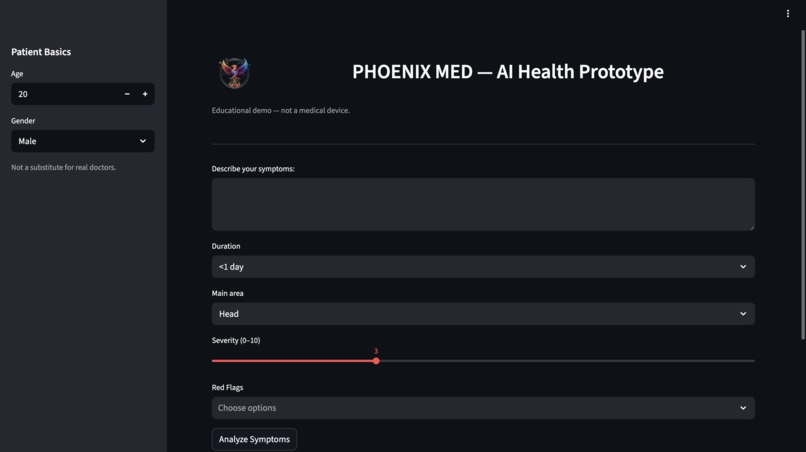
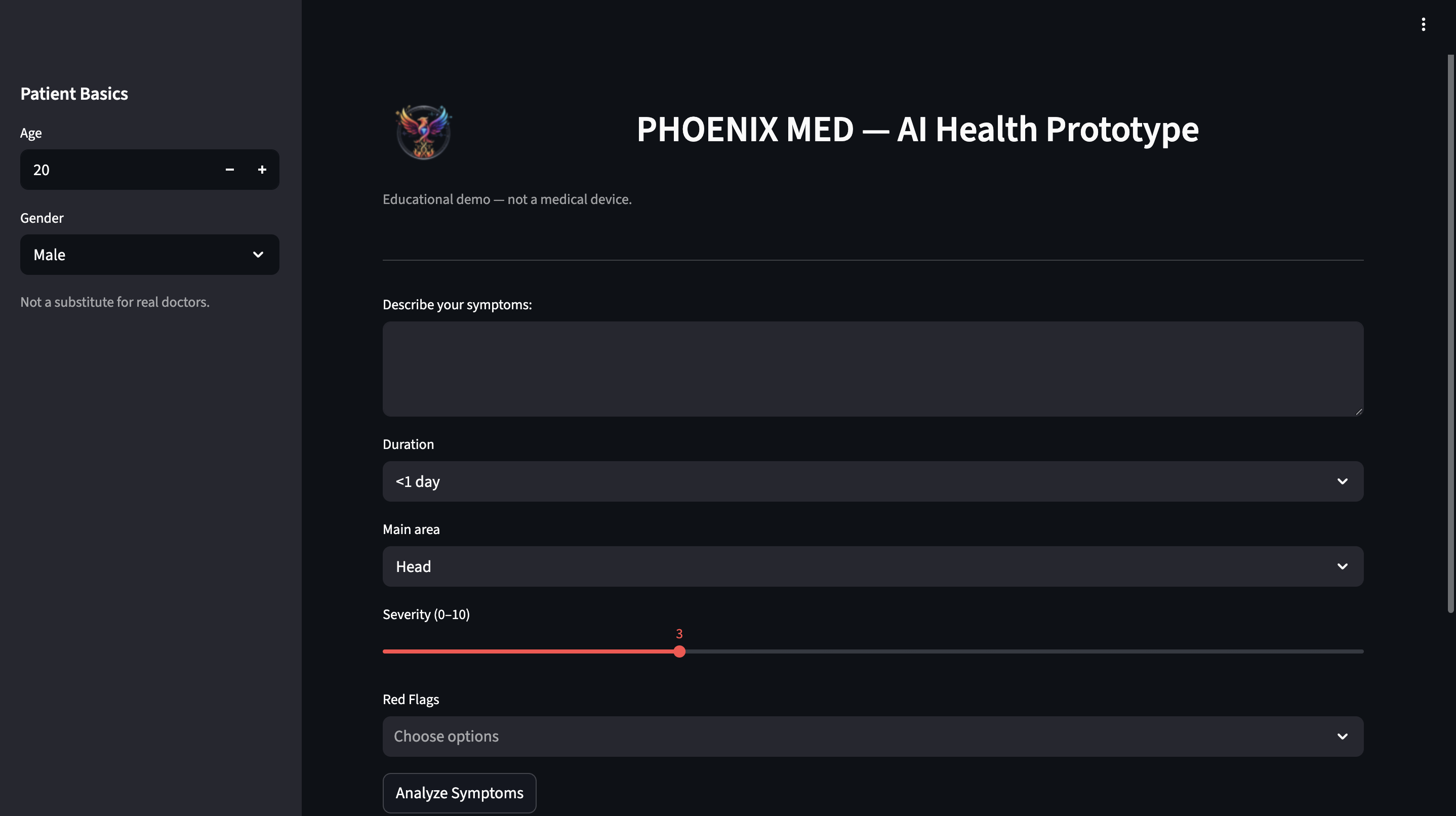
PHOENIX MED
🌿 About the Project — Phoenix Med 💡 Inspiration
Phoenix Med was inspired by a simple observation: people often turn to the internet for health information but end up overwhelmed, confused, or misinformed. I wanted to create a system that could provide clear, conversational, and responsible health guidance while encouraging users to seek professional care when necessary. The goal was to make health knowledge more accessible without replacing medical experts.
🧠 What I Learned
Building Phoenix Med helped me understand how AI can be applied in sensitive domains like healthcare. I learned:
The importance of ethical AI design
How to structure responses to avoid misinformation
The balance between helpfulness and safety
Techniques in natural language processing for context-aware conversations
I also learned that clarity is more important than complexity when users are seeking health-related information.
🛠️ How I Built It
Phoenix Med was developed as an AI-powered conversational assistant focused on:
Understanding user queries
Providing general symptom awareness
Offering wellness guidance
Avoiding diagnostic claims
The system uses natural language understanding to process user input and generate responses that are informative yet cautious. The logic follows a structured response model:
User Query → Intent Detection → Context Analysis → Safe Response Generation User Query→Intent Detection→Context Analysis→Safe Response Generation
This ensures the assistant remains helpful while maintaining responsible boundaries.
⚡ Challenges I Faced
One of the biggest challenges was ensuring accuracy without overstepping into diagnosis. Health is a sensitive field, and designing AI that informs without misleading required careful planning.
Other challenges included:
Avoiding hallucinated medical advice
Simplifying complex medical concepts
Designing a conversational tone that feels supportive, not robotic
Ensuring user trust while maintaining safety limits
🚀 Final Thoughts
Phoenix Med represents my exploration of how AI can support everyday decision-making in a responsible way. The project taught me that building AI for real-world impact requires not only technical skills but also empathy, ethics, and user-centered thinking. It’s a step toward creating technology that empowers people with knowledge while respecting professional boundaries.
Built With
- llma
- render


Log in or sign up for Devpost to join the conversation.