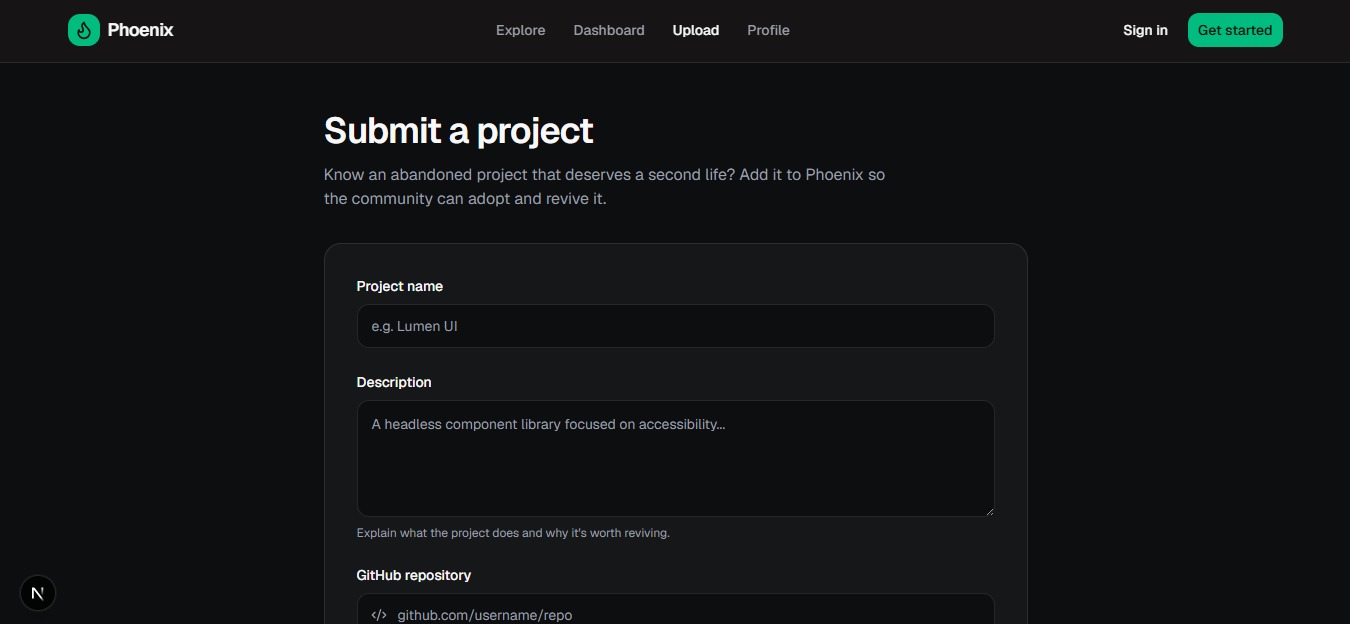
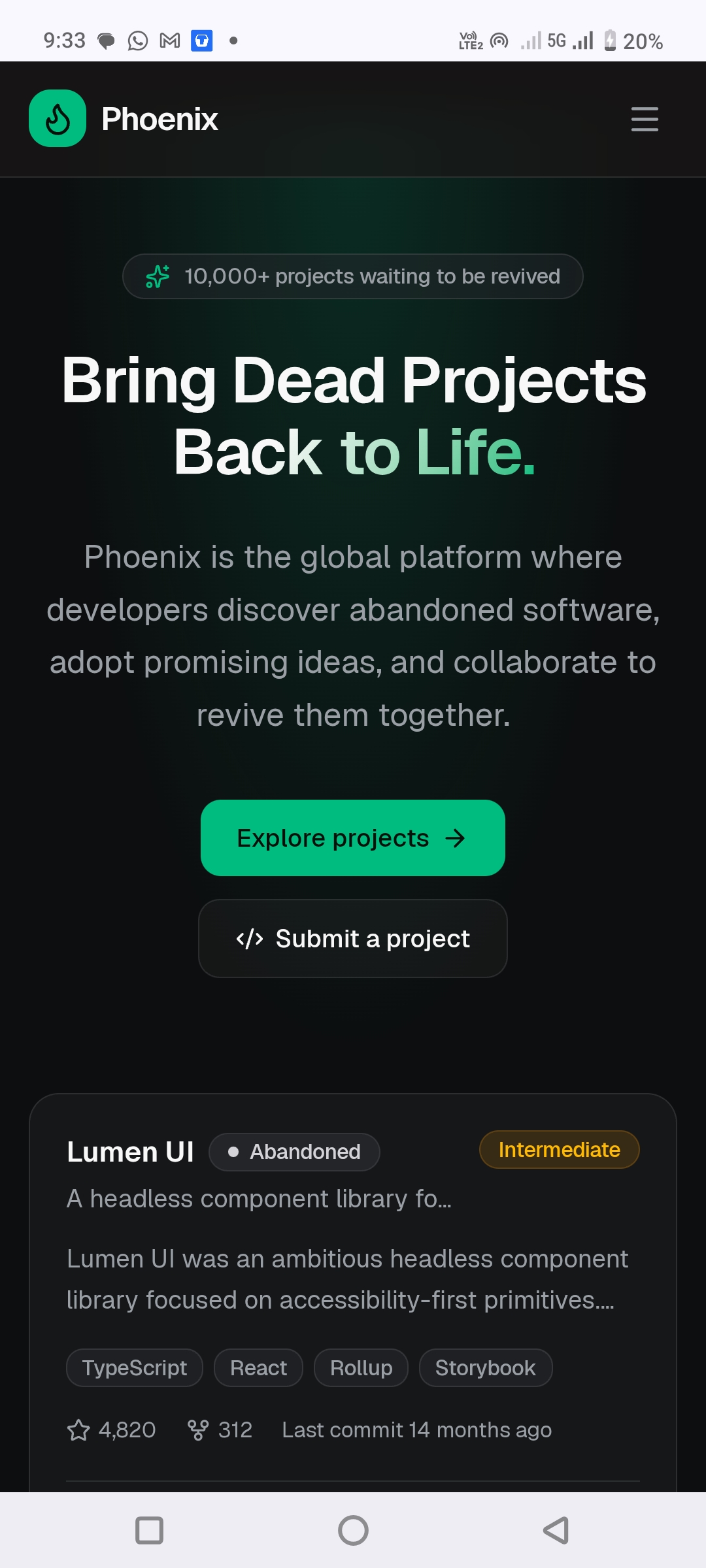
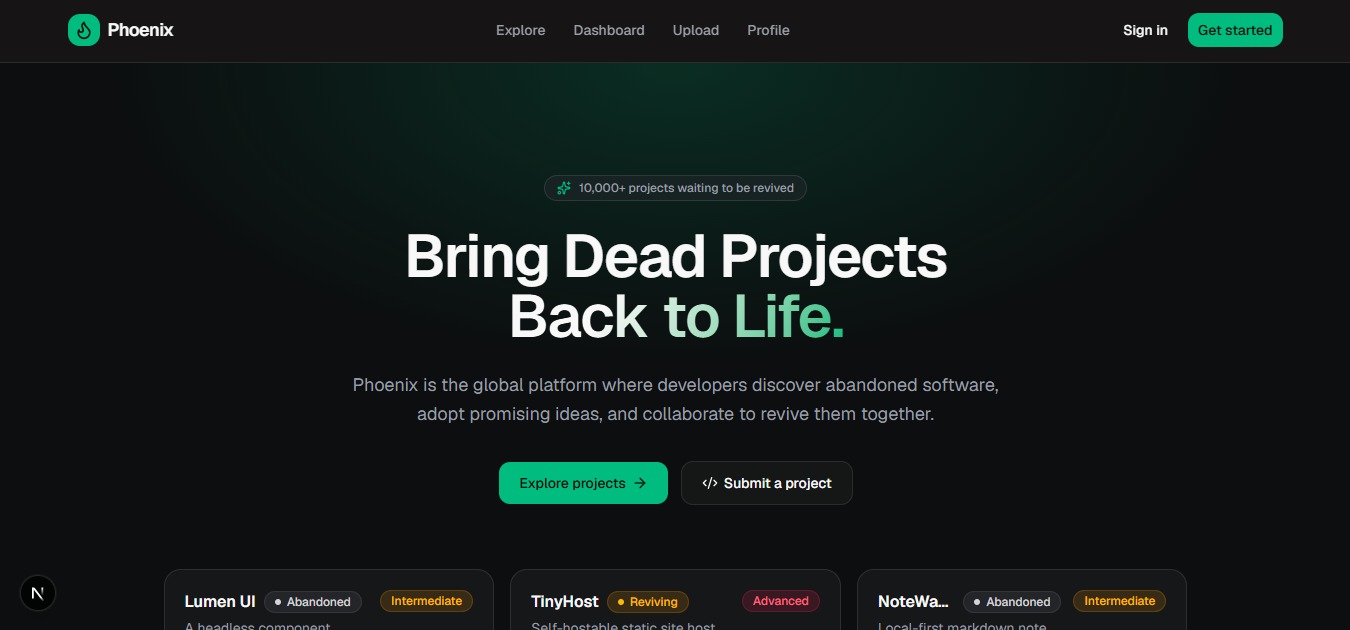
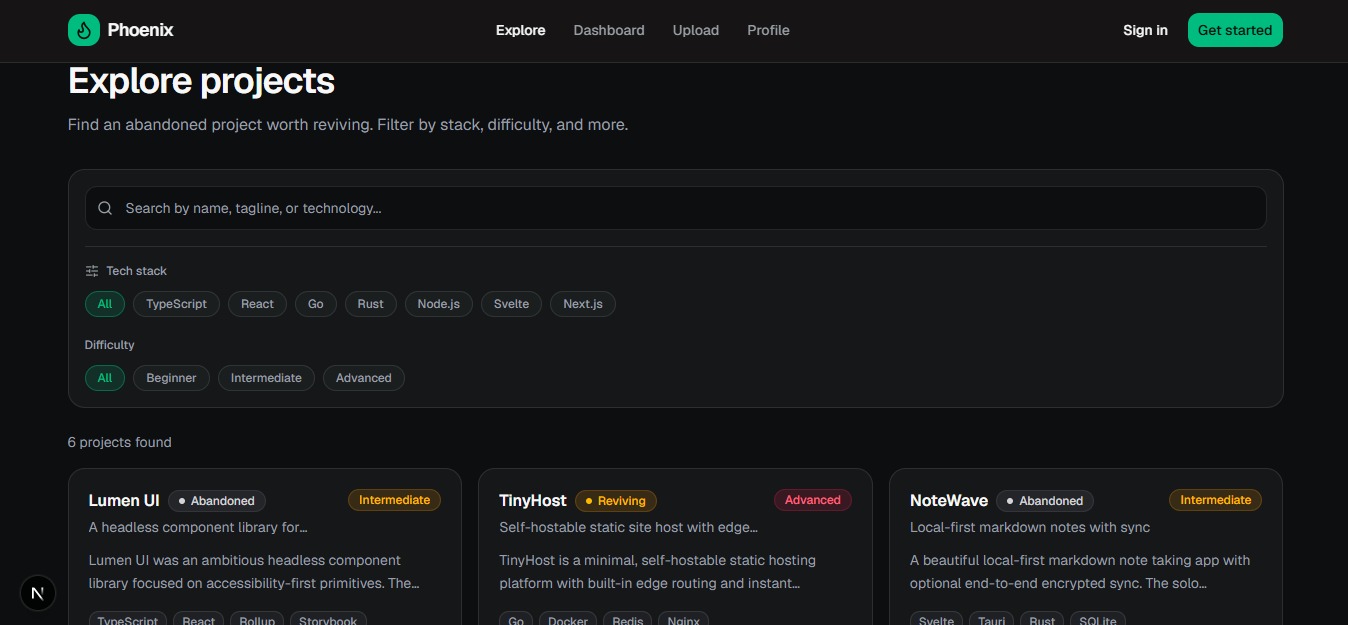
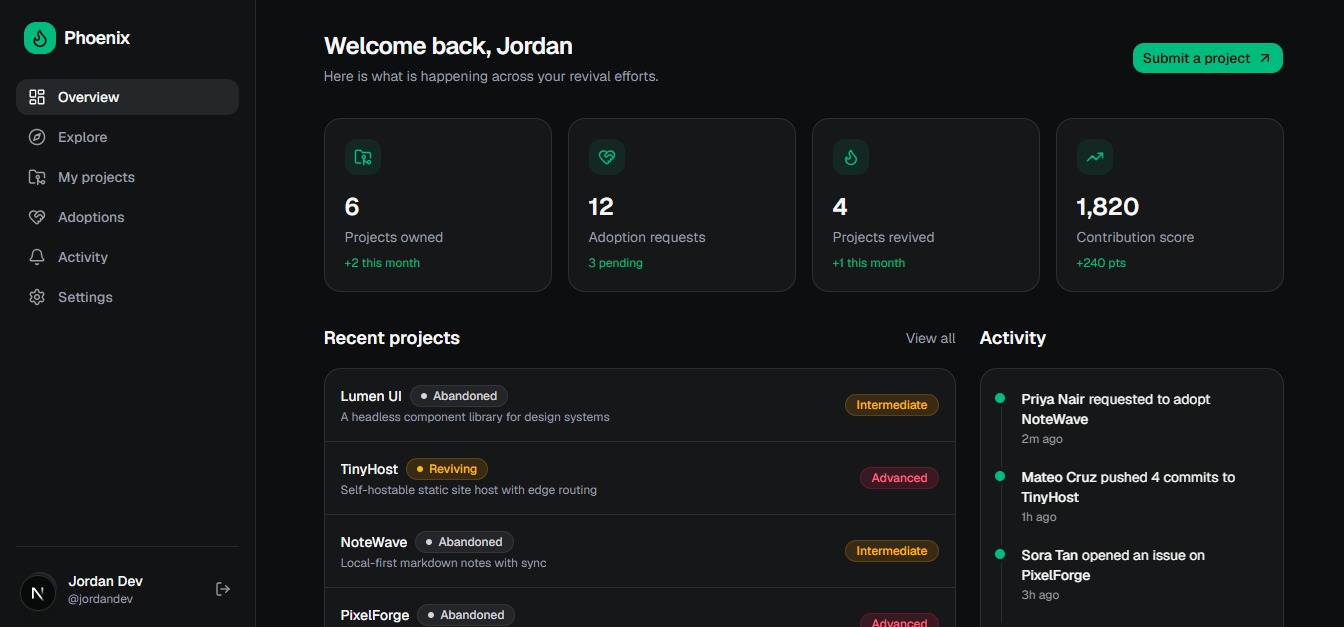
Managing multiple projects often becomes messy for developers, especially when everything is scattered across notes, tools, and random trackers. I wanted to build a simple, clean, and visual project management tool that helps developers focus on their work instead of managing complexity
While building this project, I learned how to:
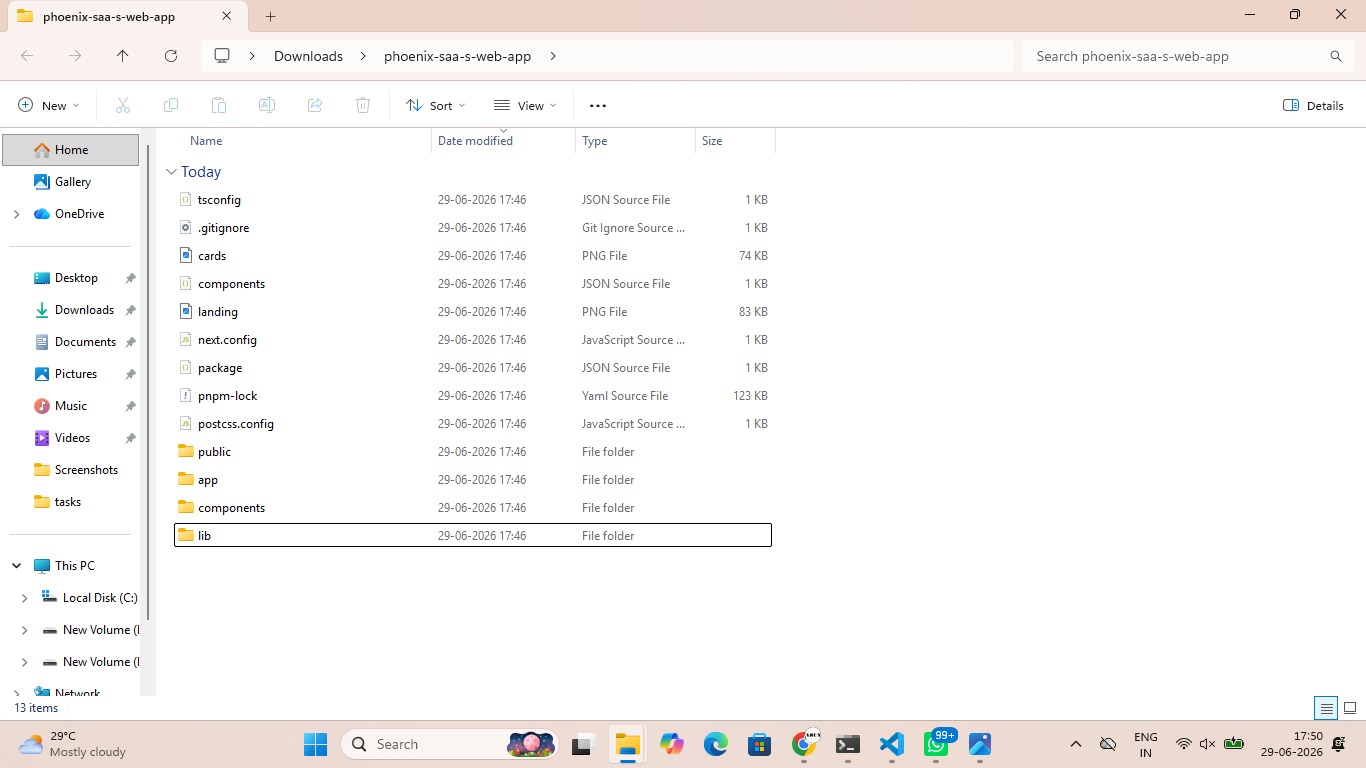
Structure a modern Next.js application Design reusable UI components using Tailwind CSS Work with a real-world project structure similar to SaaS applications Convert a UI design (generated using v0) into a working frontend application
PhoenixPM was built using:
Next.js (App Router) for frontend structure and routing React components for modular UI design Tailwind CSS for styling and responsiveness v0-generated UI as the base design system
One of the main challenges was:
Translating a generated UI into a fully structured Next.js project Managing component structure and layout consistency Handling missing backend integration while keeping the UI functional and realistic
That’s what inspired Phoenix a lightweight and intuitive dashboard for organizing projects in one place.
I also improved my understanding of how real-world dashboards are structured in production applications.
Future improvements planned:
Backend integration with AWS or DynamoDB Project creation and tracking system AI-powered project insights and recommendations User collaboration features
Built With
- next.js
- node.js
- react
- tailwind
- typescript
- v0
- vercel


Log in or sign up for Devpost to join the conversation.