-
-
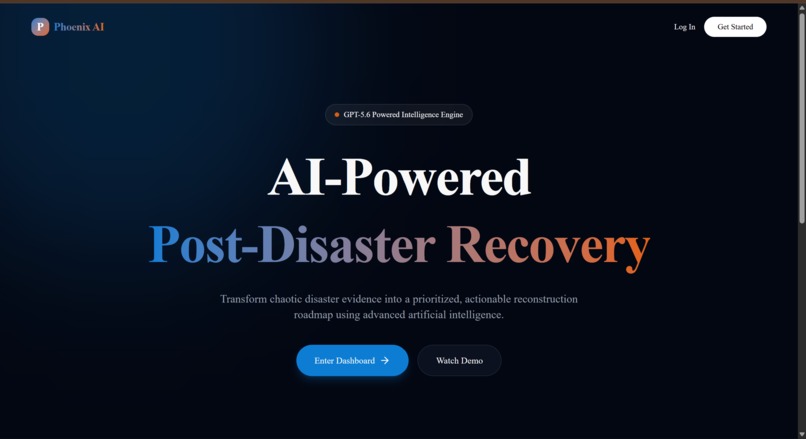
Intro Page
-
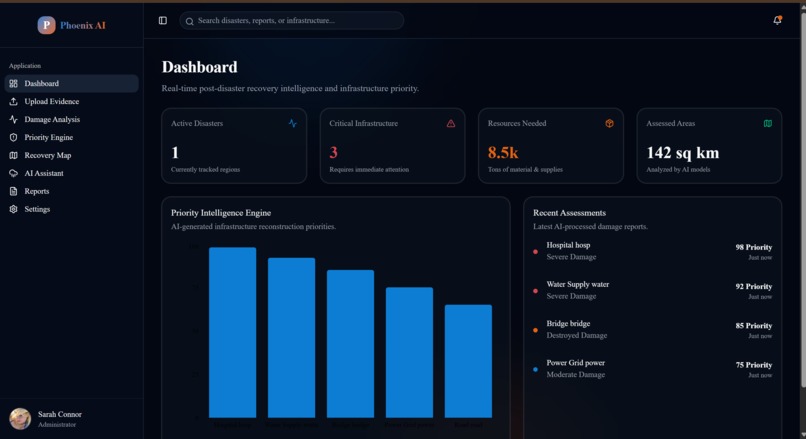
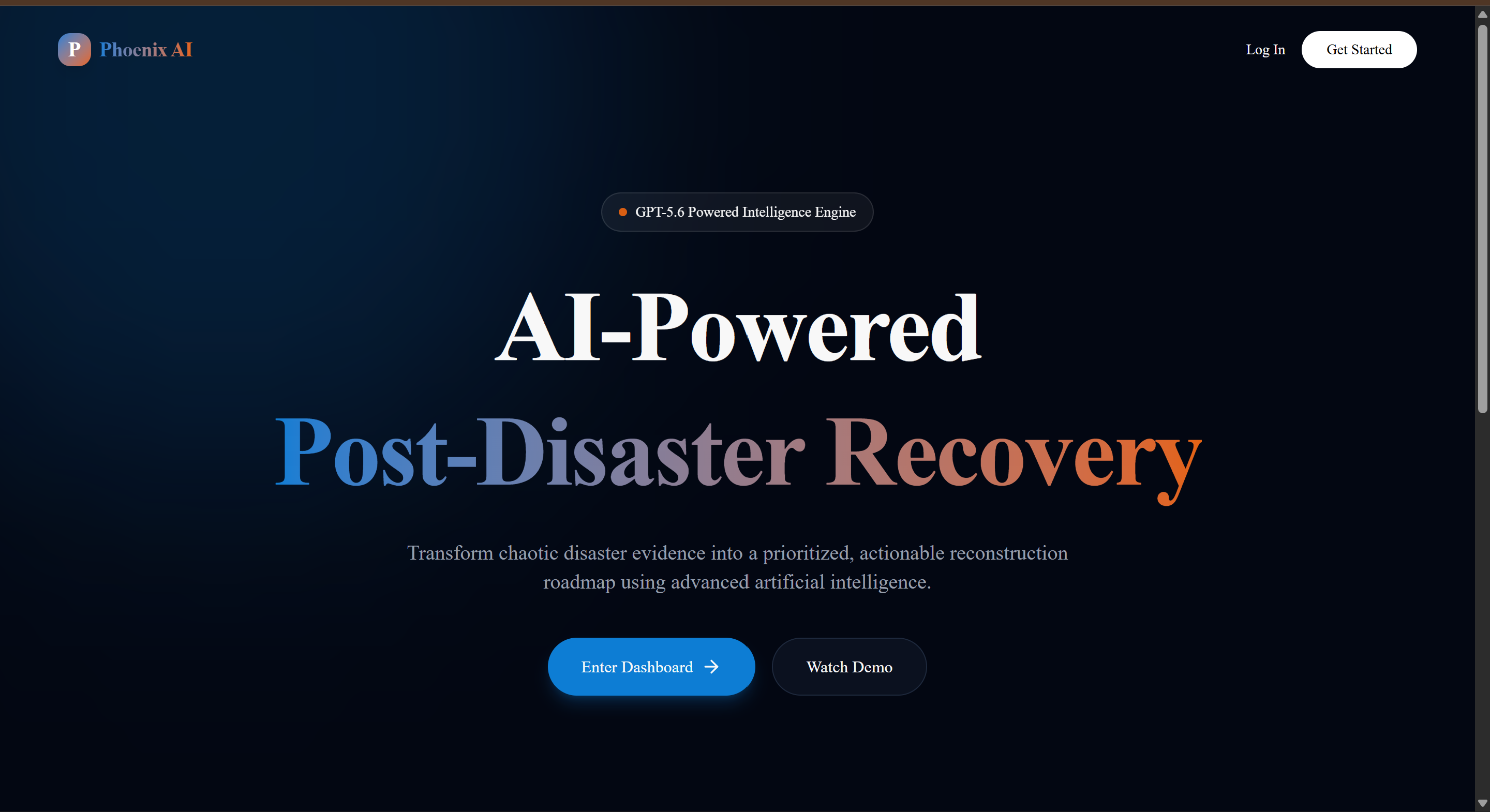
Monitor disaster damage, prioritize reconstruction, and allocate resources with AI.
-
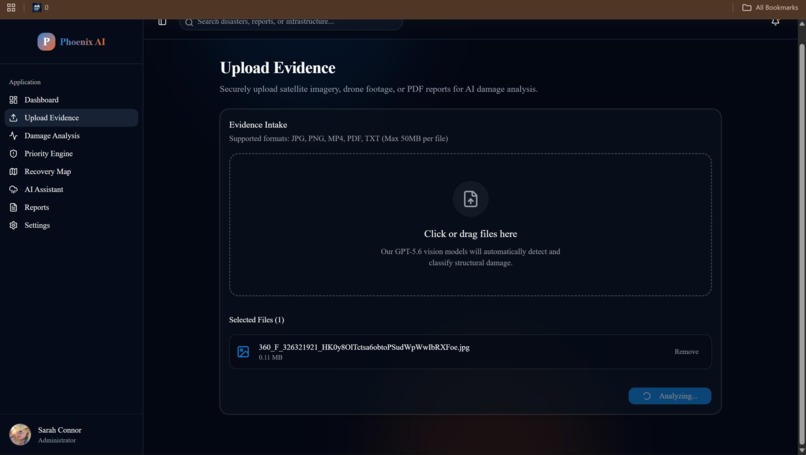
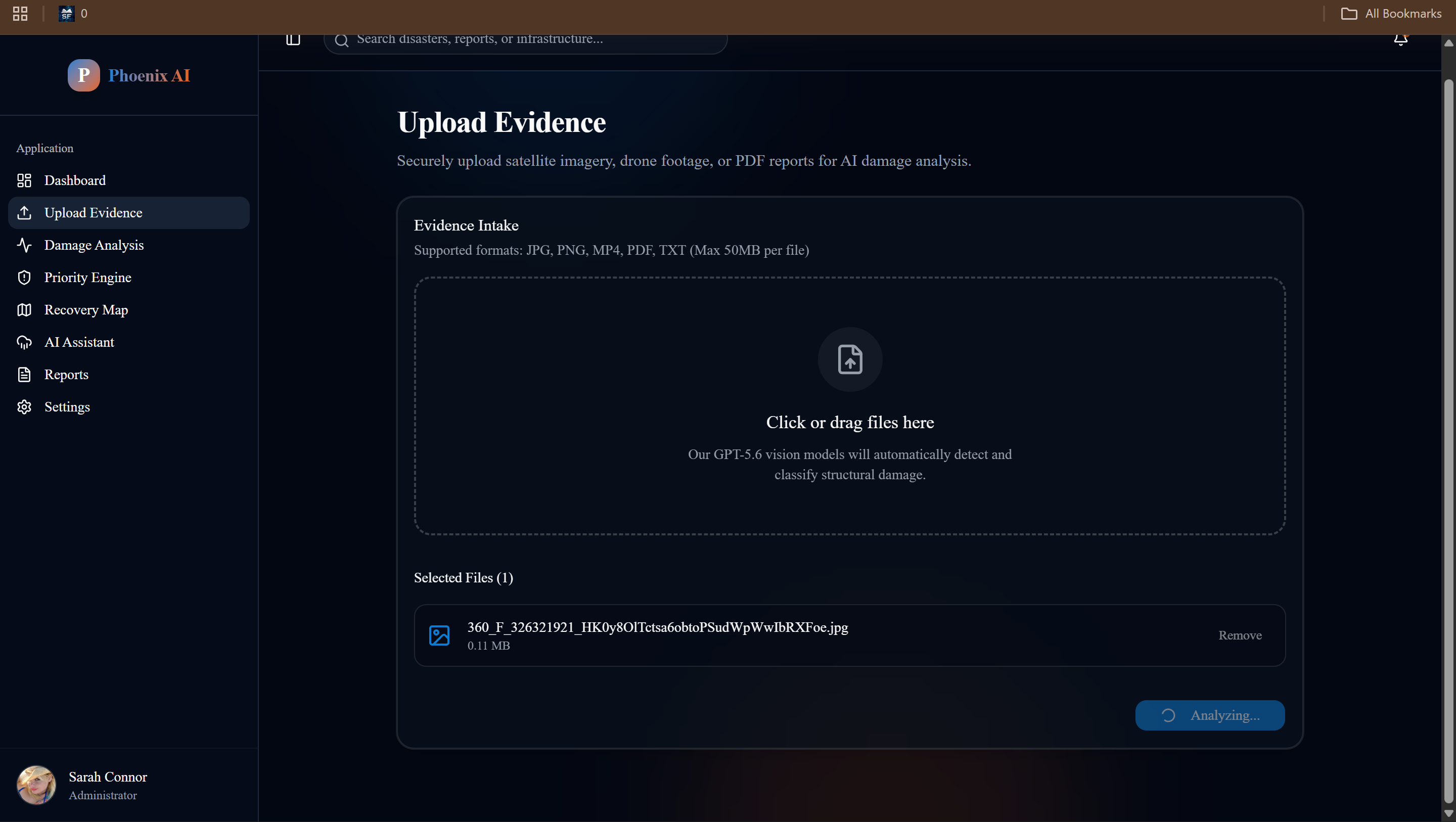
Upload disaster evidence for AI-powered damage analysis, recovery planning, and priority assessment.
-
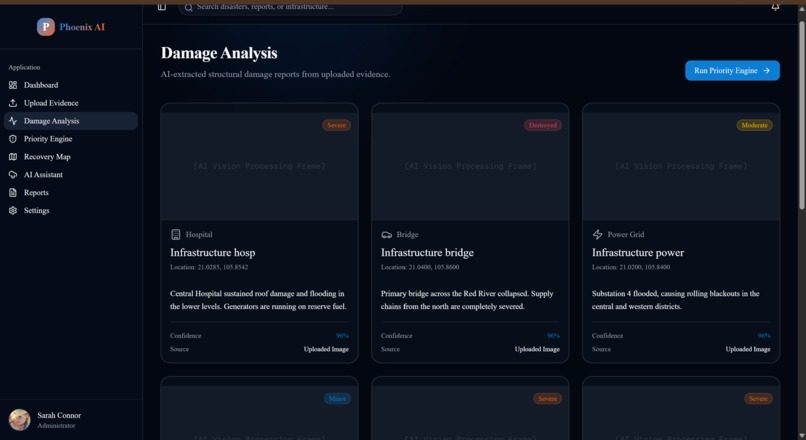
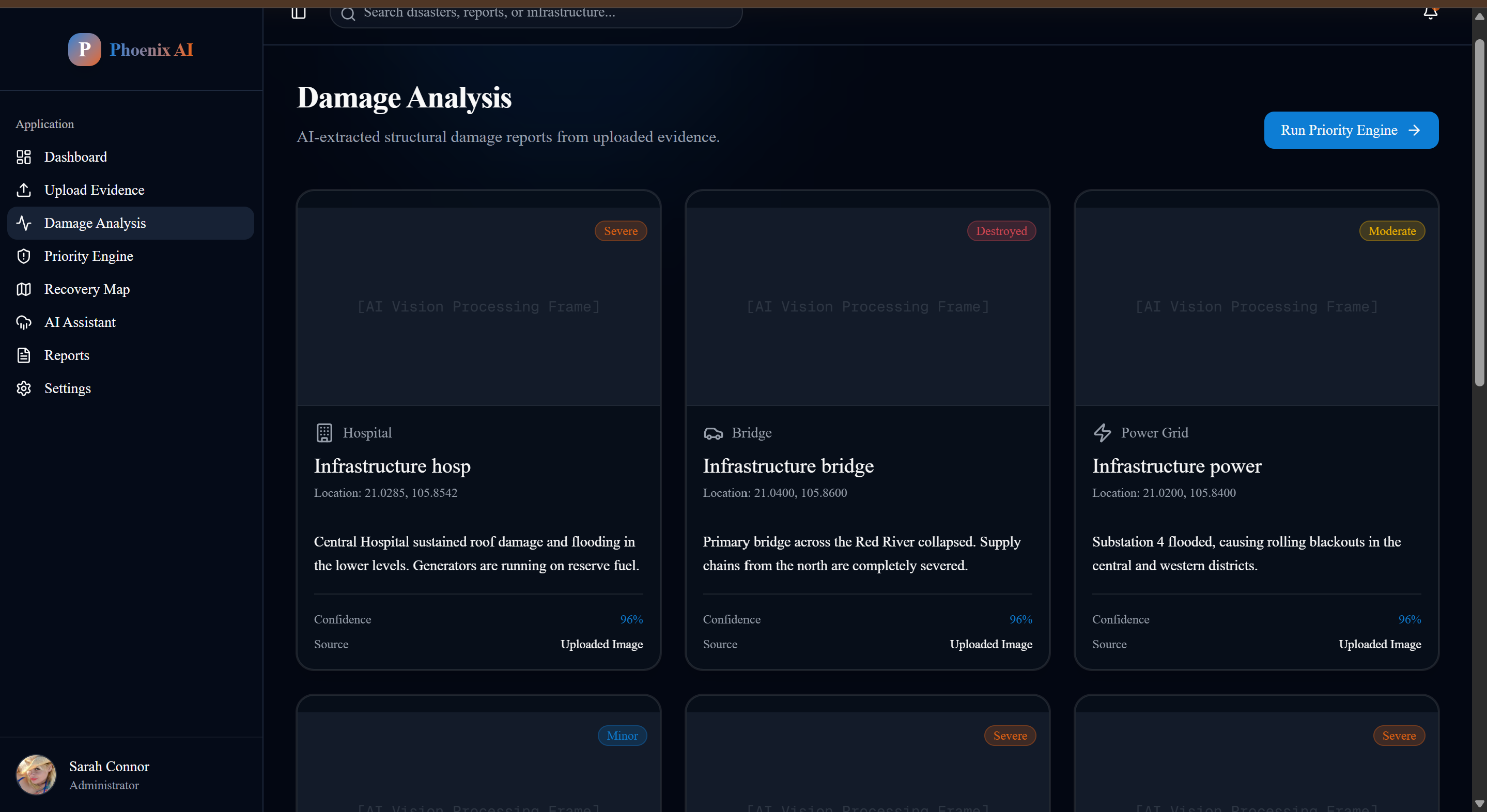
AI analyzes uploaded disaster evidence to detect damage and assess infrastructure impact.
-
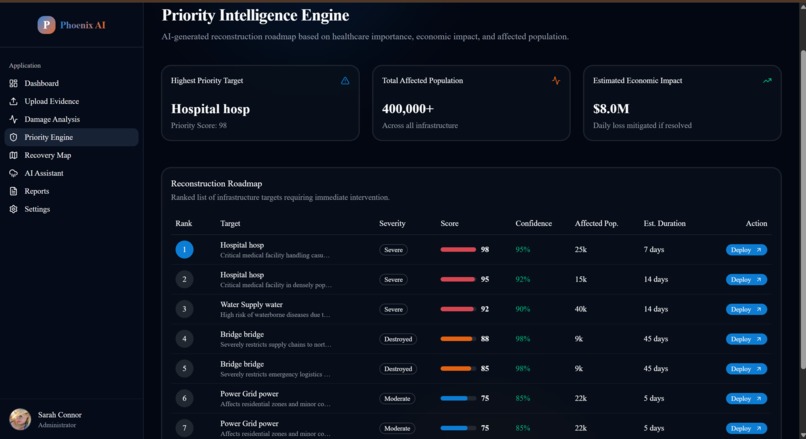
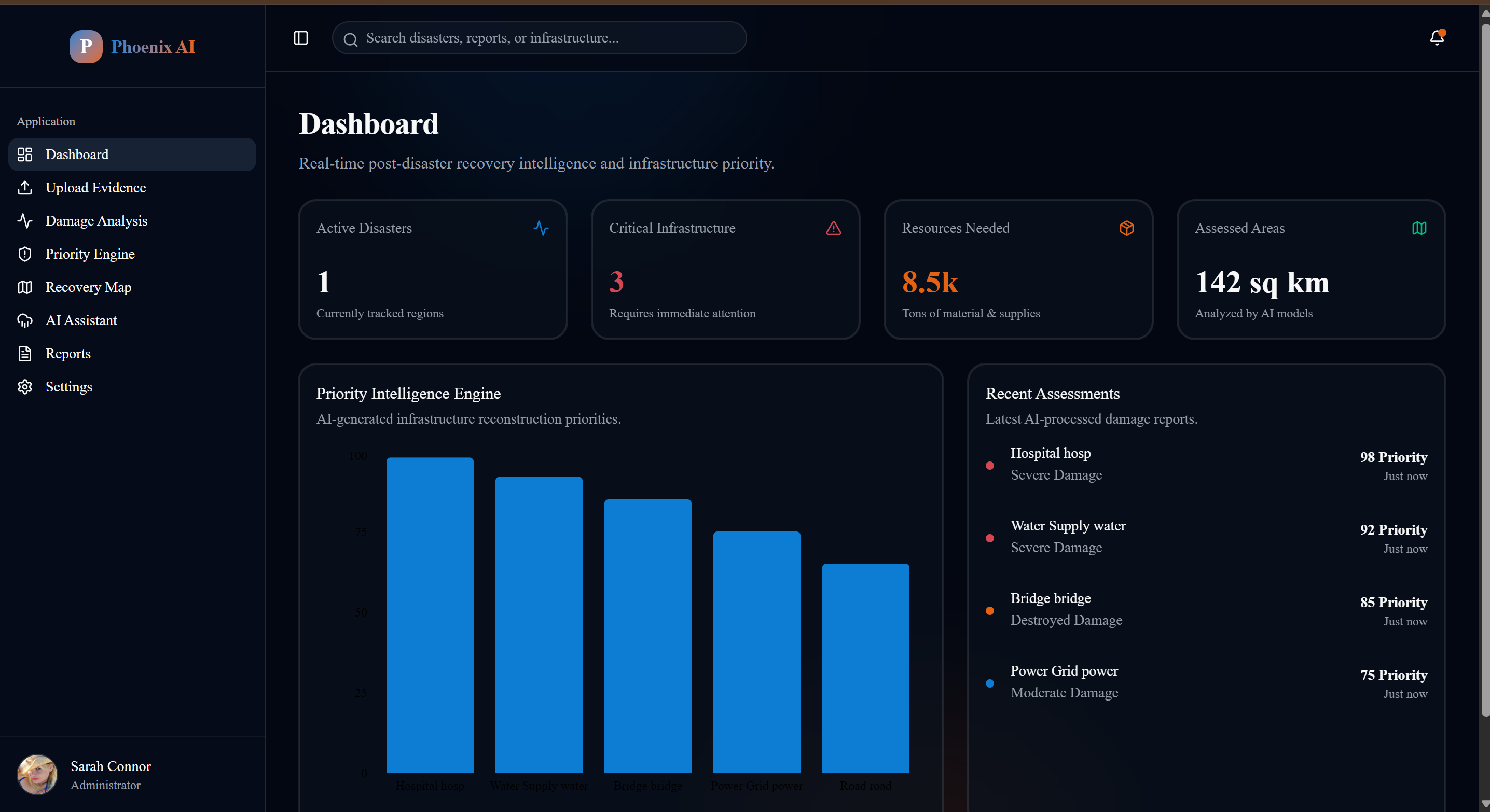
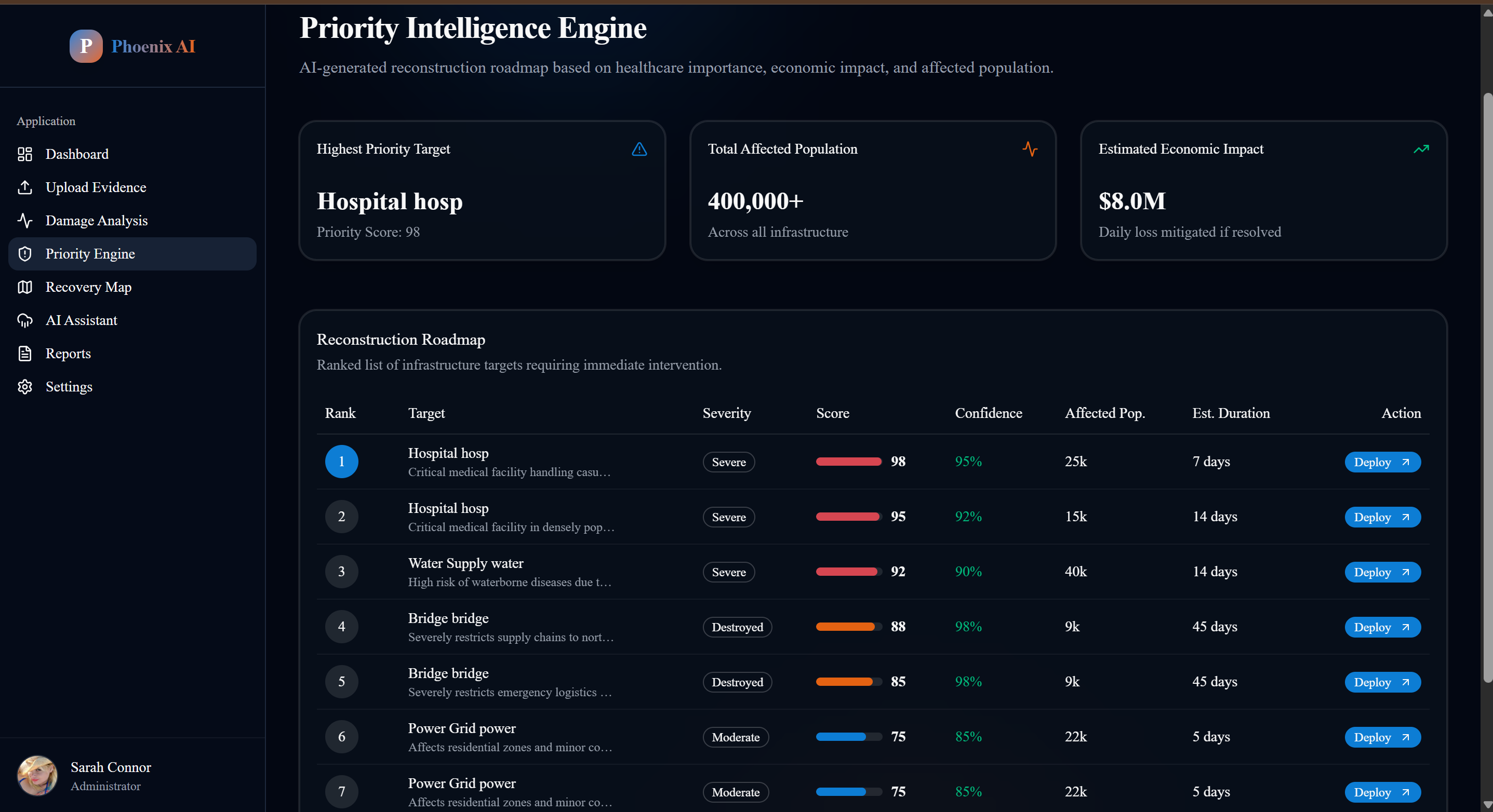
AI ranks reconstruction priorities to maximize public safety, recovery impact, and resource efficiency.
-
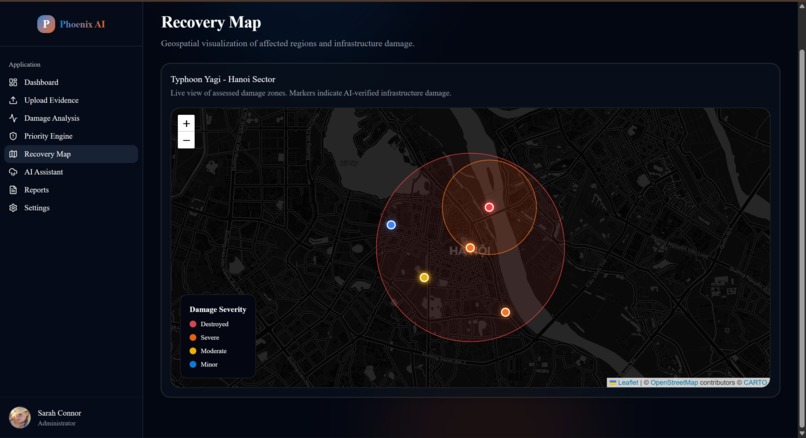
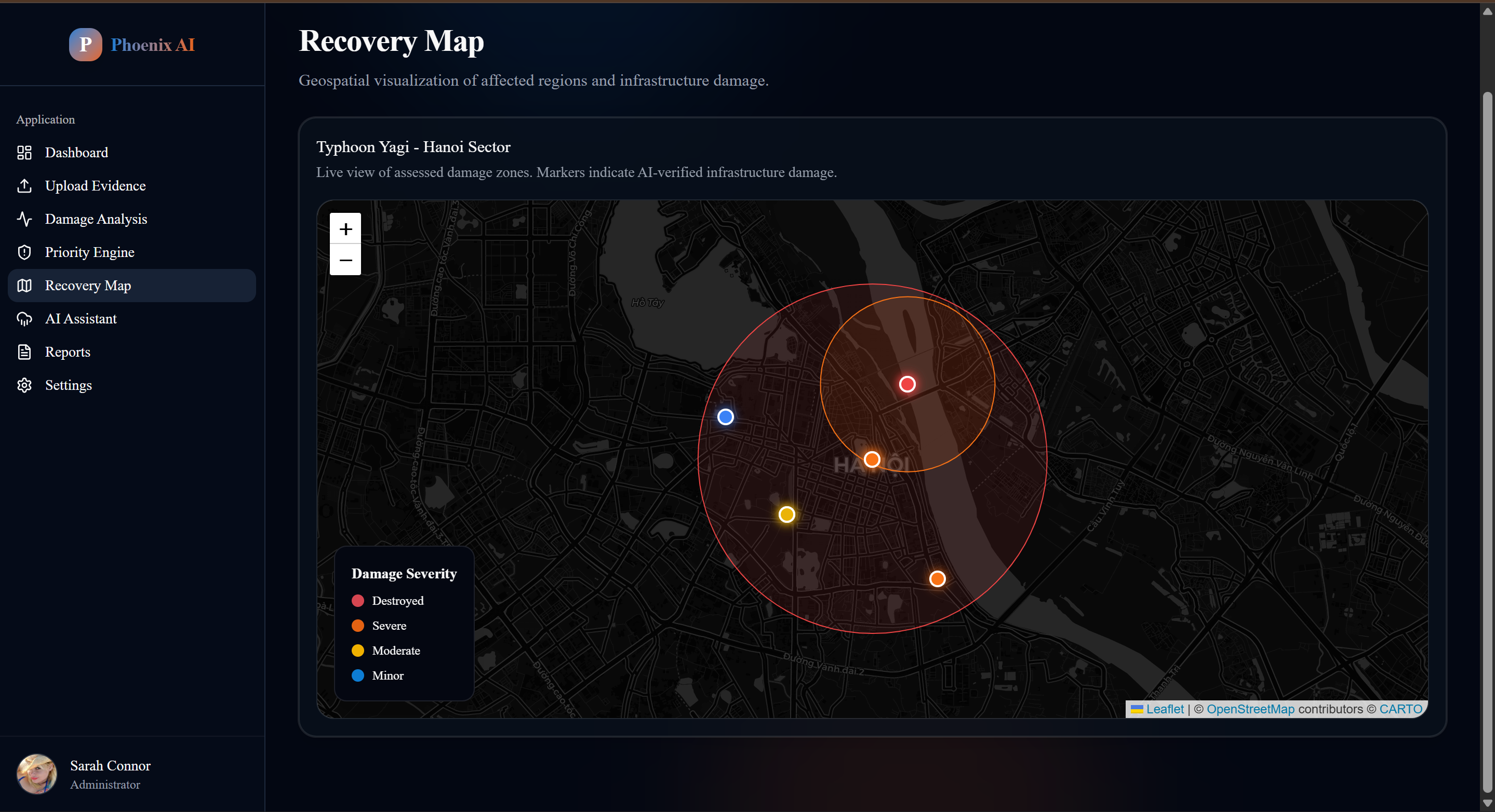
Visualize disaster zones, damage severity, and critical infrastructure on an interactive AI map.
-
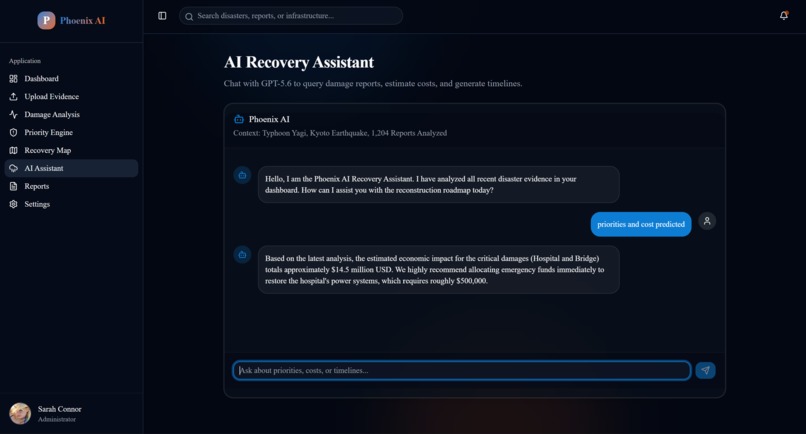
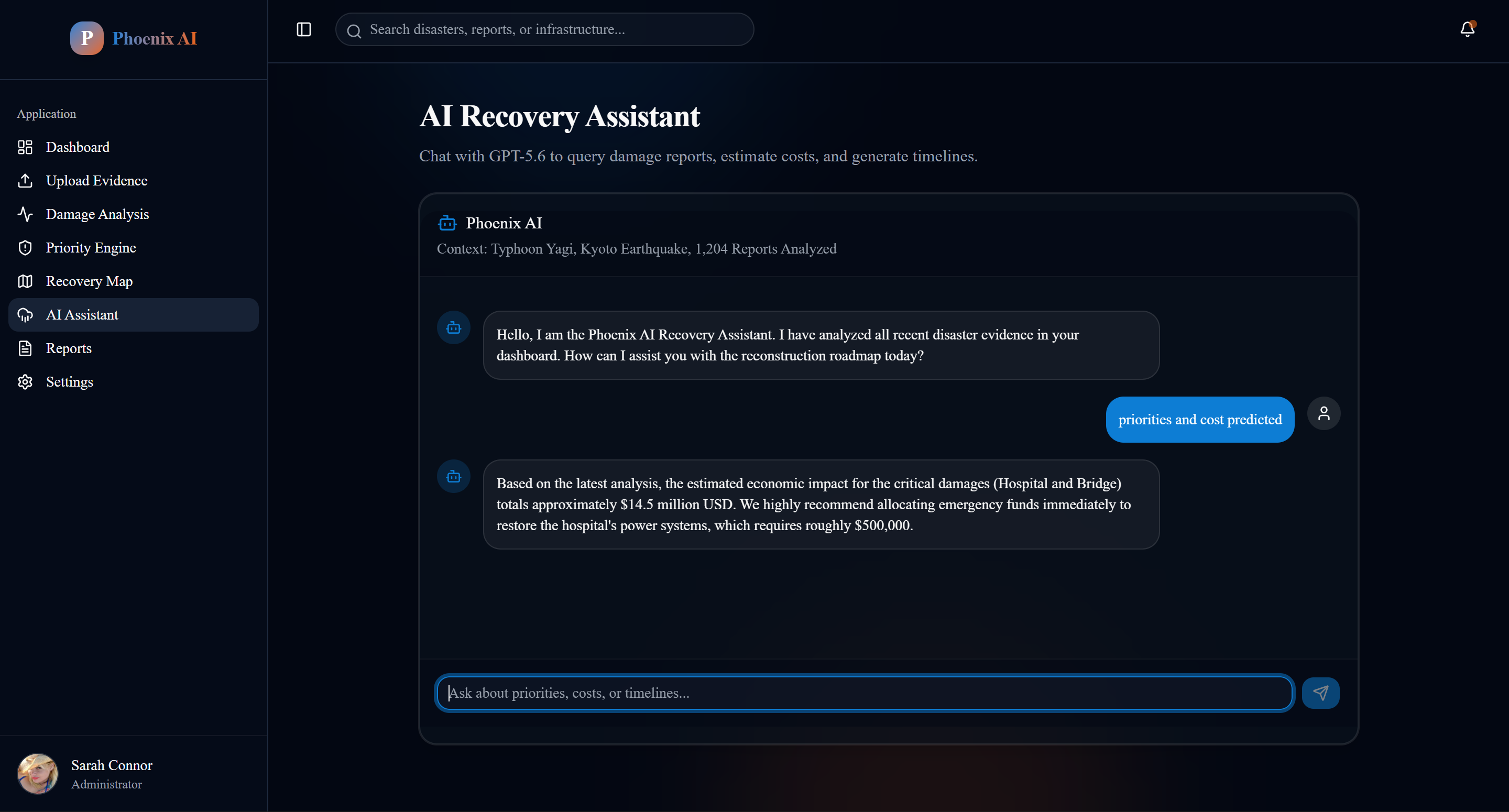
Ask Phoenix AI for recovery insights, reconstruction priorities, costs, and action plans.
-
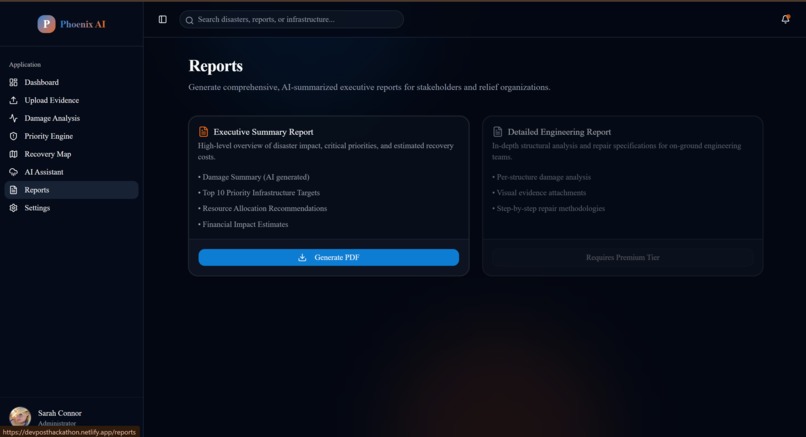
Ask Phoenix AI for recovery insights, reconstruction priorities, costs, and action plans.
Phoenix AI: From Disaster to Recovery
Inspiration
Natural disasters such as earthquakes, floods, cyclones, landslides, and tornadoes can devastate communities within minutes. While emergency rescue operations are often well coordinated, the reconstruction phase is significantly more challenging. Governments and humanitarian organizations must quickly decide which roads, hospitals, bridges, schools, and utilities should be restored first, often relying on fragmented reports and manual assessments.
We were inspired by a simple but important question:
What if AI could help decision-makers determine what should be rebuilt first and why?
This idea led to Phoenix AI, named after the mythical phoenix that rises from the ashes, symbolizing resilience, recovery, and hope. Rather than focusing only on detecting damage, Phoenix AI helps communities recover by intelligently prioritizing reconstruction based on public impact.
What We Built
Phoenix AI is an AI-powered post-disaster recovery intelligence platform that transforms disaster information into actionable reconstruction plans.
The platform enables users to:
- Upload disaster images, videos, and reports.
- Analyze damaged infrastructure.
- Prioritize reconstruction using an AI-powered Priority Intelligence Engine.
- Visualize recovery insights through an interactive dashboard.
- Ask an AI assistant questions about recovery planning.
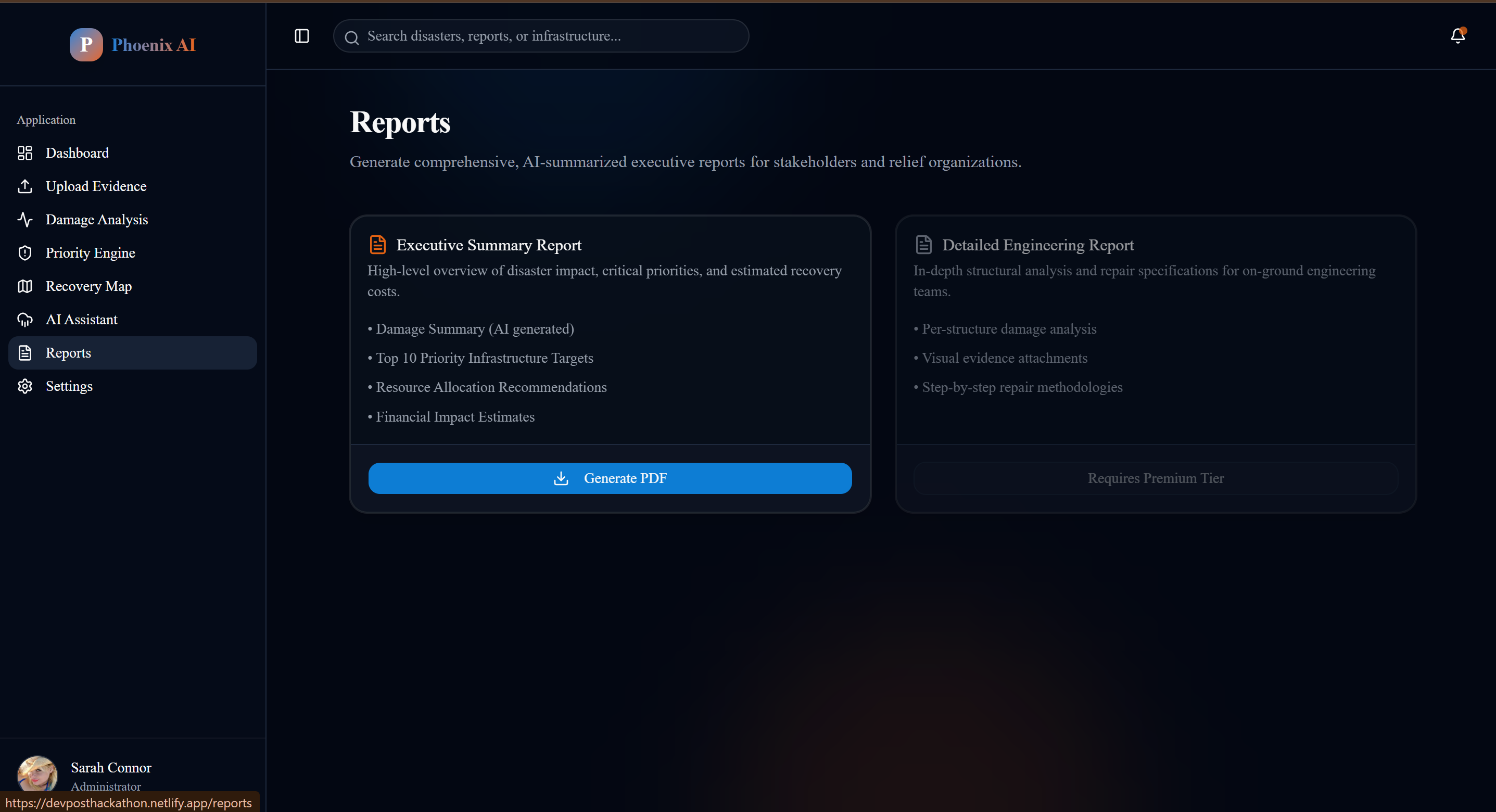
- Generate structured recovery reports for decision-makers.
Instead of simply answering "What was damaged?", Phoenix AI answers:
"What should we rebuild first to maximize public benefit?"
How We Built It
Phoenix AI was designed as a modern web application using an AI-first development approach.
Our implementation includes:
- Next.js and TypeScript for the frontend.
- Tailwind CSS and shadcn/ui for a responsive, modern interface.
- Supabase for authentication, database management, and file storage.
- OpenAI models for intelligent reasoning, damage interpretation, report generation, and recovery recommendations.
- Interactive dashboards and visualizations to present recovery priorities clearly.
Throughout development, we used Codex to accelerate implementation by generating components, refining architecture, improving code quality, and helping build features efficiently while we focused on product design, validation, and testing.
Challenges We Faced
Building Phoenix AI involved several technical and design challenges.
The first challenge was defining a problem that was both meaningful and distinct from existing disaster-management systems. Many solutions focus on disaster prediction or damage detection, so we shifted our focus to post-disaster reconstruction planning, where AI can provide decision support rather than replace human expertise.
Another challenge was designing a priority system capable of balancing multiple factors such as healthcare access, transportation, public safety, and infrastructure importance. We also needed to present these recommendations in a way that was transparent and easy for decision-makers to understand.
Finally, integrating AI into a practical workflow required careful consideration so that the system generated structured, explainable recommendations instead of generic responses.
What We Learned
Developing Phoenix AI reinforced several important lessons.
- AI delivers the greatest value when it supports real-world decision-making rather than simply automating tasks.
- Effective disaster recovery requires balancing technical analysis with human priorities.
- Clear visualizations and explainable AI recommendations are essential for building trust.
- Rapid prototyping with modern AI development tools makes it possible to transform ambitious ideas into working applications within a hackathon timeframe.
Most importantly, we learned that technology can play a meaningful role in helping communities recover faster after disasters by enabling smarter, evidence-based reconstruction decisions.
Future Vision
Phoenix AI is designed as a foundation that can continue to evolve beyond the hackathon.
Future enhancements include:
- Real-time satellite and drone imagery integration.
- Advanced computer vision models for automated damage assessment.
- GIS-based infrastructure visualization.
- Multi-agency collaboration tools.
- Resource optimization and logistics planning.
- Predictive reconstruction timelines.
- Support for governments, NGOs, and international humanitarian organizations at larger scales.
Our vision is to make Phoenix AI an intelligent recovery platform that helps communities rebuild faster, allocate resources more effectively, and recover with greater resilience after natural disasters.
Built With
- ai
- api
- chatgpt
- codex
- computer
- css
- disaster
- framer
- gpt-5.6
- learning
- machine
- mapbox
- motion
- next.js
- openai
- postgresql
- react
- recovery
- shadcn/ui
- supabase
- tailwind
- typescript
- vercel
- vision


Log in or sign up for Devpost to join the conversation.