Inspiration
As someone who’s watched loved ones struggle with phobias limiting their daily lives, I saw a gap in accessible, scalable exposure therapy. Traditional in-person sessions are costly and hard to access—so I set out to build a tool that brings evidence-based therapy to anyone, anywhere, using modern tech.
What it does
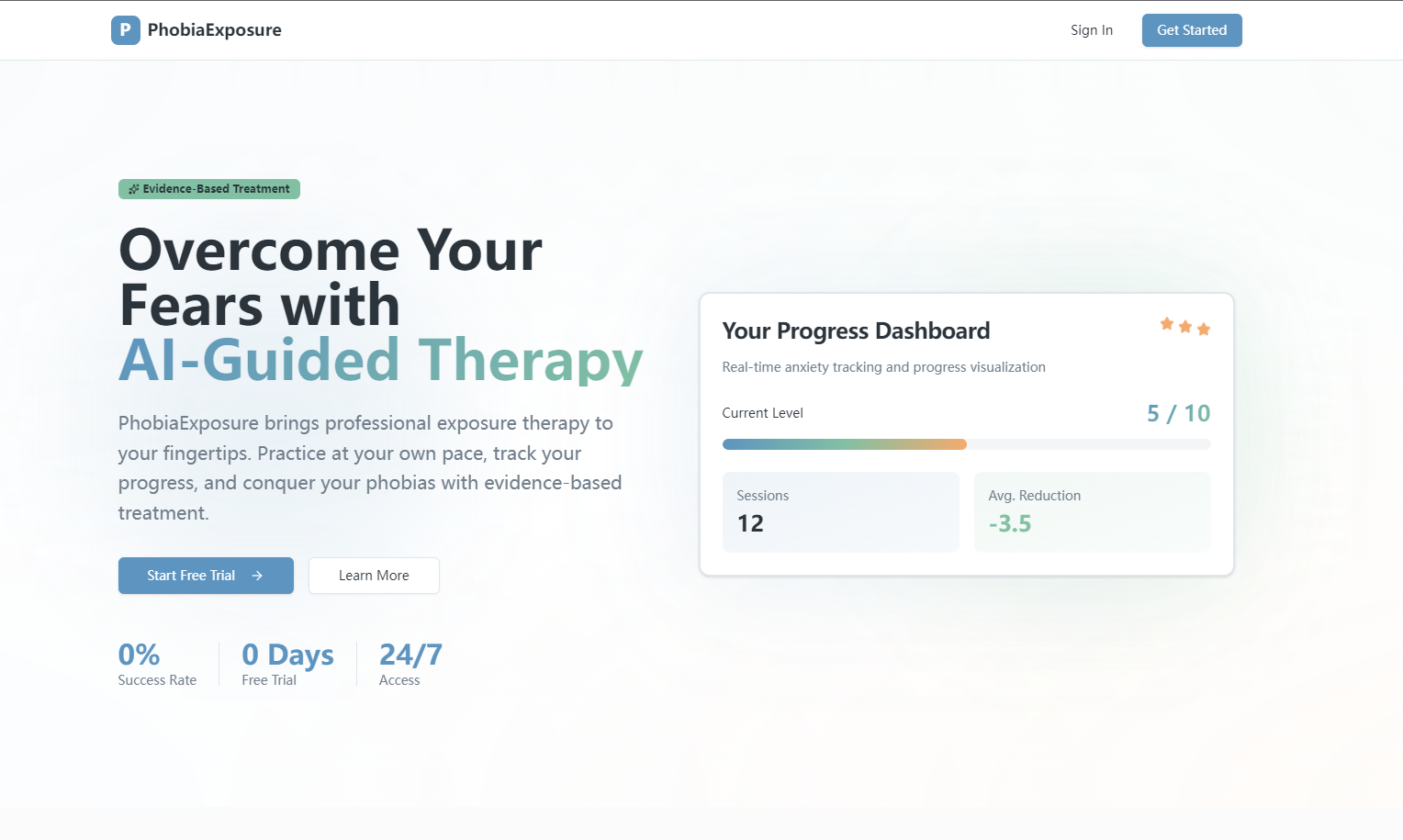
PhobiaExposure delivers AI-guided progressive exposure therapy for specific phobias (heights, flying, social anxiety, etc.). Users complete a clinical assessment to get a personalized 10-level exposure plan, practice via VR/AR simulations, track anxiety levels, and can share progress with therapists for remote guidance.
How we built it
We started with validating clinical guidelines for exposure therapy to ensure alignment with best practices. The front end was built with React for cross-device compatibility, Unity for VR/AR scene development, and WebXR to bridge the two. AWS hosted the backend, PostgreSQL stored user/progress data, and TensorFlow powered the AI that generates personalized exposure hierarchies. Stripe integrated subscription management, and Firebase handled secure authentication.
Challenges we ran into
The biggest hurdle was balancing clinical rigor with user experience—ensuring the exposure levels were therapeutically sound but not overwhelming. VR/AR load times were also a struggle; we optimized asset sizes to hit the 3-second load target. Additionally, designing privacy-compliant therapist access required careful work to honor user consent rules.
Accomplishments that we're proud of
We created a tool that marries clinical validity with accessibility—users can complete assessments in under 10 minutes, and the AI generates personalized hierarchies instantly. We also built a seamless fallback (lightweight 2D mode) for users without VR/AR hardware, ensuring no one is excluded.
What we learned
I deepened my understanding of mental health care compliance (especially around data privacy) and how to translate clinical protocols into tech workflows. I also learned that user-centric design is critical for mental health tools—small touches like calm-down prompts during high anxiety make a huge difference in usability.
What's next for this project
We plan to expand phobia modules, add mild biometric integration (e.g., heart rate tracking) to refine anxiety assessments, and explore EHR integration (long-term) for better care coordination. We also want to test the tool with more clinical partners to refine the AI-driven exposure plans further.

Log in or sign up for Devpost to join the conversation.