-
-
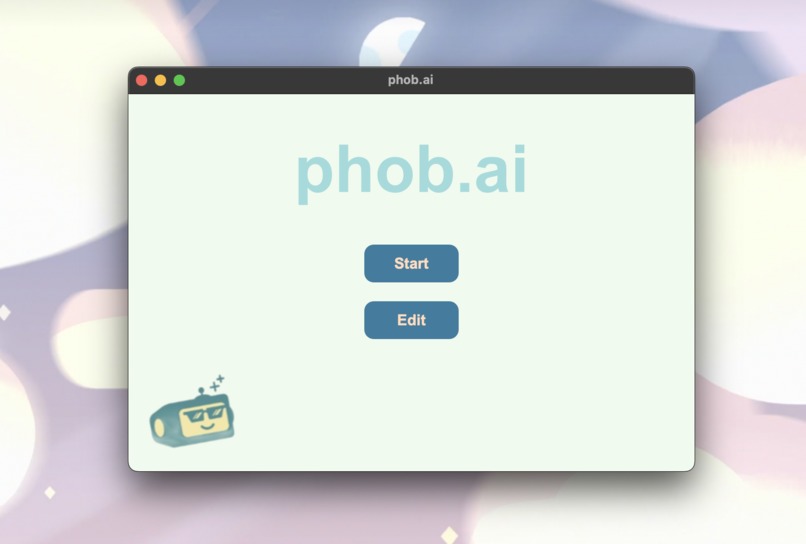
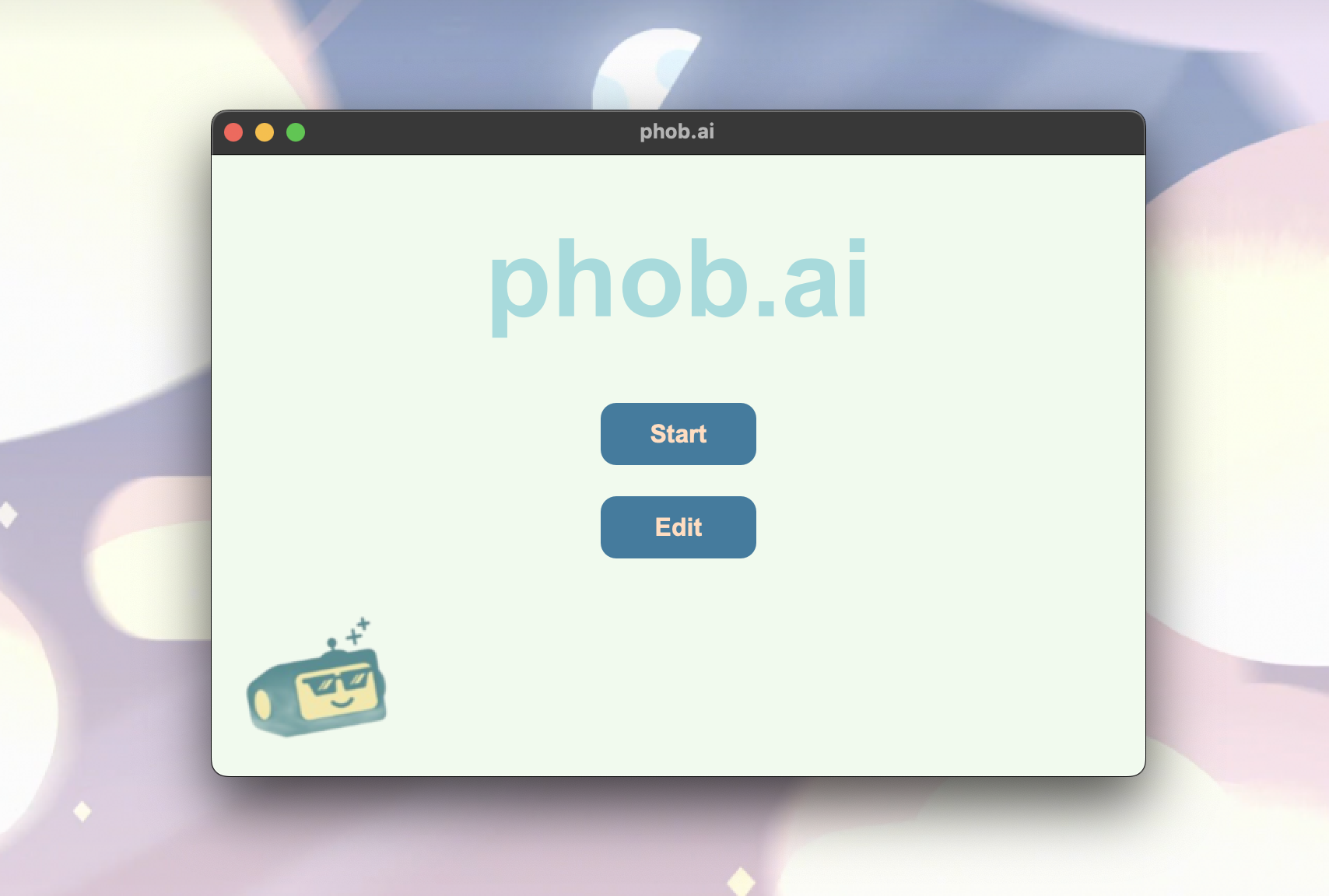
Phob.ai App
-
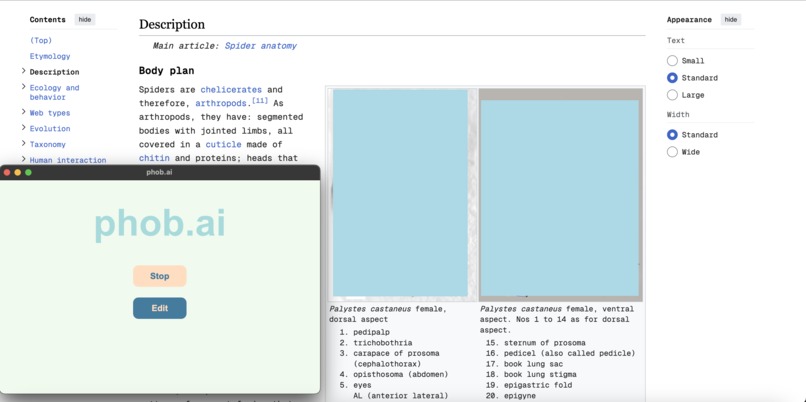
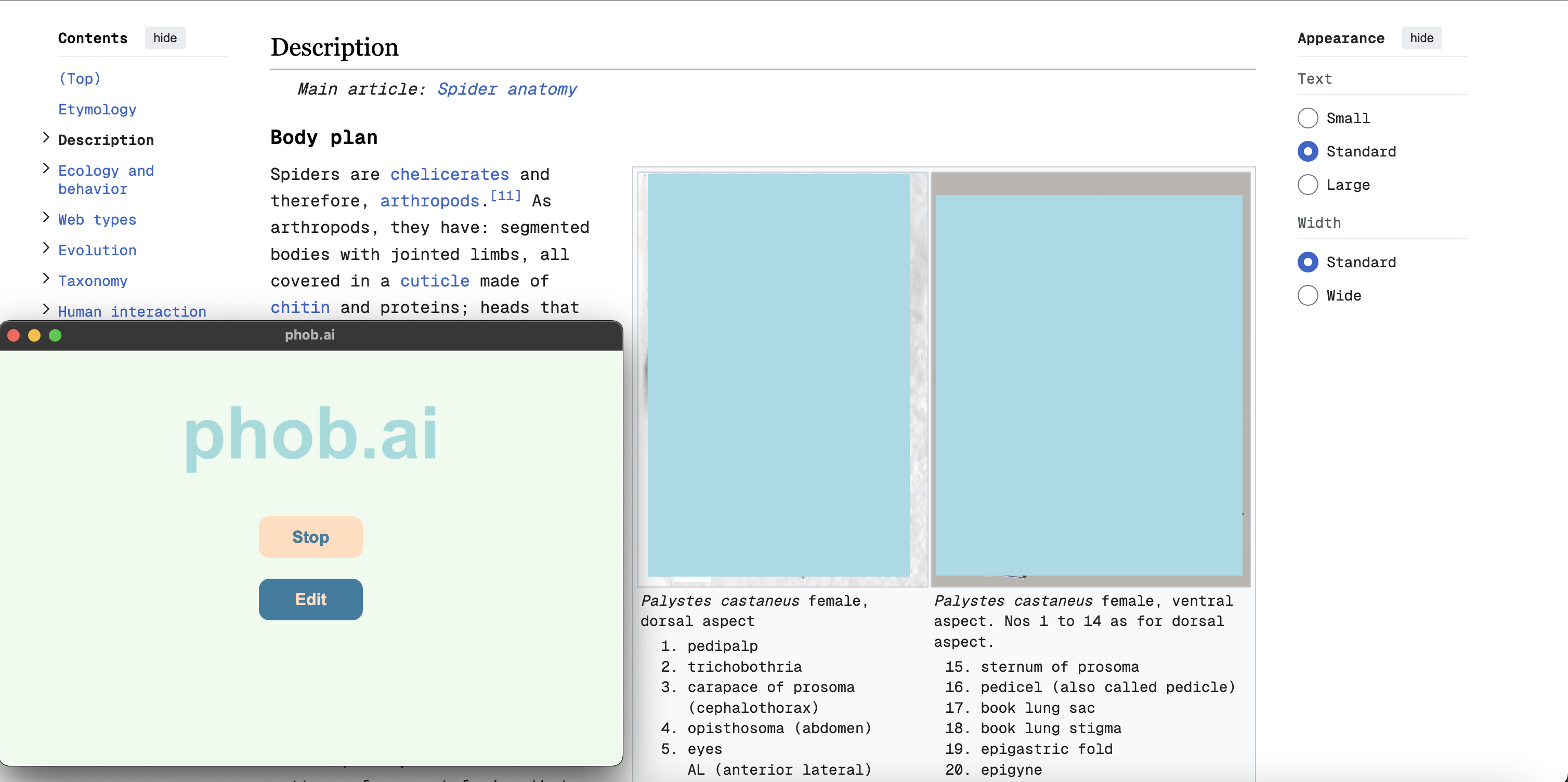
Phob.ai in action on Wikipedia
-
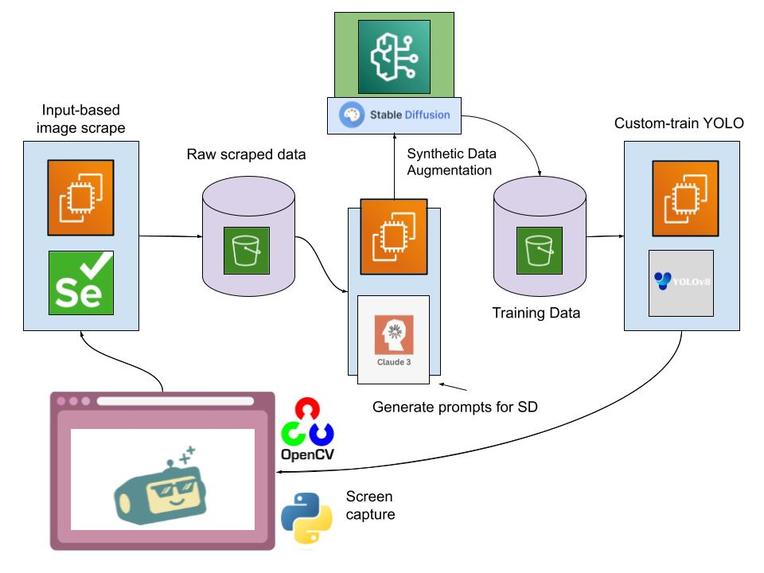
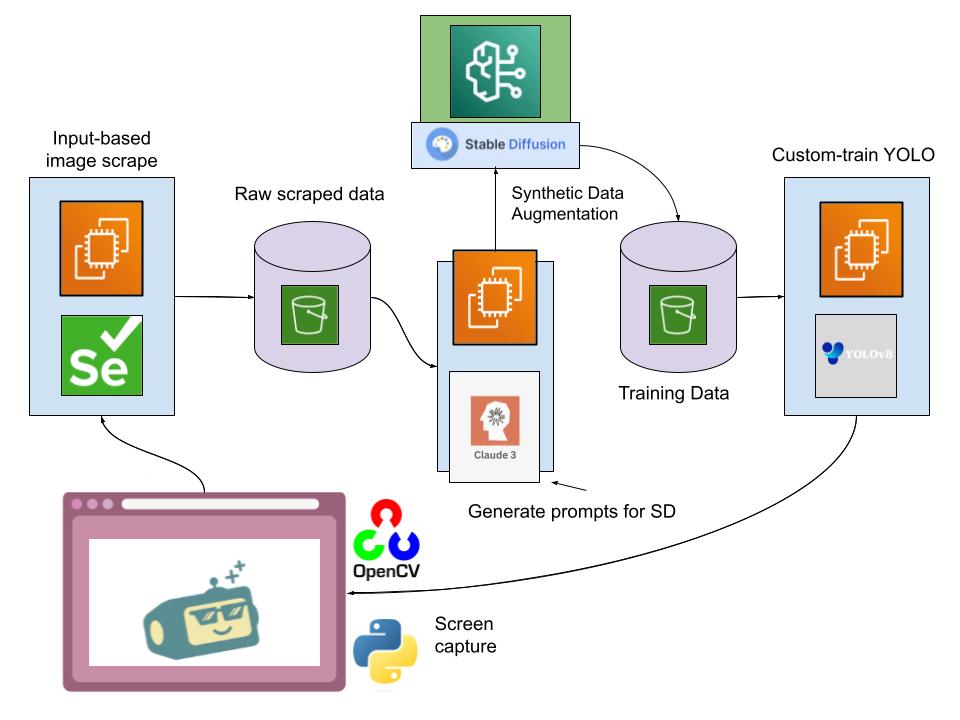
System Design
-
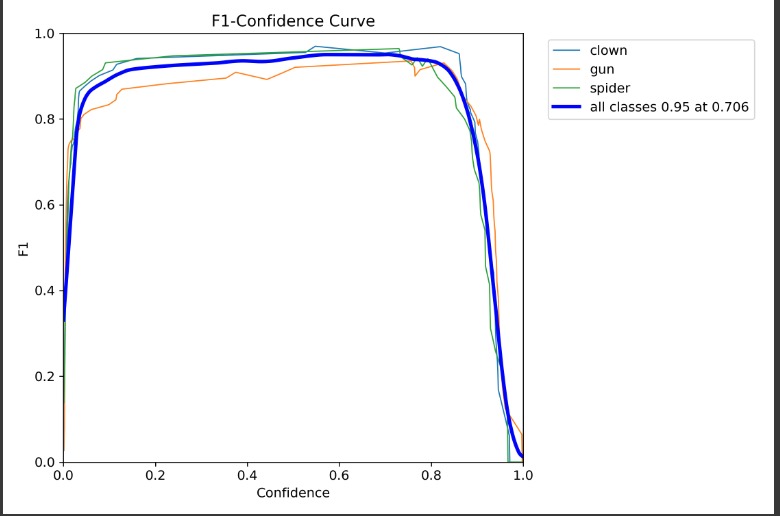
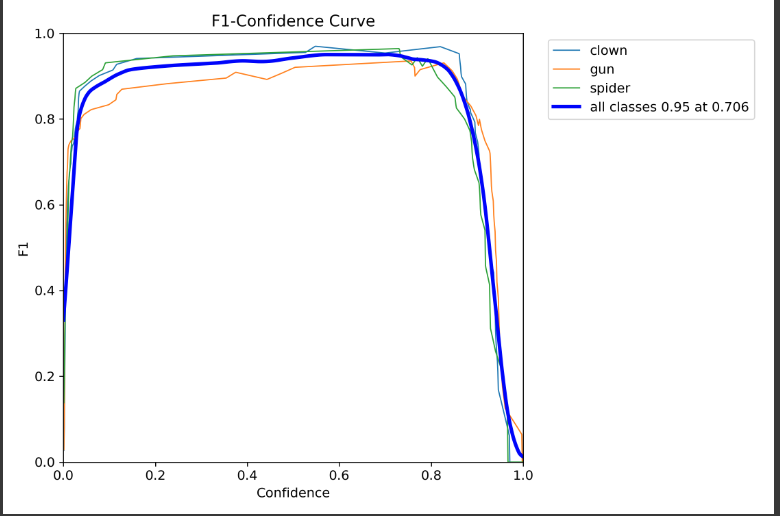
F1 Curve for Model
-
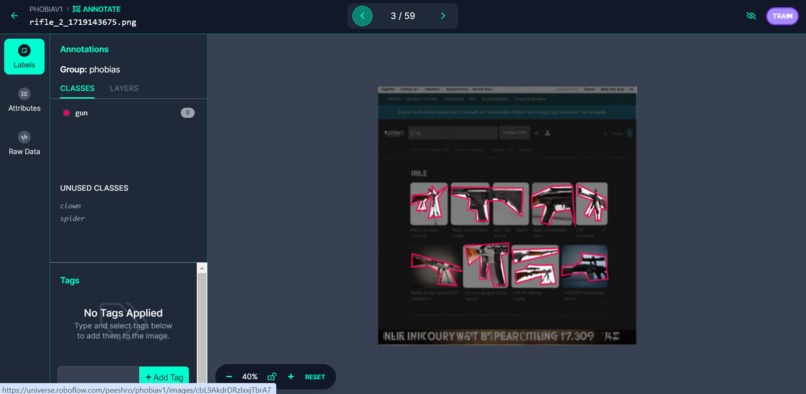
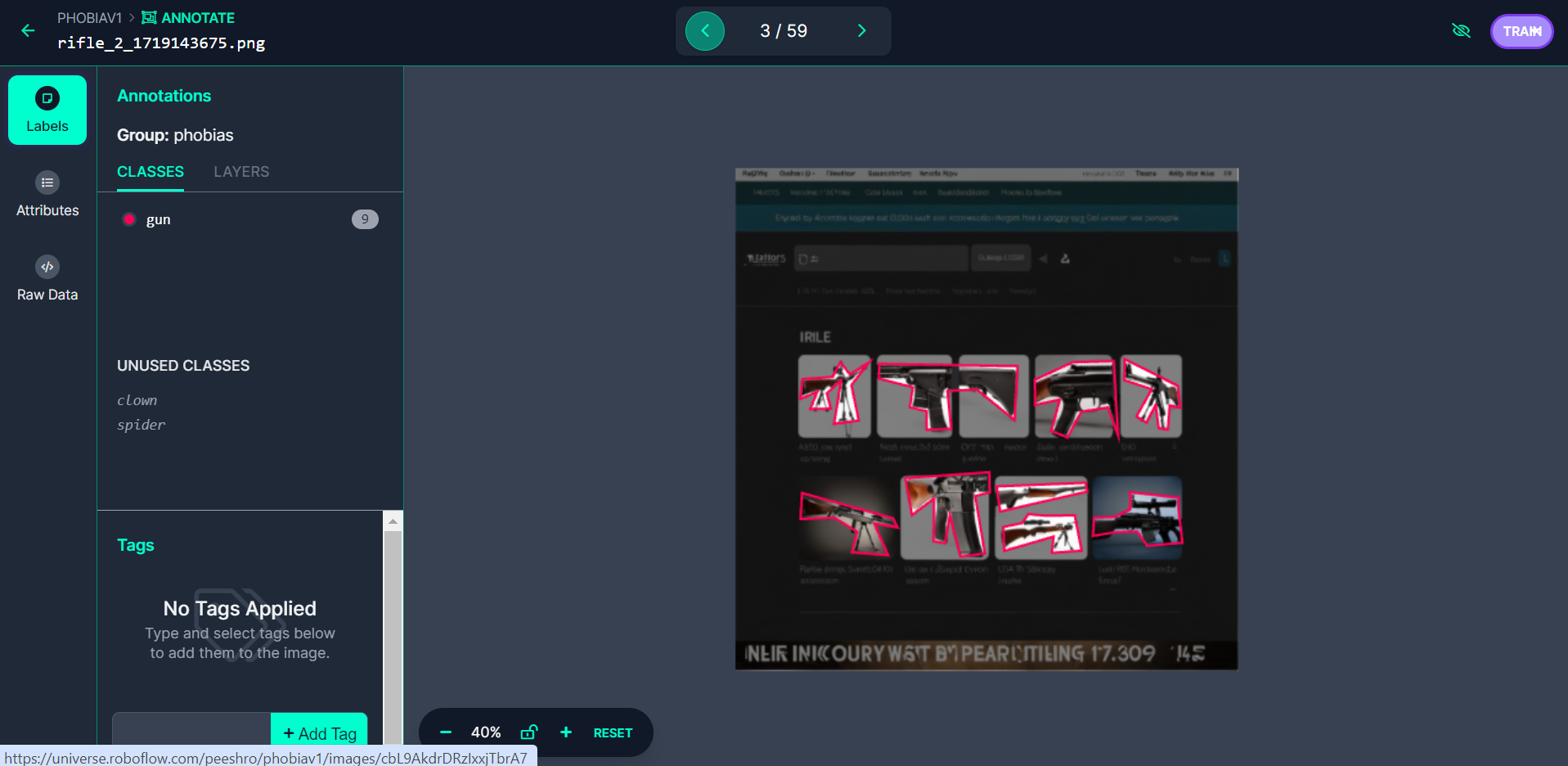
Annotation of Stable Diffusion Data
Inspiration
According to Singlecare, an estimated 19 million Americans suffer from at least one phobia. That's a significant part of the US population and we believe there needs to be more resources for such a large group. Additionally, as the internet becomes introduced to increasingly younger children, parents can utilize this to block out any NSFW content from them.
phob.ai allows users to block out what they don't wish to see on the Internet -- our primary focus is on phobias such as hoplophobia (fear of guns) or arachnophobia (fear of spiders), but our application can also be used to block anything else unpleasant to the user.
What it does
In a nutshell, phob.ai leverages computer vision technology and generative AI to create a personalized content filter. Each filter is fine tuned with artificially generated images and scans the user's screen in real-time, identifying and obscuring any images that may trigger discomfort. The application utilizes a custom-trained YOLOv8 model, which is catered to the user's individual preferences. Whether that be a specific phobia or wanting to restrict unsafe content, phob.ai will listen to its user and censor unwanted content.
Why phob.ai?
Phobias can be intensely distressing experiences for individuals who encounter triggering content online. The internet's vast and unregulated landscape makes it increasingly likely for users to stumble upon photos or videos related to their specific phobias unintentionally. These encounters can be deeply unsettling and may lead to avoidance behaviors, exacerbating the phobia over time.
As the digital world continues to expand, implementing better content filters, warning systems, and providing resources for managing phobias online are crucial to safeguarding mental well-being and promoting a more supportive online environment for all users.
From the user's perspective (some YouTube comments):
"I've feared blood my whole life the mere sight of it makes me anxious, even hearing people talk about their blood makes me anxious. I don't even know why I fear blood this much."
"please people, don't mess with others' phobias, they're phobias for a reason, i've had people actively try to show me pictures/videos of spiders when they know i get unimaginably scared, just the word "spider" gives me shivers....ugh"
"As a person with emetophobia, getting laughed at and people dismissing it, is very common and very frustrating. Phobias can’t always be “cured.” They can be managed and worked on but it’s very hard for the individual going through it. It may seem ridiculous and funny to people like the guy in the grey shirt, but it’s very intense and real for people who have this phobia. Just bc you don’t experience the phobia doesn’t make it less scary for the person with the fear."
How we built it
Our application runs the MSS (multiple screenshots) Python library to capture the user's screen in real-time. Each capture interfaces with the PyQt GUI library to create blurred overlays and block out flagged images. To filter out certain content, a user can input topics or objects they do not wish to see which is then processed by Claud 3.5 Sonnet through Amazon Bedrock. The processed user input is then sent through EC2 to run a web scraping script with Selenium that gathers initial training data from the web. Because our model requires custom training data (it sees the entire screen, not just a single image), we used Stability AI to augment our dataset in Amazon Bedrock which allows the yolo model to learn and detect their phobias in a web environment. Additionally, we used Amazon EC2 to train our YOLO models and Amazon S3 to store images and model weights. Finally, the model is then passed back to the local user and is run on the client side to promote privacy. No user data is stored on our back-end, it is only used for processing.
What we learned
We learned many new ways to utilize AWS products as well as how they can contribute to the AI development process. We also learned new effective techniques in training machine learning models and what to consider while training said models.
What's next for Phob.ai
PhobAI's defining characteristic its customizability - to be able to give people the freedom to block out what they wanted. Our immediate goals following this hackathon are to complete implementing the backend, which will allow users to automatically query items to block, gather relevant training data, train an object detection model, and finally store their unique model's weights in a cloud server for them to be able to access at any time. Additionally, we realized the potential to replace the blurred area with images of one's choice - perhaps, they could even input images that they would enjoy seeing instead.
Notes
phob.ai does not retain any data from real time screen scanning.
Built With
- amazon-web-services
- aws-bedrock
- aws-ec2
- aws-lambda
- claude-3
- mss
- opencv
- pyqt
- python
- s3
- stable-diffusion
- ultralytics
- yolov8


Log in or sign up for Devpost to join the conversation.