Inspiration
The lack of accessibility of diagnostic blood testing in developing countries is preventable, yet unfortunate reality of global public health. Blood testing services are crucial for diagnosing various types of diseases and conditions - the first step to early detection and life-saving treatment. Without these services, quality of life and healthcare decreases drastically and can even contribute to the undetected continuous spread of communicable diseases.
The inspiration for our project comes from the challenges faced by developing countries and disaster-stricken areas. In these areas, access to basic healthcare is limited due to a lack of resources, including medical staff. We wanted to create a solution that could help to bridge this gap in healthcare by making blood drawing services more accessible, efficient, and safe. Leveraging the power of engineering and computer science, we aimed to overcome the restriction and limiting factor of need a human nurse or doctor physically present to draw blood.
What it does
Our project is an automated blood drawing machine that uses AI to detect the veins in a patient's arm and navigate the needle safely and efficiently to draw their blood. Phlobot is intentionally made using only a few dollars worth of common and accessible hardware parts (eg. wood, screws, etc.), making it a cheap and accessible tool in developing countries or disaster relief efforts. As an automated machine, it can perform many tasks to streamline the healthcare process, such as automatic patient record-keeping and labelling samples for testing, all without the need of a human. Phlobot also includes built-in heart-rate, blood oxygen, and temperature sensors to capture the common vitals that are needed for healthcare purposes.
How we built it
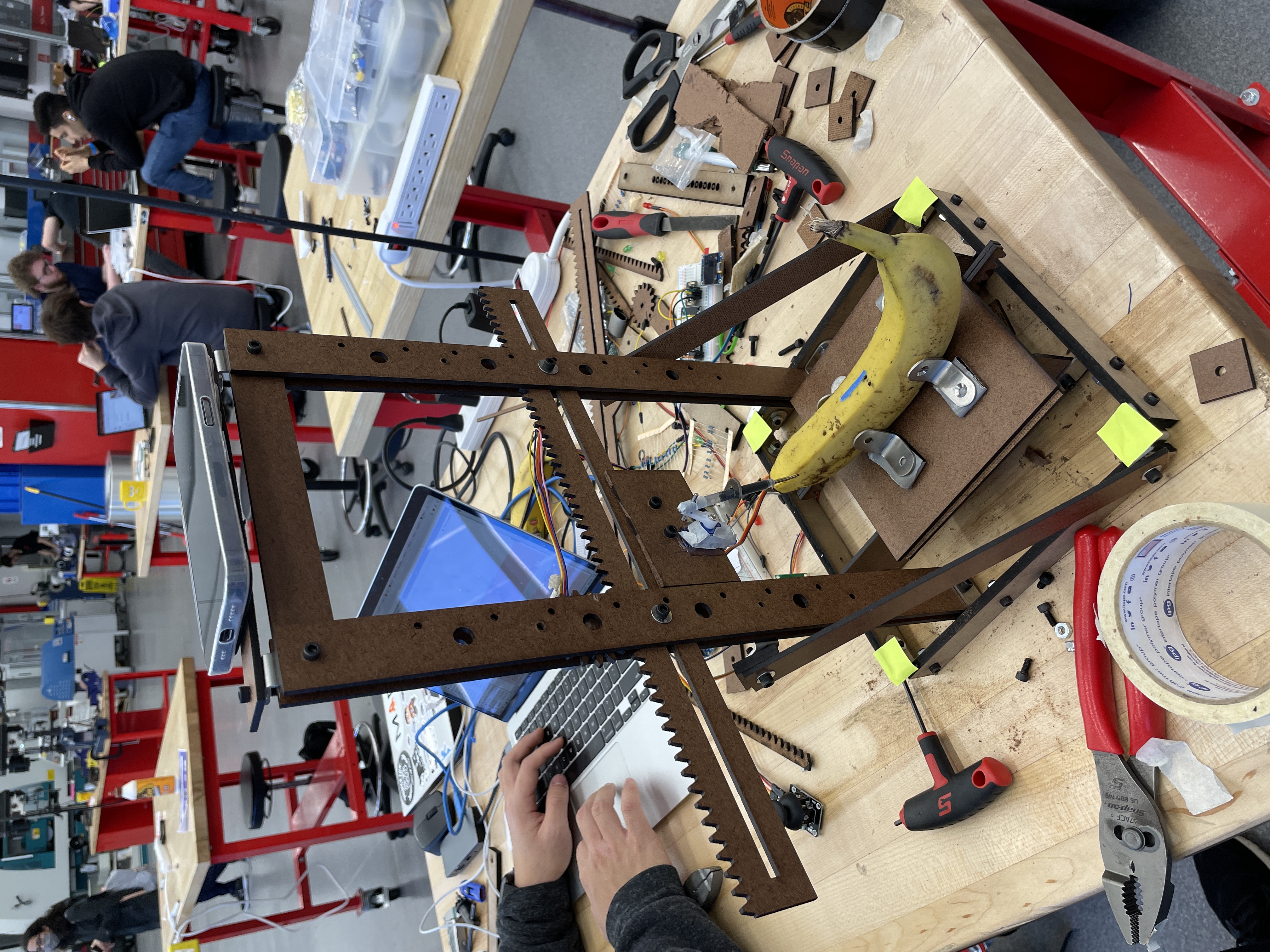
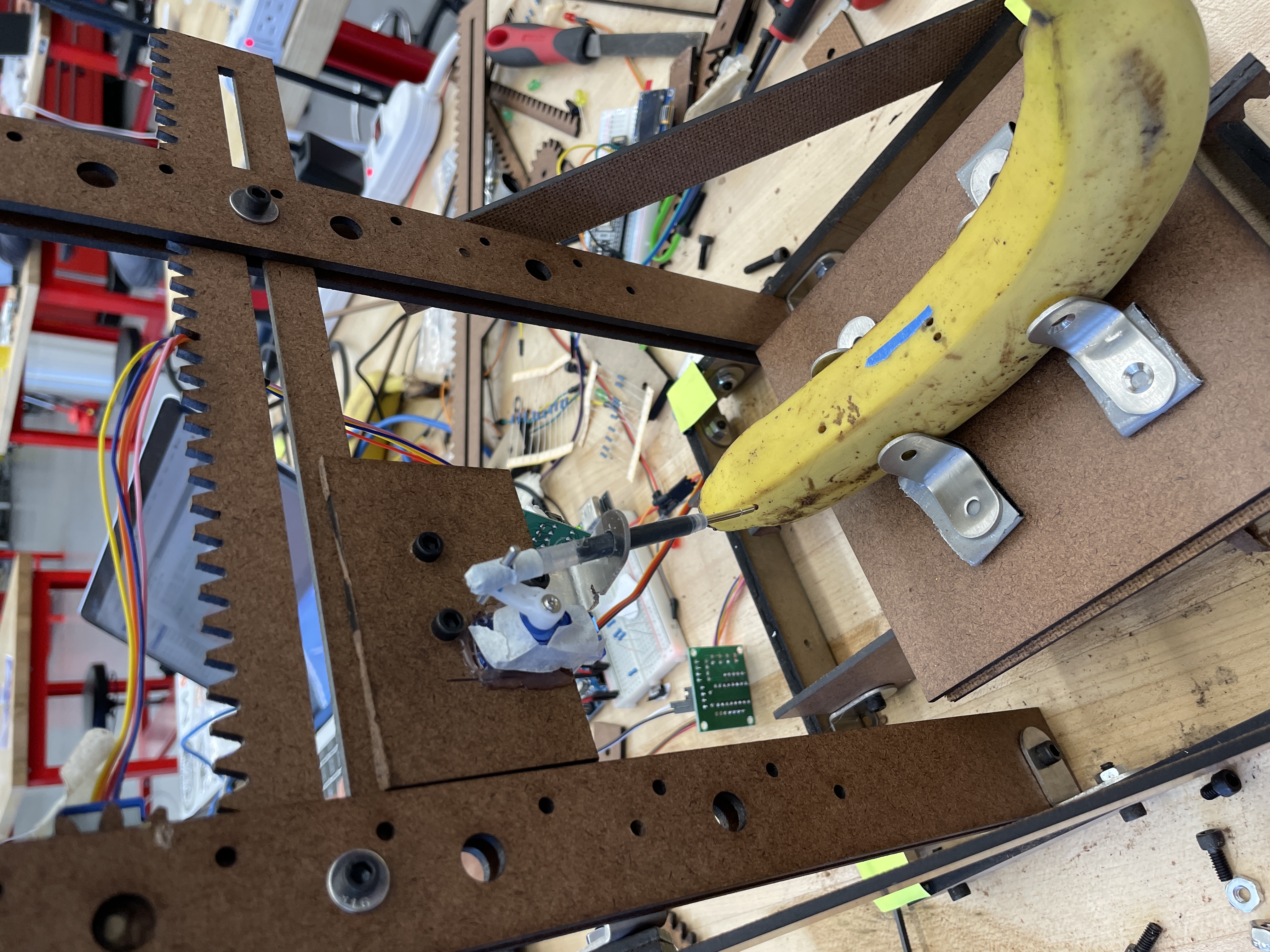
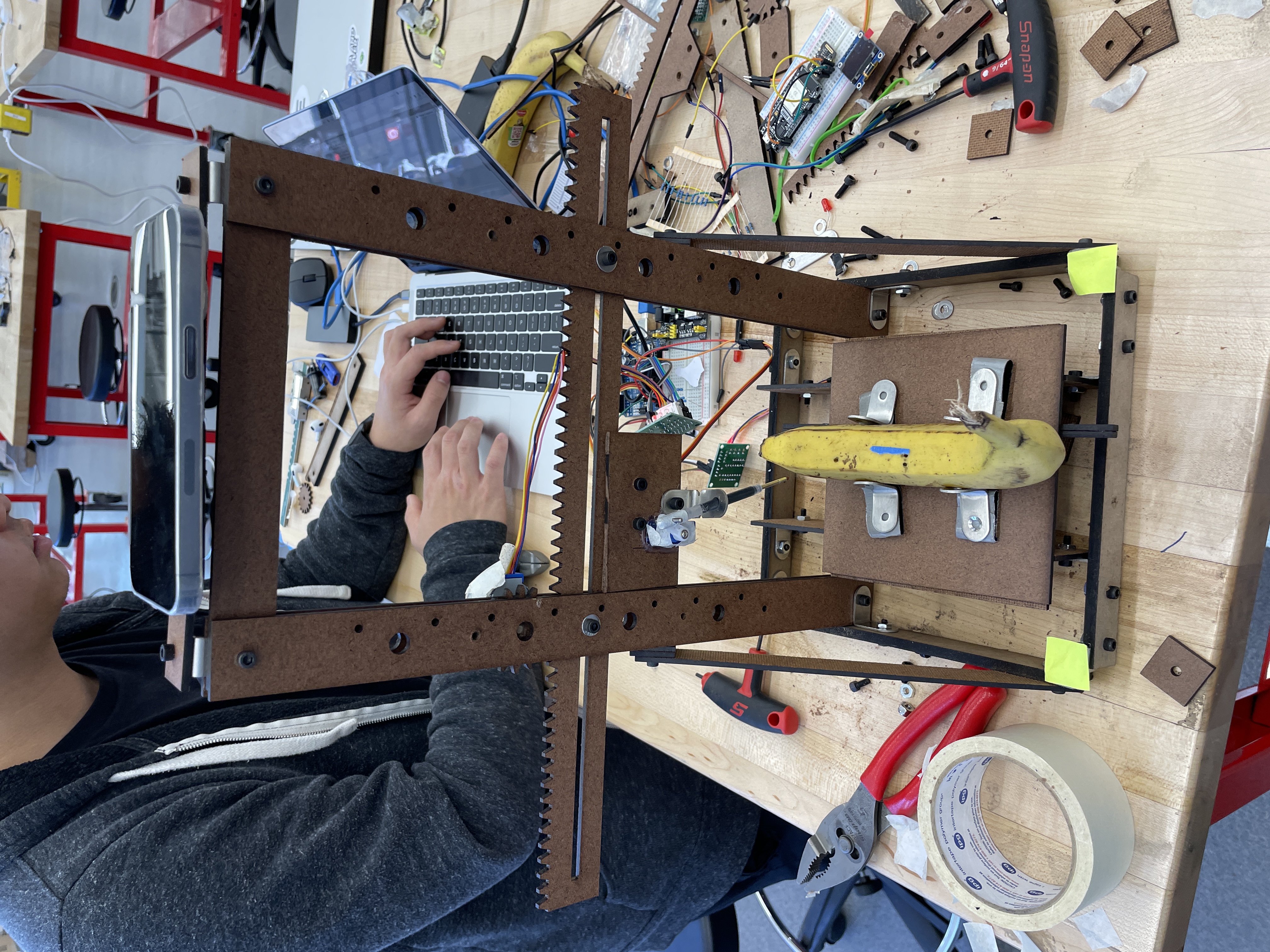
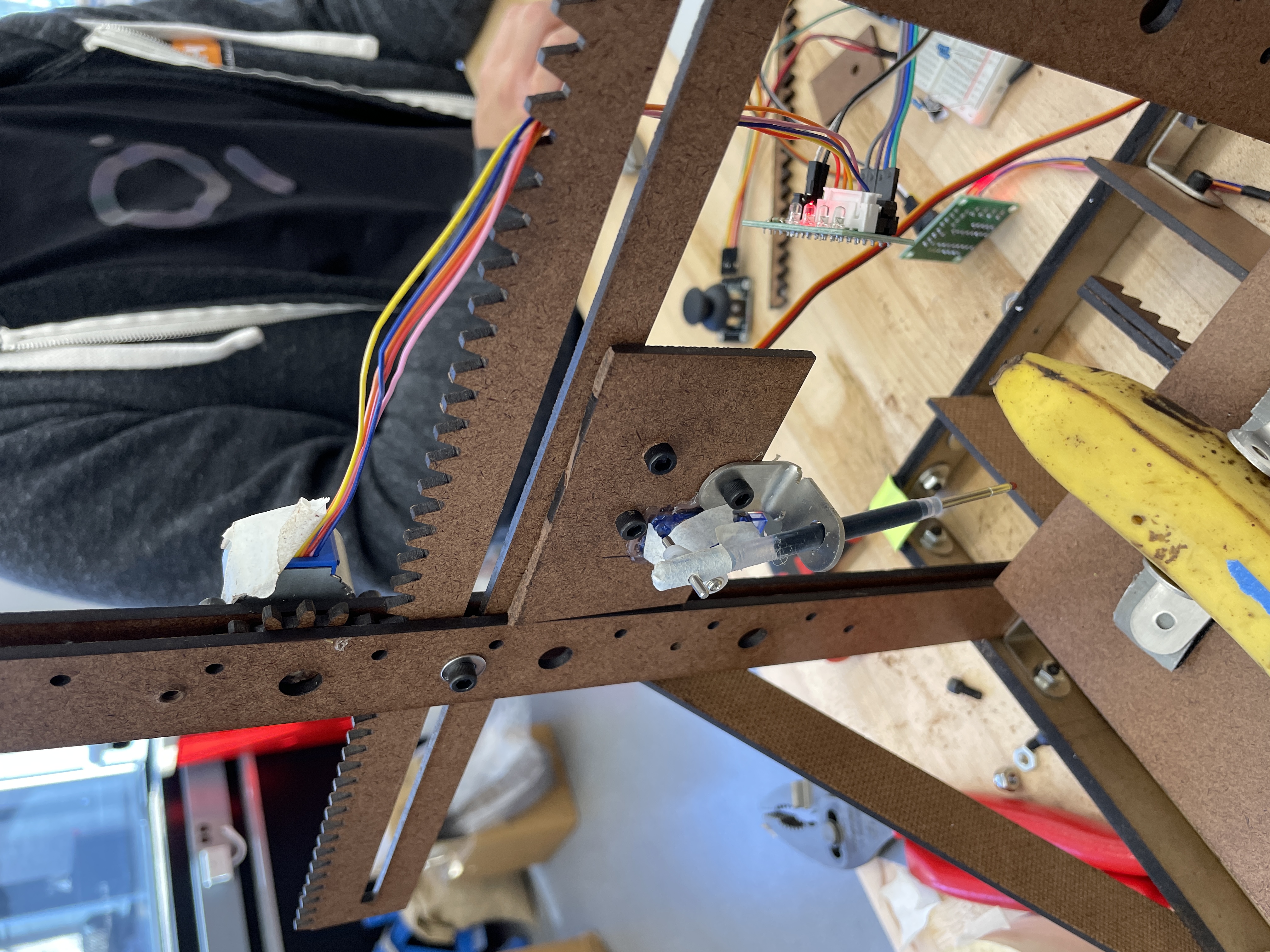
To build the Phlobot, we used a tightly integrated combination of clever hardware engineering and software design. At its core, Phlobot is made of a series of modular, laser-cut 1-inch wooden bars and other parts in standard sizes. The design was inspired by 3D-printers and cutting-edge surgical robots, such as the DaVinci robot. We aimed to take those designs, but create them in a cost-effective and easily reproducible manner. The electronics consist of stepper motors and servos, which control the three degrees of motion.
We used an Arduino board as the glue between the hardware and the software. The Arduino board is loaded with a Standard Firmata image that allowed us to offload much of the complex computation and computer vision components to an external machine.
In addition to the hardware components, Phlobot also relies heavily on advanced software design, which we spent a lot of time designing and testing. The detection and controls algorithm starts with a live video feed from a phone mounted overhead the machine. Importantly, this phone can be any phone and does not need to be mounted in any specific fixed position - we intentionally designed our algorithm to take in any video input to make the machine as accessible to use as possible. Using computer vision techniques, we detect the vein in the patient's arm and navigate the needle to the exact position, constantly rechecking and making micro-adjustments as needed.
Overall, the hardware and software components of Phlobot are tightly integrated to provide a seamless user experience. The hardware is designed to work in perfect harmony with the software, ensuring that the machine is safe, efficient, and reliable.
Challenges we ran into
From a hardware perspective, our greatest challenge was assembling all the different pieces together after the laser cutting process. With laser cutting, there are a lot if small details that need to be considered during the design process to ensure the product is what we intended. Not all the pieces fit together well on the first attempt, so we had to make some modifications on-the-fly to make everything work reliably.
One of the biggest challenges we faced was getting the computer vision system to work reliably. We had to fine-tune the algorithm to ensure that it could detect veins accurately and even under different lighting conditions. As part of the algorithm, we need to know where our needle is positioned at all times. We could have done this using additional sensors, but in the interest of keeping the device low-cost and simple, we strived to do this entirely using software. In the end, we were able to design and implement an entirely software-based calibration sequence that can be continuously run and rechecked throughout the operation of the machine, which empirically worked extraordinarily well.
Accomplishments that we're proud of
We are proud of the fact that we were able to create a fully-functional prototype of Phlobot in such a short timeframe using simple and accessible hardware components. We were very successful in integrating the hardware and software components, leading to exactly what we had envisioned during the design and planning stage. We were also proud of the fact that our project had the potential to make a real impact in the world by improving access to healthcare in developing countries and disaster relief efforts.
What we learned
Through this project, we learned a lot about the entire engineering pipeline, rather than each part isolated. Integrating the hardware and software to work so smoothly in coordination with each was a great leaning experience that can only be had through hands-on work. We also learned that with a strong team and clear vision, it is possible to create something impactful in a short amount of time - we were able to achieve the goals we set for ourselves at the beginning of the hacakathon.
What's next for Phlobot
In the future, we hope to continue refining and improving the Phlobot prototype. There are a lot of impactful improvements that can be added onto the device, such as patient tracking software for automated ordering of diagnostic tests, or built-in patient question and answer services. Hardware-wise, we want to streamline the design further to make it as quick and easy to assemble as possible for maximum accessibility. While Phlobot is just a proof-of-concept, we ultimately hope that a similar device can become a widely adopted tool for improving access to healthcare around the world.


Log in or sign up for Devpost to join the conversation.