-
-
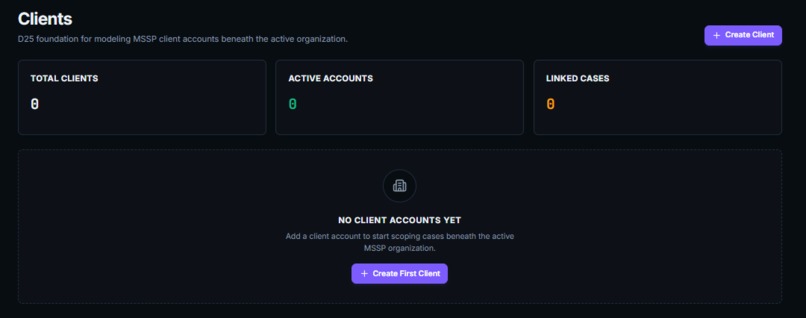
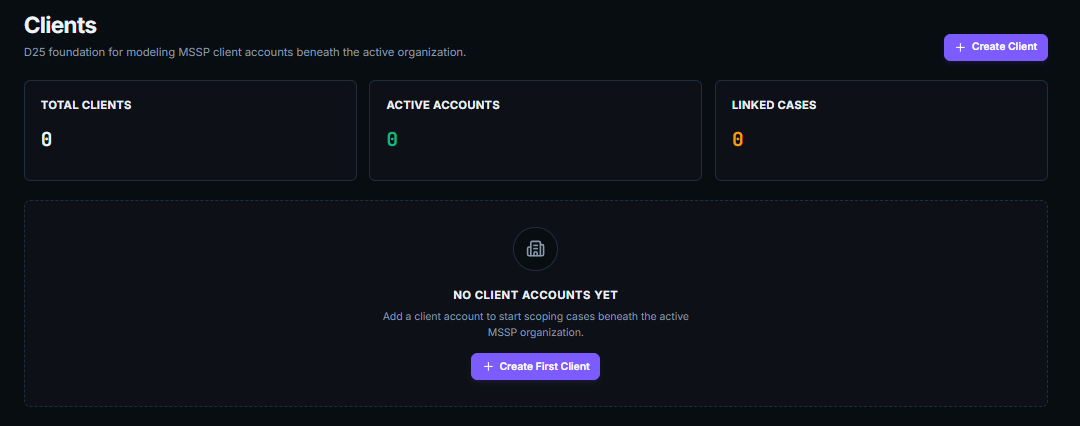
MSSP Clients Page
-
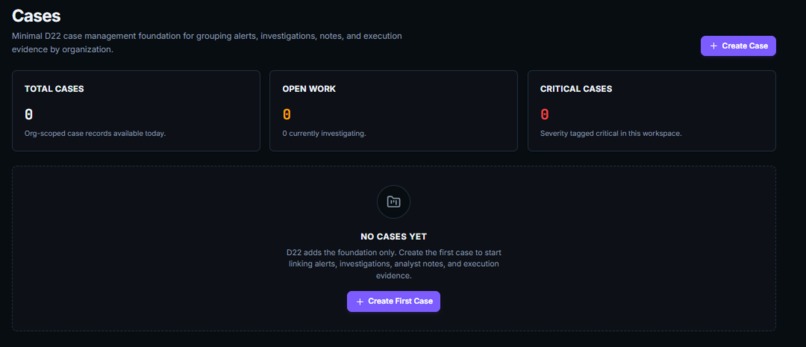
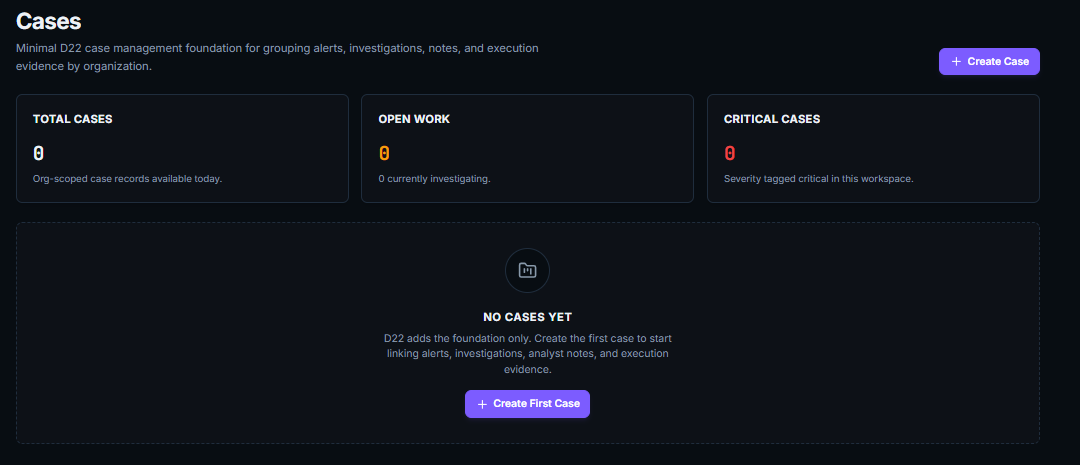
Cases Page
-
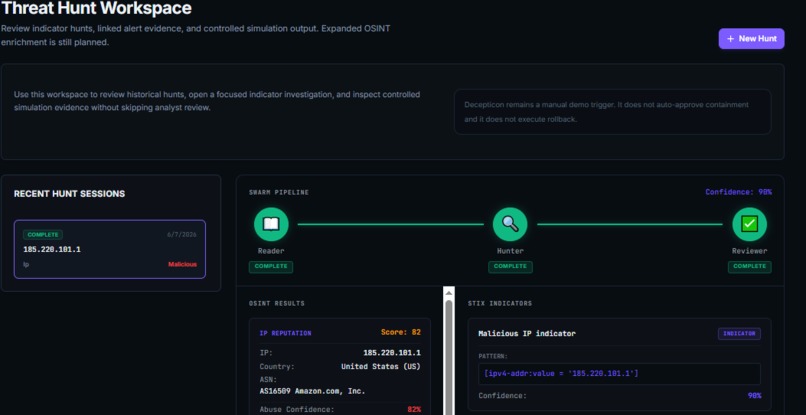
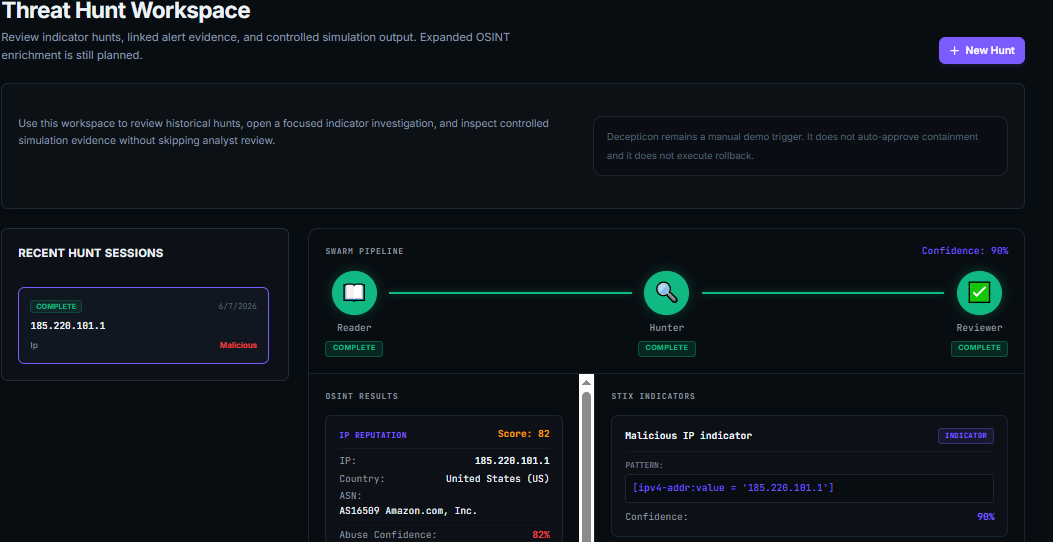
Threat Hunt Page
-
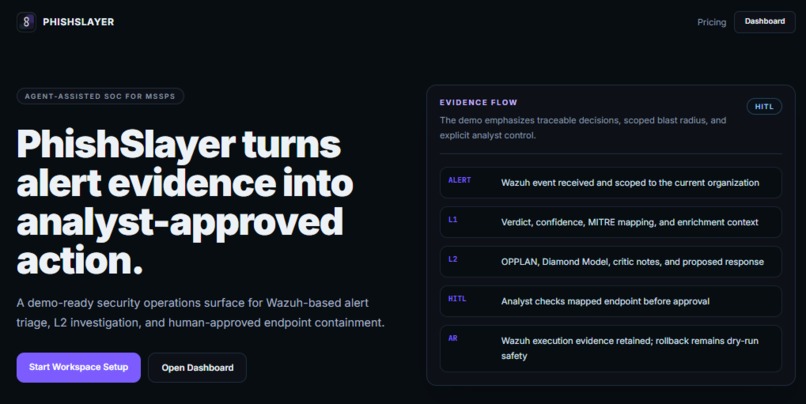
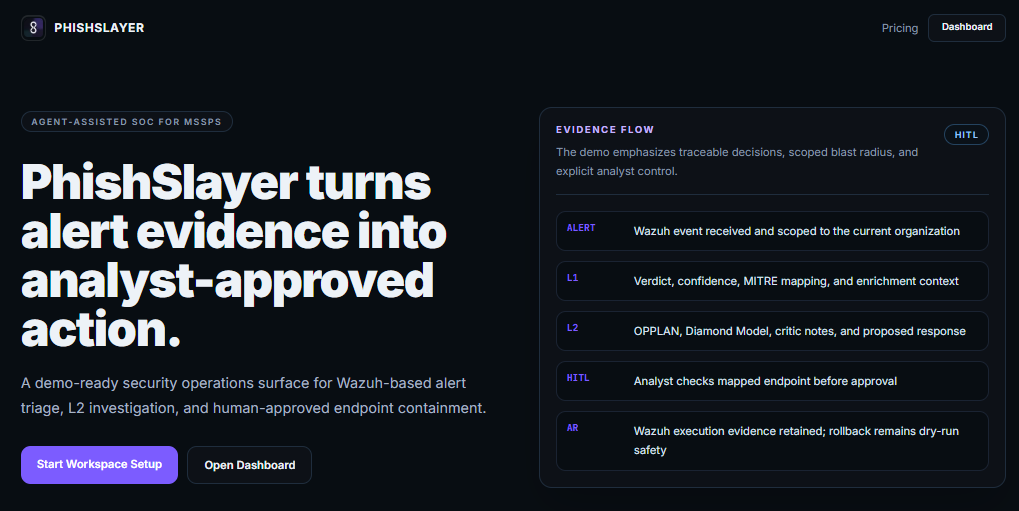
Landing Page
-
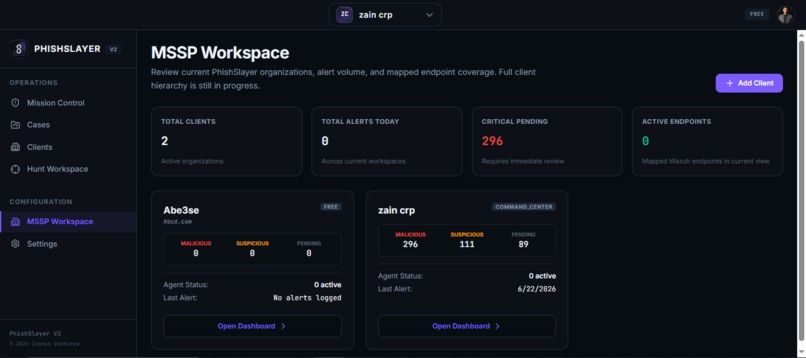
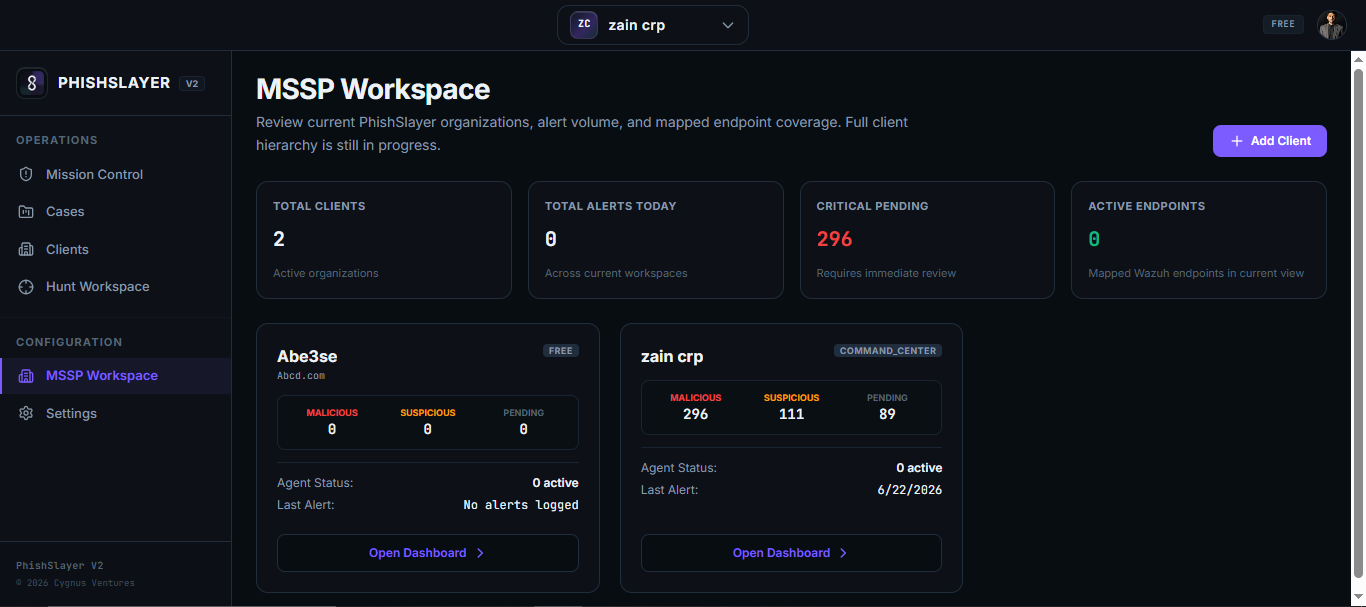
MSSP Workspace page
-
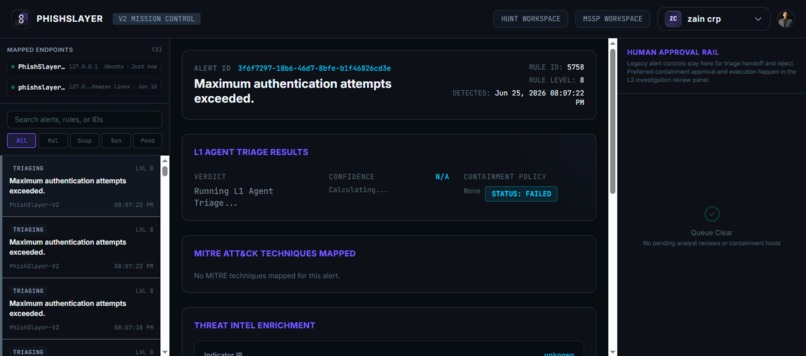
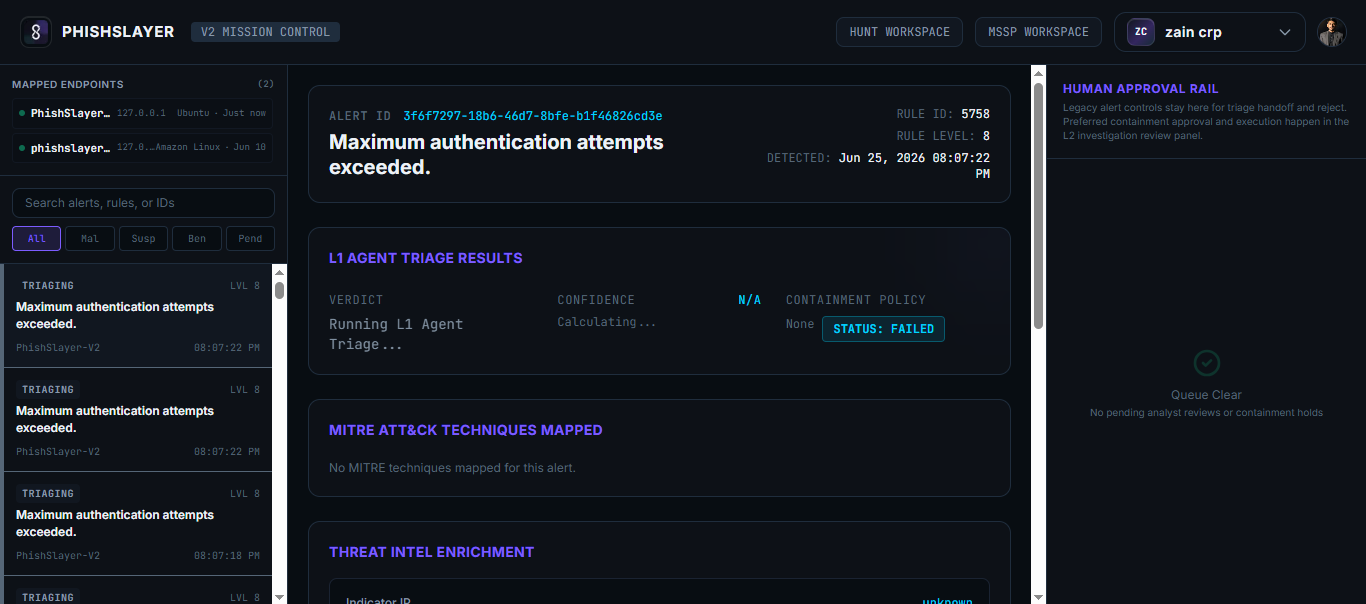
Dashboard/Mission Control
Inspiration
Security teams and MSSPs deal with the same problem every day: too many alerts, too little time, and not enough analysts to investigate everything manually.
Tier-1 SOC analysts often repeat the same tasks for every alert:
- Reading raw logs
- Understanding severity
- Checking suspicious indicators
- Writing investigation summaries
- Deciding whether to escalate
- Recommending what should happen next
PhishSlayer was inspired by this gap.
For this hackathon, I focused on one core part of the larger PhishSlayer idea: using the Gemini API to turn raw security alerts into clear SOC triage summaries with recommended next steps and human approval for risky actions.
The goal is not to blindly replace analysts. The goal is to help analysts move faster while keeping humans in control of sensitive cybersecurity decisions.
What it does
PhishSlayer Gemini SOC Triage Agent is an AI-powered cybersecurity prototype that analyzes Wazuh-style security alerts using the Gemini API.
The prototype takes a security alert and generates structured SOC triage output, including:
- Alert summary
- Severity level
- Confidence score
- Likely attack type
- Key evidence
- Recommended response action
- Whether human approval is required
The workflow is simple:
- A Wazuh-style security alert is submitted to the system.
- The alert is sent to a Gemini-powered triage endpoint.
- Gemini analyzes the alert and returns structured SOC output.
- The analyst can quickly understand what happened, why it matters, and what action is recommended.
- Risky actions are flagged for human approval instead of being executed blindly.
This makes the prototype useful for small SOC teams and MSSPs that want to reduce alert fatigue without removing analyst control.
How Gemini API was used
The Gemini API is used as the reasoning layer for SOC alert triage.
A sanitized security alert is sent to Gemini through an API endpoint. Gemini then returns a structured analysis that includes:
- A plain-language explanation of the alert
- Severity classification
- Confidence score
- Likely attack behavior
- Evidence from the alert
- Recommended response
- Human approval requirement
Gemini is not used as a general chatbot in this project. It is used inside a cybersecurity workflow to convert raw alert data into analyst-ready triage output.
The key safety idea is that Gemini can recommend an action, but risky actions such as blocking an IP, isolating a host, or disabling an account should require analyst approval.
How we built it
The prototype was built using:
- Next.js
- TypeScript
- Tailwind CSS
- Gemini API
- Google AI Studio
- Wazuh-style sample alerts
- Cybersecurity triage logic
I added a Gemini-powered triage endpoint that receives alert data, sends it to Gemini, and returns structured SOC analysis.
The project also builds on the broader PhishSlayer direction: an AI-assisted SOC platform for MSSPs with case management, evidence handling, audit logs, and analyst approval workflows.
Challenges we ran into
The biggest challenge was reducing a large cybersecurity platform idea into a working hackathon prototype.
PhishSlayer as a full product includes many parts:
- Dashboards
- Authentication
- Workspaces
- Cases
- Evidence
- Reports
- Alert ingestion
- AI agents
- Audit logs
For this hackathon, I narrowed the scope to one important workflow: Gemini-powered alert triage.
Another challenge was designing AI usage safely. In cybersecurity, AI should not blindly execute dangerous actions. A useful SOC assistant needs evidence, confidence, clear recommendations, and approval boundaries.
That is why this prototype separates AI recommendation from final response execution.
What we learned
I learned that Gemini can be used for more than simple chat interactions. It can act as a structured reasoning layer inside a real security workflow.
I also learned that AI in cybersecurity needs to be designed around trust. A good AI SOC assistant should answer:
- What happened?
- Why is it suspicious?
- What evidence supports the decision?
- How confident is the model?
- What should the analyst do next?
- Does this action require human approval?
This changed the focus from “AI that responds automatically” to “AI that helps analysts make faster and safer decisions.”
Accomplishments
I am proud that the project demonstrates a practical Gemini-powered cybersecurity workflow.
The current prototype includes:
- Wazuh-style alert input
- Gemini API integration
- AI-generated SOC triage summary
- Severity and confidence output
- Recommended response action
- Human approval flag for risky decisions
- Clear positioning for MSSPs and SOC teams
- A roadmap toward full live alert ingestion and AI-assisted investigation
What’s next
The next step is to connect this Gemini triage flow into the full PhishSlayer dashboard.
Future improvements include:
- Live Wazuh alert ingestion
- Automatic case creation
- IP/domain/hash enrichment
- MITRE ATT&CK mapping
- Analyst approval workflow
- Audit logs
- PDF incident reports
- MSSP client dashboards
- Feedback loop from analyst decisions
- Pilot testing with a real SOC or MSSP
Long term, PhishSlayer aims to become an AI SOC co-pilot for MSSPs and small security teams that need enterprise-grade triage support without enterprise-level complexity.
Built With
- aws-sqs
- clerk
- cloudflare
- docker
- fastapi
- google-gemini
- langgraph
- mongodb-atlas
- next.js
- polar.sh
- python
- redis
- supabase
- tailwind-css
- typescript
- vertex-ai
- wazuh


Log in or sign up for Devpost to join the conversation.