Inspiratio## Inspiration
Phishing attacks can look like legitimate emails, messages, and links, making them difficult to recognize. Students and everyday internet users may not know which warning signs to look for before clicking a link or sharing sensitive information.
We wanted to build a cybersecurity tool that does more than simply say “phishing” or “safe.” We wanted users to understand why something may be suspicious and what they should do next.
What We Built
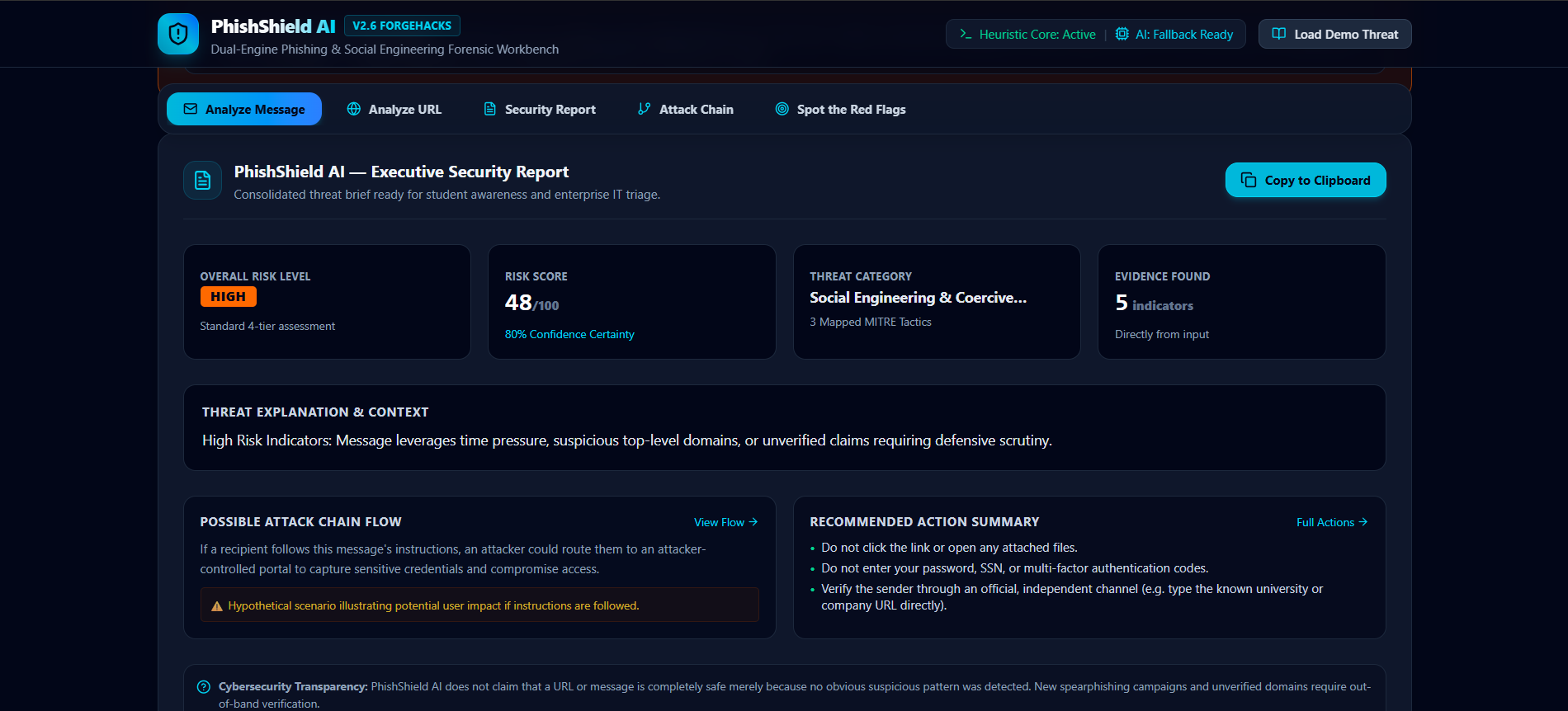
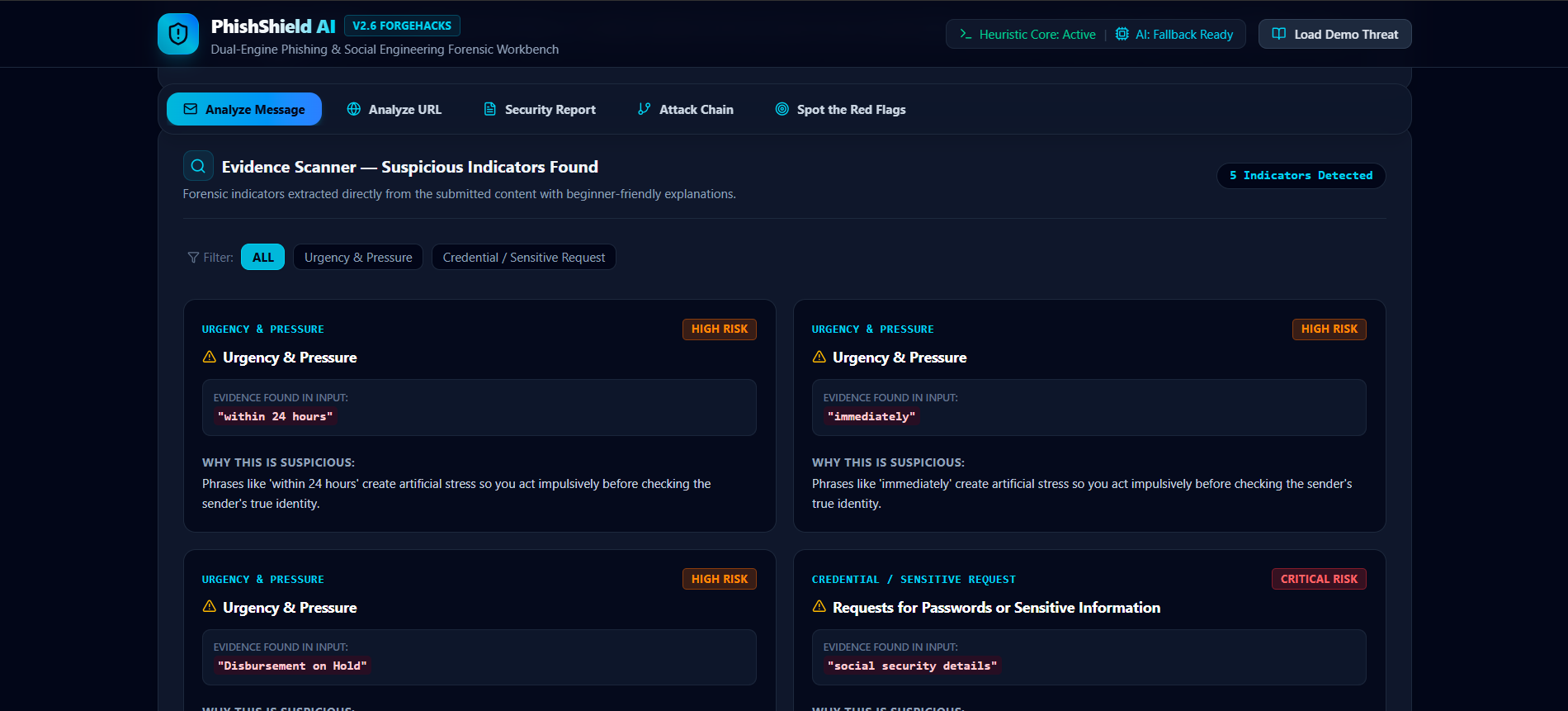
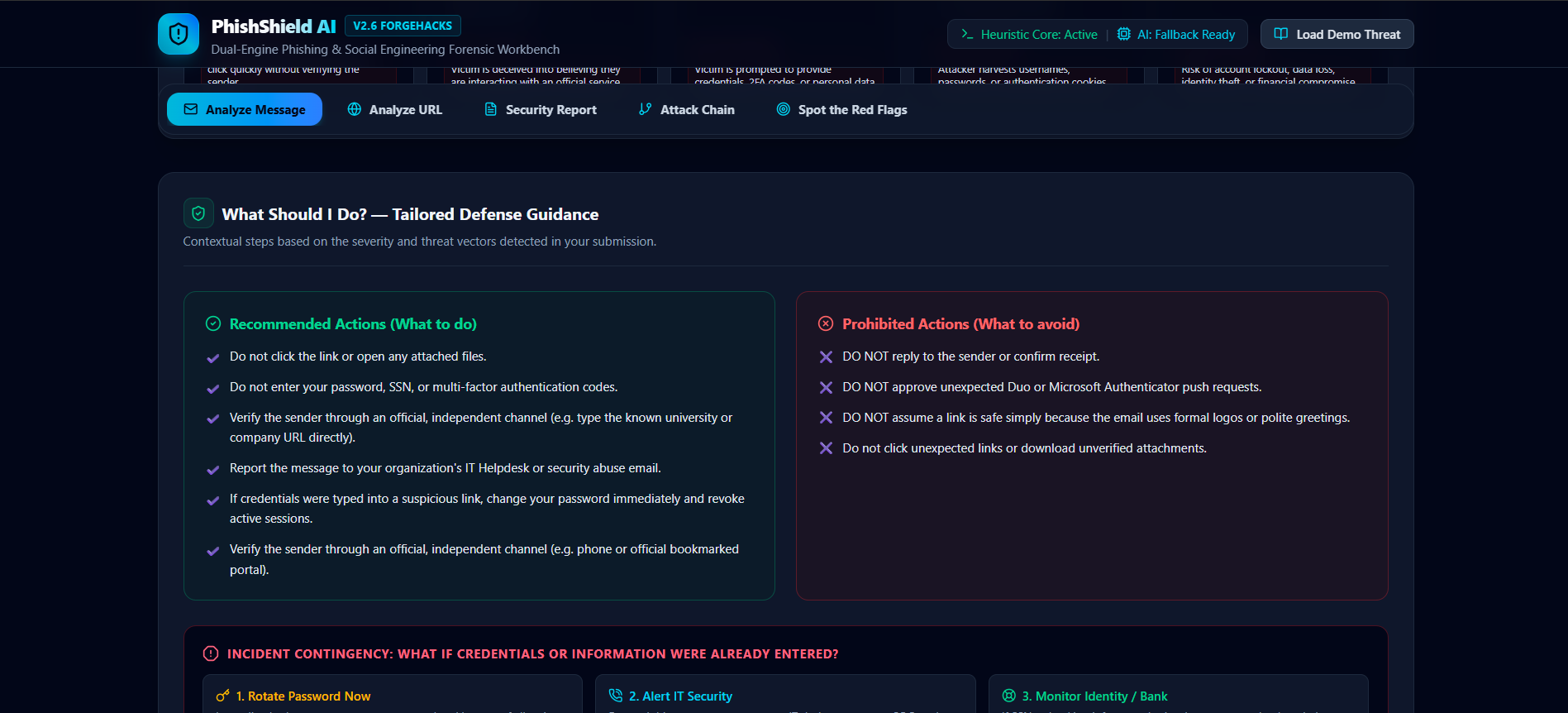
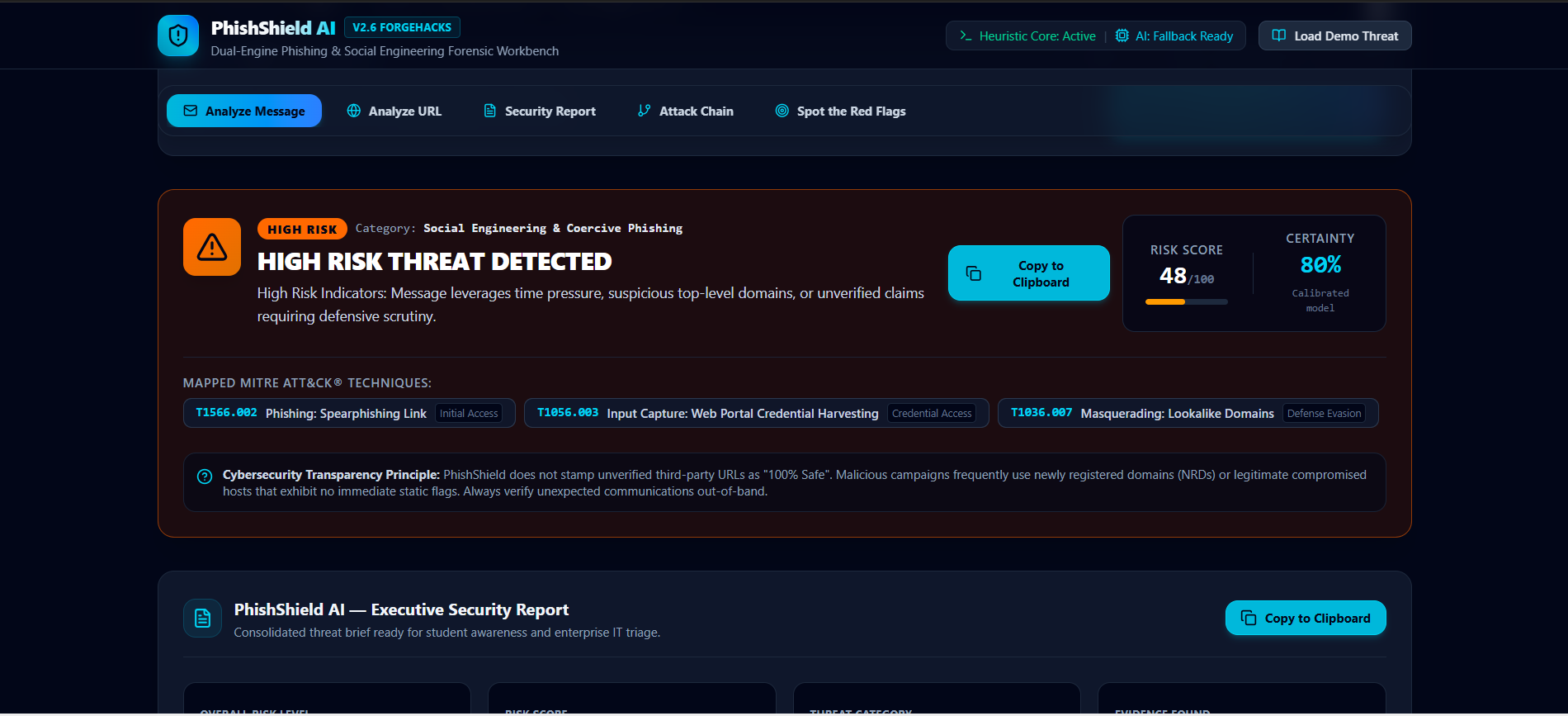
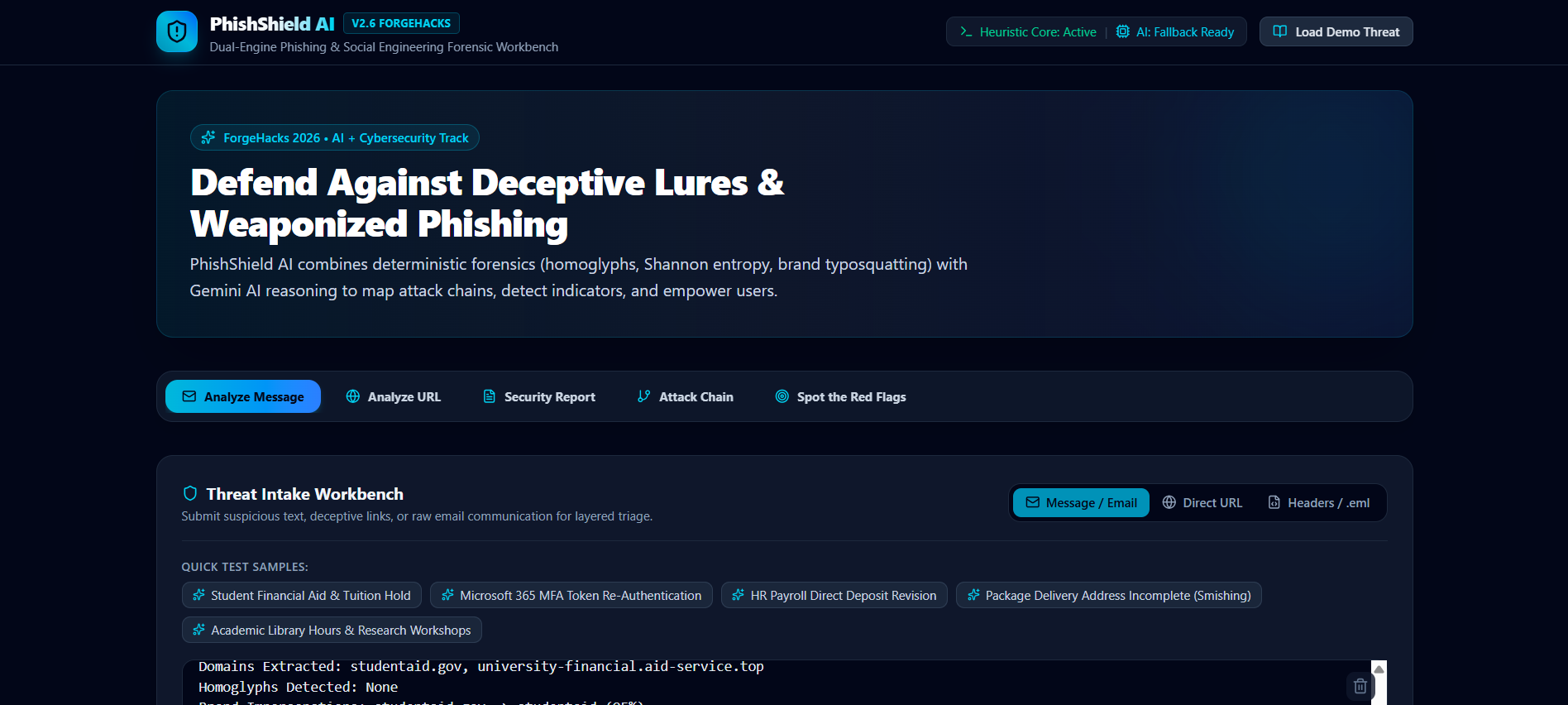
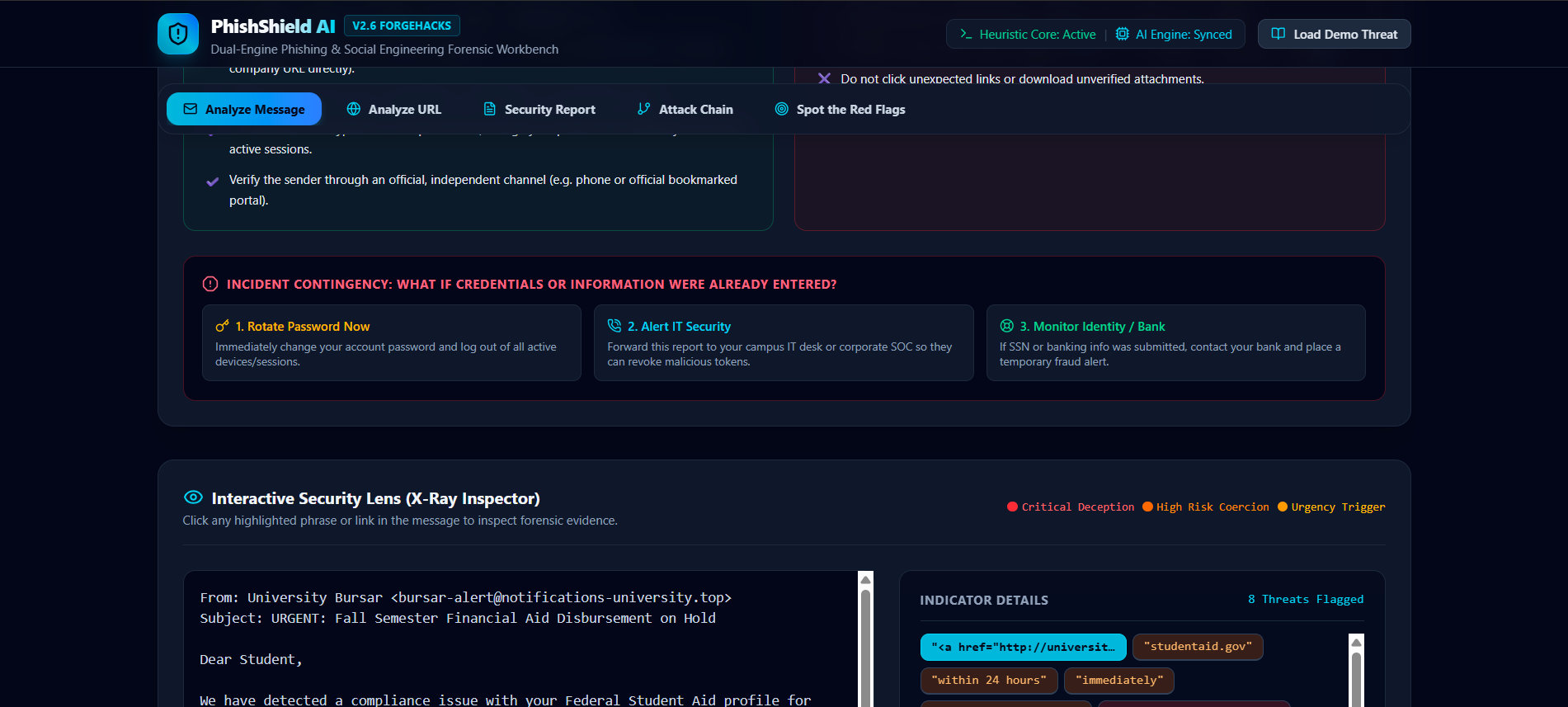
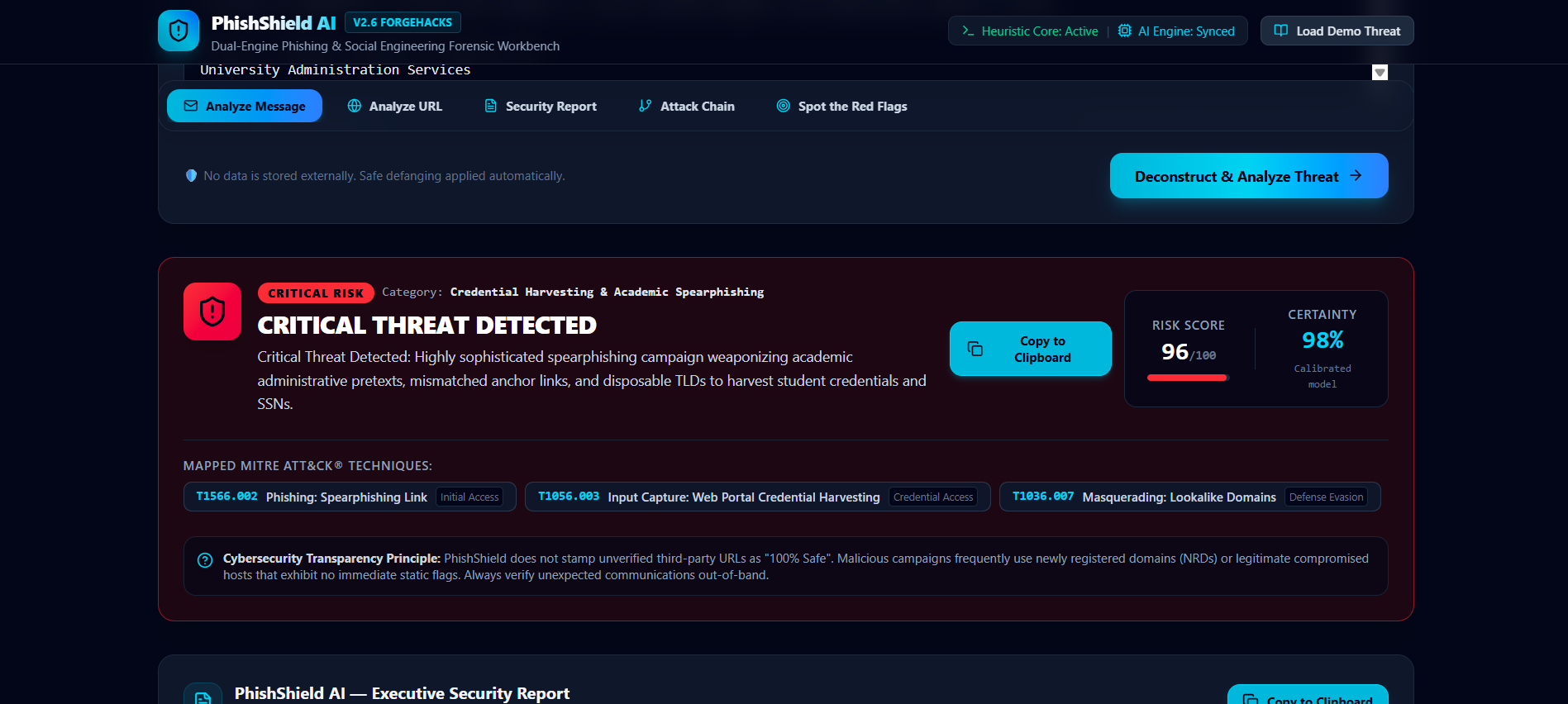
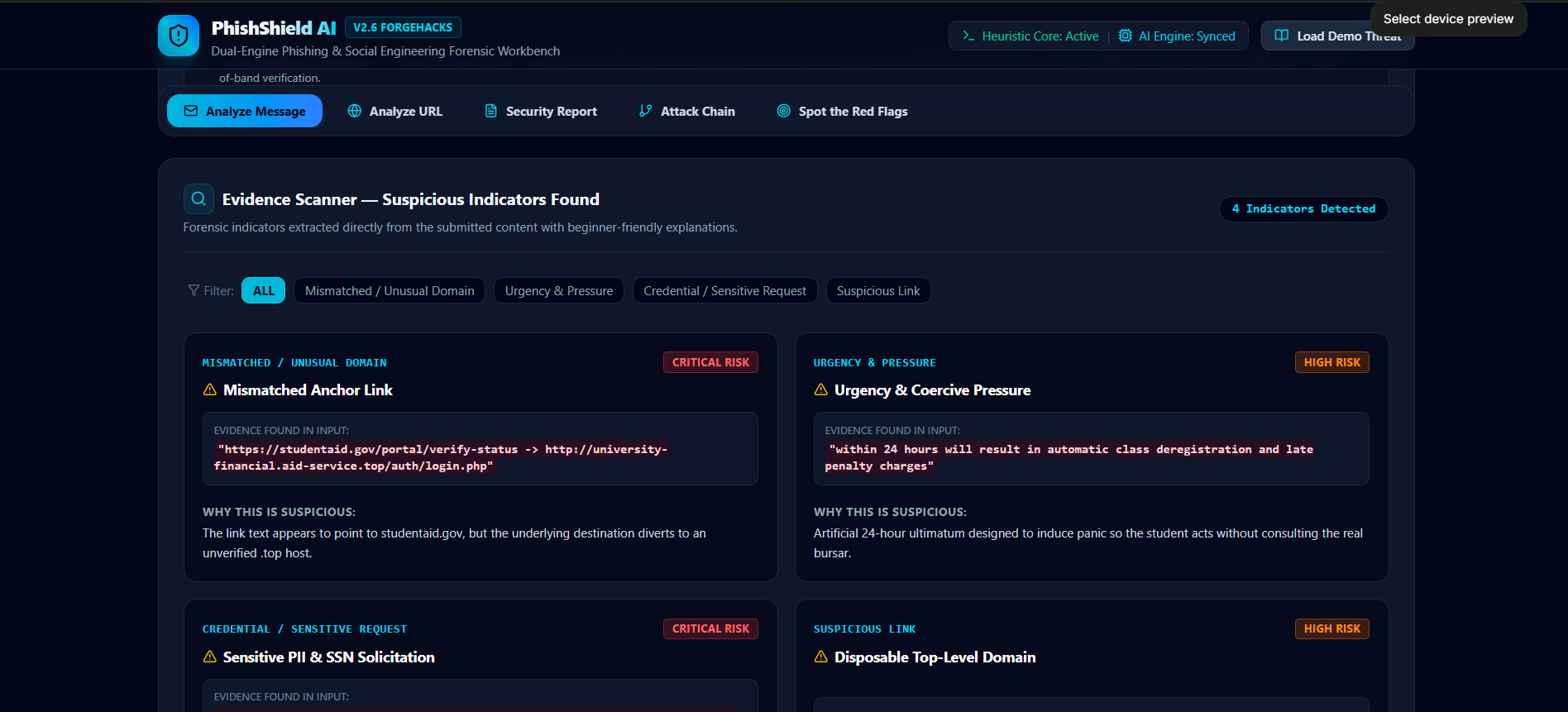
PhishShield AI is an AI-powered cybersecurity assistant that analyzes suspicious messages and URLs, identifies potential phishing indicators, provides a risk level, explains the detected warning signs, and recommends safer actions.
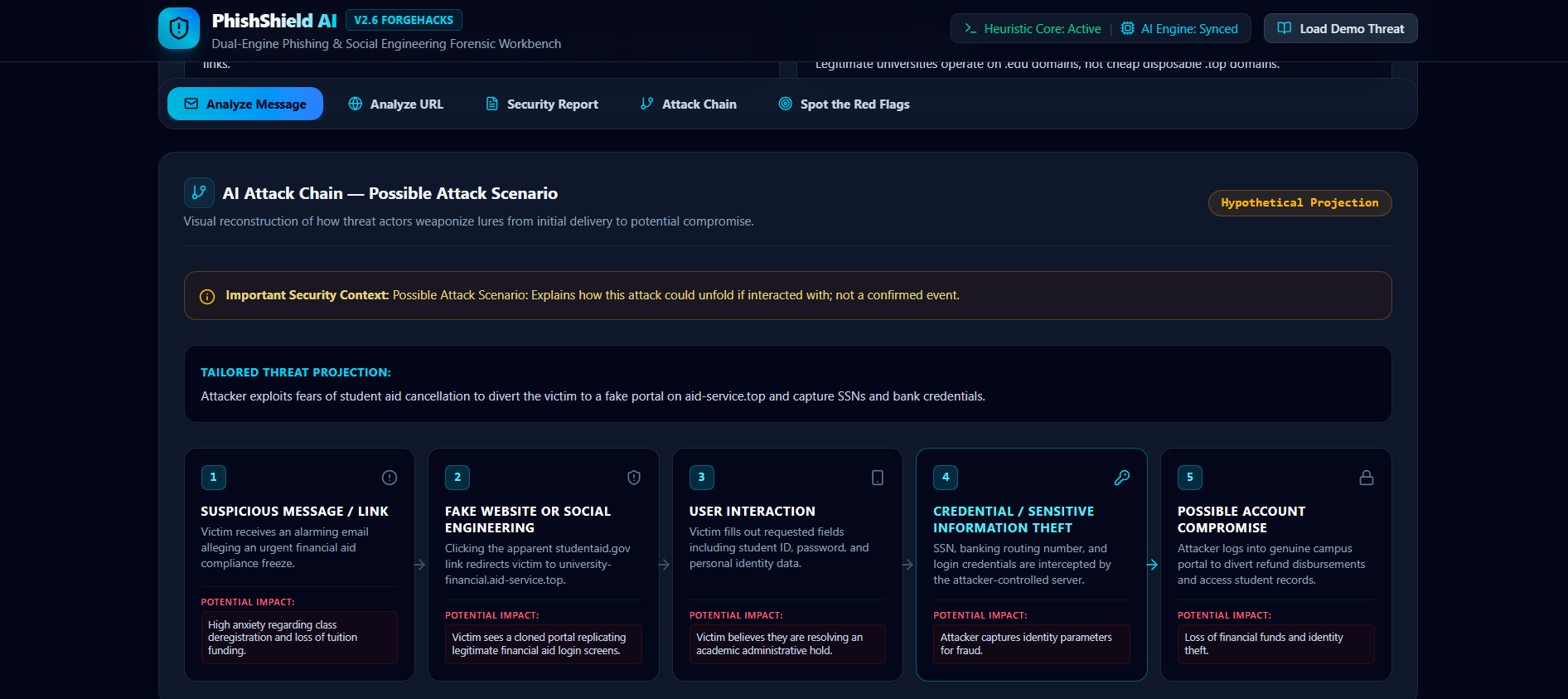
The project also includes an Attack Chain that explains a possible path from a suspicious message to a fake website and potential information theft, as well as a Security Report that organizes the analysis into an easy-to-understand format.
To make cybersecurity awareness more interactive, we also created a “Spot the Red Flags” challenge using fictional examples to help users learn common phishing warning signs.
How We Built It
We built PhishShield AI using Google AI Studio and Gemini AI, together with a modern web application interface using React and TypeScript.
The AI analyzes submitted content for potential phishing and social-engineering patterns and converts the analysis into clear explanations for non-technical users. The application also uses rule-based checks for suspicious URL and message characteristics.
What We Learned
This project helped us understand how AI can be applied to cybersecurity education and threat awareness. We learned that a useful security assistant should not only provide a result, but also explain the evidence behind that result and communicate uncertainty responsibly.
Challenges
One of our biggest challenges was making the analysis useful without making unsupported security claims. A suspicious URL cannot automatically be considered safe just because no obvious warning sign is detected.
We therefore designed the application to focus on identifying indicators, explaining potential risks, and giving users safer next steps rather than pretending to perform scans or threat-intelligence checks that are not actually available.
Impact
PhishShield AI aims to make basic cybersecurity awareness more accessible to students and everyday internet users. By explaining phishing indicators in simple language, the project can help users recognize suspicious content and make safer decisions before interacting with potentially dangerous messages or links.
What's Next
Future improvements could include integration with trusted threat-intelligence services, real-time URL reputation checks, browser-based protection, and additional cybersecurity awareness modules.n
What it does
How we built it
Challenges we ran into
Accomplishments that we're proud of
What we learned
What's next for Untitled
Built With
- ai
- analysis
- artificial
- awareness
- css
- cybersecurity
- detection
- gemini
- generative
- html
- intelligence
- javascript
- phishing
- react
- security
- studio
- threat
- typescript
- url
- web

Log in or sign up for Devpost to join the conversation.