-
-
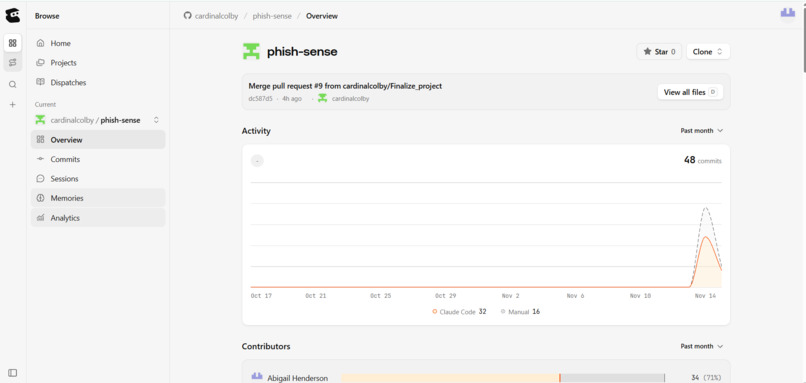
Entire.com Overview
-
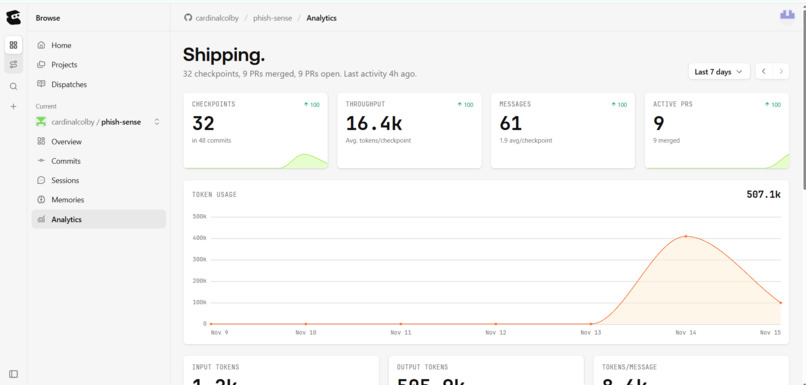
Entire.com Analytics
-
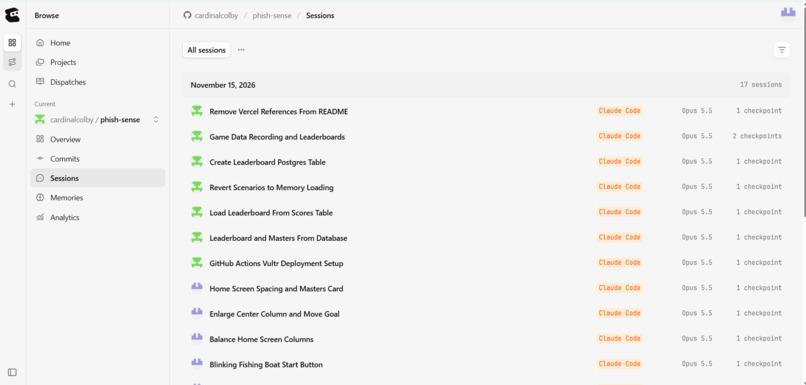
Entire.com Sessions
-
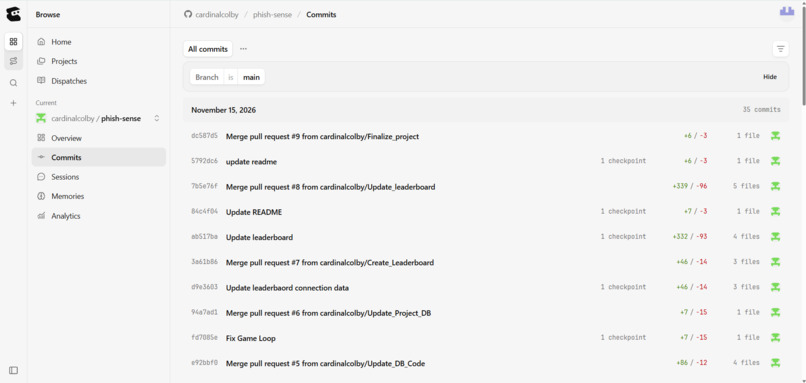
Entire.com Commits
-
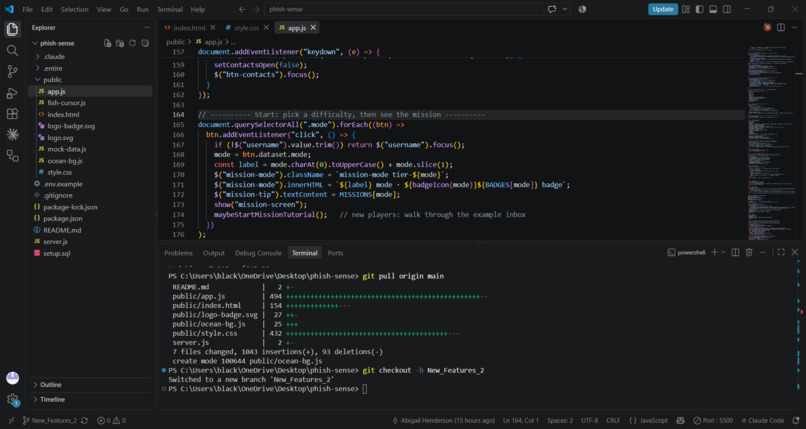
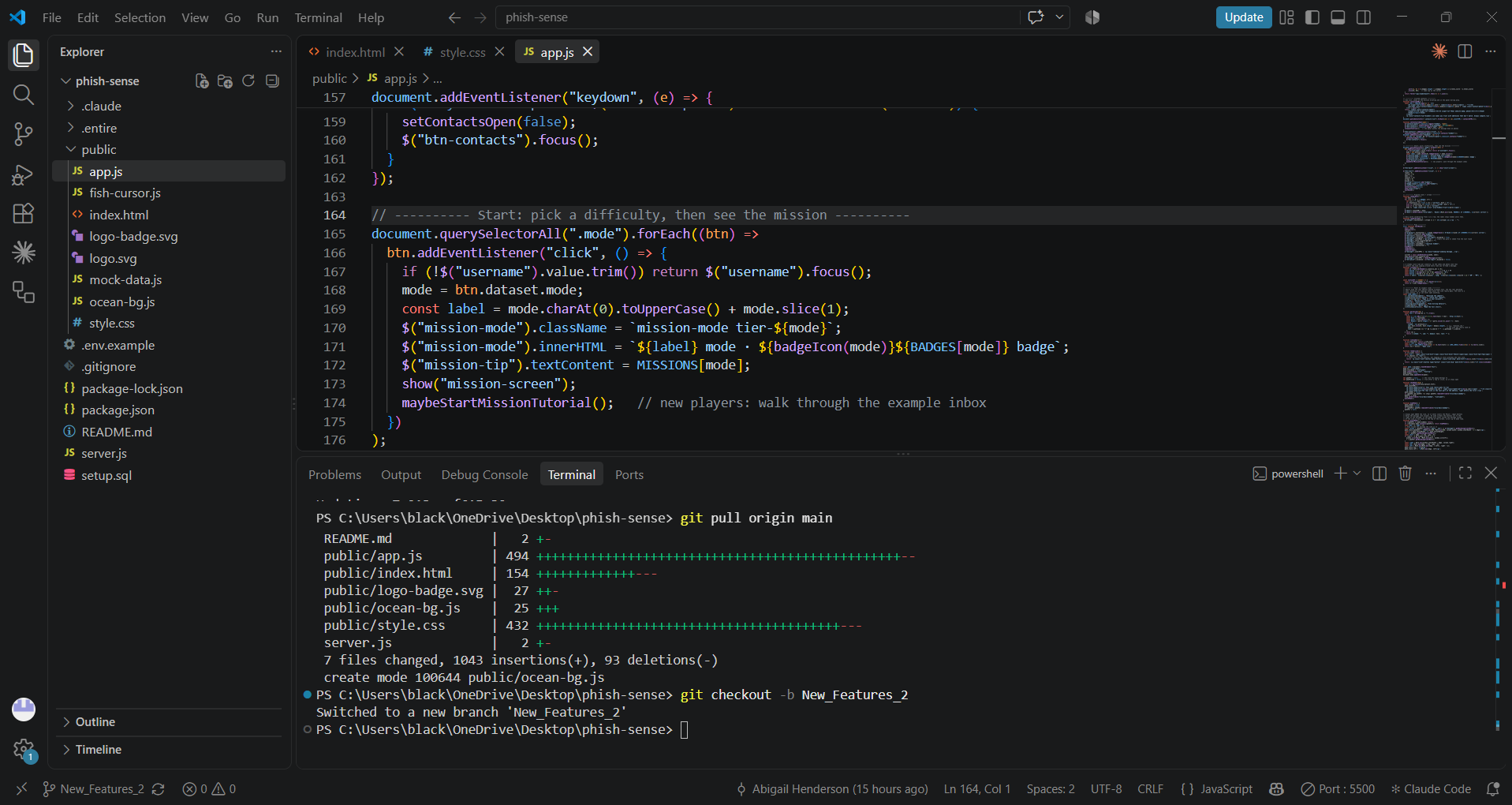
VSCode Space
-
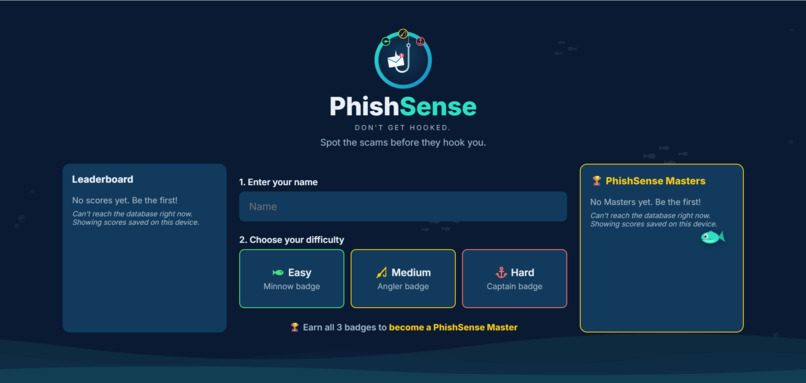
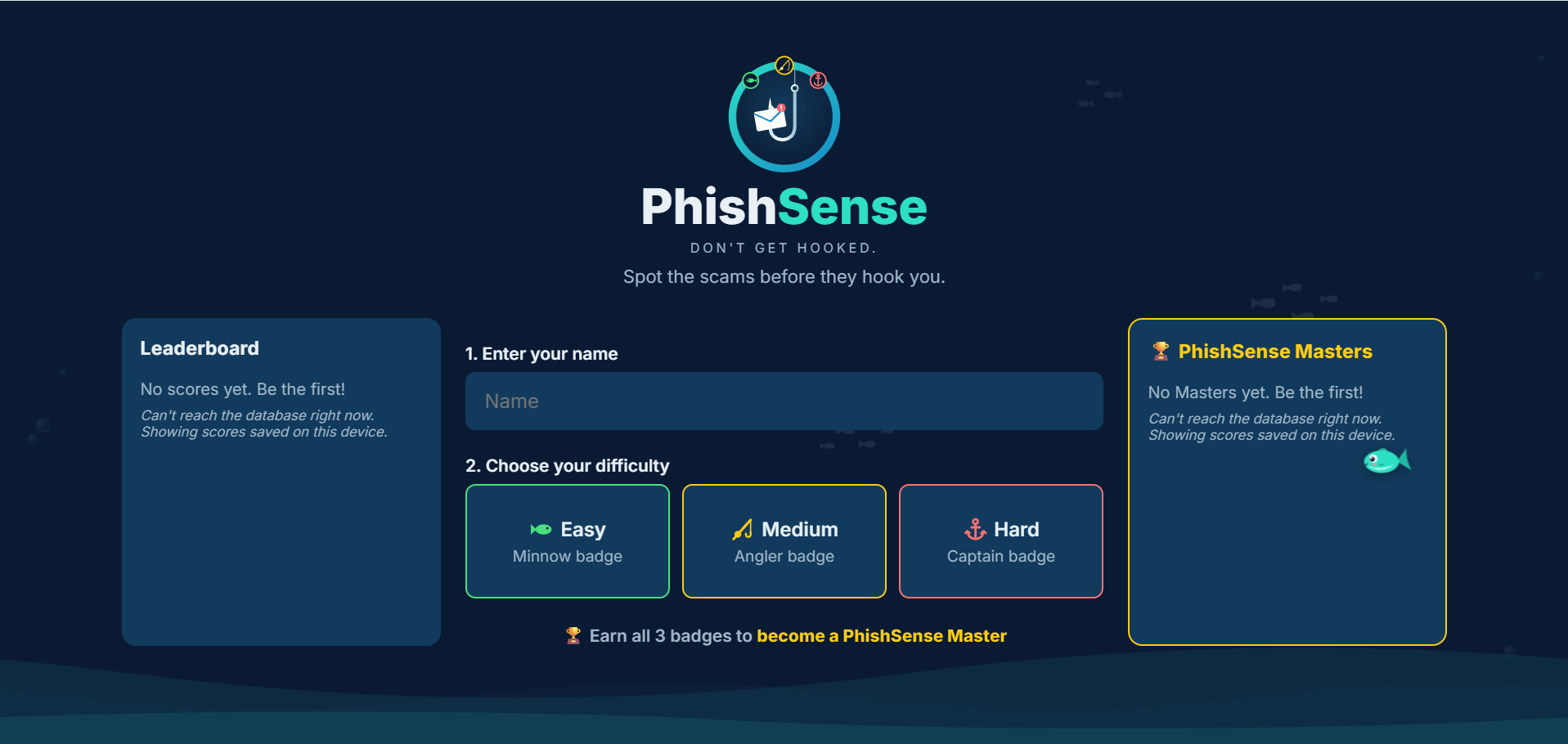
PhishSense Home Page
-
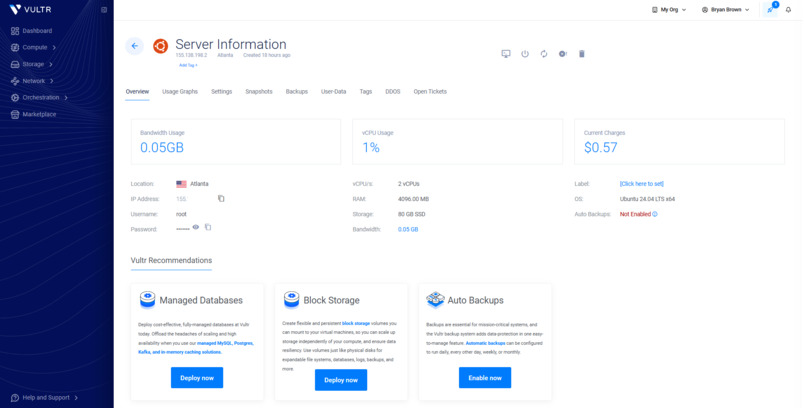
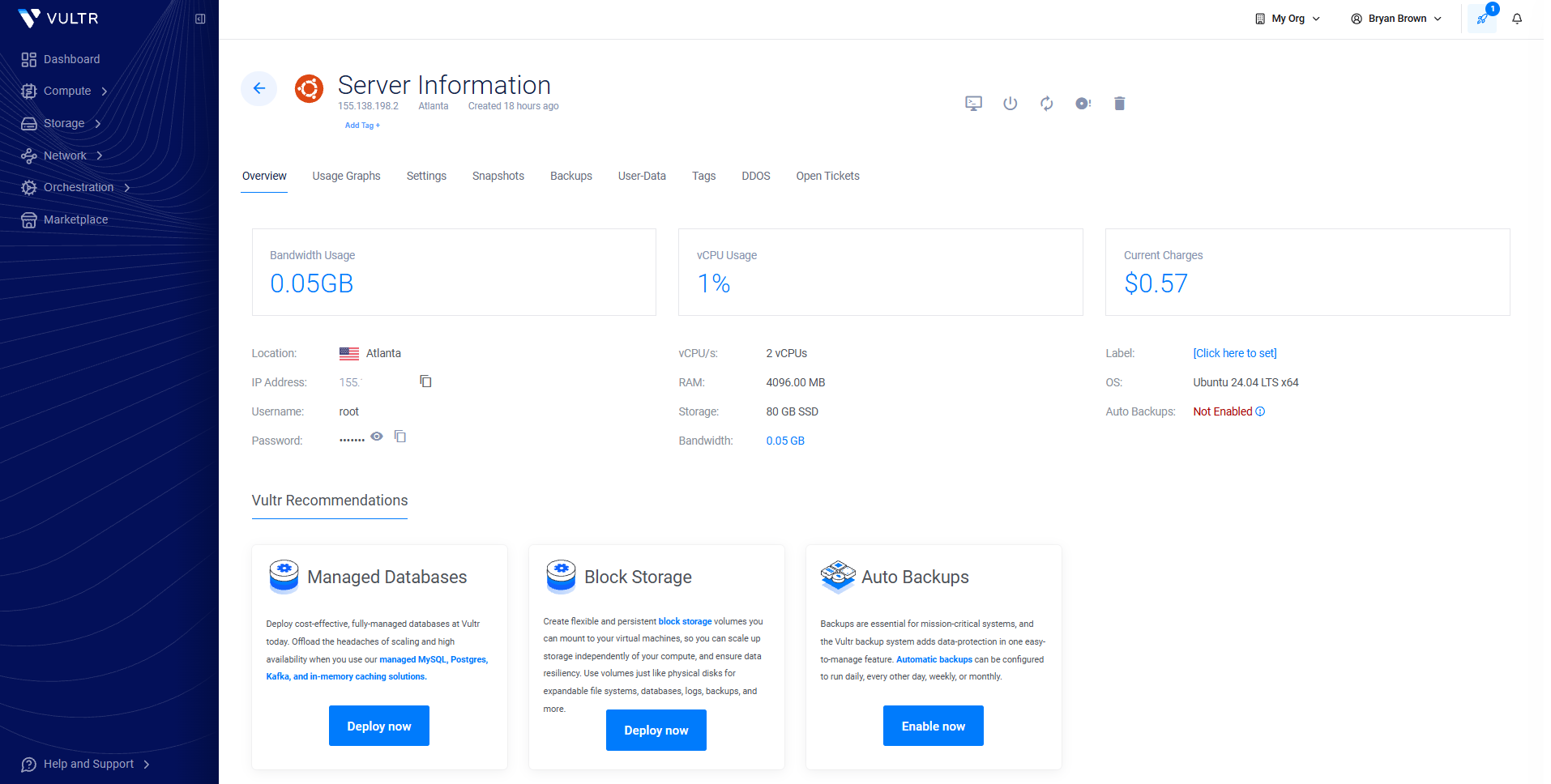
Vultr - Managed Linux VM | Ubuntu
-
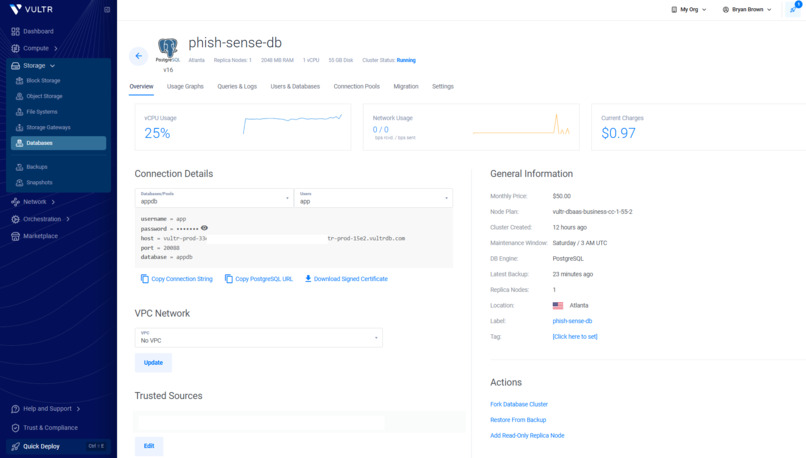
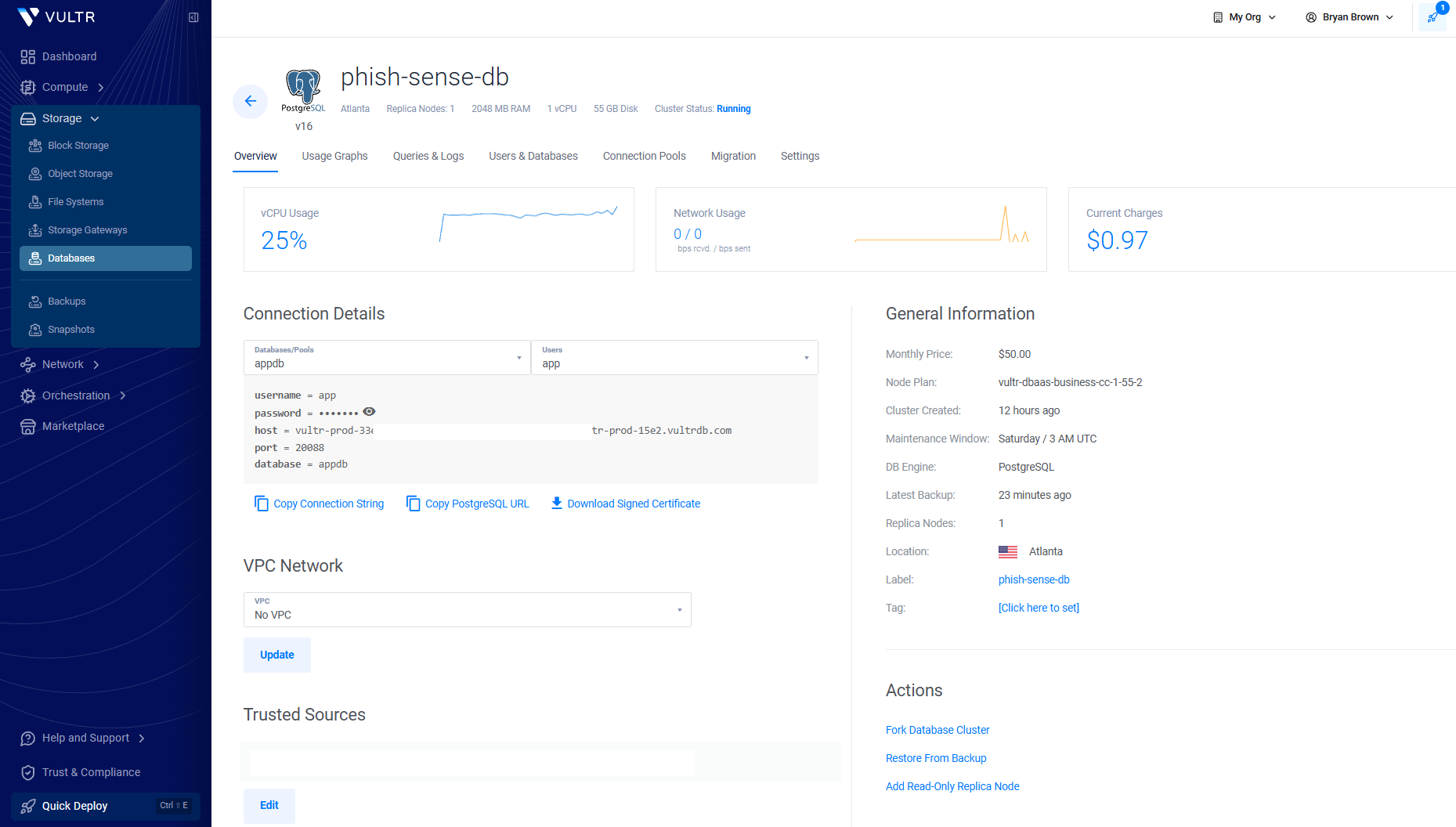
Vultr - Managed DB | Postgres
📊 View our project overview slides · 🌊 Play PhishSense
💡 Inspiration
Phishing is one of the most common ways attackers get in, but most security training is a slideshow people click through without learning anything. The same example emails get reused until everyone memorizes them. We wanted training that feels like a game, so people build real instincts instead of memorizing answers.
🎣 What it does
PhishSense is a game that trains you to spot phishing. You play as an employee at a fictional company, Bayline Energy. Each round shows you an email or text message, and you decide: Phish or Legit?
- ✍️ Curated scenarios: 20 realistic emails and text messages, reviewed and edited by our team with AI help, and sorted into Easy, Medium, and Hard, from obvious scams to polished impersonation
- 🚩 Red flag breakdowns: after every answer, you see exactly which warning signs you caught and which ones you missed
- 📋 Mission briefings: before each run, you get the company's real email domain and phone number, so you can check every message against them
- 🔍 Trusted contacts and link inspection: compare senders against a list of real company websites and phone numbers, and hover over links to see where they really go, just like you should in a real inbox
- 🧭 Built-in tutorial: new players get a quick walkthrough of what to check before their first mission
- 🪝 Instant feedback: "You got hooked!" when you fall for a scam, "You dodged the hook!" when you catch one, and a gentle note when you're too cautious with a safe message
- 🐟 Three difficulty modes: Easy, Medium, and Hard, each with its own badge (Minnow, Angler, Captain). Earn all three to become a PhishSense Master 🏆
- 📊 Leaderboard: track scores and badges, with a special spot for PhishSense Masters
- 🔒 No sign-up: just enter a name and play. We don't collect emails or passwords, because a security training app shouldn't create new data to protect
🛠️ How we built it
- Front end: HTML, CSS, and JavaScript, with an inbox-style email view and a phone-style text message view
- Backend: Node.js and Express
- Hosting: the web app is hosted on Vultr and live for anyone at our custom domain, phishsense.design, registered through GoDaddy 🌊
- Database: we set up a PostgreSQL database on Vultr to store scenarios and scores. We weren't able to fully connect the app to it in time, so the game currently runs from the scenarios built into the site, and it works on any computer from the website
- AI (in progress): we built an integration with the Google Gemini API to generate new scenarios as structured JSON, using our curated scenarios as style examples and backups
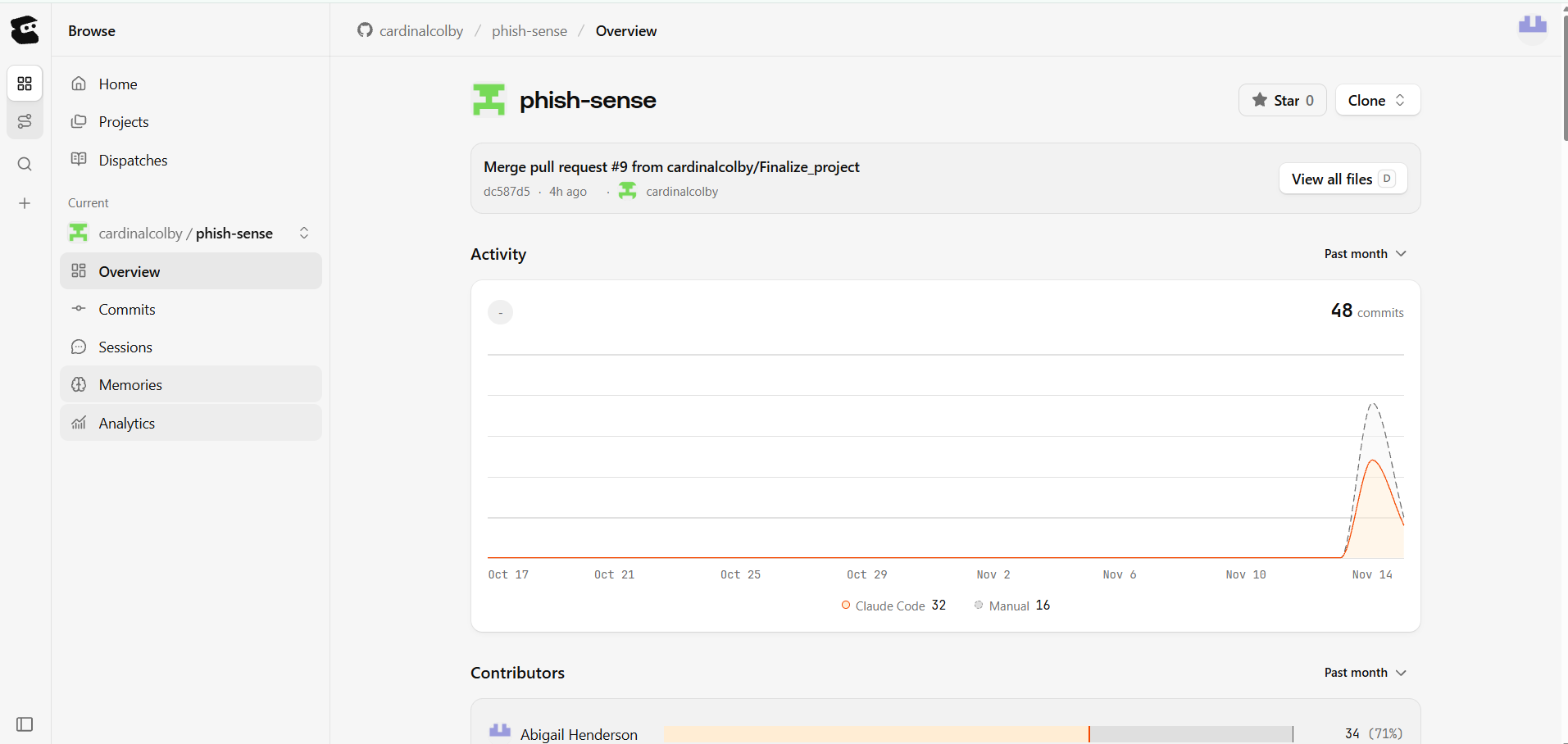
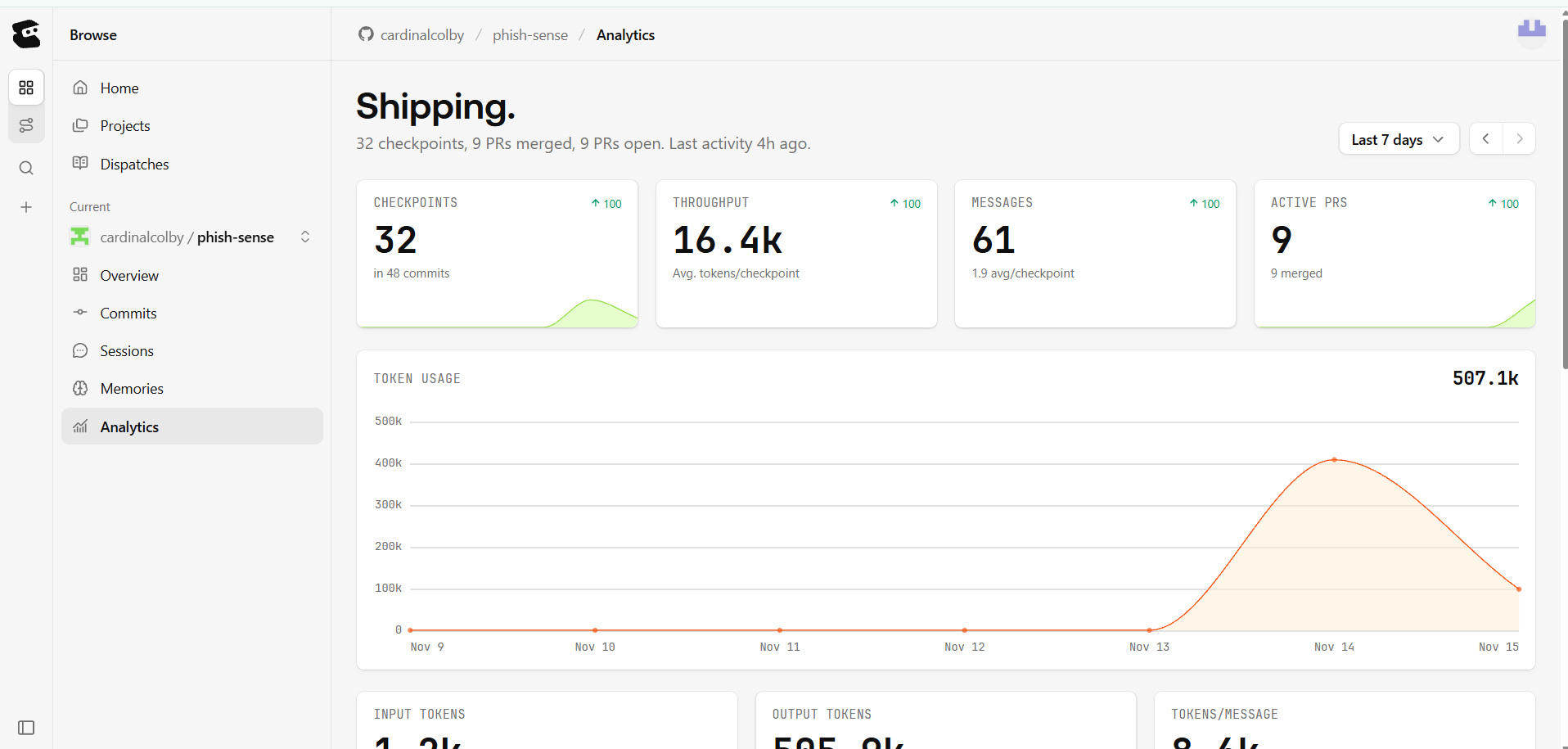
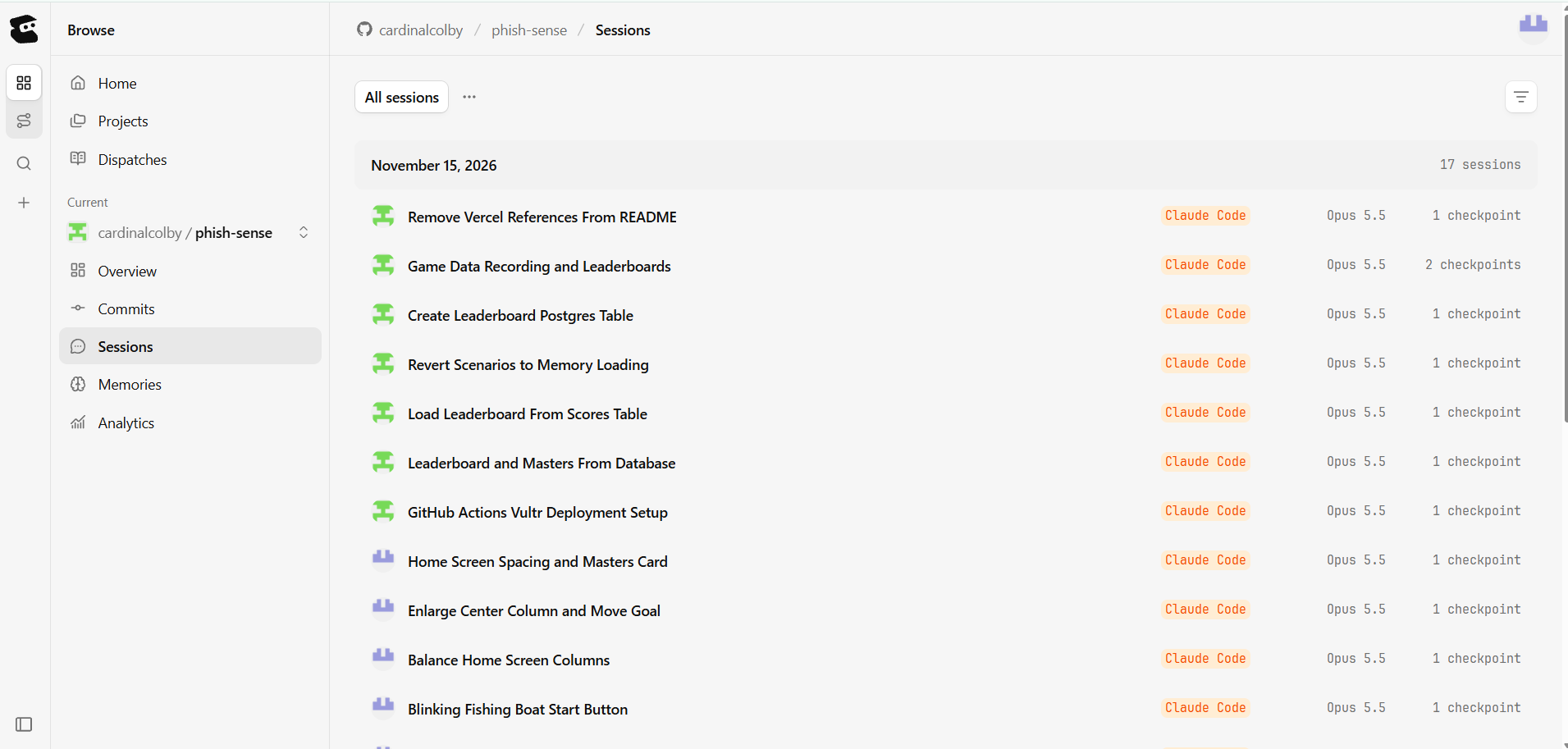
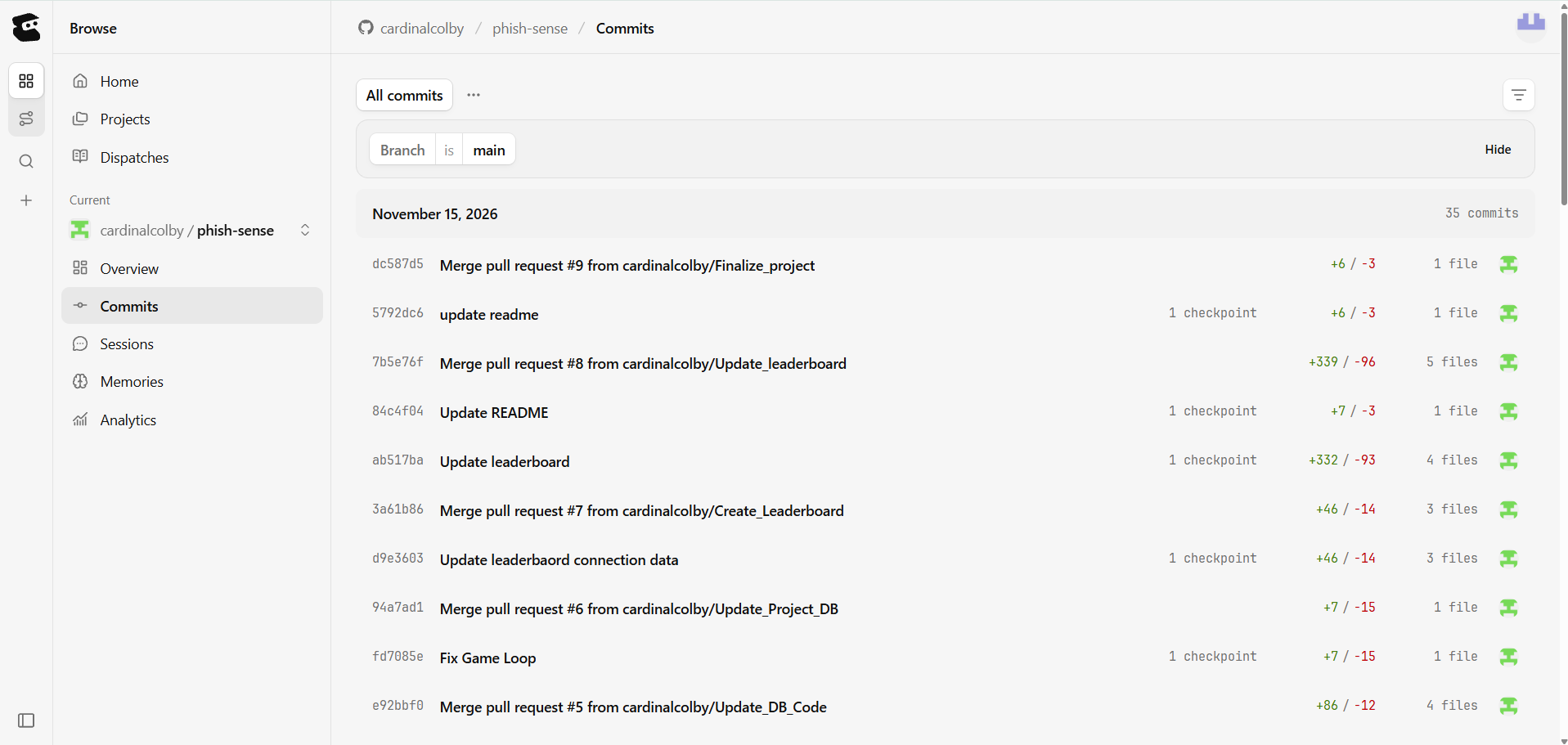
- Teamwork: we managed our code with Entire
🛟 Every scenario was reviewed and checked by our team, with fictional companies and reserved 555-01xx phone numbers, and links in the game are never clickable.
🌀 Challenges we ran into
- Getting AI-generated scenarios working: we built an integration with the Google Gemini API to create endless new messages, with our curated scenarios as backups. We couldn't get it working on the live site before the deadline, so for now the game runs on our curated scenarios
- Connecting the app to our database: our PostgreSQL database is set up on Vultr, but we couldn't finish connecting it to the live app. We built the game so it still runs fully from the website without it
- Balancing realism with safety: scenarios had to be convincing without being usable as real phishing templates, so we only use fictional companies and reserved 555-01xx phone numbers
- Changing our architecture mid-hackathon: we started with serverless functions on Vercel, then moved to hosting on Vultr, which meant reworking our backend and deployment late in the weekend
- Half of our team was new to hackathons, so we had to learn tools like databases, domains, and Git while building at the same time, and figure out how to split the work so everyone could contribute
- Coordinating four people working on the front end, backend, database, and domain at the same time, including merging separate branches without overwriting each other's work
🏆 Accomplishments that we're proud of
- ✨ Two of our four teammates were at their first hackathon ✨ and both made real contributions to the final app, from setting up our database to getting our custom domain working
- A live, playable game that anyone can open from our website
- A badge system that makes security training something people want to replay
- Teaching real habits, not just quiz answers: checking the sender against trusted contacts and inspecting where a link really goes are the same steps people should take in their real inbox
- A polished, playful experience with instant feedback, a tutorial, and an ocean theme that makes learning about phishing feel like a game
- Splitting the work across four teammates and bringing the front end, backend, hosting, and domain together into one app 🤝
📚 What we learned
- How attackers adjust phishing difficulty, from obvious scams to polished impersonation
- How to host a web app in the cloud, set up a managed database, and connect a custom domain
- How to structure an AI integration with fallbacks, even before it's fully working
- That it's better to finish a solid core game than to rush features we couldn't get working in time
- How much small design choices, like colors, feedback messages, and a short tutorial, change whether people actually learn from a game
🚀 What's next for PhishSense
- Finish debugging our Gemini API integration so the live game generates endless new scenarios, and no two games are ever the same
- Fully connect the app to our Vultr PostgreSQL database so scores and the leaderboard are shared across all players
- A Scam Library to search every scenario and red flag
- More formats: QR code phishing, voicemail transcripts, and fake login pages
- Team mode so companies can run phishing training with their own dashboards
- Personal practice that focuses on each player's most-missed red flags
- A "Report phishing" button that works like a real email client, to build the habit of reporting instead of just deleting
- Harder Hard mode: hide the trusted contacts and link hints so players check every detail on their own
- A daily challenge where everyone gets the same five messages, with its own daily leaderboard
- Speed and streak bonuses for quick, correct answers
- Shareable score cards so players can challenge their friends
- Arcade-style buttons with Makey Makey for a hands-on version at events
Built With
- css3
- entire
- express.js
- gemini
- google-cloud
- html5
- javascript
- json
- node.js
- postgresql
- rest-api
- vultr
