-
-
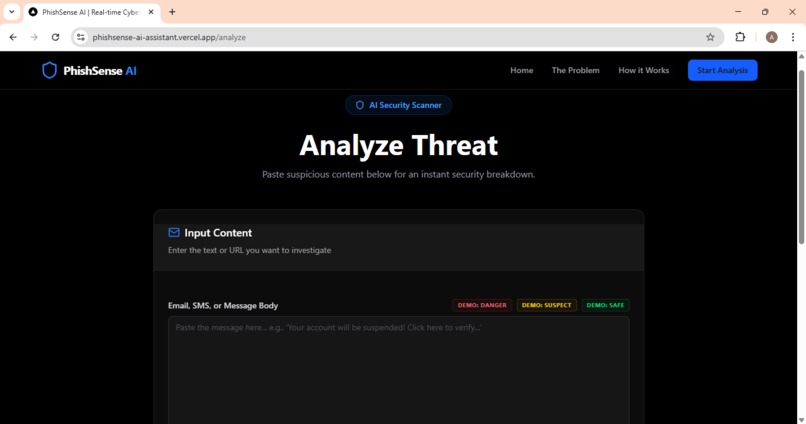
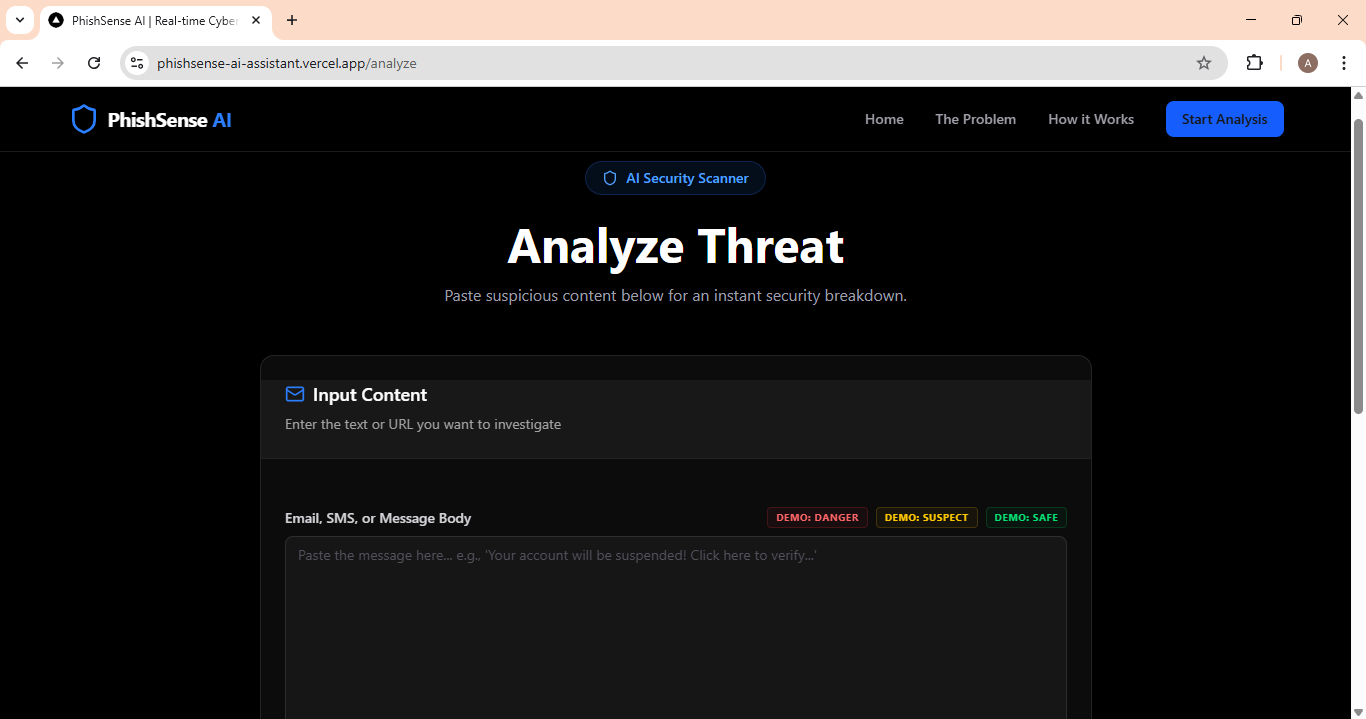
Input Box for Messages & Links
-
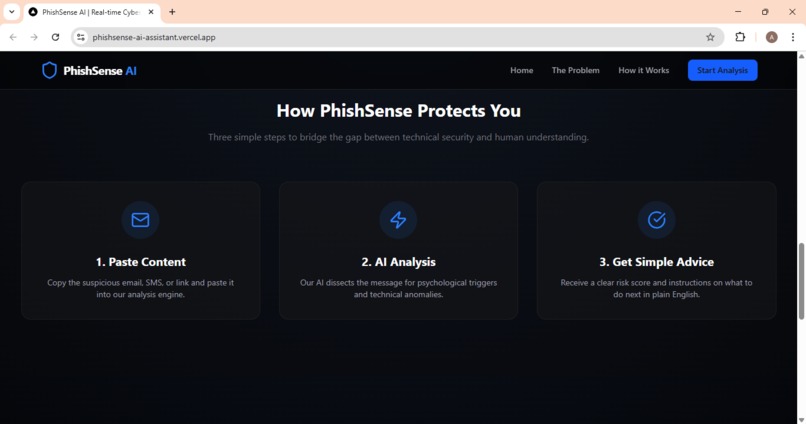
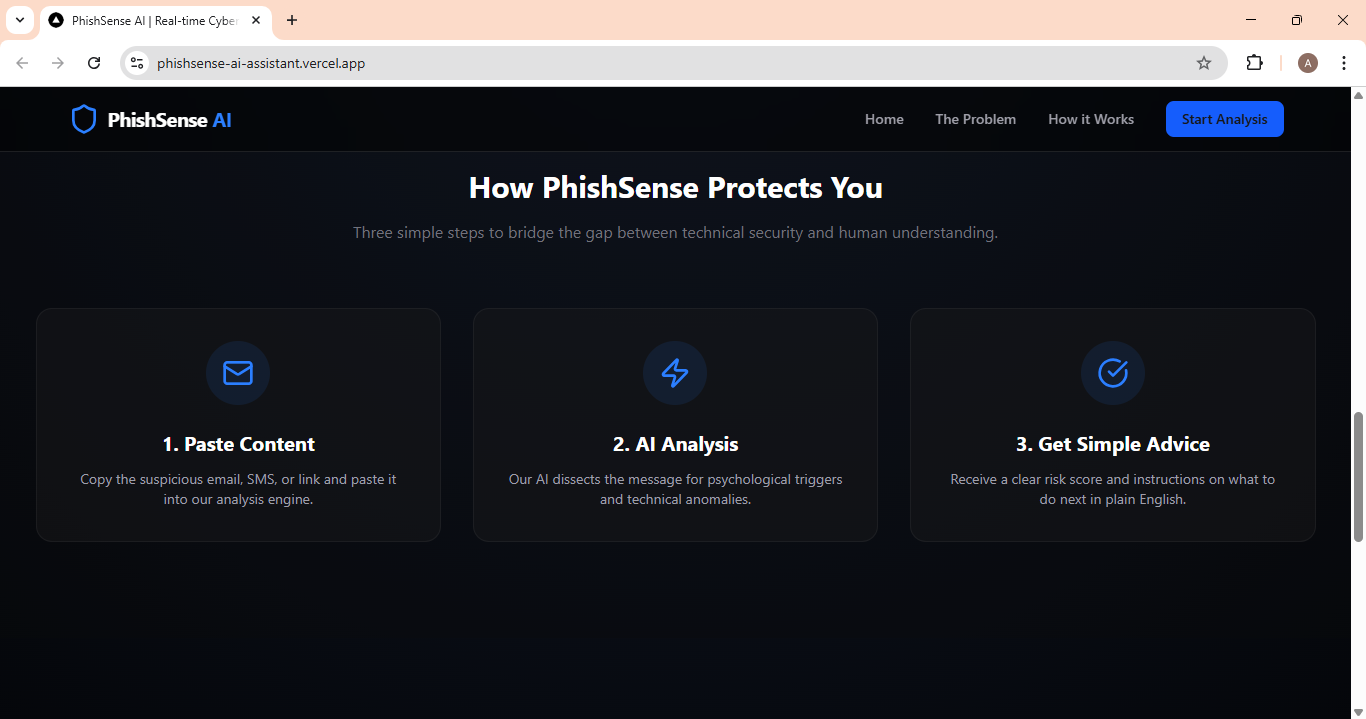
How It Works?
-
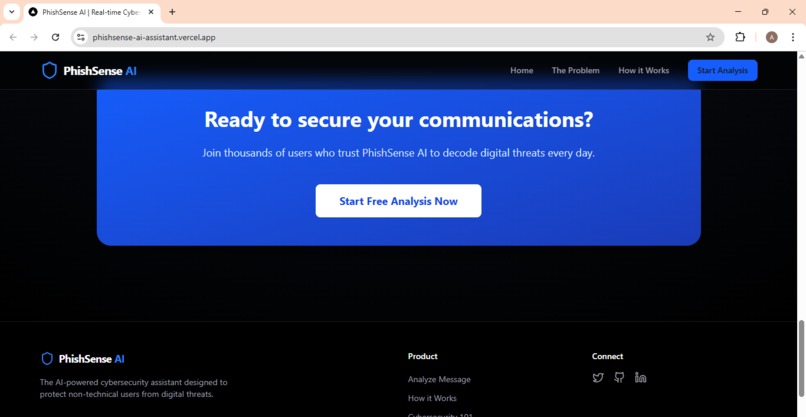
Free Analysis
-
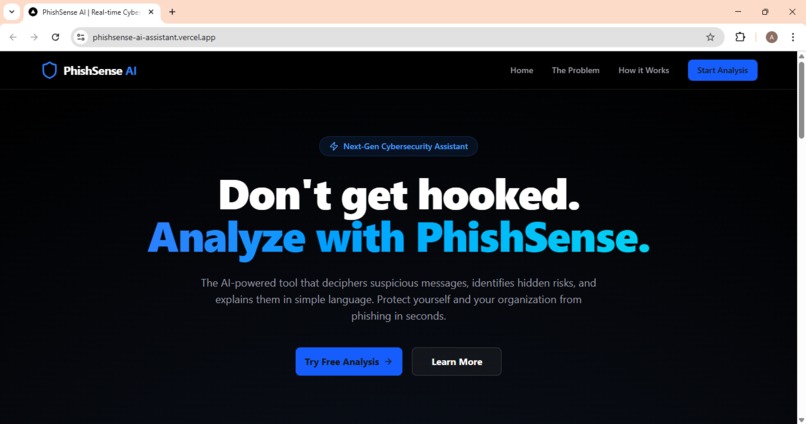
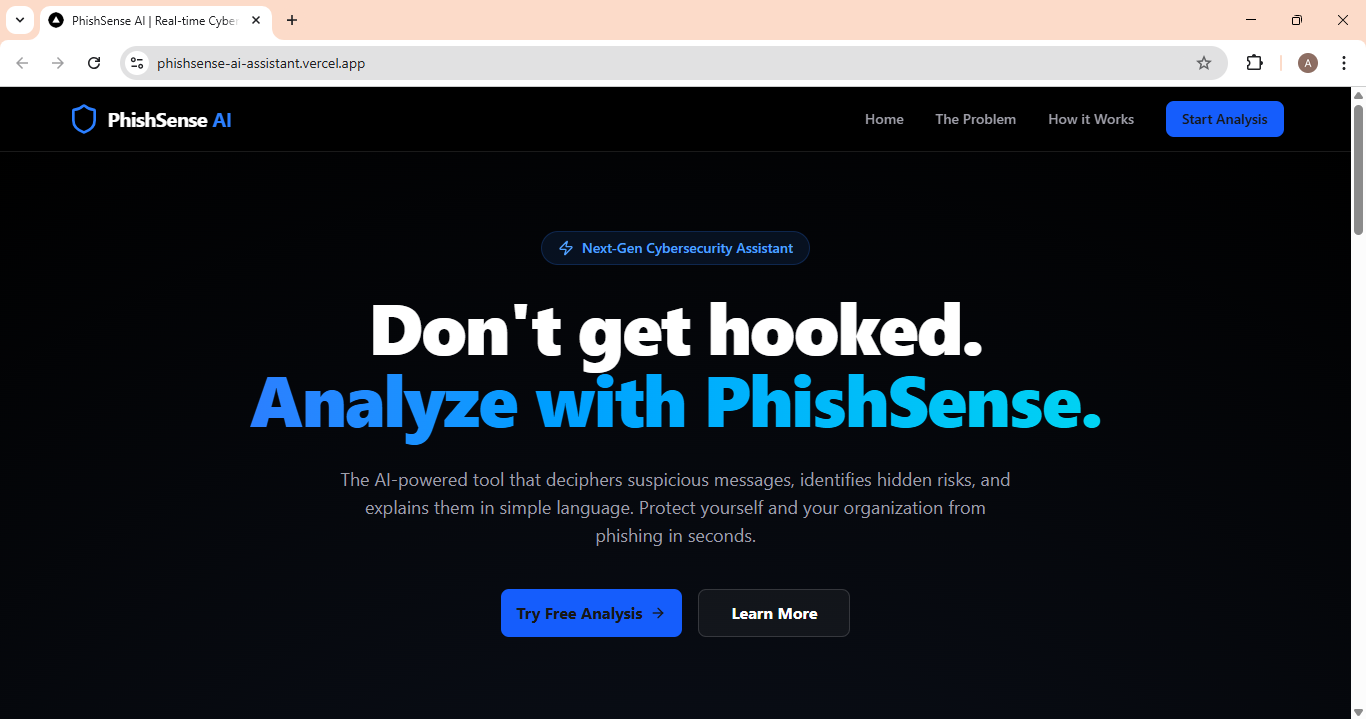
Web Interface
-
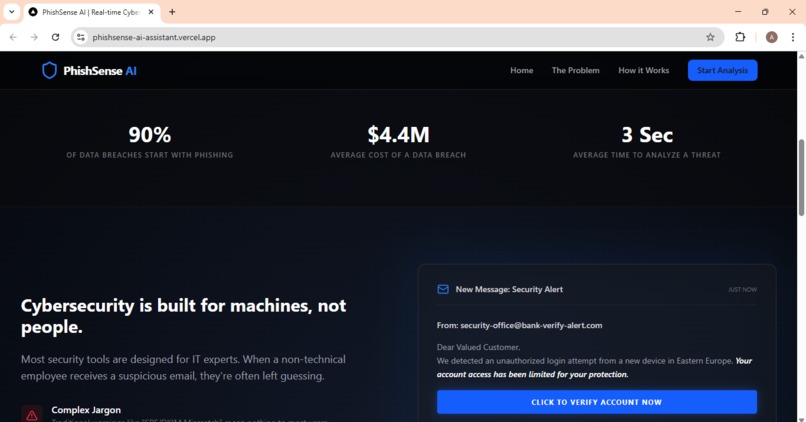
Data Breaches Risk
-
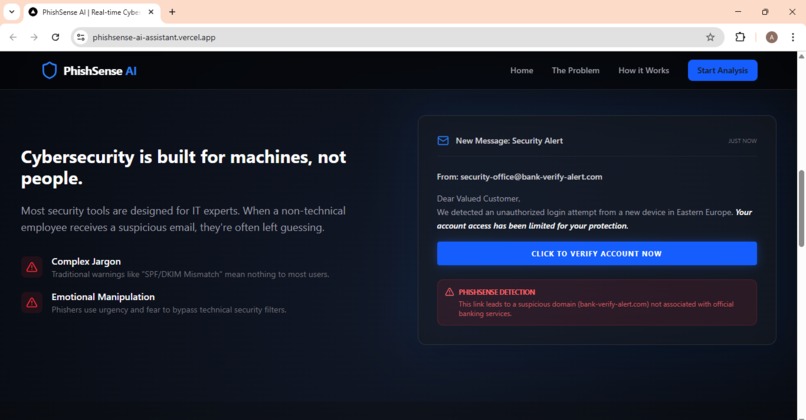
The Problem
-
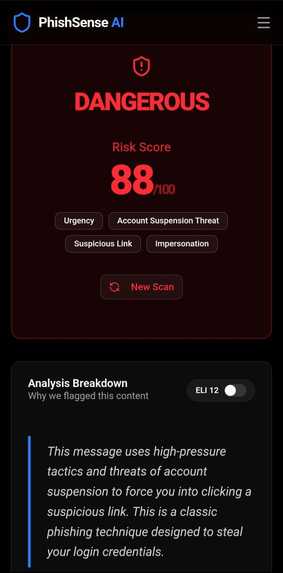
Mobile Web Version 1
-
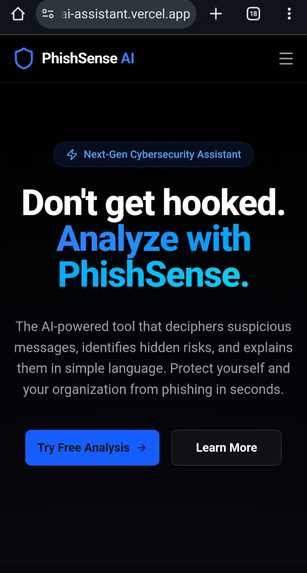
Mobile Web Version 2

Inspiration
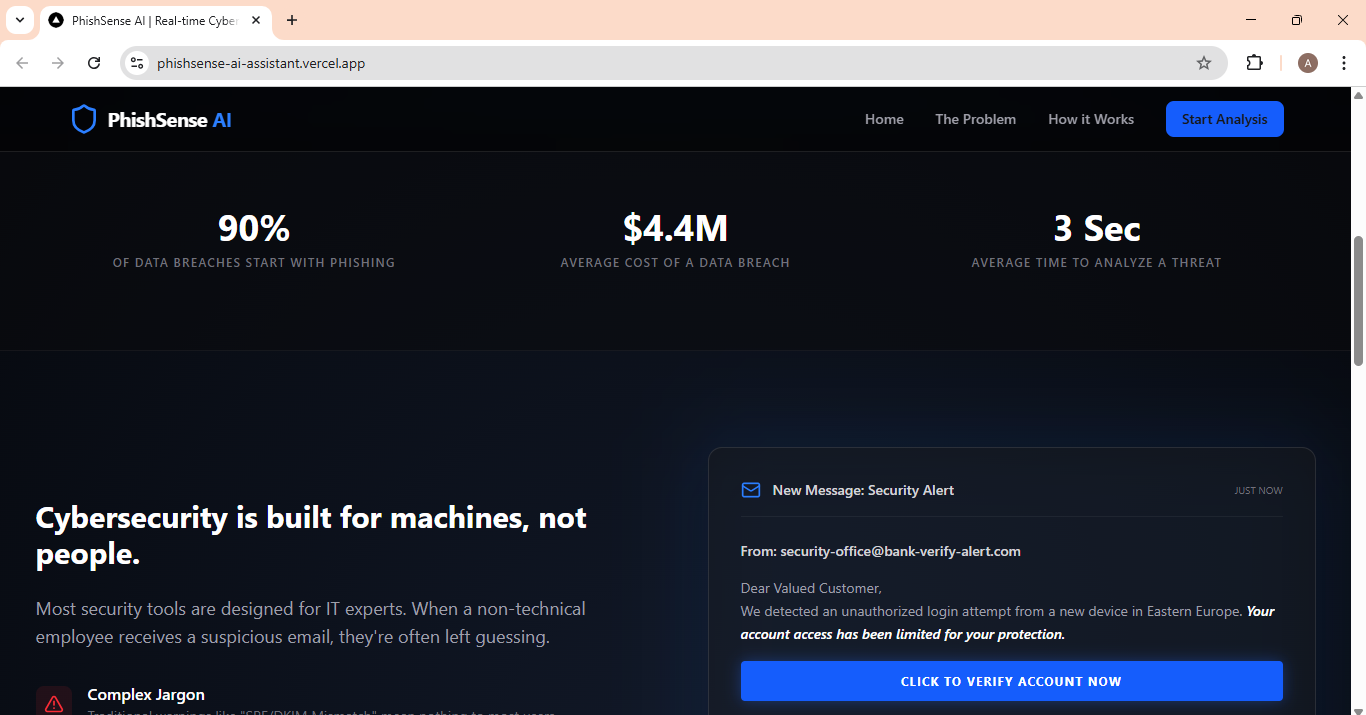
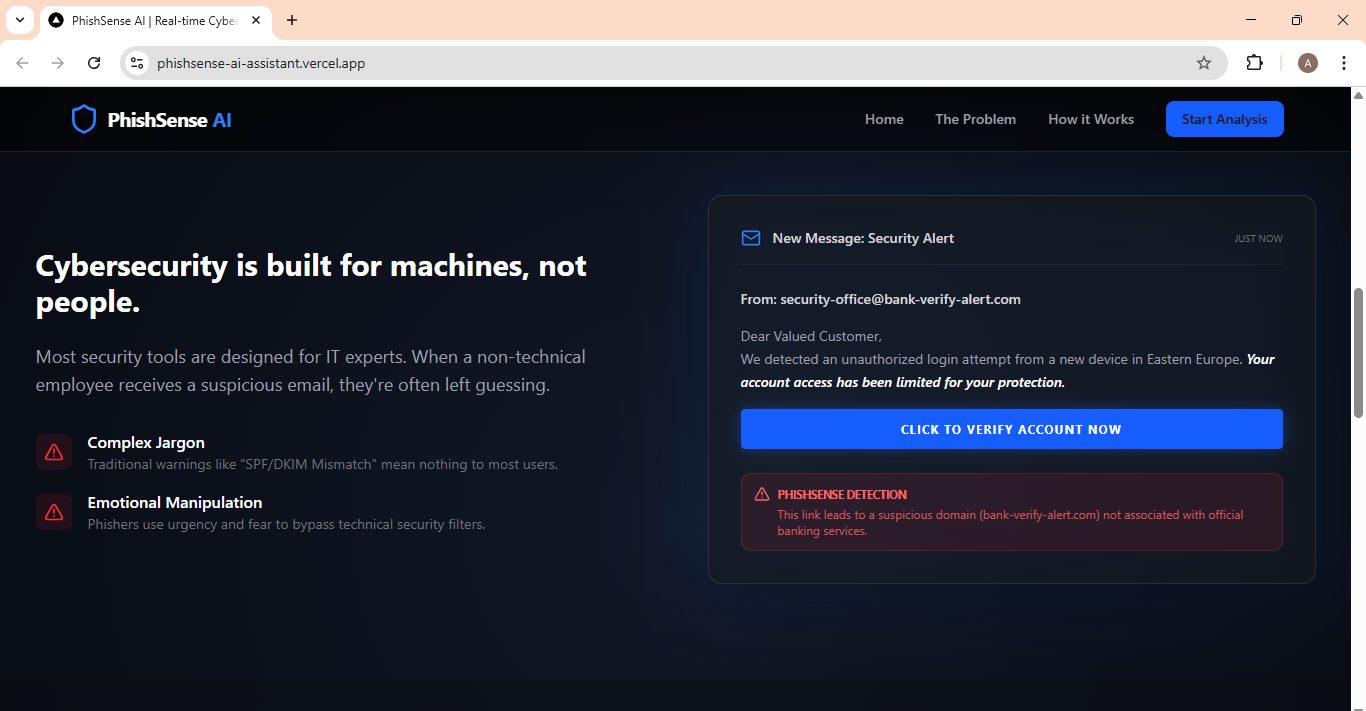
Most cybersecurity breaches don't happen because systems are weak -they happen because people are overwhelmed, rushed, or confused. Employees and everyday users regularly receive emails and messages that look legitimate, and existing security tools either block silently or overwhelmed users with technical jargon.
We were inspired by the gap between advanced cybersecurity systems and the actual people expected to make safe decisions. PhishSense Al was built to bring cybersecurity guidance into the moment, in a way that is clear, human, and educational rather than intimidating.
What it does
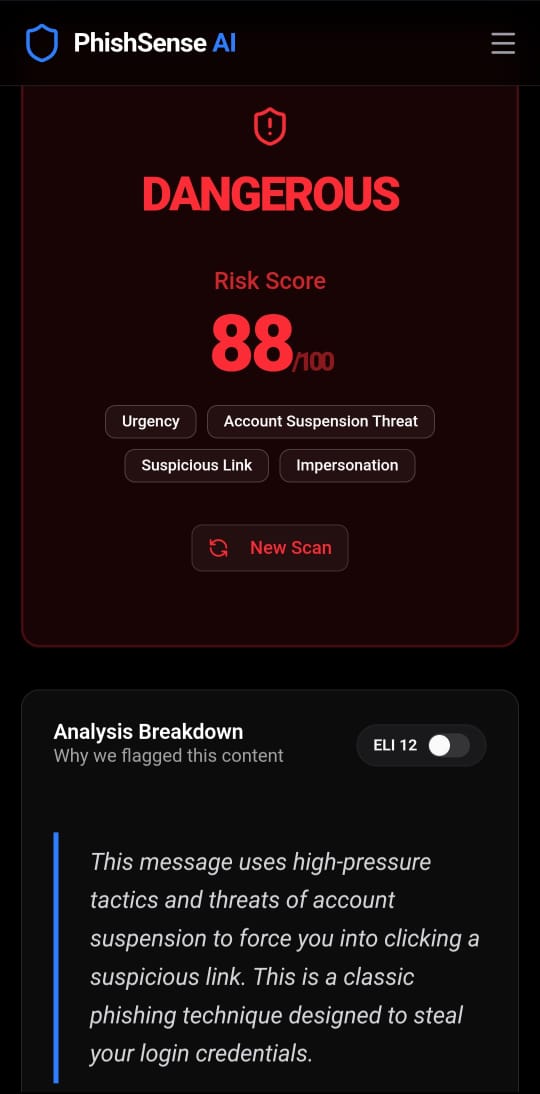
Phish Sense Al is a real-time, A-powered cybersecurity assistant that helps users identify phishing and unsafe digital messages instantly. Users can paste suspicious emails, messages, or links into the app, and PhishSense Al:
- Analyzes the content for common phishing patterns classifies the risk as Safe, Suspicious, or dangerous
- Explains why the message is risky in plain language
- Provides clear guidance on what actions the user should take next
- Includes an "Explain Like I'm 12" mode to make security understanding accessible to everyone The focus is not just detection, but empowering better human decisions. --- ## How we built it We built PhishSense Al as a lightweight, Al-first web application optimized for real-time interaction and demo ability.
- The frontend provides a clean and minimal interface focused on clarity and speed.
- User input is processed using Al-based reasoning to identify phishing indicators such as urgency language, impersonation attempts, suspicious domains, and requests for sensitive information.
- The Al generates structured, easy-to-understand explanations instead of technical security reports.
- The application was designed with a strict MVP mindset to keep the experience fast, focused, and intuitive. The entire system was built to feel production-ready while remaining realistic within a hackathon timeframe
Challenges we ran into
One of the biggest challenges was balancing accuracy with explainability. Many cybersecurity tools focus on deep technical detection, but for this project, we intentionally prioritized clarity and user understanding.
Another challenge was designing Al explanations that educate without overwhelming users. We iterated on language and structure to ensure the output felt helpful, calm, and trustworthy rather than alarming.
Finally, defining a tight MVP scope was critical-resisting the temptation to overbuild allowed us to focus on what truly delivers value.
Accomplishments that we're proud of
- Building a fully functional, end-to-end prototype within a short hackathon window
- Creating an Al system that focuses on human-centric security, not just detection
- Delivering a product that judges and users can instantly understand and interact with
- Successfully demonstrating how Al can reduce cybersecurity risk by improving decision-making, not just automation.
What we learned
Through this project, we learned that the biggest security improvements often come from better communication, not more complexity. We gained hands-on experience in:
- Designing explainable Al systems
- Translating complex technical risks into simple user guidance
- Rapidly building and refining an MVP under time constraints
4. Aligning Al capabilities with real-world human behavior
What's next for PhishSense
Future improvements could include:
- Browser extensions for real-time protection
- Organization-level insights without compromising user privacy
- Continuous learning from new phishing patterns
- Integration with internal security reporting workflows
PhishSense Al has the potential to evolve from a hackathon prototype into a practical, scalable cybersecurity solution.
Built With
- ai
- css3
- cybersecurity
- html5
- javascript
- llm
- natural-language-processing
- react

Log in or sign up for Devpost to join the conversation.