Inspiration
Phishing emails and malicious URLs can trick people into sharing sensitive information. I wanted to build a tool that helps users analyse suspicious content and understand potential threats using AI
What it does
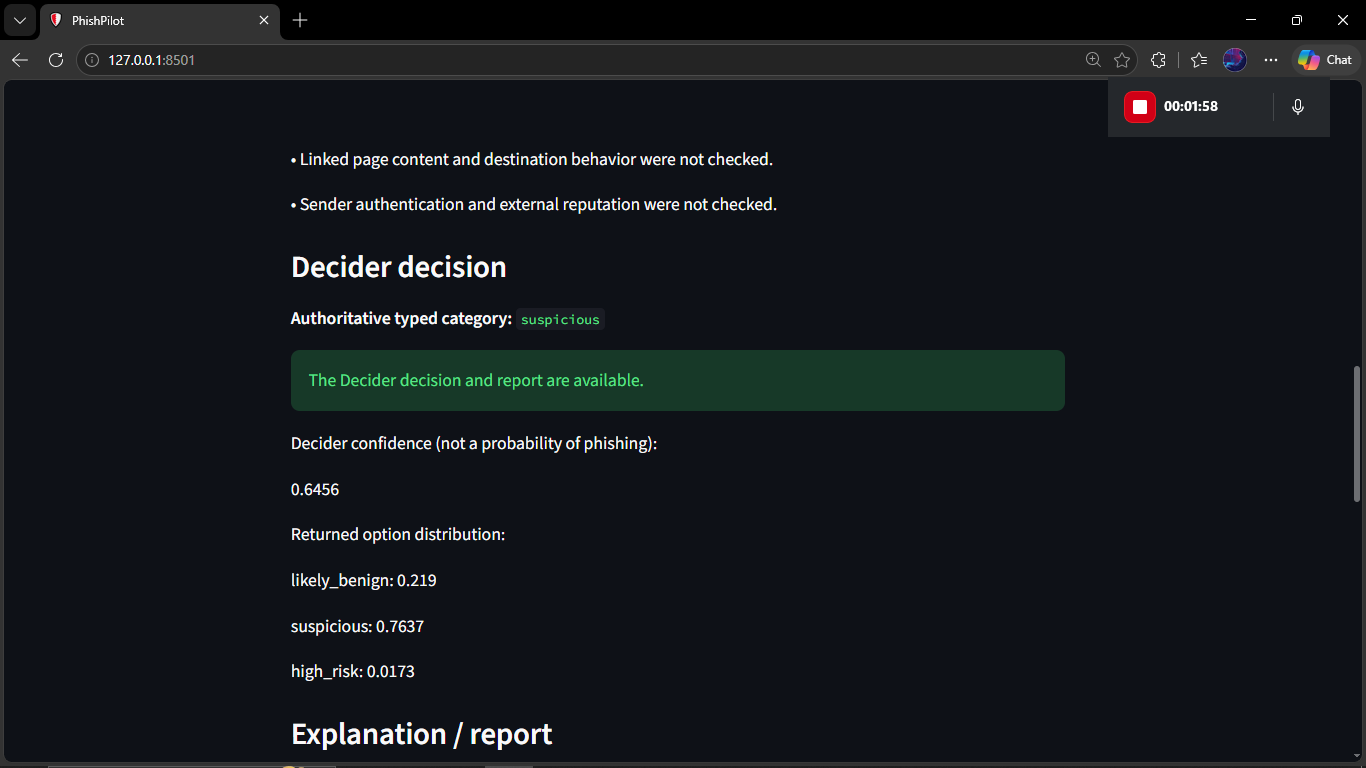
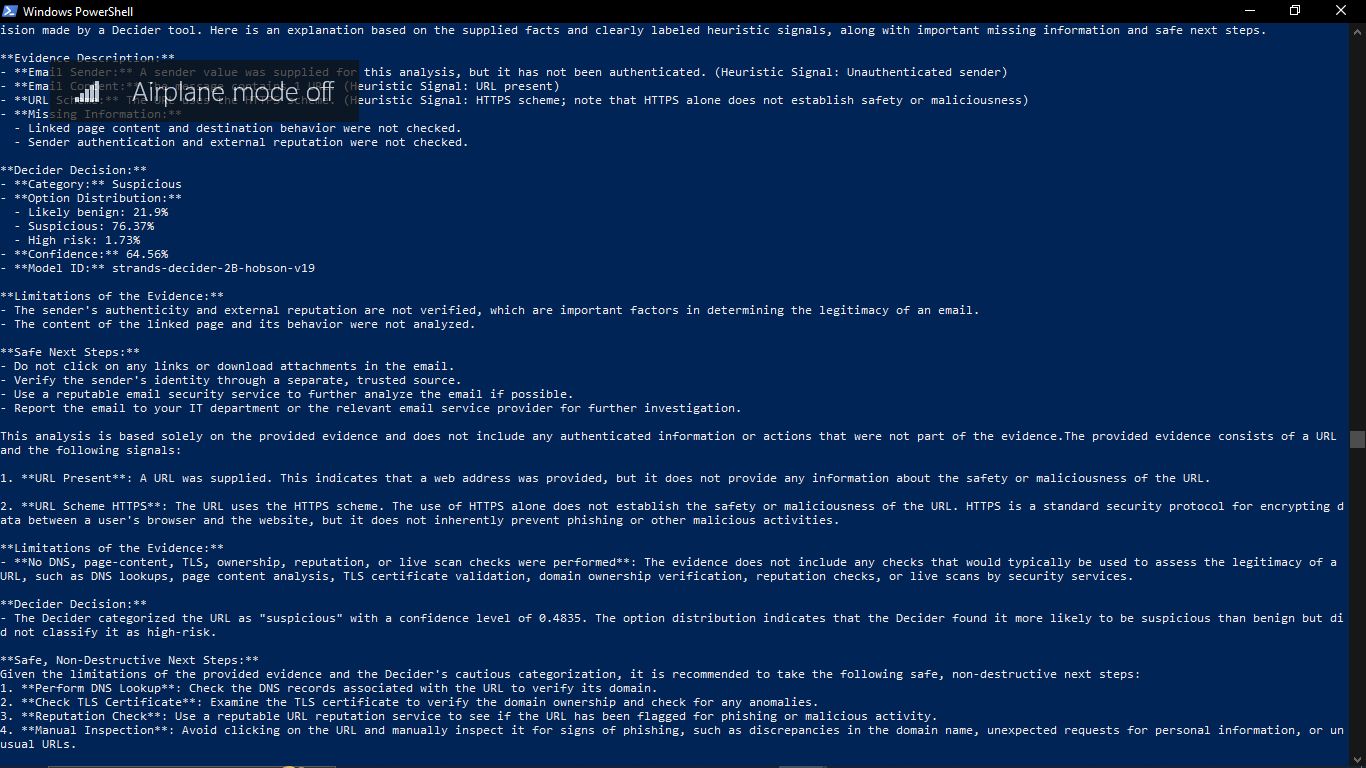
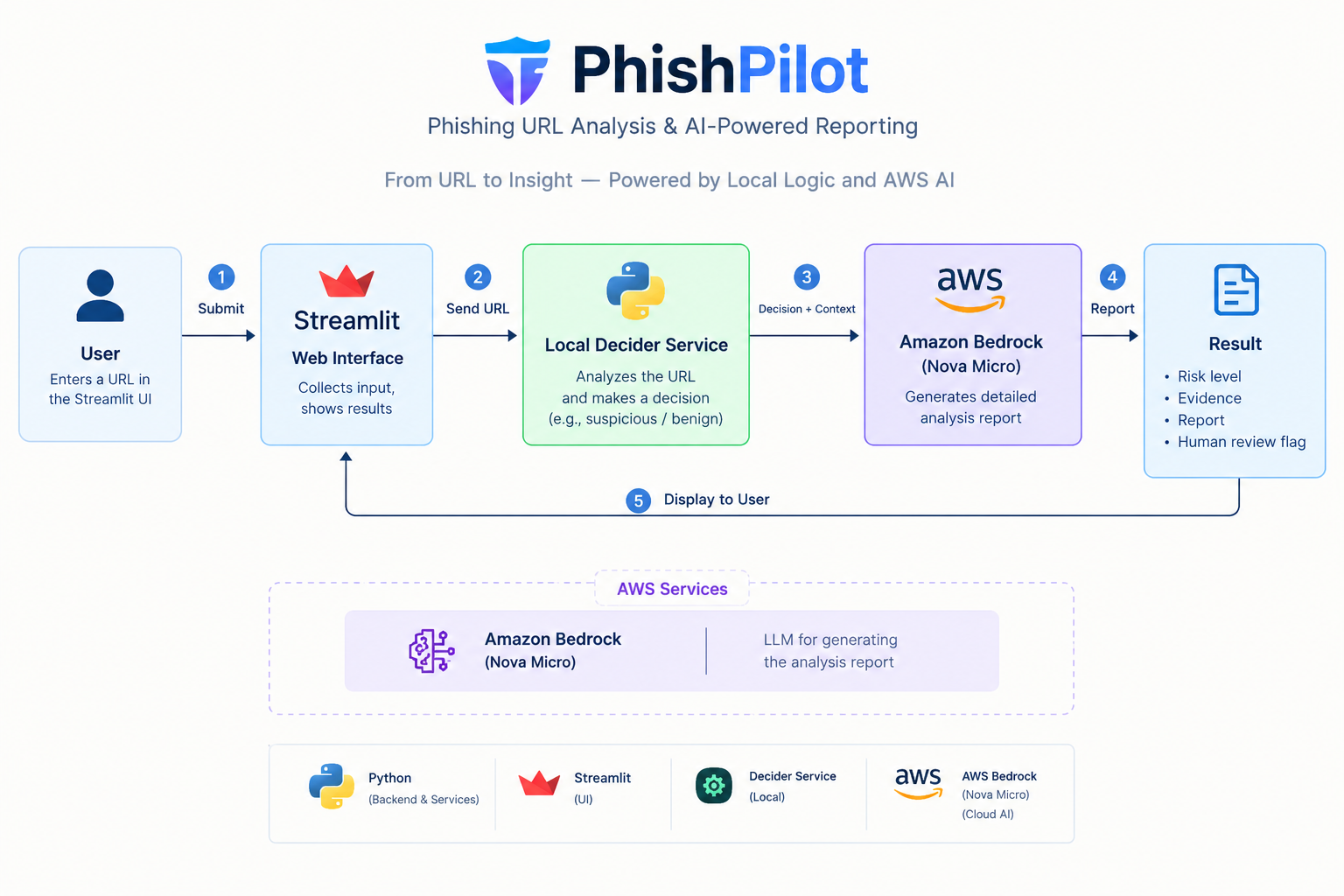
PhishPilot analyses suspicious URLs and emails using a local Decider service and Amazon Bedrock Nova Micro for AI-generated reports. It provides risk classifications, analysis evidence, and explanations to help users make informed decisions
How we built it
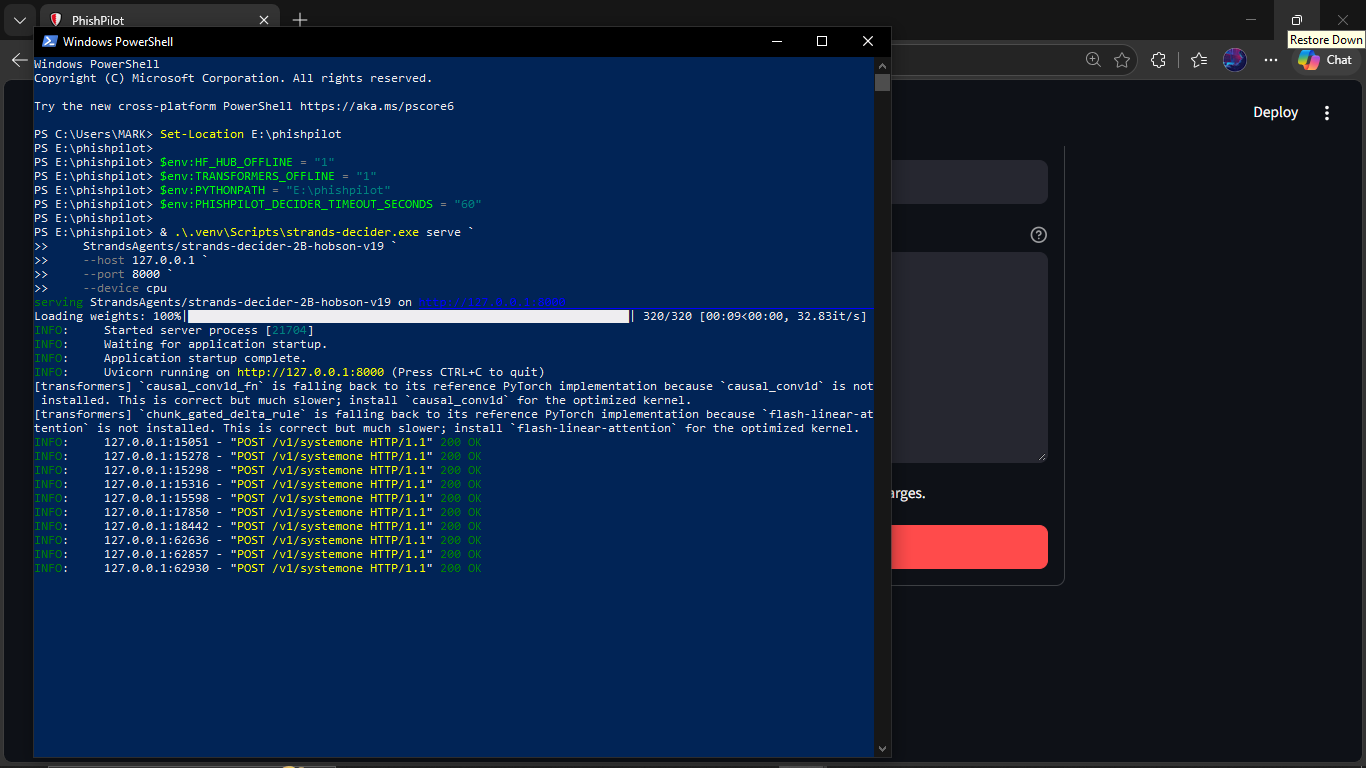
We built PhishPilot using Python and Streamlit, integrated a local Decider service for analysis, and connected Amazon Bedrock Nova Micro to generate detailed reports. The application combines local decision-making with cloud-based AI reporting
Challenges we ran into
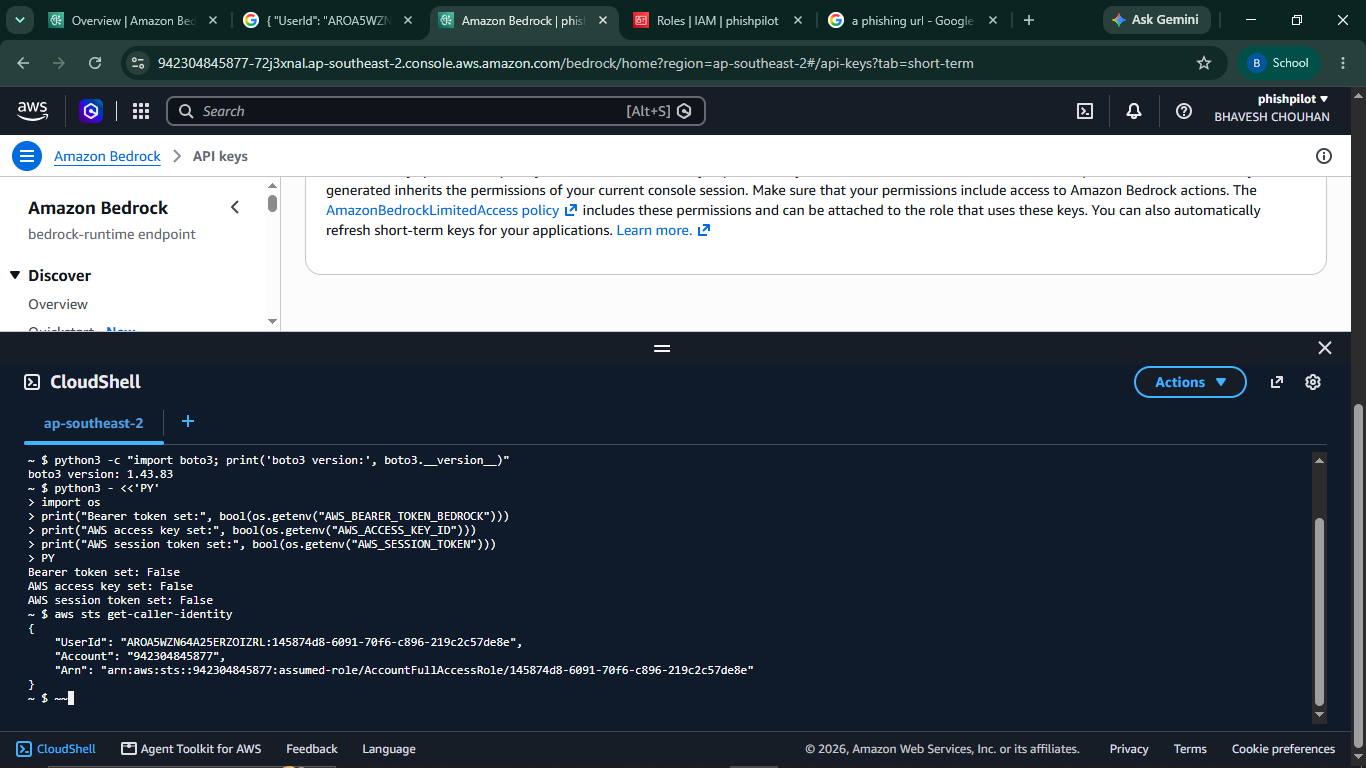
Integrating the local Decider service with AWS Bedrock was a key challenge. Debugging service communication, handling AWS authentication, and managing uncertain analysis results helped us understand the practical complexities of building AI-powered cybersecurity applications
Accomplishments that we're proud of
We completed a working prototype that brings together URL and email analysis, local AI decision-making, and AI-generated security reports in one application
What we learned
We gained practical experience with Python, Streamlit, AWS Bedrock, service integration, and building a cybersecurity application that combines local processing with cloud AI
What's next for PhishPilot
We plan to improve analysis quality, strengthen evidence validation, enhance report generation, and explore additional indicators to make PhishPilot more useful for real-world phishing analysis
Built With
- agents
- amazon
- amazon-web-services
- bedrock
- boto3
- cybersecurity
- machine
- machine-learning
- python
- strands
- streamlit

Log in or sign up for Devpost to join the conversation.