Inspiration
Phishing attacks are one of the biggest cybersecurity threats because attackers manipulate human emotions through urgency, fear, and trust. Many people receive suspicious emails but do not know how to identify the warning signs.
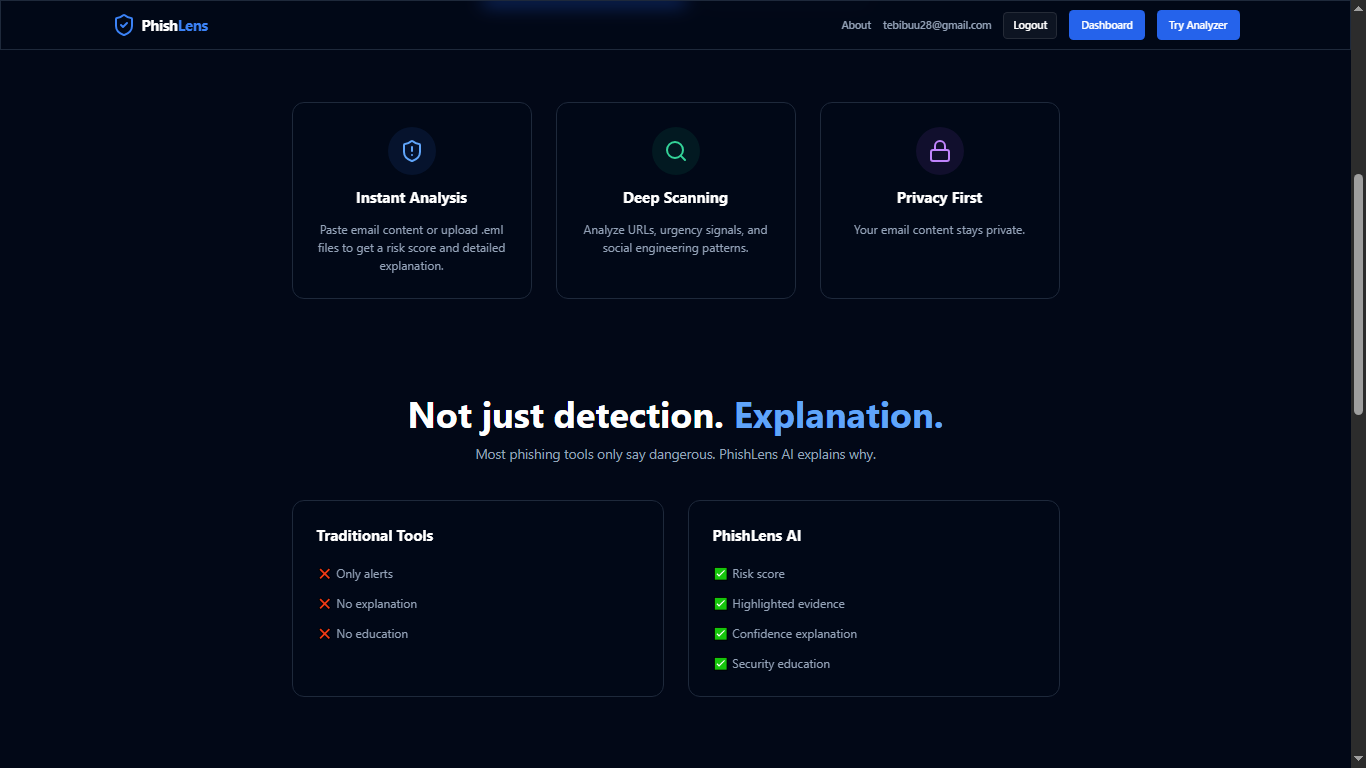
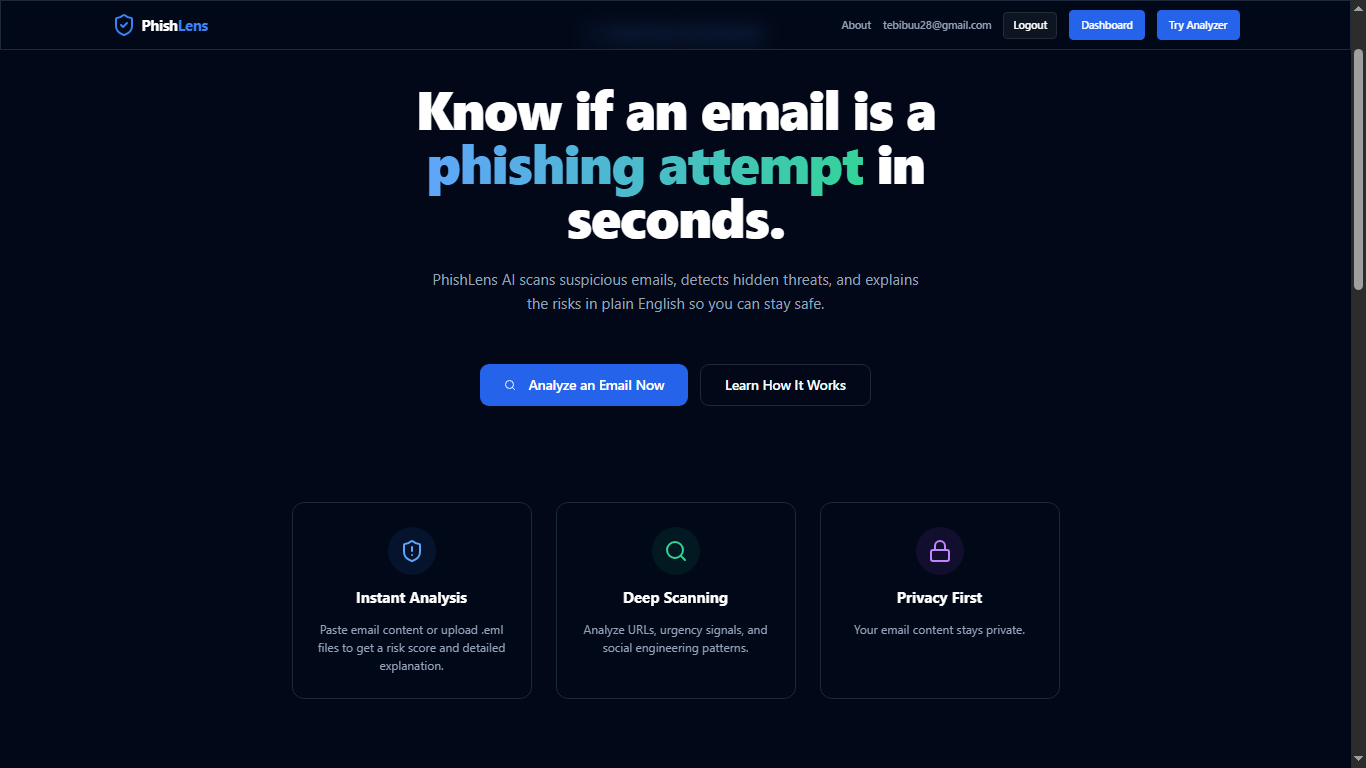
We created PhishLens AI to make phishing detection easier and more understandable by not only detecting threats, but also explaining why an email is dangerous and what actions users should take.
What it does
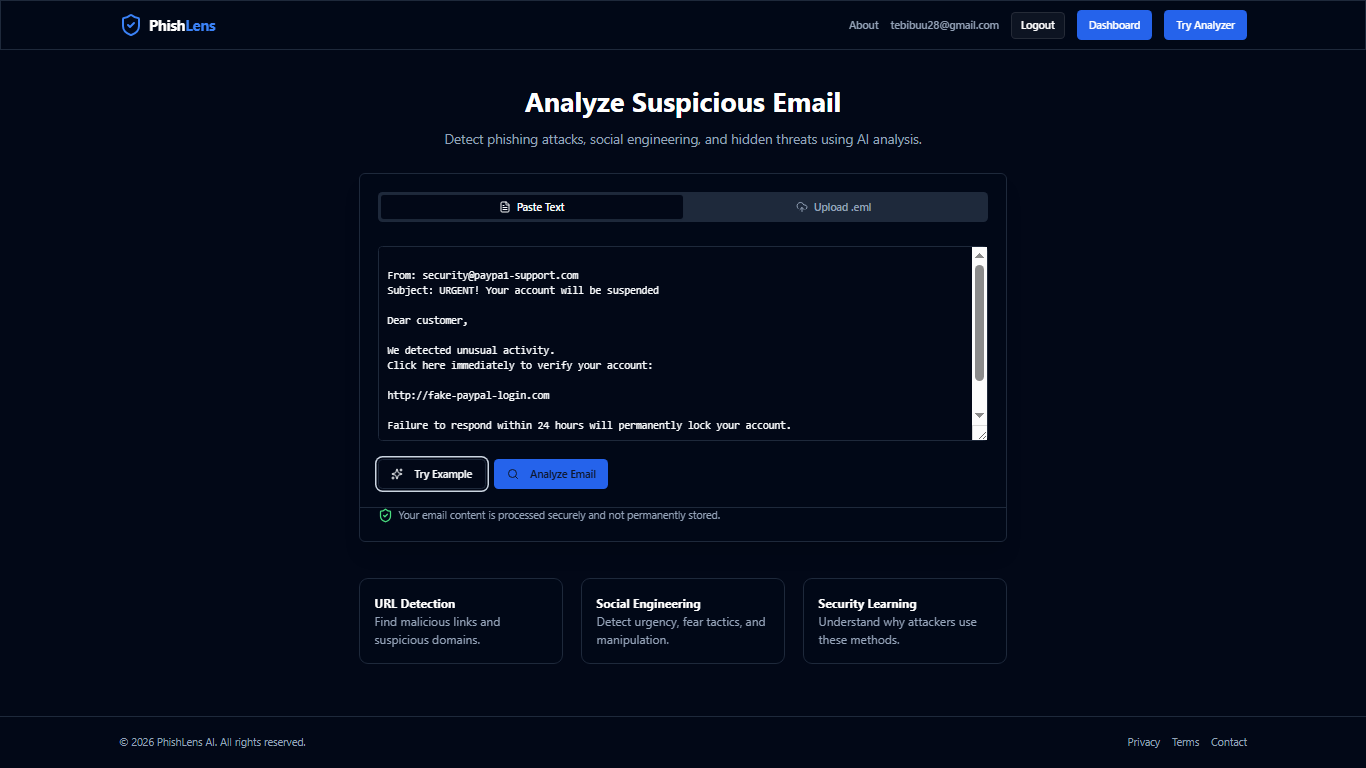
PhishLens AI is an explainable phishing detection platform that analyzes suspicious emails and identifies common phishing indicators, including:
- Urgency and fear-based manipulation
- Credential theft attempts
- Suspicious sender domains
- Malicious links
- Social engineering patterns
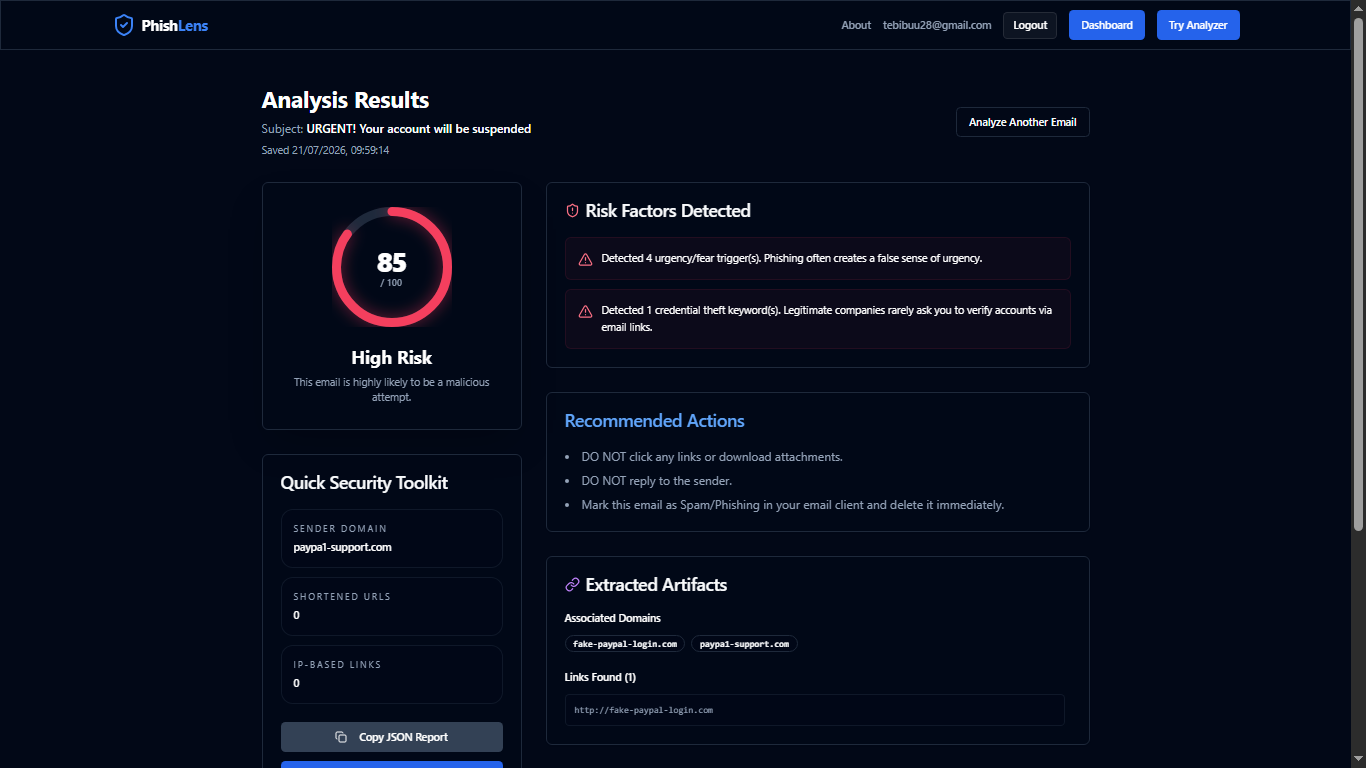
The platform generates a risk score, explains detected threats, provides security recommendations, and saves users' analysis history through a personal dashboard.
How we built it
PhishLens AI was built as a full-stack SaaS application using:
- React + TypeScript for the frontend
- Vite for fast development and production builds
- Tailwind CSS for responsive UI design
- Supabase Authentication for secure user accounts
- PostgreSQL database with Row Level Security for user data protection
- Vercel for deployment
The detection engine analyzes email content, extracts important signals, calculates a phishing risk score, and generates explainable results.
Challenges we faced
The biggest challenge was transforming a simple frontend prototype into a complete production-ready SaaS application.
We implemented:
- Secure authentication flows
- Database integration
- User-specific data protection
- Real-time dashboard updates
- Production deployment
This process taught us how to build and deploy a complete cybersecurity product from idea to working application.
Accomplishments
We built a working phishing analysis platform with:
- User authentication
- Secure cloud database
- Email threat analysis
- Risk scoring system
- Explainable security insights
- Personal dashboard with saved scans
PhishLens AI demonstrates how cybersecurity tools can become more accessible by combining automation with clear explanations.
What's next
Future improvements include:
- Machine learning-based phishing detection models
- Real-time URL reputation checking
- Browser extension support
- Email client integrations
- Enterprise security analytics
Built With
- artificial
- authentication
- css
- cybersecurity
- database
- html
- intelligence
- javascript
- postgresql
- react
- supabase
- tailwind
- typescript
- vercel
- vite


Log in or sign up for Devpost to join the conversation.