-
-
-

-
-
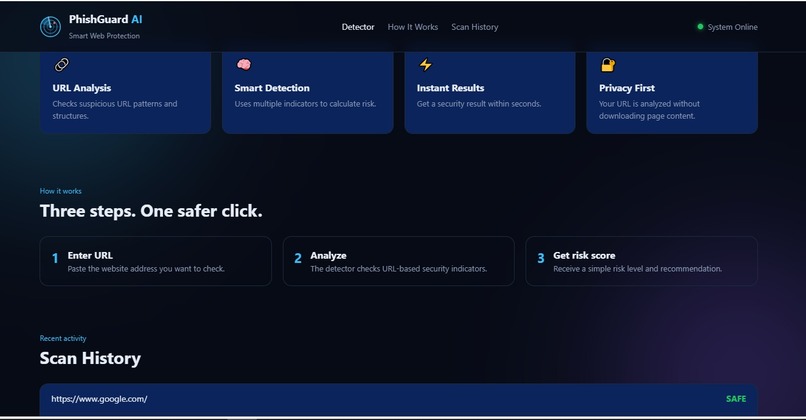
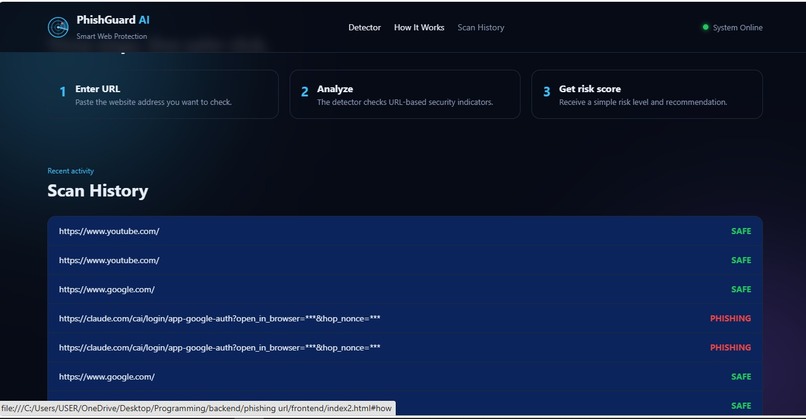
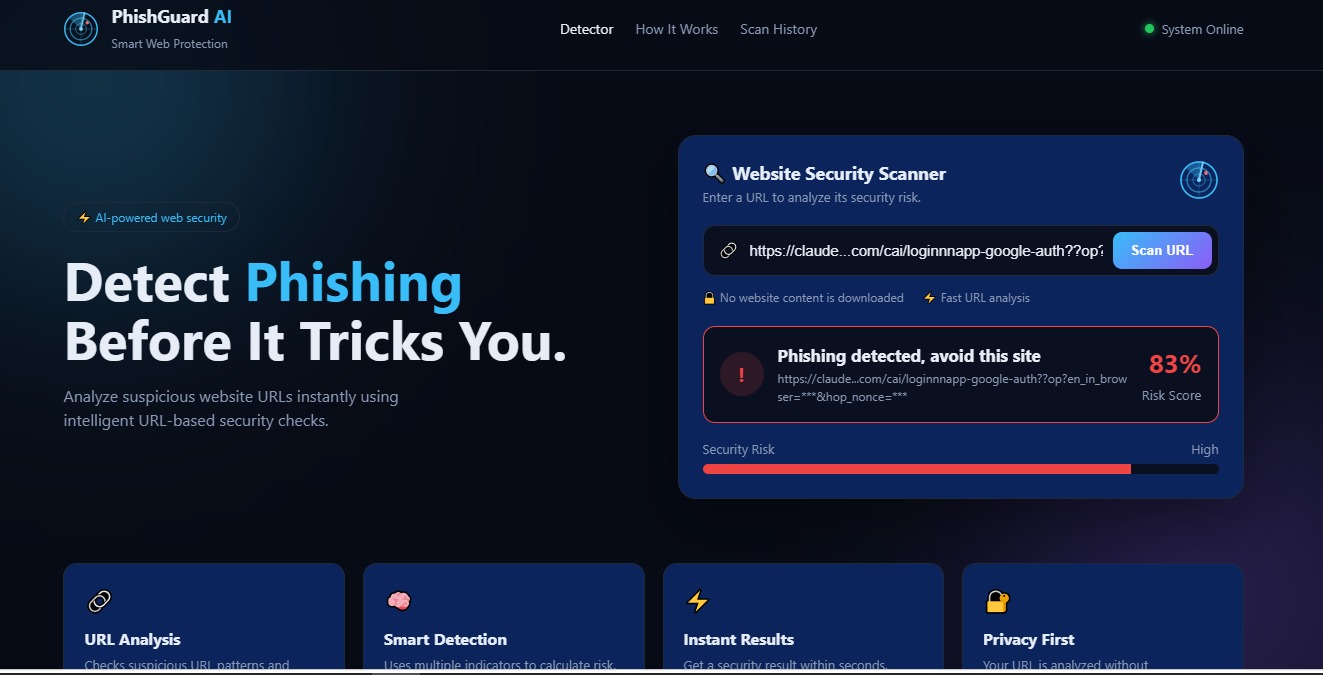
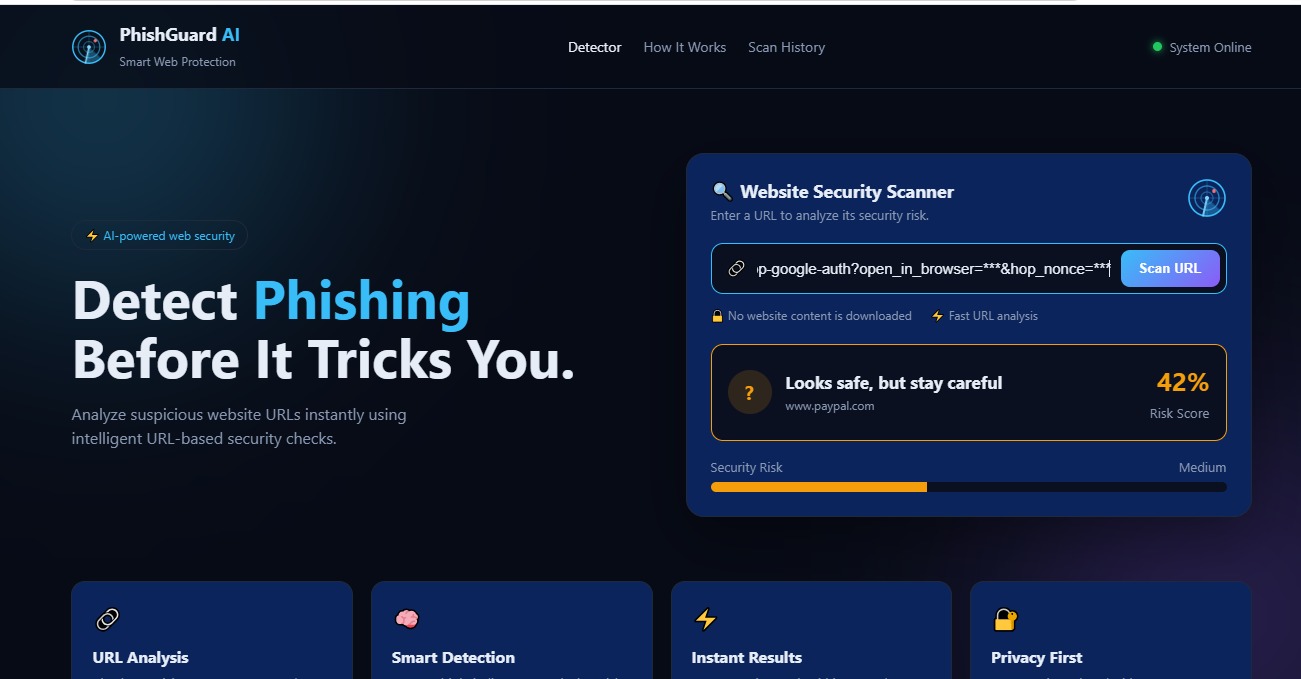
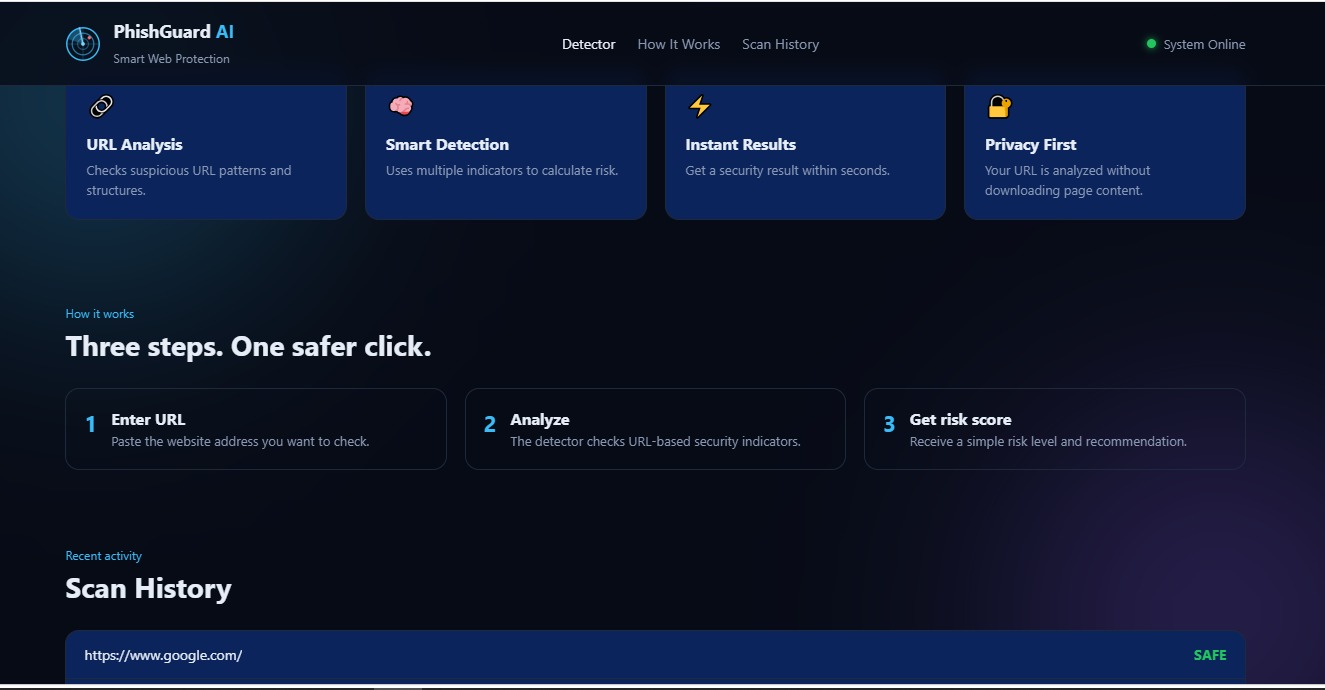
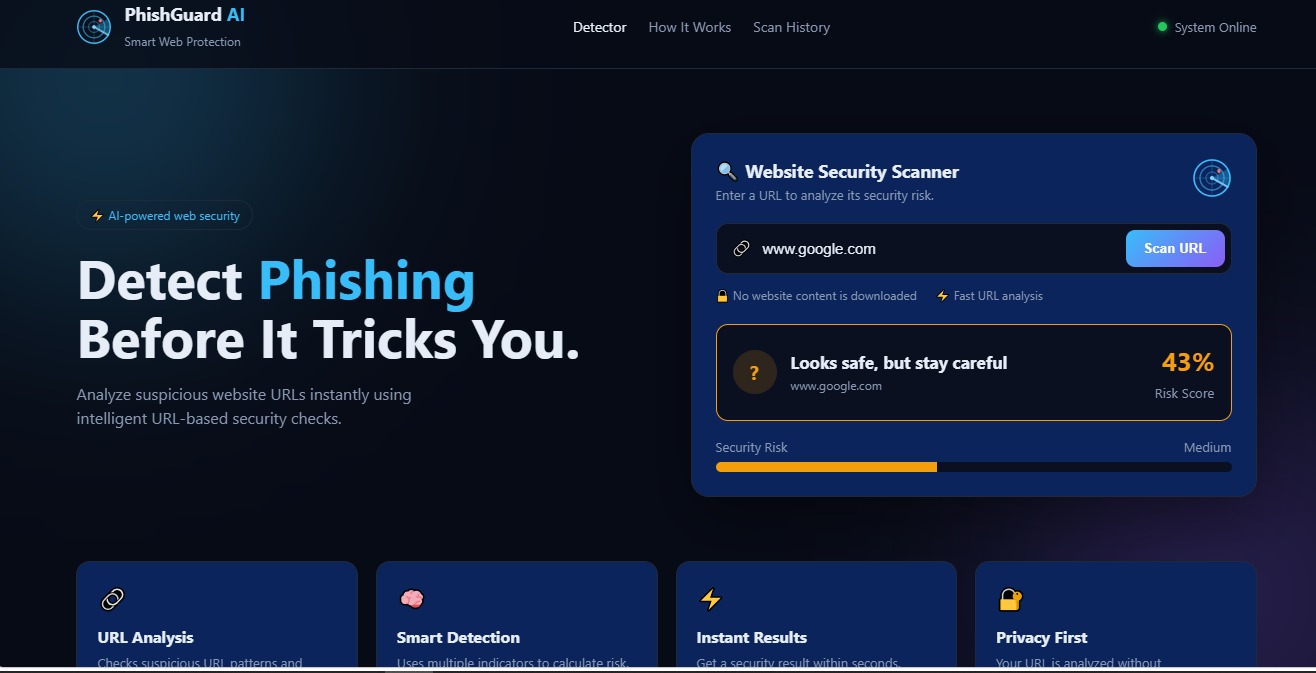
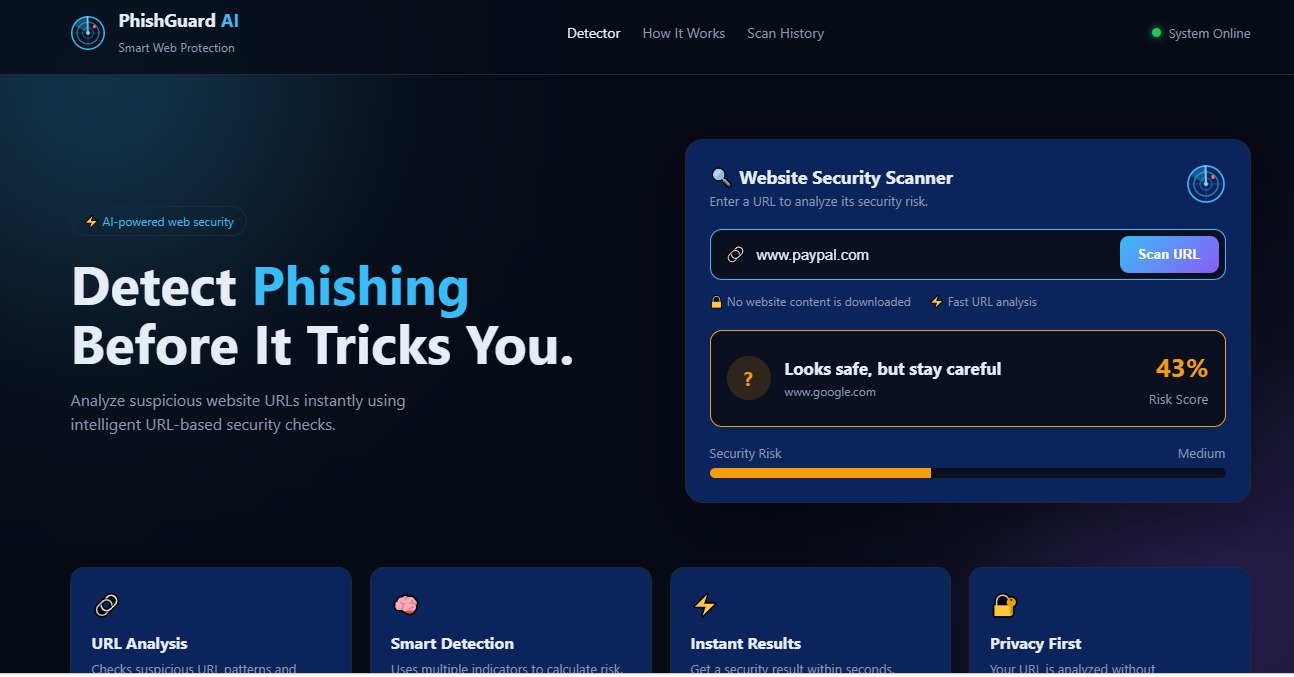
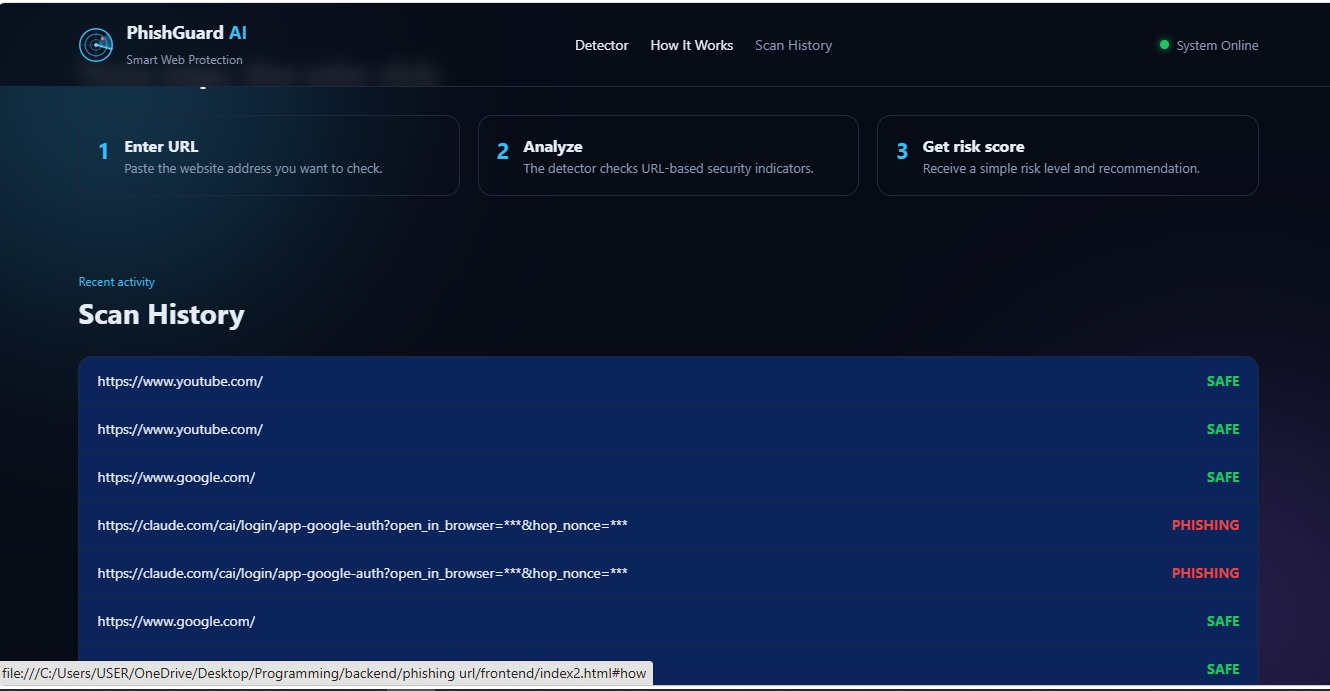
how the webpage looks
-
-
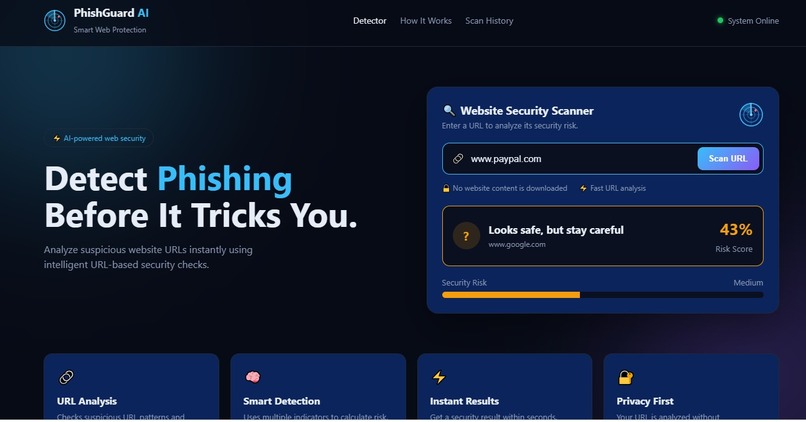
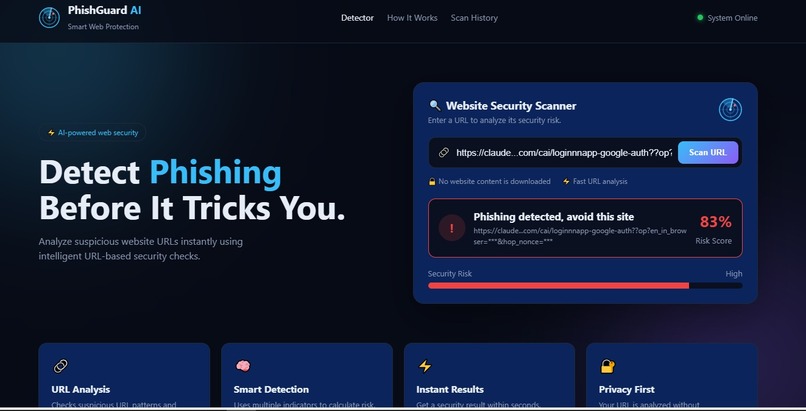
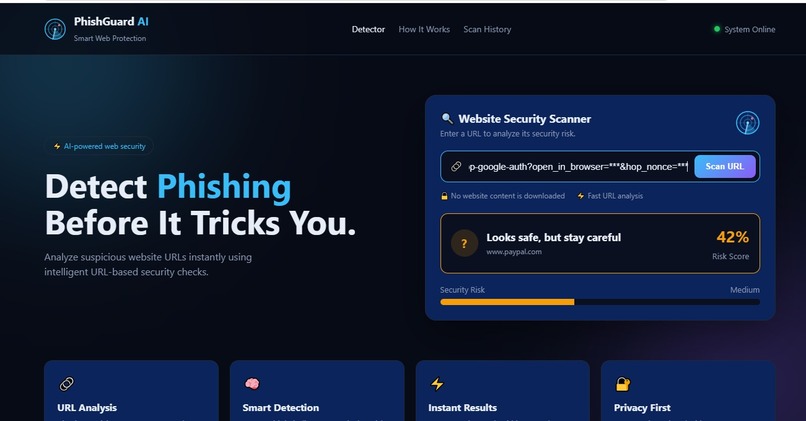
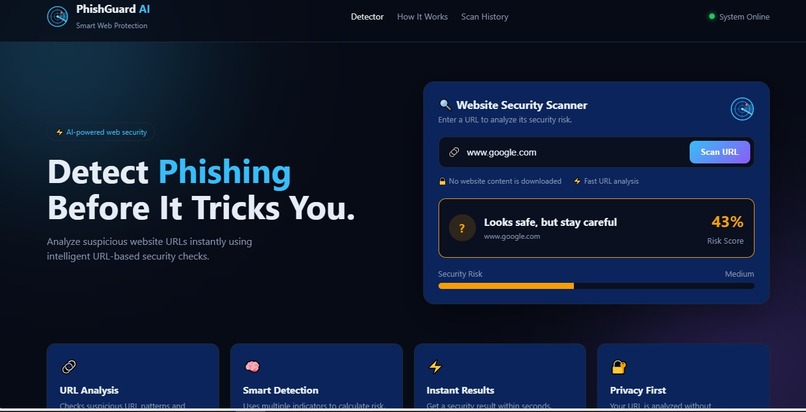
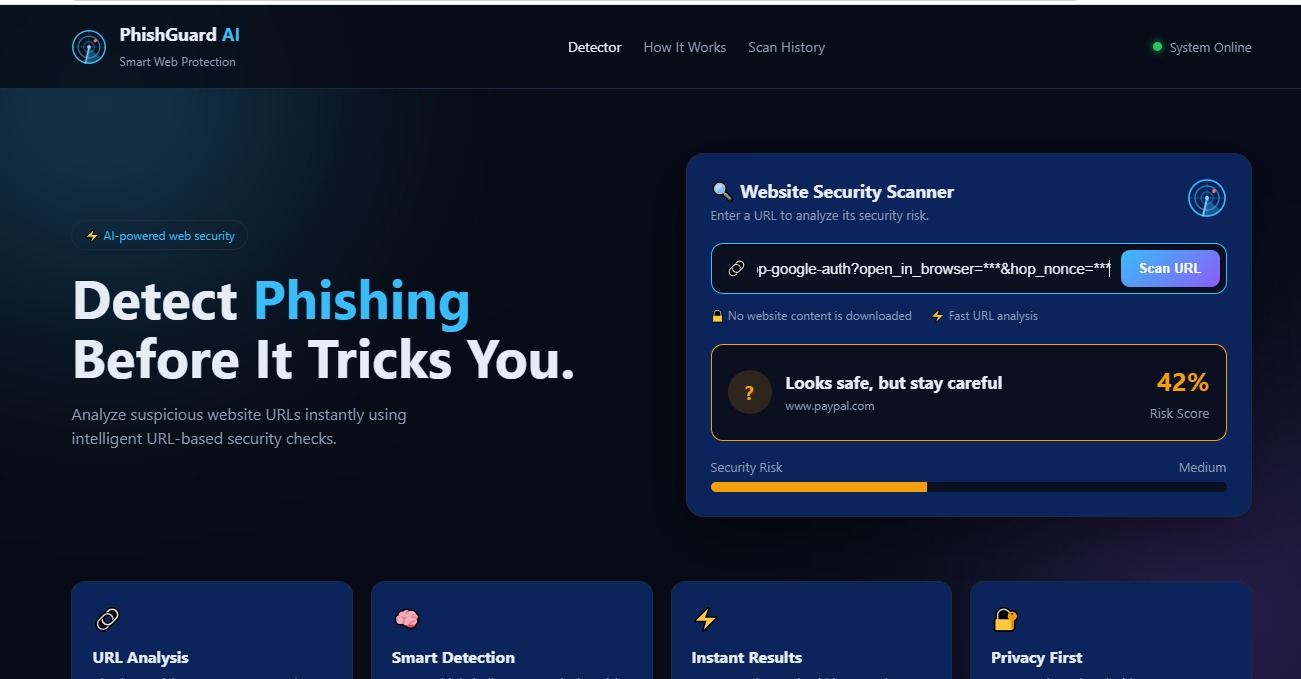
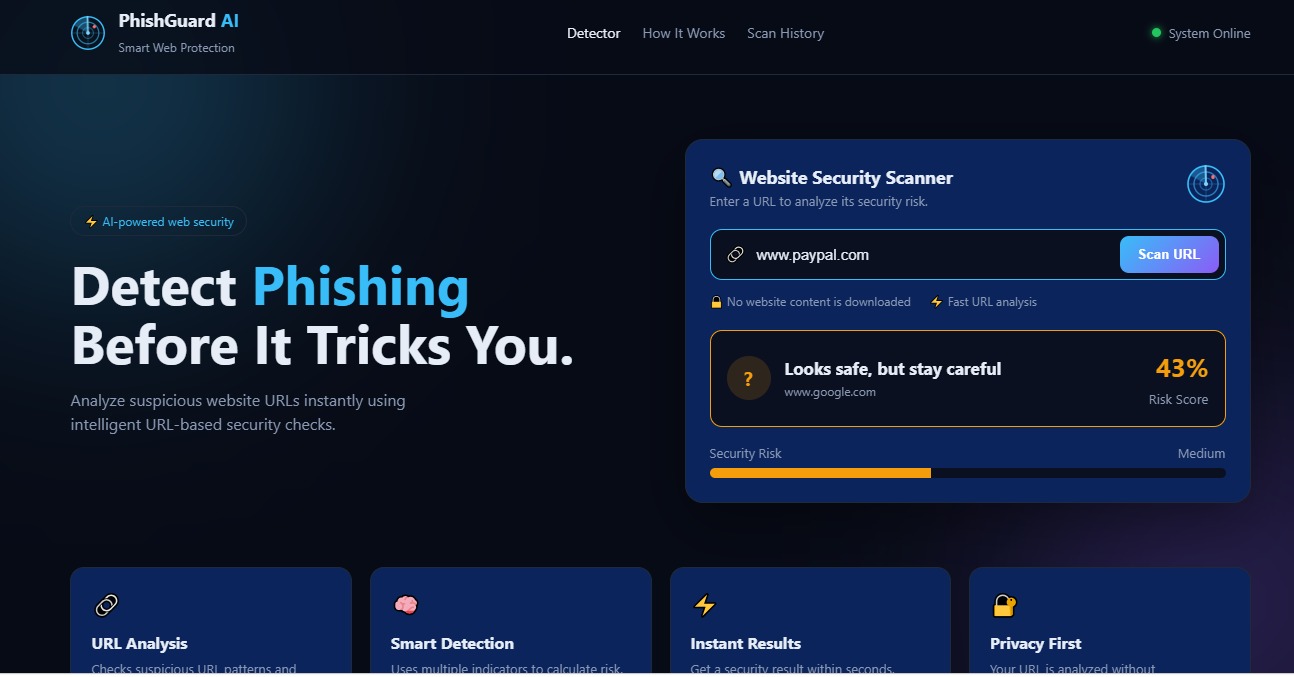
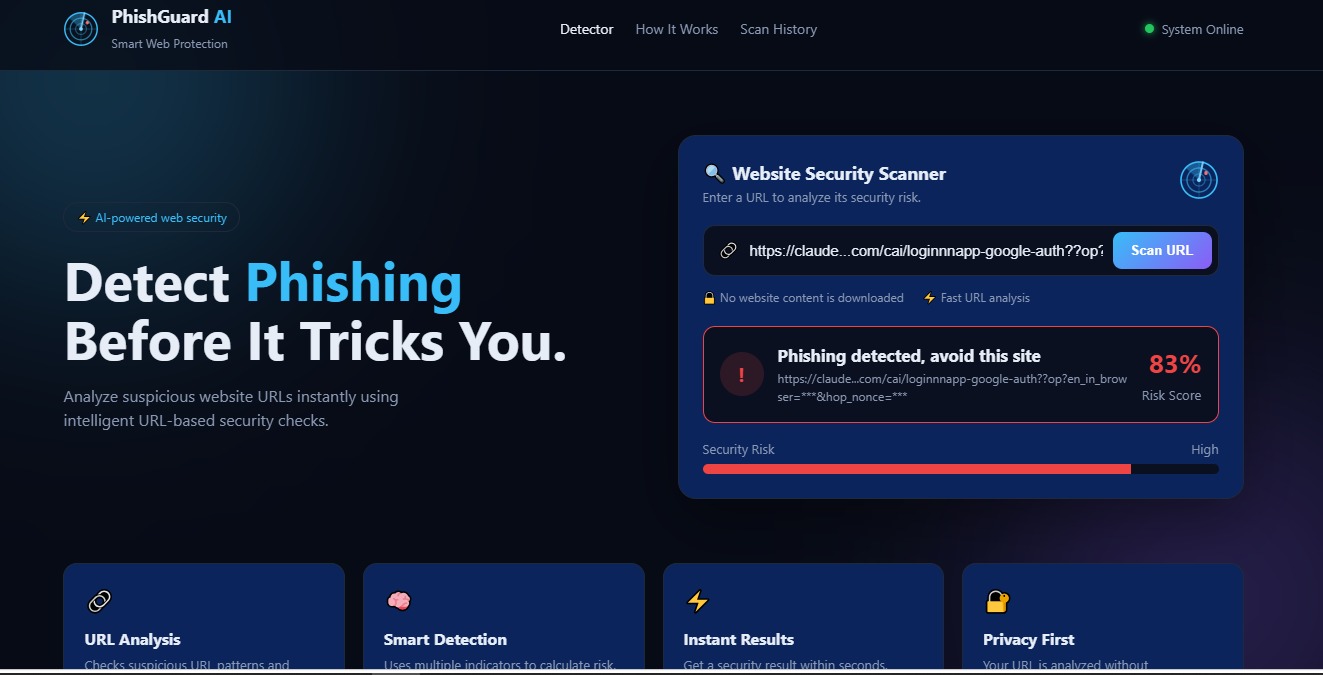
score giver in percentage to determine how malicious a website is
-
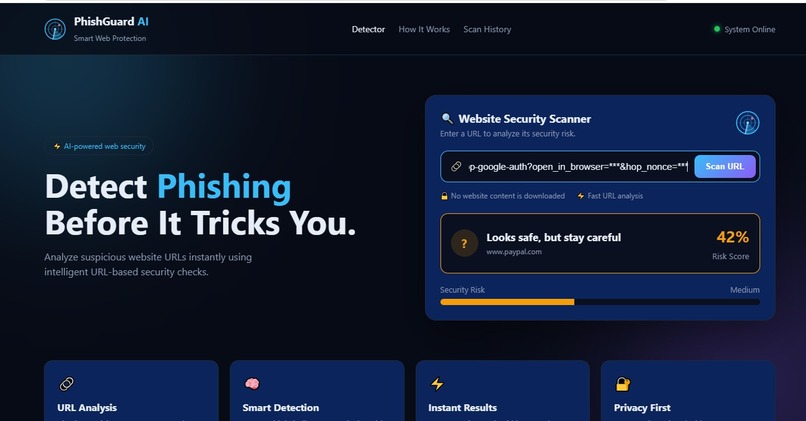
example
-
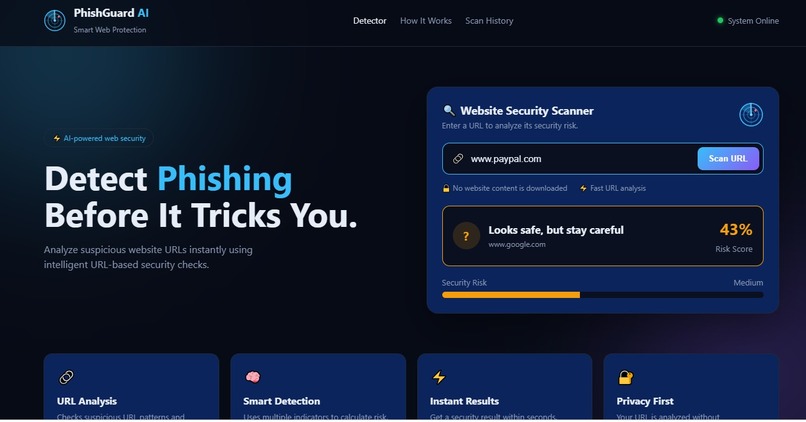
example
-
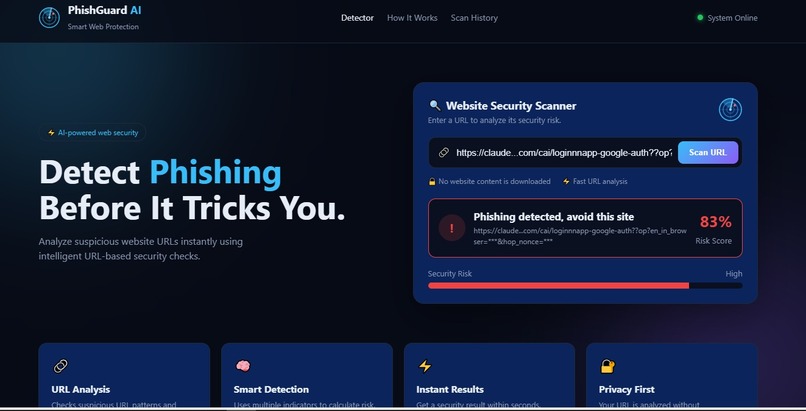
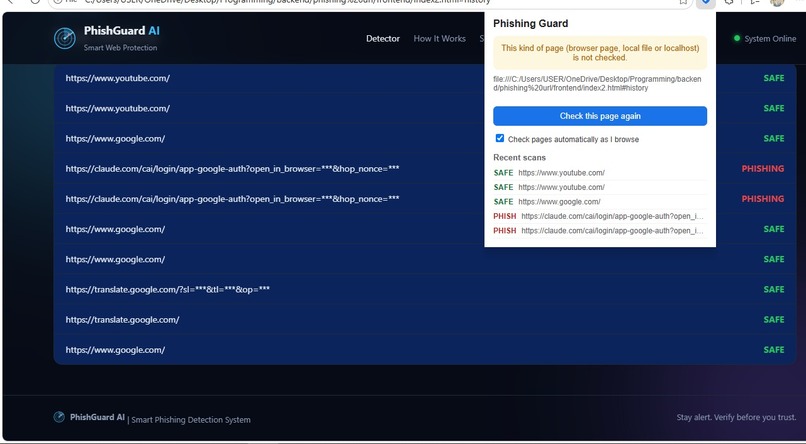
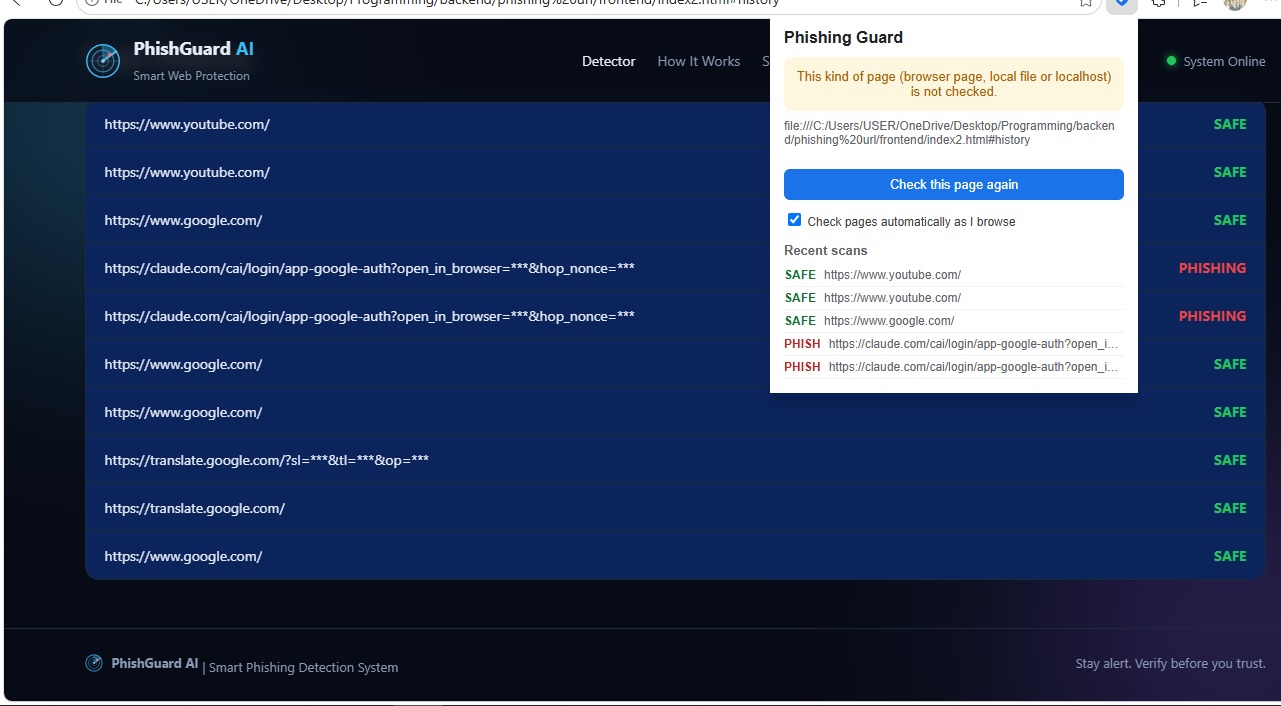
phishing detected
-
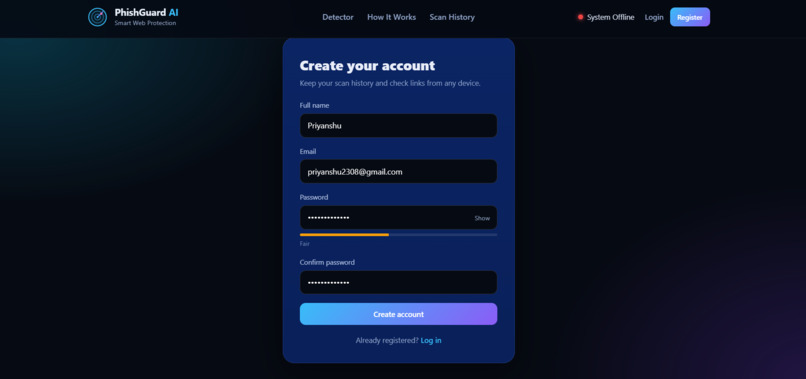
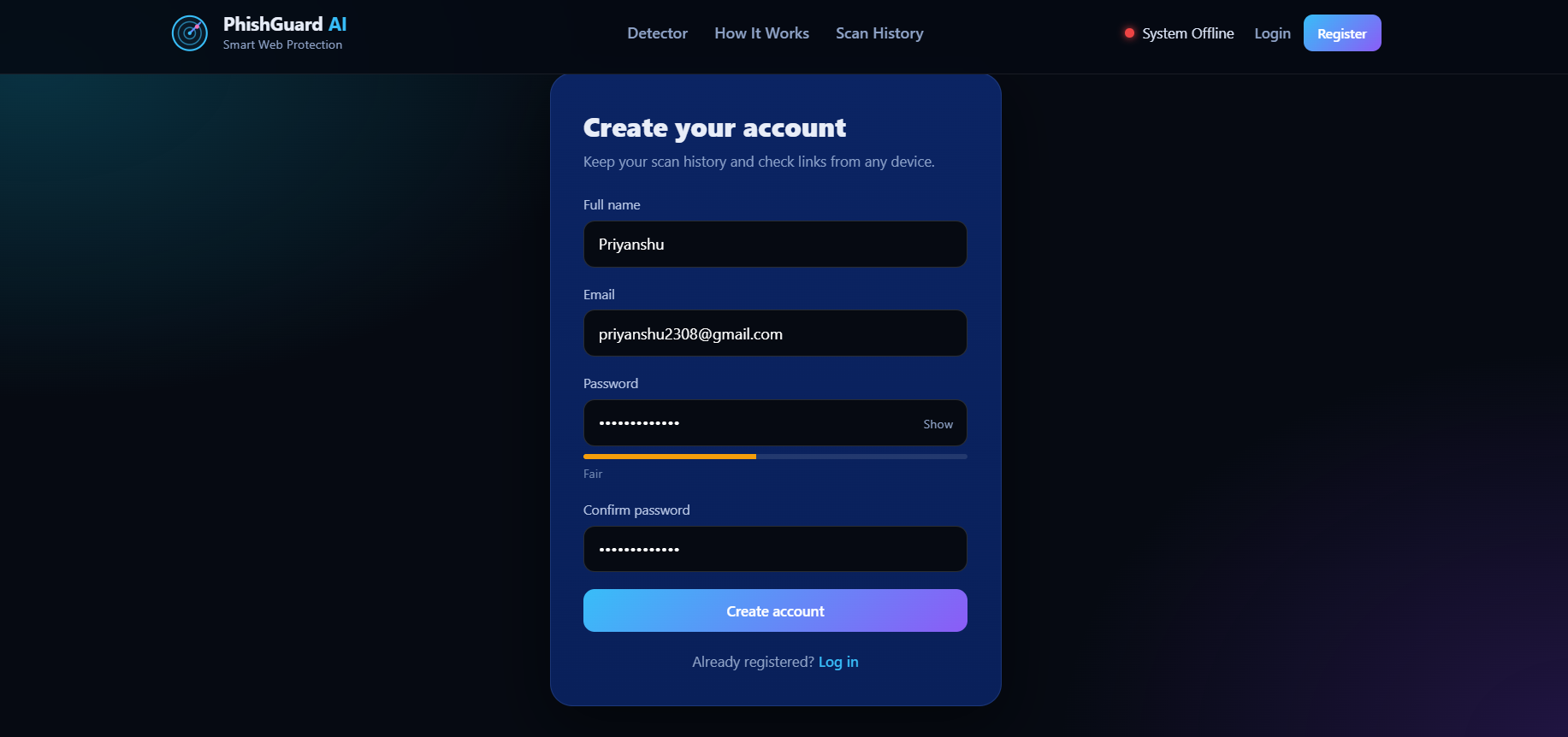
register page
-
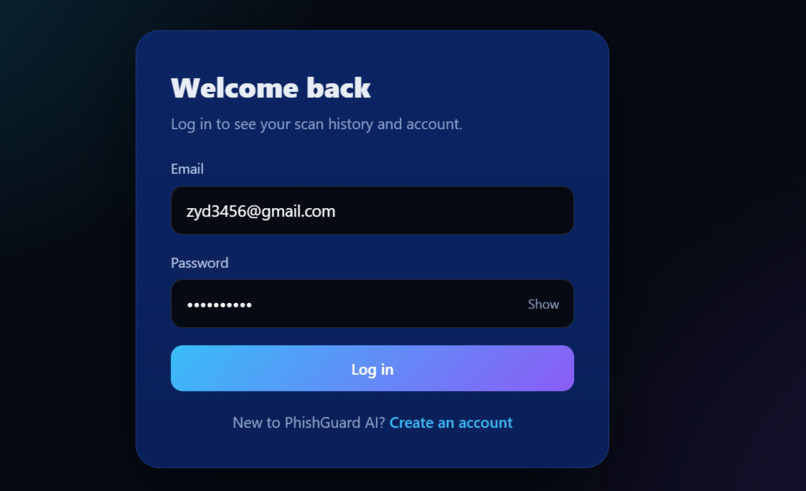
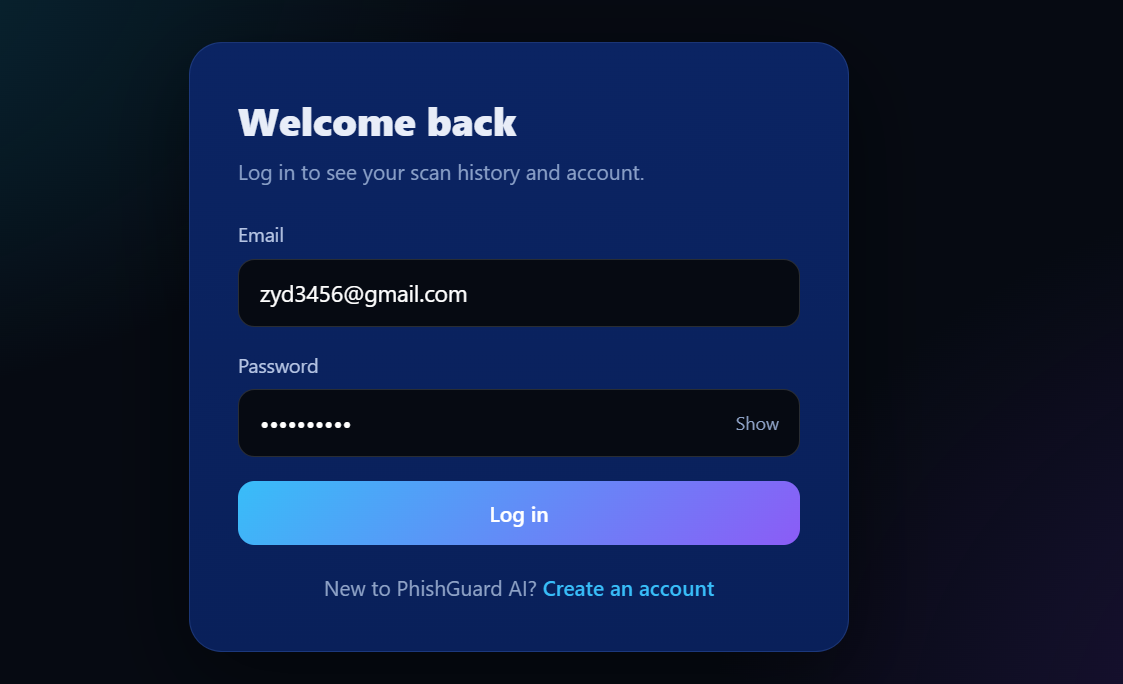
login page
-
-

Inspiration
paypa1.com looks just like PayPal, until it empties your account. One swapped letter fools almost everyone, and phishing sites count on that. We wanted to stop the click before the damage, not warn people after it.
What it does
Phishing Radar is a Chrome extension that spots lookalike URLs in real time. When you land on a fake page, it throws up a warning banner and blocks the page before you can type a single password. We started with PayPal as our first protected brand, and a web platform with user and admin access manages it all.
How we built it
A FastAPI backend checks each URL against protected brands and stores flagged sites in a database. The Chrome extension sends every page you visit to the backend and acts on the verdict. The website is built with HTML, CSS and JavaScript.
Challenges we ran into
This was our first hackathon, and it was online. Wiring the backend, database and extension together meant late-night bugs and plenty of "why isn't this working?" moments. Staying in sync as a team over chat and calls was a challenge of its own.
Accomplishments that we're proud of
We went from first-timers to a working product: open a fake PayPal link, and Phishing Radar shuts it down.
What we learned
How phishing domains are crafted, how extensions talk to backends, and how to ship as a team under a deadline.
What's next for Phishing Radar
More brands, smarter detection, user reporting, and a Chrome Web Store launch.
Built With
- api
- css
- html
- javascript
- json
- machine-learning
- pandas
- python
- randomforestregression
- sqlite


Log in or sign up for Devpost to join the conversation.