-
-
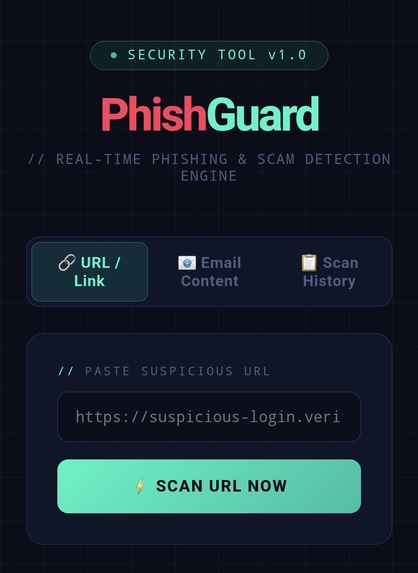
saves u from getting scammed
Inspiration
Phishing attacks are one of the most common cyber threats today, with over 3.4 billion scam emails sent every day. We noticed that most people — students, seniors, everyday users — simply cannot tell the difference between a real website and a fake one. That inspired us to build a tool that makes cybersecurity accessible to everyone, not just tech experts.
What it does
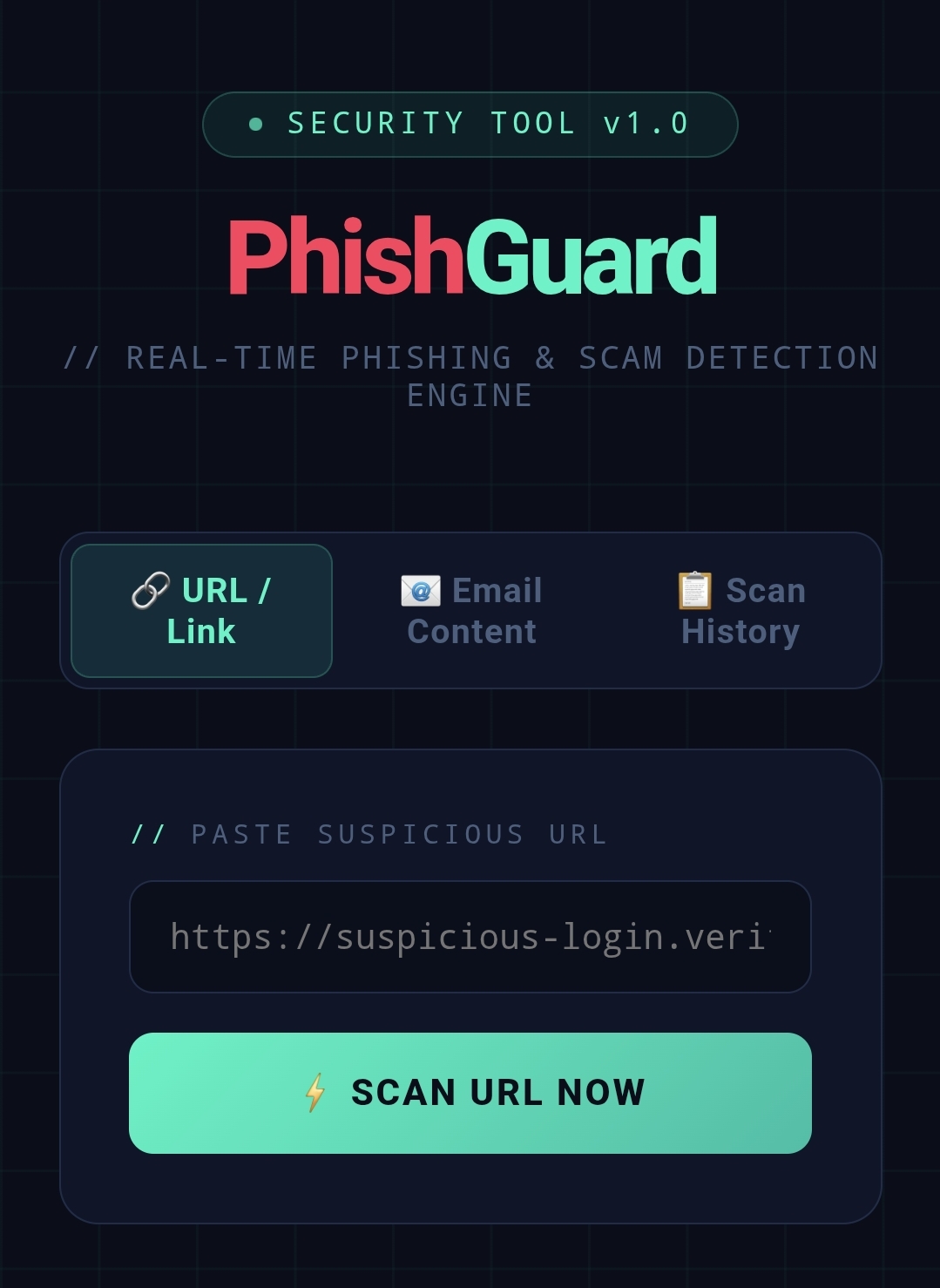
PhishGuard analyzes suspicious URLs and email content in real time and returns an instant verdict — Safe, Warning, or Danger — along with a 0–100 risk score and a detailed breakdown of exactly what triggered the alert. It detects threats like misspelled brand names, missing HTTPS, urgency language, credential requests, and suspicious domain extensions.
How we built it
We built PhishGuard using HTML5, CSS3, and JavaScript. The detection engine runs entirely in the browser using pattern recognition and rule-based threat analysis covering 20+ known phishing indicators. No backend server or API key is required — it works completely offline.
Challenges we ran into
The biggest challenge was building an accurate detection engine without a backend. We had to carefully design rules that catch real phishing patterns while avoiding false positives on legitimate websites.
Accomplishments that we're proud of
We are proud of building a fully functional cybersecurity tool that works instantly in any browser with no setup required. The clean UI with animated scanning and clear Safe/Warning/Danger verdicts makes it feel professional and easy to use for anyone.
What we learned
We learned how phishing attacks are structured, what patterns scammers use to trick victims, and how to translate that knowledge into a real detection system. We also learned how to build a complete project — from idea to working product to presentation — under time pressure.
What's next for Phishing Guard
We plan to add browser extension support so PhishGuard can scan links automatically as you browse, integrate a live threat database, and add multilingual support to protect users globally.
